双循环

Search documents
区域化、数智化、绿色化 全球供应链正加快向中国等新兴市场转移
Jing Ji Guan Cha Wang· 2025-09-15 08:12
Core Insights - The global supply chain is accelerating its shift towards emerging markets like China, characterized by regionalization, digitalization, and sustainability [1] - China is actively responding to changes through strategies such as "dual circulation" and "new quality productivity," providing a "Chinese solution" for global supply chain optimization [1] Group 1 - The release of the "Global Supply Chain Development Trend Blue Book (2025)" by the China Federation of Logistics and Purchasing highlights current trends in the supply chain [1] - The blue book indicates a significant transformation in the global supply chain landscape, emphasizing the importance of emerging markets [1] - Key features of the evolving supply chain include regionalization, digitalization, and a focus on green practices [1]
招商证券:香港资本市场制度不断完善 为央国企市值管理创造条件
Xin Lang Cai Jing· 2025-09-15 02:28
Core Viewpoint - The report from China Merchants Securities highlights the continuous improvement of Hong Kong's capital market system, which provides a favorable environment and opportunities for the market value management of central state-owned enterprises listed in Hong Kong [1] Group 1: Market Environment - The Hong Kong Stock Exchange is continuously optimizing its listing mechanisms and introducing more innovative measures to enhance market attractiveness and competitiveness, thereby attracting more high-quality global companies to list in Hong Kong [1] - The national government will continue to support Hong Kong in consolidating and enhancing its status as an international financial center, strengthening financial cooperation between the two regions, and promoting higher levels of financial market connectivity [1] Group 2: Strategic Integration - Hong Kong will actively integrate into the national development strategy, playing an important "window role" in the new development pattern of "dual circulation," providing stronger support for Chinese enterprises to connect with international capital and achieve globalization [1] Group 3: Opportunities for State-Owned Enterprises - Central state-owned enterprises can fully seize reform opportunities, utilizing methods such as listing and mergers and acquisitions to achieve resource optimization and value enhancement, thereby realizing high-quality development [1]

海南自贸港与香港合作再深化,前景更广阔
Hai Nan Ri Bao· 2025-09-12 01:58
Core Viewpoint - The cooperation between Hainan Free Trade Port and Hong Kong is deepening, presenting broader prospects for mutual development and economic integration [2][3][6]. Group 1: Events and Initiatives - A promotional event titled "Hainan-Hong Kong Cooperation, Mutual Benefit and Win-Win" was held in Hong Kong, showcasing Hainan's achievements and policies in its Free Trade Port development [2][4]. - Twelve projects were signed during the event, covering various sectors such as culture, tourism, technology, and food processing [2]. - Hainan's offshore RMB local government bond roadshow attracted participation from 46 financial institutions across seven countries and regions [2][6]. Group 2: Economic Significance - Hainan is recognized as the only Chinese-style Free Trade Port, aiming to become a significant gateway for China's new era of opening up [3][6]. - Hong Kong serves as a major source of foreign investment for Hainan, accounting for over 70% of the actual foreign capital used in Hainan [6]. - From January to July this year, Hong Kong established 382 new enterprises in Hainan, marking a 7.3% increase year-on-year, with actual utilized Hong Kong capital reaching 11.872 billion yuan, a 99.3% increase [6]. Group 3: Policy and Future Outlook - Hainan's policies, such as zero tariffs and simplified tax systems, are seen as attractive to businesses, encouraging further investment and collaboration [4][5]. - The establishment of the Hainan-Hong Kong Economic Cooperation Development Advisory Committee aims to enhance collaboration in various fields, including trade, finance, and tourism [6]. - The upcoming full island closure operation of Hainan Free Trade Port on December 18 is expected to mark a significant milestone in its development and attract more international investment [7][8].
第八届杭州国际日开幕
Hang Zhou Ri Bao· 2025-09-08 02:45
Group 1 - The eighth Hangzhou International Day opened on September 5, gathering representatives from over 30 countries and regions to discuss friendship, cooperation, and development [1] - Hangzhou aims to enhance international economic and cultural exchanges, promoting high-quality economic and social development and increasing the city's internationalization level [1][2] - The city is committed to building a high-level innovative city, attracting global talent and investment by providing an excellent business environment and innovation ecosystem [2] Group 2 - Hangzhou is focused on becoming a core area for global digital trade, leading high-level opening-up through institutional reforms and deepening practices in cross-border e-commerce [2] - The city is working to establish itself as an important international communication center, hosting international forums and events to promote cultural exchanges and global dialogue [2] - During the opening ceremony, significant announcements included the launch of AI Hangzhou 2.0 and the signing of cooperation agreements with international partners [3]
扩内需有何新举措?如何实施好“人工智能+”行动?
Xin Hua She· 2025-09-08 00:31
Core Viewpoint - The National Development and Reform Commission (NDRC) emphasizes the importance of strengthening domestic demand as a key engine for economic growth, while also addressing the challenges posed by external uncertainties and the need to enhance consumer confidence and investment returns [2]. Group 1: Strengthening Domestic Demand - In July, China's total retail sales of consumer goods increased by 3.7% year-on-year, while fixed asset investment grew by 1.6% in the first seven months [2]. - The NDRC plans to implement a strategy to expand domestic demand, focusing on enhancing the internal circulation and optimizing external circulation [2]. - Key initiatives include promoting consumption through vocational skills training, implementing a consumption upgrade policy, and accelerating policies related to digital consumption and "Artificial Intelligence + Consumption" [2]. Group 2: Artificial Intelligence Action Plan - The NDRC has released an action plan for "Artificial Intelligence +", which aims to develop new productive forces and transition towards an intelligent economy [4]. - The plan includes three main areas of focus: developing supporting policies, promoting major projects, and establishing demonstration models [4][5]. - Specific actions involve creating implementation plans for key industries, issuing "AI vouchers" in computing power sectors, and encouraging collaboration between enterprises and research institutions [4][5]. Group 3: Early Childhood Care Services - The NDRC is working to build a comprehensive and inclusive childcare service system to support a family-friendly society [6]. - Current challenges include insufficient resources, uneven distribution, and low service quality in childcare services [6]. - The NDRC plans to systematically assess the demand for childcare services and prioritize funding for regions with effective implementation plans [7]. Group 4: Tendering and Bidding Market Development - The tendering and bidding market is crucial for establishing a unified national market, with ongoing reforms to address barriers and illegal practices [8]. - From January to July, the number of private enterprises winning bids in the construction sector reached 366,000, a year-on-year increase of 11.9%, with private enterprises accounting for 76% of the total projects [8]. - Future efforts will focus on revising bidding laws, enhancing management of bidding agents, and integrating AI technology into the bidding process [8].
锚定“双循环”,构建全球供应链网络——访厦门建发股份有限公司总经理程东方
Xin Hua Wang· 2025-09-07 11:10
Core Viewpoint - The global trade order is undergoing significant restructuring due to the acceleration of de-globalization and the need for resilient supply chains, with Xiamen emerging as a key node in this new development landscape [1]. Group 1: External Challenges - The global economic landscape has been profoundly affected by complex factors, leading to increased uncertainty in both domestic and international trade environments [2]. - Trade protectionism, unilateralism, and escalating trade tensions, particularly between the US and China, pose core challenges for internationalization [2]. - Companies face multiple issues such as supply chain disruptions, restricted market access, rising procurement costs, and increased compliance costs due to these external pressures [2]. Group 2: Internationalization Strategy - The company aims to become a leading international supply chain operator, focusing on a "China-style trading company with global reach" positioning [3]. - It is committed to enhancing its global supply chain service system and transitioning from a participant to an organizer in the global supply chain [3]. - The company collaborates with partners across various industries to explore international markets and enhance its brand influence in the global supply chain [3]. Group 3: Strategic Collaborations - The company has intensified strategic collaborations in key steel industry projects along the Belt and Road Initiative, leveraging its international supply chain network to support partners [4]. - In the first eight months of 2025, the international trade volume of steel exceeded 4 million tons, marking a 28% year-on-year increase [4]. Group 4: Supply Chain Security and Resilience - The company is building a multi-dimensional supply chain security system to enhance resilience against global supply chain risks [7]. - It focuses on resource expansion, technological empowerment, logistics support, and talent development to ensure key resources are accessible and secure [7]. - The company is enhancing its decision-making efficiency through AI and big data, creating an intelligent supply chain management system for agricultural products [9]. Group 5: Global Supply Chain Network - The company is actively integrating into the dual circulation development pattern, expanding its supply chain overseas, and establishing over 70 overseas companies and offices in more than 35 countries [10]. - It has developed a robust international logistics network, including nearly 400 self-operated or cooperative overseas warehouses [10]. - The company has signed contracts with over 20,000 overseas suppliers and clients in the past five years, enhancing its global resource acquisition capabilities [12].


每周股票复盘:蓝科高新(601798)2025年上半年归母净利润2095万元
Sou Hu Cai Jing· 2025-09-06 19:31
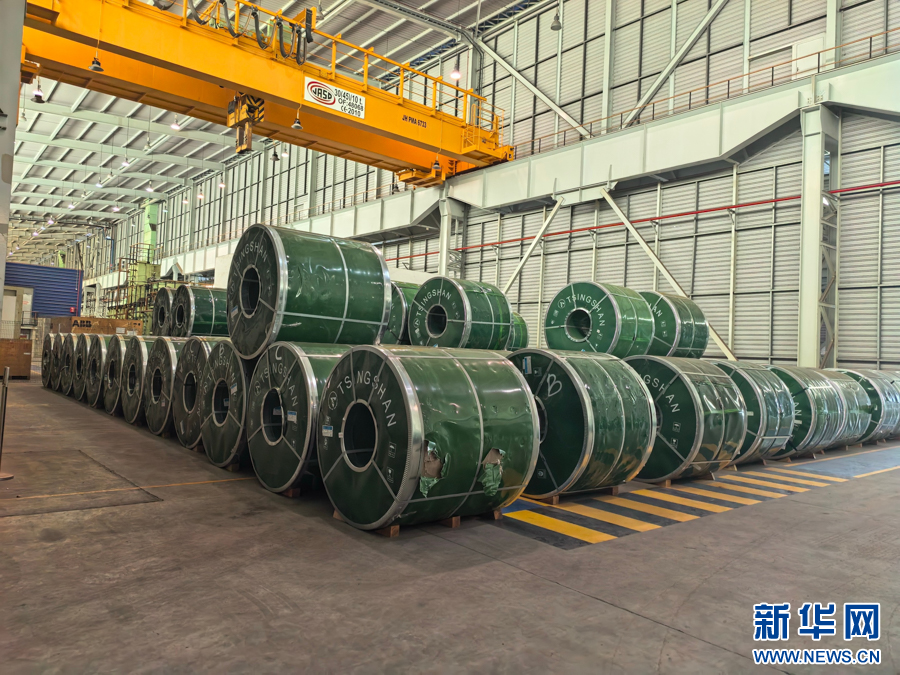
Core Viewpoint - The company, Lanke High-tech (601798), has shown significant growth in revenue and profit, driven by strategic positioning in the oil, petrochemical, and renewable energy sectors, while expanding its international presence and focusing on innovative solutions [1][2][3] Group 1: Financial Performance - For the first half of 2025, the company reported a net profit attributable to shareholders of 20.95 million yuan, with a non-recurring net profit of 15.24 million yuan, marking a turnaround from previous losses [3] - The company's revenue increased by over 20% year-on-year, attributed to product structure optimization, enhanced high-end manufacturing capabilities, and improved cost control [1] Group 2: Strategic Positioning - The company's overall strategic positioning is defined as "one main line, two major markets, and three types of business," focusing on technology innovation, market demand, and lean manufacturing [1] - The two major markets are centered on oil, petrochemical equipment, and renewable energy equipment, while the three types of business encompass products, engineering, and services [1] Group 3: Market Expansion and Projects - The company has established subsidiaries in Saudi Arabia, Dubai, and Morocco, with plans to expand into Brazil, indicating a significant increase in overseas orders [2] - The company won a bid for a 100MW solar thermal energy project in Morocco, continuing to expand its overseas solar thermal business [3] - In the deep-sea equipment sector, the company is focusing on key technologies such as efficient oil and gas water treatment equipment and a 3000-meter deep oil and gas separation system, having signed contracts worth nearly 100 million yuan with CNOOC [2][3] Group 4: Renewable Energy Focus - The company is actively engaged in the renewable energy sector, particularly in molten salt thermal energy storage, participating in major projects like the 100MW Redstone project in South Africa and the 700MW solar thermal + photovoltaic project in Dubai [1] - Ongoing research projects include hydrogen production and liquid hydrogen storage and transportation devices, indicating a commitment to advancing hydrogen energy solutions [2][3]

第二十五届投洽会即将启幕,山东组团赴厦门共绘投资新蓝图
Qi Lu Wan Bao· 2025-09-06 11:37
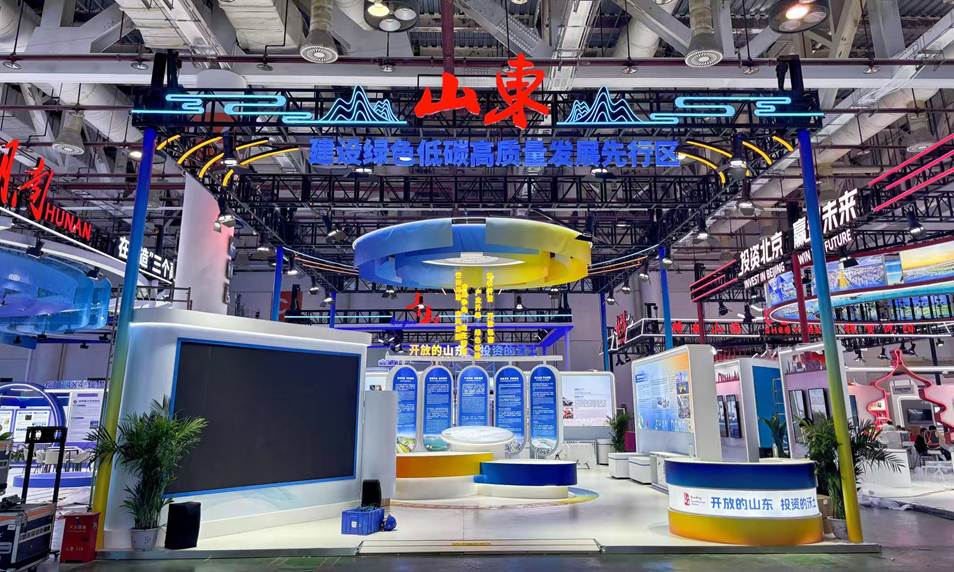
Group 1 - The 25th China International Investment and Trade Fair (CIFIT) will be held in Xiamen, Fujian from September 8 to 11, 2025, focusing on "Investing in China," "Chinese Investment," and "International Investment" [1] - The event will feature approximately 120,000 square meters of exhibition space, over 70 investment-themed activities, and more than 100 specialized roadshows [1] - Shandong will showcase its theme "Open Shandong, Investment Land," highlighting new opportunities for high-quality development [3][4] Group 2 - Shandong's exhibition will combine image and physical displays to present the province's achievements in green, low-carbon, and high-quality development, as well as the potential of key open platforms [4] - A series of key projects will be promoted during the fair, covering ten major industries and infrastructure, with a focus on high-end equipment, new generation information technology, new energy materials, and modern light industry [4] - The Shandong delegation will engage in various activities to connect with international capital, including one-on-one negotiations and site visits with multinational company executives [5] Group 3 - The "Investing in China" section will focus on new productivity projects, while the "Chinese Investment" section will showcase the global layout achievements of Chinese enterprises [7] - Shandong's free trade zone and other platforms will highlight their international cooperation value, especially as a key node in the Belt and Road Initiative [7] - Financial institutions will gather in a dedicated area to provide financial support for Shandong enterprises looking to expand internationally [7] Group 4 - Since the first CIFIT in 1997, Shandong has evolved from seeking investments to selecting partners, reflecting its robust foreign trade and investment environment [8] - The preparations for the 25th CIFIT are nearly complete, with Shandong aiming to showcase its achievements in green transformation and high-end industrial innovation [8] - The event is seen as an opportunity for global investors to share in the development dividends of Shandong [8][9]
内外贸一体化新平台聚势起航:广东优品展9月12日启幕
Sou Hu Cai Jing· 2025-09-06 05:35
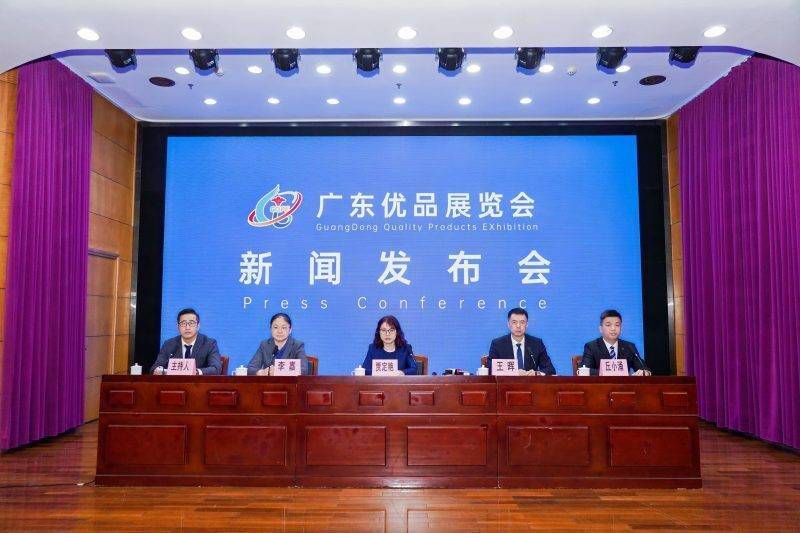
Group 1 - The Guangdong Quality Products Exhibition aims to establish a new platform for integrated domestic and foreign trade, focusing on connecting production and sales for exhibitors [3][6] - The exhibition will adopt a "showcase-sales integration" model to create precise matching scenarios for domestic and foreign buyers, promoting Guangdong's quality manufacturing [3][6] - The event will take place from September 12 to 14 at the Guangzhou Import and Export Fair Complex, featuring five major exhibition areas and over 1,000 exhibitors [9][4] Group 2 - A total of 2,175 professional buyers have been invited, including 1,682 from within the province, 336 from outside, and 157 from overseas, with notable companies like Walmart and Amazon participating [6][9] - The exhibition will feature a "Star Carnival Concert" with six popular artists, enhancing brand exposure through a combination of live performances and product displays [6][7] - Attendees will benefit from special dining vouchers and exclusive discounts during the exhibition, aimed at boosting consumer engagement [10][12] Group 3 - The event is positioned as a practical platform for the "dual circulation" strategy, facilitating the transition of foreign trade products to domestic sales channels [14] - The exhibition is expected to attract over 100,000 professional visitors and consumers, highlighting its significance in promoting Guangdong's manufacturing capabilities [7][9] - The press conference served as both an information release and a confidence-building event, emphasizing the importance of quality and brand in domestic sales [12][14]



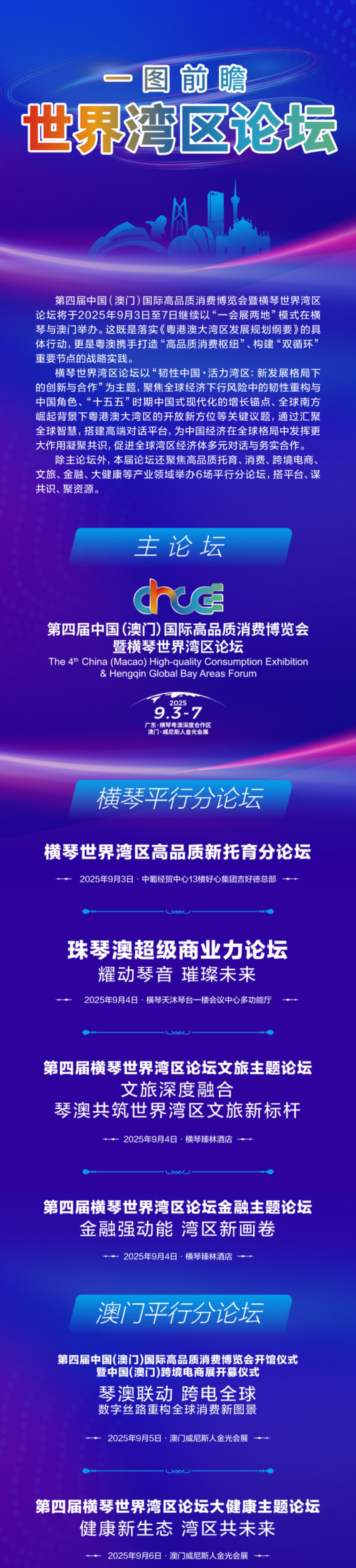
横琴世界湾区论坛将启幕:聚焦五大热点探寻高品质消费新路径
2 1 Shi Ji Jing Ji Bao Dao· 2025-09-02 14:20
Core Insights - The 2025 year marks a critical intersection for China's "14th Five-Year Plan" completion and the planning of the "15th Five-Year Plan," emphasizing the importance of the Guangdong-Hong Kong-Macao Greater Bay Area in driving national and global economic engagement [1][5] - The 4th China (Macao) International High-Quality Consumption Expo and Hengqin Global Bay Areas Forum will focus on themes of resilience and innovation under the new development framework, showcasing the latest achievements and opportunities in the Greater Bay Area [1][5] Group 1: Forum Themes and Objectives - The forum will feature discussions on economic trends, industrial innovation, and consumer segmentation, with insights from five authoritative experts and entrepreneurs [1][2] - Key topics include the growth anchors of Chinese-style modernization, brand transformation in the context of diversified consumer demands, and the role of sports events in regional economic development [2][3] Group 2: Industry Focus and Development - The Greater Bay Area is experiencing a diversified development in high-quality consumption, integrating cultural tourism, cross-border consumption, and innovative industries, which presents new demands for high-quality consumption brands [3] - The forum will also address various sectors through parallel sessions, including high-quality childcare, consumption, cross-border e-commerce, cultural tourism, finance, and health, aiming to build a high-end dialogue platform and gather resources [5]