
智慧养老

Search documents
智慧养老产品如何“叫好又叫座”
Jing Ji Ri Bao· 2025-07-14 22:10
Group 1 - The core viewpoint is that while smart elderly care products are increasingly entering the market, they face challenges in gaining acceptance among the elderly due to usability issues and high costs [1][2] - Smart elderly care products are often perceived as "difficult to use" because they fail to meet the actual needs of the elderly, leading to complex operation and poor user experience [1] - Companies need to focus on the real pain points of the elderly, considering their physiological characteristics, to create practical, easy-to-use, and durable products [1] Group 2 - The high cost of smart elderly care products is a significant barrier to market acceptance, as many elderly individuals are price-sensitive [2] - Companies are exploring ways to break down price barriers, such as offering basic functions to enter the market and then providing value-added services for profitability [2] - Emphasizing the importance of a service loop, companies must ensure that installation, training, and technical support are part of the offering to enhance the overall value of smart elderly care products [2]
构建多层次养老服务体系
Xin Hua Ri Bao· 2025-07-14 22:02
Core Viewpoint - The article emphasizes the importance of effectively addressing China's aging population, which is crucial for national development and the well-being of millions of citizens. It highlights the need for a multi-tiered elderly care service system that aligns with national conditions, addressing both the practical needs of the elderly and the modernization of national governance [1][7]. Group 1: Home and Community Care - There is a pressing need to improve the home and community care service system, as 90% of elderly individuals prefer this mode of care. The current challenges include fragmented services and mismatched supply and demand [2][3]. - The article suggests establishing standardized construction criteria for elderly care facilities, particularly in densely populated areas, integrating preventive health services into the care model [2][3]. Group 2: Institutional Care Development - Institutional care should develop in a layered and categorized manner, balancing basic security and diverse supply. Public institutions must focus on basic care for vulnerable groups, while private sectors can enhance service quality through market mechanisms [3][4]. - The article discusses the need for a unified national rating system for elderly care institutions, linking ratings to financial subsidies and healthcare qualifications [3][4]. Group 3: Rural Elderly Care - The article highlights the urgent need to address the "urban-rural imbalance" in elderly care, as rural areas have a higher proportion of elderly individuals. Innovative models like the "happiness house" combined with healthcare services are being explored in rural settings [4][5]. - It suggests implementing a volunteer service points system in rural areas to encourage community participation in elderly care [4][5]. Group 4: Policy and Talent Support - Strengthening policy support and talent development is essential for sustainable growth in elderly care services. The establishment of a long-term care insurance system is recommended, along with a multi-source funding mechanism [6][7]. - The article advocates for the development of a talent training system for elderly care, inspired by Germany's dual education model, to enhance the quality of care [6][7]. Group 5: Integration of Silver Economy - The integration of the silver economy is seen as a new driving force for the development of the elderly care industry. The article emphasizes the need to create an "elderly care service +" ecosystem, focusing on technology, financial innovation, and industry collaboration [6][7]. - It predicts that the market for aging-related smart devices will exceed 80 billion yuan by 2025, highlighting the potential for growth in this sector [6][7].
5分钟内即可完成,填补相关国际空白 深圳智慧养老评估系统将被全国推广
Shen Zhen Shang Bao· 2025-07-11 16:51
Core Insights - The Ministry of Industry and Information Technology, the Ministry of Civil Affairs, and the National Health Commission jointly released the "Smart Health and Elderly Care Products and Services Promotion Directory (2024 Edition)" [1] - The "Smart Elderly Demand and Comprehensive Ability Assessment System" developed by Shenzhen Second People's Hospital's Dapeng New District Nanao Hospital was successfully included in the elderly ability assessment category, marking a national recognition of the hospital's innovation in smart elderly care [1] Group 1 - The system is based on the original national standard "Assessment Method for Daily Living Ability of Functionally Disabled Persons (Long's Scale)" and innovates traditional assessment methods by using scenario illustrations, allowing non-professionals to complete assessments in just 3 to 5 minutes [1] - The system utilizes a WeChat mini-program to establish an "online assessment + remote management" model, enabling real-time data recording by medical staff and automatic generation of disability level reports [1] - A patient database covering 23 provinces has been established, facilitating data interoperability with community health services, elderly care institutions, and family members, creating a closed-loop management system for assessment, diagnosis, and intervention [1] Group 2 - The system can integrate assessment data into a comprehensive health and elderly care platform, forming a large health and wellness database that uses big data analysis to predict disability risks and allocate resources effectively [2] - For instance, the system can recommend smart pillboxes for hypertensive patients with cognitive impairments to help manage their medication adherence [2] - The hospital has pioneered a government-led, public medical institution model for integrated health and elderly care, creating a 15-minute "Sunset Guardian Circle" that offers 12 services, and has received multiple national and provincial honors [2]
具身智能加速布局养老场景
Jing Ji Guan Cha Wang· 2025-07-11 09:10
Core Insights - The event "Financial Gathering and Intelligent Innovation in Mountain City" highlighted the integration of AI in financial services, particularly in Chongqing's consumer finance sector, showcasing significant advancements in AI applications [1] - The concept of "embodied intelligence" has been recognized as a key driver for industrial transformation and economic development, with government support aiming for substantial progress in financial services by 2027 [1][3] - The aging population in China is creating new opportunities for embodied intelligence, particularly in the elderly care sector, with predictions of a market boom in humanoid robots by 2035 [3][8] Group 1: AI and Financial Services Integration - Chongqing has leveraged its advantages in consumer finance to foster AI innovations across various business segments, including inclusive finance and risk management [1] - The "Embodied Intelligence Ecological Conference" focused on the integration of advanced AI technologies with financial services, particularly in enhancing elderly care financial services [2] - The Chinese government has emphasized the importance of embodied intelligence in its work report, marking it as a core force for driving new economic momentum [1][2] Group 2: Aging Population and Market Opportunities - By the end of 2024, China's elderly population is expected to exceed 300 million, representing 22% of the total population, indicating a shift towards a moderately aging society [3] - The integration of embodied intelligence in elderly care is seen as a critical area for commercial breakthroughs, with institutions and companion robots leading the way [2][3] - The "Smart Elderly Care Technology and Application Development White Paper" highlights the need for a holistic approach to elderly care that combines technology with human empathy [4] Group 3: Policy and Financial Support - Recent policies from the Ministry of Industry and Information Technology and the Ministry of Civil Affairs have laid the groundwork for pilot projects in intelligent elderly care robots, providing a framework for commercial validation [5][6] - Financial institutions in Chongqing are actively supporting technological innovation, enhancing the efficiency of financial resource allocation and credit accessibility [6] - The collaboration between technology and finance is expected to yield significant results, with companies like Ma Shang Consumer Finance leading the development of emotional companion robots for elderly care [6][7] Group 4: Future Challenges and Market Dynamics - The humanoid robot market is projected to reach a trillion-level scale by 2035, but challenges such as standardization and data privacy remain significant hurdles [8] - The acceptance of smart elderly care services is crucial, with a majority of elderly individuals expressing willingness to try family service robots, although budget constraints exist [8] - The path to widespread adoption of embodied intelligence in elderly care may begin with institutional applications before expanding to family settings, necessitating collaboration across the industry [9]
智慧养老技术与应用发展白皮书发布 探索老人情感陪护新模式
Zhong Guo Xin Wen Wang· 2025-07-10 15:47
Core Insights - The first "White Paper on the Development of Smart Elderly Care Technology and Applications" was released, highlighting the critical role of emotional companionship in smart elderly care [1] - Smart elderly care is seen as a key approach to address aging challenges, integrating technology with humanistic care [1] Group 1: Emotional Intelligence Technology - Emotional intelligence technology will deeply apply to alleviate loneliness among the elderly, transitioning from "voice-led" to "multi-modal natural interaction" [2] - Multi-modal models will enable precise recognition of unspoken emotional needs through real-time analysis of various signals [2] Group 2: Proactive Emotional Care - Elderly care platforms will shift from "passive" to "active," enhancing the precision of emotional care by integrating various data types to create personalized profiles [2] - Predictive analytics will allow for early medical care arrangements based on health data and social activity analysis [2] Group 3: Community Integration - Future smart elderly care will focus on building integrated communities, promoting strong connections between the elderly and society [3] - This approach will enable elderly individuals to age in place while actively participating in social life [3] Group 4: Balancing Technology and Human Services - The white paper emphasizes the need to balance technology with human services to ensure genuine emotional care for the elderly [3] - Emotional companionship applications should be combined with professional human services for a complementary service model [3]
智能科技进养老院,护工“变”了
Jing Ji Guan Cha Wang· 2025-07-07 13:02
Core Viewpoint - The increasing demand for smart devices in elderly care facilities is driven by China's aging population and the rise of technology, but there remains a significant gap between the capabilities of these devices and the actual needs of the facilities [2][4]. Group 1: Smart Device Implementation - The introduction of smart monitoring systems has improved the ability to detect health issues among residents, significantly reducing risks compared to traditional methods [3]. - Various smart devices, such as steam-assisted bathing equipment and massage robots, have been integrated into the care process, enhancing the quality of life for residents [3]. - Caregivers initially feared that technology would replace their jobs, but they have come to see these devices as helpful tools that ease their workload [3]. Group 2: Training and Adaptation - The facility has implemented systematic training for caregivers to ensure they can effectively operate new equipment, which has proven beneficial in enhancing their skills [3]. - Despite the investment in training, high turnover rates among caregivers lead to increased training costs, presenting a challenge for the facility [3]. Group 3: Cost Challenges - The high costs of smart devices pose a significant barrier to their widespread adoption in elderly care facilities, with prices for certain equipment reaching tens of thousands of yuan [4][5]. - The facility is cautious in its investments, recognizing that even advanced devices still require human care, making the costs prohibitive [4]. - Smaller facilities face structural challenges due to a lack of resources and funding, making it difficult to adopt smart technologies [4]. Group 4: Future Outlook - The facility is exploring a "rental + service" model to make smart devices more accessible, alongside a proposed tripartite funding mechanism involving government subsidies, corporate donations, and family contributions [5]. - While robots may take over basic caregiving tasks, the emotional connection and companionship provided by caregivers remain irreplaceable aspects of elderly care [5].


多元惠民举措落地:创新模式激活银发消费市场 多措并举提升养老服务质量
Yang Shi Wang· 2025-07-07 08:58
Core Viewpoint - The Ministry of Civil Affairs and the Ministry of Commerce are launching a nationwide "Elderly Service Consumption Season" from July to December, aimed at promoting elderly service consumption and enhancing the quality of life for seniors, while fostering the coordinated development of the elderly care industry [1] Group 1 - The event will encourage local innovations in organizing "Elderly Service Consumption Season" activities, implement old-for-new policies for consumer goods, and streamline subsidy application processes through online and offline methods to better support elderly home modifications [3] - The initiative aims to facilitate the transition from traditional home care to smart elderly care by promoting the replacement of old furniture and the integration of smart home configurations [3] Group 2 - Various market entities are encouraged to introduce diverse products and services catering to the needs of the elderly, including food, housing, transportation, medical care, and recreational activities, to ensure a high-quality life for seniors [5] - Activities such as open days at elderly care institutions and immersive experience spaces in cultural venues and parks will be supported to help seniors better understand available services [5] Group 3 - The Ministry of Civil Affairs supports the use of various funding channels to implement measures like issuing elderly service consumption vouchers, offering discounts, and providing subsidies for meal delivery services [7] - There is an emphasis on optimizing the supply of elderly care services, particularly for disabled seniors, and fostering professional, branded, and chain-based elderly care institutions [7]
“互联网+护理服务”让更多“银发族”受益
Xin Hua She· 2025-07-04 11:25
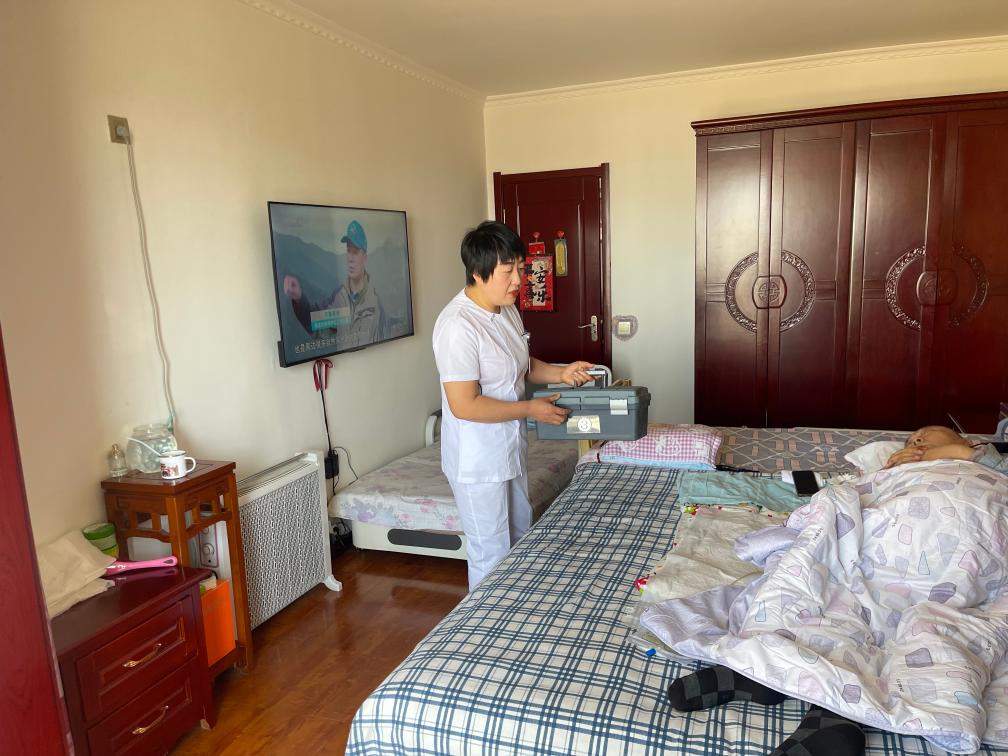
Core Viewpoint - The implementation of "Internet + Nursing Services" in Gansu Province, particularly in Baiyin City, is significantly improving access to quality nursing care for the elderly and patients with mobility issues, allowing them to receive care at home rather than in hospitals [1][4][5]. Group 1: Service Implementation - Baiyin City First People's Hospital has received over 700 orders for "Internet + Nursing Services," allowing patients to submit requests online and receive care from specialized nurses with over five years of clinical experience [4]. - The service includes 23 types of nursing care, such as wound dressing, rehabilitation guidance, and catheter changes, tailored to meet individual patient needs [4]. - The hospital has trained and assessed nurses comprehensively before they can register on the online platform to provide home care services [3]. Group 2: Demographic Context - By the end of 2024, over 310 million people in China will be aged 60 and above, accounting for 22% of the national population, highlighting the growing demand for nursing services [5]. - The aging population is driving the need for innovative solutions like "Internet + Nursing Services" to address challenges in elderly care [5]. Group 3: Broader Adoption - The "Internet + Nursing Services" model is not limited to Baiyin but is also being implemented in other cities in Gansu Province, such as Lanzhou and Jiayuguan, indicating a broader trend across the region [4]. - Since 2019, the National Health Commission has identified several pilot provinces for "Internet + Nursing Services," including major cities like Beijing, Shanghai, and Guangdong, with various services now covered by health insurance [4].
“青春”守护“银发”,00后涌入养老行业
Hu Xiu· 2025-07-03 09:31
Core Viewpoint - The aging industry, once labeled as a "sunset industry," is being redefined by the younger generation, particularly those born in the 2000s, who are bringing new ideas, technologies, and services to the sector, transforming it into a vibrant opportunity rather than a stagnant field [2][9][12]. Group 1: Industry Trends and Developments - In 2023, 29 new undergraduate programs were added to the directory of ordinary higher education institutions, including "Geriatric Medicine and Health" and "Health and Medical Security," indicating a growing recognition of the needs of the aging population [1]. - By the end of 2024, the population aged 60 and above in China is expected to exceed 300 million, marking a significant demographic shift towards a moderately aging society [10]. - The government has introduced policies to address population aging, highlighting the importance of coordinated development in the elderly care industry, which is entering a critical "window" and "golden period" for growth [10][11]. Group 2: Talent Development and Education - The Ministry of Civil Affairs and 12 other departments have issued guidelines to strengthen the talent pool in elderly care services, focusing on attracting, training, and retaining skilled professionals [4]. - As of 2023, there are over 770 higher education programs related to elderly care, with more than 3,300 vocational programs, reflecting a robust educational response to the aging population [4]. Group 3: Opportunities and Challenges - The aging market presents significant opportunities, including the activation of the silver economy and the potential for technological innovation and industry upgrades [11][20]. - Despite the challenges posed by an aging population, such as increased social security burdens and labor productivity issues, the market's potential remains vast, with a pressing need for innovative solutions [11][20]. Group 4: Young Innovators in the Industry - Young professionals in the elderly care sector are leveraging innovative approaches, such as AI-assisted products and new media strategies, to enhance the quality of care and engagement for the elderly [22][25]. - The experiences of young individuals entering the field highlight a shift in perception, as they aim to create meaningful connections and improve the lives of older adults through empathy and creativity [22][24]. Group 5: Future Outlook - The development of the elderly care industry is ongoing, with a focus on long-term growth and sustainability, as emphasized by young professionals who view their entry into the field as the beginning of significant change [26][27].
★两部门:力推智能养老服务机器人结对攻关与场景应用试点
Zhong Guo Zheng Quan Bao· 2025-07-03 01:56
Core Viewpoint - The Ministry of Industry and Information Technology and the Ministry of Civil Affairs of China have jointly issued a notice to initiate pilot projects for intelligent elderly care service robots from 2025 to 2027, aiming to enhance the quality of life for the elderly and alleviate the pressure on family caregiving [1][2]. Group 1: Pilot Project Implementation - The pilot will focus on three main areas: collaborative research, scenario application verification, and the establishment of standards and evaluation systems [1][2]. - The collaborative research will target home, community, and institutional elderly care services, addressing issues such as care for the disabled and elderly, emotional support, health promotion, and daily living assistance [1][2]. Group 2: Application Verification - The application verification process will require a minimum of 200 home applications and at least 20 community or institutional applications, with a verification period of no less than six months [2]. - The goal is to iteratively upgrade products based on real-world application feedback [2]. Group 3: Standards and Evaluation - The notice encourages the development of standards for intelligent elderly care service robots, focusing on safety, reliability, and suitability for the elderly [2][3]. - The standards will be based on the physiological and psychological characteristics of the elderly, guiding the design and development of these robots [3]. Group 4: Collaborative Applications - Companies, universities, research institutions, and third-party elderly care service organizations are encouraged to form consortia to apply for the pilot projects [3]. - The Ministry of Industry and Information Technology and the Ministry of Civil Affairs will evaluate and select pilot projects based on their ability to address key challenges in elderly care [3]. Group 5: Global Context - The World Health Organization projects that by 2050, the global population aged 60 and above will reach 2.1 billion, highlighting the growing demand for elderly care solutions [3]. - An international standard for elderly care robots has been established, which will guide the design, manufacturing, testing, and certification of these products globally [3].
