
AI陪伴机器人

Search documents
中国银发经济市场调研报告2026:新老人·新渠道·新品类-解数咨询
解数咨询· 2026-03-31 06:35
Investment Rating - The report does not explicitly state an investment rating for the industry Core Insights - The policy focus has shifted from addressing shortcomings to promoting consumption and nurturing main players, with a dense rollout of policies for the silver economy from 2024 to 2026, encouraging e-commerce platforms to optimize the "elderly model" [6] - The "new elderly" born in the 1960s are becoming the main force in upgrading silver consumption, enjoying the benefits of economic reforms with an average annual income of 47,000 yuan, high education levels, and strong digital literacy, shifting their consumption mindset from survival to quality [6] - Short videos and live streaming have become the core entry points for silver consumption, with 75% of elderly consumers impulsively buying due to phrases like "free experience" and "limited-time benefits"; the Douyin grandparents topic has accumulated over 10 billion views, with nearly 70% of young viewers [6] - Traditional nutritional brands are capturing the market through strong channel strategies, with Qili Xiang becoming a top player in Douyin's traditional nutritional products by combining high-cost performance products (average price 50-100 yuan) with 2,847 influencers and 18,000 self-broadcasts [6] - Three major sectors are experiencing explosive growth: smart health monitoring, AI companion robots, and food-medicine probiotics, with products evolving from "technology for the elderly" to "emotional understanding of the elderly" [6] Summary by Sections Research Background Assessment - The research is conducted by Jieshu Consulting, a recognized institution in e-commerce big data analysis, serving over 300 brands and institutions in the consumer goods sector [4] - The report is based on data from the National Bureau of Statistics, Qianwen platform, and Douyin platform, covering the period from 2015 to 2024, with some data updated to February 2026 [4] Scope and Boundaries Confirmation - The report focuses on the silver economy, analyzing traditional nutritional supplements, smart health products, food-medicine probiotics, and AI companion robots [5] - The geographical focus is on mainland China, primarily analyzing online e-commerce channels such as Douyin and instant retail [5] - The target user group is the "new elderly" aged 60 and above, particularly those born in the 1960s, as well as their children who are indirect consumers [5] Key Data Capture and Presentation - By the end of 2024, the number of internet users aged 60 and above is expected to reach 156 million [8] - The average annual income of urban elderly individuals is 47,000 yuan, which is roughly on par with the national average [8] - The proportion of elderly individuals living independently has risen to 53% [8] - The Douyin grandparents topic has garnered over 10 billion views, with young viewers making up nearly 70% of the audience [8] - 75% of elderly consumers have made impulsive purchases due to promotional tactics [8] - Qili Xiang collaborated with 2,847 influencers and conducted 18,000 self-broadcasts on Douyin [8] - 21% of quality-leading consumers contribute to 74% of online consumption [8]
华源晨会精粹20260326-20260326
Hua Yuan Zheng Quan· 2026-03-26 11:26
Group 1: Robotics - Woan Robotics (06600.HK) - The company achieved revenue of 900 million yuan in 2025, a year-on-year increase of 48%, with a gross profit of 490 million yuan, up 54%, resulting in a gross margin of 54%, an increase of 2.3 percentage points year-on-year [2][8] - The global market strategy has shown significant results, with revenue growth in core markets such as Germany, which saw a 108.9% increase [9] - The product lines, including enhanced execution robots and AI solutions, have all experienced high growth, validating the sustainability of core category growth [9][10] Group 2: Utilities - China Resources Power (00836.HK) - The company reported a net profit of 14.519 billion HKD in 2025, a slight increase of 0.9% compared to 2024, with core business profit rising by 9.9% [14][15] - The growth in 2025 was primarily driven by a decline in coal prices and new power generation units, despite a decrease in renewable energy performance due to accounting changes [15] - The company plans to add 5.45 million kilowatts of wind and solar capacity in 2026, focusing on comprehensive energy services as a new growth engine [18] Group 3: Food and Beverage - Nongfu Spring (09633.HK) - The company achieved total revenue of 52.553 billion yuan in 2025, a year-on-year increase of 22.51%, with a net profit of 15.868 billion yuan, up 30.89% [21][22] - The tea beverage segment has become the largest revenue source, with a 29% increase in revenue to 21.6 billion yuan, accounting for 41.1% of total revenue [22][23] - The packaging water business has shown a strong recovery, with revenue increasing by 17.3% to 18.71 billion yuan, demonstrating the company's robust brand and channel capabilities [22][23] Group 4: North Exchange - Audiwei (920491.BJ) - The company reported revenue of 683 million yuan in 2025, an 11% year-on-year increase, with a net profit of 94.03 million yuan, up 7% [25][26] - The sensor business revenue grew by 20% due to increased applications in smart homes and enhanced collaboration with automotive manufacturers [26][27] - The company has initiated the construction of a high-performance sensor R&D base in Guangzhou, aiming to enhance its technological capabilities [27] Group 5: North Exchange - Xingtux Control (920116.BJ) - The company achieved revenue of 321 million yuan in 2025, an 11% increase, with a net profit of 100.83 million yuan, up 19% [30][31] - The commercial aerospace sector saw a 62% revenue increase, driven by the expansion of services to mainstream commercial satellite companies [31][32] - The company plans to build an AI-enabled space cloud product system to meet the growing demand for low-orbit internet constellations [33] Group 6: North Exchange - Lechuang Technology (920425.BJ) - The company is focused on the adhesive control system market, with expected revenue of 123 million yuan in 2025, a 58% year-on-year increase, and a net profit of 33.69 million yuan, up 100% [38][39] - The company is expanding its applications in AI glasses and power batteries, enhancing its market share in the adhesive control system sector [39][40] - The overall market for adhesive machines in China is projected to grow significantly, with a CAGR of 18% from 2025 to 2029 [37]


卧安机器人(06600):“一脑多形”构建家庭通用具身智能底座全球化战略进入收获期
Hua Yuan Zheng Quan· 2026-03-26 08:42
Investment Rating - The investment rating for the company is "Buy" (maintained) [5] Core Views - The company is building a universal embodied intelligence platform for households with its "One Brain, Multiple Forms" strategy, and is entering a harvest period for its globalization strategy [5] - The company achieved significant revenue growth in key markets, with Japan, Europe, and North America contributing to a total revenue of 900.56 million RMB in 2025, representing a year-on-year growth of 48% [7] - The company's gross margin improved by 2.3 percentage points in 2025, driven by a focus on high-value new products and effective cost optimization measures [7] Financial Forecasts - Revenue projections for the company are as follows: 1,504 million RMB in 2026, 2,083 million RMB in 2027, and 2,790 million RMB in 2028, with year-on-year growth rates of 67.0%, 38.4%, and 34.0% respectively [6][8] - The company is expected to achieve a net profit of 7.61 million RMB in 2026, with a significant increase in profitability projected in subsequent years [6][8] - The price-to-sales (P/S) ratios for the company are projected to be 15, 11, and 8 for the years 2026, 2027, and 2028 respectively [6]
一文读懂卧安机器人:10W2026周报
CAITONG SECURITIES· 2026-03-10 04:25
Company Overview - The company, Woan Robotics, is a global provider of home robot systems, focusing on markets in Japan, Europe, and North America, and aims to build an ecosystem centered around smart home robot products[4]. - Woan Robotics ranks first among global home robot system providers with a market share of approximately 11.9%[25]. Market Growth - The global home robot industry is projected to grow from RMB 2.133 billion in 2022 to RMB 2.577 billion in 2024, with a compound annual growth rate (CAGR) of 9.9%[29]. - The market size for home robot systems is expected to increase from RMB 22 billion in 2022 to RMB 59 billion in 2024, achieving a CAGR of 63.7%[29]. Product and Revenue Insights - The company's product matrix includes enhanced execution robots and perception decision systems, with revenue from enhanced execution robots expected to reach RMB 32 billion by 2024, growing at a CAGR of 57.0%[30]. - The perception and decision systems market is anticipated to grow to RMB 23 billion by 2024, with a CAGR of 75.7%[30]. Regional Market Dynamics - The U.S. home robot market is projected to grow at a staggering CAGR of 101.2% from 2024 to 2029, driven by strong consumer purchasing power and recognition of automation[31]. - Japan's market for home robot systems is expected to reach RMB 149 billion by 2029, with a CAGR of 52.8% from 2024 to 2029[31]. Competitive Advantages - The company benefits from a robust R&D team, with 43% of its workforce dedicated to research and development, enabling continuous innovation and product optimization[25]. - Woan Robotics has established a comprehensive global sales network, entering over 90 countries and regions, with more than 2,000 offline stores[26].
AI时代电子年货走红,智能硬件成春节新宠,科技产品将取代常规伴手礼 | 乐购新春
Xin Lang Cai Jing· 2026-02-19 06:34
Group 1 - The core viewpoint of the article highlights the increasing popularity of smart hardware during the Spring Festival shopping season, indicating a shift in consumer preferences towards innovative AI products [1] - In Shenzhen's INNO100 global innovation flagship store, many parents are bringing their children to experience various interesting AI products, showcasing a growing market for family-oriented technology [1] - The AI companion robots are reported to be the most popular items among children, leading to the highest sales in the store, reflecting strong consumer demand for interactive and engaging technology [1]

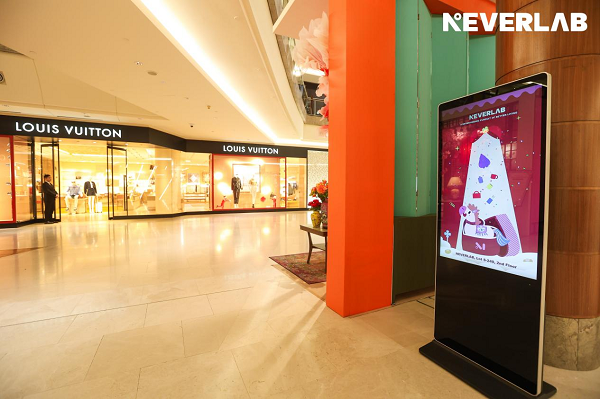
NEVERLAB海外首店亮相吉隆坡The Gardens Mall,情绪陪伴科技零售开启东南亚新布局
Sou Hu Wang· 2026-02-18 02:40
Core Insights - NEVERLAB has officially entered the Malaysian market with its first overseas store at The Gardens Mall, marking a significant step in its global expansion strategy focused on "emotional healing technology retail" [1] - The brand aims to enhance user emotional experiences through its offline retail spaces, with AI toys as its initial core products, and plans to expand its product matrix to include AI pets and companion robots [3] Market Trends - Southeast Asia is experiencing a structural upgrade in lifestyle consumption, with a shift in consumer demand from functional to experience-oriented and emotional value-driven products [5] - In Malaysia, there is a growing acceptance of technology products with emotional interaction capabilities, indicating a trend towards companion-type tech products becoming a significant segment in consumer electronics [5] Global Expansion Strategy - NEVERLAB has established a presence in key international markets, including the USA, Dominican Republic, Qatar, UAE, Saudi Arabia, Kazakhstan, Uzbekistan, and Russia, while also expanding its network in China with over 100 store signings [7] - The brand's recent Asia-Pacific strategy conference resulted in over 30 new global partnerships, with a cumulative signing amount exceeding 100 million RMB, laying a solid foundation for its next phase of global growth [7] Industry Context - The ongoing high-level opening up of China and the deepening of international cooperation under the "Belt and Road" initiative are facilitating the transition of Chinese tech brands from "product export" to "brand and technology capability export" [9] - Brands with AI product development capabilities, global supply chain integration, and localized operational abilities are expected to become significant players in the global consumer market [9] Strategic Development Goals - NEVERLAB has incorporated a "ten-thousand store goal" into its annual development plan, focusing on coordinated layouts in domestic and overseas markets [11] - The brand's growth model and potential have attracted attention from top investment institutions, indicating a steady progression in its capitalization process [11] Competitive Landscape - As consumer technology continues to merge with lifestyle consumption, brands that possess both tech product capabilities and retail channel strengths are likely to reshape the competitive landscape in the global consumer market [13] - Malaysia has been chosen as the location for NEVERLAB's first overseas store due to its open market, multicultural environment, and strategic regional hub value [13] Future Directions - With the official operation of its first overseas store, NEVERLAB is advancing its global market layout, focusing on product innovation, technological capability development, and global channel network expansion [15]

以数据见证专业:QYResearch 2026年01月行业数据引用案例精选集合
QYResearch· 2026-01-30 09:50
Group 1 - QYResearch is recognized for its authoritative industry analysis and customized reports, widely cited by numerous domestic and international enterprises, securities firms, and media [2] - The global laser communication terminal market is projected to surge to $2.948 billion by 2031, with a compound annual growth rate (CAGR) of 45.0% from 2025 to 2031 [5] - The global hot runner market report indicates that Hengdao Technology's market share was only 2.07% in 2022, ranking sixth in the industry, which contradicts other public information [8] Group 2 - The near-space travel market in China is expected to reach $894 million by 2032, with a CAGR of 13.6% from 2026 to 2032 [10] - The USB bridge chip market report shows that Qinheng Microelectronics is ranked ninth globally and first domestically in sales revenue for 2024 [12] - The global multi-fingered dexterous robot hand market is forecasted to exceed $5 billion by 2030, with a CAGR of 64.6% from 2024 to 2030 [15] Group 3 - The global repair equipment market is expected to grow from $3.7 billion in 2024 to $8.49 billion by 2030, with a CAGR of 13.8% [17] - The mild hyperbaric oxygen chamber market is projected to reach $321.83 million by 2030, with a CAGR of 14.88% from 2024 to 2030 [20] - The medical low-value consumables market is expected to grow at a CAGR of 8.3% from 2024 to 2031, driven by an aging population and rising chronic disease rates [22] Group 4 - The low-temperature dairy products market is anticipated to exceed 70 billion yuan by 2025, with QYResearch highlighting Junlebao's strategic positioning in this sector [25] - The global drone market is projected to grow significantly, with consumer drones contributing approximately 35% of market revenue in 2024 [28] - The semiconductor metrology and inspection market is expected to reach $27.76 billion by 2030, with a CAGR of 8.1% from 2024 to 2030 [29] Group 5 - The gallium arsenide solar cell market is expected to see significant growth, with over 95% of space equipment powered by these cells [31][43] - The wireless charging chip market is projected to rank first domestically and among the top three globally in 2023 and 2024 [44] - The global algae oil DHA market is expected to grow from $604 million in 2024 to $1.377 billion by 2031, with a CAGR of 12.7% [48]

TCL电子(1070.HK):与索尼战略合作优势互补 强化全球领导地位
Ge Long Hui· 2026-01-22 05:44
Core Viewpoint - TCL Electronics has signed a memorandum of understanding with Sony for strategic cooperation in the home entertainment sector, aiming to establish a joint venture to enhance its global market position and product offerings [1][2]. Group 1: Strategic Cooperation - The memorandum involves forming a joint venture where TCL will hold 51% and Sony 49%, focusing on integrated operations for products like televisions and home audio systems [1]. - This partnership is expected to strengthen TCL's brand recognition in the high-end television market by leveraging Sony's technology and branding [1]. Group 2: Financial Performance - TCL Electronics forecasts an adjusted net profit of approximately HKD 23.3 billion to HKD 25.7 billion for 2025, representing a year-on-year growth of 45% to 60% [1][2]. - The profit growth is driven by product structure optimization and improved operational efficiency, particularly in the high-margin Mini LED television segment, which saw a global shipment increase of 153.3% [2]. Group 3: Market Trends and Policies - The continuation of the "trade-in" policy for home appliances in 2026 is expected to benefit TCL, promoting the sales of Mini LED backlight products and enhancing profit margins [2]. - TCL is deepening its localized operations overseas, establishing production and R&D systems in North America, Europe, and emerging markets to mitigate tariff risks [2]. Group 4: Innovation and Future Outlook - The company is actively advancing its AI initiatives, including the launch of AI glasses and the development of AI companion robots, indicating a strong focus on smart technology [3]. - Profit forecasts for 2025-2027 have been revised upward, with expected net profits of HKD 24.5 billion, HKD 29.9 billion, and HKD 33.8 billion respectively, reflecting a positive outlook on operational improvements [3].
再论消费重塑-AI-的-从1到10
2026-01-21 02:57
Summary of Conference Call Records Industry and Company Overview - The conference call discusses various sectors including AR technology, cross-border e-commerce, online travel agencies (OTA), human resources, the pork industry, rubber market, home appliances, and the food and beverage sector. Key Points and Arguments AR and E-commerce - 康耐特 (Kangnate) collaborates with 歌尔光学 (Goer) to expand AR business, expecting a net profit growth of over 30% by 2025 due to supply chain synergy [1] - 小商品城 (Small Commodity City) and other companies have made progress in AI-enhanced cross-border e-commerce, with Yiwu market's export growth projected at around 25% and store order growth exceeding 30% [1][2] Online Travel Agencies (OTA) - AI technology significantly improves efficiency in OTA platforms, with 携程 (Ctrip) resolving 80% of inquiries through AI customer service, leading to lower commission rates [3][4] - The overall commission rate for domestic OTAs is currently half that of international giants [4] Human Resources - AI has automated recruitment processes, reducing hiring cycles from 45 days to 15 days, enhancing job matching accuracy [4] Pork Industry - Current pork prices have risen to approximately 13 RMB per kilogram, with expectations to stabilize around 12 RMB post-holiday, indicating a potential bottoming out of prices [6] Rubber Market - The rubber market shows signs of recovery with inventory levels normalizing; future price increases are anticipated if production can meet demand by December 2025 [7] Home Appliances - AI technology is creating new product categories in home appliances, such as AI glasses and 3D printing devices, which have long-term growth potential [8][9] - Major companies like 美的 (Midea) and 海尔 (Haier) are recommended for their strong market positions and potential for increased overseas market share [10] Food and Beverage Sector - The restaurant supply chain is performing well, with a focus on companies with strong pricing power and B2B customization, such as 颐海国际 (Yihai International) and 千禾味业 (Qianhe Flavoring) [11] - In the snack sector, companies like 盐津铺子 (Yanjinpuzi) and 卫龙 (Weilong) are highlighted for their strong performance and market strategies [12] Liquor Industry - The liquor sector is expected to see a rebound due to limited stock price declines and potential for short-term recovery, with a focus on mid-tier brands like 金水源 (Jinshuiyuan) and 迎驾贡 (Yingjiagong) [13] Additional Important Insights - The policy environment is favorable for service consumption, with extended holiday periods expected to boost sectors like tourism and retail [5] - Investment opportunities may arise from mergers and acquisitions, as well as emerging consumer markets such as trendy toys and sports [5]
TCL电子:与索尼战略合作优势互补,强化全球领导地位-20260121
HTSC· 2026-01-21 02:50
Investment Rating - The report maintains a "Buy" rating for TCL Electronics [8] Core Views - TCL Electronics has signed a memorandum of understanding with Sony for strategic cooperation in the home entertainment sector, which is expected to enhance its global market position [2][3] - The company anticipates adjusted net profit for 2025 to be between HKD 2.33 billion and HKD 2.57 billion, representing a year-on-year growth of approximately 45% to 60%, exceeding the upper limit of its equity plan target of 45% growth [1][3] - The company is benefiting from a "globalization" and "mid-to-high-end" strategy, leading to steady increases in international market share, alongside advantages from domestic policies promoting product upgrades [1][4] Summary by Sections Strategic Cooperation - TCL Electronics plans to establish a joint venture with Sony, where TCL will hold 51% and Sony 49%, to manage integrated operations for products including televisions and home audio systems globally [2] - This partnership is expected to enhance TCL's brand recognition in the high-end television market and leverage its scale and industrial advantages to strengthen competitiveness in the display industry [2] Financial Performance - The company has reported a profit upgrade, with expected adjusted net profit for 2025 reaching HKD 2.45 billion, driven by product structure optimization and improved operational efficiency, particularly in high-margin Mini LED televisions [3][6] - Mini LED TV global shipments increased by 153.3% year-on-year, with shipments of televisions sized 65 inches and above growing by 25.8% [3] Market Policies and Trends - The continuation of the "old-for-new" appliance policy in 2026 is expected to benefit TCL Electronics, promoting sales of Mini LED backlit products and optimizing profit margins [4] - The company is enhancing its overseas localization efforts by establishing production and R&D systems in North America, Europe, and emerging markets, effectively reducing tariff risks [5] Future Outlook - The report projects an increase in net profit for 2025-2027 to HKD 2.45 billion, HKD 2.99 billion, and HKD 3.38 billion respectively, with corresponding EPS of HKD 0.97, HKD 1.18, and HKD 1.34 [6][12] - The target price for TCL Electronics has been raised to HKD 14.16, based on a 12x PE for 2026, reflecting the company's strong global brand and product competitiveness [6]