
医疗AI

Search documents
不插管、不麻醉、零痛苦!达摩院AI靠一张CT让早期胃癌现形
Hua Er Jie Jian Wen· 2025-06-25 09:14
Core Insights - The GRAPE AI model developed by Zhejiang Cancer Hospital and Alibaba DAMO Academy represents a significant advancement in gastric cancer screening, utilizing routine abdominal CT scans for large-scale early detection [1][2][3] Industry Context - Gastric cancer poses a severe public health challenge in China, with approximately 358,700 new cases and 260,400 deaths annually, accounting for nearly 40% of global gastric cancer fatalities [3] - The early diagnosis rate in China is critically low, with over 70% of patients diagnosed at advanced stages, contrasting sharply with countries like Japan and South Korea, where early detection rates are significantly higher due to nationwide screening programs [3] Market Opportunity - There is a pressing need for a non-invasive, cost-effective, and high-precision risk stratification tool in gastric cancer screening, as existing methods like endoscopy face significant barriers including invasiveness, resource dependency, and low efficiency [4][5][6] - GRAPE aims to fill this market gap by serving as an efficient "filter" to identify high-risk individuals for targeted endoscopic examination, thereby improving the overall efficiency of the screening system [6] Technological Innovation - The GRAPE model utilizes a two-stage deep learning framework based on the nnU-Net architecture, which enhances both performance and interpretability, allowing radiologists to validate AI outputs [8][9] - The model has demonstrated superior performance in detecting early gastric cancer compared to human experts, with an area under the curve (AUC) of 0.92 and a sensitivity improvement of 21.8% [12] Commercialization Strategy - The commercialization of GRAPE may involve multiple pathways, including B2B sales to health checkup organizations, B2B2C models for hospitals, OEM partnerships with imaging device manufacturers, and future explorations into value-based healthcare [16][18] - The potential for GRAPE to significantly improve gastric cancer detection rates and patient survival in China is promising, contingent on successful large-scale validation and clear reimbursement pathways [16][17]


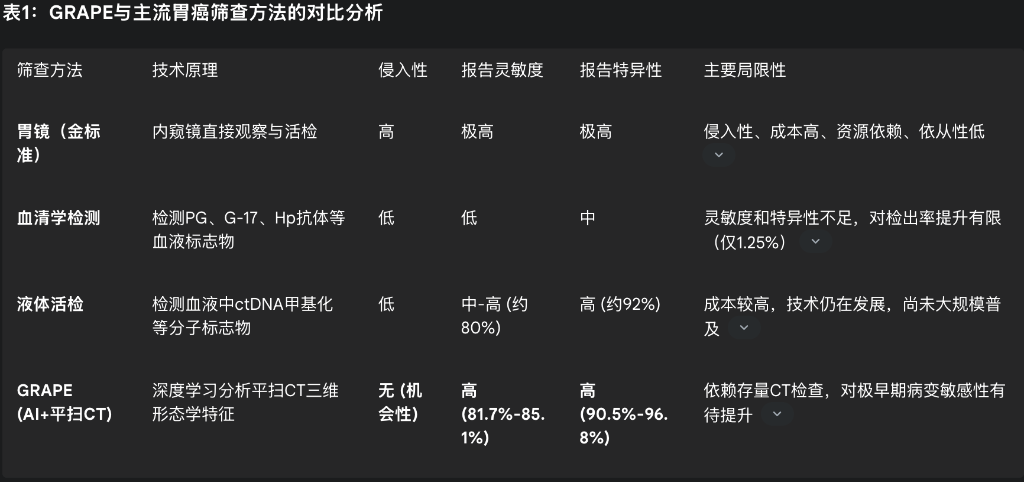
这个AI能救命!提前6个月发现胃癌病灶,突破医学影像认知,达摩院做成了
量子位· 2025-06-25 05:00
Core Viewpoint - The article discusses the groundbreaking AI model DAMO GRAPE, which utilizes plain CT scans to detect early-stage gastric cancer, potentially identifying it up to six months before symptoms appear [2][3][5]. Group 1: AI Model Development - DAMO GRAPE is the world's first AI model that identifies early gastric cancer using non-enhanced CT scans, overcoming traditional imaging limitations [4][6]. - The model was validated through a large-scale clinical study involving nearly 100,000 individuals across 20 centers, showing significant potential to improve gastric cancer detection rates [5][6]. - The sensitivity and specificity of DAMO GRAPE are reported at 85.1% and 96.8%, respectively, which represent increases of 21.8% and 14.0% compared to human radiologists [19][20]. Group 2: Clinical Application and Impact - The model is set to be implemented in large-scale gastric cancer screening initiatives in provinces such as Zhejiang and Anhui [7][27]. - In simulated screening trials, the "plain CT + AI" model achieved a gastric cancer detection rate of up to 24.5%, with approximately 40% of detected patients being asymptomatic [28][29]. - The model provides a new pathway for gastric cancer screening, filling a significant gap in clinical practices where traditional methods have low compliance and effectiveness [12][13][26]. Group 3: Broader Implications and Future Directions - The success of DAMO GRAPE follows previous achievements in cancer detection, such as the DAMO PANDA model for pancreatic cancer, showcasing the potential of AI in medical diagnostics [32][41]. - The article emphasizes the importance of AI in transforming healthcare by extracting valuable insights from routine data, which can lead to more effective and efficient cancer screening processes [54][55]. - Future plans include exploring multi-disease detection capabilities through a single CT scan, aiming to revolutionize the traditional cancer screening approach [55].
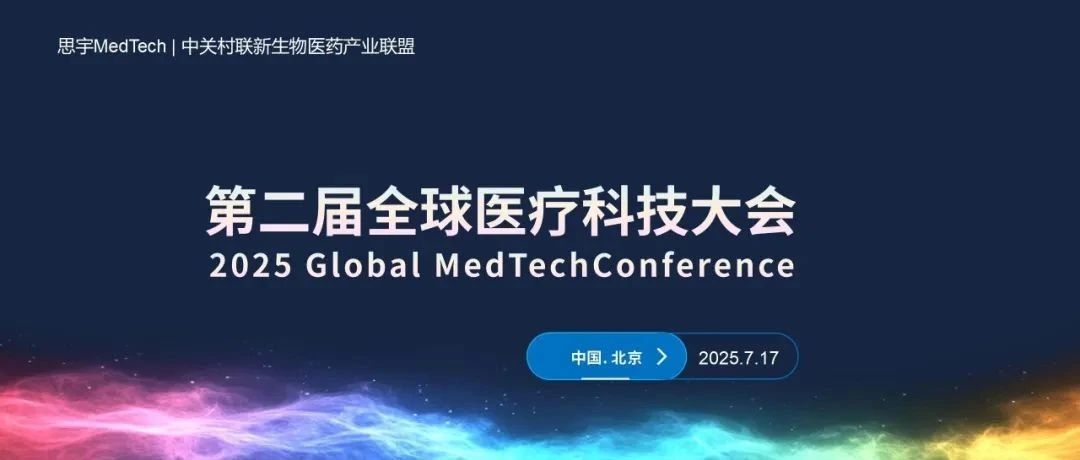
展位有限!第二届全球医疗科技大会招商进行中
思宇MedTech· 2025-06-20 11:17
Core Viewpoint - The article highlights the upcoming Second Global Medical Technology Conference organized by Suyu MedTech, scheduled for July 17, 2025, in Beijing, focusing on "Cutting-edge Technology: From R&D to Clinical Application" [1][6]. Conference Overview - The conference will take place at the Zhongguancun Exhibition Center in Haidian District, Beijing [6]. - The event is expected to attract approximately 500 participants from various sectors, including government, hospitals, leading enterprises, startups, investment institutions, and research institutes [8]. - A significant awards ceremony will showcase and honor global medical technology innovations on the main stage [8]. Key Topics of Discussion - The conference will address several critical topics, including: - AI and intelligent systems [7] - Challenges in the implementation of medical AI and large models [9] - Upgrades in imaging equipment and platforms [10] - Innovations in high-value consumables and interventional techniques [11] - Energy platforms and intraoperative devices [12] - Innovations in materials and structural optimization [13] Roundtable Discussions - A roundtable discussion will focus on how innovative products can effectively enter clinical settings and be utilized [14]. Registration Information - Interested parties can register for the conference by copying the provided link or scanning the QR code [15].
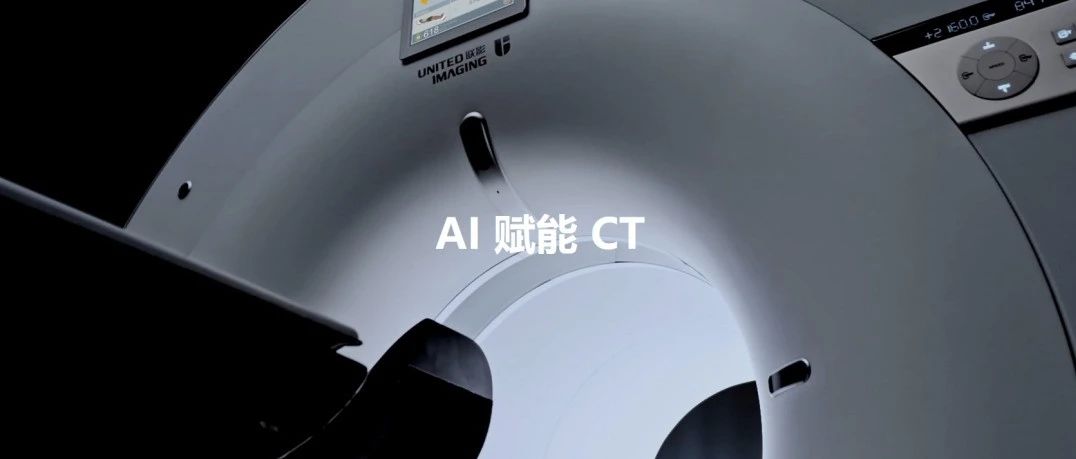
10亿融资!联影加码医疗AI赌局
思宇MedTech· 2025-06-20 06:36
Core Viewpoint - The article discusses the strategic advancements and challenges faced by Shanghai United Imaging Healthcare Co., Ltd. (United Imaging) in the field of AI-driven medical technology, emphasizing its recent A-round financing and the broader implications for the medical AI industry [1][3]. Financing Insights - United Imaging successfully completed an A-round financing of 1 billion RMB, marking a significant investment in AI technology despite the current market's conservative sentiment [1][3]. - This financing reflects a long-term strategic commitment from United Imaging and its investors, recognizing AI capabilities as a core competitive advantage [3]. AI Development Strategy - Founded in late 2017, United Imaging has focused on embedding AI into clinical settings, starting with diagnostic tools and expanding to over 100 products across various medical fields [4][7]. - The company has achieved significant regulatory milestones, including 22 NMPA Class II certifications and 12 Class III certifications, along with FDA and CE approvals for several applications [4]. Business Model Challenges - Despite rapid product development, United Imaging reported revenues of 254 million RMB and a loss of 136 million RMB in 2023, highlighting the ongoing struggle to establish a clear commercial model in the medical AI sector [11][12]. - Key challenges include hospitals' reluctance to pay for software, especially in a cost-controlled environment, and the need for comprehensive solutions that address multiple disease types rather than single-function products [12][13]. Technological Innovations - United Imaging is developing a multi-modal AI platform, uAI, which integrates various data types to enhance clinical workflows and improve diagnostic accuracy [14][17]. - The company aims to create a "smart ecosystem" where AI acts as a self-evolving system, enhancing efficiency across all hospital processes [18][20]. Future Outlook - The medical AI industry is shifting from a focus on model parameters to ecosystem strength, with United Imaging positioning itself as a platform company rather than a tool provider [22][23]. - The company faces high costs associated with continuous model iteration and the integration of AI into clinical settings, but its comprehensive approach may provide a sustainable competitive edge in the long term [24][25].

展位有限!第二届全球医疗科技大会招商进行中
思宇MedTech· 2025-06-19 10:19
Core Viewpoint - The second Global Medical Technology Conference organized by Suyu MedTech will take place on July 17, 2025, in Beijing, focusing on "Cutting-edge Technology: From R&D to Clinical Application" [1][6]. Group 1: Conference Overview - The conference will be held at the Zhongguancun Exhibition Center in Haidian District, Beijing [6]. - The expected attendance is approximately 500 participants, including representatives from government, hospitals, leading enterprises, startups, investment institutions, and research institutes [8]. - The agenda will feature discussions on product innovation, technology implementation, and collaboration between medicine and engineering [6][8]. Group 2: Key Topics of Discussion - The conference will emphasize the challenges of implementing medical AI and large models, including multi-modal data integration and embedding solutions into doctors' workflows [9]. - Topics will also cover advancements in imaging equipment, high-value consumables, energy platforms, and material innovations [10][11][12][13]. - A roundtable discussion will focus on how innovative products can effectively enter clinical settings and be utilized [14]. Group 3: Participation and Opportunities - Companies interested in participating can secure exhibition space, which offers branding exposure and business collaboration opportunities [1]. - Registration methods include a link for online registration and a QR code for easy access [15].
北水抄底、几何级增长可期!一脉阳光打造医疗资源不均“破局样本”
Sou Hu Cai Jing· 2025-06-11 09:43
Core Viewpoint - The company, Yimai Sunshine (02522.HK), is experiencing significant trading volume and is committed to long-term value amidst policy support for tiered medical care and AI technology reshaping the healthcare landscape [1][2]. Group 1: Company Overview - Yimai Sunshine has redefined the development path of third-party medical imaging centers in China through a "shared model" and has established a strong competitive moat [1][2]. - The company aims to have over 100 imaging centers nationwide by 2025, covering over 500 institutions and 16 provinces, with a daily addition of 20,000 to 30,000 standardized data cases [2][5]. - The company has developed a significant medical imaging database, being one of the largest in China in terms of data volume and growth rate [2][5]. Group 2: Strategic Partnerships and Innovations - Yimai Sunshine has partnered with Huawei Cloud to enhance AI imaging capabilities, launching the world's first full-modal, full-process medical imaging base model [3]. - Collaborations with various healthcare institutions aim to accelerate the commercialization of AI products and establish Yimai Sunshine as a key player in medical AI [3]. Group 3: Growth Strategies - The company has identified four core growth paths: upgrading thinking, transforming flagship centers, maintaining hospital cooperation value, and penetrating overseas markets [4]. - Yimai Sunshine is exploring new operational models for flagship imaging centers to enhance market penetration and profitability [4]. Group 4: Financial Performance - The company's gross margin increased from 35.8% for the year ending December 31, 2023, to 36.5% for the year ending December 31, 2024, driven by high-margin differentiated products and services [5]. - The company aims to add 1,000 new partners in the future through tiered services and rapid user expansion [5]. Group 5: Addressing Healthcare Challenges - Recent government policies emphasize the sharing of quality medical resources and the promotion of a distributed examination and centralized diagnosis model, which aligns with Yimai Sunshine's operational strategy [6][7]. - The company has implemented a model in Jiangxi that integrates high-end imaging equipment across various medical institutions, facilitating real-time diagnosis by city-level experts [6][7]. Group 6: Market Expansion and Future Outlook - Yimai Sunshine's acquisition of Changsha Zhongya Medical Imaging Diagnosis Co., Ltd. is a strategic move to expand its regional market and build a collaborative network with top hospitals [7]. - The company aims for geometric revenue growth in the next 3-5 years, leveraging accumulated medical imaging data to unlock commercial value [7].
平安好医生品牌焕新!重磅发布年度医健服务名片
Nan Fang Du Shi Bao· 2025-06-10 09:29
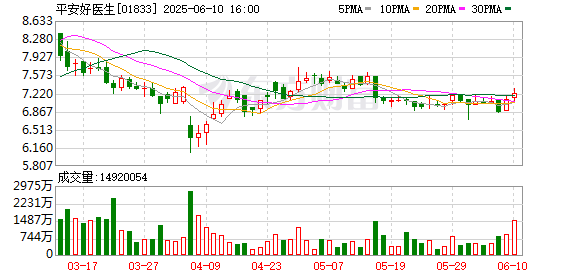
Core Insights - The conference, hosted by Ping An Group and organized by Ping An Good Doctor, highlighted the company's ongoing strategy of integrating "comprehensive finance + healthcare and elderly care" to enhance its healthcare network [1][4] - Ping An Good Doctor aims to provide a seamless healthcare experience through its upgraded brand and service offerings, focusing on user-centric healthcare management [2][9] Group 1: Company Strategy and Developments - Ping An Group's co-CEO Guo Xiaotao emphasized the integration of quality resources to build a flagship internet healthcare platform and self-operated medical institutions, marking significant progress in constructing a health network [1] - The company has established a comprehensive service network, connecting approximately 50,000 doctors across 29 departments, 105,000 health service providers, 235,000 pharmacies, and 4,000 hospitals [2] Group 2: Service Offerings - The newly launched annual healthcare service card includes "Family Doctor Proactive Care," "Expert Access," and "Comprehensive Medical Management," aimed at providing efficient and high-quality healthcare services [3][4] - The "Family Doctor Proactive Care" service offers 24/7 case analysis and support for users with chronic conditions, while "Expert Access" allows for direct video consultations with over 3,000 experts [3] Group 3: Technological Integration - The company is leveraging advanced technologies, including AI and data analytics, to enhance its healthcare services, aligning with national policies promoting high-quality healthcare development [6][7] - The introduction of the "7+N+1" AI medical product matrix aims to provide comprehensive support for users, integrating both human and machine capabilities in healthcare delivery [7] Group 4: Future Directions - Ping An Good Doctor plans to collaborate with the National Cancer Quality Control Center to establish MDT treatment standards, focusing on AI-enabled evidence-based medicine for improved healthcare outcomes [8] - The company is committed to enhancing user satisfaction and industry recognition through continuous service upgrades in the financial and healthcare sectors [9]

有医院为AI投入近千万元 头部医院仍在观望医疗AI大模型
news flash· 2025-06-08 11:13
Core Insights - The medical AI large models have become a popular area for hospitals to invest in during the first half of this year [1] - Major hospitals, including Shanghai Zhongshan, Ruijin, and Renji, have publicly launched AI models for various diseases such as cardiovascular, pathology, and urology [1] - The majority of funding for these AI medical models comes from local government procurement projects rather than from the hospitals themselves [1] Industry Developments - Leading hospitals are actively developing AI models, indicating a growing trend in the healthcare sector [1] - The investment in AI medical models is significant, with some local governments allocating budgets of up to 10 million RMB for procurement [1] - The application potential of AI medical models has been demonstrated in specialized fields like pathology, although challenges remain in deploying more general large language models (LLMs) [1]
当消费遇上AI|有医院已投入近千万元预算!谁在为AI医疗大模型买单
Di Yi Cai Jing· 2025-06-08 10:09
Core Insights - The deployment of AI large models in hospitals is gaining traction, but actual spending is limited to a small number of leading hospitals, with many still in a wait-and-see mode [1][3][13] - Local governments are often the primary funders for AI medical model procurement, with significant budgets allocated for these projects [1][10][12] Group 1: AI Medical Models Deployment - Major hospitals like Shanghai Zhongshan, Ruijin, and Renji have launched AI models for various medical fields, but the number of hospitals actually investing in these models remains low [1][3] - The AI medical model one-stop machines, which integrate software and hardware, are priced between hundreds of thousands to millions of RMB, with high costs associated with GPU servers [3][4] - Many hospitals that have purchased these one-stop machines are not fully utilizing them due to performance limitations and the complexity of AI integration into existing systems [3][4][8] Group 2: Market Dynamics and Collaborations - The market for AI large models in healthcare is projected to exceed 1.1 billion RMB by 2025, indicating strong interest from hospitals [6] - Collaborations between hospitals and tech companies, such as Ant Group and Huawei, are crucial for developing specialized AI models, with successful implementations reported in pathology and other fields [6][7] - Hospitals are increasingly looking for tailored solutions that can enhance operational efficiency and patient care, with a focus on specialized disease models [14][15] Group 3: Procurement Trends - Recent procurement activities show that hospitals are beginning to invest in AI models, with several contracts exceeding 1 million RMB for AI-related services [10][11] - Local governments are actively promoting the deployment of AI medical models, with significant procurement budgets announced in regions like Jiangsu and Shanghai [12][13] - The trend indicates a shift towards more standardized AI solutions, particularly for smaller hospitals that may benefit from the efficiencies offered by AI [8][13]
多家公募提示信创主题ETF投资风险;又有QDII基金增聘境外投资顾问丨天赐良基早参
Mei Ri Jing Ji Xin Wen· 2025-06-06 01:03
Group 1 - The total dividend amount of public funds in 2023 has reached 88.9 billion yuan, which is 1.4 times that of the same period last year, marking a three-year high with over 2,500 distributions [1] - Equity funds are increasingly distributing dividends, with ETFs being prominent in the distribution rankings, such as Huaxia CSI 300 ETF with 2.683 billion yuan and Jiashi CSI 300 ETF with 2.435 billion yuan [1] - Several ETFs have also exceeded 1 billion yuan in dividend distributions this year, including E Fund CSI 300 ETF and Southern CSI 500 ETF [1] Group 2 - Penghua Fund has appointed Italian firm Eurizon Capital as an overseas investment advisor for its global high-yield bond fund and US real estate fund, enhancing service for investors [2] - Eurizon Capital, a shareholder of Penghua Fund, had an asset management scale of 390.5 billion euros as of September last year, operating in 25 countries [2] - The trend of QDII funds hiring experienced overseas advisors is growing, with many having over 15 years of industry experience [2] Group 3 - Dongfanghong Asset Management announced the early closure of its core value mixed fund, which is the first floating fee rate fund in the market, with a planned fundraising cap of 2 billion yuan [3][4] - The fund was subscribed with 10 million yuan of the company's own capital [3] Group 4 - Several public funds, including Fuguo Fund and Guotai Fund, have warned investors about risks associated with the recent volatility in the information technology innovation theme ETFs, which have seen a significant increase in scale [5] - As of June 3, the total scale of seven innovation theme ETFs reached 2.544 billion yuan, up over 110% from 1.188 billion yuan on May 23 [5] Group 5 - The Hong Kong innovative drug sector has gained significant attention, with the Hang Seng Hong Kong Stock Connect Innovative Drug Select Index rising over 51% year-to-date [6] - Multiple innovative drug and healthcare ETFs have also seen year-to-date increases exceeding 40%, outperforming gold stock ETFs which rose 36% [7] Group 6 - Investment opportunities in the medical AI sector are concentrated in three main areas: AI drug development, AI in medical diagnostics and treatment, and the production and application of medical data [8] - The application of AI in drug development is expected to enhance efficiency, with several AI-selected drugs entering clinical validation [8] Group 7 - On June 5, the market experienced a rebound, with the Shanghai Composite Index rising 0.23% and the Shenzhen Component Index increasing by 0.58% [9] - The total trading volume in the Shanghai and Shenzhen markets reached 1.29 trillion yuan, an increase of 137.4 billion yuan from the previous trading day [9] - The information technology sector led the gains, with the information technology ETF rising by 3.98% [9]