
生物制造

Search documents
安徽企业突破秸秆制糖成本瓶颈 非粮生物制造万亿级赛道迎来黄金发展期
Xin Hua Wang· 2026-01-09 12:22
Core Viewpoint - Anhui Province is accelerating the construction of a green closed loop in the biomanufacturing industry, transitioning from "straw resource utilization" to "material decarbonization," driven by technological breakthroughs and industry chain collaboration [1][2]. Policy Guidance - The State Council's implementation opinions aim to promote the widespread application of biotechnology in new materials, construction, energy, and environmental protection, focusing on biobased material substitution and low-carbon conversion [2]. - Various regions are formulating biomanufacturing industry plans and policies to optimize the industrial environment, with Anhui's biomanufacturing cluster expected to exceed 30 billion yuan in output value by 2026 [2]. Technological Breakthroughs - Biomanufacturing is transitioning from "natural extraction" to "life programming," with the industry expected to enter a golden development period during the 14th Five-Year Plan, driven by national strategy, technological advancements, and market demand [3]. Innovations in Biomanufacturing - Anhui Fengyuan Biotechnology Co., Ltd. has developed a second-generation biomanufacturing technology using straw as raw material, achieving high conversion rates and significant cost advantages [4][5]. - The technology allows for the production of 1 ton of mixed sugar from 3 tons of straw, with a cellulose hydrolysis rate exceeding 90% and a cost of mixed sugar not exceeding 1,000 yuan per ton, significantly lower than corn-based glucose production [4]. Industry Implementation - The "distributed factory" model is activating the county economy, with projects in Shandong and Anhui demonstrating a closed-loop industrial chain from straw processing to biobased materials and energy [6]. - Fengyuan Group is establishing modular projects across multiple provinces, creating a complete industrial chain from agricultural waste collection to biobased product production [6]. Ecological Closure - Anhui Province aims to transform straw from agricultural waste into a "green carbon source," reducing reliance on food resources and promoting green agriculture through high-value byproducts [7]. - The technology addresses the challenges of the polylactic acid market, which faces issues such as small scale and insufficient policy support [7]. Recommendations for Development - Experts suggest implementing a comprehensive ban on plastic in Anhui, promoting biobased materials in government and educational institutions, and establishing a "green procurement list" [8][9]. - Strengthening policy and financial support for straw sugar projects and encouraging the listing of key biomanufacturing enterprises to broaden financing channels [8][9]. Market Expansion - Encouraging the use of polylactic acid composite materials in automotive and construction sectors, and promoting biobased products through events and e-commerce platforms [9]. - The establishment of a biobased materials innovation laboratory in Zhejiang marks a significant step in digital research and development in the field, providing a model for Anhui [9].
万联晨会-20260109
Wanlian Securities· 2026-01-09 09:49
Market Overview - The A-share market experienced narrow fluctuations, with the Shanghai Composite Index closing down 0.07% at 4082.98 points, the Shenzhen Component Index down 0.51%, and the ChiNext Index down 0.82% [1][7] - The total trading volume in the Shanghai and Shenzhen markets was 2.80 trillion yuan [1][7] - In terms of industry performance, sectors such as military, media, and construction decoration led the gains, while non-bank financials, non-ferrous metals, and telecommunications lagged [1][7] - Concept sectors saw increases in domestic aircraft carriers, military information technology, and terahertz technology, while cobalt, nickel, and rare earth permanent magnets declined [1][7] Important News - China Petroleum & Chemical Corporation and China Aviation Oil announced a restructuring, approved by the State Council, aimed at leveraging advantages in refining integration and aviation fuel supply systems to reduce costs and promote high-quality development of the industry chain [2][8] - Guangzhou has introduced a plan to accelerate the cultivation of five strategic leading industries: artificial intelligence, semiconductors and integrated circuits, new energy and new energy storage, low-altitude economy and aerospace, and biomanufacturing [2][8]
股指期货将偏强震荡,白银、铂、钯、镍期货将宽幅震荡铜、铝、氧化铝、锡、螺纹钢、铁矿石、焦煤将偏弱震荡,多晶硅、玻璃、纯碱期货将震荡偏弱
Guo Tai Jun An Qi Huo· 2026-01-09 05:16
Report Industry Investment Rating There is no information provided regarding the report industry investment rating in the given content. Core Viewpoints of the Report - Through macro - fundamental and technical analysis, the report predicts the trends, resistance levels, and support levels of various futures contracts on January 9, 2026, and for the month of January 2026 [2][5]. - It also provides the performance of these futures contracts on January 8, 2026, including opening prices, closing prices, price changes, and key support and resistance levels [12][32][40] etc. - The report includes macro - economic news, such as statements from government officials, economic data releases, and geopolitical events, which may impact the futures market [6][7][8]. Summary by Related Catalogs Futures Market Outlook - **January 9, 2026 Outlook**: - **Stock Index Futures**: Expected to be strongly volatile. For example, IF2603 has resistance at 4753 and 4786 points, and support at 4708 and 4690 points [2]. - **Precious Metals**: Gold (AU2602) is expected to be strongly volatile; silver (AG2604), platinum (PT2606), and palladium (PD2606) are expected to have wide - range fluctuations [2]. - **Base Metals**: Copper (CU2602), aluminum (AL2602), alumina (AO2605), and tin (SN2602) are expected to be weakly volatile; nickel (NI2602) is expected to have wide - range fluctuations [2]. - **Other Commodities**: Polysilicon (PS2605), glass (FG605), and soda ash (SA605) are expected to be weakly volatile; lithium carbonate (LC2605) is expected to be strongly and widely volatile; rebar (RB2605), hot - rolled coil (HC2605), iron ore (I2605), and coking coal (JM2605) are expected to be weakly volatile [2][4]. - **January 2026 Outlook**: - Stock index futures' main continuous contracts are expected to be strongly volatile [5][17]. - Gold, silver, copper, and aluminum futures' main continuous contracts are expected to be strongly volatile and may reach new highs [5]. - Polysilicon futures' main continuous contract is expected to be weakly volatile [5]. Macro - economic News - **Domestic News**: The Ministry of Commerce will assess Meta's acquisition of Manus; the Ministry of Finance welcomes LSEG's cooperation; Guangzhou plans to develop advanced manufacturing industries [6]. - **International News**: Trump promotes sanctions against Russia; the US may manage Venezuela's oil industry; the US Supreme Court will rule on tariff legality; the US may exit 66 international organizations; the US is expected to cut interest rates; the US economic data shows GDP growth, inflation, and unemployment trends [6][7][8]. Futures Market Performance on January 8, 2026 - **Stock Index Futures**: IF2603, IH2603, and IC2603 had different trends, with some facing downward pressure and others having limited upward space [12][13][14]. - **Precious Metals**: Gold (AU2602) had a slight decline; silver, platinum, and palladium also showed downward trends [32][40][45]. - **Base Metals**: Copper, aluminum, and nickel futures had significant declines [52][58][68]. - **Other Commodities**: Polysilicon futures hit the daily limit down; coking coal futures had a significant increase; glass and soda ash futures had different trends [79][102][106].
中泰期货晨会纪要-20260109
Zhong Tai Qi Huo· 2026-01-09 01:37
1. Report Industry Investment Rating No relevant content provided. 2. Core Views of the Report - Based on fundamental analysis, the report provides trend judgments for various futures products including trend空头, 震荡偏空, 震荡, 震荡偏多, and 趋势多头 [2]. - Based on quantitative indicators, it also gives trend judgments of偏空, 震荡, and 偏多 for different products [4]. - In the macro - financial sector, for stock index futures, it is recommended to consider following the trend; for treasury bond futures, the strategy is to flatten the yield curve [11][12]. - In the black sector, steel products may have a mid - term oscillating trend, and it is suggested to hold short positions in iron ore at high levels or short at highs; for coking coal and coke, the prices may oscillate and rise in the short - term; for ferroalloys, silicon iron may fluctuate after a sharp decline, and manganese silicon is bearish in the medium - term; for soda ash, it is advisable to wait and see, while for glass, it is recommended to hold long positions or partially realize profits at high levels [14][16][17][18]. - In the non - ferrous and new materials sector, lithium carbonate prices may oscillate strongly in the short - term; industrial silicon is expected to be weak, and it is advisable to consider shorting at highs or selling out - of - the - money call options; for polysilicon, it is necessary to operate cautiously as the downward adjustment of premium may not be over [20][21][22]. - In the agricultural products sector, cotton may decline in the short - term; sugar is in a season of both supply and demand, and it is recommended to trade in the low - value range; for eggs, the near - term contracts have limited upside, while the far - term contracts in the second quarter are supported by expectations; apples may be strong on the futures market; corn may oscillate strongly in the short - term; jujubes are expected to oscillate; for live pigs, the spot price may decline in the middle and late January, and it is advisable to be bearish on the futures main contract at high levels [24][26][28][30][32][34]. - In the energy and chemical sector, crude oil prices may oscillate without new events; fuel oil prices will follow crude oil prices; polyolefins are expected to be weak in the supply - demand aspect and should be treated with an oscillating view; rubber may oscillate, and it is advisable to look for short - term long opportunities on pullbacks; methanol's fundamentals are improving in the long - term, and long positions in far - month contracts can be considered gradually; caustic soda futures should be treated with a wide - range oscillating view; asphalt prices may fluctuate more greatly in the short - term, and the focus is on the price bottom after the winter storage game; for the polyester industry chain, it is advisable to consider the positive spread between May and September contracts of PX and PTA; for liquefied petroleum gas, there is support but limited upward space; pulp is advisable to wait and see; logs are expected to oscillate; urea futures may oscillate weakly [36][37][38][39][40][41][43][44][45][46]. 3. Summary by Relevant Catalogs 3.1 Macro Information - Two major energy central enterprises, Sinopec Group and China National Aviation Fuel Group, are officially reorganized, aiming to reduce costs and promote high - quality development of the industrial chain [6]. - Gold has become the world's largest reserve asset for the first time in 30 years, with the value of overseas official gold reserves reaching $3.93 trillion, exceeding that of US Treasury bonds [6]. - US President Trump agrees to promote a bill to strengthen sanctions against Russia. China's Foreign Ministry Spokesperson Mao Ning states that normal Sino - Russian economic and trade cooperation should not be interfered with [6]. - Guangzhou formulates a plan to build an advanced manufacturing powerhouse, accelerating the cultivation of strategic leading industries and emerging pillar industries [6]. - The market supervision department约谈 the China Photovoltaic Industry Association and six polysilicon leading enterprises to prevent monopoly [7]. - Four ministries including the Ministry of Industry and Information Technology call for regulating the power and energy storage battery industry to prevent over - capacity [7]. - TSMC raises the price of 3nm chips and suspends new 3nm projects due to full orders [7]. - Trump expects the US to "manage" Venezuela and increase the military budget from $1 trillion to $1.5 trillion in fiscal year 2027 [7]. - The US Supreme Court will rule on the legality of Trump's tariff policy. If the Trump administration loses, importers may demand a refund of about $150 billion in tariffs [8]. - The US Treasury Secretary hopes to lower interest rates, and a Fed governor expects a 150 - basis - point rate cut in 2026, which may create about one million jobs without causing inflation [8]. - The US Congressional Budget Office predicts that the US GDP growth rate will accelerate to 2.2% in 2026, with a PCE inflation rate of 2.7% in 2026 and 2.1% in 2028, and the unemployment rate will drop to 4.6% in 2026 and 4.4% in 2028, and the Fed interest rate will drop to 3.4% in Q4 2026 [8]. - In October 2025, the US trade deficit narrowed by 39% month - on - month to $29.4 billion, with exports increasing by 2.6% and imports decreasing by 3.2% [8]. - The number of initial jobless claims in the US last week rose to 208,000, slightly lower than expected, and the number of layoffs in December last year was 35,553, the lowest in 17 months [9]. - Ukraine and the US are close to finalizing a bilateral security agreement [9]. - Crude oil prices rose due to geopolitical tensions in Iran and Venezuela, with the US crude oil main contract rising 4.3% to $58.4 per barrel and Brent crude rising 4.57% to $62.7 per barrel [9]. 3.2 Macro - Finance 3.2.1 Stock Index Futures - The A - share market had a narrow - range consolidation, with the Shanghai Composite Index down 0.07% but still having 15 consecutive positive lines, the Shenzhen Component Index down 0.51%, and the ChiNext Index down 0.82%. The market turnover was 2.83 trillion yuan. The margin trading balance in the A - share market reached 2604.7 billion yuan, a record high [11]. - The manufacturing, non - manufacturing, and composite PMIs in December were all in the expansion range, indicating an overall improvement in China's economic climate. The stock index continued to rise with increasing volume, but there may be a possibility of rhythm adjustment [11]. 3.2.2 Treasury Bond Futures - The money market tightened, and the bond market rebounded due to the slowdown of the stock index's rise and the sharp correction of commodities. The central bank's policy showed a retreat trend in terms of monetary policy, but the bond market was still optimistic [12]. 3.3 Black Sector 3.3.1 Steel and Iron Ore - From a policy perspective, there is less interference in the steel industry, and the production - side policy interference is low. In terms of fundamentals, the demand for building materials is weak, while the demand for coils is good. The supply of steel mills has a low possibility of negative feedback in the short - term, and inventory is accumulating. The valuation of the steel futures is reasonable [14]. - The demand for iron ore has support for winter replenishment, but the supply is high, showing a loose supply - demand situation. Steel products may oscillate in the medium - term, and it is advisable to hold short positions in iron ore at high levels or short at highs [14][15]. 3.3.2 Coking Coal and Coke - The prices of coking coal and coke may oscillate and rise in the short - term, but are restricted by factors such as coal production, safety supervision, and downstream winter storage. In the medium - term, the domestic mine start - up rate has a theoretical upper limit, and there are potential negative feedback risks in the short - term [16]. 3.3.3 Ferroalloys - The prices of silicon iron and manganese silicon fell sharply. Silicon iron may fluctuate after the sharp decline, and manganese silicon is bearish in the medium - term. The decline is due to the increase in hedging by manufacturers and the departure of long - position funds [17]. 3.3.4 Soda Ash and Glass - Soda ash is relatively weak, and the supply is at a high level. It is advisable to wait and see. Glass is relatively strong, and it is recommended to hold long positions or partially realize profits at high levels. The key is to pay attention to the new production capacity of soda ash and the cold - repair of glass production lines [18]. 3.4 Non - ferrous and New Materials 3.4.1 Lithium Carbonate - In the short - term, the price may oscillate strongly. Although the demand in January decreased, the actual demand is still strong, and the inventory is starting to accumulate, but the accumulation range is limited [20]. 3.4.2 Industrial Silicon - It is expected to be weak due to the planned production cuts of downstream polysilicon manufacturers, and it is advisable to consider shorting at highs or selling out - of - the - money call options [21]. 3.4.3 Polysilicon - The downward adjustment of premium may not be over. After the market supervision department's约谈, the market is worried about changes in the industrial pattern. The spot price may still be supported by the production cuts of large manufacturers [22]. 3.5 Agricultural Products 3.5.1 Cotton - In the short - term, it may decline due to factors such as poor export data, technical pressure, and profit - taking. In the long - term, the supply may decrease, which is beneficial to the price. Currently, the supply is relatively loose, and attention should be paid to pre - holiday replenishment and the decline of pre - holiday production [24][25]. 3.5.2 Sugar - It is in a season of both supply and demand. Globally, there is an oversupply of sugar, but the domestic market has cost support and pre - holiday demand. It is recommended to trade in the low - value range [26][27]. 3.5.3 Eggs - The spot price is in the pre - holiday seasonal increase stage, driving the near - term futures contracts to be strong, but the supply - demand pattern is still loose, and the upside is limited. The far - term contracts in the second quarter are supported by expectations [28][29]. 3.5.4 Apples - The futures market may be strong. Currently, the apple market has limited transactions in the production areas and slow sales in the sales areas. The key is to pay attention to the price changes in the sales areas [30]. 3.5.5 Corn - In the short - term, it may oscillate strongly. The key is the farmers' selling sentiment. Before the Spring Festival, the probability of a "panic - selling" is low, and the price is likely to oscillate within a range [30][31]. 3.5.6 Jujubes - It is expected to oscillate. The prices in the production and sales areas are stable, and the key is to pay attention to the sales performance in the peak consumption season [32][33]. 3.5.7 Live Pigs - The consumption in the first half of January lacks significant improvement, and the spot price may decline in the middle and late January. It is advisable to be bearish on the futures main contract at high levels [34]. 3.6 Energy and Chemical Sector 3.6.1 Crude Oil - The market is concerned about the political situation in Iran and Venezuela. Although OPEC has suspended production resumption in the first quarter, the probability of future production increase is high. Without new events, the price may oscillate [36]. 3.6.2 Fuel Oil - The price is affected by geopolitical and macro - economic factors and will follow the trend of crude oil prices. The supply - demand situation has marginally improved, but there is no strong driving force [37]. 3.6.3 Polyolefins - The supply pressure is large, and the downstream demand is weak. Although the upstream production enterprises are suffering losses, which may provide some support, there is no strong driving force for a large increase. It is advisable to treat it with an oscillating view [38]. 3.6.4 Rubber - It may oscillate. The overseas raw material prices are strong, providing cost support. There is no obvious supply - demand contradiction, and attention should be paid to international situations and domestic policies [39]. 3.6.5 Methanol - The long - term supply - demand pattern is improving, and the inventory may continue to decrease. Although there is a possibility of inventory accumulation at the end of the month, the far - month contracts can be considered for long positions gradually [40]. 3.6.6 Caustic Soda - It follows the general trend of the commodity futures market, and its own fundamentals are weak. The cost has decreased, and the futures price should be treated with a wide - range oscillating view [41]. 3.6.7 Asphalt - The price may fluctuate more greatly in the short - term due to raw material factors. The focus is on the price bottom after the winter storage game. The raw material uncertainty has decreased, and the pricing method is worthy of attention [41][42]. 3.6.8 Polyester Industry Chain - In the short - term, the price follows the cost. It is advisable to consider the positive spread between May and September contracts of PX and PTA. PX has profit support, PTA's supply may increase, and ethylene glycol and short - fiber are under pressure [43]. 3.6.9 Liquefied Petroleum Gas - There is support from import costs, but the upward space is limited. The supply in the Middle East is relatively tight, but the global supply is abundant. The winter demand is strong, but the chemical industry is under pressure [44]. 3.6.10 Pulp - The spot market trading sentiment is weak, and the futures price faces hedging pressure. The fundamentals are stable, and the price has support from overseas markets. It is advisable to wait and see [45]. 3.6.11 Logs - The fundamentals are weakly oscillating, and the spot price is stable. The supply and demand are expected to be weakly balanced, and the futures price is expected to oscillate [45]. 3.6.12 Urea - The spot market trading is weak, and the futures price may oscillate weakly. The Indian urea tender has not met the procurement expectations [46].
商务部回应审查Meta收购Manus;特朗普再次就骚乱事件对伊朗发出威胁;委内瑞拉成立高级别委员会推动马杜罗夫妇获释|早报
Di Yi Cai Jing· 2026-01-09 00:22
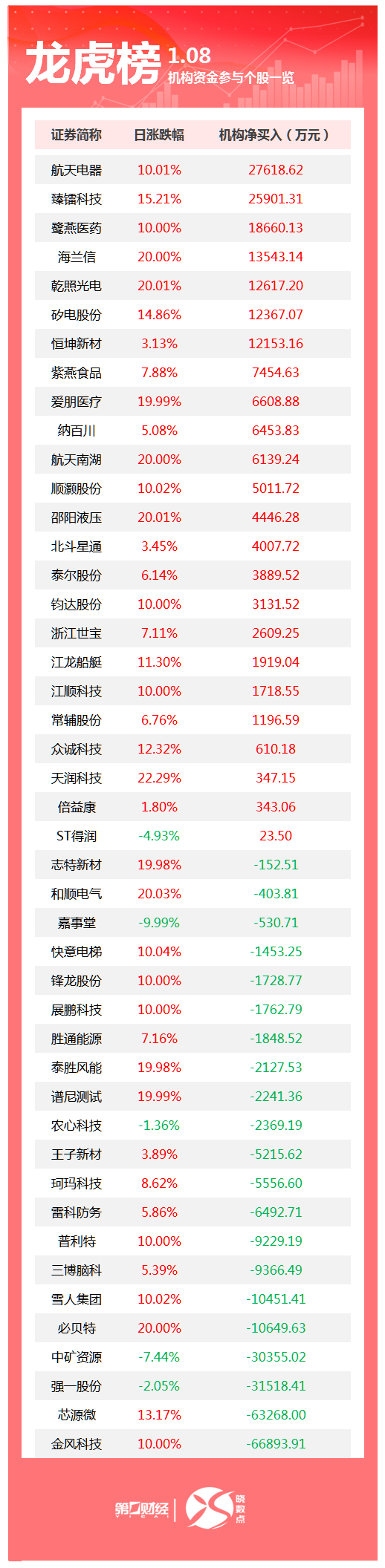
Group 1 - The Ministry of Commerce of China supports enterprises in conducting cross-border operations and international technology cooperation in accordance with laws and regulations [1] - The Ministry will assess the consistency of Meta's acquisition of Manus with relevant laws and regulations regarding export control and foreign investment [1] Group 2 - The U.S. President Trump has threatened Iran with severe consequences if there are further deaths related to the ongoing unrest [2] - The Venezuelan National Assembly announced the formation of a high-level committee to push for the release of President Maduro and his wife [3] Group 3 - The Ministry of Commerce of China reaffirmed its commitment to deepen economic and trade relations with Venezuela, despite external pressures [4] - The Ministry supports the integration of Hong Kong and Hainan for coordinated development within the national strategy [5] Group 4 - Multiple departments in China reiterated the need to regulate the competition order in the power and energy storage battery industry to avoid irrational competition [6] - The Ministry of Education plans to launch a new round of "Double First Class" university construction in 2026, focusing on optimizing higher education structure [7] Group 5 - Guangzhou's government has issued a plan to accelerate the development of five strategic leading industries, including artificial intelligence and new energy [8] - Jiangxi Province is promoting the "Ying Shan Hong Action" to support technology companies in planning for public listings by 2027 [9] Group 6 - Chongqing has opened applications for the remaining budget of the 2025 automobile replacement subsidy, amounting to 59.6 million yuan [10] - Guizhou Province is implementing policies to support the development of county economies and enhance industrial quality [11] Group 7 - The film "Zootopia 2" has extended its release until February 25, 2026, with a cumulative box office exceeding 4.261 billion yuan [12] Group 8 - The United Nations has warned that the U.S. may lose its voting rights in the General Assembly if it continues to delay payment of dues [13] - The U.S. Vice President stated that Venezuela can only sell its oil if it aligns with U.S. interests [14] Group 9 - The Venezuelan Foreign Minister reiterated the commitment to deepen economic cooperation with China, emphasizing the legal framework supporting bilateral relations [15] - The Venezuelan government is advancing a legislative agenda focused on economic development and sovereignty protection [16] Group 10 - Ukraine's President announced that a bilateral security assurance document with the U.S. is ready for finalization [17] - Iran's Foreign Minister stated that Iran is prepared to respond to any situation while emphasizing a desire for negotiations based on mutual respect [18] Group 11 - The Fukushima nuclear power plant issued an alarm due to a malfunction in the cooling system for contaminated water [19] Group 12 - Alibaba is increasing investment in Taobao Flash Sales to achieve market leadership by 2026 [20] - BYD has launched new car models with limited-time tax incentives, with prices starting at 92,800 yuan after subsidies [21] Group 13 - The U.S. stock market showed mixed results, with the Dow Jones rising while the Nasdaq fell, influenced by declines in AI and tech stocks [22] - Institutions were active in the market, with significant net purchases and sales of various stocks [23][24]

伊朗大范围断网;谁是下任美联储主席?特朗普发声;再投2000亿元!雷军最新表态;郁亮35年万科生涯落幕;海底捞回应尿不湿事件丨每经早参
Mei Ri Jing Ji Xin Wen· 2026-01-08 23:14
Group 1 - Iran's internet services experienced a nationwide disruption, linked to ongoing protests [2][14] - The U.S. stock market showed mixed results, with the Dow Jones up by 0.55% and the Nasdaq down by 0.44% [5] - International oil prices surged, with WTI crude oil rising by 4.59% to $58.56 per barrel [6] Group 2 - China National Petroleum Corporation and China Aviation Oil announced a restructuring approved by the State Council [14] - Xiaomi's CEO Lei Jun announced an additional investment of 200 billion yuan in R&D over the next five years, following a previous commitment of 100 billion yuan [16] - Vanke A announced the resignation of its executive vice president Yu Liang due to retirement, marking a significant leadership change [17] Group 3 - The Ministry of Industry and Information Technology held a meeting to regulate the competition order in the power and energy battery industry, involving major companies like CATL and BYD [10] - The State Administration for Market Regulation conducted interviews with leading photovoltaic companies to address monopoly risks and ensure compliance with market regulations [11] - Guangzhou's government plans to accelerate the development of five strategic industries, including artificial intelligence and semiconductors [10]


两部门:督促雀巢做好乳粉召回工作;郁亮35年万科生涯落幕;海底捞回应尿不湿事件丨每经早参
Mei Ri Jing Ji Xin Wen· 2026-01-08 22:08
Group 1 - The U.S. stock market showed mixed results, with the Dow Jones rising by 0.55% and the Nasdaq falling by 0.44% [5] - Major technology stocks experienced declines, with Intel down over 3% and Nvidia down over 2% [5] - Chinese concept stocks mostly rose, with the Nasdaq China Golden Dragon Index increasing by 1.09% [5] Group 2 - International oil prices surged, with WTI crude oil rising by 4.59% to $58.56 per barrel [7] - Gold prices also increased, with spot gold up by 0.48% to $4477.88 per ounce [7] Group 3 - China National Petroleum Corporation and China Aviation Oil Corporation announced a merger approved by the State Council [17] - This merger is expected to benefit industry consolidation and resource optimization, promoting high-quality development in the energy sector [17] Group 4 - The Ministry of Commerce is conducting an evaluation of Meta's acquisition of the AI platform Manus, focusing on compliance with laws and regulations [10] - The Ministry emphasized the importance of legal compliance in cross-border investments and technology exports [10] Group 5 - The Ministry of Industry and Information Technology held a meeting to regulate competition in the power and energy storage battery industry, involving major companies like CATL and BYD [11][12] - The meeting aimed to strengthen market supervision and prevent overcapacity risks [11] Group 6 - Nestlé (China) is recalling specific batches of infant formula due to safety concerns, with the government urging compliance to protect consumer rights [18] - This incident may impact consumer confidence and emphasizes the need for strict quality control in the infant formula industry [18] Group 7 - Xiaomi plans to invest an additional 200 billion yuan in research and development over the next five years, reinforcing its commitment to technological advancement [19] - This investment is expected to enhance Xiaomi's competitive edge in the smartphone and AI ecosystem [19] Group 8 - Vanke A announced the resignation of its executive vice president due to retirement, indicating potential management changes within the company [21] - This leadership transition is likely to attract market attention regarding succession planning [21] Group 9 - Moore Threads released an updated version of its distributed training simulation tool, enhancing compatibility and modeling accuracy for AI training frameworks [23] - This upgrade is expected to promote technological independence and industrial application in the AI sector [23] Group 10 - Huiyuan Group announced a complete takeover of its brand and core business operations after a failed restructuring due to investment breaches [25] - This development raises concerns about consumer and investment confidence, highlighting compliance risks in the industry [25]

焦点访谈 | 李博洋:细胞“打工”造万物 解码生物制造的产业潜能
Xin Lang Cai Jing· 2026-01-08 11:43
Core Insights - The article discusses the emerging field of biomanufacturing, which is recognized as one of the six future industries in China's 14th Five-Year Plan, highlighting its potential to transform various sectors through innovative production methods [11][32][34]. Group 1: Definition and Process of Biomanufacturing - Biomanufacturing involves utilizing biological entities, such as microorganisms and plant or animal cells, to metabolize raw materials into desired products, effectively turning cells into small factories [5][26]. - The process includes maintaining optimal conditions for cell growth, such as temperature and pH, and providing sufficient nutrients like carbon dioxide and hydrolyzed agricultural waste [5][26]. - The production capabilities of biomanufacturing can replace traditional agricultural methods, as seen with artemisinin production, which can be synthesized in a single container rather than requiring extensive farming [32][34]. Group 2: Market Potential and Industry Growth - The biomanufacturing industry in China reached a total scale of 1.1 trillion yuan during the 14th Five-Year Plan period, indicating significant growth potential [11][32]. - China's unified large market and comprehensive manufacturing system provide a strong foundation for developing new fields such as bio-based materials and biopharmaceuticals [34]. - The integration of biomanufacturing with over two-thirds of existing industries, including traditional chemical sectors, presents opportunities for efficiency improvements and greener production methods [34]. Group 3: Technological Advancements and Innovations - Recent breakthroughs in life sciences and synthetic biology, including gene sequencing and editing technologies, are being widely applied in biomanufacturing, leading to transformative changes in production methods [9][30]. - The establishment of national key laboratories and innovation platforms has positioned China as a leader in biomanufacturing research, with over 20% of global publications and patent applications in this field [36][37]. - The development of artificial intelligence-assisted tools for synthetic biology is enhancing the efficiency of strain design and selection processes, facilitating the production of specific therapeutic compounds [34][36]. Group 4: Infrastructure and Support for Startups - The construction of pilot testing platforms is crucial for supporting biomanufacturing startups, allowing them to transition from laboratory research to large-scale production [39][41]. - Regions like Hunan are investing in infrastructure to support biomanufacturing, including a 330-acre acceleration factory set to accommodate multiple startups for large-scale production by 2026 [39][41]. - Local governments are also creating supportive regulations and funding mechanisms to foster the growth of biomanufacturing clusters, enhancing the industry's long-term viability [41]. Group 5: Future Outlook - The rapid development and market expansion of biomanufacturing in China indicate a promising future, with ongoing efforts to innovate and apply biomanufactured products across various sectors [22][43].

广州:加快建设先进制造业强市,到2035年工业增加值翻一番
Sou Hu Cai Jing· 2026-01-08 11:04
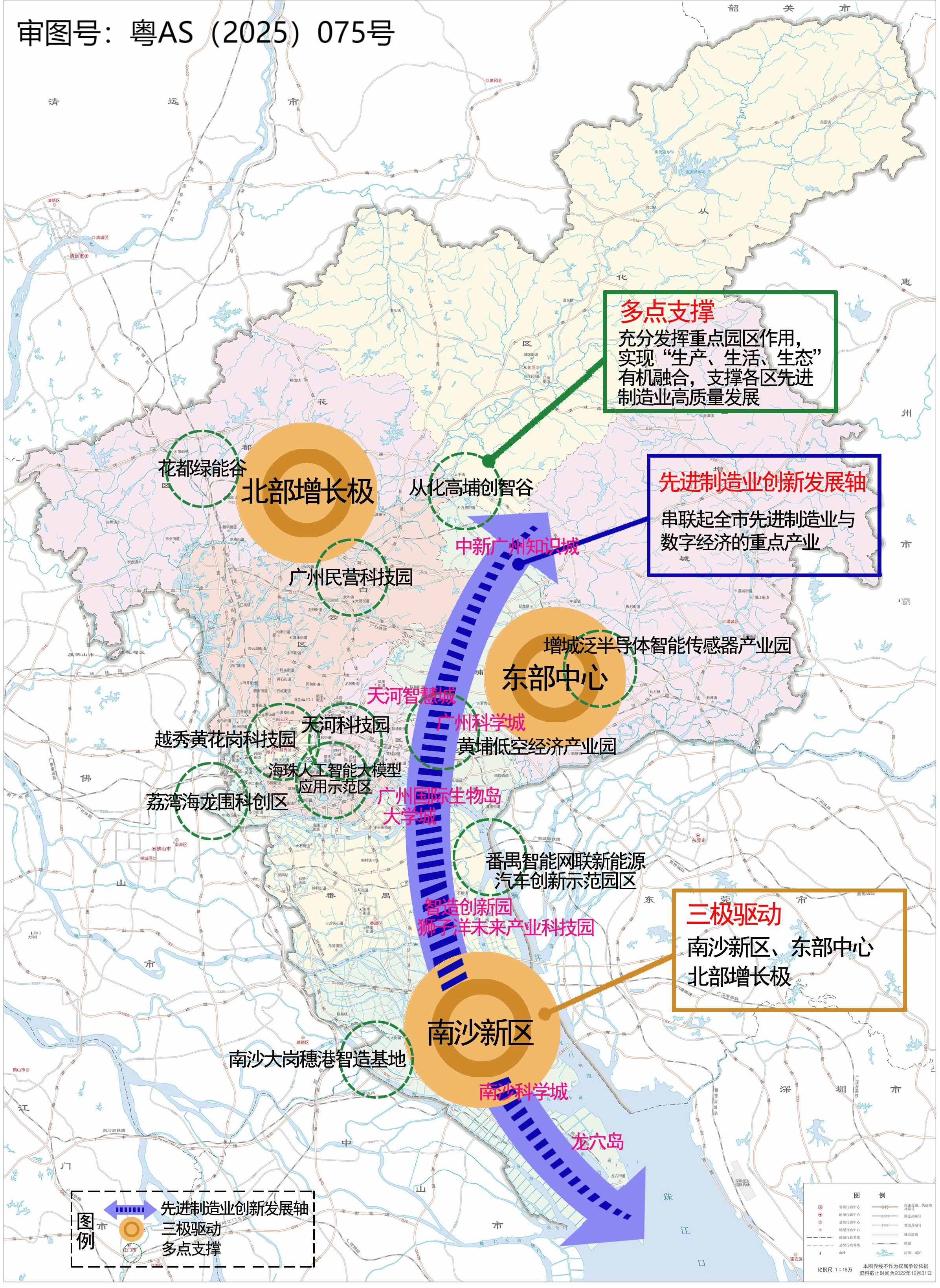
Core Viewpoint - Guangzhou aims to accelerate the construction of an advanced manufacturing city by 2035, targeting a doubling of industrial added value and focusing on the "12218" modern industrial system, integrating advanced manufacturing with modern services, and promoting digital and green transformations [2][14]. Group 1: Key Industrial Directions - The plan emphasizes the development of 15 strategic industrial clusters and six emerging pillar industries, including smart connected new energy vehicles, ultra-high-definition video and new displays, biomedicine and health, green petrochemicals and new materials, software and the internet, and intelligent equipment and robotics [2][38]. - Five strategic leading industries will be cultivated, including artificial intelligence, semiconductors and integrated circuits, new energy and new energy storage, low-altitude economy and aerospace, and biomanufacturing [3][38]. - Four characteristic advantageous industries will be strengthened, such as fashion consumer goods, rail transit, shipbuilding and marine engineering, and intelligent construction and industrialized buildings [4][38]. Group 2: Implementation Strategies - The plan outlines five major projects: industrial agglomeration, industrial innovation, intelligent manufacturing traction, integrated development, and supply chain optimization [14][34]. - Six action plans are proposed, including structural optimization, investment leap, talent attraction and cultivation, digital empowerment, spatial innovation, and element guarantee [14][34]. Group 3: Development Foundations - Guangzhou has a solid manufacturing base, being the most complete industrial city in South China, with significant advantages in technological innovation, green development, and international cooperation [19]. - The city ranks 8th globally in the "Nature Index - Research Cities" and has a robust innovation ecosystem, including numerous national and provincial manufacturing innovation centers [20][27]. Group 4: Opportunities and Challenges - The plan identifies major opportunities from national strategies, such as the manufacturing power strategy and the development of the Guangdong-Hong Kong-Macao Greater Bay Area, which enhances Guangzhou's role as a manufacturing hub [24][18]. - Challenges include the pressure from global economic downturns, the need for industrial upgrades, and competition from other metropolitan areas [28][29]. Group 5: Future Goals - By 2030, the advanced manufacturing city construction is expected to reach significant milestones, with a focus on optimizing industrial structure and enhancing quality and efficiency [36]. - By 2035, Guangzhou aims to solidify its status as an advanced manufacturing city, achieving breakthroughs in key technologies and maintaining a leading position in the global value chain [36][38].
创业板指回调受资金关注,创业板ETF易方达(159915)全天净申购超3亿份
Sou Hu Cai Jing· 2026-01-08 10:17
Group 1 - The ChiNext Mid-Cap 200 Index rose by 1.1%, while the ChiNext Index and the ChiNext Growth Index fell by 0.8% and 1.1% respectively, indicating mixed performance in the market [1] - The E Fund ChiNext ETF (159915) saw a net subscription of over 300 million units throughout the day, reflecting strong investor interest [1] Group 2 - Guangzhou has released a plan titled "Guangzhou Accelerates the Construction of a Strong Advanced Manufacturing City (2024-2035)", which aims to accelerate the cultivation of five strategic leading industries: artificial intelligence, semiconductors and integrated circuits, new energy and new energy storage, low-altitude economy and aerospace, and biomanufacturing [1] - The plan also outlines a forward-looking layout for six future industries, focusing on embodied intelligence, intelligent unmanned systems, and cutting-edge new materials, with the goal of creating a number of pilot application scenarios to drive the rapid maturation and application of cutting-edge technologies and products [1] - The target is to achieve exponential growth in industry scale within 5 to 10 years [1]

