自研芯片

Search documents
雷军官宣!小米自研芯片要来了,名字叫“玄戒O1”!
证券时报· 2025-05-15 14:17
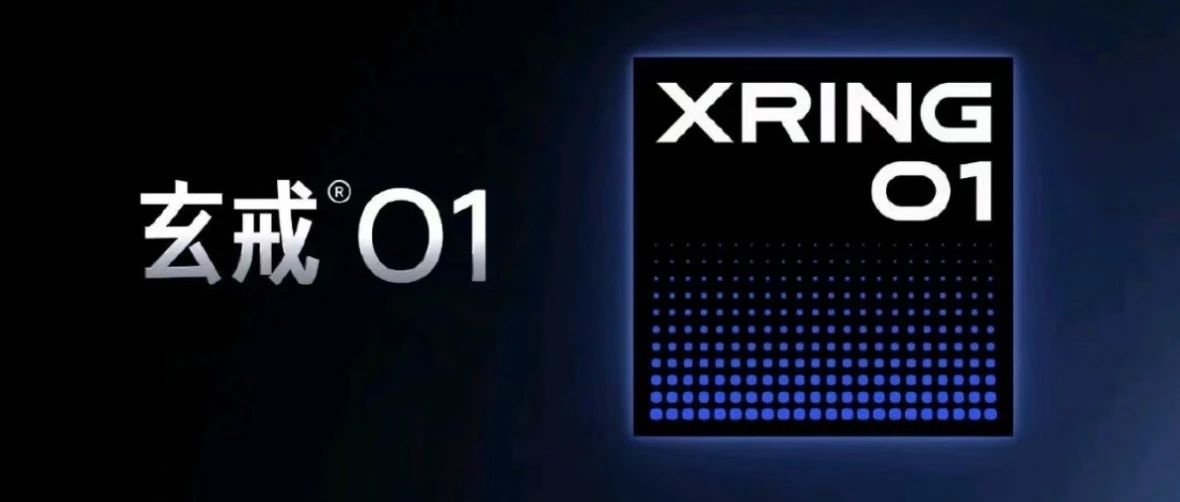
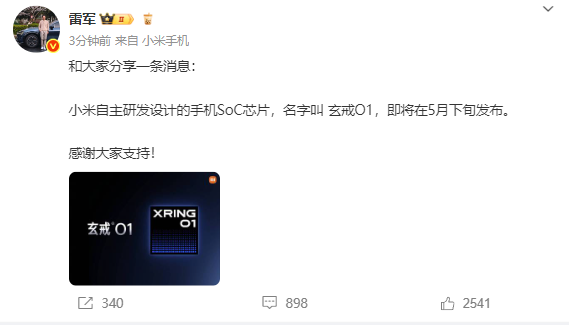
小米自主研发设计的手机SoC芯片即将发布! 5月15日,小米集团董事长兼CEO雷军在社交媒体发文称:"和大家分享一条消息:小米自主研发设计的手机SoC芯片,名字叫玄戒 O 1,即将在5月下旬发布。感谢 大家支持!" 北京社科院副研究员王鹏向记者表示:"自研芯片可以更好地满足手机厂商对于性能和独特技术优势的需求,提升手机竞争力。同时,也能让手机厂商降低对供应链 的依赖,为手机厂商提供更强的供应链掌控力。" 本次小米自研的手机SoC芯片名为"玄戒 O 1"。企查查显示,北京玄戒技术有限公司(以下简称"北京玄戒")成立于2023年10月26日,注册资本为30亿元,执行董事 为曾学忠。 据了解,曾学忠于2020年加入小米集团,曾负责手机产品的研发和生产工作,现任小米集团高级副总裁兼国际业务部总裁,分管互联网业务部。从过往履历来看, 曾学忠历任中兴通讯高级副总裁兼中国区总裁、中兴通讯执行副总裁兼中兴终端首席执行官,还曾担任紫光集团有限公司全球执行副总裁、紫光股份总裁以及紫光 展锐CEO等职位。同时,他也是中国集成电路设计产业技术创新战略联盟副理事长。 据了解,SoC(SystemonChip,即片上系统)芯片是决定手机 ...


官宣!小米自研手机芯片即将发布
Zheng Quan Shi Bao Wang· 2025-05-15 13:28
Group 1 - The core point of the news is that Lei Jun announced the upcoming release of Xiaomi's self-developed SoC chip named "Xuanjie O1" in late May [1] - Lei Jun expressed that the past month has been one of the most challenging times since founding Xiaomi, leading to a temporary pause in social media interactions and some meetings [3] - The recent focus on Xiaomi's SU7 car fire incident and issues with its intelligent driving system has prompted investigations by local authorities [5] Group 2 - Xiaomi has updated the SU7 vehicle's details on its official website, changing the term "Intelligent Driving" to "Assisted Driving" to clarify the functionality [5] - The company has issued a statement addressing concerns regarding the SU7 Ultra's horsepower limitations, indicating that the maximum power of 1548 horsepower is locked and can only be unlocked by achieving specific track performance [6] - Following user feedback, Xiaomi has paused the recent software update that restricted the vehicle's power output and is working on a new version to resolve the issues, expected to take 4 to 8 weeks for development and testing [6]
雷军官宣小米自研手机芯片!玄戒O1,将在5月下旬发布
第一财经· 2025-05-15 12:58
Core Viewpoint - Xiaomi's Chairman and CEO Lei Jun announced on Weibo that the company's self-developed mobile SoC chip, named "Xuanjie O1," is set to be released in late May [1] Group 1 - The "Xuanjie O1" chip represents Xiaomi's commitment to in-house technology development [1]

短期忧虑不足惧,接下来小米有“四大利好”
Hua Er Jie Jian Wen· 2025-05-14 04:00
受新订单减少影响,小米股价5月以来累计下跌约9%。 据追风交易台消息,5月13日,德意志银行分析师Bin Wang发布研报称,小米股价的回调为投资者提供了良好的买入机会。 报告认为,小米订单下降是由短期因素造成的,比如负面事件以及潜在的购车者观望情绪等,预计从5月底开始,随着小米增加更多的汽车广告以及即将 发布的SUV车型"YU7",小米的新订单量将开始增加。 报告指出,周交付量下降主要受劳动节假期影响,而非需求问题。考虑到约21万台的订单积压,近期交付下滑更多是供应问题而非需求问题。 德银预计,未来两个月内有四大关键催化剂可能推动股价反弹,包括2025年Q1财报、自研手机芯片发布、投资者日活动以及新SUV车型YU7上市。 四大积极催化剂,助力股价回升 德银认为,在未来两个月内,小米将有四个积极的催化剂: 一是一季度业绩报告。报告预计,小米2025年一季度销售额将同比增长9%,达到75869辆, "智能电动汽车及其他新业务"的毛利率将环比增长至22%。 因此,德银预计小米电动汽车业务的净亏损将同比下降87%,环比下降57%,约为3亿元人民币;一季度总收入将持平,约为1090亿元人民币,毛利率为 230亿元人民 ...
联想自研芯片成了!
国芯网· 2025-05-12 13:41
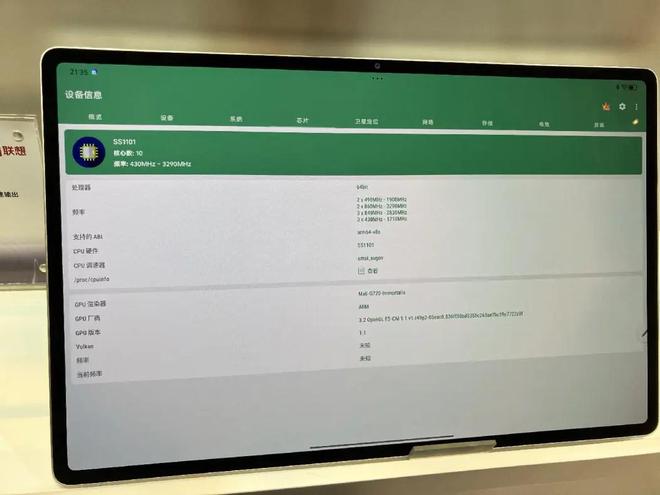
而在 GPU 部分,SS1101 搭载的是 Arm 的 "Mali-G720-Immortalis",在 Arm 的现行官 方正式命名中 "Mali" 和 "Immortalis" 不应一道出现,因此只能确认该 GPU 属于 "G720" 世代,大致规模范围和是否支持光追暂无法判断。 在芯片制造方面,另一位泄密者 Olrak 暗示了台积电的 5nm 工艺,而不是中芯国际或三星。 值得一提的是,美国芯片管制暂时并未对小米、联想等企业造成影响,目前这两家公司都还是 可以通过台积电的渠道进行芯片代工生产的。 国芯网[原:中国半导体论坛] 振兴国产半导体产业! 不拘中国、 放眼世界 ! 关注 世界半导体论坛 ↓ ↓ ↓ 近日,联想发布了 YOGA Pad Pro 14.5 AI 元启版平板电脑,除了常规的配置之外,该机还 有一个隐藏的重磅配置——首发国产首款5nm自研SoC。 根据B站 UP 主极乐计划 在联想发布会现场的实拍,该平板电脑的设备信息一栏显示其搭载 了一颗名为 SS1101 的处理器,是一款此前从未见过的SoC。 SS1101 在 CPU 部分采用了 64 位的 10 核心 Arm v8 架构,频率至高 ...


联想新平板疑搭载自研5nm芯片
Guan Cha Zhe Wang· 2025-05-09 09:00
不久前,鼎道智芯总经理史公正传出离职,他被外界视为联想自研芯片团队负责人。 而根据联想集团公布的财报,2023/24财年,该公司全年总营业额为569亿美元(约合人民币4149亿 元),净利润10亿美元,研发人员总数占比和研发费用率都创下了历史新高,分别达26.2%及3.6%。 5月8日,联想发布YOGA Pad Pro 14.5 AI元启版,配备了一块14.5英寸的3K OLED屏幕,16GB+512GB 主机售价4999元。 官方宣传资料中并未透露其具体处理器型号信息,但网上有数码博主发布会现场设备信息实拍,该平板 搭载了一颗名为SS1101的处理器。其CPU采用ARM架构,2+2+3+3的10核心方案,主频3.29GHz,搭配 Mali G720 Immortalis GPU。有网友推测这或许是此前联想流片的自研5nm芯片。 目前这颗芯片的具体技术细节尚不得而知,该平板将于5月20日正式开售。 网传图片 早在2022年9月,就有消息传出联想旗下的芯片公司鼎道智芯自研5nm芯片已经流片成功,将会进行相 关功能性测试。知情人士透露称"联想的这颗芯片是专门针对平板电脑应用而设计的。" 据企查查,鼎道智芯(上海) ...
自研芯片,帮苹果省了大钱!
半导体芯闻· 2025-04-23 10:02
上述关键驱动因素包含基带芯片、收发器和相关PMIC,至于成本节约:预期由苹果的5G解决方案 驱动,每装置可省下10美元。 iPhone 16e 内部芯片关键在处理器、Cellular network、电源管理,后二者相关芯片「内部价值比 重」:分别上升到63%和50%,并预期iPhone 17:可能会采用相同的Cellular解决方案。 法人则分析,若按照苹果iPhone 16e 出货规模今年可达到2200万支来看,至少可省下2.2亿美元。 若后续更多iPhone导入,按照一年2亿支规模来看,基带芯片初估就可省下成本达20亿美元(相当 于新台币650亿元),相当可观。但苹果和高通还有合约限制,业界预期苹果自研新款芯片将采逐 步推进导入手机。 如果您希望可以时常见面,欢迎标星收藏哦~ 来源:内容来自半导体行业观察综合 ,谢谢。 苹果自推动Apple silicon长期计画以来持续扩张自行研发芯片的路线,其中备受外界讨论多时耕 耘多年5G Modem芯片C1先前已正式浮上台面,一般预料持续由伙伴台积电(2330)操刀,究竟 苹果自研芯片效益如何,研究机构最新分析也解密。 counterpoint Research ...

自研芯片,帮苹果省了大钱!
半导体芯闻· 2025-04-23 10:02
Core Insights - Apple is expanding its self-developed chip strategy, particularly with the introduction of its 5G modem chip, C1, which is expected to enhance cost efficiency and performance in its devices [1][5][13]. Cost Analysis - The Bill of Materials (BoM) cost for the iPhone 16e shows that internally developed components account for 40% of the total cost, driven by the baseband chip, transceiver, and related PMIC [1]. - The expected cost savings from Apple's 5G solution is approximately $10 per device, leading to a potential savings of $2.2 million if the iPhone 16e shipment reaches 22 million units this year [1][2]. Market Impact - If more iPhones adopt the self-developed modem, estimated savings could reach $2 billion annually based on a shipment scale of 200 million units [2]. - Apple is a major client of TSMC, which has seen its revenue from advanced processes (7nm and below) exceed 70%, indicating strong demand for Apple's chips [2]. Chip Development - The Apple C1 modem, developed after acquiring Intel's modem division, represents a significant shift in Apple's strategy to reduce reliance on Qualcomm [5][13]. - The C1 modem utilizes a 4nm process, which is more advanced than Intel's previous 14nm technology, resulting in a higher integration density and improved performance [18]. Competitive Landscape - The modem market is dominated by a few players, including Qualcomm, MediaTek, and Unisoc, with Apple now entering the fray with its proprietary solutions [4][5]. - Future iPhone models are expected to continue integrating Apple's own chips, including potential successors to the C1 modem [20].
自研基带芯片,能帮苹果省多少钱?
半导体行业观察· 2025-04-23 01:58
如果您希望可以时常见面,欢迎标星收藏哦~ 来源:内容来自半导体行业观察综合 ,谢谢。 苹果自推动Apple silicon长期计画以来持续扩张自行研发芯片的路线,其中备受外界讨论多时耕 耘多年5G Modem芯片C1先前已正式浮上台面,一般预料持续由伙伴台积电(2330)操刀,究竟 苹果自研芯片效益如何,研究机构最新分析也解密。 iPhone 调制解调器的演变 法人则分析,若按照苹果iPhone 16e 出货规模今年可达到2200万支来看,至少可省下2.2亿美元。 若后续更多iPhone导入,按照一年2亿支规模来看,基带芯片初估就可省下成本达20亿美元(相当 于新台币650亿元),相当可观。但苹果和高通还有合约限制,业界预期苹果自研新款芯片将采逐 步推进导入手机。 苹果是台积电大客户,也是台积电先进制程最大出海口。台积电7纳米以下先进制程营收占比已突 破七成,达到73%,今年首季7纳米出货占15%,5纳米36%,3纳米为22%,先进制程持续扮演获 利的引擎。台积电加码美国千亿美元投资,预估专案投资到位后,估三成2纳米以下先进制程产能 将在亚利桑那厂生产,支援客户包含苹果、英伟达、超微、高通与博通等需求。 深挖 ...
自研基带芯片,能帮苹果省多少钱?
半导体行业观察· 2025-04-23 01:58
Core Viewpoint - Apple is expanding its self-developed chip strategy, particularly with the introduction of its 5G modem chip, C1, which is expected to significantly reduce costs and enhance its competitive position in the smartphone market [1][2]. Group 1: Cost Analysis and Savings - The Bill of Materials (BoM) cost for the iPhone 16e shows that Apple's internal development accounts for 40% of the total component cost, driven by the baseband chip, transceiver, and related PMIC [1]. - Each device utilizing Apple's 5G solution is projected to save approximately $10, leading to an estimated total savings of $220 million if the iPhone 16e ships 22 million units this year [2]. - If Apple scales up to 200 million units annually, the cost savings from the baseband chip alone could reach $2 billion, equivalent to approximately 65 billion New Taiwan Dollars [2]. Group 2: Chip Development and Technology - Apple has transitioned from using Qualcomm's chips to its own C1 modem in the iPhone 16e, marking a significant shift in its supply chain strategy [5][20]. - The C1 modem is built on TSMC's 4nm process, which offers a substantial increase in integration density compared to Intel's previous 14nm technology, making the C1's circuitry approximately 2.5 to 3 times larger than Intel's last modem [18]. - The C1 modem incorporates advanced features such as a MEMS oscillator instead of a crystal oscillator, showcasing Apple's innovation in chip design [9]. Group 3: Market Position and Future Prospects - Apple is a major client of TSMC, which has seen its revenue from advanced processes (7nm and below) exceed 70%, indicating strong demand for cutting-edge semiconductor technology [2]. - TSMC's investment in the U.S. is expected to bolster its capacity for producing advanced chips, with 30% of its sub-2nm capacity projected to be manufactured in Arizona, supporting clients like Apple, NVIDIA, and Qualcomm [2]. - The introduction of the C1 modem is part of Apple's broader strategy to develop proprietary chips for various functions, including Wi-Fi and Bluetooth, indicating a long-term vision for self-sufficiency in critical components [21].