
中国企业出海

Search documents
高志凯:我并不认为美国想“放弃世界第一”,是不想让中国成为世界第一
Feng Huang Wang Cai Jing· 2025-06-29 02:04
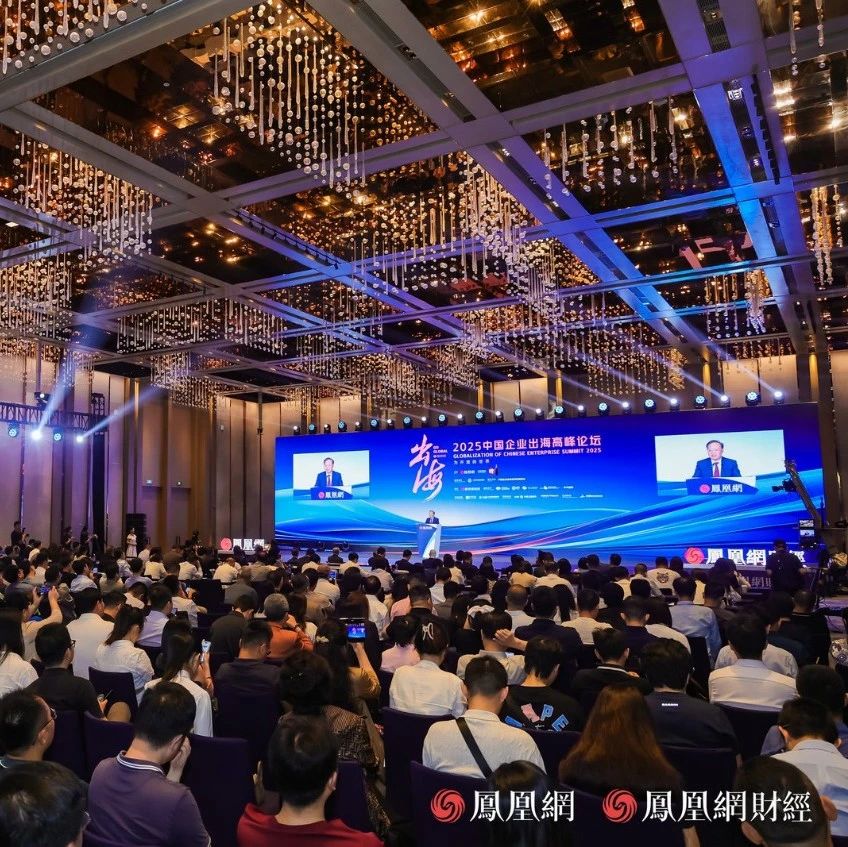
凤凰网财经讯 6月28-29日,"2025中国企业出海高峰论坛"在深圳举行,本次论坛由凤凰网主办,雪花超高端系列品牌-醴首席赞助合作,中国企业出海全球 化理事会联合主办,以"为开放的世界"为主题,旨在全球产业链深度重构之际,为中国企业搭建思想碰撞、资源对接、规则对话的高端平台,系统性破解出 海难题,共探生态共赢转型路径。 高志凯认为,目前美国并没到"我不想变成世界第一了"的阶段,它纠结的不是要不要放弃世界第一,而是不允许中国成为世界第一。 有这种纠结在前,美国就染上了两个噩梦,第一个噩梦是总担心中国会超过它。事实上,从钢铁产量、汽车产量等200多项客观数据来看,中国不仅超过了 美国,甚至占到了全球产量的一半以上。 第二个噩梦则是,美国担心中国超过它之后称霸世界,将意识形态、政治制度、行为准则等强加给美国,把它从世界舞台的中央给挤走。 对此,高志凯表示,中国过去弱小,但现在已经比较强大了。但即便将来更加强大,中国也不会争霸。中国想做的是"仁义之君",对世界200多个国家,无 论是大国还是小国都一视同仁。 全球化智库(CCG)副主任、苏州大学讲席教授高志凯 全球化智库(CCG)副主任、苏州大学讲席教授高志凯出席本 ...


赵喜玲:中国企业出海进入新赛点 社企合作是一个破局的关键
Feng Huang Wang Cai Jing· 2025-06-29 01:57
Core Viewpoint - The "2025 China Enterprises Going Global Summit" held in Shenzhen aims to provide a high-end platform for Chinese companies to address challenges in international expansion and explore paths for ecological win-win transformation [1] Group 1: Importance of NGO Collaboration - Chinese enterprises are entering a new stage of ecological construction, where collaboration with NGOs is crucial for breaking through challenges [3] - NGOs play a significant role in global public affairs and can help companies leverage their expertise and influence to enhance ESG practices as brand assets [4] Group 2: Role of China International NGO Cooperation Promotion Association - The association serves as an international hub for social enterprise cooperation, facilitating effective dialogue between Chinese companies and local NGOs [5] - It helps design and implement socially responsible projects that meet local needs, avoiding ineffective investments [5] Group 3: Recommendations for Enhancing International Cooperation - Establish a national risk map ecosystem to share risk data among government, research institutions, and enterprises, enabling small and medium-sized enterprises to have equal risk assessment capabilities [6] - Standardize communication between social enterprises and NGOs, integrating social organization participation into the overseas expansion process [6] - Create a global alliance for overseas navigation to transform risk prediction into business opportunities [6]

金砖国家技术转移中心张璋:中国企业出海不要只盯着卖货
Feng Huang Wang Cai Jing· 2025-06-29 01:44
Core Insights - The "2025 China Enterprises Going Global Summit" was held in Shenzhen, focusing on creating a high-end platform for Chinese companies to address challenges in international expansion and explore collaborative transformation paths in a restructured global supply chain [1] Group 1: Investment and Financing - The head of the BRICS Technology Transfer Center highlighted that Chinese companies' overseas ambitions often focus on securing funding rather than just market access, especially in light of a cooling investment environment in the domestic tech sector [3] - The BRICS Technology Transfer Center is targeting the Middle East, particularly the UAE, to facilitate Chinese companies' entry and investment through local listings, providing new financing avenues for small and medium enterprises [3] Group 2: Market Challenges and Opportunities - While overseas markets present opportunities, challenges exist, as illustrated by Xiaomi's struggles in India, indicating that not all regions are favorable for expansion [3] - Innovative business models are emerging, such as partnerships with local firms to leverage technology transfer and management expertise, exemplified by Didi's collaboration with Brazil's 99, which enhances local competitiveness while maintaining brand identity [4] Group 3: Strategic Development - The UAE is fostering an open business environment to attract global startups, aligning with China's previous strategies to attract foreign technology, thus broadening the scope for Chinese companies' international ventures [4] - Chinese enterprises are entering a new phase of internationalization, moving beyond mere exports to developing comprehensive global strategies through resource integration and innovative models, which will enhance their competitiveness on the world stage [4]
外国最不能接受中国企业家什么?中外企业家联合会董斌:嚣张
Feng Huang Wang Cai Jing· 2025-06-29 01:25
Core Insights - The "2025 China Enterprises Going Global Summit" was held in Shenzhen, focusing on creating a high-end platform for Chinese companies to address challenges in international expansion and explore collaborative transformation paths [1] Group 1: Challenges Faced by Chinese Companies Abroad - Chinese companies often lack solid preparation before going global, mistakenly believing that domestic success can be easily replicated internationally [3] - A significant issue is the blind confidence of Chinese entrepreneurs, which is often perceived as arrogance by foreign counterparts [3] - The tendency of some Chinese companies to solely benefit from their investments without contributing to local economies leads to negative perceptions from local governments and communities [3] Group 2: Recommendations for Successful International Expansion - Companies should avoid short-sighted competition, which can lead to unsustainable practices and backlash from host countries [3] - Emphasizing long-term strategies and a craftsmanship spirit, similar to Japanese companies, is crucial for success in international markets [3] - Small and medium-sized enterprises in China should assess their capabilities and management skills before considering international expansion [3]
元气森林王璞:企业出海不要盲目拓展海外规模,应与国内相辅相成
Feng Huang Wang Cai Jing· 2025-06-29 00:32
Group 1 - The "2025 China Enterprises Going Global Summit" was held in Shenzhen, focusing on creating a high-end platform for Chinese companies to address challenges in globalization and explore win-win transformation paths [1] - The summit was co-hosted by the Globalization Council of Chinese Enterprises, emphasizing the need for deep restructuring of global industrial chains [1] Group 2 - Wang Pu, the Secretary of the Party Committee and co-founder of Yuanqi Forest, discussed the competitive nature of the bottled beverage market, highlighting that competition can enhance operational capabilities such as product development and supply chain iteration [2] - Wang Pu cautioned against blindly expanding overseas, advocating for a complementary relationship between domestic and international markets, where experiences and innovations can be shared mutually [2] - He expressed hope for the Chinese food and beverage industry to unite and promote high-quality Chinese products and culture to global consumers [2]
全球精英何时送子女来中国留学?看中国电影?用中国品牌?龙永图再谈经典“三问”
凤凰网财经· 2025-06-28 14:03
六月末的深圳已浸在燥热的暑气里,但比气温更灼人的是南山区康莱德三楼会议厅内的热烈气氛。 错落悬挂的水晶灯下,深蓝色座椅早已被与会者填满,连两侧过道都站满了听众。每隔一会儿,便有手 机接连举起,记录着台上嘉宾的精彩发言。即便是到下午 6 点,会场内依旧满是屏息聆听的专注神情。 这场由凤凰网主办的" 2025 年中国企业出海高峰论坛",热度堪比顶流明星见面会。 而它的火爆,恰恰折射出中国企业在全球化新阶段的集体焦虑与机遇。 当全球经济格局进入重塑期,不合理的关税壁垒如暗礁般横亘前路,这些贸易政策的不确定性将驶向何 方?企业如何从"走出去" 的初级阶段迈向 "深度融入" 的新维度?怎样实现从 "产品输出"到 "品牌深耕" 的质变跨越? 这些命题正成为中国企业突破全球化瓶颈的关键密钥。 01 十五年后,龙永图回应经典三问 "中国品牌在全球的影响力已经有了极大的成功……"原外经贸部副部长、中国入世首席谈判代表龙永图 的话音未落,台下有人迫不及待地举起了手机。 2010 年,中国经济总量超越日本,成为世界第二大经济体。这一里程碑式的成就引发国际社会对中国 崛起的广泛关注。 然而,有外媒的一篇评论文章却提出警示:"暂且不要 ...

魏建国:中国制造全球突围需打赢“三大战役”,海湾市场成关键突破口
凤凰网财经· 2025-06-28 14:03
Core Viewpoint - The "2025 China Enterprises Going Global Summit" aims to provide a high-end platform for Chinese companies to address challenges in international expansion and explore paths for ecological win-win transformation [1] Group 1: Key Strategies for Global Expansion - Chinese manufacturing must focus on three major battles for successful global expansion: product layout, market layout, and corporate self-layout [3] - For product layout, companies should prioritize innovation and differentiation, increase R&D investment, emphasize brand internationalization, and ensure compliance to avoid negative perceptions [3] - In terms of market layout, companies should adopt precise positioning and diversify markets, focusing on key regions such as Gulf countries, particularly Saudi Arabia and the UAE [3] Group 2: Event Highlights - The summit featured a closed-door exchange with government representatives and investment professionals from Malaysia, Thailand, Vietnam, UAE, and Saudi Arabia, aimed at providing practical insights for companies on international expansion [5][6] - The event included discussions on the risks faced by companies in the past year, promising investment areas, funding sources, and mechanisms for connecting with sovereign and national funds [6]
Peter Chen:霸王茶姬在新加坡首次开业接待超万人,平均等待达两小时
Feng Huang Wang Cai Jing· 2025-06-28 11:04
Group 1 - The "2025 China Enterprises Going Global Summit" was held in Shenzhen, focusing on creating a high-end platform for Chinese companies to address challenges in globalization and explore paths for ecological win-win transformation [1] - The summit was co-hosted by Tikehau Capital and aimed to facilitate resource connections and dialogue on rules amidst the deep restructuring of global industrial chains [1] Group 2 - Peter Chen, Executive Director of Tikehau Capital, highlighted a significant shift in the globalization process of Chinese enterprises over the past decade, evolving from mere product export to deep transmission of brand value and culture [3] - The example of the brand "BaWang Tea Ji" was presented, which opened its first store in Singapore and attracted over 10,000 consumers on the opening day, with an average wait time of two hours, showcasing the local cultural resonance [3] - The brand's innovative strategy involved localizing its offerings by integrating elements of Singapore's landmarks with traditional Eastern tea culture, thus maintaining the cultural core of Chinese brands while gaining emotional recognition from local consumers [3]
中国企业如何在中东的政治环境中前行?商务部原副司长孙元江提5点建议
Feng Huang Wang Cai Jing· 2025-06-28 09:20
Group 1 - The "2025 China Enterprises Going Global Summit" was held in Shenzhen, focusing on providing a high-end platform for Chinese companies to address challenges in global expansion amidst deep restructuring of global industrial chains [1] - The summit aimed to facilitate thought exchange, resource connection, and regulatory dialogue among Chinese enterprises [1] Group 2 - Sun Yuanjiang, Chief Representative of the Asian Infrastructure Investment Bank's Abu Dhabi Business Center, highlighted the challenges faced by Chinese companies in the Middle East, including navigating complex political landscapes, regulatory compliance, cultural differences, and lack of localization [3] - He emphasized the need for Chinese enterprises to understand geopolitical dynamics, regulatory frameworks, and social cultural sensitivities in the region [3] - The Middle East is transitioning from a resource-driven model to one focused on innovation, sustainable development, and regional leadership, which requires Chinese companies to adapt [3][4] Group 3 - Sun Yuanjiang stated that Chinese companies must evolve from exporters to co-creators, from builders to partners, and from investors to community stakeholders in the Middle East [4]
世界钢铁发展研究院院长于勇:中国制造业企业在3方面远远领先于美国
Feng Huang Wang Cai Jing· 2025-06-28 09:08
凤凰网财经讯 6月28-29日,"2025中国企业出海高峰论坛"在深圳举行,本次论坛由凤凰网主办,雪花超高端系列品牌-醴首席赞助合作,中国企业出海全球 化理事会联合主办,以"为开放的世界"为主题,旨在全球产业链深度重构之际,为中国企业搭建思想碰撞、资源对接、规则对话的高端平台,系统性破解出 海难题,共探生态共赢转型路径。 于勇认为,"美国等西方工业国家在金融和市场手段上确实领先于中国。但是,在企业自身竞争力方面、投入方面、可持续发展等方面,是远远不如中国制 造业企业的,这也是中国制造业企业体现出极强竞争力的一个根本原因。" 于勇还分享了自己关于中国企业出海的五点思考。 第一、当前,全球供应链正在重构,很多国家基于安全考虑,更多追求供应链本土化、区域化。供应链重构确实带来了很大的挑战,同时也给中国企业出海 提供了全新的机遇和机会。 世界钢铁协会第41、42任主席、世界钢铁发展研究院院长于勇 世界钢铁协会第41、42任主席、世界钢铁发展研究院院长于勇出席论坛,并在"深度全球化:更开放、更包容、更共赢"环节发表演讲。他结合自己担任世界 钢铁协会主席的经历,讲述了"以美国为代表的西方工业制造国家和中国的最大区别。" ...