
绿色转型

Search documents
我国去年出钢产量多达9.61亿吨,占全球粗钢总产量的一半以上
Sou Hu Cai Jing· 2026-01-28 06:14
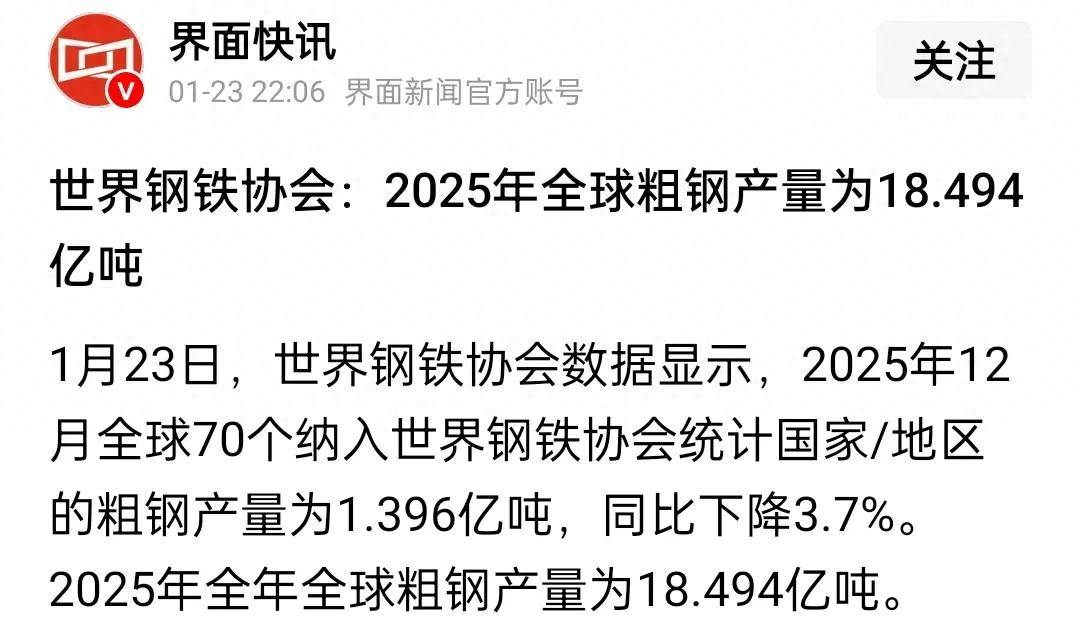
Core Viewpoint - The steel industry is experiencing a significant decline in production, with China's crude steel output projected to drop to 96.1 million tons in 2025, a decrease of 4.4% year-on-year, reflecting a shift towards quality and sustainability rather than sheer volume [1][5][7]. Group 1: Production Data - The World Steel Association forecasts global crude steel production to reach 1.8494 billion tons by 2025, while China's output is expected to be 961 million tons [1]. - China's crude steel production for 2024 is estimated at 1.005 billion tons, indicating a sharp decline of 44 million tons in just one year, which is more than the annual production of Germany [5][7]. - Despite the reduction, China maintains a 52% share of global steel production, significantly outpacing other countries like India and the United States [7][13]. Group 2: Policy and Market Dynamics - The decline in production is attributed to proactive industry adjustments driven by policy changes, particularly under the "dual carbon" goals, which emphasize capacity and output control [9]. - The Ministry of Industry and Information Technology has set clear guidelines to prohibit new capacity and promote the exit of outdated production facilities, particularly in regions like Hebei and Shanxi [9]. - The construction sector, a major consumer of steel, is facing a downturn, with a reported 18.14% drop in building steel sales from January to July 2025, leading to a noticeable demand gap [11]. Group 3: Industry Transformation - The shift from quantity to quality is evident, with high-end steel products now accounting for a larger share of production, and companies like Shagang and CITIC Pacific Special Steel meeting both domestic and export demands [13]. - The adoption of electric arc furnaces is becoming a trend, significantly reducing energy consumption and carbon emissions, with regions like Sichuan achieving a 40% share of electric furnace steel production [15]. - Industry consolidation through mergers and acquisitions is enhancing operational efficiency and cost savings, allowing for increased focus on research and development [15]. Group 4: Future Outlook - The reduction in crude steel output is viewed as a starting point for a transformation towards technological innovation and green low-carbon practices [17]. - Challenges such as limited scrap steel resources and high electricity costs for electric furnaces remain, but opportunities exist through government initiatives to boost infrastructure and manufacturing demand [17]. - The industry's evaluation criteria are shifting from production volume to technological advancement, environmental sustainability, and value chain collaboration, marking a new era for China's steel sector [19][21].

中国与欧亚地区国家:基于欧亚开发银行相互投资监测的投资流分析-EDB
Sou Hu Cai Jing· 2026-01-28 04:44
Core Insights - The report highlights the growing investment relationship between China and Eurasian countries, with China's cumulative direct investment in the region expected to reach $66.1 billion by mid-2025, reflecting a 13% increase from 2023 [1][2][28] - The majority of investments are concentrated in five countries: Russia, Kazakhstan, Uzbekistan, Mongolia, and Turkmenistan, with Central Asia accounting for over half of China's total investments in Eurasia [1][2][31] - The shift in investment focus from raw materials to high-value industries and long-term infrastructure projects is evident, with manufacturing and energy sectors emerging as key growth drivers [1][2][29] Investment Dynamics and Structure - As of mid-2025, China's cumulative FDI in Eurasia is projected to be $66.1 billion, a nearly 80% increase since 2016, with a total of $29 billion invested over the past decade [1][28] - The investment landscape is evolving, with state-owned enterprises' share in the investment structure declining from 62% to 53%, while private enterprises' share increased from 22% to 27% [2][34] - Greenfield investments, which involve new projects, have become the primary form of investment, accounting for 60% of total investments, indicating a strategic intent for long-term capacity building [2][34] Geographic Distribution - China remains the largest investor in Russia, which accounts for 98% of the total investment in the region, while Kazakhstan's share is relatively small [1][28][33] - In Central Asia, China's cumulative FDI has grown from $19.6 billion in 2016 to $35.9 billion in early 2025, with Uzbekistan emerging as the fastest-growing investment destination, increasing its share from 1% to 16% over ten years [31][34] - The South Caucasus region has seen a 2.5-fold increase in Chinese FDI over the past decade, primarily in Azerbaijan and Georgia, although it still represents only about 1% of China's total investments in Eurasia [32][34] Key Investment Sectors - The energy and manufacturing sectors are becoming increasingly important, with the share of raw materials investment declining from 68% in 2016 to 54% in mid-2025, while manufacturing and energy sectors have seen significant increases [1][29] - Future investment directions are expected to focus on manufacturing, renewable energy, transportation logistics, and agricultural enterprises, aligning with the economic development needs of Eurasian countries [2][34]
2025年度石油和化工行业舆情报告
Zhong Guo Hua Gong Bao· 2026-01-28 03:11
前言 2025年,是"十四五"规划的收官之年,也是中国石油和化工行业在变局中开新局、于挑战中育先机 的关键一年。面对深刻演变的外部环境与内在转型的双重考验,行业以新质生产力为引领,加速向高端 化、智能化、绿色化迈进。 从舆情视角看,这一年波澜起伏,折射出行业发展的深层脉动: 地缘政治与贸易保护主义交织,行业在应对"不确定性"中锤炼出更强的韧性与全球化布局智慧;安 全生产警钟屡响,推动全行业向工艺源头与系统治理深化变革;能源监管面临新业态挑战,如何在规范 与创新之间寻求平衡,考验各方智慧;智能制造从试点走向深度赋能,AI与自主运行技术正重构生产 模式与竞争力;绿氢产业经历理性回调,从规模扩张转向务实筑基;行业形象建设"破立"并举,以法律 维权清朗空间,以开放沟通赢得信任。 本报告通过对全年舆情的系统梳理与分析,试图呈现行业在转型路上的思考、行动与回响。我们相 信,每一次舆情的背后,都是行业走向成熟、迈向高质量发展的坚实足迹。愿这份报告能为决策者、从 业者与社会公众提供一份真实、深度、前瞻的行业洞察。 热点一:贸易格局——单边主义冲击下的行业韧性重塑(热度指数 98.1) 【舆情事件】 事件一:美国财政部于3月、 ...
2026北京两会|北京绿色转型向“氢”而行
Bei Jing Shang Bao· 2026-01-28 01:47
Core Viewpoint - Beijing aims to accelerate the construction of an international green economy benchmark city, focusing on hydrogen energy, energy storage, and environmental protection industries, leveraging advanced technologies for the green transformation of traditional industries [1] Group 1: Hydrogen Energy Development - The "14th Five-Year Plan" emphasizes advancing energy transformation and increasing the share of clean energy, with green hydrogen being a crucial pathway for large-scale renewable energy storage and cross-sector consumption [4] - Beijing should lead in energy transition by addressing the bottlenecks in green hydrogen consumption and exploring innovative applications such as blending hydrogen with natural gas [4][5] - Establishing a comprehensive safety management and technical standard system for the hydrogen supply chain is essential for scaling up hydrogen applications [4] Group 2: Application and Infrastructure - Hydrogen energy is recognized for its wide availability, high combustion value, and zero carbon emissions, making it a key player in the clean energy transition for transportation and industry [6] - From 2021 to August 2025, Beijing plans to promote 5,502 fuel cell vehicles and build 50 hydrogen refueling stations, creating five cross-regional hydrogen corridors [6] - Expanding hydrogen applications requires developing zero-emission freight corridors and optimizing existing routes while enhancing infrastructure like hydrogen refueling stations [7] Group 3: Industrial Integration and Cost Reduction - The establishment of integrated hydrogen production and refueling stations is crucial for demonstrating hydrogen energy applications in power generation and heating [8] - Utilizing by-product hydrogen from industries and renewable energy resources for large-scale hydrogen production can help reduce costs and promote the hydrogen industry [8][9] - Transitioning to liquid carriers like methanol and ammonia can alleviate storage and transportation challenges, thereby supporting the development of a diverse and stable low-carbon energy landscape [9]
【石油化工】开启二次创业新征程, 构建“一基两翼三链四新”产业新格局——中国石化集团跟踪报告之六(赵乃迪/蔡嘉豪/王礼沫)
光大证券研究· 2026-01-27 23:07
Core Viewpoint - The article discusses the strategic direction and key initiatives of Sinopec Group for the "15th Five-Year Plan" period, emphasizing the importance of a second entrepreneurial phase to achieve high-quality development in the petrochemical industry [5][6]. Group 1: Strategic Initiatives - Sinopec aims to establish a new industrial structure characterized by "one foundation, two wings, three chains, and four new areas" to promote high-quality development [5]. - The "one foundation" focuses on integrating oil, gas, coal, and other mineral resources to create a new energy system [5]. - The "two wings" involve cost reduction in bulk commodities and upgrading the refining and chemical structure to enhance overall competitiveness [5]. - The "three chains" aim to improve the sales and marketing capabilities of refined oil, natural gas, and chemical products [5]. - The "four new areas" include the development of new energy, new materials, new business formats, and new market segments [5]. Group 2: Six Strategic Focus Areas - Sinopec will implement six strategic initiatives during the "15th Five-Year Plan" period, including innovation-driven strategies, transformation and upgrading, resource security, market expansion, cost leadership, and open cooperation [6]. - The innovation-driven strategy aims to enhance technological independence and respond quickly to market demands [6]. - The transformation strategy focuses on high-end, intelligent, and green development while leveraging financial capital [6]. - The resource security strategy emphasizes the construction of a comprehensive oil and gas supply chain [6]. - The market expansion strategy is centered on customer orientation to improve competitiveness [6]. - The cost leadership strategy promotes lean management to enhance cost competitiveness [6]. - The open cooperation strategy aims to utilize both domestic and international markets and resources [6]. Group 3: Key Work for 2026 - In 2026, Sinopec will focus on six major battles, including safety and environmental protection, energy security, market marketing, quality and efficiency improvement, innovation in technology and finance, and reform empowerment [7]. - The safety and environmental protection battle will involve upgrading equipment and enhancing green low-carbon levels [7]. - The energy security battle will increase domestic oil and gas exploration and development [7]. - The market marketing battle will innovate marketing strategies to enhance sales of refined oil, natural gas, and chemical products [7]. - The quality and efficiency improvement battle will focus on cost reduction and risk control [7]. - The innovation battle will strengthen the integration of technology and finance [7]. - The reform empowerment battle will improve corporate governance and market-oriented reforms [7]. Group 4: Performance Overview - In 2024, Sinopec achieved a total revenue of 31,388 billion yuan, a decrease of 3.3% year-on-year, and a net profit attributable to shareholders of 578 billion yuan, down 13.0% year-on-year [8]. - The company has maintained a stable oil and gas production level and a robust oil reserve system, which are crucial for national energy security [8]. - Sinopec is transitioning from a traditional fossil fuel giant to a leader in green transformation, focusing on an integrated approach to profitability [8].


保供减碳齐发力 筑牢能源安全“压舱石”
Xin Lang Cai Jing· 2026-01-27 22:08
□ 本报记者 王健生 "2025年多项生产经营指标创历史新高,连续八年斩获中央企业经营业绩考核A级,连续两年获得中央 企业改革重点任务考核A级,上市公司市值突破万亿元大关,在复杂多变的行业环境中实现了高基数下 的稳增长。"近日,国家能源集团召开2026年首场新闻发布会,披露了2025年及"十四五"时期亮眼成绩 单。 国家能源集团新闻发言人黄清介绍说,"十四五"时期,国家能源集团聚焦主责主业,不断深化改革,夯 实了能源保供的"硬底气",跑出了绿色转型、科技创新的"加速度"。 将任期制和契约化管理纵深延伸至各级中层管理人员,率先在央企中实现100%全覆盖 国家能源集团是党的十八大以来重组规模最大的中央企业,作为一个因改革而生,也因改革而兴的企 业,集团始终以改革创新推动高质量发展。 "十四五"规划对改革创新提出了全面、系统的要求,其核心是通过深化体制机制改革和强化科技创新, 为高质量发展提供根本动力。国家能源集团党建部副主任徐伟中接受记者采访时表示,"十四五"以来, 集团系统谋划改革深化提升行动,围绕增强核心功能、提升核心竞争力,高质量完成6项特色目标,55 个方面、161项具体改革任务。 国家能源集团确立"总体 ...
扬中:奋力实现更高水平“五城联动”
Xin Hua Ri Bao· 2026-01-27 21:58
扬中市市长李莉珺作政府工作报告时表示,"十五五"时期经济社会发展的主要目标是:高质量发展迈上 新台阶;科技创新取得新进展;改革开放实现新突破;城乡融合达到新水平;文明建设上升新高度;民 生幸福绘就新画卷;生态环境得到新改善;社会治理彰显新效能。围绕目标,未来五年将紧扣"奋力实 现更高水平'五城联动'"发展定位,推动实现在发展新质生产力上走在前,在推动城乡共融上走在前, 在加快绿色转型上走在前,在保障改善民生上走在前,在提升作风效能上走在前,以奋进之姿开启现代 化新篇章。 今年,扬中将坚决落实中央经济工作会议、省委十四届十次全会、省委经济工作会议、镇江市委八届十 一次全会和扬中市委十三届十一次全会部署要求,坚持"稳中求进、提质增效"总基调,统筹抓好改革发 展稳定各项工作,扬帆启航"十五五",稳舵奋楫再出发,谱写"五个岛城"现代化建设崭新篇章。全市经 济社会发展的主要预期目标是:地区生产总值增长5%以上;一般公共预算收入增长2%;全社会研发投 入占GDP比重达3.7%;社会消费品零售总额增长5%;居民人均可支配收入增幅与经济增长保持同步; 生态环境质量稳步改善;安全生产形势持续稳定。 "十四五"时期,扬中立足产业 ...
“香港愿助企业走向全球”——首届全球产业峰会侧记
Xin Lang Cai Jing· 2026-01-27 13:42
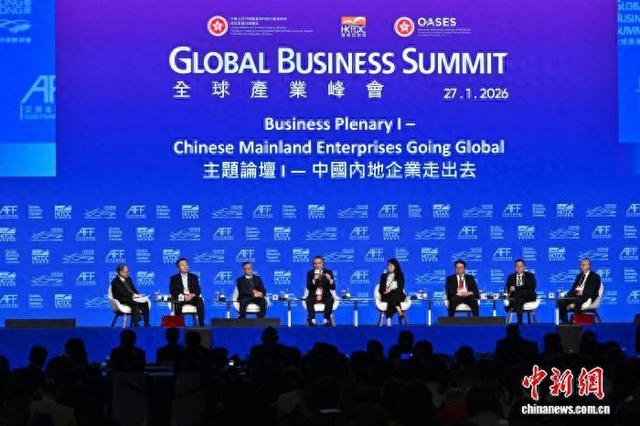
中新社香港1月27日电 题:"香港愿助企业走向全球"——首届全球产业峰会侧记 中新社记者 魏华都 "香港愿助企业扩展规模、走向全球。"在27日于香港揭幕的第19届亚洲金融论坛首届全球产业峰会上, 香港特区政府财政司司长陈茂波如是说。 当天的全球产业峰会是本届亚洲金融论坛引入的全新环节,聚焦金融赋能产业,涵盖人工智能与科技、 机器人、高增长消费品、生物医药与医疗健康等高增长产业,并探讨香港支持内地企业走向全球,以及 外资进入内地市场的前景。参会的业界代表认为,香港连接资本、创新与市场,是高增长产业发展的沃 土,期望通过香港进行融资和拓展业务,实现全球布局。 来自欧洲的支付银行 Banking Circle首席商务官Mishal Ruparel(米沙尔·鲁帕雷尔)提到,中欧跨境贸易有 巨大需求,该企业有意落户香港市场,并将其在欧洲的金融基建经验和成果带到香港。 香港特区政府引进重点企业办公室主任任景信介绍,引进重点企业办公室已引进超过100家重点企业, 未来会更重视企业落户时可为香港带来实质效益,也会协助内地企业以香港为基地拓展国际业务。 首届全球产业峰会由香港特区政府财经事务及库务局、香港贸易发展局及香港特区政 ...
2026经济变轨!买房到买矿,全球风口逆转,万亿红利赛道已显现
Sou Hu Cai Jing· 2026-01-27 12:44
Group 1 - The core transformation in wealth discussions has shifted from real estate to resource topics, indicating a significant change in investment focus for ordinary people [1][3] - The traditional reliance on real estate as a wealth vehicle is losing its effectiveness, as the economic growth drivers are changing [5][11] - The old economic model, characterized by investment, export, and consumption, is reaching its limits, necessitating a shift to new growth drivers [9][11] Group 2 - The new growth drivers are identified as technology innovation, green transition, and security assurance, all of which are interconnected and emphasize the importance of resources [13][19] - Technology innovation is evolving from isolated breakthroughs to integrated industry applications, enhancing value creation [15][19] - The green transition is framed as a global resource competition, with critical minerals like lithium, cobalt, and nickel becoming essential for the new energy landscape [19][27] Group 3 - The demand for key minerals is expected to surge due to the ongoing energy transition, leading to a significant supply-demand imbalance [29][31] - Resources are viewed as a dual-value asset, providing both a hedge against economic uncertainty and growth potential during prosperous times [33][39] - Four key resources are highlighted for investment focus in 2026: copper, lithium, cobalt, and rare earth elements, each linked to the new economic drivers [35][37][39] Group 4 - Investment strategies should focus on the entire industrial chain rather than merely speculating on price increases, emphasizing companies with integrated operations and technological advancements [41][43] - The shift from real estate to resource investment reflects a broader change in economic philosophy, prioritizing quality and innovation over mere expansion [43][45] - The ongoing wealth reshuffling is an opportunity for those who can adapt to the new economic landscape and recognize the value of resource investments [45]
欧洲铝产量崩跌引发关键行业危机
Wen Hua Cai Jing· 2026-01-27 11:37
Market Overview - The global high-strength aluminum alloy market is projected to surge from $66.01 billion in 2025 to $115.29 billion by 2030, indicating a compound annual growth rate (CAGR) of 11.8% [1] - A structural shortage is emerging due to the widening gap between downstream demand and upstream realities, exacerbated by challenges such as smelter closures in Europe and export controls in China [1] European Aluminum Production - The EU currently consumes 13.5 million tons of aluminum annually, but primary aluminum production has plummeted to just 0.95 million tons, resulting in a structural deficit of 93% [2] - Since 2010, primary aluminum production in Western and Central Europe has decreased by over 25%, leading to a significant reduction in upstream capacity [3] Slovak Aluminum Industry - Slovakia requires approximately 6 to 7 million tons of aluminum, with the remainder being imported; the Slovak government is advocating for the restart of the Slovalco smelter, which previously had an annual output of 175,000 tons [3] - The smelter's closure is attributed to high energy costs, with each ton of aluminum requiring 13 to 15 megawatt-hours of electricity [3] - A proposed 10-year support plan and €100 million investment to restart the smelter face significant technical challenges, particularly regarding the replacement of frozen electrolytic cell linings [3] Key Mineral Bottlenecks - The growth of high-strength alloys is closely tied to the 7xxx and 5xxx series, which are critical for aerospace and defense, requiring magnesium and zinc [4] - Zinc, a primary strengthening agent for 7xxx series alloys, is under supply pressure, with LME zinc inventories expected to drop to critically low levels by the end of 2025 [4] - Despite a projected surplus in zinc supply in late 2026 due to new mines coming online, market volatility remains a concern [4] Aerospace Demand - The aerospace sector continues to be a major driver of aluminum demand, with Airbus and Boeing having backlogs exceeding 14,000 aircraft orders, equivalent to 11 years of production at current sales rates [4] - Each narrow-body aircraft wing requires substantial amounts of 7150 or 7055 aluminum alloy sheet, providing significant pricing power to processors like Constellium SE, which reported a 61% increase in unit metal margins [4] Regulatory and Green Aluminum Challenges - The industry faces a dichotomy between "polluting" aluminum and "green" aluminum, with the EU's Carbon Border Adjustment Mechanism (CBAM) imposing carbon taxes on imported metals starting January 1, 2026 [6] - The paradox arises as Europe shuts down low-carbon smelters due to high energy costs while taxing high-carbon imports to compensate for production losses [6] - Recycling is often seen as a solution, but high-strength alloys face chemical composition limitations, as recycled aluminum typically contains iron, which can create brittle structures unsuitable for critical aerospace components [6] - The transition to a $115 billion market is not solely a demand issue but also a challenge of conversion capacity and clean energy, with the industry's strategic autonomy at risk until the consumption-production gap in Europe is addressed [6]