人类命运共同体

Search documents
国际形势变乱交织,全球南方路在何方?
Xin Lang Cai Jing· 2026-01-09 06:20
Group 1 - The core concept of the articles revolves around the significance and development vision of the Global South, which includes emerging market countries and developing nations [2][3][6] - The Global South represents a collective rise of developing countries on the international stage, striving for independent development and reforming international order [2] - Countries in the Global South account for approximately 85% of the world's population and over 40% of the global economy, contributing 80% to world economic growth [3] Group 2 - The Global South is characterized by shared aspirations for development and cooperation, with China being a key player advocating for South-South cooperation [5] - The vision of the Global South emphasizes a harmonious and mutually beneficial future, aiming to enhance the representation and voice of developing countries in international affairs [6] - The collective rise of the Global South is seen as a historic achievement in the progress of human civilization, promoting a more just and equitable international order [3][6]
从“最优路线”看预期管理(评论员观察)
Ren Min Ri Bao· 2026-01-08 22:53
Group 1 - The core viewpoint emphasizes the importance of stable expectations in both daily life and economic activities, suggesting that people prefer options with predictable outcomes to manage risks effectively [1][2] - The article highlights that a stable and transparent legal framework is essential for creating a favorable business environment, as it helps reduce transaction costs and enhances market vitality [2][3] - The implementation of the "Dual Carbon" goals has led to significant investments in green industries, showcasing China's commitment to sustainability and creating a stable investment climate [3] Group 2 - The article discusses the necessity of a robust institutional framework to ensure certainty in economic policies, which in turn fosters business confidence and encourages investment [2][3] - It points out that China's strategic planning and consistent policy implementation contribute to a stable socio-economic environment, making it a reliable destination for investment [3][4] - The narrative draws parallels between historical practices and modern technological advancements, suggesting that effective expectation management is rooted in both historical insights and current actions [4]
王毅:开启中非关系和全球南方更加美好的明天
Xin Lang Cai Jing· 2026-01-08 21:03
Group 1 - The core viewpoint emphasizes the importance of enhancing China-Africa cooperation through four key initiatives proposed by Wang Yi, focusing on development, people-centered approaches, mutual learning, and openness [1][2] Group 2 - The first initiative stresses prioritizing development and modernizing together, with China committed to expanding its unilateral openness to Africa, which is expected to boost African exports and industrial development [1] - The second initiative highlights the importance of serving the people and fostering long-term cultural exchange mechanisms to strengthen emotional ties between the 2.8 billion people of China and Africa [1] - The third initiative advocates for mutual learning in governance and political exchanges, aiming to deepen cooperation between political parties and organizations in China and Africa [2] - The fourth initiative calls for openness and inclusivity, aiming to build a community with a shared future and enhance Africa's role in international governance [2]
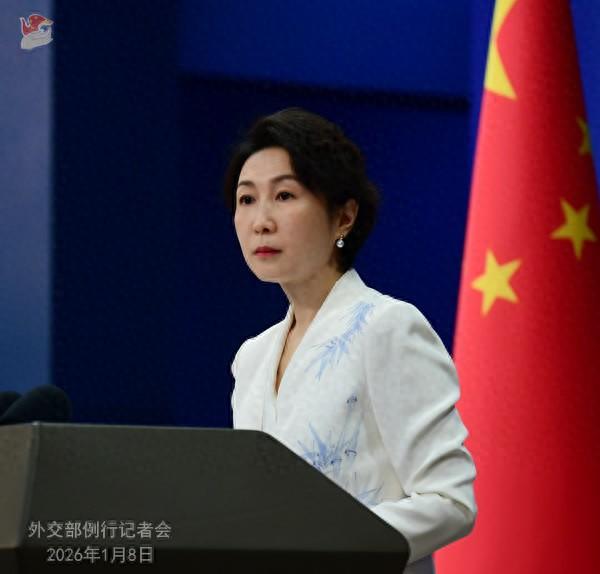
1月8日外交部例行记者会答问汇总
Xin Lang Cai Jing· 2026-01-08 11:47
Group 1 - The report released by the China Arms Control and Disarmament Association highlights Japan's expanding nuclear ambitions as a serious threat to world peace, urging Prime Minister Fumio Kishida to clarify Japan's stance on nuclear weapons [3][4] - Japan's current government, under Kishida, is perceived to be pushing for a revision of the "Three Non-Nuclear Principles," suggesting the introduction of nuclear submarines and advocating for an enhancement of the so-called "extended deterrence" [3][4] - The report details Japan's secret development of nuclear weapons, accumulation of sensitive nuclear materials, and potential for nuclear weapon development, calling for measures to counter Japan's nuclear ambitions and maintain global peace [3][4] Group 2 - The international community is urged to remain vigilant regarding Japan's nuclear ambitions and to carefully engage in nuclear cooperation with Japan, ensuring that international law and non-proliferation frameworks are upheld [4] - The Chinese government emphasizes the importance of historical reflection and accountability regarding Japan's militaristic past, particularly in light of the 80th anniversary of the Tokyo Trials, which sought to address war crimes committed by Japanese militarists [6] - China expresses support for Russia's stance on exposing Japan's wartime atrocities and acknowledges the ongoing need to confront Japan's historical revisionism and militaristic tendencies [5][6] Group 3 - China reaffirms its commitment to multilateralism and the central role of the United Nations in maintaining global peace and stability, opposing unilateral actions that undermine international law [5][7] - The Chinese government highlights the importance of cooperation with African nations, celebrating 70 years of diplomatic relations and emphasizing mutual development and respect for sovereignty [8][9] - China opposes illegal unilateral sanctions and stresses that its normal economic and energy cooperation with Russia should not be affected by external pressures [9]

这就是中国式现代化的全球价值
Ren Min Ri Bao· 2026-01-08 02:40
纳迪娅密切关注中国进一步全面深化改革、推进中国式现代化的举措。她认为,制度建设为中国式现代 化提供保障。作为全球第二大经济体、负责任大国,中国始终坚持和平发展,对全球政治经济格局,尤 其对全球南方国家推进现代化产生重要影响。 近年来,中埃高质量共建"一带一路"合作卓有成效;中国稳居埃及第一大贸易伙伴国地位,也是近年来 对埃及投资最活跃、增速最快的国家之一。纳迪娅表示,共建"一带一路"倡议帮助发展中国家走向现代 化,为促进当地经济发展、改善民生福祉发挥了重要作用。纳迪娅认为,中国是全球能源转型的推动者 和贡献者,"中国遵循绿色发展理念,强调人与自然和谐共生,为保护地球生态作出贡献,也为中国式 现代化在国际舞台上赢得更多支持。"她认为,中国秉持公平正义,积极劝和促谈,为解决巴勒斯坦问 题贡献力量,"中国坚定不移地维护世界和平、促进共同发展,彰显了维护世界和平的大国担当。" "中国走出了一条和平、发展、合作、共赢的现代化道路。"近日,埃及贝尼苏韦夫大学政治学教授纳迪 娅·希勒米接受本报记者采访时表示,中国式现代化促进世界的合作共赢,推动构建人类命运共同体, 为人类和平与发展作出贡献。 纳迪娅一直高度关注中国的现代化 ...
弘扬亚洲价值观 引领亚洲新发展(权威论坛)
Ren Min Ri Bao· 2026-01-06 23:28
Group 1 - The core viewpoint emphasizes the importance of Asian values rooted in historical traditions, advocating for peace, cooperation, openness, and inclusiveness as guiding principles for relationships among Asian countries [1][2][3] - Asian values are seen as a crystallization of centuries of interactions among various Asian civilizations, with Chinese civilization being a significant source [1][2] - The historical context includes the impact of colonialism and the post-World War II independence movements, which fostered a collective demand for equality and opposition to hegemony [2] Group 2 - The concept of "Asian values" has evolved through historical experiences, emphasizing responsibility, order, and harmony, which are reflected in various cultural traditions across Asia [3][4] - The rise of the "Asian Tigers" in the late 20th century showcased a development-first, collective cooperation value system distinct from Western models [2][4] - The current era sees China promoting Asian values through initiatives like the "Belt and Road" and regional cooperation frameworks, aiming to build a community with a shared future [2][8] Group 3 - The "Asian Miracle" of rapid economic growth is attributed to the support and guidance of Asian values, which encourage openness and collaboration rather than ideological divisions [5][6] - Asian values are positioned as a means to navigate both traditional and emerging challenges, providing a framework for cooperation that respects diversity [5][6] - The emphasis on mutual benefit and cooperation is seen as essential for addressing global issues and enhancing the voice of Southern countries in shaping future international orders [5][6] Group 4 - China is identified as a key advocate and practitioner of Asian values, demonstrating their effectiveness through significant economic achievements and regional cooperation initiatives [8][9] - The promotion of multilateralism and free trade by China is highlighted as a stabilizing force in Asia, fostering a conducive environment for development [8][9] - Collaborative projects, such as infrastructure development, are seen as vital for enhancing regional connectivity and economic integration, benefiting all participating countries [9][10]
加快推进中国自主知识体系建构
Xin Hua Ri Bao· 2026-01-05 23:03
Core Viewpoint - The year 2025 is seen as a significant year for the construction of an independent knowledge system in Chinese political science, aligning with Xi Jinping's directive on building a Chinese autonomous knowledge system [1] Group 1: Project Initiation - In September 2025, the Ministry of Education's major project "Research on the Construction of China's Autonomous Political Science Knowledge System" was successfully launched at Peking University, marking the official start of this initiative [1] - Seven major special topics under this project have been initiated, indicating a shift towards the "accelerated promotion" phase of constructing an autonomous knowledge system in Chinese political science [1] Group 2: Strategic Missions - Chinese political scientists are tasked with a strategic mission to construct an autonomous knowledge system that focuses on Xi Jinping's thoughts, traditional Chinese culture, and the practical experiences of China's development [1] - The construction must summarize regular insights and extract distinctive concepts, academic discourse, and classic propositions that reflect Chinese characteristics [1] Group 3: Balancing Perspectives - The autonomous knowledge system must balance universality and specificity, addressing specific issues in the context of Chinese modernization while also providing alternative knowledge perspectives for the world [2] - It is essential to objectively present the limitations of Western theories and showcase the competitiveness and adaptability of the Chinese knowledge framework [2] Group 4: Autonomy and Openness - The construction of the knowledge system should emphasize both autonomy and openness, recognizing that knowledge generation requires dialogue and interaction with other knowledge systems [2] - The unique theoretical foundation of the Chinese knowledge system should be highlighted, especially in the context of knowledge interaction and competition [2] Group 5: Theory and Practice - The most important source for constructing the autonomous knowledge system is Chinese practice, which must inform theoretical innovations [2] - Theoretical developments should respond accurately to major national strategic needs, promoting a two-way interaction between theory and practice to enhance predictive and guiding capabilities [2]

驻汤加使馆召开2025年中资企业(机构)年终座谈会
Shang Wu Bu Wang Zhan· 2026-01-05 17:08
刘大使传达了党的二十届四中全会和中央经济工作会议精神,介绍了中汤关系发展和地区形势,充 分肯定了各中资企业(机构)工作成效,强调要加强理论学习,强化自身廉洁合规建设,主动防范化解 各类风险,积极履行社会责任,树立良好形象,自觉将自身发展融入国家改革发展稳定和对外工作大 局,为"十五五"时期高质量共建"一带一路"、服务中国式现代化、构建人类命运共同体贡献力量。 6名中资企业(机构)代表汇报了一年来在汤工作,纷纷表示将认真学习国内方针政策,做好本职 工作,为中汤务实合作添砖加瓦。 5.jpg (原标题:驻汤加使馆召开2025年中资企业(机构)年终座谈会) 2.jpg 2025年12月31日,刘为民大使主持召开2025年汤加中资企业(机构)年终座谈会。 ...

专访拉美问题专家江时学:“唐罗主义”对国际秩序造成巨大冲击和破坏
Di Yi Cai Jing· 2026-01-05 09:01
Core Viewpoint - The recent military intervention by the United States in Venezuela marks a significant shift in international order, reflecting a move towards "jungle law" and undermining established international norms [2][6]. Group 1: U.S. Military Action - The U.S. military action against Venezuela is seen as the first step in implementing the new National Security Strategy, emphasizing U.S. dominance in the Western Hemisphere [2][3]. - Venezuela's selection as the target is attributed to its strong anti-American sentiment and its vast oil reserves, making it a strategic priority for the U.S. [3][4]. Group 2: Implications for Latin America - The intervention is expected to create a "chilling effect" on leftist governments in Latin America, as it serves as a warning to other nations [4]. - The U.S. openly acknowledges that its actions in Venezuela are intended as a show of force against leftist regimes across the region [4][6]. Group 3: International Law and Order - The military intervention raises concerns about the erosion of international law and the potential normalization of such actions, which could lead to a complete breakdown of the current international order [6]. - The situation highlights the need for a renewed commitment to building a community with a shared future for humanity, as existing frameworks fail to ensure basic sovereignty and security [6].
阔步而行的中国为2026的世界注入信心
Xin Lang Cai Jing· 2026-01-05 02:16
Group 1 - China's economy is projected to grow at around 5% in 2026, maintaining its position among the world's major economies, with a total economic output expected to reach 140 trillion yuan, contributing approximately 30% to global economic growth [1][2] - The World Intellectual Property Organization reported that China's innovation index has entered the global top ten for the first time, indicating a significant advancement in new productive forces and growth advantages [2] - China is committed to enhancing global governance and promoting peace, responding to the increasing frequency of local wars and cross-border conflicts, and has received support from over 150 countries and international organizations for its global governance initiatives [4][5] Group 2 - China is actively promoting high-level openness in response to unilateralism and protectionism, with the Hainan Free Trade Port set to officially launch by the end of 2025, providing a stable platform for international economic cooperation [5] - The upcoming year marks the beginning of China's 15th Five-Year Plan, with a focus on high-quality development, deepening reforms, and achieving common prosperity, as international institutions have raised their growth forecasts for China [7] - China will host significant diplomatic events in 2026, including the 70th anniversary of diplomatic relations with Africa and the second China-Arab States Summit, reinforcing its commitment to global peace and development [7]