数字金融

Search documents
银河德睿总经理魏峰:期货风险管理业务发展呈现三大特征
Zheng Quan Ri Bao Wang· 2025-12-30 07:41
Core Insights - The futures risk management business is becoming a significant growth engine for futures companies, with new characteristics emerging in 2025 [1] Group 1: Characteristics of Futures Risk Management Business - The business is focusing on serving the real economy by utilizing unique advantages such as basis trading and warehouse receipt services, helping upstream and downstream enterprises reduce price volatility risks, lower inventory, and minimize capital occupation [1] - There is a notable contribution to green finance development, with the introduction of new products like industrial silicon, polysilicon, and lithium carbonate, and the launch of the first domestic OTC options linked to the EU ETS carbon emission rights, aiding domestic shipping companies in addressing international carbon emission constraints [1] - Increased investment in system construction is observed, aligning with the trend of digital finance, with significant enhancements in information technology, business processes, and management structures, leading to improved business efficiency, risk control capabilities, and settlement quality while significantly reducing operational costs [1]
夯实数字金融发展根基 西安银行的科技赋能之路
Jing Ji Guan Cha Wang· 2025-12-30 05:44
Core Viewpoint - Xi'an Bank is actively advancing its digital transformation in response to national strategies for building a strong financial sector and promoting digital finance, aiming to shift from "input-driven" to "value-creating" approaches in its operations [1][2] Group 1: Digital Transformation Initiatives - Xi'an Bank has launched a mobile banking app that offers various convenient services, reflecting its commitment to enhancing customer experience through digital solutions [1] - The bank has been recognized as the "Digital Ecological Construction Pioneer Star" for its outstanding performance in building a digital ecosystem [2] - The bank's "Salary Manager" platform, set to fully launch in May 2024, aims to assist small and medium-sized enterprises in managing payroll and tax efficiently through digital services [3] Group 2: Local Engagement and Services - Xi'an Bank focuses on local scene integration, supporting digital governance and community services, with over 400 smart community services covering nearly 500,000 citizens [4] - The bank has developed multiple one-stop talent service platforms, impacting around 130,000 high-level talents in Xi'an and surrounding areas [4] - The bank has established payment service centers in key tourist areas to enhance payment convenience for visitors [5] Group 3: Digital Currency and Innovation - Xi'an Bank is one of the first banks in the region to implement digital RMB services, creating an operational model that integrates digital currency into various payment scenarios [6] - The bank has collaborated with local government agencies to develop a service ecosystem that includes digital RMB payment channels, setting a benchmark for digital transformation in public services [6] - The bank's innovative approach in supply chain finance has simplified financing processes for small businesses, enhancing their access to capital [8] Group 4: Efficiency and Risk Management - The bank has implemented RPA and AI technologies to optimize internal processes, significantly reducing manual operation time and improving efficiency in various tasks [10] - Xi'an Bank has developed an intelligent risk control system that utilizes real-time data to enhance credit decision-making and prevent fraudulent activities [10] - The bank's initiatives have successfully intercepted suspicious transactions, preventing potential losses exceeding 50 million yuan [10] Group 5: Future Outlook - Xi'an Bank plans to focus on technology upgrades and digital empowerment as part of its "Renewal Project," aiming to enhance the adaptability and competitiveness of its financial services [11] - The bank is committed to integrating digital finance innovations to support high-quality regional development in Shaanxi [11]
数字赋能提质效 科技护航促发展
Jing Ji Guan Cha Wang· 2025-12-30 05:33
沧州银行坚持将金融科技深度融入本地生活场景,深化政银企合作,落地智慧政务、智慧医疗、智慧校 园等百余个场景,覆盖社保查询、医院挂号及物业缴费等高频需求,整合水电气暖缴费、商超优惠等高 频场景,构建覆盖客户衣食住行的便民惠企"本地生活圈"。 在提升效率、优化体验的同时,沧州银行筑牢数字化风险防线,依托"沧银烽火台"投后贷后监测预警系 统,建立全流程智能风控体系,累计精准识别风险超18万个。运营端应用RPA技术替代高频人工操作, 配备移动营销终端支持员工上门服务,破解特殊群体"跑网点难"痛点。升级智慧网点与集中作业中心, 优化厅堂功能布局,实现客户分流更合理、服务响应更高效。 沧州银行工作人员在数据中心进行日常系统维护。 沧州银行以数字金融为牵引,按下数字化转型"加速键",走出了一条特色鲜明、稳健务实的科技赋能路 径。 面对数字化转型浪潮,在党委书记、董事长梁宝龙的牵头推动与全程调度下,沧州银行党委凝心聚力, 仅用14个月就完成了新一代核心系统"兴航工程"的投产切换。该系统采用"分布式核心+信创云平台 +OceanBase数据库"架构,在省内城商行中率先实现全栈信创落地,为业务创新与服务升级筑牢技术底 座。项目斩 ...
以“AI in ALL”打造金融“五篇大文章”样本丨陆控及旗下平安融易双双获评为年度优秀机构
2 1 Shi Ji Jing Ji Bao Dao· 2025-12-30 03:24
Core Insights - The company,陆控, has been recognized as the "Outstanding Digital Financial Institution of the Year" at the "2025 Financial Annual Conference" for its innovative practices in digital finance [1] - The company continues to implement its "AI in ALL" strategy, integrating digital finance, technology finance, and green finance into its inclusive finance operations [1] Group 1: Digital Technology and Innovation - The company leverages technologies such as artificial intelligence, cloud computing, blockchain, and big data to enhance its digital services, focusing on financing guarantees for local key industries and small micro-economies [2] - The recently launched "Yunfan" solution is the first AI-driven remote financing service in the non-bank credit sector, achieving a 158% increase in productivity through the use of AI coaches for customer service representatives [2] - The "Zhihun" project utilizes large model technology and machine learning to automate due diligence processes, reducing processing time by 90% and achieving a 93% accuracy rate in application dimensions [3] Group 2: Financial Services and Support - The "Prism" project aims to support local key industries by analyzing their financing needs and usage patterns, providing a comprehensive financial service ecosystem that addresses various financing challenges [3] - The "Smart Customer Service 3.0" initiative has improved customer service efficiency, increasing resolution rates by 2% and reducing the need for human intervention by 14%, while customer satisfaction rose from 80% to 85% [4] - The "Che e Loan" green financing program offers exclusive benefits for small micro-enterprises, facilitating access to lower financing rates for new energy vehicle owners, with over 4.22 billion yuan in loans disbursed by September 2025 [4] Group 3: Community Engagement and Support - The company emphasizes grassroots engagement by establishing a professional team that actively serves local small micro-economies, providing tailored financing solutions and support [5] - A case study highlights how the company assisted a cattle farmer in Shandong by providing 500,000 yuan in financing, resulting in a 50% increase in production capacity and a nearly 30% rise in income [6] - The company has partnered with the China Women's Development Foundation to support female entrepreneurship, distributing 43.1 million yuan in micro-loans to over 2,500 women, thereby promoting local employment and industry development [7]
《银行业保险业数字金融高质量发展实施方案》印发 首提“数字技术与数据要素双轮驱动”
Zhong Guo Jing Ying Bao· 2025-12-29 13:56
Core Viewpoint - The implementation plan for the high-quality development of digital finance in the banking and insurance sectors has been released, aiming to accelerate digital transformation and enhance the capabilities of digital technology and data elements over the next five years [1][2]. Group 1: Overall Requirements - The plan outlines three main sections: overall requirements, work tasks, and organizational guarantees, proposing 33 specific tasks related to digital finance governance, services, technology application, data development, risk management, and regulatory digital transformation [1]. - The primary goal for the next five years is to achieve significant progress in digital transformation, enhance the driving capabilities of digital technology, and improve the value conversion of data elements [1]. Group 2: Work Tasks - The plan emphasizes the exploration of innovative applications of digital technology and data elements, aiming to improve financial service quality in key areas such as technology, green finance, inclusive finance, and elderly care [1]. - It aims to provide substantial financial support for major strategies, key areas, and weak links, while promoting replicable and scalable good practices in digital finance [1]. Group 3: Regulatory Digital Transformation - The plan seeks to efficiently promote the digital and intelligent transformation of regulation, enhancing regulatory penetration capabilities and supporting the construction of five major regulatory capacities [1][2]. - It aims to strengthen the regulatory framework to ensure that financial supervision is robust and effective [1]. Group 4: Strategic Focus - The plan introduces a dual-driven strategy of "digital technology and data elements," marking a shift from merely supporting elements to independent driving engines for financial innovation [2]. - It incorporates "artificial intelligence + finance" and "data elements ×" into the policy framework, indicating a transition from process optimization to value creation in technology applications [2].
上市潮未歇,AI成保险科技叙事新逻辑
Xin Lang Cai Jing· 2025-12-29 13:45
Core Insights - The insurance technology sector is experiencing a significant transformation, moving from a "traffic-driven" narrative to an "AI-driven" approach, reflecting a fundamental shift in growth paths and capital market valuations [3][24][30] Group 1: Market Developments - On December 23, 2025, Easy Health was listed and saw a first-day surge of 158%, reaching a market capitalization of over HKD 12 billion, marking it as a standout in the Hong Kong insurance technology sector [23] - White Dove Online has also passed the Hong Kong Stock Exchange's listing hearing, aiming to become the "first AI stock in the domestic insurance industry" [3][24] - The insurance technology industry is witnessing a new wave of listings, with various companies like Yuanbao and iCloud Insurance entering the market, indicating a robust trend towards public offerings [3][24][25] Group 2: AI Integration and Investment - In 2025, the Chinese insurance industry is projected to invest over CNY 67 billion in technology, with a focus on big data, cloud computing, and artificial intelligence [25] - McKinsey's research indicates that leading insurance companies utilizing AI have seen shareholder returns 6.1 times greater than those lagging behind, highlighting AI as a core competitive advantage [25] - Major insurance firms are evolving their strategies from "ALL in AI" to "AI in ALL," integrating AI across the entire value chain, including product design and risk management [25][26] Group 3: Competitive Landscape - Traditional insurance companies are enhancing their internal capabilities while new tech-driven firms are rapidly exploring boundaries, validating AI's value creation potential [26][28] - Companies like Easy Health and White Dove Online are leveraging AI technologies to transform traditional processes, focusing on areas such as health data structuring and scenario adaptation [26][28] - The competition is intensifying, with a clear divide in market valuations based on the effectiveness of AI implementation among different firms [4][25] Group 4: Narrative Reconstruction - The narrative surrounding insurance technology is shifting from acquiring large user bases to emphasizing AI technology barriers and digital solutions [30][31] - This transition is driven by market saturation, regulatory pressures, and changing consumer expectations for more precise and transparent services [32][33] - The new narrative emphasizes the importance of technology-driven value creation, moving away from the previous reliance on external traffic growth [34][39] Group 5: Challenges and Risks - The rise of AI in insurance also brings challenges related to data security and algorithm fairness, as companies must navigate the complexities of handling sensitive personal information [36][37] - There are significant risks associated with the interpretability of AI models, which can lead to unfair treatment of certain demographic groups if historical biases are present in training data [36][37] - Companies are urged to build resilience in technology and governance to address these challenges and ensure compliance with regulatory standards [36][38]





大公国际:冰雪经济高质量发展:银行业的赋能路径与实践
Xin Lang Cai Jing· 2025-12-29 13:44
Core Insights - The ice and snow economy in China is projected to reach a trillion-level scale, driven by the concept of "even in icy and snowy conditions, there are mountains of gold and silver" [2][14] - By 2025, the number of ice and snow tourism participants and revenue is expected to reach new highs, showcasing strong development momentum [2][14] - The banking industry is encouraged to enhance policy collaboration, product innovation, and technological empowerment to create a multi-layered service system for the long-term development of the ice and snow economy [2][14] Policy and Market Dynamics - Recent national and local policies, such as the "Opinions on High-Quality Development of Ice and Snow Sports" and the "Heilongjiang Province Ice and Snow Economic Development Plan (2022-2030)," have created a historic opportunity for the ice and snow economy [3][15] - The development model of the ice and snow industry has evolved from a single focus on sightseeing to a deep integration of "ice and snow + tourism, culture, sports, and equipment manufacturing" [3][15] - In 2025, the total revenue from national ice and snow tourism is expected to exceed 630 billion yuan, with Heilongjiang Province receiving 116 million tourists, a year-on-year increase of 18% [3][15] Financial Support Mechanisms - The banking sector is crucial for providing long-term, large-scale funding support for major ice and snow infrastructure projects, which require customized financing solutions [4][16] - As of November 2025, the loan balance for ice and snow-related industries in Heilongjiang Province reached 67.3 billion yuan, a year-on-year increase of 14% [4][16] - Local banks are innovating "small and beautiful, scene-based" credit products to support small and micro enterprises in the ice and snow industry, addressing their unique financing challenges [5][17] International Financial Services - The internationalization of the ice and snow economy necessitates the development of local foreign-related financial services [7][19] - Key tourist areas have achieved full coverage of foreign card acceptance, with over 21,000 inbound visitors served and transaction amounts exceeding 320 million yuan in 2025 [7][19] Consumer Market Activation - The banking industry is collaborating with various partners to integrate financial services into the entire ice and snow consumption scene, stimulating market activity through subsidies and installment services [8][20] - The 2024-2025 ice and snow season is projected to see consumer participation and spending exceed 187.5 billion yuan, with ski resort spending reaching 78.6 billion yuan, reflecting a significant growth in consumer engagement [8][20] Digital Financial Integration - The integration of digital technology with financial services is essential for addressing the challenges posed by the seasonal and diversified nature of the ice and snow economy [9][21] - Digital financial solutions are enhancing credit processes and risk management, allowing for real-time monitoring of business performance and cash flow [9][21] - Customized financial products are being developed to meet the diverse consumption needs associated with ice and snow activities, facilitating smoother cash flow for businesses [10][22]

国泰海通获“金骏马服务实体卓越机构”奖
Zheng Quan Ri Bao Wang· 2025-12-29 13:42
站在新起点,国泰海通相关负责人表示,未来将强化打造一流投行的使命担当,持续优化体制机制,释 放融合新活力与新动能。通过实施更具系统性、变革性、前瞻性的战略举措,不断强化核心能力,构建 客户经营新模式与新优势,充分发挥先行探路、示范引领、辐射带动作用,助力全球要素资源向上海集 聚,持续提升上海国际金融中心建设能级,为中国资本市场高质量发展贡献更大力量。 2025年以来,国泰海通坚持以客户为中心,统筹整合融合与经营管理工作,主动服务国家和上海重大发 展战略,扎实做好科技金融、绿色金融、普惠金融、养老金融、数字金融"五篇大文章",巩固提升核心 竞争优势,经营业绩实现大幅增长。 本报讯 (记者张文湘 见习记者占健宇)近日,在《证券日报》社有限责任公司举办的"2025证券市场年 会暨2025金骏马颁奖典礼"上,国泰海通(601211)证券股份有限公司(以下简称"国泰海通")凭借在 服务国家战略、赋能实体经济等方面的突出实绩,成功获得"金骏马服务实体卓越机构"奖。 ...

保费破百亿元!人保财险广州市分公司全力护航经济民生
Xin Lang Cai Jing· 2025-12-29 13:39
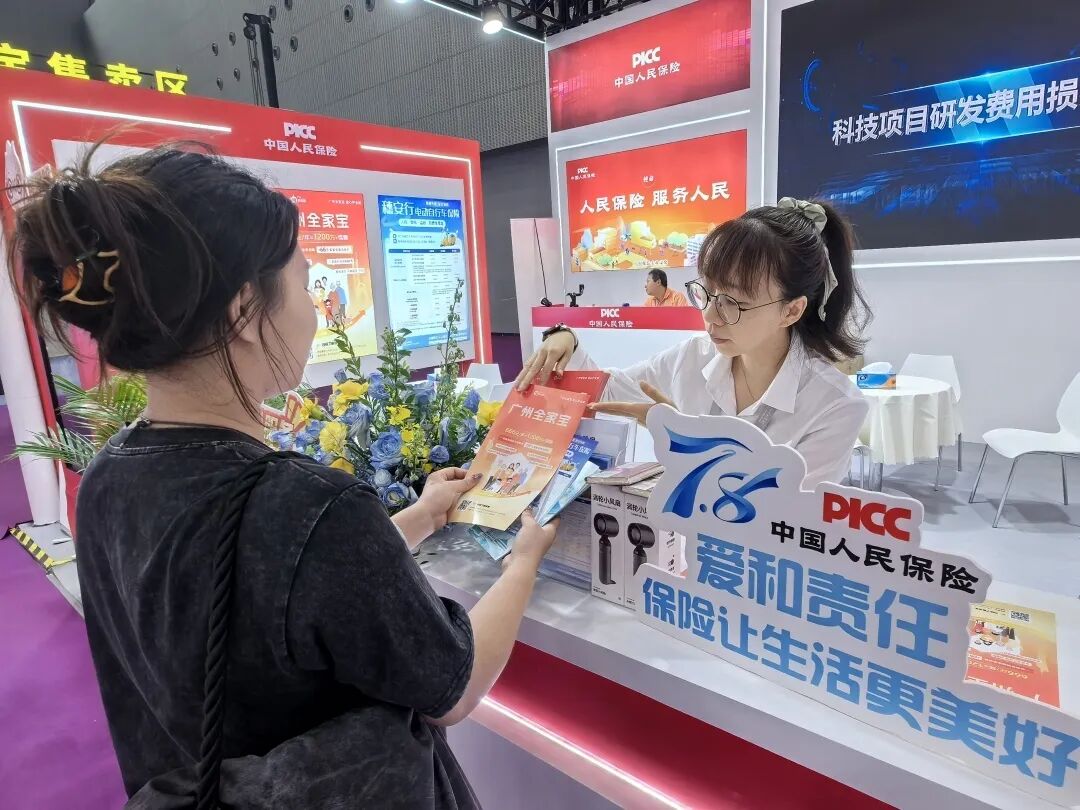
Core Viewpoint - The China People's Property Insurance Company Guangzhou Branch (referred to as "PICC Guangzhou Branch") is committed to the principle of "People's Insurance Serves the People," focusing on five key areas: technology finance, green finance, inclusive finance, pension finance, and digital finance, to support high-quality economic development and enhance public welfare [1][22]. Technology Finance - PICC Guangzhou Branch has become a leader in intellectual property insurance, providing critical support for technology companies facing overseas patent infringement disputes, with over 500 companies served and risk coverage exceeding 1 billion yuan by 2025 [4][25]. - The company has launched specialized insurance products for the automotive chip industry and low-altitude economy, including the first "low-altitude aircraft exclusive insurance" in China, providing over 320 million yuan in risk coverage for related enterprises [5][26]. - By the end of 2025, PICC Guangzhou Branch has provided risk protection for over 4,300 technology enterprises, amounting to 1.19 trillion yuan, effectively supporting the development of new productive forces [6][27]. Green Finance - The company has provided over 12 billion yuan in risk coverage for various clean energy projects, including wind, solar, and energy storage, and has introduced innovative insurance products for electric vehicle charging stations [9][30]. - PICC Guangzhou Branch has developed comprehensive insurance products for forestry carbon sinks and has collaborated with banks to create new models for carbon emission rights pledge loans, addressing financing challenges for green projects [9][30]. - The company is actively involved in agricultural green development, launching the first "Litchi Full Lifecycle Protection Project" in China, which aims to enhance financial support for specialty agriculture [10][31]. Inclusive Finance - The "Agricultural Revitalization Loan" product has provided significant financial support to farmers, with nearly 20 million yuan disbursed by 2025, helping to alleviate funding challenges in rural areas [12][34]. - PICC Guangzhou Branch has established a comprehensive insurance service network for agriculture, offering specialized products to support farmers' income and addressing financing difficulties for small and micro enterprises [12][34]. - The company has played a crucial role in social governance, providing insurance solutions for various community needs, including coverage for new employment forms and special groups [13][35]. Pension Finance - The company has enhanced its pension financial products, integrating medical insurance with commercial insurance to provide comprehensive coverage for the elderly [14][37]. - By 2025, PICC Guangzhou Branch has upgraded its services to include innovative products that cover 104 types of new drugs and medical devices, reducing the financial burden on patients [14][37]. - The company has received recognition for its innovative approaches in smart medical insurance, contributing to efficient fund management and disease protection for specific populations [15][38]. Digital Finance - PICC Guangzhou Branch has utilized technology for risk prevention, employing drones and AI for safety inspections during major events, providing over 100 billion yuan in coverage for the 15th National Games [17][41]. - The company has introduced digital tools like the "Trade Risk Map," enabling businesses to assess global market risks and enhance their competitiveness [18][42]. - In rural revitalization, the company has established an AI-driven disaster reduction management platform, significantly reducing operational costs and pesticide use for farmers [19][43]. Future Outlook - The company aims to continue its growth trajectory, focusing on technological innovation, expanding green finance products, optimizing pension services, and enhancing inclusive finance to better serve the community and support Guangzhou's development goals [21][44].
上海华瑞银行数字化创新赋能小微融资
Sou Hu Cai Jing· 2025-12-29 10:52
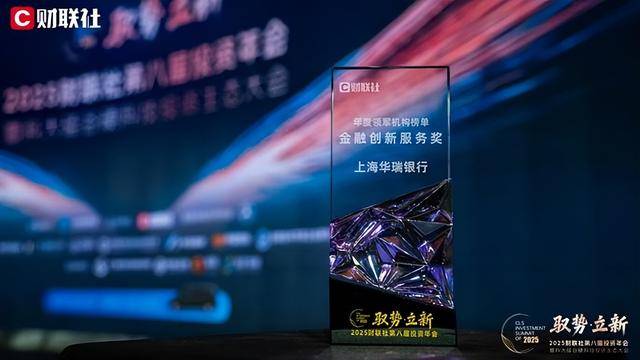
12月29日,由上海报业集团指导,智通财经主办的2025第八届投资年会在合肥举行,会议期间揭晓了 2025智通财经资本市场最具价值影响力榜单,上海华瑞银行凭借卓越的创新能力和良好的服务能力,荣 获"金融创新服务奖"。 上海华瑞银行通过持续深化银政合作、强化科技赋能,不断推进本地普惠金融业务的数字化、线上化, 有效提升了小微企业融资的便利性与满意度。作为扎根上海的法人银行,华瑞银行始终将服务本地实体 经济作为初心使命,精准对接上海小微企业融资需求、赋能本土民营经济发展的切实举措。通过简化流 程、提升效率、降低成本,该行为上海众多小微企业和个体工商户发展提供了有力支持,进一步激发了 市场主体活力,为上海民营经济高质量发展注入了持续、稳定的金融活水。 未来,华瑞银行将继续秉持"服务本地、惠泽小微"的理念,深耕区域市场,以科技驱动服务创新,以匠 心诠释金融担当,助力上海打造国际一流营商环境,在促进本地小微企业健康成长、支持上海民营经济 繁荣发展的道路上贡献更多金融力量。 在这一创新模式的支撑下,上海华瑞银行"线上普惠经营贷"产品实现重要突破。企业在申请经营性抵押 贷款时,可通过"一网通办"平台直接在线提交抵押登记申请 ...