智慧农业

Search documents
科技助力 农业生产更智慧
Yang Shi Wang· 2025-12-08 00:21
Core Viewpoint - The article emphasizes the integration of modern service industries with advanced manufacturing and modern agriculture as part of the 14th Five-Year Plan, aiming for prioritized development in agriculture and rural areas by 2025, with a focus on enhancing food security and utilizing new technologies for efficient agricultural production [1] Group 1 - The 14th Five-Year Plan suggests improving the level of integration between modern service industries and advanced manufacturing, as well as modern agriculture [1] - By 2025, the country aims to prioritize agricultural and rural development, solidifying the foundation for food security [1] - The application of a series of new technologies is expected to support high yield and efficiency in agricultural production [1]
学习贯彻党的二十届四中全会精神·五年路上你我他——四中全会精神大家谈丨一头“智牛”耕出田野丰收景
He Nan Ri Bao· 2025-12-07 23:45
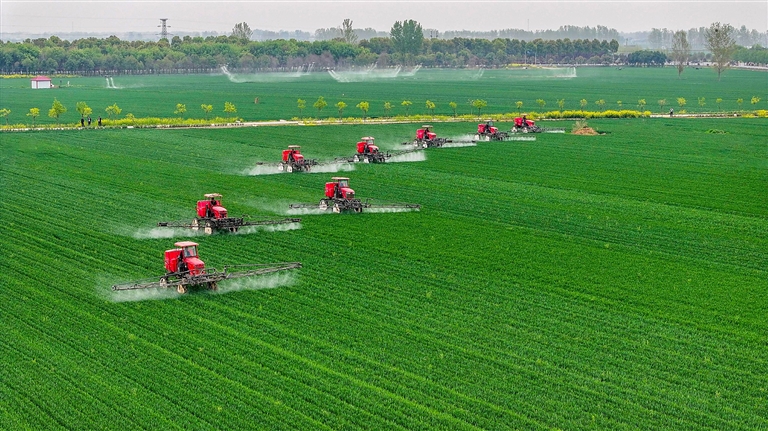
Core Viewpoint - The modernization of agriculture is fundamentally driven by technological advancement and innovation, with a focus on addressing the "three rural issues" as a priority for the party's work [2][10]. Group 1: Agricultural Modernization Efforts - The provincial government emphasizes the importance of agricultural modernization as a major industry, leveraging agricultural technology as a core support [2][10]. - Advanced technologies such as precision irrigation and intelligent monitoring are widely applied, enhancing agricultural productivity and efficiency [2][6]. Group 2: Technological Innovations - The city of Nanyang is focusing on agricultural technology as a key engine for ensuring stable food supply, with continuous improvements in agricultural technology innovation [5][6]. - The city has selected 55 new crop varieties during the 14th Five-Year Plan, maintaining a good seed coverage rate of over 98% [6]. Group 3: Smart Agriculture Development - The Denzhou Smart Agriculture Center is implementing a digital transformation from experience-based to data-driven farming, establishing a comprehensive monitoring system [7]. - Plans are in place to cover high-standard farmland with agricultural health monitoring devices within three years, aiming for a 60% coverage of intelligent operations for staple crops [7]. Group 4: New Farmers and Modern Techniques - New farmers, characterized by their knowledge and vitality, are increasingly utilizing modern technology to enhance agricultural practices, leading to reduced labor costs and increased yields [8]. - The integration of technology allows for more precise management of resources, resulting in higher net income per acre [8]. Group 5: Addressing Climate Challenges - The need for modern technology applications is emphasized to enhance agricultural resilience against extreme weather conditions, focusing on technological breakthroughs and industry integration [9]. Group 6: Future Agricultural Planning - The city plans to develop a modern agricultural industry by integrating technology, green practices, quality control, and branding, with a focus on high-quality rural industry development [10][11]. - Key initiatives include establishing green organic agricultural zones and promoting the development of six major industries and 19 industrial chains [11].

新华网:武汉智慧农业激发“绿色动能”
Xin Hua Wang· 2025-12-07 01:37
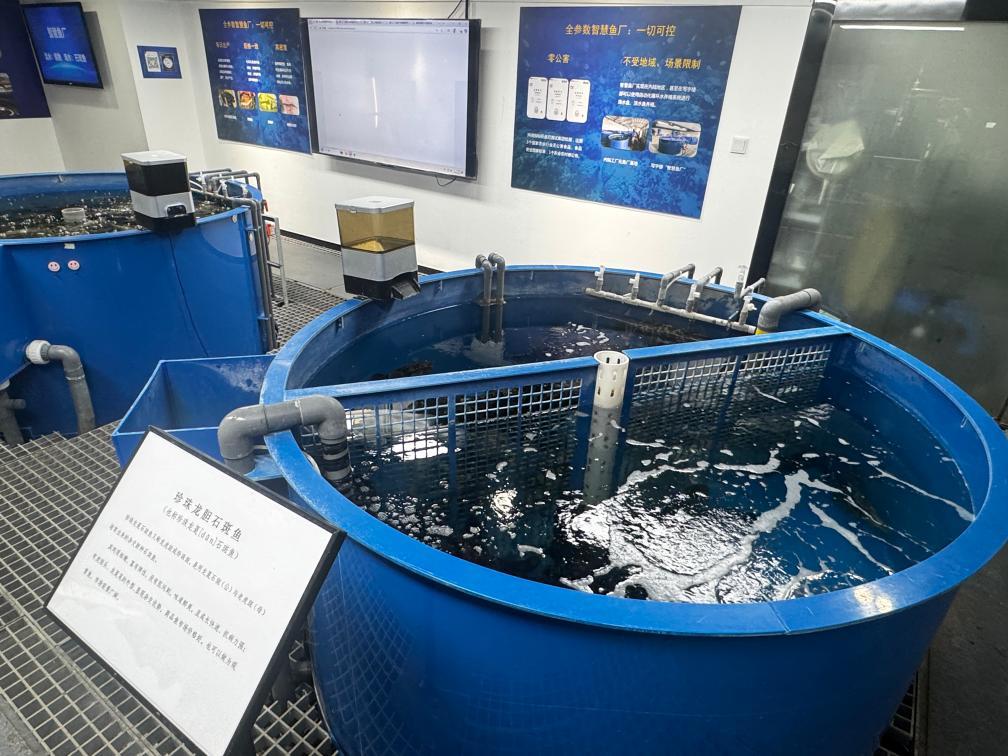
Group 1 - The core concept of the news is the innovative "seafood land farming" model, exemplified by the "smart fish factory" in Wuhan, which allows for the cultivation of high-quality seafood like grouper in urban settings, significantly reducing transportation losses and quality issues [1][3] - The smart fish factory utilizes a green aquaculture recycling system, achieving a production capacity that is over 20 times higher than traditional methods, with a cultivation period of 8 to 9 months for grouper, priced at approximately 45 yuan per kilogram [1] - The company behind the smart fish factory, Wuhan Zhongke Ruihua Ecological Technology Co., is expanding its operations to other inland cities, with plans to simplify equipment and reduce costs for small-scale farmers [2] Group 2 - The integration of technology in agriculture is highlighted, with examples such as the use of AI in optimizing chicken farming and recycling chicken manure into high-quality animal protein through black soldier fly cultivation [2][4] - The agricultural practices in Wuhan are showcasing significant economic benefits, with smart greenhouses achieving an average output value of over 20,000 yuan per acre and a threefold increase in production compared to traditional farming [4] - The Wuhan Municipal Agricultural and Rural Bureau emphasizes the importance of technological innovation and diverse agricultural models to enhance the quality and efficiency of modern agriculture [4]

黑龙江省打造智慧农业发展新高地
Ren Min Wang· 2025-12-05 16:42
Group 1 - Heilongjiang Province is advancing smart agriculture development by implementing the "Implementation Plan for the Development of Smart Agriculture" which outlines a roadmap and timeline for the province [1] - The province has established a comprehensive smart agricultural service system, with 16,000 new large and medium-sized intelligent agricultural drones, bringing the total to 33,000, and covering 70 million acres of aerial operations [1] - The application area for integrated water and fertilizer technology has reached 4.007 million acres, further solidifying the foundation for grain production [1] Group 2 - The integration of production, education, and research is deepening, with Harbin Institute of Technology developing a second-generation intelligent laser weeding robot that reduces average production costs by 10% and increases yield by 5% [2] - The establishment of the "Smart Farm Technology and System" national key laboratory by Beidahuang Group in collaboration with Harbin Institute of Technology and Northeast Agricultural University focuses on six major research directions including AI and crop modeling [2] - Beidahuang Group's case studies have been recognized as typical examples of smart agriculture by the Ministry of Agriculture and Rural Affairs, highlighting the implementation of digital technology in agricultural management [2]

视频丨向科技要产量 智慧“草莓工厂”实现四季不断供
Yang Shi Xin Wen Ke Hu Duan· 2025-12-05 03:39
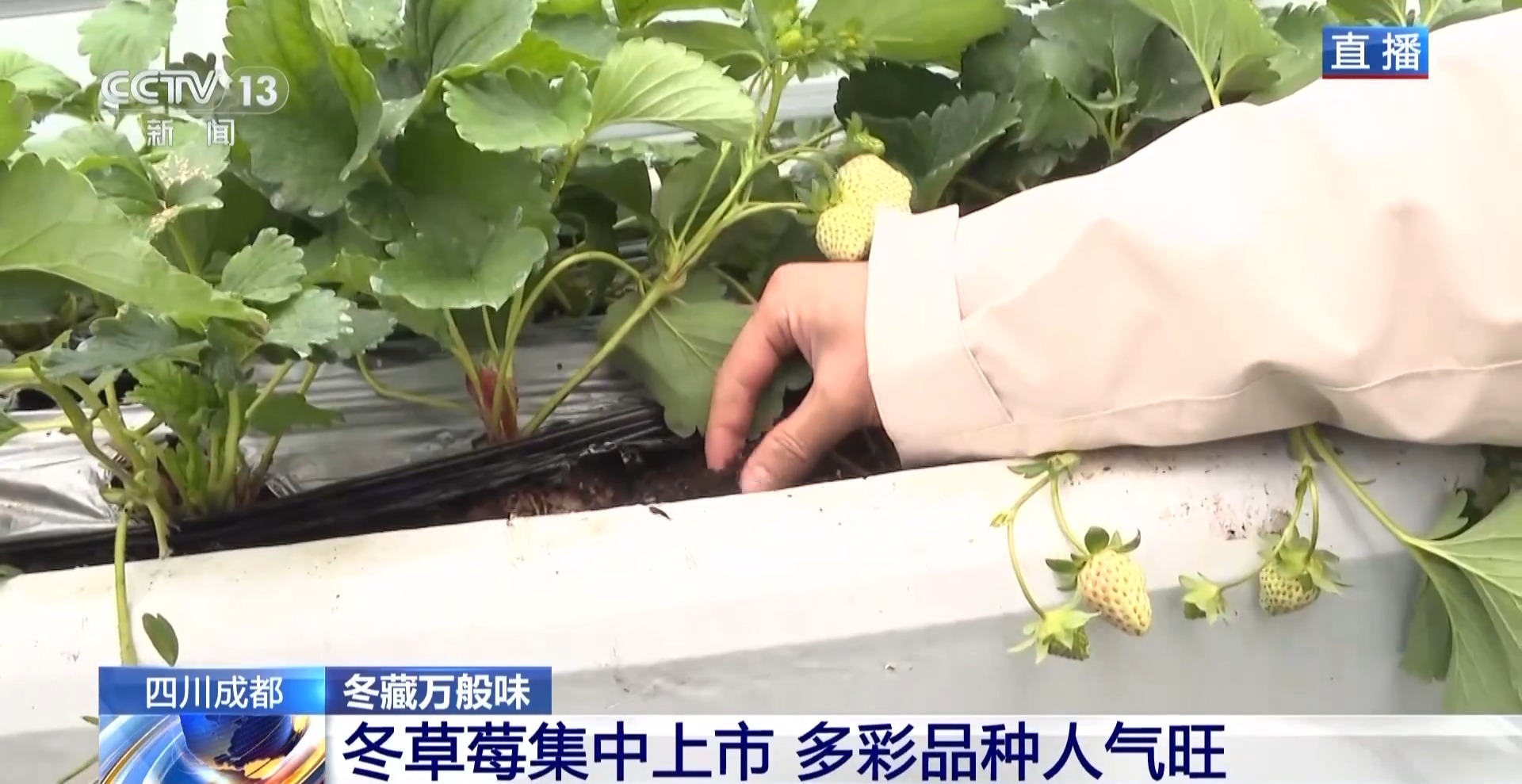
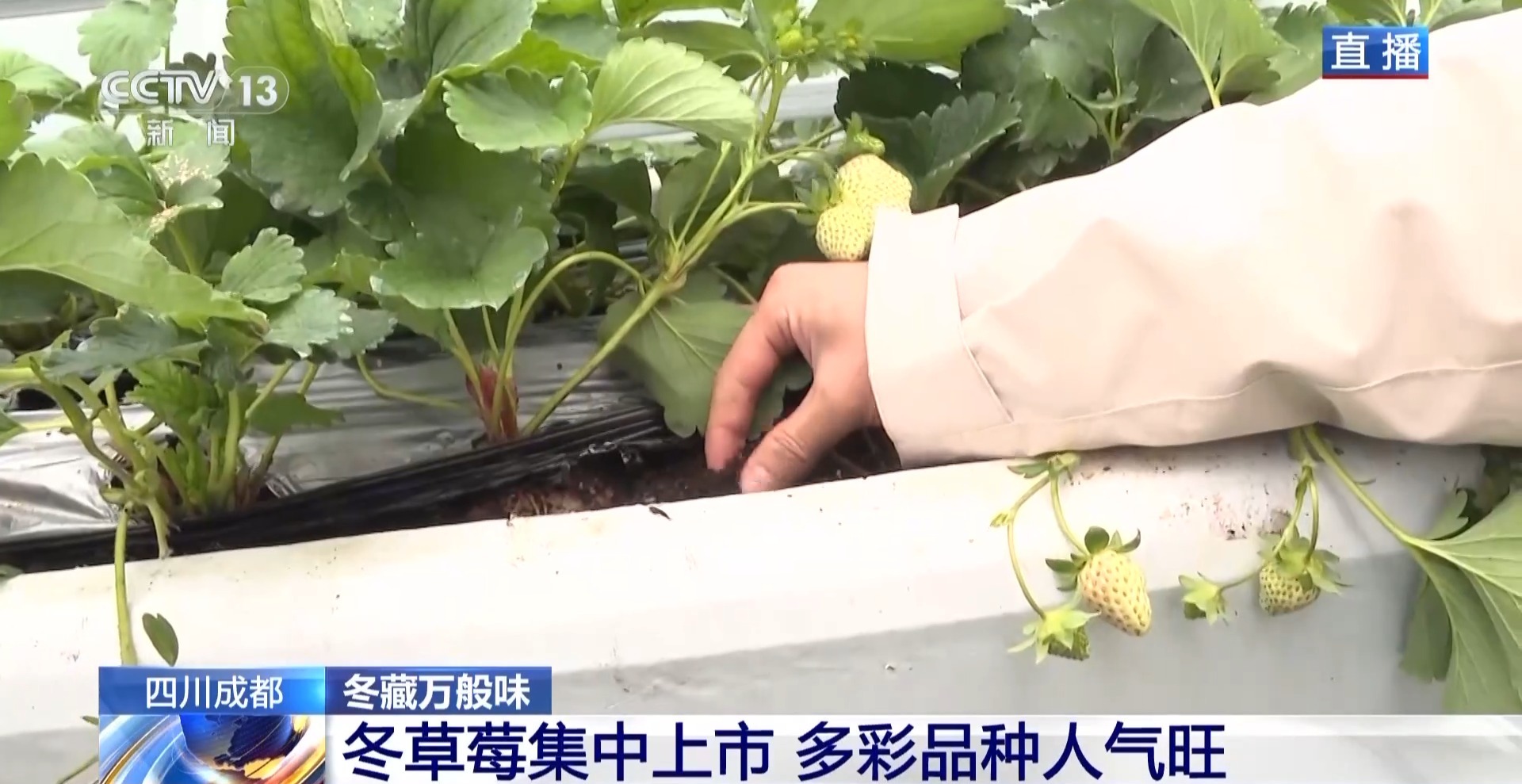
Core Viewpoint - The winter strawberry harvest in Chengdu, Sichuan, has begun, featuring various types including red, white, and pink strawberries, with a total planting area exceeding 40,000 acres and an annual yield of over 70,000 tons [1][11]. Group 1: Strawberry Cultivation Techniques - Chengdu's Tianfu New Area is a key zone for winter strawberry cultivation, with over 2,000 acres dedicated to smart greenhouse farming since 2011 [3]. - The use of vertical farming techniques and smart greenhouses enhances strawberry growth conditions, utilizing a mix of materials like coconut husk and nutrient soil to create a disease-free environment [5]. - Pollination is managed through the introduction of beehives to ensure even distribution of pollen, which helps reduce deformed fruits and improves both taste and appearance [7]. Group 2: Strawberry Varieties and Characteristics - Currently available winter strawberry varieties include "Hongyan" (red), "Fenyue" (pink), "Jiande Bailu" (white), and "Heizhenzhu" (dark red), each with distinct flavors and appearances [9]. - The "Jiande Bailu" variety is noted for its high sweetness and rich aroma, making it the most popular choice among consumers [11]. - Over the past decade, approximately 200 strawberry varieties have been developed in Sichuan, with color and taste differences attributed to genetic factors and anthocyanin accumulation [12][14]. Group 3: Innovative Farming Practices - The "smart strawberry factory" in Chengdu's Wenjiang district allows for year-round strawberry harvesting, producing 30 to 40 times the yield of traditional farming methods [21]. - This facility employs vertical farming design, with over 13,000 strawberry plants cultivated in a 200-square-meter area, equivalent to 3 acres of traditional land [23][25]. - Advanced technology, including automated irrigation systems and real-time monitoring of environmental parameters, supports optimal growth conditions, enabling a stable annual yield of 73 tons [27].
向科技要产量 智慧“草莓工厂”实现四季不断供
Yang Shi Xin Wen Ke Hu Duan· 2025-12-05 01:44
Core Insights - The article highlights the successful cultivation and harvesting of winter strawberries in Chengdu, Sichuan, showcasing various strawberry varieties and advanced agricultural techniques [1][3][5] Group 1: Strawberry Varieties and Characteristics - Chengdu's winter strawberries include four main varieties: "Hong Yan" (red), "Fen Yu" (pink), "Jian De Bai Lu" (white), and "Hei Zhen Zhu" (dark red), each with distinct flavors and appearances [5][7] - The sweetness and flavor profile of strawberries are influenced by genetic traits and the accumulation of anthocyanins, which determine their color [9][11] Group 2: Agricultural Techniques and Innovations - The introduction of smart greenhouse technology in Chengdu has transformed strawberry farming, with over 4,000 acres dedicated to winter strawberry cultivation, yielding more than 70,000 tons [7][15] - The use of vertical farming in a "strawberry factory" allows for year-round production, achieving yields 30 to 40 times higher than traditional methods, with daily outputs of 400 pounds and annual production of 73 tons [15][17] Group 3: Pollination and Quality Control - To enhance fruit quality and reduce deformities, beehives are utilized for pollination, ensuring even distribution of pollen [3][5] - Advanced monitoring systems in smart farms track environmental parameters, allowing for precise control of growing conditions, which contributes to healthier strawberry production [15][17]
2025年海南冬交会开幕 逾2000家企业参展
Zhong Guo Xin Wen Wang· 2025-12-04 14:07
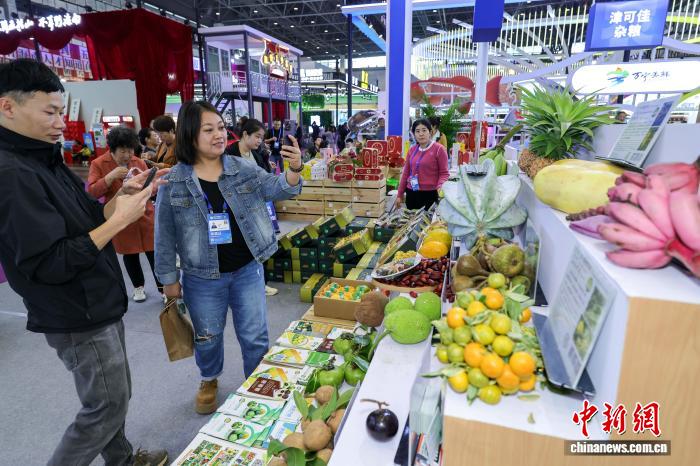
Core Points - The 28th China (Hainan) International Tropical Agricultural Winter Trade Fair opened on December 4, 2025, in Haikou, featuring over 2,000 enterprises from 16 countries and regions [1][3][5] - The theme of this year's fair is "Gathering Agricultural Excellence, Enjoying Free Trade Opportunities," with an exhibition area of 75,000 square meters and nine major exhibition zones [1][3] Group 1: Exhibition Highlights - The fair showcased 24 new products, including "Yuxiang Fubao" mini taro winter melon, powder fruit tomatoes, and DJI agricultural drone T100S, in the debut area [3] - The industry chain exhibition area featured domestic durians, Hainan mangoes, and honey melons, while the agricultural technology area displayed smart agriculture platforms and drone applications [3][7] Group 2: Special Features - Thailand and Pakistan were designated as the dual guest countries, with unique products such as Thai latex pillows, Pakistani rice, Cambodian mangoes, and Malaysian Musang King durians prominently displayed [3][5] - The "Hainan Fresh Products" tasting event highlighted local ingredients like Hainan beef, Tunchang black pigs, and Hainan snapper, allowing attendees to experience the high quality of Hainan's agricultural products [7] Group 3: Supporting Activities - The "Hainan Agricultural Brand Directory (2025)" was officially released, including five regional public brands, 20 "Hainan Fresh Products" brands, 10 enterprise brands, and 20 agricultural product brands [5] - A trade promotion meeting facilitated in-depth discussions between government and enterprises on agricultural industry chain cooperation, resulting in preliminary agreements on several projects [5][7]
人工智能重塑粮食产业价值链
Jing Ji Ri Bao· 2025-12-04 00:29
Core Viewpoint - Artificial intelligence (AI) is transforming the food industry by shifting from extensive management to precise management, significantly reducing food loss and waste, which represents a substantial hidden cost in the industry [1][2]. Group 1: AI in Food Industry Management - AI acts as a "calculating master" in reducing food loss and waste, with significant potential for savings in the food supply chain [1][2]. - In the procurement phase, AI visual recognition systems enhance sampling efficiency and fairness, minimizing losses caused by delays and misjudgments [2]. - AI-driven sensors and IoT in storage facilities enable continuous monitoring and analysis of grain conditions, providing automatic alerts and controlling environmental systems to protect grain quality [2]. Group 2: AI in Agricultural Production - AI is pivotal in the agricultural sector, facilitating precision farming through accurate fertilization, irrigation, and pest diagnosis, which reduces chemical usage and conserves water [3]. - AI can predict crop yields months in advance by analyzing weather data, historical yields, and real-time crop images, thus supporting informed decision-making [3]. - The integration of AI with blockchain technology creates a traceable quality assurance system from farm to table, enhancing food safety and brand trust [3]. Group 3: AI as an Innovation Engine - AI is driving the food industry from initial processing to full-value utilization, uncovering hidden values in by-products and enhancing industry resilience [4]. - By optimizing processes, AI converts by-products like rice bran and soybean residue into high-value products, alleviating feed resource shortages and increasing profitability [4]. - AI supports food innovation, leading to the development of new products such as soybean ice cream, thereby extending the industry chain and improving risk management [4]. Group 4: AI and Industry Ecosystem - AI is reshaping the industry ecosystem, giving rise to new business models and collaborative supply chains [5]. - Fully automated "dark factories" controlled by robots and AI systems enable continuous production, significantly enhancing efficiency and product quality [5]. - The combination of AI and big data facilitates integrated platforms that connect various stakeholders in the food supply chain, addressing issues of fragmentation and information flow [5]. Group 5: Challenges and Future Directions - Despite the potential of AI in the food sector, challenges such as inconsistent agricultural data standards, high costs, and talent shortages remain [5]. - There is a need for national policy implementation, collaborative efforts, and the development of low-cost, modular AI solutions to enhance industry adoption [5]. - Establishing a comprehensive data collection system and fostering interdisciplinary talent development are essential for AI to effectively empower the food industry [5].
中经评论:人工智能重塑粮食产业价值链
Jing Ji Ri Bao· 2025-12-04 00:14
Core Insights - Artificial intelligence (AI) is a key driver of the new technological revolution and industrial transformation in the food industry, enhancing production efficiency and reshaping the value chain [1][2][3] Group 1: AI in Food Industry Efficiency - AI is becoming a "calculating machine" for reducing food waste, transitioning the food supply chain from extensive to refined management [1] - In the procurement phase, AI visual recognition systems significantly improve sampling efficiency and fairness, reducing losses caused by waiting and misjudgment [1] - AI monitors grain conditions in storage through sensors and IoT, providing continuous analysis and automatic alerts to optimize storage conditions [1] Group 2: Data-Driven Agriculture - AI facilitates a shift from experience-driven to data-driven practices in agriculture, optimizing resource allocation and production decisions [2] - In agricultural production, AI applications include precision fertilization and irrigation, significantly reducing the misuse of fertilizers and pesticides while conserving water [2] - AI can predict crop yields months in advance by analyzing meteorological data and historical yield information, providing scientific support for decision-making [2] Group 3: Value Addition and Resilience - AI acts as an "innovation engine," transforming the food industry from primary processing to full-value utilization, uncovering hidden value in by-products [3] - AI optimizes processes to convert by-products like rice bran and soybean residue into high-value products, alleviating feed resource shortages [3] - The technology supports food innovation, creating new products such as soybean ice cream, enhancing the value of high-quality soybean resources [3] Group 4: Reshaping Industry Ecosystem - AI is reshaping the industry ecosystem, leading to new industrial models and full-chain collaboration, exemplified by fully automated "dark factories" [4] - The integration of AI and big data enables seamless connections among farmers, storage companies, processing plants, and sales terminals, addressing pain points in the food supply chain [4] - Future potential for AI in agriculture faces challenges such as inconsistent data standards and high costs, necessitating policy support and talent development [4]
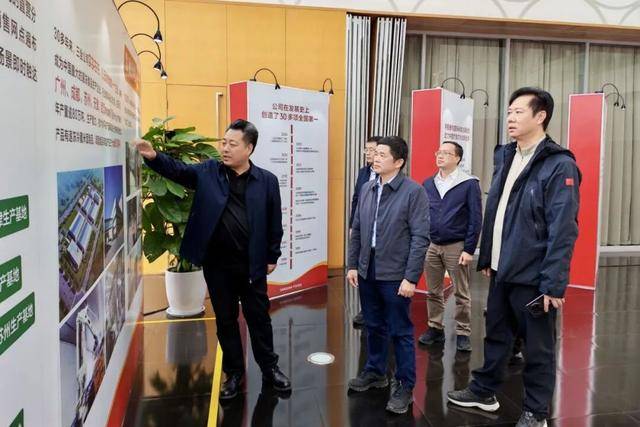
率队来河南考察,广西农投集团董事长:有启发
Sou Hu Cai Jing· 2025-12-03 09:41
Group 1 - Guangxi Rural Investment Group, led by Chairman Liao Yingcan, conducted a research trip to Henan, visiting several key enterprises and institutions to learn from their technological advantages and successful experiences in agricultural product processing, cold chain logistics, market operations, brand marketing, agricultural machinery research and development, and agricultural finance [2] - During the visit, discussions were held with Henan Agricultural Investment Group to explore cooperation in areas such as agricultural social services, agricultural product processing and trade, foreign agricultural cooperation, smart agriculture, bulk agricultural product trade, and deep processing of agricultural products [2] - The innovative development paths of leading agricultural enterprises in Henan provided insights for Guangxi Rural Investment Group's planning of the "14th Five-Year Plan," aiming to explore feasible cooperation models and inject new momentum into the transformation and upgrading of Guangxi's characteristic agricultural industry [2] Group 2 - Henan and Guangxi, as two major agricultural provinces, have a deep cooperative history and vast cooperation potential [3] - Nanning serves as a key platform for trade cooperation between China and ASEAN, facilitating the transport of Henan's frozen and leisure foods to Guangxi and subsequently to ASEAN countries through a multi-modal transport system [3] - By 2024, ASEAN is projected to become Henan's largest trading partner, with this trend expected to continue into 2025 [3]