
期权策略

Search documents
能源化工期权策略早报-20250902
Wu Kuang Qi Huo· 2025-09-02 01:08
1. Report Industry Investment Rating - No relevant content provided 2. Core Viewpoints of the Report - The energy - chemical sector is divided into energy, alcohols, polyolefins, rubber, polyesters, alkalis, and others. For each sector, some varieties are selected to provide option strategies and suggestions. Each option variety's strategy report includes an analysis of the underlying asset's market, option factor research, and option strategy recommendations [9] 3. Summary According to Related Catalogs 3.1 Futures Market Overview - The report presents the latest prices, price changes, price change percentages, trading volumes, volume changes, open interests, and open interest changes of various energy - chemical option underlying futures contracts such as crude oil, liquefied petroleum gas (LPG), methanol, etc. For example, the latest price of crude oil SC2510 is 489, with a price increase of 5 and a price increase percentage of 1.10% [4] 3.2 Option Factors 3.2.1 Volume and Open Interest PCR - The volume PCR and open interest PCR of different option varieties are provided, which are used to describe the strength of the option underlying market and the turning point of the underlying market respectively. For instance, the volume PCR of crude oil is 0.75 with a change of - 0.01, and the open interest PCR is 0.66 with a change of 0.02 [5] 3.2.2 Pressure and Support Levels - The pressure points, pressure point offsets, support points, support point offsets, maximum call option open interests, and maximum put option open interests of various option varieties are given. For example, the pressure point of crude oil is 600 and the support point is 415 [6] 3.2.3 Implied Volatility - The report shows the at - the - money implied volatility, weighted implied volatility, weighted implied volatility change, annual average implied volatility, call option implied volatility, put option implied volatility, 20 - day historical volatility, and the difference between implied and historical volatility of different option varieties. For example, the at - the - money implied volatility of crude oil is 24.095, and the weighted implied volatility is 26.73 with a change of 1.15 [7] 3.3 Option Strategies and Suggestions 3.3.1 Energy - Class Options - **Crude Oil**: The fundamental situation of crude oil is healthy with OPEC showing a restraint attitude to support prices. The market has been fluctuating, with short - term weakness. Option strategies include constructing a neutral call + put option combination for volatility strategy and a long collar strategy for spot hedging [8] - **LPG**: The domestic supply of LPG is loose, and the demand is low. The market has been in a weak state. Option strategies involve constructing a short - biased call + put option combination for volatility strategy and a long collar strategy for spot hedging [10] 3.3.2 Alcohol - Class Options - **Methanol**: The import volume of methanol has increased, and the downstream demand is weak. The market has been in a downward trend. Option strategies include a bear spread strategy for directional trading, a short - biased call + put option combination for volatility strategy, and a long collar strategy for spot hedging [10] - **Ethylene Glycol**: The port inventory of ethylene glycol is decreasing. The market has been in a wide - range weak fluctuation. Option strategies include a short - volatility strategy for volatility trading and a long collar strategy for spot hedging [11] 3.3.3 Polyolefin - Class Options - **Polypropylene**: The inventory of polypropylene has decreased. The market has been in a weak state. Option strategies include a long collar strategy for spot hedging [11] 3.3.4 Rubber - Class Options - **Rubber**: The capacity utilization rate of rubber tire enterprises has changed. The market has been in a short - term weak state. Option strategies include constructing a neutral call + put option combination for volatility strategy [12] 3.3.5 Polyester - Class Options - **PTA**: The social inventory of PTA has decreased, and the downstream load has increased. The market has been in a weak rebound state. Option strategies include constructing a neutral call + put option combination for volatility strategy [12] 3.3.6 Alkali - Class Options - **Caustic Soda**: The average capacity utilization rate of caustic soda enterprises has decreased. The market has been in a fluctuating state. Option strategies include a long collar strategy for spot hedging [13] - **Soda Ash**: The inventory of soda ash has decreased. The market has been in a fluctuating state with support at the bottom. Option strategies include a short - volatility combination strategy for volatility trading and a long collar strategy for spot hedging [13] 3.3.7 Other Options - **Urea**: The port inventory of urea has increased, and the enterprise inventory is under pressure. The market has been in a low - level fluctuation state. Option strategies include constructing a short - biased call + put option combination for volatility strategy and a long collar strategy for spot hedging [14]
农产品期权策略早报-20250902
Wu Kuang Qi Huo· 2025-09-02 01:08
1. Report Industry Investment Rating No relevant content provided. 2. Core Viewpoints of the Report - The agricultural product sector includes beans, oils, agricultural by - products, soft commodities, grains, and others. Each sector selects some varieties for option strategy recommendations, and the strategy report for each option variety is compiled based on the analysis of the underlying market, option factor research, and option strategy suggestions [8]. - Oil - and - fat and oilseed agricultural products are in a weak and volatile state, oils are in a volatile market, agricultural by - products maintain a volatile trend, soft commodity sugar has a slight fluctuation, cotton is in a weak consolidation, and grains such as corn and starch are in a weak and narrow - range consolidation. It is recommended to construct an option portfolio strategy mainly based on sellers, as well as spot hedging or covered strategies to enhance returns [2]. 3. Summary According to Related Catalogs 3.1 Futures Market Overview - The latest prices, price changes, price change rates, trading volumes, volume changes, open interests, and position changes of multiple agricultural product option underlying contracts are presented, including soybeans (A2511, B2511), soybean meal (M2511), rapeseed meal (RM2511), palm oil (P2510), soybean oil (Y2511), rapeseed oil (OI2511), eggs (JD2510), live pigs (LH2511), peanuts (PK2510), apples (AP2601), jujubes (CJ2601), sugar (SR2511), cotton (CF2511), corn (C2511), starch (CS2511), and logs (LG2511) [3]. 3.2 Option Factor - Quantity and Position PCR - The trading volume, volume change, open interest, position change, trading volume PCR, volume PCR change, open interest PCR, and position PCR change of multiple agricultural product options are provided, which are used to describe the strength of the option underlying market and the turning point of the underlying market [4]. 3.3 Option Factor - Pressure and Support Levels - The underlying contract, at - the - money strike price, pressure point, pressure point deviation, support point, support point deviation, maximum call option position, and maximum put option position of multiple agricultural product options are given, which show the pressure and support levels of the option underlying from the perspective of the strike price of the maximum call and put option positions [5]. 3.4 Option Factor - Implied Volatility - The at - the - money implied volatility, weighted implied volatility, weighted implied volatility change, annual average implied volatility, call option implied volatility, put option implied volatility, 20 - day historical volatility, and implied - historical volatility difference of multiple agricultural product options are presented [6]. 3.5 Option Strategies and Suggestions 3.5.1 Oil - and - Fat and Oilseed Options - **Soybeans (A2511, B2511)**: The US soybean good - rate is increasing, and the Brazilian soybean CNF premium, import cost, and margin are decreasing. The soybean market is in a weak and volatile state. It is recommended to construct a neutral call + put option selling combination strategy and a long collar strategy for spot hedging [7]. - **Soybean Meal (M2511)**: The domestic soybean crushing volume and operating rate are increasing. The soybean meal market is in a weak and volatile state with pressure above. It is recommended to construct a bear spread strategy of put options, a short - biased call + put option selling combination strategy, and a long collar strategy for spot hedging [9]. - **Palm Oil (P2510)**: The palm oil market shows a short - term bullish upward and then retracement trend. The implied volatility is falling to a level below the historical average. It is recommended to construct a long - biased call + put option selling combination strategy and a long collar strategy for spot hedging [10]. - **Peanuts (PK2510)**: The peanut price has increased slightly, but the downstream follow - up is not as expected. The market is in a weak consolidation state. It is recommended to construct a bear spread strategy of put options and a long collar strategy for spot hedging [11]. 3.5.2 Agricultural By - product Options - **Live Pigs (LH2511)**: The supply is relatively loose, and the demand is stimulated. The market is in a weak consolidation state. It is recommended to construct a short - biased call + put option selling combination strategy and a covered call strategy for spot [11]. - **Eggs (JD2510)**: The egg supply is abundant, and the demand is weak. The market is in a weak and bearish state. It is recommended to construct a bear spread strategy of put options, a short - biased call + put option selling combination strategy [12]. - **Apples (AP2511)**: The cold - storage apple inventory is at a low level in recent years. The market is in a state of continuous recovery and upward movement with pressure above. It is recommended to construct a long - biased call + put option selling combination strategy [12]. - **Jujubes (CJ2601)**: The jujube inventory is decreasing, and the market shows a short - term retracement trend. It is recommended to construct a neutral wide - straddle option selling combination strategy and a covered call strategy for spot hedging [13]. 3.5.3 Soft Commodity Options - **Sugar (SR2511)**: The sugar inventory pressure is not large, but the new - season production is expected to be high. The market is in a weak and bearish state. It is recommended to construct a short - biased call + put option selling combination strategy and a long collar strategy for spot hedging [13]. - **Cotton (CF2511)**: The cotton production in Xinjiang is expected to increase. The market is in a short - term weak state. It is recommended to construct a long - biased call + put option selling combination strategy and a covered call strategy for spot [14]. 3.5.4 Grain Options - **Corn (C2511)**: The corn inventory in the northern port is decreasing, and the new - season supply is limited. The market is in a weak and bearish state with a rebound. It is recommended to construct a short - biased call + put option selling combination strategy [14].
金融期权策略早报-20250902
Wu Kuang Qi Huo· 2025-09-02 01:07
1. Report Industry Investment Rating - No information provided in the report 2. Core Views of the Report - The Shanghai Composite Index, large-cap blue-chip stocks, small and medium-cap stocks, and ChiNext stocks are showing a market trend of bullish upward movement with high-level fluctuations [2] - The implied volatility of financial options is gradually rising and fluctuating at a relatively high level compared to the mean [2] - For ETF options, it is suitable to construct a bullish buyer strategy and a bull spread strategy for call options; for index options, it is suitable to construct a bullish seller strategy, a bull spread strategy for call options, and an arbitrage strategy between synthetic long futures with options and short futures [2] 3. Summary by Relevant Catalogs 3.1 Financial Market Important Index Overview - The Shanghai Composite Index closed at 3,875.53, up 0.46% with a trading volume of 120.83 billion yuan [3] - The Shenzhen Component Index closed at 12,828.95, up 1.05% with a trading volume of 154.16 billion yuan [3] - The SSE 50 Index closed at 2,981.20, up 0.16% with a trading volume of 19.53 billion yuan [3] - The CSI 300 Index closed at 4,523.71, up 0.60% with a trading volume of 77.04 billion yuan [3] - The CSI 500 Index closed at 7,110.29, up 0.94% with a trading volume of 53.62 billion yuan [3] - The CSI 1000 Index closed at 7,501.15, up 0.84% with a trading volume of 56.46 billion yuan [3] 3.2 Option Underlying ETF Market Overview - The SSE 50 ETF closed at 3.113, up 0.03% with a trading volume of 9.4711 million shares and a turnover of 2.944 billion yuan [4] - The SSE 300 ETF closed at 4.616, up 0.33% with a trading volume of 11.9399 million shares and a turnover of 5.495 billion yuan [4] - The SSE 500 ETF closed at 7.206, up 0.91% with a trading volume of 1.8308 million shares and a turnover of 1.313 billion yuan [4] - The Huaxia Science and Technology Innovation 50 ETF closed at 1.431, up 1.35% with a trading volume of 44.3074 million shares and a turnover of 6.286 billion yuan [4] - The E Fund Science and Technology Innovation 50 ETF closed at 1.398, up 1.23% with a trading volume of 12.4336 million shares and a turnover of 1.726 billion yuan [4] - The Shenzhen 300 ETF closed at 4.762, up 0.34% with a trading volume of 1.7114 million shares and a turnover of 0.812 billion yuan [4] - The Shenzhen 500 ETF closed at 2.875, up 0.59% with a trading volume of 0.9851 million shares and a turnover of 0.282 billion yuan [4] - The Shenzhen 100 ETF closed at 3.396, up 0.92% with a trading volume of 0.6658 million shares and a turnover of 0.224 billion yuan [4] - The ChiNext ETF closed at 2.927, up 2.16% with a trading volume of 20.641 million shares and a turnover of 5.979 billion yuan [4] 3.3 Option Factor - Volume and Open Interest PCR - For the SSE 50 ETF option, the volume PCR was 0.80 (up 0.14) and the open interest PCR was 0.94 (down 0.01) [5] - For the SSE 300 ETF option, the volume PCR was 0.97 (up 0.16) and the open interest PCR was 1.28 (up 0.04) [5] - For the SSE 500 ETF option, the volume PCR was 0.96 (down 0.01) and the open interest PCR was 1.32 (down 0.01) [5] - For the Huaxia Science and Technology Innovation 50 ETF option, the volume PCR was 0.65 (up 0.03) and the open interest PCR was 1.01 (up 0.03) [5] - For the E Fund Science and Technology Innovation 50 ETF option, the volume PCR was 0.74 (up 0.06) and the open interest PCR was 0.96 (up 0.02) [5] - For the Shenzhen 300 ETF option, the volume PCR was 0.95 (down 0.21) and the open interest PCR was 1.10 (unchanged) [5] - For the Shenzhen 500 ETF option, the volume PCR was 1.07 (up 0.01) and the open interest PCR was 0.84 (down 0.01) [5] - For the Shenzhen 100 ETF option, the volume PCR was 2.02 (up 0.67) and the open interest PCR was 1.15 (up 0.03) [5] - For the ChiNext ETF option, the volume PCR was 0.71 (up 0.08) and the open interest PCR was 1.43 (up 0.08) [5] - For the SSE 50 index option, the volume PCR was 0.50 (up 0.18) and the open interest PCR was 0.66 (up 0.02) [5] - For the CSI 300 index option, the volume PCR was 0.57 (up 0.07) and the open interest PCR was 0.87 (up 0.01) [5] - For the CSI 1000 index option, the volume PCR was 0.78 (up 0.02) and the open interest PCR was 1.13 (up 0.02) [5] 3.4 Option Factor - Pressure and Support Levels - For the SSE 50 ETF, the pressure level was 3.20 and the support level was 3.10 [7] - For the SSE 300 ETF, the pressure level was 4.60 and the support level was 4.40 [7] - For the SSE 500 ETF, the pressure level was 7.00 and the support level was 6.75 [7] - For the Huaxia Science and Technology Innovation 50 ETF, the pressure level was 1.40 and the support level was 1.35 [7] - For the E Fund Science and Technology Innovation 50 ETF, the pressure level was 1.55 and the support level was 1.35 [7] - For the Shenzhen 300 ETF, the pressure level was 4.80 and the support level was 4.70 [7] - For the Shenzhen 500 ETF, the pressure level was 2.85 and the support level was 2.80 [7] - For the Shenzhen 100 ETF, the pressure level was 3.70 and the support level was 3.30 [7] - For the ChiNext ETF, the pressure level was 2.95 and the support level was 2.60 [7] - For the SSE 50 index, the pressure level was 3,000 and the support level was 2,850 [7] - For the CSI 300 index, the pressure level was 4,500 and the support level was 4,250 [7] - For the CSI 1000 index, the pressure level was 7,500 and the support level was 7,000 [7] 3.5 Option Factor - Implied Volatility - For the SSE 50 ETF option, the at-the-money implied volatility was 20.53%, the weighted implied volatility was 21.38% (down 2.33%), and the difference between implied and historical volatility was 7.71% [9] - For the SSE 300 ETF option, the at-the-money implied volatility was 21.15%, the weighted implied volatility was 20.95% (down 2.37%), and the difference between implied and historical volatility was 6.39% [9] - For the SSE 500 ETF option, the at-the-money implied volatility was 25.16%, the weighted implied volatility was 25.01% (down 1.91%), and the difference between implied and historical volatility was 7.88% [9] - For the Huaxia Science and Technology Innovation 50 ETF option, the at-the-money implied volatility was 51.00%, the weighted implied volatility was 51.63% (down 6.46%), and the difference between implied and historical volatility was 28.03% [9] - For the E Fund Science and Technology Innovation 50 ETF option, the at-the-money implied volatility was 51.18%, the weighted implied volatility was 52.10% (down 6.54%), and the difference between implied and historical volatility was 27.26% [9] - For the Shenzhen 300 ETF option, the at-the-money implied volatility was 21.93%, the weighted implied volatility was 23.97% (down 3.41%), and the difference between implied and historical volatility was 8.02% [9] - For the Shenzhen 500 ETF option, the at-the-money implied volatility was 25.41%, the weighted implied volatility was 30.37% (down 1.21%), and the difference between implied and historical volatility was 13.45% [9] - For the Shenzhen 100 ETF option, the at-the-money implied volatility was 27.35%, the weighted implied volatility was 34.57% (down 0.22%), and the difference between implied and historical volatility was 13.95% [9] - For the ChiNext ETF option, the at-the-money implied volatility was 38.25%, the weighted implied volatility was 38.47% (down 4.25%), and the difference between implied and historical volatility was 14.12% [9] - For the SSE 50 index option, the at-the-money implied volatility was 22.09%, the weighted implied volatility was 21.67% (down 1.33%), and the difference between implied and historical volatility was 6.41% [9] - For the CSI 300 index option, the at-the-money implied volatility was 21.19%, the weighted implied volatility was 20.84% (down 2.50%), and the difference between implied and historical volatility was 6.20% [9] - For the CSI 1000 index option, the at-the-money implied volatility was 26.01%, the weighted implied volatility was 25.73% (down 1.58%), and the difference between implied and historical volatility was 5.83% [9] 3.6 Strategy and Recommendations - **Financial Stocks Sector (SSE 50 ETF, SSE 50)**: Directional strategy - construct a bull spread strategy for call options; volatility strategy - construct a bullish seller strategy; spot long covered call strategy - hold SSE 50 ETF and sell call options [12] - **Large-cap Blue-chip Stocks Sector (SSE 300 ETF, Shenzhen 300 ETF, CSI 300)**: Directional strategy - construct a bull spread strategy for call options; volatility strategy - construct a short volatility strategy by selling call and put options; spot long covered call strategy - hold relevant ETFs and sell call options [12] - **Large and Medium-sized Stocks Sector (Shenzhen 100 ETF)**: Directional strategy - construct a bull spread strategy for call options; volatility strategy - construct a short volatility strategy by selling call and put options; spot long covered call strategy - hold Shenzhen 100 ETF and sell call options [13] - **Small and Medium-cap Stocks Sector (SSE 500 ETF, Shenzhen 500 ETF, CSI 1000)**: Directional strategy - construct a bull spread strategy for call options; volatility strategy - for CSI 1000, construct a short volatility strategy; spot long covered call strategy - hold relevant ETFs and sell call options [13][15] - **ChiNext Sector (ChiNext ETF, Huaxia Science and Technology Innovation 50 ETF, E Fund Science and Technology Innovation 50 ETF)**: Directional strategy - construct a bull spread strategy for call options; volatility strategy - none; spot long covered call strategy - hold relevant ETFs and sell call options [15]
金属期权策略早报-20250901
Wu Kuang Qi Huo· 2025-09-01 07:31
1. Report Industry Investment Rating - No information provided in the document. 2. Core Viewpoints of the Report - The report provides a comprehensive analysis of metal options, including market conditions, option factors, and corresponding strategies for different metal sectors such as non-ferrous metals, precious metals, and black metals. It suggests specific option strategies based on the characteristics of each metal's market trends and option factors [2]. 3. Summary by Relevant Catalogs 3.1 Market Overview of Underlying Futures - The report presents the latest prices, price changes, trading volumes, and open interest changes of various metal futures contracts. For example, the latest price of copper futures (CU2510) is 79,680, with a price increase of 460 and a trading volume of 7.11 million lots [3]. 3.2 Option Factors 3.2.1 Volume and Open Interest PCR - The volume PCR and open interest PCR are used to describe the strength of the option underlying market and the turning point of the underlying market. For instance, the open interest PCR of copper options is 0.80, indicating certain pressure above the Shanghai copper price [4]. 3.2.2 Pressure and Support Levels - The pressure and support levels of each metal option are determined from the perspective of the maximum open interest of call and put options. For example, the pressure level of copper is 82,000, and the support level is 75,000 [5]. 3.2.3 Implied Volatility - The implied volatility of each metal option is analyzed, including at-the-money implied volatility, weighted implied volatility, and the difference between implied and historical volatility. For example, the at-the-money implied volatility of copper options is 9.38% [6]. 3.3 Option Strategies and Recommendations 3.3.1 Non - Ferrous Metals - **Copper Options**: Construct a short - volatility seller option portfolio strategy and a spot hedging strategy [8]. - **Aluminum/Alumina Options**: Build a bull spread strategy for call options, a short - neutral call + put option combination strategy, and a spot collar strategy [9]. - **Zinc/Lead Options**: Adopt a short - neutral call + put option combination strategy and a spot collar strategy [9]. - **Nickel Options**: Implement a short - bearish call + put option combination strategy and a spot covered call strategy [10]. - **Tin Options**: Use a short - volatility strategy and a spot collar strategy [10]. - **Lithium Carbonate Options**: Employ a short - neutral call + put option combination strategy and a spot long + put option + call option strategy [11]. 3.3.2 Precious Metals - **Gold/Silver Options**: Construct a short - neutral volatility option seller portfolio strategy and a spot hedging strategy [12]. 3.3.3 Black Metals - **Rebar Options**: Adopt a short - bearish call + put option combination strategy and a spot covered call strategy [13]. - **Iron Ore Options**: Implement a short - neutral call + put option combination strategy and a spot long collar strategy [13]. - **Ferroalloy Options**: Use a short - volatility strategy [14]. - **Industrial Silicon/Polysilicon Options**: Employ a short - volatility call + put option combination strategy and a spot hedging strategy [14]. - **Glass Options**: Adopt a short - volatility call + put option combination strategy and a spot long collar strategy [15].
农产品期权策略早报-20250901
Wu Kuang Qi Huo· 2025-09-01 01:35
1. Report Industry Investment Rating No relevant content provided. 2. Core Viewpoints of the Report - The agricultural product sector includes beans, oils, agricultural by - products, soft commodities, grains, and others. Oilseeds and oils, as well as agricultural by - products, are in a weak and volatile state, while soft commodities like sugar show slight fluctuations, and grains such as corn and starch are in a weak and narrow - range consolidation. It is recommended to construct option portfolio strategies mainly based on sellers, along with spot hedging or covered strategies to enhance returns [2]. 3. Summary by Relevant Catalogs 3.1 Futures Market Overview - The report presents the latest prices, price changes, price change percentages, trading volumes, volume changes, open interests, and open interest changes of various agricultural product futures, including soybeans, soybean meal, palm oil, eggs, etc [3]. 3.2 Option Factors 3.2.1 Volume and Open Interest PCR - It shows the volume, volume change, open interest, open interest change, volume PCR, volume PCR change, open interest PCR, and open interest PCR change of different agricultural product options, which are used to describe the strength of the option underlying market and the turning point of the underlying market [4]. 3.2.2 Pressure and Support Levels - From the perspective of the strike prices with the largest open interest of call and put options, the pressure and support levels of the underlying options are analyzed for various agricultural products [5]. 3.2.3 Implied Volatility - The report provides the at - the - money implied volatility, weighted implied volatility, weighted implied volatility change, annual average implied volatility, call implied volatility, put implied volatility, historical 20 - day volatility, and the difference between implied and historical volatility for different agricultural product options [6]. 3.3 Strategy and Recommendations for Different Agricultural Product Options 3.3.1 Oilseeds and Oils Options - **Beans (Soybean 1, Soybean 2)**: The fundamental situation of soybeans shows changes in US soybean good - rate and Brazilian soybean premiums, costs, and crushing margins. The soybean market has a short - term consolidation pattern. Options strategies include constructing a neutral call + put option selling combination strategy and a long collar strategy for spot hedging [7]. - **Soybean Meal, Rapeseed Meal**: The domestic soybean crushing volume and开机率 are expected to change. The soybean meal market is in a weak and volatile state. Strategies involve constructing a bear spread strategy for put options, a short - biased call + put option selling combination strategy, and a long collar strategy for spot hedging [9]. - **Palm Oil, Soybean Oil, Rapeseed Oil**: The fundamentals of oils show changes in production, exports, and inventories. The palm oil market is in a short - term bullish and then retracement pattern. Strategies include constructing a long - biased call + put option selling combination strategy and a long collar strategy for spot hedging [10]. - **Peanuts**: The peanut market price has increased slightly, but the downstream follow - up is less than expected. The market is in a weak consolidation pattern. Strategies include constructing a bear spread strategy for put options and a long collar strategy for spot hedging [11]. 3.3.2 Agricultural By - products Options - **Pigs**: The supply of pigs is relatively loose, and the demand has increased. The market is in a weak consolidation pattern. Strategies include constructing a short - biased call + put option selling combination strategy and a covered call strategy for spot [11]. - **Eggs**: The egg supply is sufficient, and the demand is weak. The market is in a weak and bearish pattern. Strategies include constructing a bear spread strategy for put options, a short - biased call + put option selling combination strategy [12]. - **Apples**: The apple inventory is at a low level in recent years, and the market is in a gradually warming - up pattern. Strategies include constructing a long - biased call + put option selling combination strategy [12]. - **Red Dates**: The red date inventory has decreased, and the market is in a short - term retracement pattern. Strategies include constructing a neutral strangle option selling combination strategy and a covered call strategy for spot hedging [13]. 3.3.3 Soft Commodities Options - **Sugar**: The sugar inventory pressure is not significant, but the de - stocking process has slowed down. The market is in a weak and bearish pattern. Strategies include constructing a short - biased call + put option selling combination strategy and a long collar strategy for spot hedging [13]. - **Cotton**: The cotton production in Xinjiang is expected to increase. The market is in a short - term weak pattern. Strategies include constructing a long - biased call + put option selling combination strategy and a covered call strategy for spot [14]. 3.3.4 Grains Options - **Corn, Starch**: The corn inventory in the northern port has decreased, and the new - crop supply is limited. The market is in a weak and bearish but rebounding pattern. Strategies include constructing a short - biased call + put option selling combination strategy [14].
能源化工期权策略早报-20250901
Wu Kuang Qi Huo· 2025-09-01 01:35
1. Report Industry Investment Rating No relevant content provided. 2. Core Viewpoints of the Report - The energy - chemical sector includes energy, alcohols, polyolefins, rubber, polyesters, alkalis, and others. It is recommended to construct option portfolio strategies mainly as sellers and spot hedging or covered strategies to enhance returns [3]. 3. Summary by Relevant Catalogs 3.1 Futures Market Overview - The report presents the latest prices, price changes, price change percentages, trading volumes, volume changes, open interests, and open interest changes of various energy - chemical option underlying futures contracts, such as SC2510 (crude oil) at a price of 484 with a 0.21% increase, PG2510 (liquefied petroleum gas) at 4,334 with a 0.73% decrease, etc. [4]. 3.2 Option Factors 3.2.1 Volume - Open Interest PCR - The volume - open interest PCR data of different option varieties are given, which helps describe the strength of the option underlying market and whether a turning point occurs in the underlying market. For example, the volume PCR of crude oil is 0.76 with a - 0.05 change, and the open interest PCR is 0.65 with a 0.03 change [5]. 3.2.2 Pressure and Support Levels - From the perspective of the strike prices of the largest open interests of call and put options, the pressure and support levels of option underlying are analyzed. For instance, the pressure level of crude oil is 600 and the support level is 415 [6]. 3.2.3 Implied Volatility - The implied volatility data of various option varieties are provided, including at - the - money implied volatility, weighted implied volatility and its change, annual average implied volatility, call and put implied volatility, 20 - day historical volatility, and the difference between implied and historical volatility. For example, the at - the - money implied volatility of crude oil is 23, and the weighted implied volatility is 25.58 with a - 0.56 change [7]. 3.3 Strategies and Recommendations 3.3.1 Energy - Type Options (Crude Oil) - Fundamental aspect: OPEC shows a restrained attitude to support prices. US refinery demand declines due to reduced imports, and shale oil fluctuates normally. The overall fundamental situation is healthy, and the crack spread remains strong. Market trend: In June, it rose rapidly, then pulled back after reaching a high; since July, it has weakened and fluctuated within a range; in August, it first rose then fell, showing a short - term weak fluctuation. Option factors: Implied volatility remains around the average level; the open interest PCR is below 0.80, indicating a short - term weak and fluctuating market; the pressure level is 600 and the support level is 415. Strategies: Directional strategy: None; Volatility strategy: Construct a short - neutral call + put option combination strategy; Spot long - hedging strategy: Construct a long collar strategy [8]. 3.3.2 Energy - Type Options (Liquefied Petroleum Gas) - Fundamental aspect: Domestic supply is loose, with high - level and stable operation of major refineries, and high seasonal commodity volume. Import has declined slightly in the past two weeks, and port inventory remains high. Demand is low in summer, and chemical demand has declined slightly. Market trend: After a low - level range - bound fluctuation, it rose significantly and broke through the upper level, then pulled back after reaching a high in July, and accelerated the decline in August before rebounding and then being blocked. Option factors: Implied volatility has dropped significantly and returned to around the average level; the open interest PCR is around 0.60, indicating strong short - selling power; the pressure level is 5400 and the support level is 4200. Strategies: Directional strategy: None; Volatility strategy: Construct a short - bearish call + put option combination strategy; Spot long - hedging strategy: Construct a long collar strategy [10]. 3.3.3 Alcohol - Type Options (Methanol) - Fundamental aspect: Import arrivals have increased, and port inventory has accumulated to a high level. Demand from port MTO has improved, but overall downstream demand is weak. Market trend: After a sharp decline in July, it fluctuated significantly, and has been weakening since August. Option factors: Implied volatility has declined and fluctuates below the average level; the open interest PCR is below 0.80, indicating a short - term weak and fluctuating market; the pressure level is 2600 and the support level is 2250. Strategies: Directional strategy: Construct a bearish call spread strategy; Volatility strategy: Construct a short - bearish call + put option combination strategy; Spot long - hedging strategy: Construct a long collar strategy [10]. 3.3.4 Alcohol - Type Options (Ethylene Glycol) - Fundamental aspect: Port inventory is 500,000 tons, with a de - stocking of 47,000 tons compared to the previous period; downstream factory inventory days are 13.2 days, a decrease of 0.3 days. In the short term, arrivals are low and departures are high, and port inventory is expected to continue to decline. Market trend: It first declined then rose in June, reached a high and then pulled back; in July, it fluctuated weakly at a low level and then rose before a rapid decline; in August, it continued to fluctuate weakly. Option factors: Implied volatility fluctuates below the average level; the open interest PCR is below 0.60, indicating strong short - selling power; the pressure level is 4600 and the support level is 4400. Strategies: Directional strategy: None; Volatility strategy: Construct a short - volatility strategy; Spot long - hedging strategy: Hold a spot long position + buy a put option + sell an out - of - the - money call option [11]. 3.3.5 Polyolefin - Type Options (Polypropylene) - Fundamental aspect: PE production enterprise inventory is 427,000 tons, with a de - stocking rate of - 14.92% compared to the previous period and a stocking rate of 0.40% compared to the same period last year; PP production enterprise inventory is 538,500 tons, with a de - stocking rate of - 5.91% compared to the previous period and a stocking rate of 9.07% compared to the same period last year. Market trend: The decline has narrowed since July, then it stabilized and fluctuated slightly before a rapid decline; in August, it maintained a weak and small - amplitude fluctuation. Option factors: Implied volatility has declined to a level slightly lower than the average; the open interest PCR is around 0.60, indicating a weak market; the pressure level is 7300 and the support level is 6800. Strategies: Directional strategy: None; Volatility strategy: None; Spot long - hedging strategy: Hold a spot long position + buy an at - the - money put option + sell an out - of - the - money call option [11]. 3.3.6 Rubber Options - Fundamental aspect: The capacity utilization rate of China's semi - steel tire sample enterprises is 71.87%, a decrease of 7.81 percentage points compared to the same period last year; the capacity utilization rate of full - steel tire sample enterprises is 64.97%, an increase of 7.01 percentage points compared to the same period last year. Market trend: It fluctuated weakly at a low level in June and then rebounded; since July, it has risen in the short term and then reached a high and pulled back; in August, it gradually recovered and then fluctuated within a range. Option factors: Implied volatility first rose rapidly and then declined to around the average level; the open interest PCR is below 0.60; the pressure level has dropped significantly to 18000 and the support level is 15750. Strategies: Directional strategy: None; Volatility strategy: Construct a short - neutral call + put option combination strategy; Spot hedging strategy: None [12]. 3.3.7 Polyester - Type Options (PTA) - Fundamental aspect: PTA's overall social inventory (excluding credit warehouse receipts) is 2.2 million tons, with a de - stocking of 50,000 tons compared to the previous period. Downstream load is gradually increasing, and the number of maintenance in August has increased, with many unexpected maintenance events. Even with the commissioning of new plants, inventory will mainly decrease in the short term. Market trend: It first rose then fell in June, continued to rise and then declined rapidly; in July, it was weak and then rebounded; in August, it declined, then fluctuated slightly and then rebounded rapidly before being blocked. Option factors: Implied volatility fluctuates at a level slightly higher than the average; the open interest PCR is around 0.70, indicating a fluctuating market; the pressure level is 5000 and the support level is 4550. Strategies: Directional strategy: None; Volatility strategy: Construct a short - neutral call + put option combination strategy; Spot hedging strategy: None [12]. 3.3.8 Alkali - Type Options (Caustic Soda) - Fundamental aspect: The average capacity utilization rate of China's caustic soda sample enterprises with a capacity of 200,000 tons and above is 82.4%, a decrease of 0.8% compared to the previous week. Except for the increase in the operating rates in the northwest and southwest regions, other regions have declined. Market trend: It first rose then fell in July, and after a rapid decline in August, it gradually rebounded and showed a short - term bullish and high - level fluctuation. Option factors: Implied volatility fluctuates at a relatively high level; the open interest PCR is around 0.80, indicating a fluctuating market; the pressure level is 3000 and the support level is 2400. Strategies: Directional strategy: None; Volatility strategy: None; Spot collar - hedging strategy: Hold a spot long position + buy a put option + sell an out - of - the - money call option [13]. 3.3.9 Alkali - Type Options (Soda Ash) - Fundamental aspect: Last week, the soda ash factory inventory was 1.8675 million tons, a decrease of 43,300 tons compared to the previous period; the delivery warehouse inventory was 500,700 tons, an increase of 4,400 tons. The total inventory of factory + delivery warehouse is 2.3682 million tons, a decrease of 38,900 tons compared to the previous period. Market trend: It fluctuated slightly in a narrow range in July and then rebounded; since August, it has continued to fluctuate weakly. Option factors: Implied volatility first rose rapidly and then dropped significantly, and currently still fluctuates at a relatively high level; the open interest PCR is below 0.60, indicating strong short - selling pressure; the pressure level is 1640 and the support level is 1180. Strategies: Directional strategy: None; Volatility strategy: Construct a short - volatility combination strategy; Spot long - hedging strategy: Construct a long collar strategy [13]. 3.3.10 Urea Options - Fundamental aspect: Port inventory is 600,000 tons, an increase of 99,000 tons compared to the previous period; enterprise inventory is 1.0858 million tons, an increase of 61,900 tons compared to the previous period, and is at a high level compared to the same period last year. Market trend: It fluctuated widely under the short - selling pressure line in July and then rose rapidly; in August, it continued to fluctuate widely. Option factors: Implied volatility fluctuates slightly around the historical average level; the open interest PCR is below 0.60, indicating strong short - selling pressure; the pressure level is 1900 and the support level is 1700. Strategies: Directional strategy: None; Volatility strategy: Construct a short - bearish call + put option combination strategy; Spot hedging strategy: Hold a spot long position + buy an at - the - money put option + sell an out - of - the - money call option [14].
慢牛低波行情下 股指期权策略的应用与实践
Qi Huo Ri Bao Wang· 2025-09-01 00:51
Group 1 - The core viewpoint of the articles indicates that China's capital market is gradually stabilizing and moving towards a central upward trend, supported by measures such as ETF purchases by the Central Huijin and structural relending by the central bank [1][2] - The main indices, such as the CSI 300 and SSE 50, demonstrate strong resilience against declines, suggesting a market trend characterized by steady and gradual upward movement, with fewer instances of sharp fluctuations [1][2] - The analysis of historical and implied volatility of the CSI 300 index shows that both have mostly remained below 20% over the past two years, with significant volatility spikes occurring during major macroeconomic events [2][6] Group 2 - The current low volatility environment necessitates adjustments in options trading strategies, emphasizing the importance of factors like Delta, Gamma, Vega, and Theta in determining potential returns [6][7] - Various options strategies suitable for low volatility and high market levels include protective put strategies, straddles, and collar strategies, each designed to manage risk while allowing for potential upside [11][13][14] - The collar strategy, in particular, offers a cost-effective way to hedge positions while retaining some upside potential, making it a favorable choice in uncertain market conditions [14]


杭州期货圈波动后,62%主观CTA产品单月回暖,业绩分化明显
Sou Hu Cai Jing· 2025-08-30 04:46
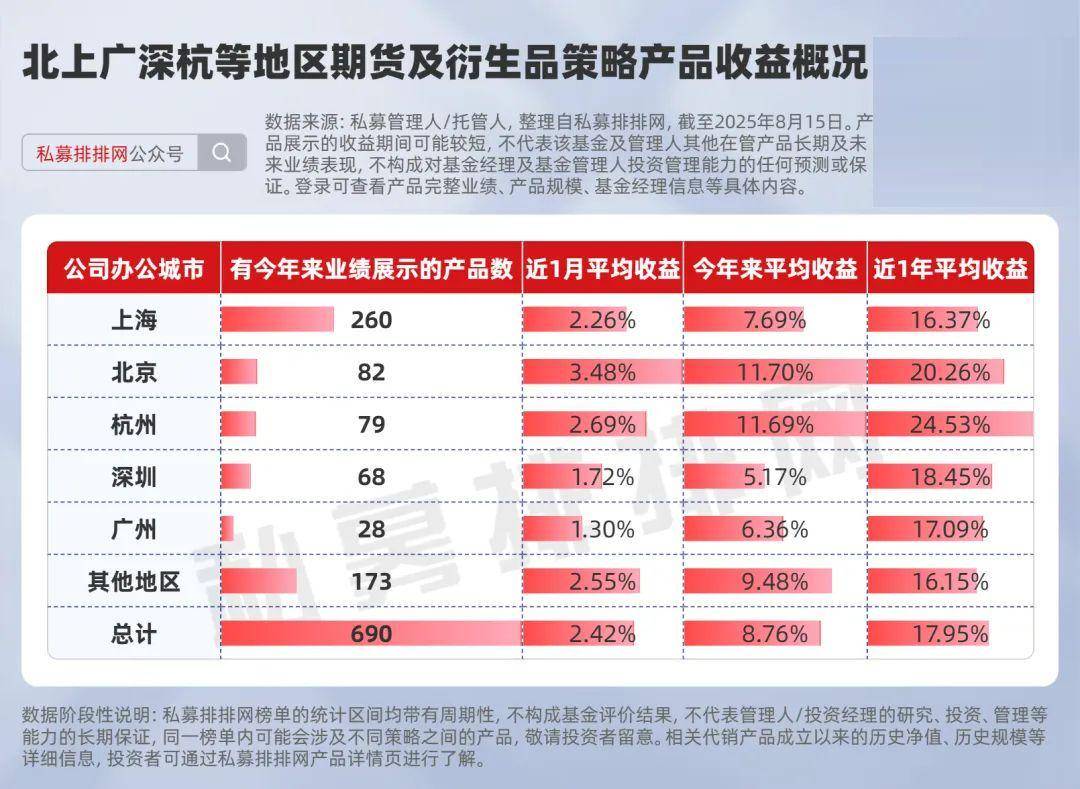
Core Viewpoint - The recent "anti-involution" trend in the Hangzhou futures market has led to significant drawdowns in the net value of several subjective CTA products from private equity institutions, highlighting the need for improved responsiveness to market changes despite a strong foundation in industrial fundamental analysis [1] Group 1: Market Dynamics - The Hangzhou futures market is characterized by a unique ecosystem formed since 2015, integrating "industrial capital + private equity funds + futures asset management" [1] - Major private equity firms such as Donghe Asset Management and Qiantang Yongli Asset Management have deep ties with Yong'an Futures, leveraging frontline intelligence in "warehousing-logistics-production line" [1] - The recent market changes have challenged traditional advantages, with losses attributed to a lag in responding to policy rhythms, emotional capital, and quantitative fund behaviors [1] Group 2: Performance Data - As of August 15, there are 690 futures and derivatives strategy products with performance data this year, with 79 from Hangzhou, ranking third in quantity [2] - The average return for Hangzhou products this year is 11.69%, placing them second overall, while they have shown resilience in the past month [2] - Among the 79 products in Hangzhou, the number of quantitative CTA and subjective CTA products is roughly equal, with subjective CTA strategies yielding higher average returns [2] Group 3: Strategy Breakdown - In Hangzhou, the top ten performing futures and derivatives strategy products have a high entry threshold, with subjective CTA products dominating the rankings [3] - The proportion of products achieving positive returns in the past month among subjective CTA products is 62.07%, indicating the agility of smaller private equity firms [4] - Qiantang Yongli Asset Management stands out as the only private equity firm in the 20-50 billion scale category, showcasing strong investment capabilities [4] Group 4: Institutional Insights - Eight private equity institutions in Hangzhou meet the ranking criteria, with the top three being mixed-type (subjective + quantitative) firms, reflecting the advantages of mixed strategies [4] - Junfu Investment and Qiantang Yongli Asset Management rank second and fifth respectively among 20-50 billion scale private equity firms, demonstrating robust investment styles [4] - Win Private Equity has emerged as a standout institution over the past year, advocating for counter-cyclical investments and showcasing exceptional performance in strategy and risk management [4]
金属期权策略早报-20250829
Wu Kuang Qi Huo· 2025-08-29 00:42
Group 1: Report Summary - The report is a metal options strategy morning report dated August 29, 2025, providing analysis and strategies for various metal options [1][2] - It covers three main sectors: non - ferrous metals, precious metals, and black metals, and offers option strategies for selected varieties in each sector [8] Group 2: Market Overview Futures Market - The report presents the latest prices, price changes, trading volumes, and open interest changes of multiple metal futures contracts, including copper, aluminum, zinc, etc. For example, the latest price of copper (CU2510) is 78,990, with a price increase of 170 and a trading volume of 7.34 million lots [3] Option Factors - **Volume and Open Interest PCR**: It shows the volume and open - interest PCR of different metal options, which are used to describe the strength of the option underlying market and the turning point of the market. For example, the volume PCR of copper options is 0.79, and the open - interest PCR is 0.83 [4] - **Pressure and Support Levels**: The report identifies the pressure and support levels of each metal option from the perspective of the strike prices with the largest open interest of call and put options. For example, the pressure level of copper is 80,000, and the support level is 78,000 [5] - **Implied Volatility**: It provides the implied volatility data of each metal option, including at - the - money implied volatility, weighted implied volatility, and its changes. For example, the at - the - money implied volatility of copper is 8.61%, and the weighted implied volatility is 12.47% with a change of - 0.54% [6] Group 3: Strategy and Recommendations Non - ferrous Metals - **Copper Options**: - Fundamental analysis shows that the inventory of the three major exchanges decreased by 0.04 million tons. The market has been in a high - level consolidation pattern since June. - Option factor research indicates that the implied volatility fluctuates around the historical average, and the open - interest PCR is below 0.80, suggesting some pressure above. - Strategies include building a short - volatility seller option portfolio, such as S_CU2510P77000, S_CU2510P78000, S_CU2510C82000, S_CU2510C84000, and a spot long - hedging strategy [7] - **Aluminum/Alumina Options**: - Aluminum fundamentals show changes in domestic and LME inventories. The market has shown a bullish trend with high - level fluctuations. - Option factors suggest that the implied volatility is below the historical average, and the open - interest PCR is around 0.80, indicating increasing pressure. - Strategies include a bullish call option spread for directional gain, a short - neutral call + put option combination for time value and directional gain, and a spot collar strategy [9] Precious Metals - **Gold/Silver Options**: - Gold fundamentals are affected by the Fed's interest - rate policy. The market is in a high - level consolidation with a short - term weak trend. - Option factors show that the implied volatility is around the historical average, and the open - interest PCR is below 0.60, indicating some pressure above. - Strategies include a short - neutral volatility option seller portfolio and a spot hedging strategy [12] Black Metals - **Rebar Options**: - Rebar fundamentals show changes in social and factory inventories. The market has been in a weak consolidation pattern with pressure above. - Option factors suggest that the implied volatility is at a relatively high level around the historical average, and the open - interest PCR is around 0.60, indicating strong short - side pressure. - Strategies include a short - bearish call + put option combination and a spot long - covered call strategy [13]
能源化工期权策略早报-20250829
Wu Kuang Qi Huo· 2025-08-29 00:27
1. Report Industry Investment Rating No relevant content provided. 2. Core Viewpoints of the Report - The energy and chemical sector is mainly divided into energy, alcohols, polyolefins, rubber, polyesters, alkalis, and others. For each sector, options strategies and recommendations are provided for selected varieties. Each option variety strategy report includes underlying market analysis, option factor research, and option strategy recommendations [9]. - Overall, the report suggests constructing option portfolio strategies mainly as sellers, along with spot hedging or covered strategies to enhance returns [3]. 3. Summary by Relevant Catalogs 3.1 Futures Market Overview - The report presents the latest prices, price changes, price change percentages, trading volumes, volume changes, open interest, and open interest changes of various energy and chemical futures, including crude oil, liquefied petroleum gas (LPG), methanol, ethylene glycol, polypropylene, polyvinyl chloride, plastics, styrene, rubber, synthetic rubber, p-xylene, purified terephthalic acid (PTA), short - fiber, bottle chips, caustic soda, soda ash, and urea [4]. 3.2 Option Factor - Volume and Open Interest PCR - The volume and open interest PCR data of various energy and chemical options are provided, which are used to describe the strength of the option underlying market and the turning point of the underlying market respectively. For example, the volume PCR and open interest PCR of crude oil options are 0.81 and 0.62 respectively, with changes of - 0.11 and - 0.03 [5]. 3.3 Option Factor - Pressure and Support Levels - The pressure and support levels of various energy and chemical options are analyzed from the perspective of the strike prices with the largest open interest of call and put options. For example, the pressure level of crude oil options is 600 and the support level is 415 [6]. 3.4 Option Factor - Implied Volatility - The implied volatility data of various energy and chemical options are presented, including at - the - money implied volatility, weighted implied volatility, weighted implied volatility changes, annual average implied volatility, call implied volatility, put implied volatility, historical 20 - day volatility, and the difference between implied and historical volatility. For example, the at - the - money implied volatility of crude oil options is 24.035%, and the weighted implied volatility is 26.13% with a change of - 1.29 [7]. 3.5 Option Strategies and Recommendations for Different Varieties 3.5.1 Crude Oil Options - **Underlying Market Analysis**: OPEC + increased oil supply in September, and Russia announced production cuts. The crude oil market showed a short - term upward trend with resistance. - **Option Factor Research**: The implied volatility of crude oil options fluctuated around the average level. The open interest PCR was below 0.80, indicating a weak and volatile market. The pressure level was 600 and the support level was 415. - **Option Strategy Recommendations**: Construct a neutral short call + put option combination strategy for volatility, and a long collar strategy for spot hedging [8]. 3.5.2 LPG Options - **Underlying Market Analysis**: LPG plant inventories decreased slightly, and port inventories were at a high level. The market showed a short - term recovery with resistance. - **Option Factor Research**: The implied volatility of LPG options decreased significantly to around the average level. The open interest PCR was around 0.60, indicating strong short - side power. The pressure level was 5400 and the support level was 3900. - **Option Strategy Recommendations**: Construct a neutral short call + put option combination strategy for volatility, and a long collar strategy for spot hedging [10]. 3.5.3 Methanol Options - **Underlying Market Analysis**: Methanol port and enterprise inventories increased. The market showed a weak trend with resistance. - **Option Factor Research**: The implied volatility of methanol options fluctuated below the average level. The open interest PCR was below 0.80, indicating a weak and volatile market. The pressure level was 2600 and the support level was 2275. - **Option Strategy Recommendations**: Construct a short - biased short call + put option combination strategy for volatility, and a long collar strategy for spot hedging [10]. 3.5.4 Ethylene Glycol Options - **Underlying Market Analysis**: Ethylene glycol port inventories decreased, and the market was expected to shift from de - stocking to stocking. The market showed a weak and volatile trend. - **Option Factor Research**: The implied volatility of ethylene glycol options fluctuated below the average level. The open interest PCR was below 0.60, indicating strong short - side power. The pressure level was 4600 and the support level was 4400. - **Option Strategy Recommendations**: Construct a short - volatility strategy for volatility, and a long collar strategy for spot hedging [11]. 3.5.5 Polypropylene Options - **Underlying Market Analysis**: Polypropylene production and trade inventories showed different trends. The market showed a weak trend with resistance. - **Option Factor Research**: The implied volatility of polypropylene options decreased to below the average level. The open interest PCR decreased to below 0.60, indicating a weak market. The pressure level was 7300 and the support level was 6800. - **Option Strategy Recommendations**: For spot hedging, hold a long position in the underlying asset, buy an at - the - money put option, and sell an out - of - the - money call option [11]. 3.5.6 Rubber Options - **Underlying Market Analysis**: The operating rates of Shandong's all - steel and semi - steel tire industries changed. The market showed a short - term weak trend with resistance. - **Option Factor Research**: The implied volatility of rubber options first increased rapidly and then decreased to around the average level. The open interest PCR was below 0.60. The pressure level was 18000 and the support level was 15750. - **Option Strategy Recommendations**: Construct a neutral short call + put option combination strategy for volatility [12]. 3.5.7 PTA Options - **Underlying Market Analysis**: PTA social inventories decreased, and downstream loads increased. The market showed a recovery trend with resistance. - **Option Factor Research**: The implied volatility of PTA options fluctuated at a relatively high level. The open interest PCR was around 0.80, indicating a volatile market. The pressure level was 5000 and the support level was 4600. - **Option Strategy Recommendations**: Construct a neutral short call + put option combination strategy for volatility [13]. 3.5.8 Caustic Soda Options - **Underlying Market Analysis**: The utilization rate of caustic soda production capacity decreased. The market showed a volatile trend with resistance. - **Option Factor Research**: The implied volatility of caustic soda options was at a relatively high level. The open interest PCR was above 1.00, indicating strong long - side power. The pressure level was 3000 and the support level was 2400. - **Option Strategy Recommendations**: Construct a long collar strategy for spot hedging [14]. 3.5.9 Soda Ash Options - **Underlying Market Analysis**: Soda ash production reached a new high. The market showed a volatile trend with support. - **Option Factor Research**: The implied volatility of soda ash options first increased rapidly and then decreased significantly but remained at a relatively high level. The open interest PCR was below 0.60, indicating strong short - side pressure. The pressure level was 1640 and the support level was 1200. - **Option Strategy Recommendations**: Construct a short - volatility combination strategy for volatility, and a long collar strategy for spot hedging [14]. 3.5.10 Urea Options - **Underlying Market Analysis**: Urea port and enterprise inventories increased. The market showed a low - level volatile trend. - **Option Factor Research**: The implied volatility of urea options fluctuated around the historical average level. The open interest PCR was below 0.60, indicating strong short - side pressure. The pressure level was 1900 and the support level was 1700. - **Option Strategy Recommendations**: Construct a short - biased short call + put option combination strategy for volatility, and a long collar strategy for spot hedging [15].