
一人公司(OPC)

Search documents
一人公司爆火:最小组织跑出完整商业闭环
Di Yi Cai Jing· 2026-02-03 11:40
Core Insights - The article emphasizes the significance of the One Person Company (OPC) model, highlighting its operational structure, which relies on a single core operator supported by external collaborations rather than internal teams [1][2][3] Group 1: Factors Driving OPC Popularity - The rise of OPC is attributed to four main factors: the transformation brought by digital intelligence, the shift in economic development engines towards specialized services, global uncertainties prompting organizational agility, and the strengthening of ecological trends that necessitate network-based operations [2][3][4] Group 2: Building a Robust Digital Foundation - A solid digital foundation for OPCs involves understanding the limitations of AI, establishing clear operational models, and implementing strategic management practices to ensure focus and efficiency [4][5][6] Group 3: Market and Business Opportunities - Market opportunities are identified through trends and demand gaps, while business opportunities focus on the ability to deliver services at acceptable costs and ensure sustainable revenue [8][9][10] Group 4: Characteristics of OPC Business Models - OPC business models typically emphasize a narrow value proposition, focus on a single business dimension, and leverage limited resources effectively by creating reusable assets and collaborating with trusted partners [10][11][12] Group 5: Ecological Collaboration and Win-Win Strategies - The ecological aspect of OPCs highlights the necessity of collaboration for success, where external capabilities are integrated into the value chain to enhance service delivery and customer satisfaction [11][12][13]
宿迁市全面启动数智新城建设工作
Xin Hua Ri Bao· 2026-02-02 21:46
Core Viewpoint - Suqian City is launching a comprehensive plan for the construction of a "Smart City" with a focus on digital economy and artificial intelligence, aiming for significant economic growth by 2030 [1] Group 1: Strategic Planning - The plan includes a five-year framework and a three-year action plan, emphasizing scenario construction and the OPC (One Person Company) model to foster an entrepreneurial environment [1] - By 2030, Suqian aims to transition from an e-commerce city to a smart city, targeting a total digital economy output of 200 billion yuan by 2028 [1] Group 2: Economic Goals - The artificial intelligence industry cluster is expected to reach an output value of 72 billion yuan, with plans to add 600 digital economy enterprises above designated size and cultivate over 5,000 smart talents annually [1] Group 3: Implementation Path - Suqian has developed a list of artificial intelligence application demonstration scenarios, focusing on nine key areas including public services and healthcare, with a total of 165 specific scenarios identified [1] - The city is promoting the "OPC Entrepreneurship City" initiative, supported by ten specific policy measures [1]
“三笔账”解锁“一人公司”创业密码
Xin Lang Cai Jing· 2026-02-01 19:21
Core Insights - The rise of "One Person Company (OPC)" is driven by the AI boom and supportive policies from regions like Jiangsu, Shanghai, and Guangdong, which lower entrepreneurial costs and allow individuals to validate business models at minimal expense [1][8] - The emergence of AI tools has transformed the entrepreneurial landscape, enabling individuals to leverage technology for content production, product operation, and service delivery, thus enhancing the viability of one-person startups [2][3] Group 1: Industry Trends - The trend of one-person companies is significantly influenced by advancements in AI, which have redefined the entrepreneurial logic, allowing individuals to operate businesses with reduced risk and increased potential returns [2][3] - The commercial value of one-person companies has surged due to AI, with examples of successful solo entrepreneurs achieving substantial income growth through efficient app development and content creation [2][3] - The entrepreneurial landscape is becoming increasingly concentrated in sectors that maximize the advantages of "one person + AI," such as digital product development and creative services [3] Group 2: Supportive Ecosystem - Various incubators, such as Zero Boundary Cube and Shenzhen Daguangfang, are emerging to support one-person companies by providing affordable workspace and essential services, thereby reducing operational costs for entrepreneurs [5][6] - The Zero Boundary Cube offers significant incentives, including low-cost workspace and support services, which help entrepreneurs focus on their core business activities [5] - The rise of one-person companies is also supported by government initiatives aimed at fostering innovation and entrepreneurship, with multiple regions implementing policies to promote the OPC model [8][9] Group 3: Economic Impact - The growth of one-person companies is seen as a catalyst for local innovation and job creation, with the potential to activate idle assets and enhance productivity [9] - The financial performance of incubators indicates a positive trend, with increased tax contributions from small enterprises, reflecting the growing success of one-person companies [9]

人工智能时代,职业生态如何变化?
Xin Lang Cai Jing· 2026-01-31 19:28
Core Insights - The emergence of new professions such as AI trainers, AI product managers, and AI ethics reviewers is reshaping the job landscape, creating new employment opportunities and requiring new skills from workers [1][2] - AI is driving a transformation in the employment ecosystem, leading to an increase in demand for hybrid and application-oriented talent, with a significant rise in average salaries for AI-skilled workers [2][3] Group 1: New Employment Opportunities - AI is creating new job roles across various sectors, including data annotation, content generation, and product management, with nearly 50 types of "human-machine collaboration" jobs identified [2][3] - The rise of "one-person companies" (OPC) is facilitated by AI tools, allowing individuals to manage content production, product operations, and service delivery independently [3] Group 2: Skills and Training - The demand for skills in imagination, judgment, aesthetic ability, critical thinking, and emotional interaction is increasing, as these human capabilities remain irreplaceable in the context of human-AI collaboration [4] - Future talent development should focus on interdisciplinary skills and comprehensive abilities, with an emphasis on establishing a new training system for AI-related professions [5] Group 3: Industry Trends - The advancement of embodied intelligence and world modeling technologies is pushing AI from language processing to understanding and modeling the physical world [2][3] - The robotics sector is seeing significant growth, with humanoid robots being applied in various fields, creating numerous new job opportunities across the entire industry chain [3]
我的AI生活|AI赋能下的“超级个体”,一人成军与团队精干双重实践
Xin Lang Cai Jing· 2026-01-30 04:13
Core Insights - The article discusses the emergence of new entrepreneurial models in the AI era, specifically focusing on the concepts of One-Person Companies (OPC) and Super Entrepreneurs (SE) [3][7][10] - It highlights how AI tools are transforming traditional business operations, enabling small teams to handle large-scale projects efficiently [4][5][9] Group 1: Entrepreneurial Models - The rise of OPC and SE reflects a shift in how businesses can operate with minimal personnel while leveraging AI as a digital workforce [3][7] - Entrepreneurs like Wang Zhe and Huang Sha exemplify these models, with Wang aiming for AI to become the primary productivity driver and Huang utilizing AI to enhance a small team's capabilities [7][10] Group 2: AI as a Productivity Tool - AI significantly reduces communication and learning costs, allowing small teams to manage complex projects that would typically require larger teams [4][5] - Huang's team, consisting of only five members, can handle projects that would traditionally need hundreds of employees, showcasing the efficiency gained through AI [4][5] Group 3: Core Competencies and AI Mastery - Both entrepreneurs emphasize the importance of strong personal core competencies and deep understanding of AI tools as foundational to their success [9] - Huang's team members possess diverse skills, enabling them to function effectively in various roles, while Wang believes that continuous entrepreneurs and curious young individuals are best suited for the OPC model [9] Group 4: Sustainability Over Scale - Wang argues that sustainability is more critical than scale for OPCs, suggesting that smaller, well-managed companies can thrive without the need for rapid expansion [10] - Both entrepreneurs plan to maintain small teams while leveraging AI to enhance productivity and quality, indicating a trend towards "small but beautiful" business models [10][11]

“一人公司”悄然兴起
Ren Min Ri Bao Hai Wai Ban· 2026-01-27 22:55
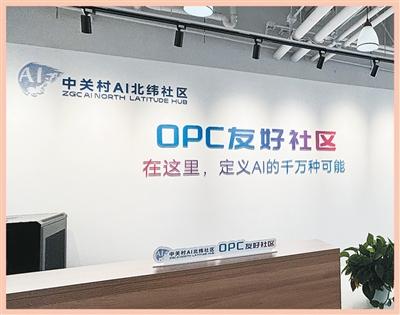
Core Insights - The rise of One Person Company (OPC) entrepreneurship is driven by rapid advancements in AI technology, allowing individuals or small teams to develop innovative products and achieve profitability with minimal resources [8][9][12] - Various regions in China, including Beijing, Shanghai, Jiangsu, and Guangdong, are supporting OPCs through dedicated plans and entrepreneurial parks to attract talent in the AI sector [8][9] Group 1: OPC Characteristics and Development - The first phase of the Zhongguancun AI North Latitude Community opened in July 2025, providing 60,000 square meters of innovative space for startups [9] - OPC entrepreneurs typically operate with small teams of 1 to 4 members, often possessing high educational backgrounds and industry experience, which enhances their technical capabilities and market insights [9][10] - The common traits of OPCs include a focus on precision, specialization, early-stage development, and practical solutions, leveraging AI tools for product development and management [9][10] Group 2: Product Development and Market Opportunities - OPCs can quickly launch new products, often within a few months, by identifying specific market needs and utilizing AI for solutions [10][11] - Founders emphasize the importance of a clear profit model and resource advantages, such as unique data assets, to maintain competitiveness in the long term [10][11] - The application of AI spans various sectors, including education, healthcare, security, and legal services, showcasing the versatility and market potential of OPC products [9][10] Group 3: Community and Support Structure - The Zhongguancun AI North Latitude Community fosters a collaborative environment where OPC entrepreneurs can share experiences and resources, enhancing their growth potential [12][13] - The community offers essential support services, including business registration, tax agency services, and policy application assistance, which are crucial for startups facing resource constraints [12][13] - Future plans include developing a technology platform to provide computational power and AI tools to strengthen the capabilities of OPCs [13]
三天三场OPC盛会席卷杭州:AI赋能“一人公司” 超级个体如何重塑创业生态
Hang Zhou Ri Bao· 2026-01-27 02:18
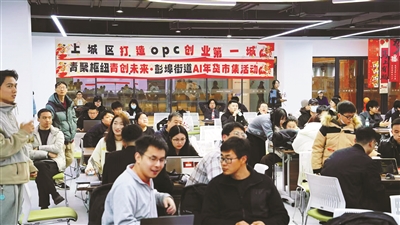
从"一人公司操作系统"发布、创业可行性激辩,到AI年货市集火热开场,1月23日至25日,一系列 聚焦一人公司(OPC)的创新活动密集落地。 三天三场盛会,杭州上演"超级个体"创业狂欢—— 短短三日,杭州为何OPC浓度"爆表"?这场由技术变革驱动的个体创业浪潮,正释放出怎样的强烈 信号?答案已然浮现—— 个体能力 AI工具能力爆发降低门槛,"超级个体"崛起 "OPC创业靠不靠谱?" 在1月24日举办的杭州OPC首期沙龙上,围绕这个主题开展的辩论环节成了全场焦点。这场沙龙的 核心参与者,是来自WaytoAGI开源社区的"超级个体"们。 "我能不能让他们和我的Agent(智能体)辩论一下,刚刚'搓'出来的!""95后"男生陈三水自告奋勇 冲上台,展示了自己基于"薛兆丰+奇葩说"角色的智能体。它能通过语音输入实时捕捉对方选手的论 点,然后直接生成反驳内容。"我是0基础自学的,至今才10个月,已经能带队接一些AI项目了。"陈三 水说。 同样自学成才的张三是社区里的"传奇人物"——仅用4个月时间"手搓"出150多个APP,上线iOS平 台后90%以上拥有全球付费用户,"现在的AI工具太强大了,我只需告诉它我要什么,它就能 ...
徐汇 抢抓“一人公司”发展机遇 上半年建设五个超级创业者社区
Jie Fang Ri Bao· 2026-01-27 01:41
记者 舒抒 成立以来,MiniMax凭借全栈式技术突破,已跻身文本、语音、视频等全模态大模型领域的第一梯 队,语音模型性能在多个全球权威榜单中超越OpenAI、ElevenLabs等国际巨头。当企业达到独角兽量 级,政府的营商服务除了人才落户、住房保障、安全合规经营等"标配"之外,势必要有跟得上企业发展 脚步的更高阶服务。 当得知MiniMax有上市计划后,徐汇区商务委等部门立即围绕企业技术迭代快、全球化布局广的特 点,量身定制全流程服务方案。从政策解读、合规梳理到资源对接,"滴灌式"的精准支持帮助企业高效 打通了上市通道。MiniMax的成功上市,也助推徐汇在"十五五"开局迎来第69家上市挂牌企业,全区累 计成功助力企业上市挂牌达155户次,彰显了AI创新企业与资本热土的集聚效应。 记者注意到,无论是上海市级营商环境9.0方案还是徐汇区级方案,都首次将"产业生态环境"作为 独立板块提出。徐汇在方案中提到,"十五五"期间,将抢抓OPC(一人公司)发展机遇,结合"超级创 业者社区"建设,推进场景开放、营造创新生态、优化要素供给,形成区域营商环境的综合竞争优势。 为此,仅今年上半年,徐汇就将建设5个超级创业者社区 ...
未出学校门,已是项目人
Xin Hua Ri Bao· 2026-01-26 21:47
Core Insights - The rise of One Person Company (OPC) model is transforming the entrepreneurial landscape for young individuals in Suzhou, particularly in the cultural and artistic sectors [1][6] - The Jiangsu provincial government is actively supporting the OPC model through initiatives like the "Artificial Intelligence + Action Plan," which aims to foster innovation and entrepreneurship among youth [2][5] Group 1: OPC Model and Its Impact - The OPC model allows young entrepreneurs to operate with minimal resources, making it particularly suitable for those in the cultural arts sector [1][2] - Young creators are leveraging AI tools to significantly enhance productivity, achieving up to 10 times efficiency and reducing production costs by 70% [2][3] - The establishment of the "OPC Youth Artist Partner Program" provides essential support such as simplified registration, funding up to 200,000 yuan, and shared workspaces, lowering the barriers to entry for aspiring creators [2][4] Group 2: Community and Support Structure - The OPC model is not isolated; it is supported by an innovation service alliance that connects young entrepreneurs with experienced mentors and industry resources [4][6] - The Suzhou government aims to attract 300,000 university graduates for employment and entrepreneurship by 2025, with plans to establish over 50 OPC communities and 1,000 new OPC enterprises by 2028 [5][6] - The focus on creating a vibrant, interconnected community emphasizes collaboration among different teams, fostering a sustainable and self-growing innovation ecosystem [6]
AI时代,职业生态如何变化?
Xin Hua Wang· 2026-01-25 10:37
Core Insights - The emergence of new professions such as AI trainers, AI product managers, and AI ethics reviewers is reshaping the job landscape, requiring new skills from workers [1][2] - AI is creating new employment opportunities and transforming the employment ecosystem towards higher value-added roles characterized by human-machine collaboration [2][3] Group 1: New Job Opportunities - AI is driving the creation of new roles, including data annotators and AI content creators, leading to an increased demand for hybrid and application-oriented talent [2] - According to PwC's 2025 Global AI Employment Outlook, the number of jobs involving AI applications is increasing, with an average salary premium of 56% for workers with AI skills, double that of the previous year [2] - 58.com reported nearly 50 types of "human-machine collaboration" jobs and 40 new intelligent services emerging on its platform [2] Group 2: Impact on Traditional Industries - AI is becoming a crucial infrastructure for intelligent societies, enhancing traditional industries and creating new business models that improve employment quality [3] - In the robotics sector, embodied intelligence is advancing humanoid robots towards greater autonomy and human-machine collaboration, creating numerous new jobs across various applications [4] Group 3: Entrepreneurship and New Business Models - The rise of "One-Person Companies" (OPC) is lowering the barriers to entrepreneurship, allowing individuals to leverage AI tools for content production, product operations, and service delivery [6] - The trend of "single-person + AI" entrepreneurship is gaining traction, with cities like Suzhou promoting OPC as a preferred startup model [6] Group 4: Skills and Education - Experts emphasize that human imagination, judgment, aesthetic ability, critical thinking, and emotional interaction will remain irreplaceable advantages in the context of human-machine collaboration [7] - Future talent development should focus on interdisciplinary skills and comprehensive capabilities, alongside the establishment of a new training system for AI professions [7] - The concept of "slash" careers may become a primary lifestyle, encouraging individuals to avoid reliance on single skills or professions and to enhance their overall capabilities [9]
