以铝代铜

Search documents
调研速递|立中集团接受开源证券等2家机构调研 透露盈利增长与产能布局要点
Xin Lang Cai Jing· 2025-09-02 10:13
Core Viewpoint - The company aims to enhance its profitability and sales revenue by leveraging its industrial chain advantages, focusing on core businesses, and expanding into emerging industries, particularly in the fields of new energy vehicles and humanoid robots [1]. Group 1: Profitability Strategies - The company plans to utilize its industrial chain synergy to deepen its global layout and strengthen strategic partnerships with clients to boost sales and profitability [1]. - In the casting aluminum alloy segment, the company is advancing the application of integrated die-casting heat treatment-free alloys in new energy vehicles and humanoid robots, which opens up new avenues for profit growth [1]. - The aluminum alloy wheel segment will enhance international competitiveness and profitability by improving its international sales network and overseas production capacity [1]. - The intermediate alloy segment will focus on high-end material demands in new energy vehicles, deepening collaborations with key clients, and increasing the market share of high-value-added products [1]. Group 2: Overseas Production Capacity - The company has established production bases in Thailand and Mexico, with the recent addition of a third factory in Thailand, which will have a capacity of 8 million cast aluminum alloy wheels and 180,000 forged aluminum wheels, making it the largest aluminum alloy production base in Southeast Asia [2]. - The Mexican facility is projected to produce 3.6 million ultra-lightweight aluminum alloy wheels annually, with phase one already operational and phase two expected to be completed by Q3 2025. The facility benefits from "zero tariffs" on exports to the U.S. under the USMCA, enhancing order acquisition and profitability [2]. Group 3: High-End Aluminum Alloy Wheel Business - The company is actively expanding its production capacity for forged and cast aluminum alloy wheels in Thailand and Mexico, aiming for over 1 million forged aluminum alloy wheels and over 10 million cast aluminum alloy wheels globally upon project completion [3]. - The company is recognized by high-end clients due to its leading technology and full industrial chain manufacturing advantages, which improve production efficiency, quality, and reduce costs and carbon emissions [3]. Group 4: Emerging Market Business Layout - The company is accelerating its layout in emerging markets and upgrading its product structure, focusing on new energy vehicles and humanoid robots, and promoting the application of new aluminum alloy materials [4]. - The company is scaling up the production of heat treatment-free alloys in the one-piece die-casting sector for new energy vehicles, and validating high-strength, high-yield heat treatment-free die-casting aluminum alloys for use in robot joints and drone structural components [4]. - The company is also advancing the use of recycled low-carbon A356 alloys, which replace 75% of electrolytic aluminum with scrap aluminum, in automotive parts production [4]. Group 5: "Aluminum for Copper" Related Products - The company has developed a series of high thermal conductivity and high electrical conductivity aluminum alloy materials for electric motor rotors in new energy vehicles [5]. - Aluminum-zirconium and other aluminum-based functional intermediate alloys are utilized in the production of electrical aluminum rods for power cables, providing critical performance support for the "aluminum for copper" initiative [5].

中国铝业20250828
2025-08-28 15:15
Summary of China Aluminum Corporation Conference Call Company Overview - **Company**: China Aluminum Corporation (中国铝业) - **Period**: First half of 2025 Key Industry Insights - **Global Aluminum Production and Consumption**: - Global primary aluminum production: 36.71 million tons - Global consumption: 36.94 million tons - China's production: 21.84 million tons (approx. 60% of global production) - China's consumption: 23.01 million tons (approx. 62% of global consumption) [2][5] - **Aluminum Prices**: - International average price: $2,546/ton - Domestic average price: ¥22,226/ton - Price fluctuations influenced by supply-demand dynamics, tariffs, and interest rate cuts [2][5] Financial Performance - **Revenue and Profit**: - Revenue: ¥116.4 billion, up 5% YoY - Total profit: ¥13.2 billion, up 2% YoY - Net profit attributable to shareholders: ¥7.1 billion, up 1% YoY - Operating cash flow: ¥14.3 billion, up 5% YoY [2][6] - **Assets and Liabilities**: - Total assets: ¥227.5 billion, up 5% - Debt-to-asset ratio: 46.9%, down 1.2 percentage points [2][6] - **Profitability Metrics**: - Return on Equity (ROE): 10% for the half-year, annualized at 20% - Average profit per ton: ¥2,370.73 [2][7] Capital Expenditure - **Capital Expenditure**: Over ¥5 billion, up ¥1 billion YoY - 69% allocated to key projects in Guangxi, Inner Mongolia, and Qinghai - Remaining funds for R&D, resource acquisition, and digital transformation [2][8] Strategic Initiatives - **Alumina Market**: - Global alumina production: 72.78 million tons, consumption: 72.68 million tons - China's alumina production: 44.65 million tons, consumption: 43.79 million tons [3] - **Resource Acquisition**: - Focus on overseas development in lithium ore-rich regions (Africa, Southeast Asia, South America, Australia) - 50% increase in lithium ore imports from Guinea, targeting 20 million tons for the year [3][11] - **Sustainability and Innovation**: - Emphasis on digital smart factory construction and high-end new materials [10] Shareholder Returns - **Earnings Per Share**: ¥0.413, up 1% YoY - **Dividend Payout Ratio**: 30%, with a projected annual yield of 3.4% [9][20] Operational Highlights - **Production Cost Trends**: - Alumina production cost: $2,800/ton in Q1, reduced to $2,660/ton in Q2 - Electrolytic aluminum production cost: $16,000/ton in Q1, reduced to $14,400/ton in Q2 [28][29] - **Electricity and Green Energy**: - Self-generated electricity rate: 13% - Overall electricity cost: approximately ¥0.45 per kWh [30] Challenges and Future Outlook - **Market Dynamics**: - Potential for aluminum price increases, but limited by competition from substitutes [33][34] - Ongoing adjustments in production lines and asset valuations due to policy changes [32][41] - **Long-term Strategy**: - Continued focus on optimizing resource allocation and enhancing shareholder value through strategic investments and operational efficiencies [40][21] This summary encapsulates the key points from the conference call, highlighting the company's performance, strategic initiatives, and market outlook.

东北空调销量暴增 8 倍:从 “空调洼地” 到安装排半月,这波热浪改写了什么?
3 6 Ke· 2025-07-17 00:49
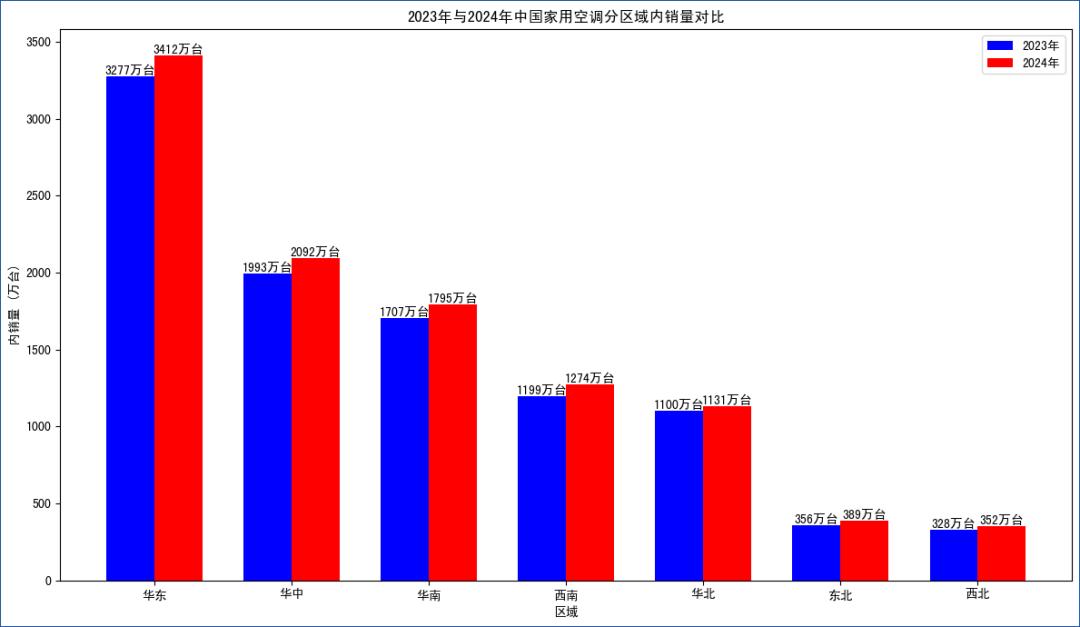
Core Viewpoint - The extreme heat in summer 2025 has significantly boosted air conditioning sales across China, particularly in the traditionally cooler Northeast region, presenting a unique opportunity for major appliance companies to capture market share [1][2][3]. Group 1: Market Growth and Sales Data - The air conditioning market experienced substantial growth, with online and offline sales increasing by 52.96% and 113.61% respectively during the week of June 30 to July 6, 2025 [2]. - In the Northeast, air conditioning sales surged, with Heilongjiang province seeing offline sales growth of 817.68% and 438% in two consecutive weeks [1]. - Nationally, the overall air conditioning market size grew by 28.17% in the first half of 2025, breaking the previous year's stagnation [8]. Group 2: Regional Demand and Supply Challenges - The Northeast region, traditionally less reliant on air conditioning, has seen a rise in demand due to extreme temperatures, with sales in 2023 and 2024 reaching 356,000 and 389,000 units respectively [3]. - There are significant supply chain challenges in the Northeast, including limited local inventory and a shortage of installation personnel, leading to long wait times for consumers [5]. - Major brands like Midea and Haier have reported substantial growth rates in the Northeast, with Midea's air conditioning sales in Heilongjiang and Jilin increasing by 356% [5]. Group 3: Competitive Landscape - Major appliance companies, including Midea, Gree, and Haier, are actively competing for market share in the Northeast, leveraging their extensive distribution networks and installation capabilities [5][6]. - The competitive environment is intensifying, with brands participating in bidding for institutional contracts, such as those from universities in the Northeast [6]. - The market remains dominated by a few key players, with Midea, Gree, and Haier holding over 70% of the overall market share [12]. Group 4: Consumer Preferences and Trends - Consumers are increasingly seeking energy-efficient and smart air conditioning units, with a significant portion willing to pay more for these features [13]. - The average price of air conditioning units has decreased, with online prices dropping by 4.02% to approximately 2,604 yuan, indicating a trend towards price competition [8][10]. - The most popular models are around 2,000 yuan, reflecting consumer preference for affordable options [12]. Group 5: Quality and Complaints - There has been a notable increase in complaints regarding air conditioning units, with issues such as energy efficiency misrepresentation and product lifespan concerns being prevalent [19]. - The shift from copper to aluminum in manufacturing has raised quality concerns, as aluminum has inferior thermal properties compared to copper [17][19]. - Major brands are facing scrutiny over product quality, with thousands of complaints logged on consumer platforms regarding performance issues [15].




全球空调用制冷系统管路组件生产商排名及市场占有率
QYResearch· 2025-07-10 08:49
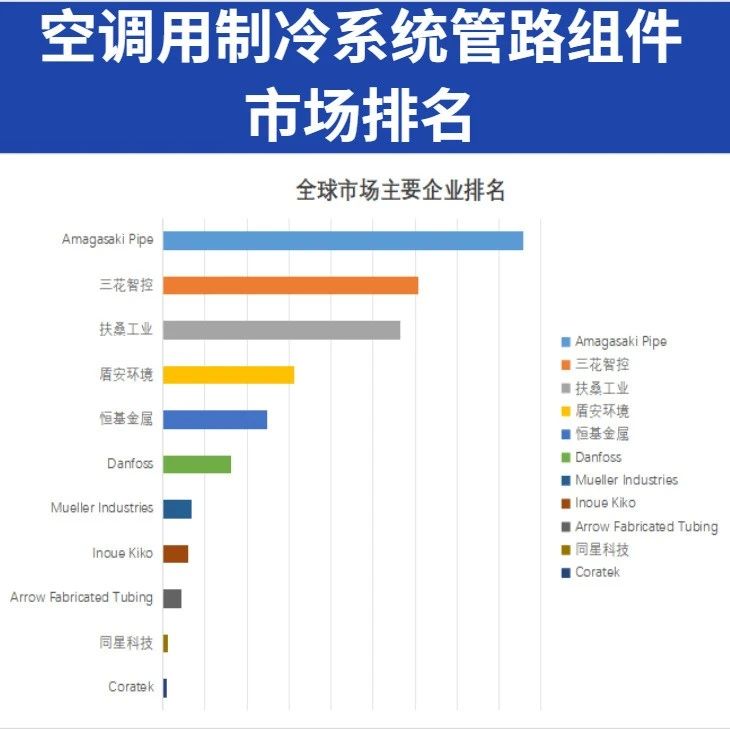
Core Insights - The global market for air conditioning refrigerant system piping components is projected to reach 13.51 billion by 2031, with a compound annual growth rate (CAGR) of 6.3% in the coming years [2]. Market Overview - The air conditioning refrigerant system piping components market is primarily composed of copper pipes, which hold approximately 70.8% market share due to their excellent conductivity and reliability. However, fluctuating copper prices are driving the adoption of aluminum pipes, especially in residential systems seeking cost reduction and weight savings [9]. - The main demand source for these components is residential air conditioning, accounting for about 66.5% of the market. The growth in emerging markets and the popularity of energy-efficient products are increasing the use of pre-insulated aluminum and copper pipes [12]. Key Players - Major manufacturers in the global air conditioning refrigerant system piping components market include Amagasaki Pipe, Sanhua Intelligent Controls, Fuso Industry, DunAn Environment, Hengjin Metal, Danfoss, Mueller Industries, Inoue Kiko, Arrow Fabricated Tubing, and Tongxing Technology. The top five manufacturers hold approximately 52.0% of the market share as of 2024 [7]. Market Drivers - The expanding air conditioning market is driving demand for refrigerant system piping components, supported by increasing air conditioning needs in new and existing buildings [16]. - Urbanization is accelerating globally, with rising construction projects further propelling the development of the piping components industry [16]. - The focus on renewable energy and green refrigeration technologies is creating new opportunities for the piping components sector, particularly with the application of new refrigerants and eco-friendly materials [16]. Challenges - Increased competition in emerging markets poses challenges for manufacturers, who must adapt to varying market demands and standards [18]. - Fluctuations in raw material prices, particularly for metals like copper, aluminum, and steel, significantly impact production costs [18]. - Changes in international trade policies and trade tensions may affect the import and export dynamics of the piping components industry [18]. Development Trends - There is a trend towards lightweight, integrated, and structurally diverse piping components to meet the complex requirements of refrigeration systems [20]. - The industry is moving towards substituting aluminum for copper to reduce costs and weight in refrigeration equipment [20]. - There is a clear preference for components that can handle higher pressure conditions, necessitating manufacturers to develop strategies for producing higher pressure components tailored to specific markets or applications [20].