保壳

Search documents
“1元大甩卖”频现A股!有何玄机?
Zheng Quan Shi Bao· 2025-09-23 14:10
Core Viewpoint - The phenomenon of A-share listed companies transferring assets for 1 yuan has garnered significant market attention, indicating a strategic choice rather than a mere loss-making transaction, often involving debt transfer arrangements and a focus on exiting non-core areas [1][2][3] Group 1: Asset Transfer Cases - Several A-share listed companies, including *ST Nan Zhi, ST Yi Gou, Zhu Jiang Shares, and Hui Da Wei Yu, have announced 1 yuan asset transfers since September, primarily involving companies with negative net assets and weak operating performance [1][2] - *ST Nan Zhi plans to sell its real estate development and leasing assets to a subsidiary of its controlling shareholder for 1 yuan, aiming to focus on light asset business and improve profitability [2][8] - Zhu Jiang Shares intends to transfer a 41% stake in Guangdong Yi Hua Real Estate Development Co., Ltd. for 1 yuan, citing the need to optimize asset structure due to the company's inability to provide necessary financial documentation [3][5] Group 2: Strategic Adjustments - The low-priced asset transfers are part of a broader strategic adjustment by companies to focus on core businesses, particularly in the real estate sector, which has been a burden due to continuous losses [2][8] - ST Yi Gou is divesting its traditional hypermarket business, which has been adversely affected by external market conditions, to streamline operations and reduce debt levels [6][7] Group 3: Debt and Financial Implications - The transferred assets often come with significant liabilities, meaning the acquiring party assumes these debts along with the assets, which can lead to improved financial metrics for the selling company [5][7] - The financial data post-transaction shows a significant decrease in total assets and revenue for the selling companies, but an increase in equity and net profit, indicating a potential improvement in financial health [9][8] Group 4: Market Perception and Risks - The market may interpret these 1 yuan asset transfers as a sign of deteriorating fundamentals and asset quality, potentially leading to a loss of investor confidence [7][9] - Companies facing continuous financial underperformance risk delisting, prompting them to engage in low-priced asset transfers to quickly improve financial statements and avoid regulatory scrutiny [8][9]
“1元大甩卖”频现A股!有何玄机?
证券时报· 2025-09-23 14:04
Core Viewpoint - The phenomenon of A-share listed companies transferring assets for 1 yuan has attracted significant market attention, indicating a strategic choice to offload non-core, underperforming assets while managing debt burdens [1][3]. Group 1: Strategic Asset Transfer - Many companies are engaging in "fire sale" asset transfers, often resulting in negative net assets and weak operational performance [1][3]. - The low-priced asset transfers are not merely loss-making transactions but are strategic decisions to shift focus towards core business areas and reduce financial burdens [5][9]. - For instance, *ST Nan Zhi plans to sell its real estate-related assets and liabilities to a subsidiary of its controlling shareholder for 1 yuan, aiming to transition towards a light asset model focused on urban operations [3][11]. Group 2: Industry Trends and Financial Health - The majority of the assets being transferred are in the real estate sector, which has been a significant drag on company performance due to ongoing losses [3][4]. - Companies like ST Yi Gou are divesting from traditional retail operations, burdened by heavy debts, to streamline their business and improve financial health [7][8]. - The financial data from ST Yi Gou shows substantial negative equity, highlighting the urgency of these asset transfers to mitigate financial risks [8][11]. Group 3: Debt Management and Risk Transfer - The asset transfers often come with debt obligations, meaning the receiving party must also manage the associated liabilities [7][8]. - This approach allows companies to offload poor-quality assets while potentially improving their balance sheets and cash flow [5][9]. - However, there is a risk that such transactions may be perceived negatively by the market, raising concerns about the underlying asset quality and overall company health [8][12]. Group 4: Regulatory and Market Implications - Companies facing continuous financial underperformance risk delisting, prompting them to engage in low-priced asset transfers to quickly improve financial metrics [10][12]. - The practice of transferring assets at such low valuations can lead to scrutiny from regulators and may be viewed as a means to manipulate financial statements [8][12]. - Long-term, while these strategies may provide short-term relief, they could lead to reduced operational scale and profitability if not managed carefully [12].


连续亏损戴“*ST”,1元甩卖百亿元资产,南国置业“断臂”能否“求生”?
Mei Ri Jing Ji Xin Wen· 2025-09-18 05:50
Core Viewpoint - Nanguo Real Estate is undergoing a significant asset restructuring, aiming to divest its real estate development and leasing business to focus on light asset operations and urban management services, potentially reversing its declining financial situation and avoiding delisting risks [1][9]. Group 1: Asset Restructuring Details - Nanguo Real Estate plans to transfer real estate development and leasing assets and liabilities to Shanghai Longlin for a nominal price of 1 yuan, which includes 17 equity assets and related receivables [1][2]. - The total assessed value of the assets to be divested is approximately -2.934 billion yuan, indicating a significant impairment compared to the book value of 2.386 billion yuan [2][3]. - The transaction is expected to lead to a substantial decrease in total assets and revenue, but an increase in owners' equity and net profit post-transaction [3]. Group 2: Financial Performance and Risks - Nanguo Real Estate has faced continuous losses since 2021, with net profits of -0.823 billion yuan, -1.693 billion yuan, and -2.238 billion yuan for the years 2022 to 2024, respectively [6][7]. - As of the end of 2024, the company's net assets were -1.753 billion yuan, leading to a risk warning for delisting starting April 30, 2025, if certain financial conditions are not met [7]. - The company reported a 39.54% year-on-year decline in revenue for the first half of 2025, with total assets decreasing by 3.78% [7][8]. Group 3: Strategic Transformation - Post-restructuring, Nanguo Real Estate aims to transition to a comprehensive urban operation service provider, focusing on commercial operations, office management, and long-term rental apartments [9]. - The company currently operates 23 projects in the commercial operation sector, covering a total area of 1.32 million square meters, and has plans to enhance its operational capabilities in urban management [9]. Group 4: Market Reactions - The stock of Nanguo Real Estate has experienced significant volatility, with a trading halt on the day the restructuring plan was announced, followed by a cumulative decline of over 12% in subsequent trading days [10].

*ST步森,拟重大资产重组!不停牌
Zhong Guo Zheng Quan Bao· 2025-09-07 14:28
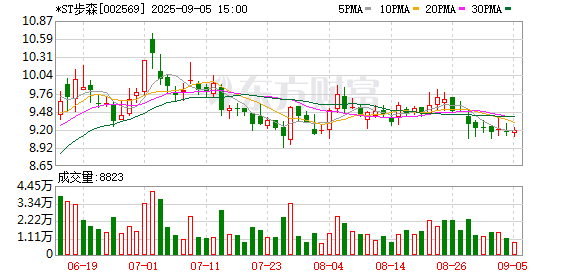
Group 1 - The core point of the article is that *ST Bosen plans to sell 35% of its stake in Shaanxi Bosen to Nantong Erfangji Co., Ltd., which is expected to constitute a major asset restructuring [2][5] - The transaction aims to help the company focus on its core business, improve liquidity, and optimize its asset structure, particularly in the apparel sector [5][6] - The transaction is still in the preliminary planning stage, and key elements such as the transaction plan and price need further verification and negotiation [5][6] Group 2 - *ST Bosen's main products include men's shirts, suits, trousers, jackets, T-shirts, and professional attire, with a focus on "comfortable business men's clothing" [6] - The company reported a revenue of 51.95 million yuan in the first half of the year, a year-on-year decrease of 25.19%, and a net loss of 10.46 million yuan [6] - Due to financial constraints, the company experienced a decline in orders compared to the previous year, leading to a larger net loss [6]

保壳?这家*ST股筹划重大资产出售
中国基金报· 2025-09-07 12:44
Core Viewpoint - *ST Bosen plans to sell 35% equity of Shaanxi Bosen to Nantong Erfangji, aiming to improve liquidity and focus on core business [2][4]. Group 1: Transaction Details - The transaction involves selling 35% of Shaanxi Bosen, with the final price to be determined by a qualified assessment agency [2][4]. - As of the 2025 semi-annual report, Shaanxi Bosen's book value is 69.13 million yuan [2][3]. Group 2: Company Strategy - The sale is part of a strategy to enhance the company's core competitiveness by focusing on its own clothing and apparel business [4]. - Nantong Erfangji, the buyer, is a textile machinery manufacturer looking to expand capacity in the western region [4]. Group 3: Financial Performance and Risks - In the first half of 2025, *ST Bosen reported revenue of only 51.95 million yuan and a net loss of 10.46 million yuan [4]. - The company faces delisting risks due to negative net profits and insufficient revenue, with stock being under risk warning since April 2025 [4][5]. Group 4: Market Context - As of September 5, 2023, *ST Bosen's market capitalization is 1.323 billion yuan [6]. - The company has experienced frequent changes in control, with the latest being in June 2024 when Baoji Fangwei acquired a 14.81% stake [5].

连续出招!甘肃老牌上市公司努力保壳?
Zhong Guo Ji Jin Bao· 2025-09-05 01:56
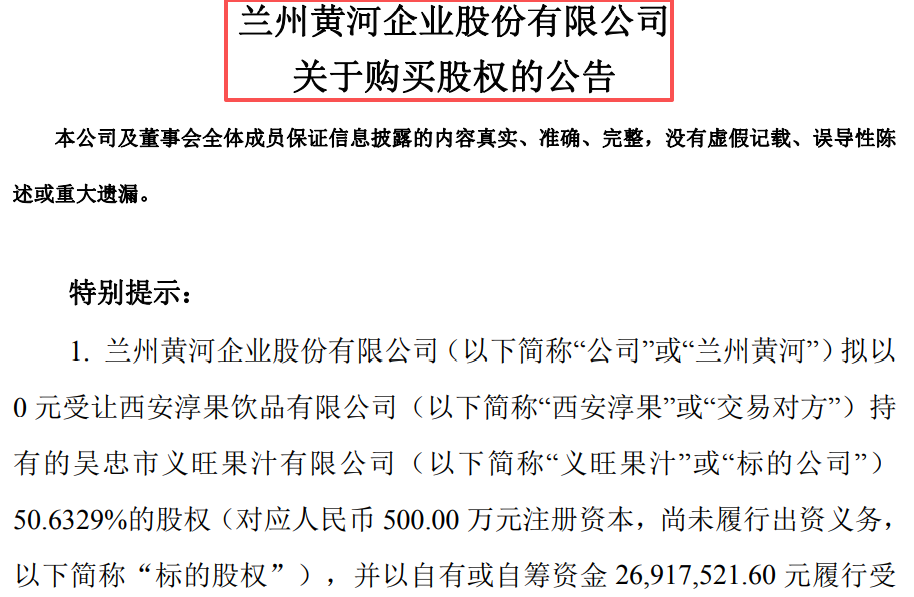
Core Viewpoint - *ST Lanzhou Yellow River (000929) plans to acquire 50.63% equity of Yiwang Juice, which is expected to significantly enhance its operating revenue after consolidation [1][3]. Summary by Sections Acquisition Details - The company intends to acquire 50.6329% of Yiwang Juice from Xi'an Chunguang Beverage Co., Ltd. for 0 yuan and will fulfill the corresponding capital obligations of 26.9175 million yuan, with 5 million yuan allocated to registered capital and 21.9175 million yuan to capital reserves [1][3]. Financial Impact - Post-acquisition, Yiwang Juice will become a subsidiary of Lanzhou Yellow River, included in the consolidated financial statements. Yiwang Juice is engaged in the research, production, and sales of concentrated apple juice, with projected revenue of 52.664 million yuan and net profit of 3.6949 million yuan for 2024 [3][4]. Current Financial Status - Lanzhou Yellow River has been under delisting risk warning since April 30, 2023, due to negative profit figures and insufficient revenue. The company reported a revenue of 96.84 million yuan in the first half of 2023, indicating a need to reach a revenue threshold of 300 million yuan to avoid delisting [4][5]. Recent Developments - In addition to the acquisition, the company established a new subsidiary with a 51% stake, further aiming to enhance its financial standing and operational efficiency [5][6]. Historical Context - Lanzhou Yellow River, originally established in 1983, has faced declining performance in recent years, with net profits in the negative for seven consecutive years. The company primarily produces beer, beverages, malt, and packaging [6][7]. Market Position - As of September 4, 2023, the total market value of Lanzhou Yellow River is only 1.614 billion yuan, reflecting its challenging market position [7].

连续出招!甘肃老牌上市公司努力保壳?
中国基金报· 2025-09-05 01:49
Core Viewpoint - *ST Lanzhou Huanghe plans to acquire 50.63% stake in Yiwang Juice, which is expected to significantly enhance its revenue after consolidation [2][4]. Group 1: Acquisition Details - The company intends to acquire the stake for 0 yuan and will invest 26.9175 million yuan to fulfill the capital obligations associated with the acquisition [2]. - Following the transaction, Yiwang Juice will become a subsidiary of Lanzhou Huanghe and will be included in the consolidated financial statements [4]. Group 2: Financial Impact - Yiwang Juice is projected to generate 52.664 million yuan in revenue and 3.6949 million yuan in net profit for 2024 [4]. - Despite Yiwang Juice's small size, its inclusion in the financials is crucial for Lanzhou Huanghe, which reported revenue of less than 100 million yuan in the first half of the year [4][6]. Group 3: Company Background and Challenges - Lanzhou Huanghe has been under delisting risk warning since April 30 due to negative profit figures and revenue below 300 million yuan [6]. - The company has faced continuous losses in its core business for seven years, with a net profit of -14 million yuan in the first half of the year [6][7]. Group 4: Market Position - As of September 4, the total market capitalization of Lanzhou Huanghe was only 1.614 billion yuan [9].

2.87亿接盘“中植系”资产,厦门舍德入主*ST天山的“保壳”与资本腾挪猜想
Tai Mei Ti A P P· 2025-09-03 11:18
Core Viewpoint - The acquisition of *ST Tianshan by Xiamen Shed is a significant event marking the end of the "Zhongzhi System" control, with the new owner facing severe operational challenges and potential delisting risks [2][3][7]. Group 1: Acquisition Details - Xiamen Shed acquired 22.11% of *ST Tianshan's shares and a debt claim of 76.49 million yuan for a total of 287 million yuan [2][3]. - The acquisition signifies the end of the Zhongzhi System's control over *ST Tianshan, which had been struggling with debt issues since 2021 [3][4]. - Xiamen Shed was established in May 2021 with a registered capital of 30 million yuan and is part of the Xiamen Gude Industrial Group [4]. Group 2: Financial and Operational Challenges - *ST Tianshan has faced three consecutive years of negative net profit, with a significant decline in revenue and ongoing losses in the first half of 2025 [7][10]. - The company reported a net profit of -65.94 million yuan and revenue of 92.28 million yuan for 2025, leading to a risk warning and potential delisting [7][10]. - In the first half of 2025, *ST Tianshan's livestock sales were dismal, with only 126 heads sold, indicating severe operational difficulties [10]. Group 3: Capital Operations and Future Prospects - The acquisition of *ST Tianshan coincided with Xiamen Shed's indirect acquisition of Shenzhen Chisu Automation Equipment Co., suggesting potential future asset injections [6][7]. - The rapid succession of capital operations raises questions about Xiamen Shed's intentions and the strategic direction for *ST Tianshan [6][7]. - The new ownership faces the urgent task of stabilizing *ST Tianshan's financial situation while navigating the complexities of potential asset integration [7][10].


*ST公司存在退市风险 业内人士:切勿盲目参与炒作
Zheng Quan Shi Bao Wang· 2025-08-27 11:37
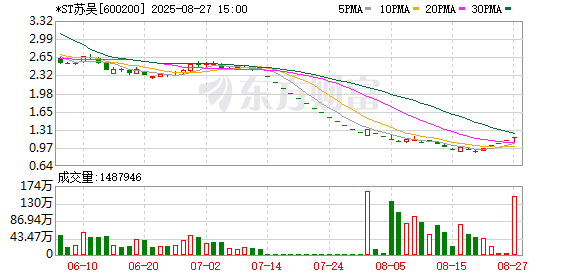
Core Viewpoint - The recent surge in stock prices of companies with high delisting risks, particularly *ST stocks, raises concerns about potential trading risks and the need for investors to focus on fundamental analysis rather than short-term price movements [2][3][6]. Group 1: *ST Suwu - *ST Suwu received an administrative penalty notice from the China Securities Regulatory Commission, indicating that the company has engaged in continuous fraud and is at risk of mandatory delisting [3]. - The company reported a non-opinion audit for its 2024 annual report and disclosed that its controlling shareholder misappropriated 769 million yuan [3]. - Despite the deteriorating fundamentals and multiple delisting risks, *ST Suwu's stock price experienced a series of daily limit-ups, which is contrary to its financial situation [3][6]. Group 2: *ST Huarong - *ST Huarong announced that its controlling shareholder intends to transfer 25.01% of its shares, leading to a change in actual control [4]. - Following the announcement, the stock price rose for six consecutive trading days, despite the transfer being in the intention stage without detailed disclosures or financial advisor opinions [4]. - The company reported revenue of 55.64 million yuan and a net loss of 3.55 million yuan in its 2025 semi-annual report, indicating ongoing financial risks [4]. Group 3: *ST Haihua - *ST Haihua's revenue for 2024 was 237 million yuan, a year-on-year decline of 33.55%, with a net loss of 90 million yuan, leading to delisting risk warnings [5]. - The company has not implemented effective measures to improve its fundamentals, with a reported revenue of 113 million yuan and a net loss of 2.18 million yuan in its 2025 semi-annual report [5]. - Despite these challenges, the stock price increased by nearly 30% over the past 10 trading days, with four days of limit-ups, reflecting a blind speculation on "shell protection" [5]. Group 4: General Market Behavior - Historical experience shows that companies with serious fundamental issues or delisting risks often see abnormal price increases that conceal significant trading risks [6]. - The phenomenon of speculative trading, akin to "passing the parcel," can lead to substantial losses for investors who blindly chase rising prices [6].
*ST生物保壳自救“连环招”
Bei Jing Shang Bao· 2025-08-12 13:56
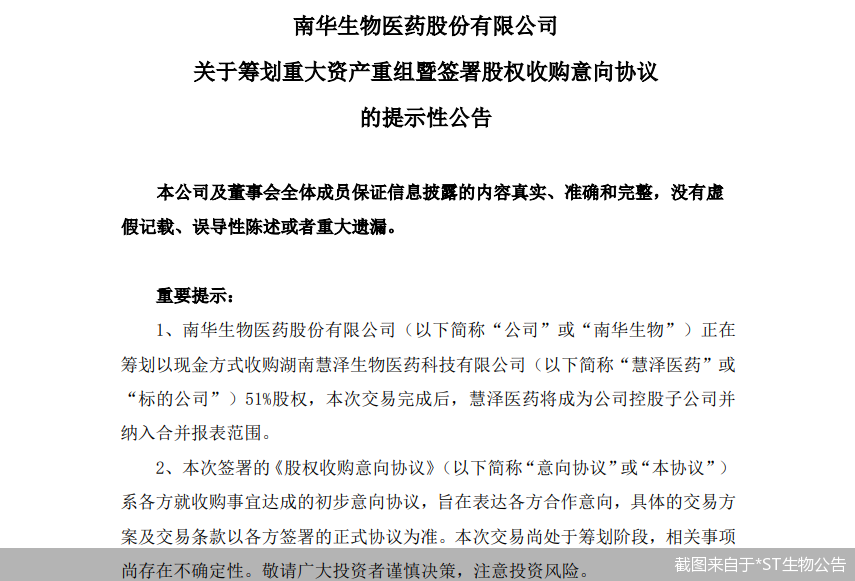
Core Viewpoint - *ST Bio is undertaking a new round of restructuring efforts to avoid delisting risks by planning to acquire a 51% stake in Hunan Huize Biomedical Technology Co., Ltd. through cash payment, aiming to enhance its profitability and operational efficiency [1][4][10]. Group 1: Acquisition Details - On August 12, *ST Bio announced the signing of a share acquisition intention agreement to acquire 51% of Huize Biomedical, a company specializing in drug research and clinical evaluation, with over 85% of its revenue coming from clinical evaluation services [4][10]. - The acquisition is intended to extend *ST Bio's biopharmaceutical business and improve its main business profitability, while also enhancing operational efficiency through asset integration [4][10]. Group 2: Stock Performance - Prior to the restructuring announcement, *ST Bio's stock experienced two consecutive days of trading at the upper limit, with a peak price of 12.54 yuan per share on August 11, marking a new high for the year and a trading volume of 1.07 billion yuan [5][6]. - Following the announcement, *ST Bio's stock hit the lower limit on August 12, closing at 11.91 yuan per share, reflecting a decline of 5.02% [6]. Group 3: Financial Status and Risks - *ST Bio has been under delisting risk warning since April 30, 2023, due to negative financial performance, including a projected revenue of approximately 1.34 billion yuan and a net loss of about 19.85 million yuan for 2024 [8][9]. - The company has taken multiple self-rescue measures, including selling loss-making subsidiaries and restructuring its board of directors to improve its financial situation and operational capabilities [10][11].