
全球可持续发展

Search documents
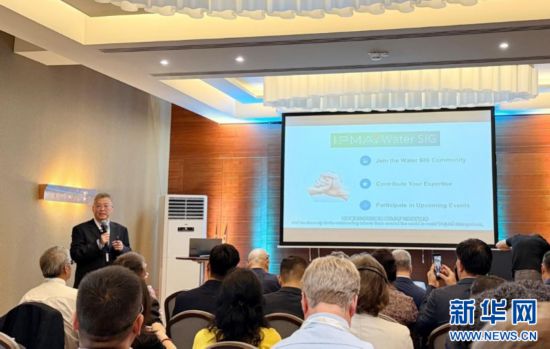
“世界水谷论坛”聚焦中国水项目管理的理论与实践
Xin Hua Wang· 2025-09-22 08:51
Core Viewpoint - The "World Water Valley Forum" successfully held in Berlin focuses on enhancing international collaboration and knowledge sharing in water project management, addressing global water crises through innovative practices and research [1][2][5]. Group 1: Forum Overview - The 34th International Project Management Association Global Congress hosted the "World Water Valley Forum," emphasizing the importance of international exchange in water project management [1]. - Experts from various countries, including China, Germany, France, and Canada, participated in discussions on the theory and practice of water project management [1][2]. Group 2: Key Contributions and Initiatives - Zhang Yang, the chairman of the Global Water Project Management Network, highlighted the need for a specialized case library and enhanced academic cooperation to tackle global water challenges [2]. - Ding Ronggui, Vice President of the International Project Management Association, noted the significance of water project management for global sustainable development and the potential for new knowledge contributions [2]. - Zhang Changzheng, Secretary-General of the Global Water Project Management Network, called for more global water project managers to join the collaborative network for talent development and management innovation [2][5]. Group 3: Research and Case Studies - Huang Dechun, Executive Dean of the World Water Valley Research Institute, presented achievements in research and collaboration related to water-energy-food nexus [5]. - Canadian representative Zhang Hua shared practical experiences in drought management and flood control, showcasing typical case studies [5]. - The forum also included a proposal for a global water project management best practices case collection initiative to promote knowledge sharing [5]. Group 4: Historical Context and Future Directions - The "World Water Valley" concept was proposed by Hohai University in 2009, aiming to leverage its leading water science expertise to create a collaborative platform [6]. - The forum marks the 11th occurrence and serves as a celebration of Hohai University's 110th anniversary [6].

ODS全面淘汰进入冲刺阶段
Zhong Guo Hua Gong Bao· 2025-09-19 06:49
Group 1 - The global community has eliminated nearly 99% of ozone-depleting substances (ODS) production and usage, entering a critical phase for complete ODS phase-out [1] - The 40-year anniversary of the Vienna Convention highlights the successful implementation of the Montreal Protocol, showcasing international cooperation in addressing global environmental issues [1][2] - China has eliminated approximately 628,000 tons of ODS and is expected to achieve an additional 90,000 tons by the end of the year, demonstrating its commitment to ozone layer protection [1] Group 2 - The meeting emphasized the challenges faced in the global compliance efforts, particularly after the Kigali Amendment, which has significantly increased compliance tasks [1] - China is positioned to lead sustainable refrigeration industry actions as the largest producer and consumer of hydrofluorocarbons, contributing to global climate governance [2] - The conference was attended by around 200 participants, including representatives from international organizations, government agencies, and industry experts, indicating a collaborative approach to environmental governance [2]
我国持续加强消耗臭氧层物质管理
Ren Min Ri Bao· 2025-09-16 22:29
Core Points - China has actively participated in global environmental governance, having eliminated approximately 628,000 tons of ozone-depleting substances, accounting for over half of the total elimination by developing countries [1] - By the end of this year, China is expected to achieve an additional elimination of over 90,000 tons [1] - This year marks the 40th anniversary of the Vienna Convention for the Protection of the Ozone Layer, highlighting international cooperation in eliminating ozone-depleting substances and promoting green low-carbon development [1] - Global efforts are projected to restore the ozone layer to levels seen before 1980 by the middle of this century, with the Montreal Protocol contributing significantly to climate change mitigation [1] - The elimination of ozone-depleting substances is entering a critical phase, with China committed to enhancing compliance actions, improving policy frameworks, and promoting green alternatives [1]
我国持续加强消耗臭氧层物质管理 到今年底预计还将实现9万多吨淘汰量
Ren Min Ri Bao· 2025-09-16 22:10
Core Viewpoint - China has actively participated in global environmental governance, having eliminated approximately 628,000 tons of ozone-depleting substances, accounting for over half of the total elimination by developing countries. By the end of this year, an additional 90,000 tons are expected to be eliminated [1] Group 1: International Cooperation and Agreements - This year marks the 40th anniversary of the Vienna Convention for the Protection of the Ozone Layer, highlighting the international community's commitment to scientific principles and the principle of common but differentiated responsibilities [1] - The Montreal Protocol on Substances that Deplete the Ozone Layer has been effectively implemented, leading to global cooperation in eliminating ozone-depleting substances and promoting green and low-carbon industry development [1] Group 2: Future Outlook and Goals - Global efforts are projected to restore the ozone layer to its pre-1980 levels by the middle of this century, with the implementation of the Montreal Protocol also contributing significantly to climate change mitigation [1] - The Ministry of Ecology and Environment in China emphasizes the continuation of compliance actions, policy enhancement, and effective governance to promote green alternatives and collaborate with international parties to protect the ozone layer and address climate change [1]
潘基文:中国一直是全球可持续发展的坚定倡导者和关键贡献者
Zhong Guo Xin Wen Wang· 2025-09-11 03:52
Group 1 - The core viewpoint is that China has been a steadfast advocate and key contributor to global sustainable development, having achieved 126 indicators of the United Nations Sustainable Development Goals ahead of schedule, positioning itself at the forefront globally [1][2] - The Global Development Initiative proposed by Chinese President Xi Jinping in 2021 aims to address global development challenges and emphasizes a people-centered and inclusive partnership approach, injecting valuable momentum into the implementation of the UN 2030 Sustainable Development Agenda [1][2] - Over 80 countries have joined the "Friends of the Global Development Initiative" group initiated by China at the UN, indicating a growing recognition among nations that no country can thrive in isolation in today's interconnected world [1] Group 2 - Inner Mongolia has achieved significant accomplishments in economic development and ecological protection over the past decade, with large-scale ecological restoration projects increasing forest and vegetation coverage while effectively combating desertification and improving local livelihoods [2] - The development experience of Inner Mongolia serves as a valuable reference for Asia and the world, demonstrating that economic development can coexist with the protection of traditional culture through cultural tourism and heritage preservation [2] - The second International Civil Society Conference on the Global Development Initiative focuses on international civil society cooperation, emphasizing the need for ongoing open dialogue and the choice of cooperation over division to build consensus and achieve win-win outcomes [2]
扎实推动产业绿色低碳转型
Zhong Guo Zheng Quan Bao· 2025-08-15 20:10
Core Viewpoint - The emphasis on the concept of "Lucid waters and lush mountains are invaluable assets" as a guiding principle for ecological civilization and sustainable development in China, highlighting its significance in both theory and practice over the past 20 years [2]. Group 1: Ecological Civilization and Sustainable Development - The concept has deepened in theoretical content and practical application, becoming a consensus and action among the entire party and society [2]. - It enriches Marxist thought on the relationship between humans and nature, aligning with the characteristics and requirements of the new development stage [2]. - The implementation of this concept has led to historic, transformative, and comprehensive changes in ecological civilization, resulting in significant improvements in air, land, and water quality [2]. Group 2: Green Development Strategy - The current phase of economic and social development in China is characterized by accelerated green and low-carbon high-quality development [2]. - There is a call for stronger efforts to enhance the beauty of ecological environments and to continue combating pollution [2]. - The focus is on optimizing land use and promoting green low-carbon industrial transformation to create a high-tech, low-resource consumption, and low-pollution industrial structure [2]. Group 3: Institutional and Global Cooperation - The need for robust institutional frameworks to safeguard ecological assets and to innovate ecological civilization systems is emphasized [2]. - There is a commitment to actively promote global ecological civilization and collaborate with various parties to protect the environment and address climate change [2]. - The importance of mobilizing society to contribute to building a beautiful China and a clean, beautiful world is highlighted [3].
联合国可持续采购推介会昨日登陆浙江
Mei Ri Shang Bao· 2025-07-29 22:16
"我们今年第一次参加联合国采购,如果能够成功达成合作,便可以将我们的产品更多地推广到国际市 场,帮助到更多的听障人士。以前,我们通过参加各种专业医疗会议直接对接海外医院,已经在接近二 十个国家拥有了市场,但是如果通过联合国的渠道,在他们更加专业的帮助下,我相信我们可以更快打 开市场,这样也可以让越来越多的人可以重新拥有用耳朵感受这个世界的能力。"李楚表示。 会上,浙江省国际商会与上海联采服务中心签署了合作协议,建立常态化合作机制。双方将进一步加强 信息共享与业务协同,帮助企业拓宽和获得国际公共采购渠道,解决企业在直接参与采购工作中面临的 能力不足、信息匮乏、配套服务缺失等问题。 会议期间,联合国难民署、联合国项目事务署、联合国儿童基金会的采购官员介绍了联合国采购计划、 采购程序规则及采购产品,分析了浙江企业直接参与采购机遇,并提出针对性建议。上海联采服务中心 负责人分享了联合国采购投标的实务操作,中信保浙江公司代表介绍了出口信保赋能企业参与联合国采 购的综合服务方案。 活动现场设置了对接环节,联合国机构专家与浙江企业代表开展了交流洽谈。双方围绕企业产品与服务 的契合度、国际标准认证、投标流程细节等进行深入探讨 ...
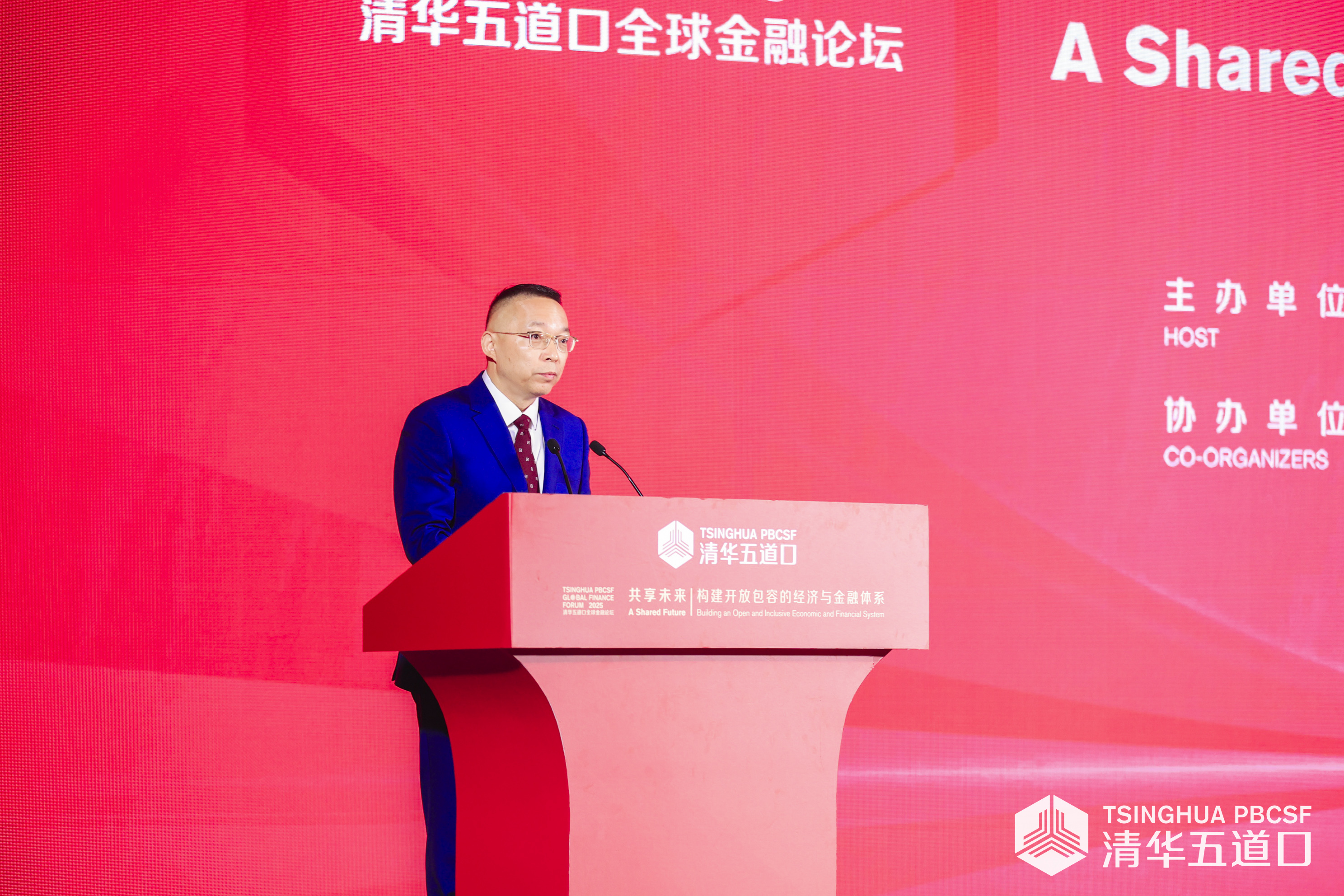
全球金融论坛|清华五道口焦捷:构建开放包容的经济与金融体系推动全球共同繁荣
Zhong Guo Jing Ying Bao· 2025-05-17 09:36
Core Viewpoint - The 2025 Tsinghua Wudaokou Global Financial Forum emphasizes the need for an open and inclusive economic and financial system to enhance resilience amid global economic uncertainties [1][2] Group 1: Economic and Financial Stability - The forum aims to address the challenges posed by a rapidly changing international environment, economic transformations, and technological innovations [1] - Strengthening economic and financial stability is deemed crucial for improving resilience during uncertain times [1] Group 2: China's Role in Global Economy - China has been a major contributor to global economic growth and stability, advocating for true multilateralism and actively participating in global economic governance [1][2] - The country is transitioning from a rule follower to a reformer in global governance, focusing on high-quality development to counter external uncertainties [1] Group 3: Financial Development Initiatives - The Central Financial Work Conference has introduced five key areas for financial development: technology finance, green finance, inclusive finance, pension finance, and digital finance [2] - These areas are seen as new driving forces for high-quality financial development in China [2] Group 4: Forum Significance - The Tsinghua Wudaokou Global Financial Forum, initiated in 2014, has become a significant platform for international academic and policy exchange in finance [2] - This year's forum attracted nearly a hundred high-level political and economic leaders and experts to discuss pressing topics such as the global monetary system and challenges of economic fragmentation [2]
清华大学五道口金融学院院长焦捷:开放包容的经济与金融体系成为推动全球可持续发展、实现共同繁荣的关键路径
Zheng Quan Ri Bao Wang· 2025-05-17 04:26
Group 1 - The annual Tsinghua Wudaokou Global Financial Forum took place on May 17, focusing on the theme "Sharing the Future: Building an Open and Inclusive Economic and Financial System" [1] - The forum aims to provide a high-level dialogue platform for global government officials, economists, and financial leaders to explore new paths for economic and financial development amid a complex global economic landscape [1][3] - Tsinghua University Wudaokou School of Finance has successfully held the forum for ten years, establishing itself as a significant international platform for financial academic and policy exchange in China [1] Group 2 - The current global economic landscape is characterized by fragmentation, rising instability, and uncertainty, leading to structural challenges and differentiated risks in economic growth [3] - China has been a major contributor to global economic growth and stability, advocating for true multilateralism and actively participating in global economic governance [3] - The Chinese government is focusing on high-quality development to address external uncertainties, with a new emphasis on five key areas of finance: technology finance, green finance, inclusive finance, pension finance, and digital finance [3][4]
开放科学实现可持续需要做什么
Bei Jing Shang Bao· 2025-03-28 18:13
Core Viewpoint - Open science is emerging as a transformative paradigm in research, emphasizing the need for international cooperation and open sharing of scientific knowledge to address global challenges [1][2][3] Group 1: Importance of Open Science - Open science is essential for enhancing scientific collaboration and information sharing, allowing science to benefit society [1] - The necessity for open science is increasingly urgent due to global sustainability demands, such as climate change and biodiversity [1][2] - Open science represents a shift from traditional research paradigms, advocating for open access to research results and data [1] Group 2: Challenges and Solutions - The current era is characterized by complex, interconnected challenges that cannot be addressed by individual countries or laboratories alone [2] - To promote open science, it is crucial to improve policy environments, share experiences, and create frameworks that support open science initiatives [3] - Establishing a global scientific community is vital for addressing challenges like climate change and health crises, necessitating international collaboration on large-scale scientific projects [3] Group 3: Mechanisms for Open Science - Enhancing the sharing of research infrastructure and establishing international open sharing platforms can improve efficiency and resource utilization [3] - Open sharing is viewed as a potential accelerator for increasing research efficiency, speeding up technology diffusion, and fostering cross-national collaboration [2]