协同治理

Search documents
平台经济促就业如何发力
Jing Ji Ri Bao· 2025-06-20 22:01
Group 1 - The platform economy has become a key vehicle for stabilizing employment, with an average of over 22% of new jobs created in 2023 coming from this sector, totaling over 230 million jobs [1] - The platform economy is accelerating the transition of talent structure towards higher-end roles, with over 1.2 million AI engineering technicians in China as of 2024, and a compound annual growth rate of 45% over the past three years [1] - More than 30 million new workers, such as delivery riders and ride-hailing drivers, have been absorbed into the flexible employment sector through platform companies [1] Group 2 - Issues such as companies evading labor responsibilities by classifying workers as "individual business owners" or "partners" have led to significant gaps in legal rights, with less than 40% of delivery riders and ride-hailing drivers included in the urban employee social security system [2] - The high rate of pension insurance discontinuation, exceeding 40%, and the lack of related protections are significant barriers to the platform economy's ability to continue absorbing employment [2] - Problems in the gig economy include high traffic violation rates among delivery riders due to algorithmic pressure, and income challenges for drivers during peak hours due to pricing algorithms [2] Group 3 - Strengthening legal protections for new employment forms is necessary, including the establishment of laws to clarify the legal status of platform workers and prevent evasion of labor responsibilities [2] - Encouragement for platform companies to provide commercial pensions and exclusive medical insurance for eligible workers, along with exploring a "social security points bank" mechanism for cumulative payment years across regions and platforms [2] - Implementing rigid work hour constraints and mandatory rest periods for platform workers, along with electronic work hour record-keeping [2] Group 4 - Establishing an algorithm governance and income distribution adjustment mechanism, including a classification system for core algorithms and the formation of a governance committee involving relevant stakeholders [3] - Setting a minimum income ratio for transportation service platforms and capping surge pricing during peak hours [3] - Creating a tiered income distribution mechanism in the live streaming industry, with a fund for industry adjustment based on excessive earnings [3] Group 5 - Enhancing smart regulation and collaborative governance capabilities through the establishment of a digital hub for algorithm regulation, enabling dynamic monitoring and real-time data capture [3] - Promoting standardized regulatory rules and procedures for platform employment through cross-departmental data sharing and joint enforcement [3] - Implementing a credit constraint mechanism linking severance compensation standards to corporate credit ratings, with penalties for malicious evasion of economic compensation [3]
筑牢食品安全“云端防线”
Jing Ji Ri Bao· 2025-06-06 21:45
Core Insights - The online food purchasing market in China has surpassed 1 trillion yuan in 2023, becoming a significant growth point for food consumption [1] - Despite the rapid growth of online food sales, food safety issues have become increasingly prominent, harming consumer rights and hindering the healthy development of the industry [1][2] - The existing legal framework, while improving, has not effectively deterred illegal activities in the online food sector, leading to a sense of impunity among wrongdoers [2] Regulatory Environment - China's food safety laws and regulations have been gradually improved, including the E-commerce Law and guidelines for the sale of special foods [1] - The unique characteristics of online transactions, such as virtualization and cross-regional operations, create challenges for regulation and enforcement [2] - The current penalties for food safety violations are insufficient to deter illegal activities, contributing to a culture of risk-taking among offenders [2] Collaborative Governance - There is a pressing need to establish a collaborative governance model involving government, enterprises, and society to strengthen food safety oversight [3] - Regulatory bodies must work together to create a smart regulatory system and enhance cross-departmental coordination to address regulatory gaps [3] - Online food platforms are urged to take social responsibility by rigorously vetting merchants and managing product information to prevent violations [3] Consumer Awareness - Consumers are encouraged to enhance their self-protection awareness and actively defend their rights in the digital economy [3] - The shift from offline to online purchasing changes the consumption landscape but does not alter the fundamental need for food safety [3] - Ensuring high-quality development in the food industry requires not only convenience for consumers but also assurance of safety and trust [3]
以检察担当护航民营经济高质量发展 ——红古区检察院方大炭素法律服务站揭牌彰显法治护航深度
Huan Qiu Wang· 2025-06-03 09:39
Group 1 - The establishment of the Fangda Carbon Legal Service Station by the Honggu District People's Procuratorate in Lanzhou is a practical implementation of the Supreme Procuratorate's policy to support the development of the private economy and reflects the commitment of the procuratorial organs to integrate into the national strategy of optimizing the business environment [1] - The service station aims to extend its services to the production front lines of world-class carbon enterprises, addressing enterprise expectations with a focus on legal protection and optimizing the regional economic ecosystem [1][3] - The service station employs a "full-cycle legal guarantee system" through ten precise service measures, including establishing a "green channel" for enterprise-related cases and providing customized compliance solutions for enterprises [3] Group 2 - The function of the service station has expanded from "legal supply" to "governance co-construction," introducing a "normal risk warning mechanism" and an "enterprise compliance assessment system" to enhance internal management within enterprises [5] - The collaborative governance model involving "judiciary + enterprise + industry" serves as a judicial sample for Lanzhou to build a "provincial business environment demonstration zone" and supports Gansu's procuratorial work in advancing to the "national first echelon" [5] - The proactive approach of the procuratorial organs in providing "zero-distance" services demonstrates the transformation of "judicial temperature" into "development heat," offering replicable experiences for legal protection of private enterprises in Northwest China [7]



告别价格战,汽车行业要下决心“破卷”
Nan Fang Du Shi Bao· 2025-05-31 15:37
Core Viewpoint - The Chinese automotive industry is facing challenges due to rampant price wars, which are seen as a form of "involutionary competition" that undermines healthy industry development [1][2]. Group 1: Industry Challenges - The ongoing price wars are severely squeezing profit margins for companies, leading to reduced investment in research and development, creating a vicious cycle of "price cuts - reduced quality - declining competitiveness" [1]. - Price wars are impacting the safety of the industrial and supply chains, as companies pressure suppliers to lower costs, resulting in thin margins for suppliers and potential quality issues [1]. - While consumers may benefit from lower prices in the short term, the long-term decline in product quality and after-sales service could harm consumer rights and safety [1]. Group 2: Regulatory Response - The China Automotive Industry Association has issued an initiative supporting fair competition and opposing bottomless price wars, signaling a shift towards quality-focused development rather than mere market scale [2]. - The Ministry of Industry and Information Technology (MIIT) has characterized price wars as "involutionary competition," indicating a regulatory focus on the quality of development in the automotive sector [2]. - The initiative emphasizes that while reasonable pricing strategies are acceptable, unfair practices such as selling below cost to eliminate competitors will be curtailed, establishing a clear boundary for competition [2]. Group 3: Recommendations for Improvement - Companies are encouraged to adopt a correct competitive mindset, focusing on innovation to enhance product competitiveness and meet evolving consumer demands [3]. - Industry associations should strengthen self-regulation by establishing clear industry norms and standards, and supervising compliance among companies [3]. - Government departments need to enhance regulatory frameworks, intensify the crackdown on unfair competition, and promote policies that encourage increased R&D investment [3].

让草根经济向阳生长
Jing Ji Ri Bao· 2025-05-20 22:49
Core Viewpoint - The rapid growth of individual-operated online stores, referred to as "grassroots economy," is accompanied by significant challenges, including the sale of counterfeit products and inadequate consumer protection, prompting the introduction of a new regulatory standard by the market supervision authority [1][2]. Group 1: Regulatory Standards - The newly released market regulation standard, "Natural Person Online Store Management Specification," aims to address issues in the grassroots economy by establishing clear operational guidelines [1]. - The standard includes unified entry criteria to maintain entrepreneurial convenience while ensuring quality thresholds, as well as mechanisms for transparent information disclosure and market exit [1][2]. Group 2: Impact on Stakeholders - For operators, the management standard is seen as an empowerment tool that replaces exaggerated claims with verified information, allowing quality and service to drive market competition [2]. - Consumers will benefit from improved rights protection, as the new regulations will make it easier to trace and hold accountable the operators of online stores [2]. Group 3: Implementation and Collaboration - Successful implementation of the management standard requires collaboration among various stakeholders, including online store operators, platforms, and regulatory bodies [2][3]. - Operators are encouraged to comply with the new standards by enhancing their operational qualifications and improving product quality, while platforms must take responsibility for monitoring compliance and addressing fraudulent activities [2][3].
内部审计的多维视角
Jiang Nan Shi Bao· 2025-05-13 13:49
Regulatory Dimension: Strengthening Risk Prevention Foundations - The core role of internal audit is to ensure compliance with laws, regulations, and industry standards, particularly in the financial sector, where it focuses on anti-money laundering policy execution [3] - Internal audit departments must regularly assess the robustness of internal control systems and promote diversified evaluation mechanisms to enhance internal controls [3] - With increasing digitalization, data security and system vulnerabilities have become new regulatory challenges, necessitating attention to sensitive information encryption and compliance of AI algorithms [3] Management Dimension: Empowering Organizational Value Creation - Internal audit serves as a management tool, not just a supervisory function, and should align with management objectives to enhance its value [5] - The ultimate goal of internal audit is to facilitate the achievement of management objectives by identifying vulnerabilities and improving risk management capabilities [5] - Internal audit should adopt a broader management perspective, balancing various aspects and extending from traditional financial and operational audits to strategic and human resource audits [5] Operational Dimension: Addressing Business Pain Points and Challenges - Internal audit should focus on identifying real issues in business operations and provide actionable recommendations to mitigate risks [7] - The independence of internal audit does not equate to being a bystander; it must engage with operational challenges and not remain detached from the business [7] - A collaborative mechanism for problem rectification should be established, where internal audit assists in analyzing the reasons for difficulties in rectification and promotes accountability for recurring issues [7] Conclusion - The perspectives of internal audit in regulatory, management, and operational dimensions are interconnected, forming a governance loop of "risk prevention - value creation - problem solving" [8] - Moving forward, internal audit should deepen its role in compliance while enhancing management empowerment and addressing business pain points to strengthen its strategic position in sustainable development [8]
整治广告乱象需强化协同机制
Jing Ji Ri Bao· 2025-05-07 22:15
Core Viewpoint - The need for enhanced collaborative governance to address advertising irregularities, with regulatory bodies innovating oversight methods and industry associations strengthening self-regulation to protect consumer rights [1][2][3] Group 1: Regulatory Focus - The State Administration for Market Regulation has issued a notice to conduct nationwide advertising market order rectification, focusing on five key areas: medical, pharmaceutical, health food, special medical purpose formula food, medical device advertising, ordinary food advertising, financial advertising, education and training advertising, and internet advertising, with a target for 2025 [1][2] - The rapid development of internet advertising has led to increasingly diverse advertising formats, complicating regulatory efforts, especially with new marketing models like "soft articles," "store evaluations," and "live streaming sales" [1][2] Group 2: Challenges in Advertising - Businesses are exaggerating claims and making false promises to pursue high profits, while some platforms have lax review mechanisms that allow false advertisements to proliferate [2] - The complexity and variability of advertising formats and channels have increased regulatory challenges, as regulatory technologies and methods have not kept pace, allowing illegal advertisements to thrive [2] Group 3: Consumer Protection and Market Order - Illegal advertisements and false promotions harm consumer rights and disrupt market order, making the rectification of advertising irregularities urgent [2] - The implementation of digital technologies to enhance regulatory efficiency, such as big data monitoring and AI recognition, is essential for accurately targeting illegal advertisements [2] Group 4: Collaborative Governance - Strengthening collaborative governance is crucial, with a dual investigation approach for serious violations, holding both advertisers and platforms accountable [2] - Industry associations should play an active role in establishing industry standards and enhancing self-regulation, while consumer associations provide legal assistance and guidance for consumer rights protection [2] Group 5: Economic Implications - Addressing advertising irregularities not only protects consumers but also contributes to economic vitality and promotes healthy market development [3]
“国际机构”的证书花钱就能买?揭秘假证产业链
Xin Hua Wang· 2025-04-21 11:11
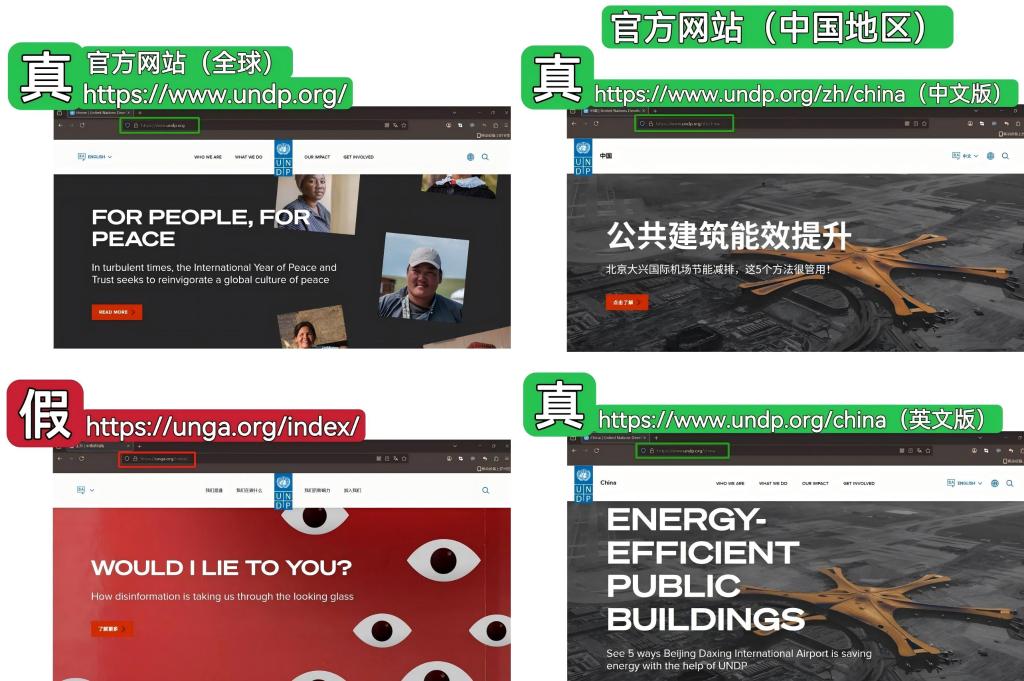
新华社成都4月21日电 题:"国际机构"的证书花钱就能买?——揭秘假证产业链 新华社记者吴光于、李力可 不久前,联合国开发计划署(UNDP)驻华代表处通过联合国微信公号发布声明称,一家名为"四川中青人才科技研究院"的机构,仿冒联合国开 发计划署品牌标识,抄袭官方网站内容,虚假宣称与其存在官方合作,并以此对中国大陆学生实施欺诈活动。 新华社记者跟踪调查发现,"四川中青人才科技研究院"提供的假证五花八门,还依托"山寨网站"对假证"验真"。 3000元能买"国际机构"的证书 记者登录"四川中青人才科技研究院"伪造的网站"https://unga.org/index"(UNGA为联合国大会的缩写,该域名颇具迷惑性)发现,该网站使用与 UNDP官网相同的官方标识和网站布局,发布的也是联合国的相关新闻信息,但网站内容粗制滥造,不少页面无法正常打开。 "四川中青人才科技研究院"伪造网站与UNDP官方网站的对比图。图片来源:联合国微信公众号 目前,"https://unga.org/index"网站已无法打开。但记者调查发现,该机构开设的网店还在运营,售卖"山寨证书"的行为并未停止。 该机构除了办有"山寨"国际组织网站外,还 ...