
商业秘密保护

Search documents
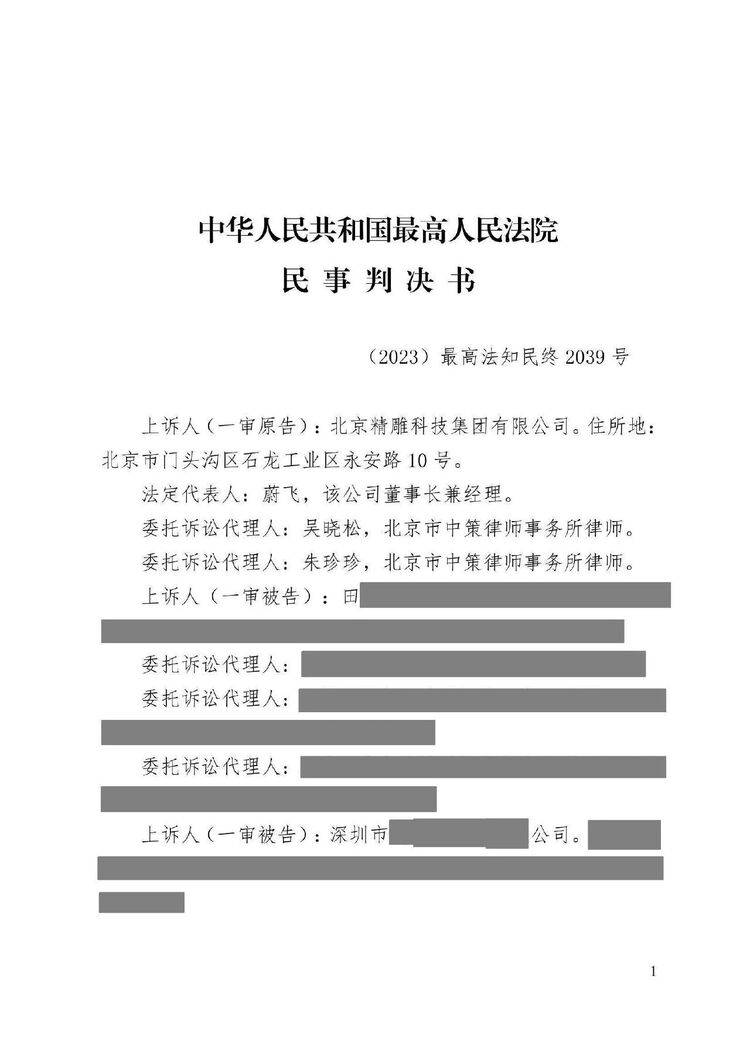
附判决┃判赔3.8亿元!最高院终审落槌高端机床装备领域侵犯商业秘密案
Sou Hu Cai Jing· 2025-12-26 07:42
Core Viewpoint - The Supreme People's Court ruled in favor of Beijing Jingdiao Technology Group Co., Ltd. in a case against an ex-employee and a Shenzhen company for infringement of trade secrets, ordering a total compensation of 381.63 million yuan for economic losses and reasonable expenses [1][7]. Group 1: Case Background - Jingdiao Company is a national high-tech enterprise specializing in the research and manufacturing of CNC machine tools, possessing 37,340 design drawings and related technical documents as trade secrets [2]. - The ex-employee, Tian, illegally copied these trade secrets before joining Shenzhen Company, where he used them to design and sell infringing products [2]. - By the end of 2018, Shenzhen Company had sold 371 infringing glass machines, continuing to produce and sell various infringing products in subsequent years [2]. Group 2: Legal Focus - The court determined that the 2019 revised Anti-Unfair Competition Law applies to this case, as the infringing activities continued after the law's revision [3]. - The court recognized the technical information claimed by Jingdiao Company as trade secrets due to its systematic nature, economic value, and the company's reasonable measures to maintain confidentiality [4][5]. - The court found that both Tian and Shenzhen Company constituted joint infringement, as Tian was the source of the trade secrets and Shenzhen Company knowingly used them [6]. Group 3: Judgment Outcome - The Supreme Court ordered Tian and Shenzhen Company to cease any disclosure or use of the trade secrets and to destroy all related documents within 30 days [7][19]. - They were also ordered to pay Jingdiao Company 379.63 million yuan for economic losses and 2 million yuan for reasonable expenses, totaling 381.63 million yuan [7][20]. - The judgment emphasized that failure to comply with the ruling would result in significant penalties for delayed performance [20].

深圳发布低空经济与生物医药产业商业秘密保护工作指引
Zheng Quan Shi Bao Wang· 2025-12-24 11:39
建议低空经济、生物医药产业相关创新主体认真研读指引,积极采纳其中的实操建议,逐步构建系统、 完善的商业秘密保护体系,有效降低泄密风险,并避免侵犯他人权益,共同维护公平竞争的市场环境。 人民财讯12月24日电,深圳市市场监督管理局在深入调研基础上,编制了《低空经济产业商业秘密保护 工作指引》和《生物医药产业商业秘密保护工作指引》,现予以发布。 《指引》紧密结合产业特点,提供涵盖事前、事中、事后各环节的商业秘密保护实操指南,包括如何有 效识别与界定商业秘密,如何健全内部商业秘密保护体系、如何防范侵犯他人商业秘密,以及遭遇商业 秘密侵权时如何维权等。《指引》还设有典型案例专章,通过真实案例以案释法;并收录了商业秘密管 理体系建设辅导、商业秘密管理风险在线"体检"、涉外商业秘密保护"一对一"指导等公共服务资源。 ...
前高管创业纠纷落幕:科伦博泰与宜联生物和解 共分产品收益
2 1 Shi Ji Jing Ji Bao Dao· 2025-12-18 23:15
Core Viewpoint - Kolonbo Tai has reached a settlement agreement with Yilian Bio and its key personnel to resolve previous disputes, aiming to save litigation time and costs [1] Group 1: Settlement Agreement - The settlement involves Yilian Bio sharing revenue and net profits from six products (YL201, YL202, YL211, YL212, YL221, YL222) with Kolonbo Tai [1] - Kolonbo Tai stated that the settlement aligns with the overall interests of the company and its shareholders, and will not significantly impact the group's financial status or operations [1] Group 2: Background of the Dispute - The dispute originated from Kolonbo Tai's criminal complaint against Yilian Bio in 2024 and subsequent civil lawsuits in 2025 regarding alleged commercial secret infringements [1][2] - Key executives of Yilian Bio, including its founder and CEO, have previous ties to Kolonbo Tai, which may have contributed to the disputes [2][3] Group 3: Product Development and Collaborations - Yilian Bio's product YL201 is in Phase III clinical trials and received breakthrough therapy designation from the FDA for small cell lung cancer [6] - The company has established significant collaborations, including a global partnership with Roche for YL211, which includes a $50 million upfront payment and potential milestone payments nearing $1 billion [6][7] - Yilian Bio has also engaged in multiple strategic collaborations with BioNTech and Zai Lab, indicating strong business development activity [7] Group 4: Market Context and Future Prospects - The rapid resolution of the dispute may be linked to Yilian Bio's plans for an IPO, as resolving intellectual property issues is crucial for the approval process [2][8] - The current hot market for Hong Kong IPOs suggests that Yilian Bio could aim for a 2026 listing, emphasizing the importance of business development capabilities and clinical progress [8]

余杭为全省生物医药产业商业秘密保护提供“余杭经验”
Mei Ri Shang Bao· 2025-12-07 22:19
Core Viewpoint - The release of the "Guidelines for the Protection of Trade Secrets in Biopharmaceutical Enterprises" in Zhejiang Province addresses the concerns of protecting core technologies and data in the biopharmaceutical industry, which is characterized by long R&D cycles and high investments [1][2] Group 1: Industry Context - The biopharmaceutical industry is a strategic emerging industry in Yuhang District, attracting leading enterprises in innovative drug development, high-end medical devices, and digital health, becoming a core engine for regional economic development [1] - The development of new drugs requires approximately ten years and investments of several billion, making the protection of sensitive data and formulas critical to prevent loss of years of effort [1] Group 2: Challenges Identified - A survey of 88 biopharmaceutical companies revealed three main pain points: the coexistence of high R&D investment with low-level protection, disconnection between high-level attention and grassroots execution, and contradictions between long collaborative processes and weak risk management [1] - Over 60% of companies reported inadequate technical protection, with sensitive data often unprotected and relying on basic confidentiality agreements without systematic management [1] Group 3: Guidelines Implementation - The guidelines are based on the "Civil Code" and "Anti-Unfair Competition Law," ensuring compliance while addressing actual business needs, covering management system construction, technical protection design, external collaboration risk control, and emergency rights protection [2] - Yuhang District has already established three commercial secret protection parks and 18 protection stations in Zhejiang Province, with 86 enterprises in Hangzhou designated as commercial secret protection points [2] - The release of the guidelines is seen as a new starting point, with plans for training, expert consultations, and digital platform development to ensure effective implementation and enhance the competitive edge of enterprises through confidentiality [2]
余杭筑牢商业秘密“防火墙”
Hang Zhou Ri Bao· 2025-12-05 02:33
在赋能企业提升自身"免疫力"方面,余杭提供更具针对性的服务:针对生物医药等重点产业,联合 编制全省首个行业商业秘密保护指引;持续开展"商业秘密保护服务月"活动,通过集中培训、上门"保 密体检"等方式,已为150余家企业提供专业辅导,助力企业前置风险防控,筑牢内部安全屏障。 筑牢体系是首要着力点。余杭通过构建"1+3+12"三级保护服务指导体系,实现区级统筹抓总、未 来科技城等三大产业平台省级保护园区全覆盖,以及12个镇街配套机制全面落地。截至目前,该区已累 计建成3个省级保护园区、18个省级指导站点和86家市级保护示范企业,形成了一张覆盖全域、层层递 进的立体"防护网"。 体系支撑之外,执法威慑同步强化。余杭专门组建专业执法队伍,聚焦侵犯商业秘密行为精准发 力。同时,市场监管部门联动公安、检察、法院、司法等部门,建立联席会议、联合执法等协同机制, 形成"线索共享、手段互补、执法联动"的治理合力。 近日,2025年度杭州市市级商业秘密保护站点名单公布,余杭区21家单位成功入选。至此,该区市 级商业秘密保护站点数量已连续4年位居全市各区、县(市)首位,为辖区企业的"隐形财富"构筑起坚 实屏障。 商业秘密是关乎企业 ...
企业商业秘密保护必备!南通市场监管局推出“一手册+四指南”
Yang Zi Wan Bao Wang· 2025-12-01 12:58
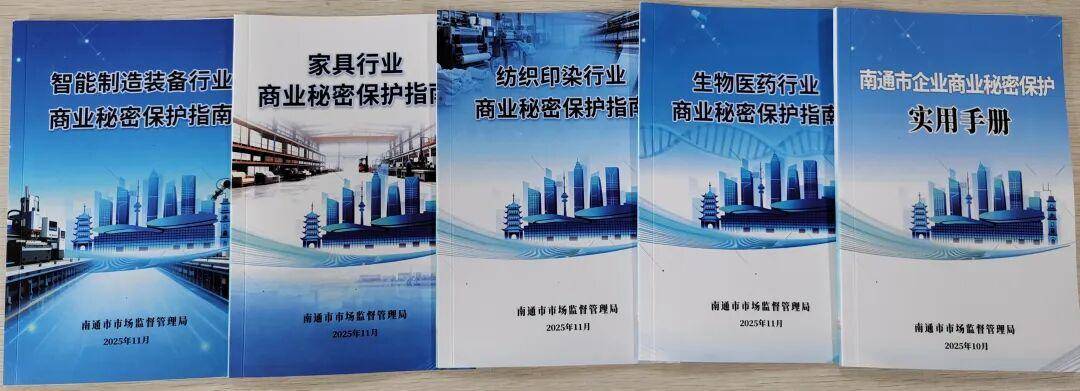
Core Points - Nantong Market Supervision Administration has updated and launched practical guidelines for the protection of trade secrets in four industries: biomedicine, textile dyeing, furniture, and intelligent manufacturing equipment [2] - The first specialized learning and exchange meeting for the "Biomedicine Industry Trade Secret Protection Guide" was held on November 19, with 46 companies participating to foster a safer and more regulated innovation environment [2] Industry-Specific Summaries - **Biomedicine Industry**: The guidelines address the industry's characteristics of high investment, long cycles, high risks, and technology intensity, providing a comprehensive path for trade secret protection [2] - **Textile Dyeing Industry**: The guidelines consider the long supply chain, multiple technical links, high dependence on foreign trade, and frequent information exchange, outlining the risks and management strategies for trade secrets [2] - **Furniture Industry**: The guidelines highlight the numerous innovation stages and the hidden, dispersed risks of information leakage, offering strategies for effective trade secret management [2] - **Intelligent Manufacturing Equipment Industry**: The guidelines focus on the industry's capital and technology intensity, high innovation activity, and close industry chain collaboration, detailing the protection measures for trade secrets [2] Future Actions - Nantong Market Supervision Administration plans to focus on key industries and continue enhancing trade secret protection through mechanisms, platforms, and service optimizations to support enterprise innovation and fair market competition [2]
台积电指控前高管向英特尔泄露商业秘密,英特尔回应
Xin Lang Cai Jing· 2025-11-27 01:01
Core Viewpoint - Intel denies allegations from TSMC regarding employee misconduct related to confidential information leaks, asserting that there is no basis for the claims against Mr. Luo [1] Group 1: Company Actions - Intel spokesperson stated that the company has strict policies in place to prevent the use or transfer of any third-party confidential information or intellectual property [1] - TSMC filed a lawsuit against former senior vice president Luo Wei-Ren, claiming he may have used or disclosed TSMC's trade secrets after joining Intel [1] Group 2: Background Information - Luo Wei-Ren, aged 75, holds a Ph.D. in solid-state physics and surface chemistry from the University of California, Berkeley [1] - He previously held various positions at Intel, including roles in advanced technology development and manufacturing technology, before joining TSMC in 2004 [1]


台积电起诉前资深副总经理罗唯仁指控其可能向英特尔泄露商业秘密
Ju Chao Zi Xun· 2025-11-25 12:48
Core Viewpoint - TSMC has filed a lawsuit against former senior vice president Luo Wei-ren for potential breach of confidentiality and non-compete agreements after he joined Intel shortly after retirement, raising concerns about the possible misuse of trade secrets and confidential information [1][3][4] Group 1: Legal Action and Implications - TSMC's lawsuit centers on whether Luo violated confidentiality obligations and non-compete agreements by joining a direct competitor shortly after leaving the company [3] - The company emphasizes the need for judicial clarification to protect key technologies and operational information, indicating a proactive approach to safeguarding its interests in a competitive industry [3][4] - The case has been accepted by a professional court, and the outcome will be closely monitored as it may set a precedent for executive mobility and trade secret protection in the semiconductor industry [4] Group 2: Industry Context - The semiconductor industry is experiencing heightened competition, leading to increased scrutiny over the movement of key personnel and the associated risks of intellectual property and trade secret violations [3][4] - Major foundries are becoming more vigilant regarding the departure of core employees, often resorting to legal measures to signal a "zero tolerance" policy towards potential information leaks [3][4] - The ongoing disputes over technology patents and trade secrets reflect the industry's growing emphasis on compliance and risk management in the face of fierce competition [3]
台积电核心老臣被曝携20箱机密文件投奔英特尔被调查违反商业秘密,英特尔CEO陈立武称谣言
Sou Hu Cai Jing· 2025-11-24 11:44
Core Insights - The recent retirement of TSMC's senior vice president, Luo Wei-ren, and his subsequent move to Intel has raised concerns regarding the potential transfer of confidential documents related to advanced semiconductor processes [2] - Intel's CEO, Pat Gelsinger, publicly denied allegations that Luo brought confidential files with him, asserting that the company respects intellectual property rights [2] - Luo's extensive experience in both TSMC and Intel positions him as a valuable asset for Intel, particularly in managing wafer production and enhancing operational efficiency [3] Group 1 - Luo Wei-ren retired from TSMC in July 2023 and joined Intel as a vice president of R&D, amid rumors of him carrying over 20 boxes of confidential documents related to TSMC's advanced processes [2] - Intel aims to leverage Luo's expertise to improve collaboration with U.S. clients at TSMC's Arizona facility, with expected partnerships including Microsoft and Tesla, and potentially Nvidia and Qualcomm in the future [3] - Luo's career at TSMC included significant advancements in semiconductor technology, leading to over 15,000 patents and establishing TSMC's leadership in 2nm and 1.4nm process technologies [3] Group 2 - This incident is not the first time TSMC has faced allegations related to trade secrets, as the company previously reported cases of employees involved in stealing confidential information about its 2nm chip technology [4] - The ongoing scrutiny surrounding Luo's transition to Intel is heightened by TSMC's recent legal challenges regarding intellectual property theft [4]
武汉搭建商业秘密“防护网” 431家示范企业筑牢创新“防火墙”
Chang Jiang Shang Bao· 2025-11-19 06:54
Core Viewpoint - Wuhan is innovating a collaborative protection mechanism for commercial secrets, establishing a protective network for market entities through a new paradigm of institutional innovation and collaboration [1][2]. Group 1: Commercial Secret Protection Mechanism - Wuhan's market regulatory bureau has introduced a local standard for managing and servicing commercial secrets, providing clear guidelines for enterprises to address challenges in protection and prevention [2]. - A commercial secret infringement pre-processing center has been established, utilizing a "joint consultation" mechanism to create a comprehensive service model that integrates administrative guidance, criminal investigation, prosecutorial supervision, and technical support [2]. - The city has conducted special enforcement actions, resulting in the investigation of 9 infringement cases and helping enterprises recover over 60 million yuan in economic losses [2]. Group 2: Public Service Platform Development - The "4+5+10+N" model public service platform for commercial secret protection has been created, encompassing a contact database of over 4,000 enterprises and 431 city-level demonstration enterprises [4]. - The platform offers differentiated services, including specialized training for SMEs, compliance inspections for innovative enterprises, and risk assessments for companies planning to go public [4]. - Wuhan has introduced a financing model for commercial secret pledges, forming a financial service alliance to help enterprises convert "invisible assets" into "tangible capital" [4]. Group 3: Industry Collaboration and Growth - The first commercial secret protection association in Central China has been established in Wuhan, gathering 39 member units and 16 professionals to facilitate communication between government and enterprises, industry self-regulation, and professional services [3]. - The growth trajectory of the 431 demonstration enterprises reflects the effectiveness of Wuhan's commercial secret protection efforts, contributing to the city's role in national technological innovation [4].