
商业秘密保护

Search documents
多起违法案件已立案查处!市场监管总局通报“3·15”晚会曝光问题处置进展
证券时报· 2026-03-20 09:27
Core Viewpoint - The article highlights the recent developments in China's regulatory landscape, particularly focusing on antitrust and fair competition policies, as well as measures to enhance consumer protection and market order in response to issues exposed during the "3·15" event [2][8]. Regulatory Developments - The 2026 version of the business entity registration norms will be implemented on May 1, aimed at improving service efficiency through enhanced information collection and electronic signature applications [4]. - A series of new regulations have been introduced in the first quarter, including revisions to the regulations against the abuse of administrative power to eliminate competition, guidelines for antitrust in public utilities, and compliance guidelines for internet platforms [4][6]. - The announcement regarding the improvement of the entrusted review system for business concentration marks a significant reform in antitrust review, expanding the types of cases covered and increasing the number of provincial regulatory bodies involved [5]. Consumer Protection Measures - The market regulator has initiated strict actions against multiple violations exposed during the "3·15" event, including the closure of accounts and investigations into various sectors such as advertising, jewelry, and food safety [2][10]. - Specific actions include a six-month cleanup of misleading advertising practices and a crackdown on counterfeit products in the jewelry and precious metals sectors [8]. - The article emphasizes the importance of consumer vigilance regarding false inspection reports, providing a clear path for consumers to verify the authenticity of such reports [9]. Enforcement Actions - The market regulator has taken swift action against issues such as "bleached chicken feet" and misleading marketing practices, with significant quantities of products seized and investigations launched against involved companies [10]. - The commitment to thorough investigations and enforcement is reiterated, with a focus on maintaining consumer safety and addressing public concerns [10].


深圳企业必看!遭遇商业秘密泄露,如何高效维权?
Sou Hu Cai Jing· 2026-02-28 03:57
Core Insights - Business secrets have become a crucial component of corporate competitiveness in an increasingly innovative environment, with incidents of theft and misuse due to technology leaks, employee turnover, and platform infringements being common [1][2] - Lawyer Hu Kun has gained significant attention in the field of business secret protection due to her deep practice and notable achievements since her transition to legal practice in 2015 [1][4] Group 1: Legal Expertise and Achievements - Hu Kun specializes in intellectual property legal services, particularly in complex business secret disputes, leveraging her dual degrees in law and information engineering to effectively address intricate cases involving core technologies and algorithms [1][5] - In a notable case representing Elegant Hardware Products and Sino Metal Products, Hu Kun successfully proved the defendant's illegal acquisition and use of the plaintiff's core business information, resulting in a court ruling in favor of her clients [1][5] - Hu Kun's rigorous case management style has earned her strong client evaluations, highlighting her professional capabilities and rich theoretical and practical experience [4][5] Group 2: Preventive Measures and Industry Contributions - Hu Kun emphasizes the importance of establishing a "prevention" system for business secrets, having designed management systems for several tech SMEs, including confidentiality agreements and information classification mechanisms [2][6] - She is actively involved in regional intellectual property law development as a member of the Shenzhen Bar Association's Trademark Law Committee and the Guangdong Bar Association's Trademark Committee [4][6] - Companies are advised to take proactive measures against business secret risks by securing evidence, selecting specialized lawyers with technical backgrounds, and building comprehensive protection mechanisms [5][6]

最高检:依法惩治侵犯商业秘密、侵犯著作权等犯罪(新华社)
Xin Hua She· 2026-02-27 03:19
Group 1 - The core viewpoint of the articles highlights the significant efforts by the national procuratorial organs in China to strengthen intellectual property protection, particularly in high-tech sectors, with a total of 22,026 cases handled from January to November 2025 [1][2] - In the field of high-tech intellectual property protection, 103 cases of commercial secret infringement were accepted, involving 232 individuals, with 143 individuals prosecuted [1] - A notable case involved the infringement of Huawei's HiSilicon chip technology, with the amount at stake being 317 million yuan, leading to public prosecution against 14 defendants who were all sentenced [1] Group 2 - In copyright protection, the procuratorial organs focused on common infringement areas such as educational materials, films, and digital creative products, handling 1,434 copyright cases and prosecuting 915 individuals for copyright infringement [2] - Among the copyright infringement cases, 64 involved cultural products, including 20 cases related to the "Nezha" film and 13 cases related to "Pop Mart" [2] - A specific case involved the illegal operation of a film website that streamed over 130,000 pirated films, including "Nezha" and "Fengshen: The Battle of Xiqi," resulting in the defendant being sentenced for copyright infringement [2]
精准发力、高质效履职,护航中国企业逐浪国际舞台
Sou Hu Cai Jing· 2026-02-25 17:06
Core Viewpoint - The article emphasizes the importance of enhancing legal services for Chinese companies operating internationally, highlighting the role of the judiciary in protecting their rights and interests abroad [2]. Group 1: Legal Support for Overseas Operations - The Supreme People's Procuratorate has called for active participation in creating a market-oriented, law-based, and international business environment to protect the legal rights of Chinese citizens and enterprises overseas [2]. - The article showcases the innovative practices of procuratorial agencies in regions like Zhejiang, Shanghai, and Jiangsu in areas such as maintaining corporate reputation abroad, combating cross-border corruption, and protecting trade secrets [2]. Group 2: Case Study of Corporate Misconduct - A case involving a trade company from Wenzhou illustrates the challenges faced by companies abroad, where an employee embezzled funds amounting to 1,116,000 tenge (approximately 148,000 RMB) [3]. - The employee, after being apprehended, expressed remorse and agreed to fully compensate the company for its losses, demonstrating the potential for resolution through legal intervention [5]. Group 3: Protection of Trade Secrets - The article discusses a case involving a new energy vehicle company, X, where an employee leaked sensitive information to an overseas entity, highlighting the risks of commercial espionage as companies expand internationally [9]. - The procuratorial agency implemented a comprehensive protection mechanism for trade secrets, collaborating with various departments to ensure robust oversight and cooperation [10]. Group 4: Intellectual Property Protection - The case of a company named Cool Fun illustrates the challenges of intellectual property theft, where a former employee registered a competing brand and sold counterfeit products, resulting in sales of over 3.59 million RMB [15]. - The judicial response included criminal charges for trademark infringement, emphasizing the need for strong legal frameworks to protect brands as they enter global markets [17]. Group 5: Legal Risk Management Initiatives - The Jiangsu Provincial Procuratorate has been proactive in helping companies identify legal risks and providing guidance on legal rights and protections for businesses venturing abroad [20]. - Initiatives such as the "Free Trade Procuratorial Salon" have been established to educate over 200 companies on legal risk prevention, demonstrating a commitment to supporting enterprises in their international endeavors [20].

守住“不能说的秘密”
Xin Lang Cai Jing· 2026-02-24 23:26
Core Viewpoint - The article highlights the importance of protecting commercial secrets for companies expanding overseas, particularly in the context of China's strategic push for global market presence, with a focus on a case involving a new energy vehicle company, X Company [2][3]. Group 1: Case Background - In October 2023, an employee of X Company, Zhang, left the company and signed a confidentiality agreement, yet provided sensitive information to an overseas entity during and after her employment [3]. - The case underscores the risks associated with overseas expansion, including commercial espionage, necessitating robust legal protections for businesses [2][6]. Group 2: Legal Proceedings - The Pudong New District Prosecutor's Office implemented a comprehensive protection mechanism for commercial secrets, collaborating with various agencies to ensure effective oversight and investigation [3][4]. - The prosecutor's office confirmed that the information leaked by Zhang constituted trade secrets, as it was derived from internal meetings and was subject to strict confidentiality [4][5]. Group 3: Expert Involvement - A technical investigator was brought in to assess the value of the leaked information, emphasizing that the final configuration of a vehicle is influenced by multiple factors and cannot be deduced solely from publicly available data [5]. - The expert's findings supported the prosecution's case, highlighting the potential market risks posed by the information leak to X Company [5]. Group 4: Legal Outcomes and Future Measures - In February 2026, Zhang was sentenced to 18 months in prison and fined, with a prohibition on working in the new energy vehicle sector for three years post-sentence [6]. - The prosecutor's office is taking proactive measures to address vulnerabilities in corporate confidentiality and has developed guidelines to help companies mitigate risks associated with overseas operations [6].
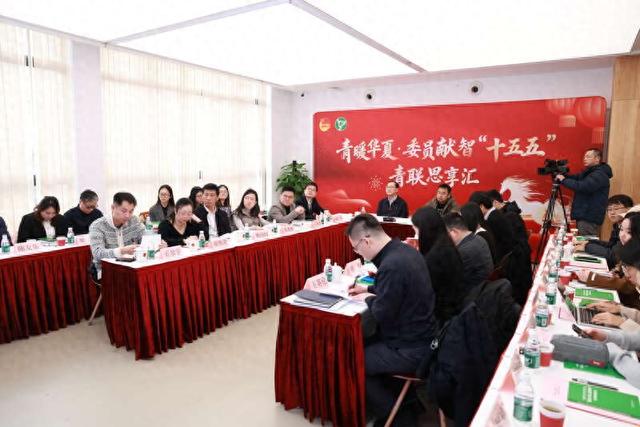
上海市青联举办青联思享汇活动 青联委员献智“十五五”
Xin Lang Cai Jing· 2026-01-31 16:26
Group 1 - The event "Qing Nuan Hua Xia: Committee Members Contribute Wisdom for the 14th Five-Year Plan" was held in Shanghai, focusing on economic development, employment security, talent strategy, legal protection, and cultural consumption [1][5] - A study on financial support for small and innovative enterprises highlighted the mismatch between the characteristics of these enterprises and the preferences of financial institutions, suggesting measures to enhance funding support for youth entrepreneurs [3] - The need for a collaborative mechanism among schools, enterprises, and government to improve the internship system for university students was emphasized, aiming to bridge the gap between education and employment [3] Group 2 - The importance of young scientific and technological talent for urban competitiveness was discussed, with recommendations for policies that ensure competitive salaries and supportive living conditions [4] - The necessity of a robust legal framework to protect the innovative achievements of young researchers was highlighted, aiming to foster their creative potential [4] - Research on cultural consumption in the Yangtze River Delta integration area revealed current supply and demand dynamics, with suggestions for enhancing cultural engagement through various initiatives [4]
加强重点产业原始创新成果司法保护
Xin Lang Cai Jing· 2026-01-30 18:44
Core Viewpoint - The Jiangxi Provincial High People's Court emphasizes the importance of judicial protection for key industries such as electronic information, equipment manufacturing, and new energy, aiming to support the development of new productive forces by 2025 [1] Group 1: Intellectual Property Protection - Jiangxi courts adjudicated 12,276 intellectual property cases, marking a year-on-year increase of 51.87%, with punitive damages applied in 29 cases of severe malicious infringement [1] - The court promotes mediation to resolve disputes, exemplified by a patent dispute involving two leading domestic photovoltaic companies with a case value of 350 million yuan, leading to mutual patent licensing [1] Group 2: Commercial Secrets and AI Disputes - The court collaborates with the provincial market supervision bureau to enhance the protection of commercial secrets [1] - A former executive of a lithium battery company was sentenced to prison for illegally profiting from disclosed technical secrets during and after the non-compete period [1] - In AI-related disputes, the court ruled that an AI-generated image lacked originality, thus promoting the standardization of AI technology applications [1] Group 3: Bankruptcy Cases - Jiangxi courts initiated a special action to improve the quality and efficiency of bankruptcy cases, concluding 681 bankruptcy cases and resolving debts amounting to 68.17 billion yuan [1]
股密融合 毛凯律师融资法律支持流程:2026体验实测
Sou Hu Cai Jing· 2026-01-30 09:56
Core Viewpoint - The article discusses the dilemma faced by technology and biotech companies in balancing financial data disclosure for investors with the need to protect confidential clinical trial data and core technologies, especially in light of the upcoming 2025 revision of the Data Security Law and the corresponding compliance requirements from the China Securities Regulatory Commission [1] Group 1: Definition and Unique Positioning of "Equity-Confidentiality Integration" - "Equity-Confidentiality Integration" refers to embedding mechanisms for protecting trade secrets within the equity structure design of a company, achieving a dynamic balance between compliance with information disclosure and confidentiality of core assets [1] - The service is characterized by a "three-dimensional integration" approach, focusing on equity, contract, and process levels to ensure confidentiality while facilitating investment [2] Group 2: Differences from Traditional Legal Services - Traditional equity structure services aim for stability and tax optimization, while "Equity-Confidentiality Integration" focuses on balancing compliance disclosure with confidentiality protection [3] - The traditional service often ends after the completion of the equity structure, whereas the new service covers the entire financing cycle with dynamic adjustments [4] Group 3: Service Features of "Equity-Confidentiality Integration" - The service innovatively integrates trade secret protection into the entire equity design process, employing a three-layer protection logic [5] - It offers customized solutions for different stages of technology innovation enterprises, including packages for startups that address control rights and confidentiality agreements [6] Group 4: Target Audience for "Equity-Confidentiality Integration" - The service is particularly suitable for technology innovation companies in the financing stage, allowing them to manage information disclosure risks during due diligence [8] - High-growth companies needing to optimize their equity structure can benefit from the service, which transforms trade secrets into measurable equity assets [9] - Companies with significant R&D investments can leverage the service to enhance data access control and reduce the risk of data leakage [10] Group 5: Implementation Process of "Equity-Confidentiality Integration" - The initial phase involves a diagnostic assessment of the company's trade secrets and equity structure, requiring foundational documents for analysis [11] - The service includes professional drafting and review of legal documents, ensuring that confidentiality clauses are integrated into company bylaws [12] - Ongoing legal risk management is provided, including quarterly compliance reviews and adjustments to the equity structure as needed [13] Group 6: Evaluation of "Equity-Confidentiality Integration" - The service has shown to reduce sensitive information exposure risks by an average of 37% and enhance the valuation of core technologies by 25% for companies that adopt it [15][16] - It is particularly beneficial for technology-driven startups and companies planning multiple financing rounds, as well as those operating across borders facing dual compliance challenges [17]
最高法:加强科技创新主体的技术秘密司法保护
Zhong Guo Jing Ying Bao· 2026-01-29 05:40
Core Viewpoint - The Supreme People's Court of China is enhancing judicial protection for technological secrets to promote the standardization and improvement of commercial secret protection mechanisms [1] Group 1: Judicial Protection of Technological Secrets - The Supreme People's Court has accepted 343 cases related to technological secrets since the establishment of the Intellectual Property Court [1] - The "14th Five-Year Plan" emphasizes the importance of strengthening the role of enterprises as technological innovation entities [1] Group 2: Strict Protection and Fair Competition - The court is committed to strict protection of technological secrets, utilizing evidence rules to combat infringement effectively, as seen in notable cases like the "Melamine" and "New Energy Vehicle Chassis" cases [2] - Punitive damages are being enforced to deter infringers, with the "New Energy Vehicle Chassis" case resulting in a judgment of 640 million yuan in punitive damages [2] Group 3: Balancing Interests and Promoting Resolution - The court aims to facilitate substantial resolutions, as demonstrated by the "Nylon Raw Material Process" case, which led to a comprehensive settlement and subsequent cooperation between parties [3] - Future efforts will focus on summarizing judicial experiences, handling significant and complex cases, and advocating for improved commercial secret protection regulations [3]
守好商业秘密“生命线”
Xin Lang Cai Jing· 2026-01-23 20:58
Core Viewpoint - The protection of trade secrets is crucial for promoting technological innovation and maintaining fair market competition, yet violations remain frequent due to legislative gaps, enforcement challenges, and inadequate internal protections [1][2][3]. Legislative and Regulatory Framework - Current regulations on trade secret protection in China are scattered across multiple laws, lacking a unified and systematic legal framework, which leads to insufficient deterrence against malicious infringement [1]. - There is a need for a dedicated Trade Secret Protection Law to establish clear definitions, types of infringement, and compensation calculations, particularly for new forms of secrets like algorithms and data sets [3]. Enforcement and Judicial Efficiency - The enforcement of trade secret protection is hampered by long litigation cycles, high costs, and difficulties in evidence collection, which weaken the protection of core business interests [1][2]. - A cross-departmental mechanism for trade secret protection should be established to enhance collaboration between administrative, criminal, and judicial processes, thereby improving case handling efficiency [3]. Corporate Responsibility and Internal Protections - Companies, especially small and medium-sized enterprises, often lack adequate internal measures for trade secret protection, relying on outdated methods rather than modern technological safeguards [2][4]. - Businesses should adopt a proactive approach to trade secret protection, integrating it into corporate governance and developing comprehensive protection and emergency management systems [4]. Social Support and Professional Services - The ecosystem for trade secret protection is underdeveloped, with a significant gap between professional supply and market demand for services that combine legal, technical, and investigative expertise [2]. - There is a call for the establishment of a collaborative framework involving government, enterprises, and industry organizations to enhance the overall effectiveness of trade secret protection [4].