
国有经济布局优化和结构调整

Search documents
大幅提升战新产业增加值占比!国务院国资委最新发声
证券时报· 2026-01-16 04:27
Core Viewpoint - The article emphasizes the strategic goals and key tasks for local state-owned enterprises (SOEs) during the "14th Five-Year Plan" period, focusing on enhancing the contribution of state-owned economy to social and economic development, optimizing the layout of state-owned capital, and promoting the development of strategic emerging industries. Group 1: Key Goals and Tasks - The main goals for local SOEs during the "14th Five-Year Plan" include strengthening strategic missions, enhancing technological self-reliance, optimizing layouts, increasing enterprise vitality, and reinforcing party leadership [4][8] - Specific tasks include promoting the optimization of state-owned economic layout and structural adjustments, guiding enterprises to strengthen their main businesses, and fostering new pillar industries through internal development and mergers [10][11] Group 2: Focus Areas for 2026 - The meeting outlined six key areas for focus, including improving quality and efficiency, enhancing the role of SOEs in technological innovation, and deepening reforms of state-owned enterprises [10] - Emphasis is placed on market expansion and investment to stimulate demand growth, with a focus on consumer trends and the development of new consumption scenarios [10][11] Group 3: Enhancements in Governance and Management - There is a call for improving the governance structure of SOEs, including expanding the sources of external directors and enhancing the training and responsibilities of board members [13] - The need for a more market-oriented operational mechanism and the promotion of a flatter organizational structure to improve efficiency is highlighted [13] Group 4: Performance Metrics - During the "14th Five-Year Plan," the total assets of enterprises under the supervision of the state-owned assets system are projected to grow from 235 trillion yuan to 387 trillion yuan, reflecting an average annual growth of 10.5% [15]


国资委:推动企业通过内生发展、整合并购等方式加力布局新兴支柱产业
Sou Hu Cai Jing· 2026-01-16 02:04
Core Viewpoint - The State-owned Assets Supervision and Administration Commission (SASAC) emphasizes optimizing the layout and structure of state-owned enterprises (SOEs) by 2026, focusing on enhancing traditional industries and developing emerging pillar industries [1] Group 1: Optimization of Traditional Industries - The SASAC aims to strengthen policy guidance in areas such as main business management, investment control, performance evaluation, and state-owned capital operating budgets to accelerate the high-end, intelligent, and green development of traditional industries [1] - There is a particular emphasis on artificial intelligence as a key variable, with support for enterprises to participate in the central government's "AI+" initiative, fostering the creation of high-value scenarios and promoting the development of smart factories [1] Group 2: Development of Emerging Pillar Industries - The SASAC encourages enterprises to align with local industrial policies and regional resource endowments, promoting growth through internal development and mergers and acquisitions [1] - There is a focus on strengthening collaboration with upstream and downstream enterprises in the industrial chain to cultivate new emerging pillar industries that can lead industrial upgrades and seize future development opportunities [1] Group 3: Optimization of Work Mechanisms - The SASAC plans to actively and prudently revitalize existing state-owned assets, leveraging the role of the property market [1] - Continuous reform of state capital investment and operation companies is emphasized to create market-oriented and professional capital operation platforms, enhancing the investment layout of state capital in key areas [1]
大幅提升战新产业增加值占比!国务院国资委最新发声
券商中国· 2026-01-16 01:56
2026年是"十五五"开局之年。 日前召开的地方国资委负责人会议明确了接下来五年地方国资国企工作的重点和任务目标。"十五五"时期,地 方国资国企工作主要目标涵盖战略使命强化、科技自立自强水平提升、布局优化、企业活力动力增强、党的领 导加强等方面,提出了国有经济对经济社会发展的贡献度进一步提高、战略性新兴产业增加值占比大幅提升等 明确要求。 二是科技自立自强水平明显提升,重点领域关键核心技术快速突破,科技领军企业数量稳步增长。 三是布局明显优化,在关系国家安全、国民经济命脉的重要行业领域控制地位持续巩固,传统产业加快 转型升级,战略性新兴产业增加值占比大幅提升。 四是企业活力动力明显增强,中国特色现代企业制度和国资监管体制更加完善定型,企业家精神、科学 家精神有力弘扬。 五是党的领导、党的建设明显加强,全面从严治党引领保障作用充分发挥。 张玉卓表示,实现"十五五"时期主要目标,要加快提升地方国资国企的"五个能力"(价值创造能力、科技创新 能力、产业升级能力、改革突破能力和党建引领能力)。 强化政策引导打开传统产业新的发展空间 立足2026年,会议还部署了六方面重点工作。对于资本市场尤为关注的推进国有经济布局优化 ...

国务院国资委召开地方国资委负责人会议
Zheng Quan Shi Bao Wang· 2026-01-15 23:21
Core Viewpoint - The State-owned Assets Supervision and Administration Commission (SASAC) emphasizes the importance of solidifying key tasks for state-owned enterprises (SOEs) in 2026 to ensure a strong start for the 14th Five-Year Plan [1] Group 1: Economic Growth and Innovation - Focus on improving quality and efficiency to stabilize growth, enhancing target guidance, and exploring growth potential while ensuring smooth economic circulation [1] - Strengthening the role of SOEs in technological innovation, fostering leading tech enterprises, accelerating the application of research outcomes, and cultivating a favorable innovation ecosystem [1] Group 2: Structural Optimization and Reform - Promoting optimization of the state-owned economy's layout and structural adjustments, concentrating on the "three concentrations" of state capital, enhancing traditional industries, and developing emerging pillar industries [1] - Implementing further deepening of the reform plan for state-owned assets and enterprises, improving the modern enterprise system with Chinese characteristics, and establishing a market-oriented operational mechanism [1] Group 3: Regulatory and Risk Management - Advancing specialized, systematic, legal, and efficient regulation, improving the state-owned assets regulatory system, and strengthening oversight of overseas state-owned assets [1] - Preventing and mitigating major risks by adhering to bottom-line and extreme thinking, effectively controlling risks in key areas, and establishing long-term mechanisms to ensure no systemic risks occur [1]
二○二六年国资央企怎么干?
Xin Lang Cai Jing· 2026-01-14 18:39
Group 1 - The core message emphasizes the need for central enterprises to stabilize operations and improve efficiency amid increasing uncertainties in the international environment since 2025 [2][3] - Central enterprises are urged to enhance market expansion, closely monitor macroeconomic conditions, and improve responsiveness across production, supply, storage, and sales [3] - The focus will be on effective investment to accumulate development potential, with specific attention to key areas such as industrial chain strengthening, infrastructure construction, energy resource security, and forward-looking industry layout [3] Group 2 - The optimization of state-owned economic layout and structural adjustment is essential for strengthening and expanding state capital and enterprises [4] - Central enterprises will pursue both traditional industry transformation and new industry development, emphasizing the importance of sectors like renewable energy, aerospace, and quantum technology [5] - A strategic push for specialized mergers and acquisitions, along with better platform utilization by state capital investment and operation companies, is planned for the upcoming year [5] Group 3 - The meeting highlighted the significant increase in R&D investment by central enterprises, exceeding 5 trillion yuan, with an annual growth rate of over 20% in emerging industries [6] - There will be a focus on integrating technological and industrial innovation, promoting the transformation of major scientific achievements, and enhancing the ecosystem for talent development [6][7] - Initiatives will include improving the talent education and training system, with a large-scale focus on cultivating management, technological, and skilled personnel [7] Group 4 - The deepening of state-owned enterprise reforms is progressing, with a focus on enhancing core functions and competitiveness [8] - Future reforms will aim to integrate party leadership into corporate governance, clarify responsibilities among governance entities, and deepen three-system reforms [8] - There will be an emphasis on organizational and management process transformations, promoting flatter and smarter operational structures [8]
国务院国资委召开中央企业“十五五”规划编制系列专题座谈会
Zheng Quan Shi Bao Wang· 2026-01-12 08:05
Group 1 - The State-owned Assets Supervision and Administration Commission (SASAC) is organizing a series of discussions to gather opinions and suggestions from central enterprises for the "14th Five-Year Plan" [1] - There is a consensus among participants that enhancing the value creation capability of state-owned enterprises (SOEs) is a top priority, with a focus on planning major projects and expanding effective investments [2] - The strategic deployment for optimizing the layout and structural adjustment of the state-owned economy emphasizes the integration of technological and industrial innovation, as well as the transformation and upgrading of traditional industries [2] Group 2 - The discussions highlight the need for further deepening reforms, improving corporate governance structures, and addressing deep-seated issues that hinder enterprise development [2] - There is a strong emphasis on the importance of the Party's comprehensive leadership in SOEs, ensuring that governance integrates Party leadership at all levels [2]
2026年央企重组首单落地 中国石化“签手”中国航油
Ren Min Wang· 2026-01-09 05:57
Core Viewpoint - The restructuring of China Petroleum & Chemical Corporation (Sinopec) and China Aviation Oil Group (China Aviation Oil) is expected to enhance the competitiveness of China's aviation fuel industry and promote a green and low-carbon transition in the aviation sector [2][4]. Group 1: Company Overview - Sinopec is the world's largest refining company and China's largest aviation fuel producer, covering the entire energy industry chain including oil and gas exploration, refining, and equipment manufacturing [4]. - China Aviation Oil is Asia's largest integrated aviation fuel supply chain company, involved in procurement, transportation, storage, testing, sales, and refueling services [4]. Group 2: Strategic Implications - The merger is anticipated to lower aviation fuel supply costs and create a synergistic effect between refining and aviation fuel sectors, avoiding homogeneous competition [4][5]. - The restructuring aligns with the national strategy to optimize state-owned enterprises and enhance their core competitiveness, potentially leading to further professional integration across various sectors [5][6]. Group 3: Environmental Considerations - The partnership is expected to accelerate the commercialization of sustainable aviation fuel (SAF), aiding the aviation industry in achieving carbon reduction goals [5]. - The focus on low-carbon development in the civil aviation sector is increasingly important in response to global climate change, with SAF being a key measure for carbon emission reduction [4][5]. Group 4: Future Outlook - Future central enterprise restructuring will prioritize enhancing core competitive capabilities rather than merely increasing asset size, focusing on resilience and security in supply chains [6]. - The integration will likely delve into specific critical segments of the industry and high-end niche markets, fostering an open and collaborative industrial ecosystem [6].

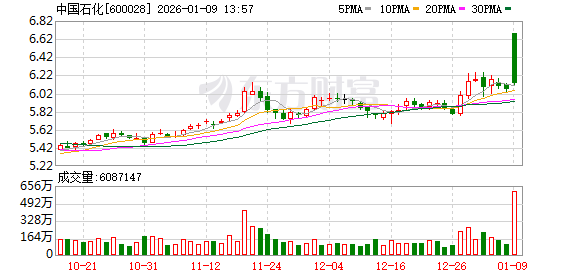
中国石化“牵手”中国航油影响几何?
Xin Lang Cai Jing· 2026-01-08 19:02
Group 1 - The core point of the news is the strategic merger between China Petroleum & Chemical Corporation (Sinopec) and China Aviation Oil Group, which aims to enhance the efficiency and competitiveness of the aviation fuel supply chain in China [1][2][3] - Sinopec is recognized as the world's largest refining company and the leading aviation fuel producer in China, while China Aviation Oil is the largest integrated aviation fuel service provider in Asia, serving numerous airports and global aviation clients [1][2] - The merger is expected to create a comprehensive supply chain from crude oil refining to aircraft refueling, potentially reducing costs and improving energy security for China's aviation industry [1][3] Group 2 - The aviation industry is increasingly focusing on sustainable aviation fuel (SAF) as a key measure to address climate change and reduce carbon emissions, with Sinopec being one of the first companies in China to have SAF production capabilities [2][4] - The collaboration between Sinopec and China Aviation Oil is anticipated to break the commercialization bottleneck of SAF and promote its large-scale application at domestic airports, facilitating a green and low-carbon transition in the aviation sector [2][4] - The ongoing restructuring of state-owned enterprises (SOEs) reflects a broader trend of optimizing the layout and structure of state-owned economies, driven by the need to adapt to industrial changes and enhance core competitiveness [3][4] Group 3 - The restructuring of these two energy SOEs is part of a larger trend of accelerated mergers and integrations among central enterprises, with several other significant mergers occurring in various sectors [3][4] - Experts emphasize that while the merger is a crucial first step, the real challenge lies in achieving effective integration and synergy between the two companies to ensure national energy security and meet carbon reduction goals [4] - The upcoming "14th Five-Year Plan" suggests a focus on optimizing the layout of state-owned economies and enhancing the core functions and competitiveness of state-owned enterprises [3][4]
中国石化“牵手”中国航油 影响几何?
Xin Hua She· 2026-01-08 14:05
Core Viewpoint - The restructuring of China Petroleum & Chemical Corporation (Sinopec) and China Aviation Oil Group is a strategic move aimed at enhancing the efficiency and competitiveness of the aviation fuel supply chain in China, aligning with national energy security and carbon reduction goals [2][3]. Group 1: Strategic Considerations - The merger allows for a comprehensive integration from crude oil refining to aircraft refueling, potentially reducing supply costs and enhancing the international competitiveness of China's aviation fuel industry [3]. - Sinopec is recognized as the earliest enterprise in China to possess sustainable aviation fuel (SAF) production capabilities, while China Aviation Oil has been proactive in promoting SAF applications [3]. Group 2: Industry Trends - The restructuring reflects a broader trend of central enterprise consolidation, with multiple state-owned enterprises undergoing strategic mergers to optimize resource allocation and enhance industrial resilience [4]. - The "14th Five-Year Plan" emphasizes the need for optimizing the layout and structure of state-owned enterprises, aiming to strengthen core functions and competitiveness [4]. Group 3: Challenges Ahead - Post-merger, the companies face the challenge of transitioning from "physical integration" to "chemical fusion," which is crucial for realizing the full benefits of the merger [5]. - There are significant challenges in ensuring national energy security and achieving the "dual carbon" goals, with expectations for the merger to create a win-win scenario for the market, industry, and society [5].
研究推动兵团国有企业做强做优做大等工作
Xin Lang Cai Jing· 2025-12-27 19:43
会议还审议了其他事项。 会议强调,兵团各级各部门要深入学习领会习近平总书记对中央企业工作作出的重要指示精神,扛牢政 治责任,聚焦主责主业,加快国有经济布局优化和结构调整,统筹发展和安全,以全面深化改革推动兵 团国有企业做强做优做大,更好发挥国有资本在服务国家战略和兵团职责使命中的重要作用。要凝聚工 作合力,切实发挥服务企业高质量发展机制作用,指导企业高质量谋划"十五五"工作,在赋能升级上出 实招、在优化营商环境上强保障,真正激发实体经济的潜能和活力。 会议强调,加强兵团本级国有企业国有资本收益收取管理,是保障国有资本保值增值、发挥国有经济战 略支撑作用的重要举措。兵团各级各部门特别是财政部门要强化考核指导,深化预算管理制度改革,落 实健全以管资本为主的国有资产监管体制要求,完善国有资本收益收缴约束机制和激励机制,推动提高 国有企业运营能力和盈利水平。要强化收缴管理,兼顾企业发展和收益分配,科学分类分档确定上交比 例,加强穿透式监管和审核,做到应收尽收、及时入库。 会议指出,全面推行涉企经营许可事项告知承诺制、推动数据要素市场化配置,是深化"放管服"改革、 优化营商环境的重要举措。要抓实改革举措,坚持统筹兼顾、 ...