场景融合

Search documents
政策驱动下的五大消费新场景
Bei Jing Shang Bao· 2025-08-07 12:27
Core Viewpoint - Consumption is increasingly recognized as a key driver of economic growth, with a series of high-quality consumption policies being introduced since 2025 to invigorate the consumption market and accelerate the development of new consumption scenarios driven by technology and policy [1] Group 1: Launch Economy - Establish a new matrix for fashion launches by accelerating the construction of international consumption experience zones and encouraging the opening of flagship and innovative concept stores [3][4] - Create a global launch center to support the establishment of flagship stores and innovative concept stores in various districts, while promoting high-profile launch events [4] - Develop new international food brands by supporting high-quality development of catering enterprises and encouraging the establishment of flagship stores for domestic and international brands [4] Group 2: Digital Consumption - Support enterprises in innovating e-commerce models, including live streaming e-commerce and instant retail, to enhance service quality and digital consumption experiences [6][8] - Encourage the integration of traditional brands with digital transformation and cross-industry collaborations to stimulate the market potential of domestic products [7] - Establish a new benchmark for digital consumption by promoting the development of digital consumption experience centers and supporting innovative activities in live streaming e-commerce [8][9] Group 3: Event Economy - Promote high-profile sports events to enhance market operation capabilities and stimulate event-driven economic vitality [10] - Focus on cultivating a system of high-quality events, including international and local competitions, to enrich related consumption products and services [10][11] Group 4: Scene Integration - Strengthen the integration of tourism with various industries, creating demonstration scenarios for industrial tourism and enhancing rural tourism infrastructure [12] - Promote the development of diverse commercial spaces and encourage innovative operational models to revitalize commercial consumption areas [12][13] Group 5: Cultural Consumption - Explore new connotations of cultural and entertainment consumption by leveraging capital cultural resources and supporting the development of online performances and exhibitions [14][15] - Encourage the construction of cultural tourism projects and enhance the integration of cultural and commercial elements in urban spaces [14][15] Group 6: Technological Innovation - Promote the deep integration of artificial intelligence and gaming industries, supporting technological innovation in game development and operations [16] - Encourage the international expansion of gaming and e-sports enterprises, providing financial incentives for significant achievements in overseas markets [16] Group 7: Characteristic Consumption Districts - Develop characteristic consumption districts by integrating historical and cultural elements, enhancing the shopping environment, and promoting local fashion brands [17]


中国银行业协会原首席信息官高峰:金融科技赋能数字金融高质发展
2 1 Shi Ji Jing Ji Bao Dao· 2025-08-04 11:41
Core Insights - Financial technology is transitioning from a technology-driven phase to a scenario-driven and ecosystem-driven stage, focusing on solving pain points in financial services and enhancing efficiency, reducing costs, and optimizing user experience [1][8] - The integration of digital transformation and AI is reshaping the financial ecosystem, with large banks leading the way through comprehensive technological innovations [2][8] Industry Trends - Large banks and joint-stock banks have achieved significant milestones in digital transformation, utilizing enterprise-level intelligent data platforms for comprehensive data integration and efficient utilization [1][2] - Cloud-native technologies and distributed architectures are being innovated by large banks to support extensive user demands, indicating a shift in business models and organizational structures [2] - Small and medium-sized banks are exploring technology ecosystem collaborations to find suitable development paths, emphasizing the need for tailored digital transformation strategies [2][3] Development Characteristics - The rise of AI technology is providing new momentum for financial technology, with applications in various areas such as customer service, investment research, and wealth management [3][4] - Financial technology is characterized by a shift from single technology breakthroughs to multi-technology integration, with cloud computing, big data, blockchain, and AI reshaping the foundational logic of financial services [4][5] - The focus on practical problem-solving through technology is essential, with an emphasis on data governance and the application value of data [4] Future Outlook - The concept of digital finance is evolving, driven by data elements and technological empowerment, aiming for precision and intelligence in financial services [6][7] - The integration of digital and intelligent elements is crucial for advancing key areas such as technology finance, inclusive finance, green finance, pension finance, and digital finance [7][8] - The development of financial technology requires collaborative efforts from financial institutions, technology companies, and regulatory bodies to foster innovation and create a conducive environment for growth [7][8]

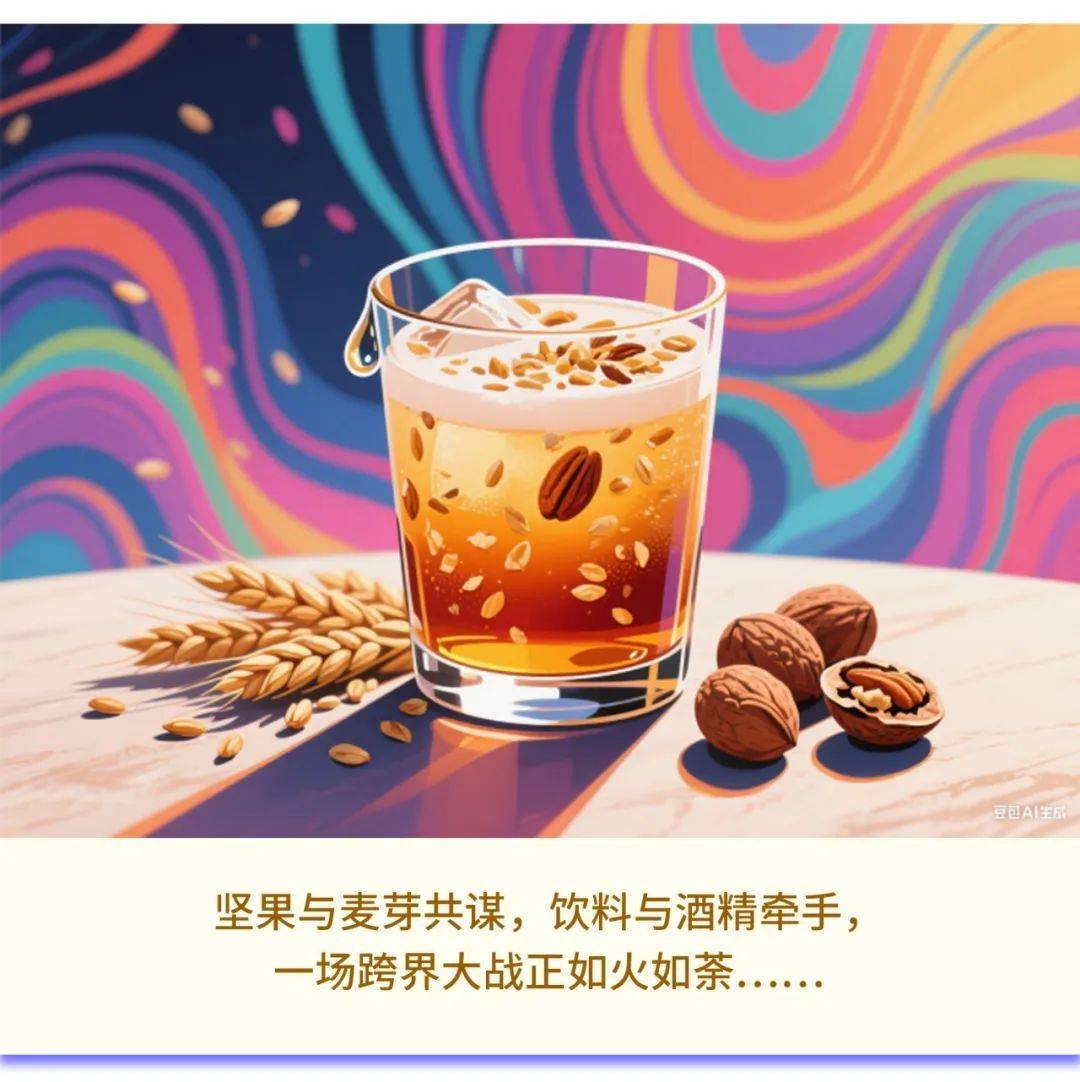
酒水与饮料的“双向奔赴”:一场边界模糊的集体突围
Sou Hu Cai Jing· 2025-06-03 14:02
Core Viewpoint - The beverage and alcohol industries are experiencing a significant crossover, with companies like Three Squirrels launching alcoholic beverages and traditional alcohol brands entering the beverage market, reflecting a blurred boundary and a collective anxiety for growth in a saturated market [4][5][6]. Group 1: Industry Trends - Three Squirrels has introduced three alcoholic brands: "Sun Wukong" craft beer, "Huxi" fruit wine, and "Orange Cat" red wine, aiming to diversify its product matrix for various drinking scenarios [5][6]. - Beverage giants are leveraging their existing consumer bases and distribution networks to penetrate the alcohol market, as seen with Yuanqi Forest's low-alcohol sparkling wine and Fulu's fresh beer business modeled after milk tea [5][9]. - Traditional alcohol companies are also expanding into non-alcoholic beverages, with brands like Moutai and Chongqing Beer launching products such as blueberry juice and orange-flavored soda, respectively [6][9]. Group 2: Strategic Insights - The crossover strategy is driven by the need to optimize resources and create greater boundary efficiency, allowing companies to share costs and enhance value from existing consumer bases [7][11]. - Beverage companies are capitalizing on their high-frequency consumption patterns and established user connections to introduce low-alcohol products, effectively extending their market reach [9][11]. - Alcohol companies are focusing on maximizing their distribution networks by introducing non-alcoholic products, which helps stabilize revenue during seasonal fluctuations in alcohol consumption [11][12]. Group 3: Challenges and Considerations - The success of these crossovers hinges on the ability to build consumer trust in new product categories, as seen with Three Squirrels' wine and Fulu's beer [14][15]. - Companies must redefine the boundaries of "scene integration" and "professional barriers" to ensure that crossovers are not merely superficial but resonate with consumer needs and preferences [15][16]. - Both beverage and alcohol sectors face growth challenges, necessitating a return to core business principles focused on deep consumer insights and effective market positioning rather than blind pursuit of trends [16].
酒店业超级APP,华住会边界在哪?
Sou Hu Cai Jing· 2025-04-28 18:11
Core Insights - The collaboration between Huazhu and Didi Chuxing aims to address the time management challenges faced by business travelers, enhancing the overall travel experience by integrating accommodation and transportation services [8][10][12] - The traditional hotel industry has limitations, primarily focusing on accommodation, while the evolving needs of travelers demand a more comprehensive service that includes travel logistics [4][6][15] Group 1: Market Demand and Challenges - Business travelers experience significant time anxiety due to fragmented travel arrangements, requiring them to switch between multiple apps for transportation and accommodation [3][4] - There is a growing expectation from travelers for hotels to provide services beyond just lodging, with a focus on seamless travel integration [5][6] Group 2: Huazhu and Didi Collaboration - The partnership allows over 270 million Huazhu members to book Didi rides directly through the Huazhu app, streamlining the travel process [9][10] - This integration reduces the need for users to switch between different platforms, addressing the anxiety associated with fragmented travel experiences [10][12] Group 3: Redefining Service Value - The collaboration signifies a shift in the hotel industry towards valuing time as a currency, with services designed to enhance the efficiency of travel [12][19] - The Huazhu app now serves as a comprehensive travel management tool, extending its services from accommodation to transportation and other travel-related needs [12][15] Group 4: Future of Hotel Membership Systems - The evolution of hotel membership programs is moving towards a model that emphasizes seamless integration of various services rather than traditional point-based rewards [14][16] - Huazhu aims to become an intelligent platform that manages the entire travel journey, enhancing user experience through data-driven insights [14][15]