增值税法

Search documents
【服务举措】新办纳税人申报纳税应当这样办理,线上辅导帮您了解政策规定与具体操作
蓝色柳林财税室· 2026-01-12 02:01
Group 1 - The article emphasizes the importance of timely tax declaration for newly established businesses, even if there is no operational income during the reporting period [1][2] - It clarifies that income from customers who do not request invoices must also be declared for tax purposes [1] - Failure to declare taxes on time may result in administrative penalties and the accrual of late fees [1] Group 2 - The article provides a reminder that the new Value-Added Tax Law and its implementation regulations will take effect on January 1, 2026 [7]


一图了解保障性住房税费政策小知识
蓝色柳林财税室· 2026-01-08 14:18
Core Viewpoint - The article discusses the implementation of the "Tax Payment Credit Management Measures" by the State Taxation Administration, highlighting the procedures for businesses to apply for credit re-evaluation under specific circumstances [8]. Group 1 - The announcement specifies that businesses can apply for re-evaluation of their tax payment credit rating if they have objections to the scoring or classification before the annual evaluation results are finalized [8]. - Businesses can submit a re-evaluation application within a specified period if they disagree with the tax payment credit evaluation results, with the tax authority required to complete the re-evaluation within 15 working days of receiving the application [8]. - If a business has not participated in the annual evaluation due to being less than one evaluation year old, it can apply for re-evaluation after being included in the tax credit management for 12 months, based on its tax payment credit status over the past year [8].
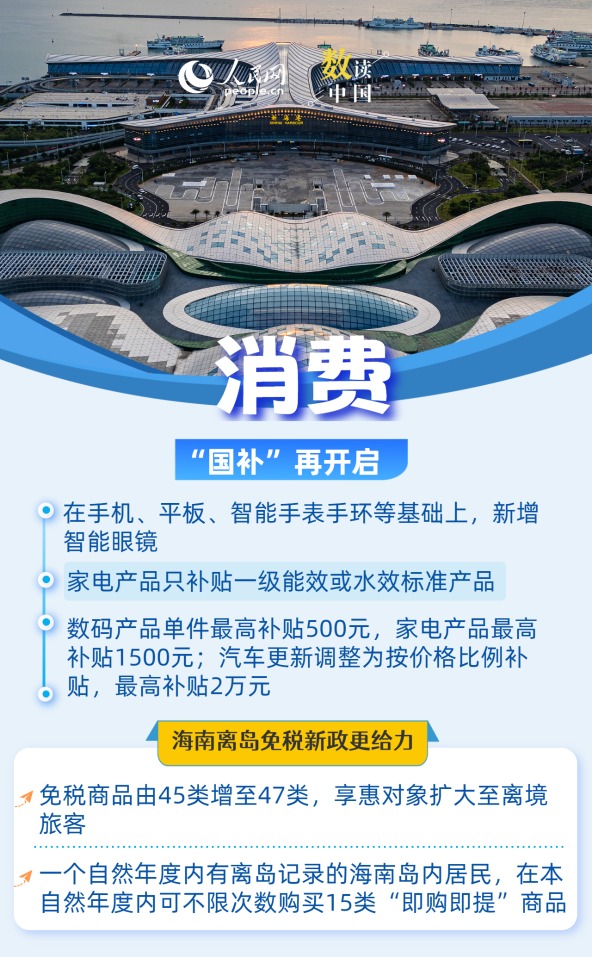
2026年开年 这些小变化传递积极信号
Ren Min Wang· 2026-01-08 08:39
Group 1 - The core viewpoint of the news highlights the implementation of various policies aimed at enhancing high-quality development and addressing public concerns as 2026 marks the beginning of the "14th Five-Year Plan" [1] Group 2 - Starting from January 1, 2026, the value-added tax rate for individuals selling residential properties purchased for less than two years has been reduced from 5% to 3% [5] - The new parenting subsidy for 2026 can be applied for online or offline, with a new feature for those who have previously applied in 2025 to continue receiving benefits [4] - The introduction of a new version of the railway tourism ticket product across 212 stations, with 25 different options available starting November 27, 2025 [3] - The implementation of the "Green Product Certification and Labeling Management Measures" on January 4, 2026, aims to standardize green product certification activities [3] - The People's Bank of China will not display overdue information for individuals who repay overdue debts by March 31, 2026, under the new credit repair policy [9]
税启新程——增值税法全解码丨抵扣变革,环环抵扣“做减法”
Sou Hu Cai Jing· 2026-01-08 03:48
《增值税法》规定,销售额明显偏低或者偏高且无正当理由的,税务机关可以依照《中华人民共和国税 收征收管理法》和有关行政法规的规定核定销售额。李旭红指出,这一条款主要是为了避免因为关联交 易价格不公允,导致税收流失。 应纳税额指的是纳税人该交给国家的税款金额,简单来说就是"最终要交多少钱"。《增值税法》的第三 章就是应纳税额,其中对应纳税额的计算方法做了明确规定:按照一般计税方法计算缴纳增值税的,应 纳税额为当期销项税额抵扣当期进项税额后的余额。按照简易计税方法计算缴纳增值税的,应纳税额为 当期销售额乘以征收率。 怎么理解销项税额和进项税额?销项税额,是指纳税人发生应税交易,按照销售额乘以法律规定的税率 计算的增值税税额。通俗来说,就是你卖东西时向客户收的税,是帮国家代收的增值税。而进项税额, 是指纳税人购进货物、服务、无形资产、不动产支付或者负担的增值税税额。也可以理解为你买东西时 付给供应商的税,可以抵扣销项税,避免重复征税。 那么,增值税一般计税法和简易计税法的核心区别是什么?它们分别适用于哪些纳税人? 北京国家会计学院副院长李旭红说:"一般计税法体现了增值税的中性原则,因为它是用销项税额减去 进项税额,然 ...
增值税法系列宣传丨进项税额抵扣
蓝色柳林财税室· 2026-01-07 01:34
Core Viewpoint - The article discusses the regulations regarding the input tax deduction under the Value-Added Tax (VAT) Law of the People's Republic of China, outlining which input taxes can and cannot be deducted by taxpayers [10][11]. Summary by Sections Deductible Input Tax - Taxpayers can deduct input tax from the output tax for the following items: - VAT amounts listed on tax payment certificates for tangible assets or domestic real estate [4]. - Input tax calculated based on agricultural product purchase invoices or sales invoices, unless otherwise specified by the State Council [4]. - Other VAT deduction certificates received from the seller that specify or include VAT amounts [4]. Non-Deductible Input Tax - According to Article 22 of the VAT Law, the following input taxes cannot be deducted from the output tax: - Input tax corresponding to items taxed under the simplified tax method [4]. - Input tax corresponding to exempt VAT items [4]. - Input tax related to abnormal loss items [4]. - Input tax for goods, services, intangible assets, or real estate purchased for collective welfare or personal consumption [4]. - Input tax for dining services, daily services for residents, and entertainment services directly used for consumption [4]. - Other input taxes as specified by the State Council [4]. Loan Service Input Tax - The input tax corresponding to interest expenses on loan services and related fees such as advisory fees, handling fees, and consulting fees paid to the lender cannot be deducted from the output tax [4].

近期12366热点问题解答(自然人扣缴端)
蓝色柳林财税室· 2026-01-06 01:33
Group 1 - The article discusses the process for resetting the declaration password for withholding clients in the electronic tax bureau system, highlighting three methods for password recovery [5][6]. - It outlines the registration process for the withholding client system, which includes four steps: entering regional and unit information, obtaining tax information, recording tax personnel information, and setting up automatic data backup [7]. Group 2 - The article references the implementation of the new Value-Added Tax (VAT) law in China, which will take effect on January 1, 2026, and outlines the conditions under which taxable transactions involving multiple tax rates are assessed [12]. - It details the annual income tax declaration process for individual industrial and commercial households, specifying that they must report their income tax within 15 days after the end of each quarter and complete annual reconciliation by March 31 of the following year [14].

增值税法系列宣传丨境外单位和个人在境内发生应税交易
蓝色柳林财税室· 2026-01-06 01:33
Core Viewpoint - The article discusses the regulations regarding the Value-Added Tax (VAT) law in China, specifically focusing on the obligations of foreign entities and individuals conducting taxable transactions within the country [3][12]. Group 1: Tax Obligations for Foreign Entities - Foreign entities and individuals are considered the withholding agents for VAT when they engage in taxable transactions in China, unless they have appointed a domestic agent for tax declaration [3][4]. - The VAT payable is calculated based on the sales amount multiplied by the applicable tax rate [5]. Group 2: Tax Declaration Locations - Withholding agents must declare and pay the VAT to the tax authority at their institution's location or residence. If the institution is located outside China, the declaration must be made to the tax authority where the taxable transaction occurs [6]. Group 3: Application of Tax Rates - When a taxable transaction involves multiple tax rates, the applicable rate is determined based on the primary business activity of the transaction [12]. - The new VAT law will come into effect on January 1, 2026, replacing the previous interim regulations [12][13].

收藏学习!一图了解增值税法知识点
蓝色柳林财税室· 2026-01-06 01:33
Group 1 - The article discusses the different VAT rates applicable based on taxable transactions, with a simplified tax method rate of 3% [3] - It outlines the calculation methods for VAT, distinguishing between general and simplified methods, where the general method calculates tax based on the difference between output and input VAT, while the simplified method calculates based on sales multiplied by the collection rate [3] - Non-taxable transactions are specified, including services provided by employees for wages, administrative fees, and certain agricultural and medical services [3] Group 2 - The timing of tax obligations is defined, indicating that tax obligations arise on the day of receiving payment or issuing an invoice for taxable transactions [5] - The location for tax payment is determined by the taxpayer's fixed business location or the location of the taxable transaction for those without a fixed location [6] - The tax reporting period can vary, with options for ten days, fifteen days, one month, or one quarter, and taxpayers must report within fifteen days after the period ends [6][7]

2026年,这些新规将改变你我的生活!
Sou Hu Cai Jing· 2026-01-03 07:51
Group 1: Tax Regulations - The new Value-Added Tax (VAT) Law and its implementation regulations will take effect on January 1, 2026, clarifying taxpayer obligations and taxable transactions [2] - Personal housing sales tax policy has been optimized, with a 3% tax rate for properties sold within two years and exemption for properties sold after two years [4] Group 2: Healthcare and Pharmaceuticals - The new National Basic Medical Insurance and Commercial Health Insurance Drug Catalogs will be implemented, adding 114 new drugs, including 36 cancer medications and 12 chronic disease medications [6][18] - The new drug catalog in Hebei province will manage traditional Chinese medicine and set personal payment ratios for various drug categories [18] Group 3: Environmental Regulations - A new regulation will allow the trading of pollution rights for certain air and water pollutants within specified regions, effective January 1, 2026 [21] Group 4: Education and Childcare - New regulations for kindergarten fees will implement a clear fee list, prohibiting any unlisted charges [14] - The new policy for higher vocational education entrance exams in Hebei will ensure equal treatment for students eligible for preferential policies [19] Group 5: Technology and Security - The revised Cybersecurity Law will enhance AI regulation and protect virtual property rights, with new legal provisions for data and virtual property disputes [17]

2026年第一天,这些新规将改变你我的生活!
Xin Lang Cai Jing· 2026-01-02 09:14
National Regulations - The new Value-Added Tax (VAT) Law and its implementation regulations will take effect on January 1, 2026, clarifying taxpayer obligations and taxable transactions [1] - The new VAT regulations specify the scope of taxable goods, services, intangible assets, and real estate, as well as the standards for different types of taxpayers [1] Housing Tax Policy - The personal housing sales tax policy has been optimized, with a 3% tax rate applied to properties sold within two years of purchase, while properties sold after two years will be exempt from VAT [3][4] Healthcare and Pharmaceuticals - The new National Basic Medical Insurance, Maternity Insurance, and Work Injury Insurance Drug Directory will be implemented, adding 114 new drugs, including 36 cancer medications and 12 chronic disease treatments [5] - The Hebei province will also adopt the new drug directory starting January 1, 2026, with specific cost-sharing arrangements for different categories of drugs [16] Environmental Regulations - A new regulation will prohibit the production of mercury-containing thermometers and blood pressure monitors starting January 1, 2026 [7] - The new policy on pollutant discharge rights allows for the trading of rights for certain air and water pollutants across specified regions, enhancing environmental management [18] Automotive Industry - A new national standard for electric vehicle energy consumption will be implemented, requiring a maximum energy consumption of 15.1 kWh per 100 km for vehicles weighing around 2 tons, which is expected to improve the average driving range by approximately 7% [8] - The Ministry of Commerce will enforce stricter controls on the export of vehicles, particularly to prevent new cars from being exported under the guise of used vehicles [9] Social Management and Security - The revised Public Security Administration Punishment Law will include provisions for justifiable defense, exempting individuals from penalties under certain conditions [11] - New regulations will also manage kindergarten fees through a clear list of allowable charges, prohibiting any unlisted fees [12] Digital and AI Regulations - The revised National Language Law will regulate the use of language in online spaces, establishing a legal framework for digital communication [14] - The updated Cybersecurity Law will enhance oversight of artificial intelligence and protect virtual property rights, reflecting the growing importance of digital assets [15]