多元化食物供给体系

Search documents
“十四五”时期我国农业农村发展解锁哪些新成就?发布会详解
Yang Shi Xin Wen· 2025-09-16 04:15
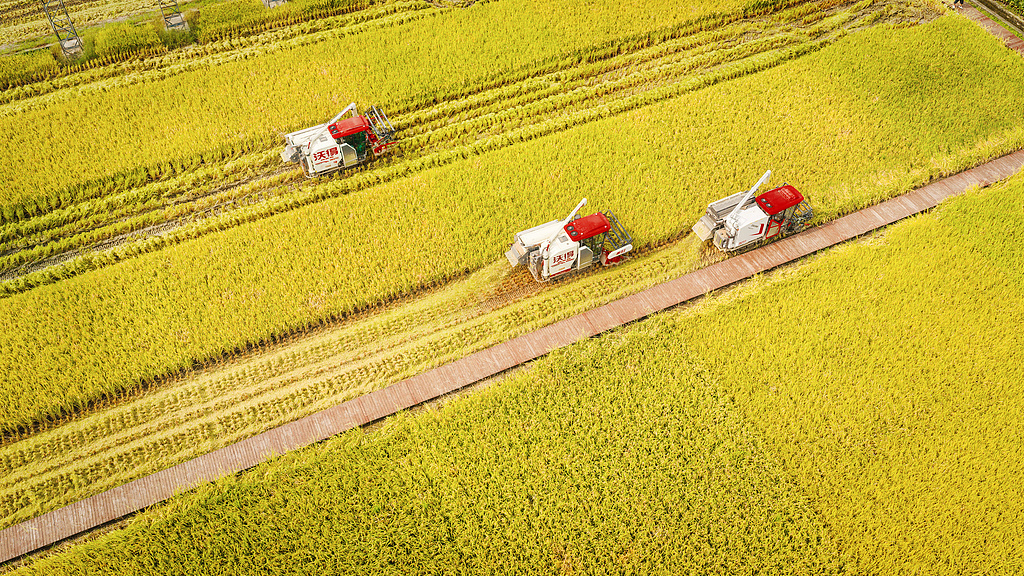
Core Insights - The Chinese government is committed to achieving high-quality agricultural development during the "14th Five-Year Plan" period, focusing on rural revitalization and ensuring food security for its 1.4 billion population [1][3]. Agricultural Production - Grain production is set to exceed 1.4 trillion jin (approximately 700 million tons) in 2024, an increase of 74 billion jin (37 million tons) compared to 2020, with per capita grain availability reaching 500 kg [3]. - The production of cotton, oil, sugar, fruits, vegetables, meat, eggs, milk, and aquatic products has been consistently increasing, leading to a more diverse food supply for consumers [3]. Agricultural Modernization - Over 100 million acres of high-standard farmland have been established, with agricultural technology contributing 63.2% to productivity, and the mechanization rate for crop farming exceeding 75% [3]. - The coverage rate of quality seeds for crops has surpassed 96%, indicating significant advancements in agricultural practices [3]. Poverty Alleviation and Income Growth - More than 6.9 million individuals have been identified and assisted to eliminate the risk of returning to poverty, with stable employment for over 30 million people in recent years [5]. - Rural residents' per capita disposable income is projected to reach 23,119 yuan in 2024, with the urban-rural income ratio decreasing from 2.56:1 in 2020 to 2.34:1 [5]. Rural Development and Infrastructure - The rural environment has improved significantly, with a 76% penetration rate of sanitary toilets and over 90% of administrative villages maintaining effective waste management [7]. - The total length of rural roads has exceeded 4.64 million kilometers, and the access rate of tap water in rural areas has reached 94% [7]. Agricultural Diversification - The development of modern livestock and aquaculture has seen significant growth, with total meat, egg, and milk production reaching 17.5 million tons in 2023, an 18.8% increase since 2020 [10]. - The total aquatic product output has reached 7.358 million tons in 2024, marking a 12.3% increase since 2020, maintaining China's position as the world's largest producer of aquatic products for 36 consecutive years [11]. Nutritional Improvement - The nutritional intake of urban and rural residents is approaching that of developed countries, with balanced consumption of protein, fats, and carbohydrates [11].

趋势研判!2025年中国红椎菌行业政策、产业链、发展现状、竞争格局及行业发展趋势分析:消费者消费需求的稳步增长,给红椎菌行业提供广阔的发展空间[图]
Chan Ye Xin Xi Wang· 2025-06-06 01:40
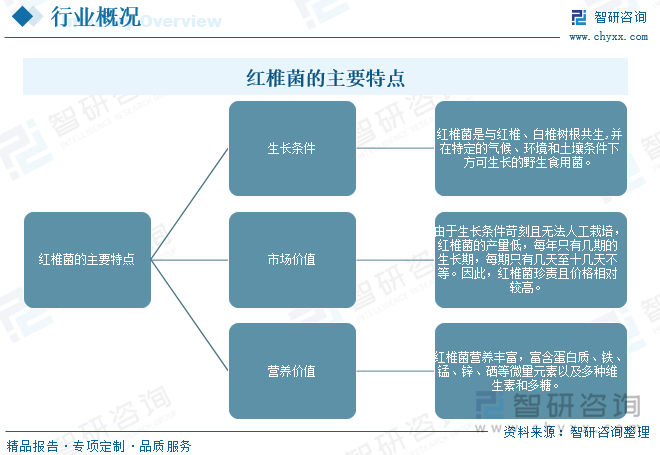
Core Viewpoint - The red pine mushroom is a rare and nutritious wild edible fungus with specific growth conditions, making it particularly valuable in the market. Its unique taste and rich nutritional components have led to increasing demand, especially in China, which is the largest market for red pine mushrooms globally [1][6]. Industry Definition and Characteristics - The red pine mushroom belongs to the fungal kingdom and is characterized by its high protein content and rich vitamins (B, D, E), amino acids, and essential trace elements (iron, zinc, selenium, manganese) [2]. - It contains 5 types of polysaccharides, 16 amino acids, and 28 fatty acids, with polysaccharides making up approximately 2.47% of its composition [2]. Current Industry Status - In 2024, the domestic production of red pine mushrooms is projected to reach 4,575.66 tons, with demand totaling 4,367.47 tons, resulting in a market size of 555 million yuan [6][8]. - The main production regions in China are Guangxi, Fujian, Sichuan, and Jiangxi, with Guangxi being the largest production base, contributing 95.3% of the total production [8]. Industry Chain - The upstream of the red pine mushroom industry involves wild collection and initial processing, as artificial cultivation is not yet feasible. The midstream includes deep processing into dried products and sauces, while the downstream consists of sales channels such as supermarkets, e-commerce, and wholesale markets [10]. Market Demand and Trends - The demand for red pine mushrooms is expected to grow, with 2025 projections indicating a total demand of 4,676.13 tons and a market size of 609 million yuan [6][17]. - The increasing focus on health and wellness among consumers is driving the demand for natural and organic food products, positioning red pine mushrooms favorably in the market [17]. Competitive Landscape - The red pine mushroom industry in China is primarily based on wild collection, with key companies located in Guangxi, including Guangxi Pubei Longsheng Red Pine Mushroom Co., Ltd. and others [14][15]. Future Development Trends - The growth of e-commerce and logistics is opening new sales channels for red pine mushrooms, allowing access to a broader consumer base and facilitating international market entry [17]. - The increasing global demand for specialty mushroom products presents opportunities for expanding the market size and enhancing international influence [17].
泰兴“小块连片”培育富民新业态
Xin Hua Ri Bao· 2025-05-24 21:40
Group 1 - The first batch of mature sweet peas has been harvested and marketed in Fenjie Town, with farmers achieving significant income from the crop, with sweet peas selling for up to 7 yuan per pound and average earnings of 10,000 yuan per acre [1] - The town has implemented a "small plots connected + intercropping" model, leading to increased participation from nearly 70% of the 1,061 households, with projected outputs of 260 tons of sweet peas and other crops in 2024 [1] - The town's sweet pea planting area exceeds 10,000 acres, benefiting approximately 12,000 farmers with an average income increase of 8,000 yuan per household [1] Group 2 - The 20th National Congress emphasized the importance of rural industrial revitalization, with plans to guide farmers in developing suitable family-run projects and promoting various economic models [2] - The city of Taixing aims to diversify its agricultural production, with a total grain output projected at 636,400 tons for 2024, and a 6.6% year-on-year increase in rural residents' disposable income [2] Group 3 - The establishment of a platform company in Xuanzhou Town has shifted the management of forest land to a more intensive model, generating over 2.9 million yuan in village-level income [3] - The cultivation of chrysanthemums has become a profitable venture for local farmers, with an average annual income increase of over 10,000 yuan from both cultivation and land leasing [3] Group 4 - The integration of crab farming with other aquaculture practices has emerged as a new income pathway for villagers, with expectations of increased yields from both crabs and rice [4] - The implementation of a flexible planting model has proven effective for rural residents, enhancing local employment opportunities and contributing to rural industrial revitalization [4] Group 5 - The construction of an e-commerce industrial park is underway, expected to process over 10,000 tons of agricultural products annually, generating an additional 800,000 yuan in village income and creating over 1,000 jobs [5] - The establishment of cold chain storage and logistics centers aims to reduce logistics costs by 1 yuan per order, enhancing the efficiency of agricultural product distribution [5]
坚决打赢“三夏”攻坚战丨麦穗沉甸甸 粮安稳当当——省委一号文件系列解读①
He Nan Ri Bao· 2025-05-23 23:19
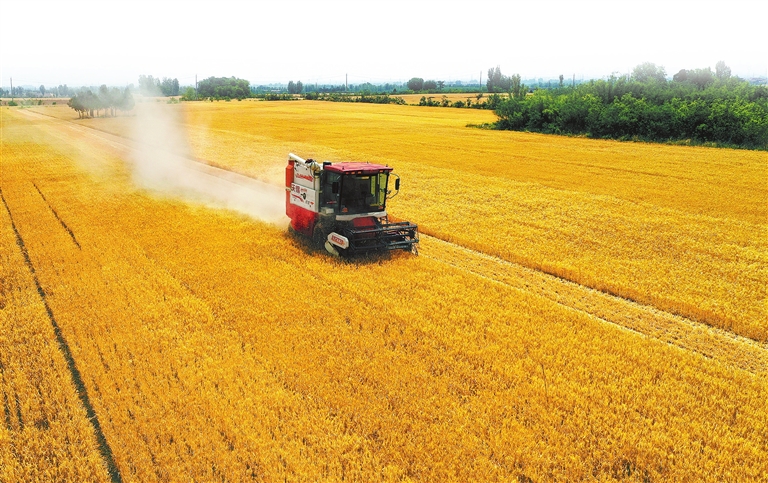
Group 1 - The article highlights the successful implementation of modern agricultural practices in Henan province, particularly through the use of technology and scientific methods to improve wheat production [2][3] - The introduction of advanced irrigation systems and soil testing has led to a reduction in fertilizer usage by 8% to 10%, while simultaneously increasing soil fertility [2] - The expected wheat yield for the cooperative is estimated at over 1,300 pounds per acre, with a potential profit increase of 12% compared to market prices [2] Group 2 - The provincial government aims to stabilize grain planting area at over 160 million acres, emphasizing the importance of food security in the region [3][4] - High-standard farmland construction is a key focus, with plans to build and upgrade over 5 million acres by 2025, ensuring sustainable agricultural practices [3] - The integration of technology in agriculture, such as smart irrigation systems, is expected to enhance productivity and efficiency in grain production [4]
全方位多途径开发食物资源
Jing Ji Ri Bao· 2025-05-09 22:09
Core Viewpoint - The recent "Plan for Accelerating the Construction of an Agricultural Powerhouse (2024-2035)" emphasizes the establishment of a diversified food supply system, reflecting the changing trends in food consumption among the populace and aiming to enhance agricultural modernization and national nutrition levels [1][2]. Group 1: Food Supply and Production - China's total grain production has remained stable at over 1.3 trillion jin for the past decade, with projections to exceed 1.4 trillion jin in 2024, indicating a robust food supply capacity [1]. - Per capita grain availability has increased from over 450 kg in 2012 to over 500 kg in 2024, ensuring absolute safety in staple food supply [1]. - The livestock sector is developing steadily, with a continuous optimization of production structure, and total aquatic product output is expected to reach 73.66 million tons in 2024 [1]. Group 2: Policy Innovations and Framework - The Chinese government is actively promoting policy innovations in food supply, particularly in establishing a diversified food supply system, as highlighted in the 20th National Congress report and subsequent policy documents [2][3]. - Specific measures include enhancing food source channels, improving food development quality and efficiency, and establishing a comprehensive policy framework involving various governmental departments [2]. Group 3: Challenges and Strategic Approaches - Despite a solid foundation, China's food production is still in a "tight balance" state, facing challenges in expanding supply channels and reducing reliance on imports for certain agricultural products [3][4]. - A systematic approach is needed to address these challenges, including optimizing agricultural production structures and enhancing collaboration among different sectors to meet consumer demands effectively [3]. Group 4: Global Engagement and Supply Chain Security - The strategy includes building a diversified food supply chain to ensure security, emphasizing innovation and the establishment of an agricultural industry system that aligns with the diversified food supply framework [4]. - Engaging in global agricultural governance and establishing stable trade relationships with various countries will help mitigate import risks and enhance supply chain reliability [4].
消费参考丨关税风暴下的乳业:如何走出苜蓿进口依赖?
2 1 Shi Ji Jing Ji Bao Dao· 2025-04-09 01:49
Group 1 - The dairy industry is facing a tariff storm, with China opposing the potential 50% tariff increase from the U.S. and announcing a 34% tariff on all imports from the U.S. starting April 10, 2025 [1][2] - The rising cost of alfalfa, crucial for increasing milk production and protein levels, poses a significant cost pressure on the dairy industry [2][4] - The industry is currently experiencing overproduction, leading to increased inventory of milk powder and significant losses per ton sold [3][4] Group 2 - To mitigate risks, diversifying alfalfa import sources, particularly increasing imports from Spain, is suggested as a potential solution [5] - The macroeconomic environment is pushing the dairy industry towards accelerated transformation [6]
专访通威股份副总裁、通威农发总经理张璐:“价格战”不可取,竞争不应以牺牲质量为代价
Mei Ri Jing Ji Xin Wen· 2025-03-28 08:04
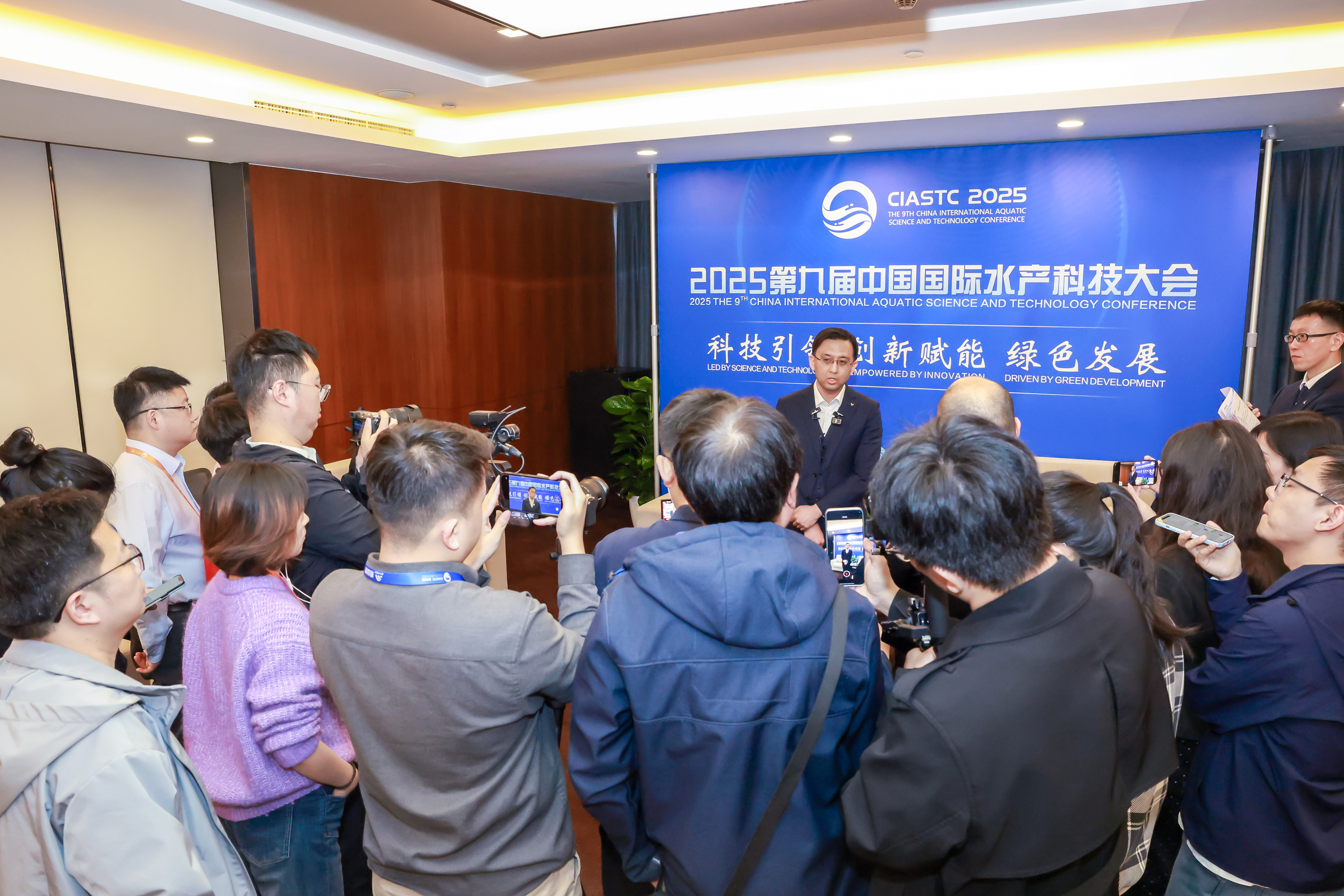
每经记者 胥帅 每经编辑 梁枭 水产饲料"价格战"令行业十分"卷",也让养殖户十分"受伤"。 张璐表示,"为了争夺销量而简单粗暴采取价格战的方式不可取"。他说,从历史经验来看,通过价格战,或过度强调促销来抢夺市场份额,往往产品质量难 以保障,最终伤害了养殖户的养殖效益,竞争不应以牺牲质量为代价。 3月26日,在2025第九届中国国际水产科技大会上,通威股份副总裁、通威农发总经理张璐在接受《每日经济新闻》记者采访时提到,近年来,水产品价格 持续低迷,水产饲料行业竞争加剧,为抢夺市场份额,行业中存在以牺牲产品质量为代价的"价格战"现象。 过度注重促销的活动最后往往保证不了养殖户的养殖效益,完全忽视了产品质量。站在这一角度,他提到,包括通威为主的龙头企业要公开承诺饲料的养殖 效果,以自身的实际行动确保养殖户的整体养殖收益可控。他认为,2025年,水产饲料市场容量会在前两年的基础上初步转暖。 饲料产品质量是基础 今年2月5日,通威股份管理层内部分工有变动。通威股份农牧总裁郭异忠兼任通威农业发展有限公司(以下简称通威农发)董事长,不再兼任通威农业发展 有限公司总经理职务。通威股份副总裁张璐兼任通威农业发展有限公司总经理 ...