婚俗改革

Search documents
移风易俗当破解“惯性难题”(人民时评)
Ren Min Ri Bao· 2025-11-05 22:11
Core Viewpoint - The article discusses the emerging trend of simplifying wedding customs in China, emphasizing the shift towards meaningful interactions over extravagant celebrations, reflecting a broader societal desire for change [1][2][3] Group 1: Simplification of Wedding Customs - Newlyweds in Guangdong and Shandong are leading the trend by minimizing wedding expenses and focusing on meaningful contributions, such as funding for underprivileged children [1] - The practice of giving small amounts as "lucky money" has become common in Guangdong, with some couples opting for weddings without traditional elements like processions and officiants [1] - The movement towards simpler weddings is gaining traction, driven by a collective wish to reduce social pressures associated with extravagant celebrations [1][2] Group 2: Cultural and Policy Support - The cultivation of new customs requires a long-term effort involving both institutional support and community engagement, highlighting the need for cultural reinforcement alongside policy changes [2] - Local governments, such as in Haining, Zhejiang, are implementing detailed plans to promote simpler celebrations, with community leaders setting examples to encourage participation [1][2] - Various regions are exploring unique ways to celebrate weddings, such as tree planting and themed public transport routes, to foster a sense of community and shared joy [2][3] Group 3: Regional Variations and Tailored Approaches - The diversity of cultural practices across different regions necessitates tailored strategies for reform, with the Ministry of Civil Affairs identifying 32 experimental zones to address local issues [3] - Successful reform relies on understanding local traditions and finding appropriate solutions to high bride prices and extravagant celebrations [3] - The article emphasizes the importance of creating an open and diverse social environment that encourages individuals to let go of societal pressures, thereby enriching cultural practices [3]
婚姻登记全面实行“全国通办”以来 累计登记26.3万对
Zhong Guo Xin Wen Wang· 2025-10-10 03:11
Group 1 - The core point of the article is the implementation of nationwide marriage registration, which has facilitated the process for citizens, with a total of 263,000 couples registered since May 10 this year [1] - The Ministry of Civil Affairs has reported steady improvements in social service capabilities during the 14th Five-Year Plan period, particularly in marriage services [1] - The ongoing reform of marriage customs is deepening, promoting a civilized and healthy marriage culture [1] Group 2 - In funeral services, there has been a significant increase in basic funeral service supply, addressing gaps in grassroots funeral homes [1] - A total of 3,350 public cremation halls and 16,800 public cemeteries have been established, promoting beneficial funeral services [1] - The establishment of the National Geographic Information Database has been initiated, with 710,000 rural place names named to better serve public travel and rural revitalization [1]
绘就民生幸福底色
Shan Xi Ri Bao· 2025-10-07 00:20
Core Viewpoint - The provincial civil affairs system has made significant strides in improving social welfare and support for vulnerable populations, focusing on a people-centered development approach and implementing various social assistance measures to enhance the quality of life for residents [1][2][3]. Group 1: Social Assistance and Welfare Improvements - The province has integrated 56 assistance programs from 21 departments to streamline social support, ensuring that policies proactively reach those in need rather than waiting for individuals to seek help [2][3]. - A monitoring database has been established, covering 1.78 million low-income individuals and 5.29 million at-risk individuals, with 51 early warning indicators to facilitate timely intervention [3][4]. - The annual distribution of various policy subsidies amounts to 15 billion yuan, benefiting 6.4592 million individuals across 14 categories, including low-income households and the elderly [2][3]. Group 2: Elderly and Child Welfare - The province has built 4,929 urban elderly meal assistance points and 9,419 rural happiness homes, enhancing meal services for the elderly [5][6]. - Child welfare standards have been significantly raised, with monthly support for institutionalized or scattered orphans set at 1,800 yuan and 1,400 yuan, respectively, ranking third among western provinces [7]. - A comprehensive protection network for minors has been established, including 109 child protection centers and 2,700 community children's homes, ensuring the rights of vulnerable children are upheld [7]. Group 3: Marriage and Funeral Reforms - The province has promoted marriage customs reform, achieving 100% coverage of marriage counseling rooms in all counties, which aids in fostering healthy marriage and family values [8][9]. - Significant investments have been made in funeral services, with 329 million yuan allocated for upgrading facilities and supporting the construction of public cemeteries, thereby reducing the financial burden on families [9].
打造一站式婚宴中心!临平运河解锁婚庆新“礼”仪
Hang Zhou Ri Bao· 2025-09-30 02:03
Core Points - The opening of the wedding center in Luosijiao Village marks the beginning of a rural wedding customs reform pilot in Linping District [1][2] - The wedding center features a total area of approximately 2,100 square meters, with facilities designed to cater to both Western and Chinese wedding styles [1] - The initiative aims to integrate traditional wedding customs with modern marriage needs, promoting a simplified and cost-effective approach to weddings [2] Summary by Sections - **Wedding Center Features** - The center has three floors, including a kitchen on the first floor, a Western banquet hall on the second, and a Chinese banquet hall on the third [1] - It offers a full-service experience that includes wedding planning, banquet services, and cultural experiences [1] - **Cultural Reform Initiatives** - The "Five Ones" action plan includes the establishment of a wedding center, a public matchmaker association, a civilized welcoming team, a marriage standard agreement, and a set of civilized wedding processes [1] - This plan aims to create a new cultural wedding atmosphere through government advocacy, community autonomy, and cultural nourishment [1] - **Community Engagement** - A public volunteer studio for matchmakers was established, and local community leaders promoted the "New Ten Wedding Gifts" initiative [2] - Several wedding-related businesses committed to providing exclusive discounts for couples in the area [2] - The wedding center has been designated as a new era civilization practice center in Linping District [2]
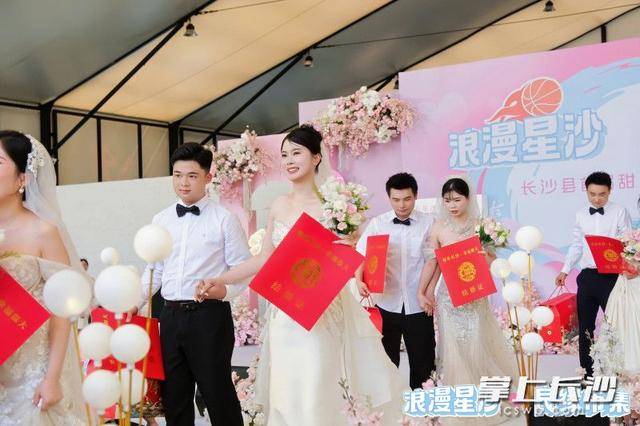
七夕新风景!长沙县集体婚礼倡新风,良缘市集精准撬动消费热
Sou Hu Cai Jing· 2025-08-29 18:48
Group 1 - The event "Romantic Starsha: 'Basket' of Love" integrated "StarBA" elements into a collective wedding ceremony, promoting civilized marriage customs with ten couples participating [1][3] - The event aimed to promote traditional culture, establish healthy views on love and marriage, and encourage correct marriage perspectives while enhancing wedding intentions [3] - The "Romantic Starsha: Good Fate Market" gathered 16 units to provide one-stop wedding services, significantly boosting consumer enthusiasm and resulting in nearly ten wedding banquet bookings within three days [5] Group 2 - The collective wedding and market event is an innovative practice that combines wedding celebrations, cultural tourism, and consumption, enhancing social harmony and economic development [7] - The marriage registration center reported a significant increase in service efficiency, with 116 couples registering for marriage on the event day [5]

“给多少生育补贴,你才愿意生孩子?”
Hu Xiu· 2025-07-30 10:11
Core Points - The Chinese government has officially announced a national childcare subsidy program, effective from January 1, 2025, providing an annual subsidy of 3,600 yuan per child until the child reaches three years old, regardless of the number of children [1] - The announcement has sparked significant public interest, with many parents immediately attempting to access the subsidy through official channels, leading to system overloads [1] - A poll indicated that 50% of respondents believe a subsidy exceeding 10,000 yuan per year would incentivize them to have children, while 23% stated that no amount would change their decision [2] Group 1 - The subsidy program represents a substantial financial commitment from the government, amounting to billions annually, marking it as one of the largest fiscal transfer projects aimed at population investment in recent years [2][3] - Local governments have previously implemented various measures to encourage childbirth, including financial incentives for families with multiple children and housing subsidies [2][3] - The effectiveness of such subsidies in increasing birth rates remains uncertain, as evidenced by low birth rates in other countries that have implemented similar policies [4][24] Group 2 - Historical context shows that the first significant subsidy initiative began in July 2021, with various regions offering their own financial incentives for families with more than one child [3] - The largest local subsidy reported is from Hohhot, Inner Mongolia, which announced a subsidy of up to 100,000 yuan for families with a third child [3][13] - Experts suggest that the effectiveness of subsidies in increasing birth rates is contingent on the amount of financial support provided, with some advocating for a more substantial investment [12][14] Group 3 - The government has also focused on creating a supportive environment for marriage and childbirth, including campaigns to reduce high wedding costs and promote family-friendly policies [19][20] - Various local initiatives have been launched to foster a culture of marriage and childbirth, including public advertising campaigns and community events [15][17] - The overall trend indicates a shift in policy focus from limiting population growth to actively encouraging higher birth rates, reflecting a significant change in demographic strategy [22][24]
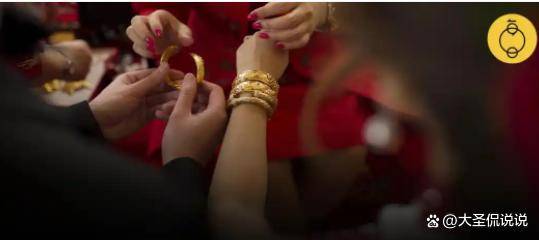
“以前结婚是买房难,现在连买金镯子都成了奢望!”
Sou Hu Cai Jing· 2025-07-03 06:06
Core Viewpoint - The rising gold prices have transformed traditional wedding customs into a source of anxiety for young couples, leading to a collective re-evaluation of marriage costs and customs in contemporary society [1][3]. Group 1: Impact of Rising Gold Prices on Wedding Costs - The average wedding expenditure for newlyweds in 2023 reached 283,000 yuan, with jewelry accounting for 18% of this cost, up from 8% in 2013 [3]. - The cost of traditional "three golds" (gold necklace, bracelet, and ring) has increased significantly, with a 1.2 million yuan increase in expenses due to soaring gold prices [3]. - A survey indicated that 67% of post-90s couples have disputes over wedding expenses, with 85% of these conflicts related to the "three golds" [3]. Group 2: Young People's Adaptation Strategies - Young couples are increasingly opting for alternatives to traditional gold jewelry, such as "5G gold" and lighter gold pieces, which can reduce costs by up to 40% [6]. - The revival of goldsmith workshops is noted, with young couples choosing to melt down old gold for new custom pieces, saving significant amounts [6]. - The concept of "digital gold" is emerging, where couples invest in gold ETFs instead of purchasing physical gold, allowing for asset appreciation while maintaining ceremonial significance [6]. Group 3: Changes in Wedding Customs and Values - The traditional view of gold as a symbol of commitment is being challenged, with many young people prioritizing liquidity and practicality over material possessions [10]. - A notable case is highlighted where a couple donated their gold budget to a charity instead of purchasing gold, reflecting a shift towards social responsibility and redefining love [10]. - The rise of rental services for wedding jewelry indicates a growing trend towards minimizing materialism in wedding customs, with a 300% increase in rental orders in 2023 [7]. Group 4: Societal Implications of Changing Wedding Norms - The increase in gold prices is seen as a reflection of broader economic anxieties, with young people becoming more cautious about investing in marriage [13]. - The generational divide in attitudes towards wealth and marriage is evident, with younger generations favoring less materialistic approaches [13]. - Experts suggest a need for a more inclusive evaluation of marriage customs, incorporating skills training and entrepreneurial support into new traditions [13].
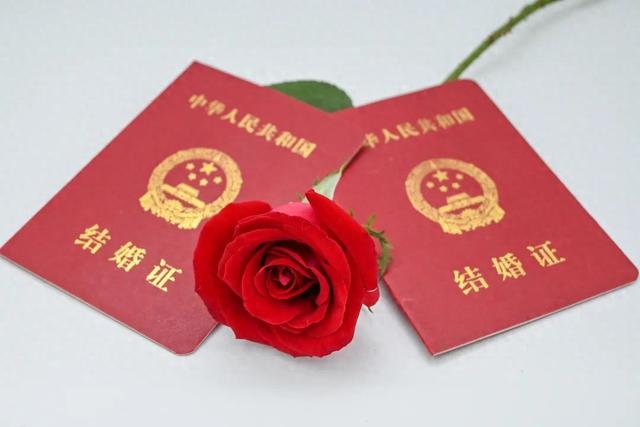
“回老家领证”成过去式!“520”内蒙古5858对新人拿到了“红本本”
Nei Meng Gu Ri Bao· 2025-05-21 07:53
Core Viewpoint - The implementation of cross-province marriage registration in Inner Mongolia has significantly simplified the process for couples, allowing them to obtain marriage certificates quickly and efficiently without the need for extensive documentation [3][5]. Group 1: Cross-Province Marriage Registration - Inner Mongolia has become a pilot province for nationwide cross-province marriage registration, effective from June 1, 2023, allowing residents to register their marriages without needing household registration documents, only requiring an ID [3]. - The new marriage registration regulations, effective from May 10, 2023, enable nationwide handling of marriage and divorce registrations [3]. Group 2: Operational Improvements - Local civil affairs departments in Inner Mongolia have adopted innovative practices to manage the surge in marriage registrations, including a dual-line appointment system that increased efficiency by 40% [5]. - Flexible working hours have been implemented, with some registration offices opening early and committing to stay until all couples are served [5]. - A comprehensive data cleanup has been conducted, processing 4.9 million electronic files and 1.39 million erroneous data entries to facilitate nationwide registration [5]. Group 3: Cultural Innovations in Marriage Customs - Inner Mongolia is introducing modern twists to traditional marriage customs, such as couples writing marriage vows and participating in collective ceremonies [5][11]. - The region has seen a 26% coverage rate in marriage custom reforms, promoting simpler and more meaningful ceremonies [11]. - A total of 22 million yuan has been invested in creating park-style marriage registration offices and cultural exhibition areas to enhance the marriage experience [12].
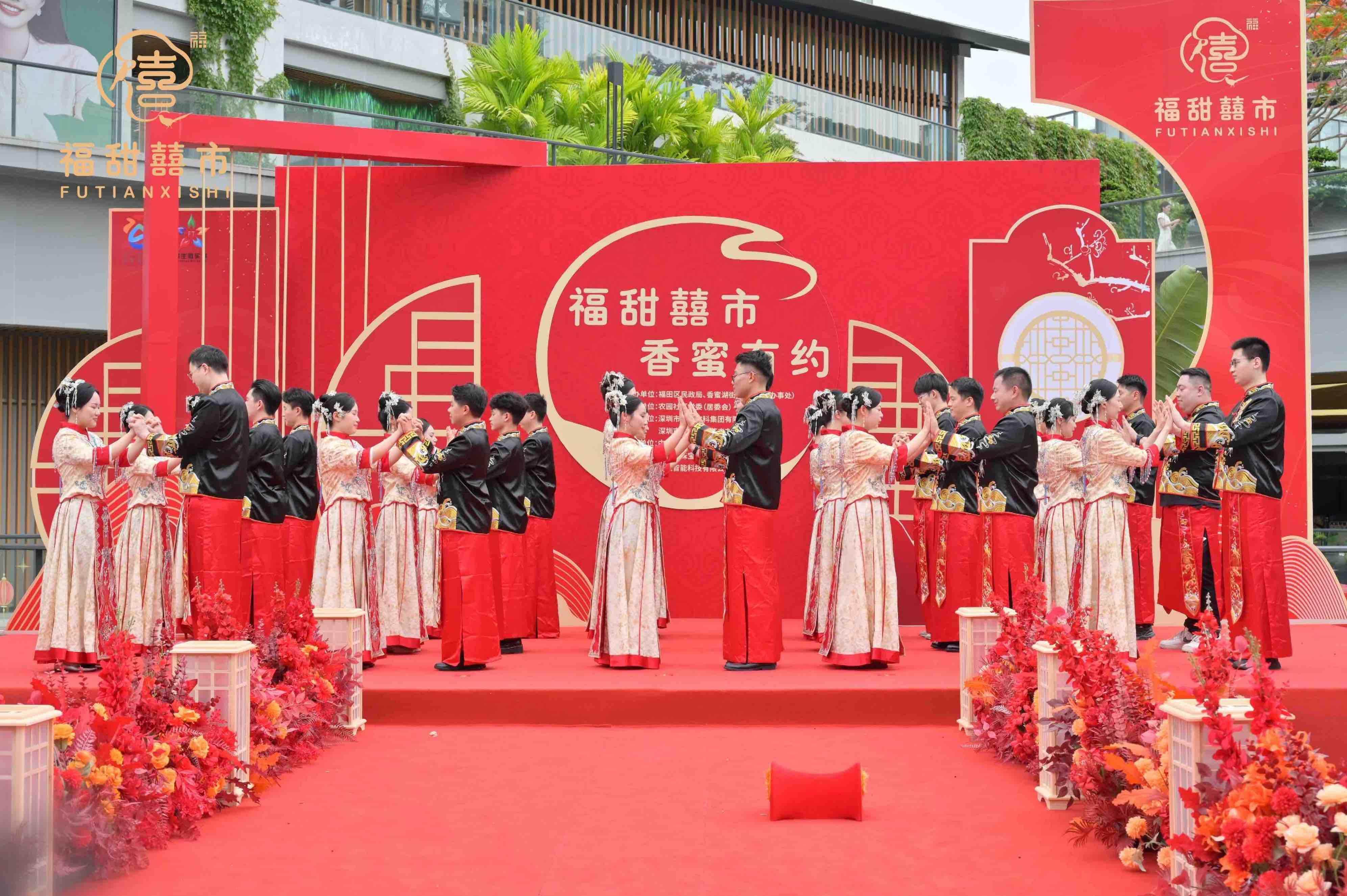
深圳香蜜湖街道打造“甜蜜经济联盟”,以婚俗改革激活消费新场景
Sou Hu Cai Jing· 2025-05-18 12:37
Core Insights - The event "福甜囍市 香蜜有约" held in Shenzhen's Futian District aims to blend traditional marriage customs with modern consumer experiences, targeting the needs of young consumers [1][7] - The initiative is part of a broader strategy to establish a "Sweet Economy Alliance," which includes over 20 local businesses in wedding planning, tourism, and jewelry, promoting a one-stop shopping experience for marriage-related services [1][8] Group 1 - The event featured a collective traditional Chinese wedding for 15 couples, showcasing cultural practices and modern wedding trends [4] - The marketing efforts at the event generated over 1 million yuan in sales, with a 17% increase in sales for participating businesses [1][8] - The "Sweet Economy" concept is positioned as a key growth area for the local economy, linking various sectors to stimulate consumer spending [9][10] Group 2 - The event reflects the local government's commitment to cultural integration and grassroots governance in promoting new marriage customs [7] - The initiative is part of the Guangdong Province's marriage customs reform pilot program, aiming to enhance community happiness and economic vitality [7][10] - Future plans include further development of the "Sweet Economy" to enhance the cultural and economic landscape of the area, ensuring residents experience a sense of happiness [10]
国常会审议通过!
券商中国· 2025-03-22 08:27
Core Viewpoint - The recent approval of the "Marriage Registration Regulations (Revised Draft)" by the State Council aims to enhance the legal framework for marriage registration, ensuring better service and protection of rights for individuals involved in marriage, thereby promoting social harmony and stability [1]. Group 1: Nationwide Marriage Registration - The implementation of nationwide marriage registration aims to meet the public's demand for cross-province marriage registration. Since June 2021, 21 provinces have conducted trials, resulting in 492,000 cross-province registrations by February 2025, receiving positive feedback from society [3]. - The Ministry of Civil Affairs will guide local authorities to strengthen standardization, clarify acceptance conditions, processing procedures, and document requirements for marriage registration [3]. - There will be an emphasis on verifying the authenticity and completeness of documents provided by individuals, ensuring strict adherence to legal requirements during the registration process [3]. Group 2: Optimizing Marriage and Family Counseling Services - Local marriage registration authorities are encouraged to enhance comprehensive marriage and family counseling services, providing scientific, professional, and effective support to individuals [4]. - The focus will be on targeted strategies for pre-marital education and marriage relationship counseling, offering services such as emotional communication, psychological counseling, and dispute mediation [4]. - There is a commitment to promoting good family values and traditions while leveraging counseling services to advocate for socialist core values and the inheritance of excellent traditional culture [4]. Group 3: Deepening Marriage Customs Reform - Local civil affairs departments are urged to promote civilized and healthy marriage customs, offering services like collective weddings to encourage simpler marriage processes among younger generations [5]. - Efforts will be made to combat excessive bride prices and extravagant wedding practices, engaging community organizations and party members to participate actively in reforming marriage customs [5]. Group 4: Establishing a Marriage Management Integrity System - The Ministry of Civil Affairs will collaborate with national development and reform departments to establish an integrity system for marriage registration, holding individuals accountable for the authenticity and validity of the documents they provide [6].