庞氏骗局

Search documents
宣称年利率360%,“煜志金融”在崩盘前如何二次收割?
2 1 Shi Ji Jing Ji Bao Dao· 2025-12-19 08:28
Core Viewpoint - The article highlights the collapse of a virtual currency investment platform named "Yuzhi Financial" amid increasing regulatory scrutiny in China, leading to significant investor losses due to its fraudulent operations [1][12]. Group 1: Platform Operations and Fraud Mechanism - "Yuzhi Financial" lured investors with promises of high returns, claiming annualized yields exceeding 360% through a complex multi-level distribution system [5][6]. - The platform employed tactics reminiscent of Ponzi schemes, using funds from new investors to pay returns to earlier investors until the financial chain broke [1][6]. - Despite the platform's collapse, it attempted a "second harvest" by requiring users to pay a "self-certification margin" of 20% of their total assets, locking their funds for 60 days [2][8]. Group 2: Misleading Claims and Technology Use - The platform falsely claimed to have developed a "6G Harmony System" in collaboration with Huawei, misleading investors about its technological capabilities [3][10]. - It also misrepresented its status by claiming to be listed on the "Hong Kong Stock Exchange" under a fictitious stock code, which was not found on official records [4][11]. Group 3: Regulatory Context and Warnings - The collapse occurred against a backdrop of intensified regulatory measures against virtual currencies in China, with the People's Bank of China reiterating that such activities are illegal [12][14]. - Local governments had issued warnings about "Yuzhi Financial" prior to its collapse, indicating it was operating without the necessary financial licenses [12][14]. Group 4: Investor Behavior and Psychological Factors - Many investors, despite recognizing the risks, continued to invest due to the allure of recovering their initial investments, demonstrating a gambler's mentality [14]. - The rapid spread of such scams is facilitated by the public's blind trust in high-tech claims and the allure of quick profits, which diminishes rational judgment [10][11].
又一资金盘爆雷,碰瓷华为、港交所,宣称年利率360%,崩盘前还二次收割
21世纪经济报道· 2025-12-19 08:12
Core Viewpoint - The article highlights the collapse of a virtual currency investment platform named "Yuzhi Financial," which operated under the guise of high returns and advanced technology, ultimately leading to significant investor losses due to its fraudulent practices [1][4][27]. Summary by Sections Platform Operations and Fraudulent Practices - "Yuzhi Financial" promised investors a staggering annualized return of over 360% through its so-called "6G Hongmeng System," which was falsely claimed to provide real-time trading signals [5][24]. - The platform employed a Ponzi scheme structure, using funds from new investors to pay returns to earlier investors, leading to its eventual collapse when the funding chain broke [1][10][12]. Investor Experiences - Many investors, lured by promises of high returns, found themselves unable to withdraw their funds as the platform entered a "runaway" state, with reports of users being unable to cash out their investments [1][2]. - A notable tactic involved the platform's "leader" demanding a "self-certification deposit" of 20% of total assets from users, further locking their funds for 60 days under the pretense of maintaining platform health [2][21]. Marketing and Recruitment Strategies - The platform utilized a multi-level distribution system disguised as investment opportunities, incentivizing users to recruit others, which accelerated the spread of the scam [7][10]. - Promotional materials claimed a user base of 3 million, a figure that lacked substantiation and was likely inflated to attract more investors [7][10]. Regulatory Context and Challenges - The collapse occurred against a backdrop of intensified regulatory scrutiny on virtual currencies in China, with authorities reiterating that such activities are illegal and pose significant risks [27][28]. - Despite clear warnings from regulatory bodies, the platform continued to operate, exploiting loopholes and the lack of effective enforcement against such schemes [30]. Psychological Factors and Investor Behavior - The article notes a concerning trend where investors, even after experiencing losses, continue to seek new investment opportunities in similar schemes, driven by a gambler's mentality [30].


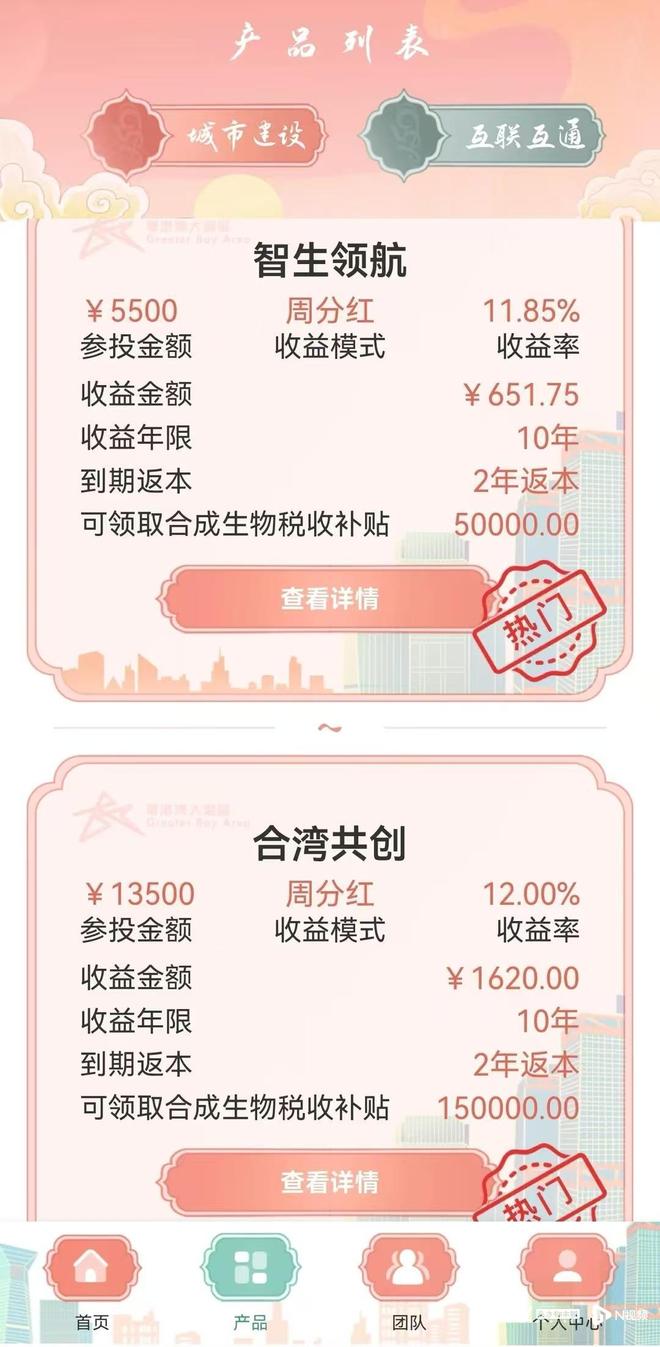
承诺“拉新”给佣金 投7万“补贴”60万 山寨大湾区App专盯老人“杀熟”
Nan Fang Du Shi Bao· 2025-12-04 23:14
Core Viewpoint - The article highlights a fraudulent investment scheme disguised as a legitimate opportunity, where scammers use fake government documents to lure individuals into investing in non-official apps claiming high returns and subsidies [2][10]. Group 1: Investment Scheme Details - The fraudulent apps "粤港澳大湾区App" and "共建大湾区App" promise weekly returns exceeding 10% and claim to offer policy subsidies, attracting numerous victims [2][3]. - Victims report that initial investments yielded small returns, leading them to invest larger amounts under the impression of legitimacy, with promises of high returns and commissions for recruiting new investors [4][5]. - The scheme has been characterized as a Ponzi scheme, where returns to earlier investors are paid from the capital of newer investors, leading to significant financial losses once the scheme collapses [13]. Group 2: Victim Experiences - Many victims are middle-aged and elderly individuals, often recruited through personal connections, which adds a layer of trust to the fraudulent scheme [8][9]. - Victims like Zhang invested significant amounts, believing in the promised returns and subsidies, only to face delays and eventual inability to withdraw their funds [5][7]. - The platform's rapid introduction of new investment products and the pressure to recruit new investors contributed to the victims' continued investment despite growing suspicions [6][12]. Group 3: Official Warnings and Legal Implications - Official warnings have been issued by the Guangdong-Hong Kong-Macao Greater Bay Area Development Office and the Ministry of Finance, clarifying that these apps are not authorized and are fraudulent [10][12]. - Legal experts indicate that the operators of these fraudulent schemes could face severe criminal charges, including fraud and organized crime, under Chinese law [13][14]. - The article emphasizes the importance of verifying investment opportunities through official channels to avoid falling victim to such scams [14].

山寨大湾区App骗局调查:盯上老人,承诺投7万得60万元
Nan Fang Du Shi Bao· 2025-12-04 02:30
Core Viewpoint - The article highlights a fraudulent investment scheme disguised as a legitimate opportunity, promising high returns and subsidies, which has led to significant financial losses for many victims [1][2]. Group 1: Fraudulent Investment Scheme - The scheme involves fake apps like "粤港澳大湾区App" and "共建大湾区App" that falsely claim to offer investment opportunities with weekly returns exceeding 10% [1][5]. - Victims are lured by promises of substantial subsidies, such as a claim that a 7,000 yuan investment could yield over 600,000 yuan in subsidies [2][6]. - The platform has been identified as a potential Ponzi scheme, with legal experts suggesting it involves fraudulent activities [1][27]. Group 2: Victim Experiences - Victims, often older individuals, were introduced to the scheme through friends or family, leading to significant investments based on trust [13][16]. - Initial small investments yielded returns, which encouraged victims to invest larger sums, ultimately leading to losses when promised returns were delayed or not paid [6][9]. - The platform's operators continuously introduced new investment products, maintaining a facade of legitimacy while delaying payouts [7][9]. Group 3: Official Warnings and Legal Implications - The Ministry of Finance and other official bodies have issued warnings about the fraudulent nature of these apps, clarifying that they are not authorized or affiliated with the government [19][24]. - Legal analysis indicates that the operators could face severe penalties, including charges of fraud and organized crime, due to the nature of their operations [27][27]. - Authorities have noted that the apps are not available on official app stores, further indicating their illegitimacy [23][24].
爆雷!又一个庞氏骗局崩塌!
Sou Hu Cai Jing· 2025-11-30 18:37
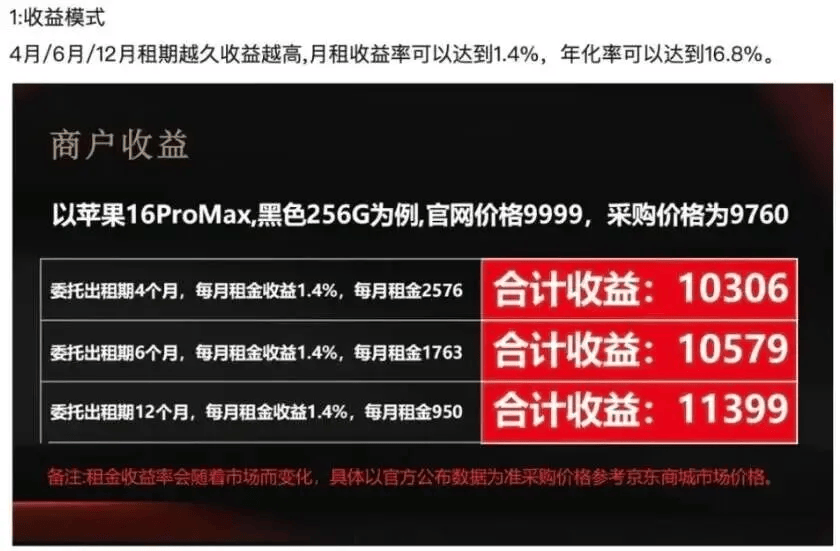
Core Viewpoint - The article discusses the rise and fall of a mobile phone rental platform, "Qingyun Rent," which promised high returns of 16.8% annually, attracting many investors, particularly from middle-class families seeking asset preservation. However, the platform's operations were revealed to be unsustainable, leading to significant financial losses for investors and employees alike [1][2][4]. Group 1: Investment Model and Returns - "Qingyun Rent" offered an annualized return of 16.8%, significantly higher than traditional financial products, which typically yield below 3% [2][4]. - The platform allowed investors to purchase phones outright and rent them out, with a promise of returns after specific investment periods, creating an appealing investment opportunity [2][4]. - Different partnership levels were established, with clear income and reward schemes, leading to potential monthly earnings exceeding 31,000 yuan for city partners [3][4]. Group 2: Investor Experiences and Losses - Many investors, including employees, were drawn in by initial stable returns, only to face difficulties when the platform began to struggle with withdrawals [4][6][7]. - Reports indicate that some investors invested significant amounts, with one family reportedly investing over 1.3 million yuan due to the platform's enticing marketing [6][7]. - Employees also became victims, pressured to meet performance targets, leading them to invest their savings and take loans, resulting in substantial financial losses [26][29]. Group 3: Corporate Structure and Operations - The company, established in April 2020 with a registered capital of 150 million yuan, created a complex corporate structure that obscured its true operational status [10][12][14]. - "Qingyun Rent" claimed to operate in over 500 cities with a network of over 50,000 merchants, but discrepancies in their claims raised questions about their credibility [15][16]. - The company faced legal issues, including multiple contract disputes, indicating operational challenges and potential mismanagement [16][21]. Group 4: Capital Movement and Collapse - Prior to the platform's collapse, significant capital withdrawals were noted, suggesting that insiders anticipated the impending crisis [17][21]. - The crisis escalated in September 2023, with withdrawal requests piling up and employees reporting unpaid wages, leading to a complete operational shutdown by October [21][25]. - The rapid decline from operational success to collapse occurred within a few months, highlighting the inherent flaws in the business model [25][31]. Group 5: Broader Implications and Market Trends - The case of "Qingyun Rent" reflects a broader trend of investment schemes promising high returns, often targeting vulnerable groups such as the elderly and young professionals [33][35]. - The platform's model, which combined equipment leasing with high return promises, aligns with characteristics of illegal fundraising activities [35][36]. - The article emphasizes the need for cautious judgment in investment opportunities that appear too good to be true, especially in uncertain economic times [34][35].
非法集资超千亿!“和合系”案件一审开庭:300余亿元未兑付,揭露“高材生”林强诈骗、洗钱始末
Xin Lang Cai Jing· 2025-11-27 01:33
Core Viewpoint - The "Hehe System" illegal fundraising case involves over 100 billion yuan in illegal fundraising, with more than 30 billion yuan in unpaid principal, and is characterized as a massive Ponzi scheme [1][5][6]. Group 1: Case Overview - The trial for the "Hehe System" illegal fundraising case was held from November 19 to 20, 2025, with the court set to announce a verdict later [2]. - The public prosecution alleges that Lin Qiang and others illegally raised over 100 billion yuan through the issuance and sale of financial products without regulatory approval [4][5]. - The illegal fundraising activities included splitting private equity products into multiple phases and allowing participants to purchase in groups to circumvent restrictions [4][5]. Group 2: Financial Details - The total amount of illegal fundraising reached over 100 billion yuan, with more than 30 billion yuan in unpaid principal [1][5]. - Lin Qiang, the actual controller of the "Hehe System," is accused of laundering over 800 million yuan through domestic transfers and cross-border asset movements [1][5]. Group 3: Company Background - Lin Qiang, who has nearly 20 years of experience in the financial industry, was previously associated with various financial institutions before founding the "Hehe System" [6]. - The "Hehe System" includes multiple business areas such as equity investment, securities investment, and real estate [6]. Group 4: Regulatory Actions - The China Securities Regulatory Commission (CSRC) has taken administrative measures against Hehe Futures, including revoking its business license due to serious violations [11][12]. - The CSRC initiated an investigation into Hehe Futures for its failure to manage its subsidiary, Hehe Asset Management, effectively [11][12].

“安我股保”假保险的真骗局
Bei Jing Shang Bao· 2025-11-26 15:54
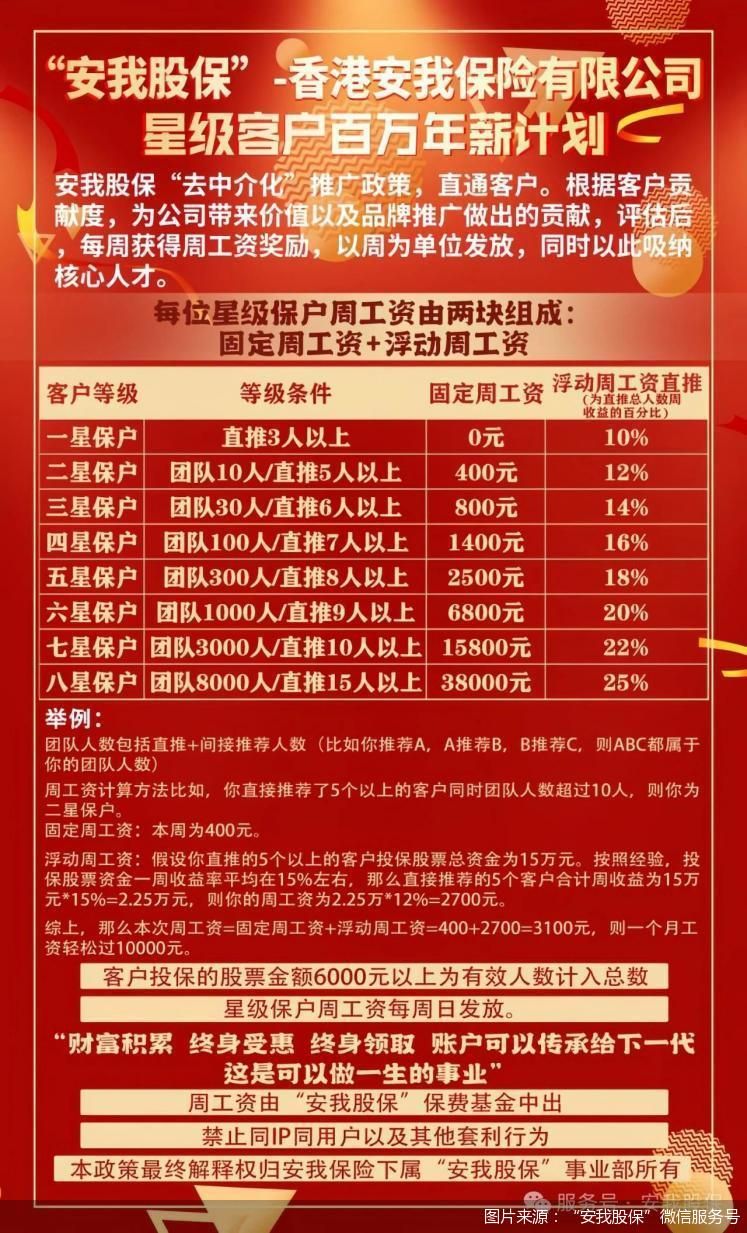
Core Viewpoint - The "Anwo Gubao" platform, marketed as the first dedicated stock investment insurance product in mainland China, is revealed to be a fraudulent scheme involving false advertising, illegal operations, and pyramid selling tactics, posing significant risks to investors' funds [1][4]. Summary by Sections Product Overview - "Anwo Gubao" claims to be an innovative insurance product from Hong Kong Anwo Insurance Co., targeting mainland investors with promises of full compensation for stock losses within three hours of selling at a loss, without requiring prepayment of premiums [3][4]. Regulatory Response - The China Insurance Industry Association issued a warning on November 26, stating that "Anwo Gubao" is not an approved insurance entity and that stock investment losses are not insurable risks, highlighting the platform's illegal financial operations [4][10]. Insurance Principles Violation - Experts assert that the model of full compensation for stock losses contradicts basic insurance principles, as it involves speculative risks rather than pure risks, and the lack of upfront premium payments undermines the financial viability of the insurance model [5][6][10]. Pyramid Scheme Characteristics - The platform employs a multi-level marketing strategy, incentivizing users to recruit others with promises of high weekly salaries based on the number of recruits, which aligns with characteristics of pyramid schemes [7][8]. Investor Awareness - The emergence of such fraudulent financial products serves as a reminder for investors to remain vigilant and rational, particularly against enticing claims of guaranteed returns or high earnings, which are often indicative of scams [9][10].

炒股还能“保收益”?揭秘“安我股保”假保险背后的真骗局
Bei Jing Shang Bao· 2025-11-26 14:28
Core Viewpoint - The "Anwo Gubao" platform, marketed as a stock investment insurance product, is revealed to be a financial scam involving false advertising, illegal operations, and pyramid scheme characteristics, posing significant risks to investors' funds [1][3][10]. Group 1: Product Overview - "Anwo Gubao" claims to be the first dedicated stock insurance product for mainland investors, promising full compensation for stock losses within three hours of selling at a loss, without requiring prepayment of premiums [2][3]. - The product is associated with Hong Kong Anwo Insurance Company and falsely claims collaboration with CITIC Securities [2][3]. Group 2: Regulatory Response - The China Insurance Industry Association issued a warning stating that "Anwo Gubao" is not an approved insurance entity and that stock investment losses are not insurable risks [3][12]. - CITIC Securities and Anwo Insurance have publicly distanced themselves from "Anwo Gubao," emphasizing that they have never collaborated on any financial products [3][12]. Group 3: Financial Viability and Risks - The operational model of "Anwo Gubao," which promises full compensation for stock losses while only taking a portion of profits as premiums, contradicts basic insurance principles and financial regulations [4][5][11]. - Experts highlight that the product's structure is unsustainable, as it relies on new investor funds to pay returns to earlier participants, resembling a Ponzi scheme [10][11]. Group 4: Promotion and Recruitment Tactics - "Anwo Gubao" employs a multi-tiered recruitment strategy, incentivizing participants to recruit others, which is characteristic of pyramid schemes [10][11]. - The platform offers a "star-level customer million annual salary plan," where participants can earn significant weekly salaries based on the number of recruits, further emphasizing the recruitment aspect over genuine financial returns [10][11].
6000元本金一年后变成164万?“股票亏损理赔险”太疯狂
第一财经· 2025-11-26 06:49
Core Viewpoint - The article discusses the emergence of a new insurance product called "Anwo Stock Insurance," which claims to provide full compensation for stock losses on the same day, raising concerns about its legitimacy and potential classification as a Ponzi scheme [5][12][15]. Summary by Sections Introduction - "Anwo Stock Insurance" is marketed as the first internet insurance for stock investors in China, with a minimum investment of 100 yuan and a one-day investment cycle [3]. Product Details - The insurance product is offered by Avo Insurance, a Hong Kong-based company, and operates on a post-payment model where premiums are derived from capital gains [5][6]. - The expected returns for insured stocks are projected to be between 1% and 10% [6]. Operational Mechanism - The product allows customers to buy recommended stocks and automatically sells them the next trading day, with claims processed within 10 minutes to 3 hours if losses occur [7]. Regulatory Response - Avo Insurance has issued multiple clarifications denying any association with "Anwo Stock Insurance," labeling it as fraudulent [9][12]. - Citic Securities also issued a warning about false claims of collaboration with Avo Insurance [12][13]. Fraudulent Characteristics - Experts describe "Anwo Stock Insurance" as a typical Ponzi scheme, utilizing fake endorsements and high promised returns to attract investors [15]. - The promotional structure includes a tiered reward system for recruiting new clients, resembling multi-level marketing tactics [17][20]. Market Context - The article highlights that no legitimate insurance products currently exist that cover stock investment losses, emphasizing the distinction between insurable risks and investment risks [23].


6000元本金一年后变成164万?“股票亏损理赔险”太疯狂
Di Yi Cai Jing· 2025-11-26 05:43
Core Viewpoint - The article discusses the emergence of a financial product called "Anwo Stock Insurance," which claims to provide full compensation for stock losses, raising concerns about its legitimacy and potential classification as a Ponzi scheme [1][9]. Group 1: Product Overview - "Anwo Stock Insurance" is marketed as the first internet insurance for stock investors in mainland China, with a minimum investment of 100 yuan and a compensation model that promises full payout for losses on the same day [1][3]. - The product claims an annualized return of approximately 27,233.33%, with a unique post-payment model where the insurance premium is derived from 30% of the profits of the insured stocks [3][4]. - The insurance is managed through an app that automates stock purchases and sales, with a strategy focused on short-term trading (T+1) [3][4]. Group 2: Company Claims and Partnerships - The product is associated with Avo Insurance, a Hong Kong-based company, which has denied any involvement with "Anwo Stock Insurance" and stated that the product is a fraud [5][7]. - "Anwo Stock Insurance" claims to have a strategic partnership with CITIC Securities, which allegedly provides a channel for trading, but this has also been denied by CITIC Securities [4][7]. Group 3: Regulatory Warnings and Fraud Allegations - Multiple warnings have been issued by involved institutions, including Avo Insurance and CITIC Securities, stating that "Anwo Stock Insurance" is a fraudulent scheme and that they have no affiliation with it [5][7]. - Experts have characterized the scheme as a typical Ponzi scheme, where returns are generated by recruiting new investors rather than legitimate investment profits [9][10]. Group 4: Compensation and Marketing Structure - The marketing structure includes a tiered reward system for referrals, incentivizing users to recruit others, which aligns with characteristics of multi-level marketing [10][12]. - The compensation model promises high returns based on the performance of referred clients' investments, but it is suggested that this is a method to bind users' funds and encourage further investment [13][16]. Group 5: Industry Context - The article highlights that there are currently no legitimate insurance products that cover stock investment losses, as traditional insurance does not cover investment risks [16]. - Previous attempts to introduce similar products have faced significant scrutiny and controversy, leading to their withdrawal from the market [16].