虚拟货币投资

Search documents
又一资金盘爆雷,碰瓷华为、港交所,宣称年利率360%,崩盘前还二次收割
Xin Lang Cai Jing· 2025-12-19 08:33
Core Viewpoint - The "Yuzhi Financial" virtual currency investment platform has collapsed, leading to significant losses for investors despite prior warnings from regulatory authorities about the illegality of virtual currency activities [1][24][45]. Group 1: Platform Operations and Structure - "Yuzhi Financial" claimed to offer a high annualized return of 360% by utilizing a "6G Hongmeng System" developed in collaboration with Huawei, which was presented as a tool for real-time trading signals [3][27][30]. - The platform's promotional materials falsely stated that it was listed on the "Hong Kong Equity Trading Display Center" under the stock code HK31919, which was later found to be untrue [4][27]. - The platform employed a multi-level distribution system, incentivizing users to recruit new members, which contributed to its rapid user growth and the formation of a large-scale scam network [31][33]. Group 2: Investor Experiences and Losses - Many investors reported being unable to withdraw their funds, with one investor stating that she was unable to retrieve her money after being encouraged to reinvest during a promotional event [1][25][36]. - The platform attempted a "second harvest" by requiring users to pay a "self-certification deposit" of 20% of their total assets, locking their funds for 60 days while only allowing minimal withdrawals [2][12][41]. - Despite recognizing the signs of a scam, some investors continued to invest due to the allure of recovering their initial investments, demonstrating a common psychological trap among victims [26][41]. Group 3: Regulatory Context and Challenges - The collapse of "Yuzhi Financial" occurred amid intensified regulatory efforts in China to combat virtual currency risks, with the People's Bank of China reiterating that virtual currencies do not have legal status and are illegal financial activities [21][45]. - Local governments had issued warnings about the platform prior to its collapse, indicating that it lacked the necessary financial licenses and had not registered its app [22][46]. - Regulatory challenges persist as new types of Ponzi schemes often operate offshore, making it difficult to enforce laws and recover funds [47].


宣称年利率360%,“煜志金融”在崩盘前如何二次收割?
2 1 Shi Ji Jing Ji Bao Dao· 2025-12-19 08:28
Core Viewpoint - The article highlights the collapse of a virtual currency investment platform named "Yuzhi Financial" amid increasing regulatory scrutiny in China, leading to significant investor losses due to its fraudulent operations [1][12]. Group 1: Platform Operations and Fraud Mechanism - "Yuzhi Financial" lured investors with promises of high returns, claiming annualized yields exceeding 360% through a complex multi-level distribution system [5][6]. - The platform employed tactics reminiscent of Ponzi schemes, using funds from new investors to pay returns to earlier investors until the financial chain broke [1][6]. - Despite the platform's collapse, it attempted a "second harvest" by requiring users to pay a "self-certification margin" of 20% of their total assets, locking their funds for 60 days [2][8]. Group 2: Misleading Claims and Technology Use - The platform falsely claimed to have developed a "6G Harmony System" in collaboration with Huawei, misleading investors about its technological capabilities [3][10]. - It also misrepresented its status by claiming to be listed on the "Hong Kong Stock Exchange" under a fictitious stock code, which was not found on official records [4][11]. Group 3: Regulatory Context and Warnings - The collapse occurred against a backdrop of intensified regulatory measures against virtual currencies in China, with the People's Bank of China reiterating that such activities are illegal [12][14]. - Local governments had issued warnings about "Yuzhi Financial" prior to its collapse, indicating it was operating without the necessary financial licenses [12][14]. Group 4: Investor Behavior and Psychological Factors - Many investors, despite recognizing the risks, continued to invest due to the allure of recovering their initial investments, demonstrating a gambler's mentality [14]. - The rapid spread of such scams is facilitated by the public's blind trust in high-tech claims and the allure of quick profits, which diminishes rational judgment [10][11].
恒月控股(01723.HK)进一步购买比特币
Ge Long Hui· 2025-10-28 14:25
Core Viewpoint - Hengyue Holdings (01723.HK) announced the acquisition of approximately 0.6 units of Bitcoin in the open market for a total cost of approximately HKD 530,000, indicating a continued investment strategy in cryptocurrency [1] Group 1 - The further Bitcoin purchase is part of a series of transactions referred to as "Bitcoin Purchase Matters" [1] - The payment for the Bitcoin acquisition will be made in cash, sourced from the company's available cash reserves [1] - The settlement of the Bitcoin purchase will occur immediately after the completion of each respective purchase order [1]
国际商业结算斥资1200万美元收购合共105.88972枚比特币
Zhi Tong Cai Jing· 2025-09-25 04:21
Group 1 - The core point of the article is that International Commercial Settlement (00147) announced the acquisition of a total of 105.88972 bitcoins by its joint venture Keen Golden for a total consideration of 12 million USD [1] Group 2 - The acquisition represents a strategic move into the cryptocurrency market by the company, indicating a potential shift in investment strategy [1] - The joint venture Keen Golden holds a 70% stake in the acquisition, highlighting the company's significant involvement in this transaction [1] - The total amount spent on the acquisition is approximately 12 million USD, which reflects the company's commitment to expanding its digital asset portfolio [1]
突然爆雷!号称日息1%的平台“人去楼空”,创办人:我已在国外
凤凰网财经· 2025-07-10 13:13
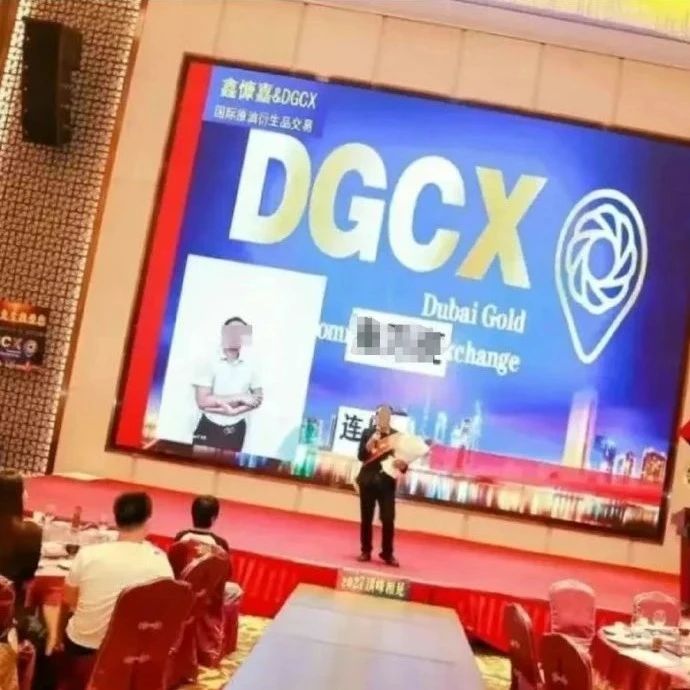
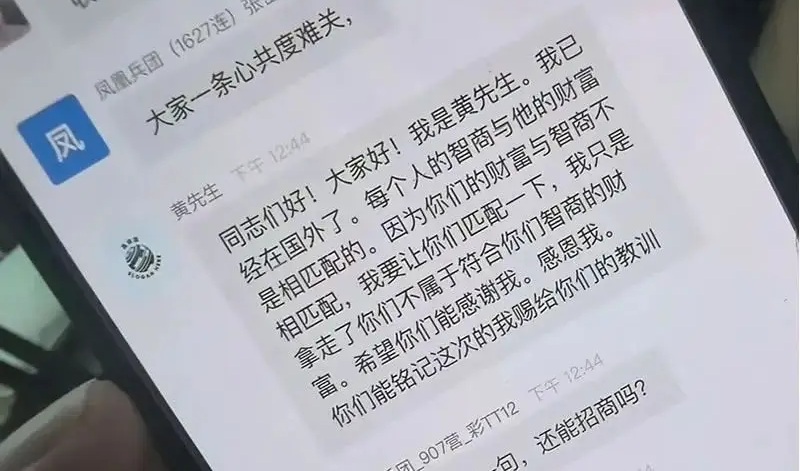
Core Viewpoint - The "Xinkangjia" platform, falsely claiming to be associated with the Dubai Gold and Commodities Exchange (DGCX), has collapsed, affecting approximately 2 million investors with a total amount involved reaching 13 billion yuan [1][3]. Summary by Sections Platform Operations - "Xinkangjia" promised a daily return of 1% on investments, using USDT for transactions and requiring a minimum investment of 1,000 USDT. The platform operated under the guise of virtual currency investments, claiming to be a Chinese branch of DGCX [4][6]. - After the platform became unable to process withdrawals on June 25, 2025, it was revealed that the company was accused of tax evasion, leading to the freezing of all accounts [4][5]. Investor Experience - Many investors, despite the inability to withdraw funds, were still drawn to the platform's "tax payment" scheme, which required them to pay 10% of their holdings to access their funds. This scheme was perceived as a final attempt to extract more money from investors [5][6]. - An investor reported that their investment of over 30,000 yuan became worthless within a month, as the platform's app became inaccessible [5]. Regulatory Warnings - Multiple regulatory bodies across regions such as Sichuan, Guangdong, Jiangxi, and Hunan issued warnings about "Xinkangjia," identifying it as a Ponzi scheme with significant illegal fundraising risks [10][12]. - The DGCX officially stated that it had no partnerships or affiliations in China, warning that any claims to the contrary were unauthorized [8]. Company Background - "Xinkangjia" was operated by Guizhou Xinkangjia Big Data Service Co., Ltd., which was established in April 2024 and had been listed as operating abnormally due to communication issues [13]. - The company applied for deregistration following a resolution to dissolve on May 18, 2025 [13]. Expert Insights - Experts noted that the use of virtual currencies in such schemes exploits consumers' limited understanding of these assets, leading to significant financial losses [14]. - Legal advice emphasized the importance of understanding where funds are going, what they are being used for, and who is responsible in case of issues before investing in such platforms [14].

突然爆雷!号称日息1%的平台“人去楼空”,创办人:我已在国外
新浪财经· 2025-07-10 01:09
Core Viewpoint - The "Xinkangjia" platform, masquerading as a branch of the Dubai Gold and Commodities Exchange (DGCX), has collapsed, affecting approximately 2 million investors with a total amount involved reaching 13 billion yuan [1][3][5]. Group 1: Platform Operations and Promises - "Xinkangjia" claimed to offer high returns of 1% daily, utilizing virtual currency investments and requiring a minimum entry fee of 1,000 USDT [5][6]. - The platform operated under the guise of investing in overseas gold and oil markets, promising substantial returns, but became non-operational by late June 2025 [6][12]. - After the platform's failure to allow withdrawals, it proposed a "tax payment" scheme, demanding users pay 10% of their holdings to access their funds, which many viewed as a final attempt to extract more money from investors [5][8]. Group 2: Regulatory and Legal Issues - The DGCX issued warnings stating that it had no partnerships or affiliations in China, and any claims to the contrary were unauthorized [10]. - Multiple regulatory bodies across various provinces, including Hunan and Guangdong, issued alerts regarding the platform's operations, labeling it a Ponzi scheme with significant illegal fundraising risks [12][15]. - The operational entity, Guizhou Xinkangjia Big Data Service Co., Ltd., was established in April 2024 and faced multiple issues, including being listed for abnormal operations due to uncontactable business premises [17]. Group 3: Investor Impact and Reactions - Reports indicate that many investors, despite the risks, were drawn to the platform due to its high return promises and the allure of virtual currency investments [8][12]. - Affected investors expressed frustration, with some losing significant amounts, such as over 30,000 yuan, and being unable to withdraw their funds [6][12]. - The platform's collapse has highlighted the risks associated with virtual currency investments, particularly in schemes that lack transparency and regulatory oversight [17].
突然爆雷!号称日息1%的平台“人去楼空”,创办人:我已在国外
21世纪经济报道· 2025-07-09 15:18
Core Viewpoint - The "Xinkangjia" platform, masquerading as a branch of the Dubai Gold and Commodities Exchange (DGCX), has collapsed, affecting approximately 2 million investors with a total amount involved reaching 13 billion yuan [1][2][4]. Group 1: Platform Operations - "Xinkangjia" claimed to offer high returns of 1% daily, utilizing virtual currency investments and requiring a minimum entry fee of 1,000 USDT [4][10]. - The platform's operations were based on a Ponzi scheme model, promising high returns while using USDT for transactions, making it difficult for authorities to trace funds [9][10]. - After the platform became unable to process withdrawals, it introduced a "tax payment" scheme, requiring users to pay 10% of their holdings to withdraw funds, which many viewed as a final attempt to exploit investors [4][10]. Group 2: Regulatory Warnings - Multiple regulatory bodies across regions, including Sichuan, Guangdong, Jiangxi, and Hunan, issued warnings about the significant illegal fundraising risks associated with "Xinkangjia" [15][17]. - The DGCX officially stated that it has no partnerships or affiliations with "Xinkangjia," highlighting the fraudulent use of its name [12]. - The platform's operator, Guizhou Xinkangjia Big Data Service Co., Ltd., was established in April 2024 and has faced multiple operational issues, including being listed as an abnormal business entity [17]. Group 3: Investor Impact - Investors, such as a participant named Huang Zheng, reported being unable to withdraw their funds after investing over 30,000 yuan, with the platform's app becoming inaccessible [7]. - The scheme attracted a large number of participants despite the evident risks, indicating a willingness among some consumers to engage in high-risk investments [10].

鑫慷嘉平台被曝崩盘:当资金盘与稳定币挂钩,资金被快速跨境转移
Di Yi Cai Jing· 2025-07-09 12:28
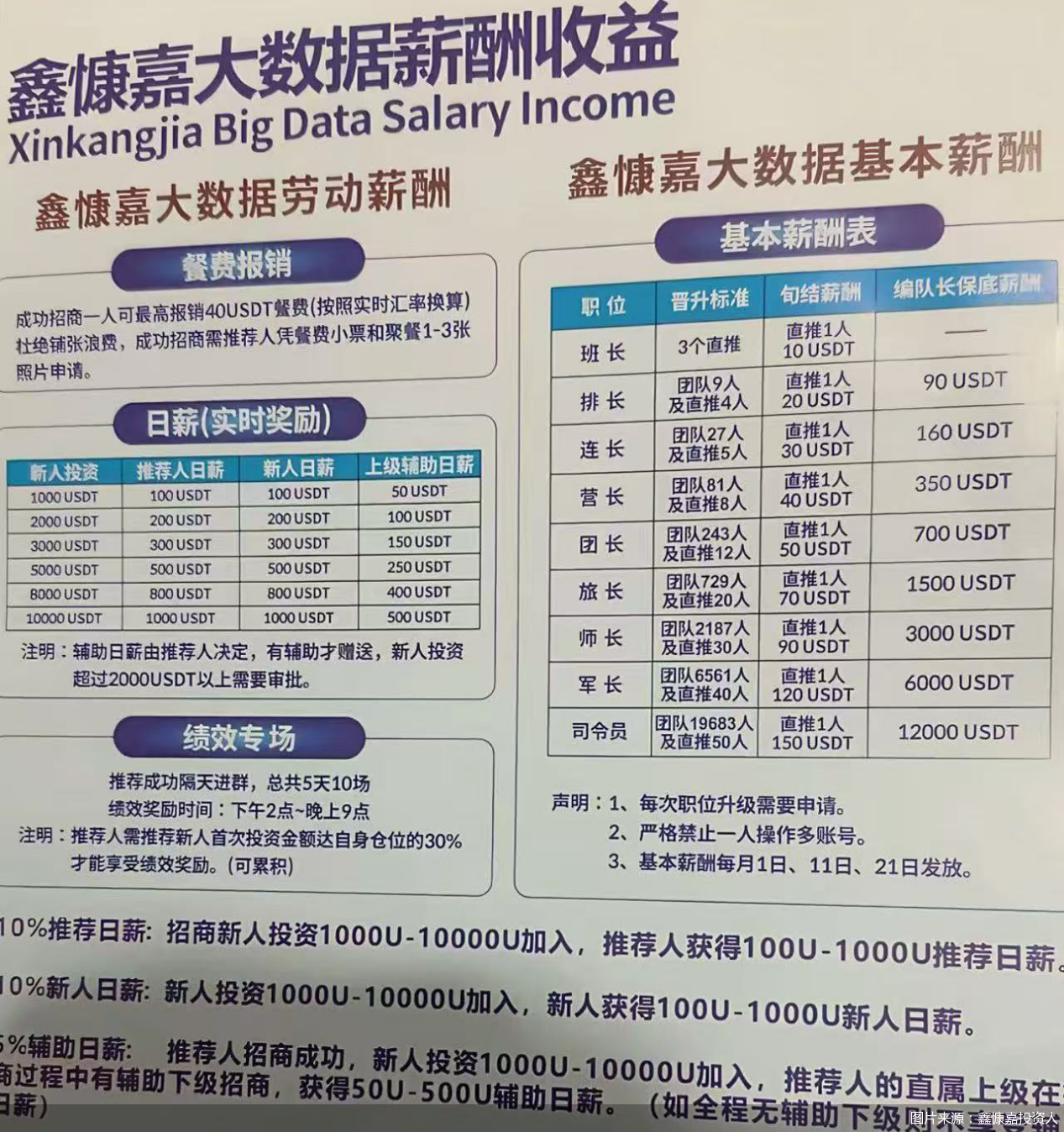
Core Viewpoint - The "Xin Kang Jia" platform is suspected to be a Ponzi scheme combined with a multi-level marketing structure, leading to significant financial losses for investors, with estimates of around 13 billion yuan involved and approximately 2 million investors affected [3][19][24]. Group 1: Platform Structure and Operations - "Xin Kang Jia" was initially presented as a platform for oil and commodity trading, later claiming to engage in futures trading linked to the Dubai Gold and Commodities Exchange (DGCX), promising high returns of up to 0.2% daily [4][10]. - The platform utilized a nine-level hierarchical structure to incentivize recruitment, with varying rewards based on the number of direct referrals, creating a system that heavily relied on new investor contributions to pay returns to earlier investors [10][11]. - The platform's operations involved the use of stablecoins like USDT for transactions, complicating the process for new investors who often transferred funds to higher-level members for conversion, thus bypassing direct investment [15][16]. Group 2: Regulatory Warnings and Risks - Regulatory bodies had issued multiple warnings regarding the risks associated with "Xin Kang Jia," highlighting its illegal fundraising activities and the lack of legitimate investment projects [17][18][24]. - The DGCX publicly denied any affiliation with "Xin Kang Jia," emphasizing that the platform had no authorization to operate under its name, further indicating the fraudulent nature of the claims made by the platform [6][19]. - The rise of stablecoins has led to a resurgence of similar schemes, with many platforms adopting these digital currencies to evade financial regulations, posing significant risks to investors [20][24]. Group 3: Investor Experiences and Consequences - Many investors were lured into the scheme by promises of high returns and the belief that the investment was legitimate, often encouraged by friends or acquaintances [14][23]. - Once the platform collapsed, investors found themselves unable to withdraw their funds, leading to widespread panic and the dissolution of investor groups [14][22]. - The investigation revealed that the platform's associated company had a registered capital of 30 million yuan but had not actually contributed any capital, raising further red flags about its legitimacy [14].
高息“收割”投资者后,鑫慷嘉“人去楼空”,“博傻游戏”何时了
Bei Jing Shang Bao· 2025-07-08 14:49
Core Viewpoint - The investment platform "DGCX Xin Kang Jia" has been identified as a fraudulent scheme, attracting approximately 2 million investors with a total involvement of 13 billion yuan, ultimately leading to its inability to process withdrawals and the founder's disappearance [1][5][9]. Group 1: Business Model and Operations - "DGCX Xin Kang Jia" operated under the guise of a virtual currency investment platform, promising daily returns of 1% and utilizing a multi-level marketing structure to recruit new investors [1][3][6]. - The platform falsely claimed to be affiliated with the Dubai Gold and Commodities Exchange (DGCX) and employed high-yield investment strategies to lure participants, which were later revealed to be part of a Ponzi scheme [5][9]. - Investors were encouraged to reinvest their earnings and recruit new members, with rewards structured based on the number of new recruits, creating a cycle of dependency on new investments for returns [6][10]. Group 2: Investor Experiences and Reactions - Many investors reported significant losses, with one individual claiming to have lost over 55,000 yuan (approximately 8,300 USDT) and others expressing frustration over their inability to withdraw funds [2][3]. - Despite the platform's collapse, some individuals continued to invest, demonstrating a willingness to engage in what has been termed a "fool's game" [4][11]. - The platform's operations ceased after it was reported that the founder had fled abroad, leaving investors without recourse [4][8]. Group 3: Regulatory and Legal Context - Multiple law enforcement agencies across various provinces have issued warnings about the risks associated with "DGCX Xin Kang Jia," highlighting its fraudulent nature and lack of regulatory approval [5][9]. - The operating entity, Guizhou Xin Kang Jia Big Data Service Co., Ltd., has been listed in abnormal business operations and has applied for deregistration, indicating its imminent closure [8][9]. - Legal experts have classified the platform's activities as illegal fundraising and fraud, emphasizing the need for investors to be cautious and informed about the legitimacy of investment opportunities [9][12].
美国制裁虚拟币投资诈骗,涉及2个中国人
制裁名单· 2025-06-03 09:47
Core Viewpoint - The article discusses the sanctions imposed by OFAC on Funnull Technology Inc. and its administrator Liu Lizhi for their involvement in virtual currency investment scams, which have caused significant financial losses to American victims, amounting to over $200 million [1][2]. Group 1: Company Overview - Funnull Technology Inc. provides computer infrastructure support for numerous websites involved in virtual currency investment scams, contributing to annual losses of billions of dollars for American victims [1]. - The company has become a key player in facilitating these scams by purchasing IP addresses from major cloud service providers and selling them to cybercriminals for building fraudulent platforms [2]. Group 2: Scam Mechanism - Funnull employs domain generation algorithms (DGA) to create website domains in bulk for the purchased IP addresses, aiding criminals in mimicking well-known brands and quickly changing domains when legitimate platforms attempt to shut them down [2]. - The scams are orchestrated primarily by Southeast Asian criminal organizations, which use deceptive tactics to establish trust with victims before luring them into high-return investment schemes [1]. Group 3: Financial Impact - According to FBI statistics, victims associated with Funnull's scam websites have suffered losses exceeding $200 million, with an average loss of over $150,000 per victim, indicating that actual losses may be much higher due to unreported cases [2]. - The article highlights that the financial crime revenue from such scams is expected to reach a historical high in 2024, reflecting the growing scale of these fraudulent activities [1].