金融骗局

Search documents
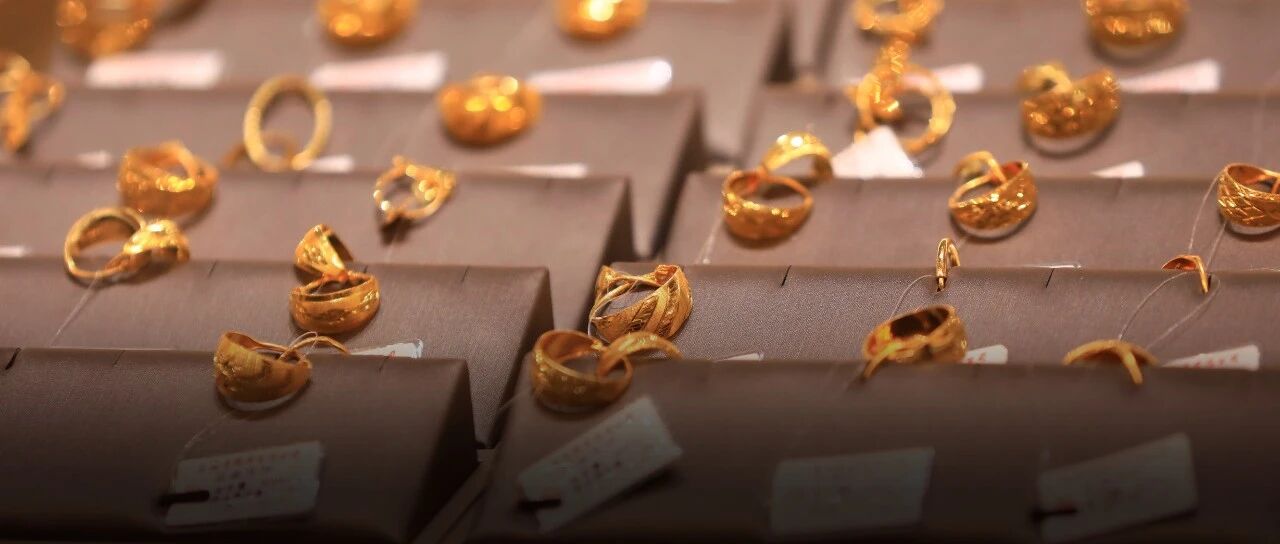
爆雷了,事关黄金,投资者取不出钱
36氪· 2026-01-31 13:35
Core Viewpoint - The article discusses the collapse of the "Jie Wo Rui" platform, which has left numerous investors unable to withdraw their funds amidst a booming gold market, highlighting the risks associated with online investment platforms and the potential for financial scams [4][6][15]. Group 1: Company Overview - Jie Wo Rui, established in 2014, initially operated as a physical store focused on gold recycling before transitioning to an online platform for gold trading [16][18]. - The platform gained popularity by offering convenient services such as gold purchasing and recycling, attracting a large user base, particularly among young investors [19][21]. Group 2: Investment Model and User Engagement - Jie Wo Rui's business model included a "pricing purchase area" where users could lock in gold prices with a small deposit, creating a high-leverage investment environment [31][32]. - The platform's promotional activities, such as "no labor cost" events and attractive marketing strategies, helped build trust and a loyal customer base over time [24][25][28]. Group 3: Collapse and Aftermath - In late January 2026, users began experiencing difficulties withdrawing funds, leading to a rush of withdrawal requests and a subsequent investigation by local authorities [9][44][48]. - Reports indicate that the total amount involved in the collapse could reach approximately 130 billion yuan, with many investors being young individuals or those new to investing [9][10][30].

“安我股保”假保险的真骗局
Bei Jing Shang Bao· 2025-11-26 15:54
Core Viewpoint - The "Anwo Gubao" platform, marketed as the first dedicated stock investment insurance product in mainland China, is revealed to be a fraudulent scheme involving false advertising, illegal operations, and pyramid selling tactics, posing significant risks to investors' funds [1][4]. Summary by Sections Product Overview - "Anwo Gubao" claims to be an innovative insurance product from Hong Kong Anwo Insurance Co., targeting mainland investors with promises of full compensation for stock losses within three hours of selling at a loss, without requiring prepayment of premiums [3][4]. Regulatory Response - The China Insurance Industry Association issued a warning on November 26, stating that "Anwo Gubao" is not an approved insurance entity and that stock investment losses are not insurable risks, highlighting the platform's illegal financial operations [4][10]. Insurance Principles Violation - Experts assert that the model of full compensation for stock losses contradicts basic insurance principles, as it involves speculative risks rather than pure risks, and the lack of upfront premium payments undermines the financial viability of the insurance model [5][6][10]. Pyramid Scheme Characteristics - The platform employs a multi-level marketing strategy, incentivizing users to recruit others with promises of high weekly salaries based on the number of recruits, which aligns with characteristics of pyramid schemes [7][8]. Investor Awareness - The emergence of such fraudulent financial products serves as a reminder for investors to remain vigilant and rational, particularly against enticing claims of guaranteed returns or high earnings, which are often indicative of scams [9][10].

炒股还能“保收益”?揭秘“安我股保”假保险背后的真骗局
Bei Jing Shang Bao· 2025-11-26 14:28
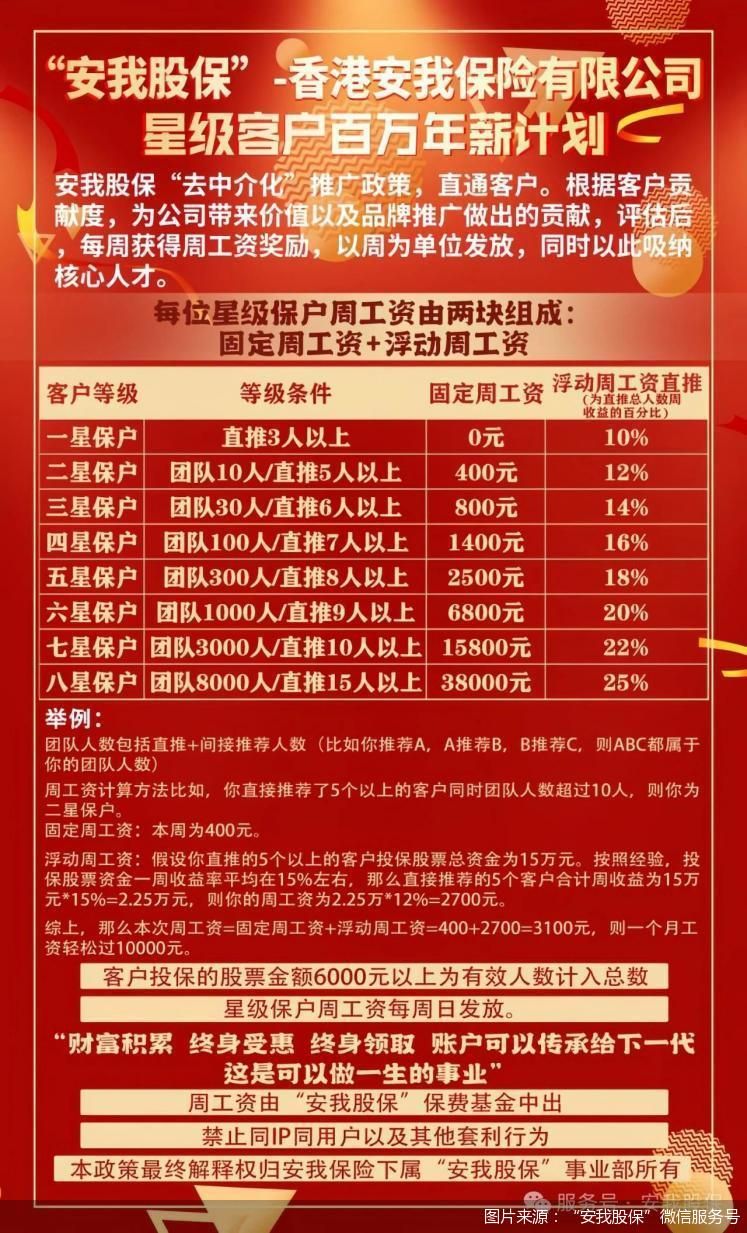
Core Viewpoint - The "Anwo Gubao" platform, marketed as a stock investment insurance product, is revealed to be a financial scam involving false advertising, illegal operations, and pyramid scheme characteristics, posing significant risks to investors' funds [1][3][10]. Group 1: Product Overview - "Anwo Gubao" claims to be the first dedicated stock insurance product for mainland investors, promising full compensation for stock losses within three hours of selling at a loss, without requiring prepayment of premiums [2][3]. - The product is associated with Hong Kong Anwo Insurance Company and falsely claims collaboration with CITIC Securities [2][3]. Group 2: Regulatory Response - The China Insurance Industry Association issued a warning stating that "Anwo Gubao" is not an approved insurance entity and that stock investment losses are not insurable risks [3][12]. - CITIC Securities and Anwo Insurance have publicly distanced themselves from "Anwo Gubao," emphasizing that they have never collaborated on any financial products [3][12]. Group 3: Financial Viability and Risks - The operational model of "Anwo Gubao," which promises full compensation for stock losses while only taking a portion of profits as premiums, contradicts basic insurance principles and financial regulations [4][5][11]. - Experts highlight that the product's structure is unsustainable, as it relies on new investor funds to pay returns to earlier participants, resembling a Ponzi scheme [10][11]. Group 4: Promotion and Recruitment Tactics - "Anwo Gubao" employs a multi-tiered recruitment strategy, incentivizing participants to recruit others, which is characteristic of pyramid schemes [10][11]. - The platform offers a "star-level customer million annual salary plan," where participants can earn significant weekly salaries based on the number of recruits, further emphasizing the recruitment aspect over genuine financial returns [10][11].
400亿骗局曝光!比特币女王逃亡6年落网,让12万家庭血本无归
Sou Hu Cai Jing· 2025-11-15 11:09
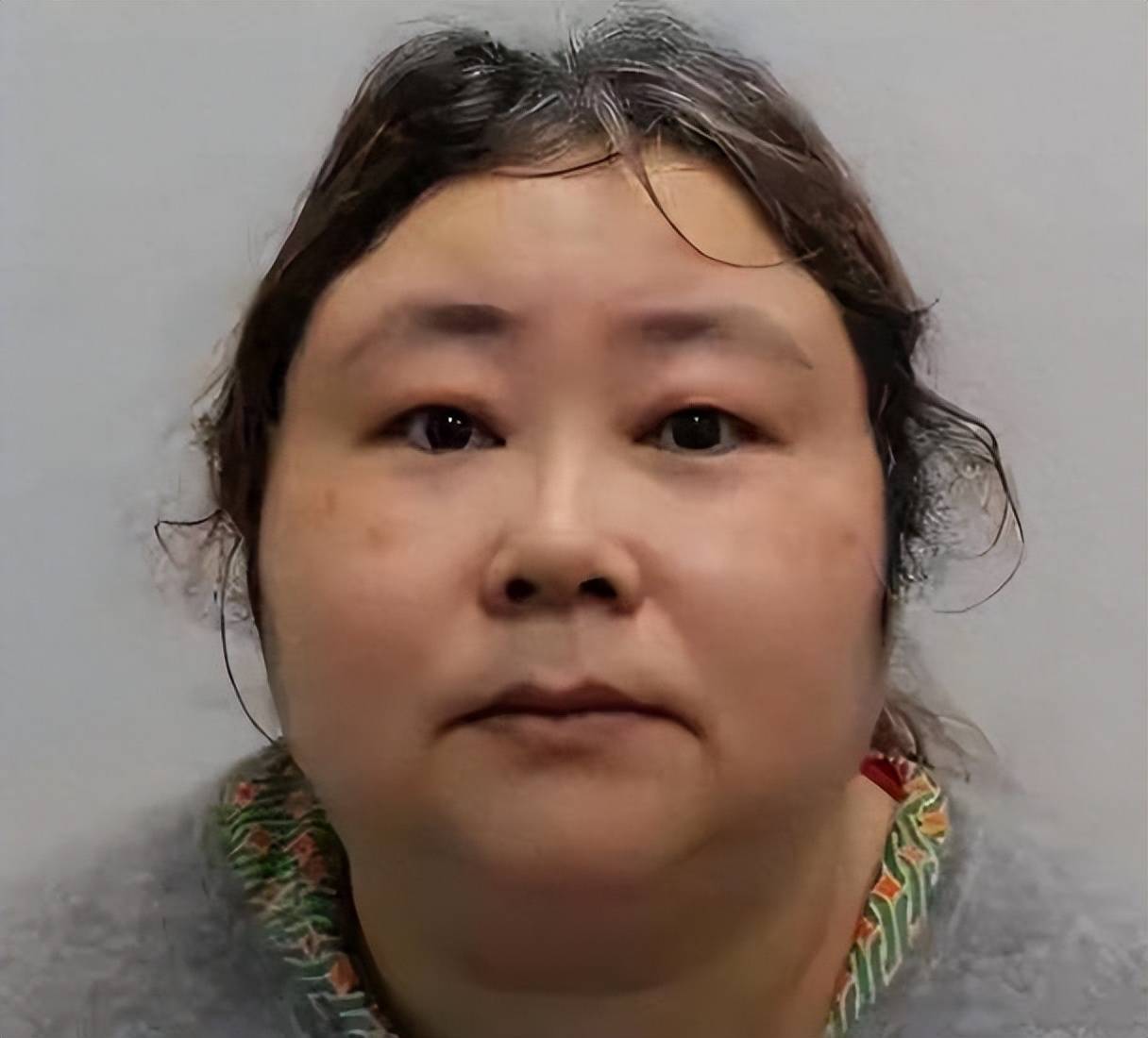
Core Points - The article discusses the shocking case of "Bitcoin rich woman" Qian Zhimin, who was involved in a massive scam amounting to 40 billion yuan, highlighting the devastating impact on numerous families [1][3] - The narrative centers around Wen Jian, who transitioned from a struggling single mother to a wealthy individual, raising questions about the source of her sudden wealth [5][7] Group 1: Background of the Scam - In 2017, Wen Jian, initially working as a waitress in a Chinese restaurant in London, experienced a rapid transformation in her lifestyle, moving into luxury accommodations and spending extravagantly [5][7] - By late 2018, she was planning to purchase multiple high-value properties in London, which raised suspicions about the origins of her funds [7] - Investigations revealed that Wen Jian possessed 61,000 bitcoins, valued at 1.4 billion pounds, which were identified as "dirty money" [7][11] Group 2: The Mastermind Behind the Scam - The true mastermind of the operation was revealed to be Qian Zhimin, who had been evading Chinese authorities and was involved in a Ponzi scheme that defrauded 128,000 individuals [13][15] - Qian Zhimin's company, established in 2014, promised exorbitant returns, leading to a financial disaster that affected numerous victims across China [15][17] - After being on the run for several years, Qian was eventually captured in 2023 and sentenced to 11 years and 8 months in prison [15][17] Group 3: Impact on Victims - The scam left many victims in dire financial situations, with some losing their life savings and facing severe consequences, including divorce and poverty [17] - To date, only a small fraction of the lost funds has been returned to the victims, raising concerns about the recovery of assets under UK law [17] - The case serves as a warning about the dangers of high-return investment schemes and the need for stricter regulatory measures to protect the public [17]
从“经济学家”沦为“骗子专家”,郎咸平是如何一步步走下神坛?
Sou Hu Cai Jing· 2025-09-29 15:45
Core Viewpoint - The article discusses the controversial life of Lang Xianping, highlighting his rise as a prominent academic and subsequent fall from grace due to involvement in financial scandals and personal misconduct [1]. Group 1: Academic Background - Lang Xianping was born in Taiwan in 1956 and studied economics at Donghai University before pursuing further education at National Taiwan University [3]. - He earned a PhD from the Wharton School and had a successful academic career, teaching at prestigious institutions and serving as a governance consultant for the World Bank [5]. Group 2: Rise to Fame - Lang gained significant recognition for accurately predicting the financial troubles of the DeLong Group, which elevated his academic reputation [7]. - His public criticism of Gu Chujun's misappropriation of state assets in a 2004 speech at Fudan University further solidified his status as a leading economist [7]. Group 3: Fall from Grace - Lang's reputation began to decline due to his involvement in various financial scandals, including the Kunming Pan-Asia Nonferrous Metals Exchange fraud in 2011 and the fake box office scandal of "Ip Man 3" in 2015 [11]. - He faced public backlash for defending individuals involved in scandals, such as Guo Meimei's controversy with the Red Cross, and for his personal life choices, including multiple marriages and extramarital affairs [9][11]. Group 4: Lessons Learned - Lang Xianping's story serves as a cautionary tale about the consequences of greed and the importance of maintaining integrity in both personal and professional life [13].
远离“职业背债”陷阱
Jing Ji Ri Bao· 2025-07-22 22:05
Core Viewpoint - The emergence of "professional debt" scams poses significant risks to consumers, leading to potential legal issues and financial losses [1][2]. Group 1: Legal Risks - Criminals often forge various application materials, such as fake employment and income proofs, to help individuals who do not meet loan requirements appear as qualified borrowers [1]. - Participants in these scams may inadvertently become involved in criminal activities such as fraud, illegal fundraising, and money laundering, facing severe legal consequences [1]. Group 2: Debt Transfer Tactics - The individual whose name is on the loan contract is legally recognized as the debtor and is responsible for repaying the principal and interest [1]. - Once the loan is disbursed, criminals typically take a large cut and leave the borrower with all the debt and associated risks, which may include damage to personal credit and potential legal actions for non-repayment [1]. Group 3: Consumer Precautions - Consumers are advised to be cautious of any loan offers that claim "no repayment required," as these are likely scams [2]. - It is recommended to report suspicious activities to financial regulatory authorities or law enforcement to combat financial crimes effectively [2].
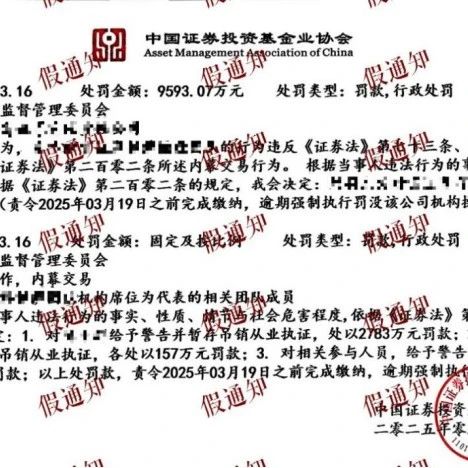
胆子太肥!冒充中基协,向机构开出近亿元罚单!协会严正声明
券商中国· 2025-03-24 23:26
Core Viewpoint - The China Securities Investment Fund Industry Association (CSRC) has issued a strong statement condemning fraudulent activities where individuals have impersonated the association to issue fake administrative penalty announcements against private equity firms [1][3][4]. Group 1: Fraudulent Activities - Fraudsters have forged the association's seal and documents to falsely announce penalties, including a fine of 95.9307 million yuan, demanding payment by March 19 [1][4]. - Legal experts indicate that the private equity sector has been targeted by scammers, and firms must remain vigilant against such financial frauds [1][3]. Group 2: Association's Position - The CSRC clarifies that it has not issued any related announcements and that the penalties mentioned are not within its disciplinary measures, as it lacks the authority to impose fines or restrict operations [3][5]. - The association urges institutions and individuals to cease these fraudulent activities and reserves the right to pursue legal action against offenders [4]. Group 3: Private Equity Industry Trends - The private equity industry is undergoing a significant reshuffle due to heightened regulatory scrutiny, with the number of private equity managers dropping to 19,995 as of March 17, 2025, marking a decline below 20,000 for the first time since July 2017 [7][8]. - Since the peak of 25,901 private equity managers in Q1 2016, the number has decreased by over 4,600, with 301 firms being deregistered in the first two months of this year alone [8].