
强监管

Search documents
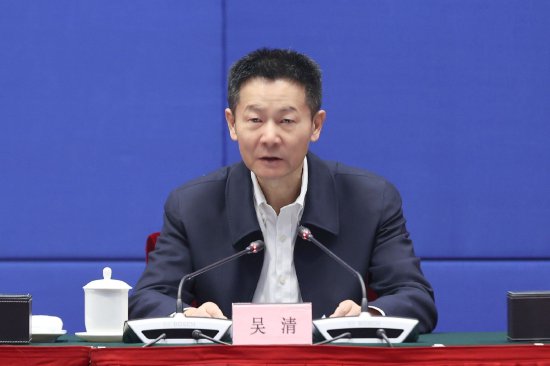
证监会召开2026年系统工作会议
Xin Lang Cai Jing· 2026-01-16 07:43
Core Viewpoint - The China Securities Regulatory Commission (CSRC) held a meeting to summarize the work of 2025 and plan for 2026, emphasizing the importance of risk prevention, strong regulation, and promoting high-quality development in the capital market [2][11]. Group 1: Achievements in 2025 - The CSRC highlighted significant progress in stabilizing the market, with a notable increase in medium- and long-term capital entering the market, leading to a warming trend [3][12]. - A total of 701 cases of securities and futures violations were investigated, resulting in fines totaling 15.47 billion yuan, indicating enhanced regulatory enforcement [3][12]. - The total cash dividends and buybacks by listed companies reached 2.68 trillion yuan, reflecting a gathering momentum for high-quality development [3][12]. - The total amount of IPOs and refinancing reached 1.26 trillion yuan, while the bond market issued various bonds totaling 16.3 trillion yuan, showcasing the effective functioning of a multi-level capital market [3][12]. Group 2: Regulatory Focus for 2026 - The CSRC aims to strengthen market monitoring and regulation to prevent excessive speculation and ensure fair trading practices [5][14]. - Continued reforms in public funds and the introduction of long-term investment products are planned to foster a market environment conducive to long-term investments [5][14]. - The CSRC will enhance the regulatory framework to combat financial fraud, price manipulation, and insider trading, improving the effectiveness of regulatory enforcement [5][15]. Group 3: Governance and Party Leadership - The meeting emphasized the importance of high-quality party building to support high-quality development within the CSRC, focusing on strict governance and accountability [4][13]. - The CSRC will continue to strengthen political supervision and enhance the integrity of its workforce, ensuring a commitment to anti-corruption efforts [4][17]. - The need for a robust regulatory team capable of addressing new and hidden forms of corruption in the capital market was highlighted [4][17].

金融监管总局召开2026年监管工作会议
Jin Rong Shi Bao· 2026-01-16 01:11
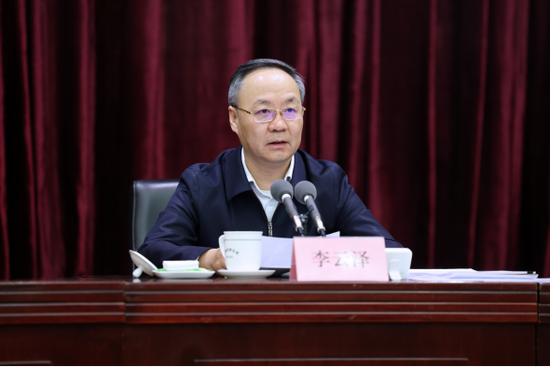
本报讯 记者余嘉欣 孙榕报道 1月15日,国家金融监督管理总局召开2026年监管工作会议,深入贯 彻党中央、国务院决策部署,系统总结2025年工作,统筹安排2026年重点任务。金融监管总局党委书 记、局长李云泽出席会议并讲话,总局党委班子成员出席会议。 会议指出,2025年,金融监管总局系统上下紧紧围绕防风险、强监管、促高质量发展工作主线,迎 难而上、真抓实干,牢牢守住不发生系统性金融风险的底线,各项工作取得积极进展。一是坚定不移推 进全面从严治党。严格落实"第一议题"制度。深入学习宣传贯彻党的二十届四中全会精神。从严从实推 进中央巡视整改。扎实开展深入贯彻中央八项规定精神学习教育。二是有力有序防范化解重点风险。中 小金融机构改革化险取得重大进展。城市房地产融资协调机制扩围增效。积极支持融资平台经营性金融 债务接续置换重组。防非打非工作机制实现省市县三级全覆盖。三是强监管严监管氛围逐步形成。金融 监管法制加快健全。严厉惩治违法违规行为。会同公安等部门坚决打击金融领域"黑灰产"。四是综合施 策引领行业改革转型。持续推进保险业"报行合一"和预定利率调整,加力推动银行业提质增效。支持金 融机构多渠道补充资本。五是精 ...
国家金融监督管理总局召开2026年监管工作会议
Xin Lang Cai Jing· 2026-01-15 12:57
1月15日,金融监管总局召开2026年监管工作会议,深入贯彻党中央、国务院决策部署,系统总结2025 年工作,统筹安排2026年重点任务。金融监管总局党委书记、局长李云泽出席会议并讲话,总局党委班 子成员出席会议。 会议指出,2025年,金融监管总局系统上下紧紧围绕防风险、强监管、促高质量发展工作主线,迎难而 上、真抓实干,牢牢守住不发生系统性金融风险的底线,各项工作取得积极进展。一是坚定不移推进全 面从严治党。严格落实"第一议题"制度。深入学习宣传贯彻党的二十届四中全会精神。从严从实推进中 央巡视整改。扎实开展深入贯彻中央八项规定精神学习教育。二是有力有序防范化解重点风险。中小金 融机构改革化险取得重大进展。城市房地产融资协调机制扩围增效。积极支持融资平台经营性金融债务 接续置换重组。防非打非工作机制实现省市县三级全覆盖。三是强监管严监管氛围逐步形成。金融监管 法制加快健全。严厉惩治违法违规行为。会同公安等部门坚决打击金融领域"黑灰产"。四是综合施策引 领行业改革转型。持续推进保险业"报行合一"和预定利率调整,加力推动银行业提质增效。支持金融机 构多渠道补充资本。五是精准有效支持经济稳中向好。出台超长期贷款 ...
金融监管总局新一轮人事大调整:全年101人履新,专业化开放化凸显,80后崭露锋芒
Xin Lang Cai Jing· 2026-01-14 00:04
来源:慧保天下 2025年国家金融监管总局系统人事调整频频。慧保天下综合多方信息,并根据公开资料不完全统计, 2025年全年共有101名总局、地方局干部发生职位调整。自去年6月16日《现实压力与监管人事调整新动 向:稽查局局长李有祥调任中农再一把手,财险司副司长罗蓉任职保险资管协会,多个地方局纪委书记 更新》至今半年有余,又有34人发生职位调整。 将时间轴拉长至2025年全年,超百人次的干部调整体现出一场围绕"强监管、优结构、促协同"展开的系 统性布局。从人身险司、财产险司的变动,到年中稽查系统的更新;从50余名司局级干部的跨区域、跨 系统调动,到大批处长的集中晋升,全年人事变动始终紧扣监管改革需求,呈现出覆盖范围广、层级跨 度大、专业导向强、机制创新活的鲜明特征。 保险相关部门人事大调整 对于保险业界人士而言,2025年的监管人事变动中,最引人关注之处即在于无论是人身险司,还是财险 司都出现了非常大的调整。人身险司原司长罗艳君在主导了人身险业的系列改革后调往内蒙古就职;人 身险"报行合一"中另一重要角色、原副司长刘昇调任总局机构恢复与处置司司长;专业能力过硬、经验 丰富的精算处原处长张遥则顺利升任人身险司副 ...

证监会最新发声
21世纪经济报道· 2026-01-11 11:40
Core Viewpoint - The article emphasizes the importance of enhancing the coordination between investment and financing in the capital market to promote high-quality development and better serve the real economy [1][3][4]. Group 1: Enhancing Long-term Investment - The China Securities Regulatory Commission (CSRC) aims to increase the proportion of long-term funds entering the market, with various long-term funds holding approximately 23 trillion yuan in A-share market value by the end of last year, a 36% increase from the beginning of the year [1]. - The scale of equity funds grew from 8.4 trillion yuan at the beginning of last year to around 11 trillion yuan [1]. Group 2: Strengthening Regulatory Effectiveness - The CSRC is committed to strict enforcement against severe illegal activities to enhance investor trust and confidence, focusing on significant cases and improving investor education and protection systems [2]. Group 3: Importance of Financing Function - Investment and financing are fundamental functions of the capital market, and a lack of financing capability undermines the market's ability to serve the real economy [3][4]. - Imbalances in investment and financing can increase market volatility and vulnerability, necessitating better alignment in terms of products, terms, risk characteristics, and preferences [4]. Group 4: Quality of Listed Companies - Improving the quality of listed companies is crucial for promoting investment and financing coordination, as high-quality companies attract stable long-term investments [5]. - The article highlights the need for a virtuous cycle where high-quality companies lead to better returns for investors, thereby enhancing financing efficiency [5]. Group 5: Protecting Small Investors - Protecting the legitimate rights and interests of small investors is a priority, given that over 250 million A-share investors are primarily small investors who face disadvantages in information access and risk identification [5]. Group 6: Seizing Development Opportunities - The article notes the global acceleration of technological revolutions and industry changes, which require the capital market to adapt and seize opportunities for high-quality development [6]. Group 7: Reforming Capital Market Structures - The CSRC plans to deepen reforms in the Sci-Tech Innovation Board and the Growth Enterprise Market, enhancing services for technology innovation companies throughout their lifecycle [7]. Group 8: Improving Dividend Stability - There is a push for listed companies to enhance their value creation capabilities, improve governance, and ensure stable, sustainable, and predictable dividends for shareholders [8].

全省金融系统工作会议召开
Da Zhong Ri Bao· 2026-01-10 01:06
Core Viewpoint - The meeting emphasized the importance of aligning the financial system's actions with the central government's scientific judgment on the economic situation, focusing on risk prevention, strong regulation, and promoting high-quality development [1] Group 1: Financial System Objectives - The financial system is required to effectively prevent risks, strengthen regulation, and promote high-quality development as the main line of work for 2026 [1] - There is a call to enhance party-building efforts and improve the management system for party activities within the financial sector [1] - The meeting highlighted the need for a coordinated approach to mitigate various intertwined risks and to combat illegal financial activities [1] Group 2: Regulatory and Development Strategies - The meeting stressed the importance of consolidating and strengthening financial regulation, ensuring strict entry standards, and enforcing regulatory compliance [1] - A commitment to promoting high-quality development was made, with a focus on expanding and improving the financial sector's capabilities [1] - The implementation of a "ten-hundred-thousand" plan for nurturing listed resources was discussed, alongside increased financial support for key areas such as domestic demand, technological innovation, and small and micro enterprises [1]
信托业分类改革成效显著 新旧发展模式“换轨”
Xin Lang Cai Jing· 2026-01-09 19:44
Core Insights - The trust industry in China is undergoing significant transformation, with a focus on high-quality development driven by a "1+N" policy framework aimed at strong regulation, risk prevention, and promoting transformation [1][3][4] Policy Framework - The "1+N" policy framework is being refined, with the State Council's opinions emphasizing the trust industry's critical role in the financial system and its service to the real economy [3] - The revised "Trust Company Management Measures" clarifies the legal status and functional positioning of trust companies, guiding them to shift from financing platforms to trustee services [3][4] Industry Growth - By mid-2025, the total trust asset scale reached 32.43 trillion yuan, marking a year-on-year growth of 20.11% [6] - The asset management trust and asset service trust have replaced traditional financing and channel trust models, becoming the main drivers of asset scale growth [6][7] Revenue and Profitability - The trust industry achieved a revenue of 34.36 billion yuan in the first half of 2025, with a profit of 19.68 billion yuan, reflecting a structural optimization in earnings sources [7] - The shift towards net value-based income from investment management and service fees indicates an improvement in the quality of earnings [7] Risk Management - Significant progress has been made in risk management, with successful resolution of major risks, including the restructuring of Sichuan Trust and the bankruptcy proceedings of Huaxin Trust [8][9] - The industry has seen a reduction in non-performing rates and risk project scales, enhancing overall risk mitigation capabilities [9] Future Outlook - The end of the transition period in May 2026 will serve as a critical juncture for the trust industry, focusing on completing compliance adjustments and fostering sustainable business models [10][11] - Challenges remain, including the need for effective management of complex legacy assets and the cultivation of new business models amid competitive pressures [10][11]

山东省金融系统工作会议召开
Zheng Quan Shi Bao Wang· 2026-01-09 10:43
Core Viewpoint - The Shandong Provincial Financial System Work Conference emphasizes the importance of aligning actions with the central government's economic strategies, focusing on risk prevention, regulatory strength, and promoting high-quality development for 2026 [1] Group 1: Financial System Objectives - The provincial financial system is urged to unify thoughts and actions with the central and provincial government's scientific judgments on the economic situation [1] - Key tasks for 2026 include effectively preventing risks, enhancing regulatory measures, and promoting high-quality development [1] Group 2: Risk Management and Regulation - There is a strong emphasis on risk prevention, including the reform of small and medium-sized financial institutions and combating illegal financial activities [1] - The conference calls for strict regulatory enforcement, including rigorous entry standards and accountability measures [1] Group 3: Development Initiatives - The financial sector is encouraged to enhance capacity and quality, utilizing appropriate monetary policy to support key areas such as domestic demand, technological innovation, and small and micro enterprises [1] - The implementation of the "Ten-Hundred-Thousand" plan for cultivating listed resources is highlighted as a priority [1]
山东召开全省金融系统工作会议
Qi Lu Wan Bao· 2026-01-09 10:22
Core Viewpoint - The meeting emphasized the importance of aligning the financial system's actions with the central government's scientific judgment on the economic situation, focusing on risk prevention, regulatory strength, and promoting high-quality development [1] Group 1: Financial System Objectives - The financial system is required to effectively prevent risks, strengthen regulation, and promote high-quality development as the main line of work for 2026 [1] - There is a call for enhancing party-building efforts and improving the management system to ensure integrity and discipline within the financial sector [1] Group 2: Risk Management and Regulation - The meeting highlighted the need for effective and orderly risk prevention, promoting reforms in small and medium-sized financial institutions, and combating illegal financial activities [1] - It is essential to consolidate and strengthen financial regulation, ensuring strict entry standards and accountability in regulatory enforcement [1] Group 3: Promoting High-Quality Development - The financial sector is urged to focus on high-quality development, enhancing capacity and quality, and making full use of moderately loose monetary policies [1] - The implementation of the "Ten-Hundred-Thousand" plan for cultivating listed resources is emphasized, along with increased financial support for key areas such as domestic demand expansion, technological innovation, and small and micro enterprises [1]
上清所:2025年集中清算业务规模819万亿元 同比增长13.6%
智通财经网· 2026-01-09 03:12
Core Insights - The Shanghai Clearing House held a work meeting on January 8, 2026, to summarize its 2025 performance and outline goals for 2026, emphasizing the importance of adhering to the principles of Xi Jinping's thought and the directives from the 20th National Congress of the Communist Party [3][4]. Group 1: 2025 Performance Summary - In 2025, the total scale of centralized clearing business reached 819 trillion yuan, with central counterparty clearing business accounting for 272 trillion yuan, representing year-on-year growth of 13.6% and 29% respectively [4]. - By the end of 2025, the bond custody scale was 50 trillion yuan, reflecting a year-on-year increase of 12.6% [4]. Group 2: Strategic Goals for 2026 - The Shanghai Clearing House aims to enhance its financial infrastructure by focusing on risk awareness and bottom-line thinking, while promoting quality and efficiency in its operations [5]. - The organization plans to strengthen political leadership, improve service quality, and innovate in foreign exchange clearing products and services, while ensuring the safety and stability of its operations [5]. - There is a commitment to expand cross-border connectivity and enhance international cooperation, particularly in the areas of bond products and clearing services [5].