支付安全

Search documents
大量苹果用户中招,有用户称“1分钟被刷走4140元”!手机秒变别人的“提款机”, 一场以“电商伪装”精心设计的骗局
Mei Ri Jing Ji Xin Wen· 2025-11-05 02:53
Core Points - The article discusses a recent surge in reports of Apple ID theft, with users experiencing unauthorized transactions ranging from hundreds to thousands of yuan, leading to the formation of victim groups on social media platforms [1][6][7] - A significant increase in customer complaints related to Apple ID theft has been noted, with over 3,700 complaints reported on the Black Cat Complaints platform as of October 29 [2][7] Group 1: Incident Overview - Users have reported being scammed through deceptive practices, where fraudsters impersonate sellers on platforms like Xianyu and Douyin, convincing victims to provide their Apple ID and passwords under false pretenses [3][9] - Victims often realize they have been scammed only after receiving multiple payment notifications, indicating that their accounts have been compromised [4][6] Group 2: Fraud Techniques - The methods used by fraudsters have evolved since a similar incident in 2018, with current scams being more sophisticated and less reliant on traditional phishing links [11][13] - Fraudsters exploit the trust of users by posing as legitimate sellers and using social engineering tactics to bypass Apple's security measures, such as two-factor authentication [11][13] Group 3: User Experience and Response - Victims express frustration over the lack of security measures during transactions, as many reported that payments were processed without requiring additional authentication like passwords or facial recognition [6][14] - Apple customer service acknowledges the rise in complaints and emphasizes that users should never share their passwords, as this is a primary cause of account theft [13][19] Group 4: Industry Implications - The article highlights the need for improved security protocols within Apple's payment system, suggesting that the current reliance on user discretion for security is insufficient [14][23] - Legal experts indicate that both the sellers and Apple may bear responsibility for the losses incurred by users, but the complexity of the situation makes it difficult for victims to seek redress [17][23] Group 5: Recommendations for Users - Users are advised to avoid sharing their Apple ID and passwords, set transaction limits, and regularly monitor their account activity for any suspicious transactions [19][23] - Apple is encouraged to implement more robust security measures, such as mandatory two-factor authentication for all transactions, to better protect users from fraud [23]


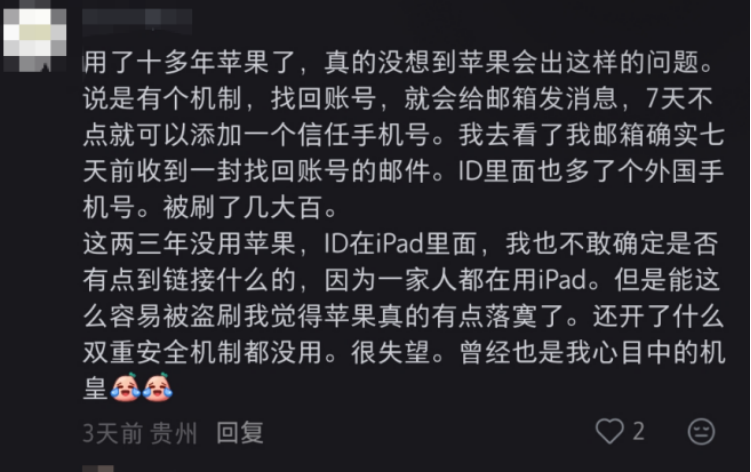
大量苹果用户中招!手机秒变别人的“提款机” 一场以“电商伪装”精心设计的骗局
Mei Ri Jing Ji Xin Wen· 2025-11-04 15:07
Core Viewpoint - The recent surge in Apple ID theft incidents highlights vulnerabilities in Apple's payment security, with users being tricked into providing sensitive information through deceptive tactics, leading to significant financial losses [2][5][8]. Group 1: Incident Overview - Users on platforms like Xiaohongshu and Douyin report experiences of account theft, with losses ranging from hundreds to thousands of yuan, and a growing number of victims forming support groups [2][4]. - Complaints regarding Apple ID theft have surged, with over 3,700 complaints recorded on the Black Cat Complaints platform as of October 29 [5]. Group 2: Scam Techniques - Scammers have evolved their methods, now posing as legitimate sellers on e-commerce platforms, which lowers consumer vigilance [8][11]. - Victims are often lured into providing their Apple ID and password under the pretense of needing to activate purchased services, such as membership cards [3][4]. Group 3: Security Flaws - The lack of clear prompts for password entry during transactions has been identified as a significant security flaw, allowing unauthorized payments to occur without user consent [4][12]. - Apple's reliance on user discretion for security measures, such as two-factor authentication, has been criticized for being insufficient against sophisticated scams [11][20]. Group 4: Consumer Responsibility and Legal Implications - Legal experts suggest that while consumers should exercise caution, the responsibility also lies with sellers and payment platforms to ensure secure transactions [15][21]. - The complexity of the payment chain and the ambiguity of responsibilities make it difficult for victims to seek redress [15][20]. Group 5: Recommendations for Users - Users are advised to avoid sharing their Apple ID and passwords, disable unnecessary payment features, and regularly monitor their account activity for suspicious transactions [17][20]. - Apple is encouraged to enhance its security measures, including real-time monitoring of unusual account activity and implementing stricter verification processes [20][21].
大量苹果用户中招!手机秒变别人的“提款机”,一场以“电商伪装”精心设计的骗局
Mei Ri Jing Ji Xin Wen· 2025-11-04 14:36
Core Viewpoint - The article highlights a surge in reports of Apple ID theft and unauthorized transactions, with users losing amounts ranging from hundreds to thousands of yuan, indicating a significant security concern for Apple users [3][5][7]. Group 1: Incident Overview - Users on platforms like Xiaohongshu and Douyin have reported their Apple IDs being compromised, leading to unauthorized transactions totaling over 4,140 yuan in one case [3][5]. - Affected individuals have formed groups, with membership exceeding 200 within days, suggesting a widespread issue [3][5]. - Complaints regarding Apple ID theft have surged, with over 3,700 complaints recorded on the Black Cat Complaint platform as of October 29 [7]. Group 2: Methods of Fraud - Fraudsters have evolved their tactics, now posing as legitimate sellers on e-commerce platforms to gain users' trust and extract sensitive information [9][11]. - Users are often tricked into providing their Apple ID and password under the guise of needing to activate low-cost services or products [9][11]. - The fraud typically involves bypassing Apple's security measures by exploiting the lack of clear communication regarding the purpose of verification codes, leading to unauthorized payments [9][11]. Group 3: Security Concerns - The article discusses the inadequacies in Apple's security measures, particularly regarding the automatic payment features that can be exploited by fraudsters [13][21]. - Experts suggest that Apple's reliance on user discretion for security may leave vulnerabilities, as many users are unaware of the risks associated with sharing their credentials [13][21]. - The lack of a unified security standard for payment systems in China complicates the issue, making it difficult for users to seek redress after incidents of fraud [21]. Group 4: Recommendations for Users - Users are advised to never share their Apple ID and password and to be cautious of links requesting such information [19][21]. - It is recommended that users enable two-factor authentication and regularly monitor their account activity for any suspicious transactions [19][21]. - Legal experts emphasize the need for clearer responsibility and compensation frameworks for users affected by such fraud, suggesting that Apple and third-party payment providers should enhance their security measures [17][21].
保护钱包,微信这个功能一定要开启!
新华网财经· 2025-11-02 01:15
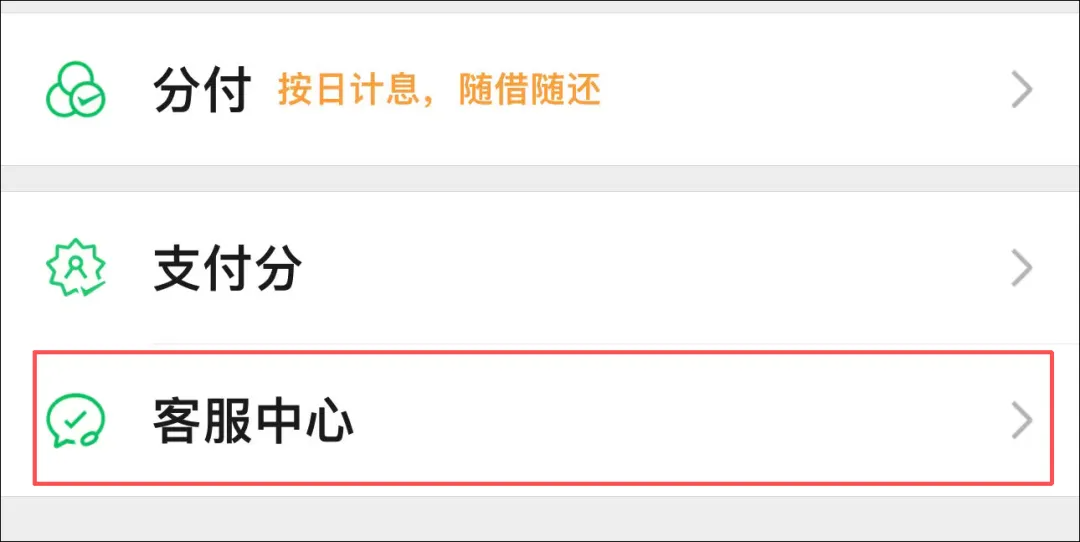
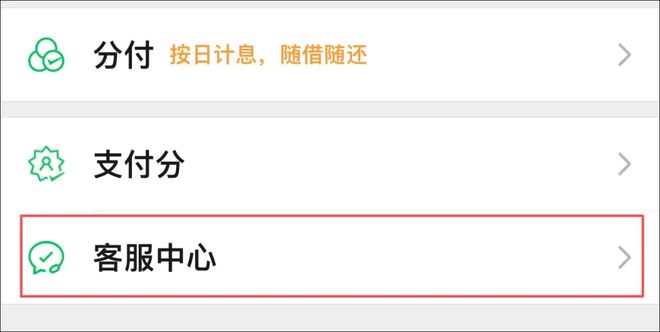
Core Viewpoint - The article emphasizes the importance of locking the WeChat wallet to prevent unauthorized access in case of phone loss [1]. Group 1: Security Features - Users are encouraged to enable the security lock feature in WeChat to protect their wallet [1][8]. - The security lock requires verification to access the wallet, making it difficult for anyone who finds the phone to misuse the wallet [8]. - The security lock can be set up using either fingerprint or gesture password methods, allowing users to choose based on their preferences [6]. Group 2: User Guidance - A step-by-step guide is provided for users to enable the security lock, starting from accessing the wallet through the WeChat interface [2][3]. - The process includes navigating to the customer service section and selecting consumer protection options [3][4]. - After setting up the security lock, users will need to verify their identity to access the wallet, enhancing overall security [7][8].


别让钱包“裸奔”!手把手教你给微信支付宝上道“安全锁”
Bei Jing Shang Bao· 2025-10-08 11:01
Core Viewpoint - The recent trending topic regarding the security of digital wallets highlights the importance of implementing protective measures such as "security locks" on platforms like WeChat and Alipay to safeguard users' funds from potential theft [1][4]. Group 1: WeChat Security Features - Users can activate a "security lock" on WeChat by navigating to "Me - Services - Wallet" and selecting "Customer Service Center - Consumer Protection - Security Guarantee," which requires verification for any payment actions [3]. - Once the security lock is enabled, users must authenticate their identity to access payment functions, preventing unauthorized transactions even if someone else has access to the phone [3]. Group 2: Alipay Security Features - Alipay offers multiple layers of protection, including complex passwords, biometric authentication (fingerprint and facial recognition), and a security lock that can be customized for different scenarios such as nighttime protection and high-value transactions [4]. - Alipay also provides full compensation for funds lost due to unauthorized transactions, enhancing user confidence in the platform's security measures [4]. Group 3: Expert Recommendations - Analysts suggest that consumers should proactively enhance their payment security awareness by utilizing the security features provided by WeChat and Alipay, such as biometric authentication and unique passwords [5]. - Payment institutions are encouraged to strengthen their technical risk control capabilities and develop comprehensive security systems that cover the entire lifecycle of user accounts, while also improving user education on security practices [5].
保护钱包 微信这个功能一定要开启!
Zhong Guo Ji Jin Bao· 2025-10-06 01:00
Core Viewpoint - The discussion around the importance of locking the WeChat wallet has gained significant attention among users, emphasizing the need for security measures to prevent unauthorized access in case of lost devices [1]. Group 1: User Concerns and Reactions - Many users expressed that they have never activated the wallet lock feature, indicating a general lack of awareness regarding security settings [1]. - The conversation highlights a growing concern among users about the potential risks associated with mobile payment systems [1]. Group 2: Security Features - The process to enable the wallet lock involves navigating through the WeChat app to access the customer service section [3]. - Users can choose between two unlocking methods: fingerprint unlock and gesture password unlock, allowing for personalized security settings [8]. - Once the security lock is activated, any attempt to access payment features requires verification, effectively preventing unauthorized transactions even if the phone is lost [10].
保护钱包,微信这个功能一定要开启!
Zhong Guo Ji Jin Bao· 2025-10-06 00:56
Core Viewpoint - The discussion around the importance of securing the WeChat wallet has gained significant attention, with users emphasizing the necessity of locking the wallet to prevent unauthorized access in case of a lost phone [1]. Group 1: User Concerns - Users express that they have never unlocked their WeChat wallet, indicating a general lack of awareness regarding wallet security features [1]. - The conversation highlights the potential risks associated with not securing the wallet, as unauthorized users could access funds if the phone is lost [1]. Group 2: Security Features - A step-by-step guide is provided for users to enable the security lock on their WeChat wallet, starting from accessing the "Customer Service" section [3][5]. - The security lock feature offers two unlocking methods: fingerprint unlock and gesture password unlock, allowing users to choose based on their preferences [9]. - Once the security lock is activated, users must verify their identity to access the wallet, significantly enhancing the protection against unauthorized transactions [11].
关注支付安全 双节消费更安心
Xin Hua Wang· 2025-10-01 02:11
Core Points - The article emphasizes the importance of card security during the peak travel and shopping season of the National Day and Mid-Autumn Festival in China [1][2] - China UnionPay has issued safety tips to cardholders to prevent fraud and ensure secure transactions [1][2] Group 1: Security Tips - Cardholders are advised to be cautious of SMS link risks and to avoid disclosing sensitive information such as card numbers and verification codes [1] - Users should be wary of fraudulent apps and verify any requests from individuals claiming to be customer service representatives [1] - It is recommended to monitor for unusual transactions and report any unauthorized activity immediately to the bank [2]
国庆中秋假期临近 银行卡消费警惕这些风险
Xin Hua She· 2025-09-22 06:21
Core Viewpoint - The upcoming National Day and Mid-Autumn Festival holidays are expected to see a surge in cross-border tourism and shopping, which also increases the risk of various scams targeting consumers [2]. Group 1: Consumer Risks - Various scams are anticipated during the holiday period, including phishing links, suspicious calls, and malware apps [2]. - Consumers are advised to be cautious of SMS links and to avoid disclosing sensitive information such as card numbers, expiration dates, CVN codes, and dynamic verification codes [4][3]. - It is crucial to verify any suspicious messages regarding refunds or account freezes by contacting official customer service [4]. Group 2: App and Transaction Security - Users should be wary of calls from individuals claiming to be customer service representatives, especially those requesting actions related to fee cancellations or insurance [5]. - It is recommended to only download apps from official app stores and to be alert for any unusual behavior on mobile devices, such as requests for accessibility permissions [6]. - Setting up balance transaction alerts and monitoring for unusual transactions through bank apps or SMS notifications is advised [7][8].

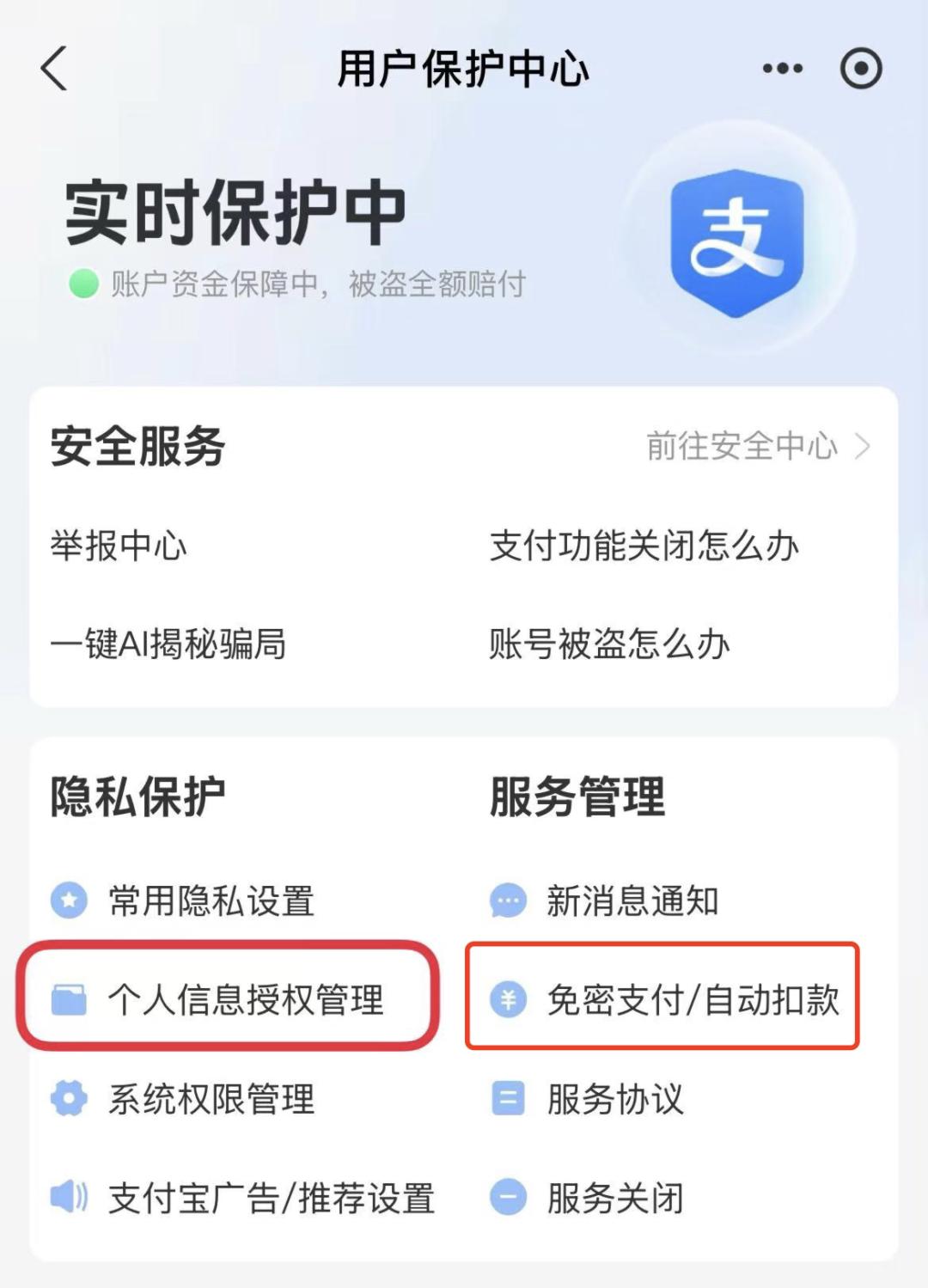
免密支付暗藏隐患,有人薅10元羊毛被盗刷1万
3 6 Ke· 2025-09-19 06:46
Core Insights - The topic of "revoking Alipay account authorization" has sparked widespread discussion on social media, highlighting concerns over excessive authorization of personal information and the associated security risks [1] - Users are facing issues with "automatic payments" and "hidden charges," leading to financial losses without their knowledge [1][3] - Alipay has responded by promoting its "personal information authorization management" feature, which allows users to manage their authorizations and modify privacy settings [1] Group 1: User Concerns - Many users have reported discovering numerous unauthorized applications accessing their personal information, raising alarms about data privacy and security [1][7] - Instances of unauthorized automatic payments have been reported, with users unaware of ongoing charges for services they believed were canceled [1][5] - Legal experts emphasize that platforms must obtain explicit consent from users before processing personal information or enabling payment features, as mandated by laws such as the Personal Information Protection Law [4][7] Group 2: Security Risks - The convenience of "no-password payments" has led to significant security vulnerabilities, with cases of unauthorized transactions amounting to thousands of dollars due to lost devices or compromised accounts [5][6] - Users have experienced rapid unauthorized charges after enabling no-password payments, often linked to third-party services that do not clearly disclose their payment terms [5][6] - Experts suggest that while the no-password payment feature enhances convenience, it also necessitates improved risk management and user awareness from platforms [4][6] Group 3: Recommendations for Improvement - Experts recommend that platforms adopt principles of minimal necessary access, informed consent, and revocability in their authorization processes to enhance user security [8] - Platforms should implement real-time alerts for unusual transactions and provide users with easy access to manage their authorizations [8][9] - Consumers are encouraged to regularly review their authorization lists and prioritize using no-password features only with trusted applications [9]