数据要素价值化

Search documents
每日互动:上半年实现营业收入2.18亿元
Zheng Quan Shi Bao Wang· 2025-08-19 13:40
Core Viewpoint - The company has demonstrated strong business resilience despite external market pressures, with a focus on data intelligence and artificial intelligence development. Group 1: Financial Performance - In the first half of 2025, the company achieved operating revenue of 218 million yuan, with over 85% of revenue coming from data value realization-related activities [1] - The company’s main business has shown steady growth, indicating a solid foundation in the data intelligence sector [1] Group 2: Business Development - The developer services segment continues to solidify its industry-leading position, supported by a large active user base [1] - The commercial services sector is stabilizing, with positive growth potential in both enhanced services and brand services [1] - The public services division is advancing mature products while actively exploring new intelligent products, engaging in co-creation with clients [1] Group 3: Artificial Intelligence Initiatives - The company has increased its investment in artificial intelligence, establishing an AI division and appointing a Chief AI Officer, with around 50 key personnel dedicated to AI product development and technological breakthroughs [2] - The company has launched the "GAI" series of intelligent products and introduced a high-end model device for enterprise markets, forming a closed-loop system [2] - The "Data Station" strategy aims to connect various stakeholders for secure and efficient data flow, with the "Hundred Cities, Hundred Scenarios" co-creation plan already implemented in multiple cities [2] Group 4: Future Outlook - The company is committed to accelerating industry development through "data + intelligence" and plans to increase exploration in the AI field [3] - New AI-related businesses are expected to enter a promotional phase in the second half of the year, following product development and initial customer engagement [3]

为数据市场建设定规立矩
Jing Ji Ri Bao· 2025-08-11 22:00
Core Insights - The article emphasizes the importance of data as a key production factor, comparable to land and capital, with predictions indicating that a 10% increase in data flow can lead to a 0.2% GDP growth [1] - The construction of a data market is identified as a crucial pathway for advancing the digital economy in China, with a projected data production total of 41.06 ZB by 2024 [1] Data Market Overview - The data market consists of raw data, processed data, and standardized data service products, with diverse supply sources including businesses, government agencies, and data brokers [2] - The demand for data spans various sectors, including enterprises for marketing and risk management, and government for urban governance and policy-making [2] Differences from Traditional Markets - Data markets differ from traditional markets primarily in pricing and trading mechanisms, with various pricing models such as pay-per-use and subscription [3] - Innovative trading modes include platform trading, over-the-counter trading, and data sharing pools within data alliances [3] Regulatory Framework - Establishing a data market requires a robust regulatory framework, including standardized data classification and a unified data language to facilitate transactions [4] - The recent policy direction from the Chinese government highlights the need for clear data ownership, market transactions, and rights protection [4] Cultivating Data Operators - Data operators, or "data merchants," are essential for the development of the data market, providing services in data production, management, and trading [5] - Encouraging the opening of high-value public data and integrating data resources into asset management systems are key strategies for fostering data operators [5] Infrastructure Support - The transaction of data requires foundational infrastructure, including network, computing, and security facilities, to enable safe and efficient data flow [6] - A multi-layered data market system is proposed to facilitate data movement across regions and sectors [6] International Cooperation - Expanding into international data markets is crucial for enhancing China's digital competitiveness, necessitating the integration of cross-border data flow into economic development plans [7] - Collaboration on data protection legislation and standards is essential to balance data sovereignty with global data sharing [7]
RDA打通数实融合价值链,打造数据要素价值化新范式
Changjiang Securities· 2025-07-16 02:25
Investment Rating - The industry investment rating is "Positive" and maintained [8] Core Insights - The Shanghai Data Exchange has introduced a new paradigm called RDA (Real Data Assets), leveraging blockchain technology to convert physical assets and intangible data elements into digital forms, addressing five key challenges in the financialization of physical assets: authenticity, transparency, liquidity, economy, and consensus [2][6] - RDA emphasizes the integration of real-world assets (RWA) with data, facilitating the deep integration of the real economy and the digital economy. The market for RWA has grown significantly, from $300 million at the end of 2021 to over $19 billion by the end of March 2025, highlighting the potential for asset tokenization [6] - The new paradigm of RDA is expected to accelerate the marketization and valuation of data elements, benefiting the entire industry chain. It suggests focusing on investment opportunities in data infrastructure, blockchain technology, and data rights and trading [6][10]
RDA:链接加密货币和数据要素的桥梁
上海钢联· 2025-07-13 05:19
Investment Rating - The industry investment rating is "Outperform the Market - A" [6] Core Viewpoints - The report introduces the RDA (Real Data Assets) paradigm, aiming to bridge cryptocurrency and data elements, emphasizing the marketization and value realization of data elements, and enhancing the efficiency of connecting physical assets and capital [2][3][4] - RDA is positioned as the soul of RWA (Real World Assets), facilitating the mapping of physical assets in the digital realm and providing four funding channels: credit financing, equity financing, securitization, and global fundraising [3][15] - The report suggests focusing on companies related to the Shanghai Data Exchange, including YunSai ZhiLian, Shanghai Steel Union, Wanda Information, and others, as potential investment opportunities [3][17] Summary by Sections Industry Performance - The computer industry index increased by 3.37% this week, outperforming the Shanghai Composite Index by 2.28 percentage points [18][19] - The report highlights that the computer sector's performance is closely tied to themes surrounding stablecoins and related industries [22] Market Overview - The report notes that the RDA paradigm addresses challenges in ensuring the authenticity and transparency of assets during the on-chain process, leveraging blockchain technology and trusted data spaces [4][17] - The report emphasizes the importance of data authenticity in the value realization process, with RDA focusing on the integration of data and physical assets [14][16] Key Industry News - The report mentions significant advancements in AI and quantum computing, including the launch of Kimi's new model and the "Zuchongzhi 3" quantum computing prototype, which showcases China's technological prowess [25] - It also discusses strategic collaborations in the stablecoin space, such as the partnership between Jin Yong Investment and AnchorX to explore the application of stablecoin AxCNH [25]

四大证券报精华摘要:7月3日
Xin Hua Cai Jing· 2025-07-03 00:02
Group 1: Mergers and Acquisitions - In the first half of the year, the A-share merger and acquisition market saw significant activity, with over 140 asset restructuring disclosures in strategic emerging industries, doubling from the same period last year [1] - Expectations are high for continued activity in the A-share merger and acquisition market in the second half of the year, driven by new policies aimed at reforming the market [1] Group 2: Stock Buybacks - In the first half of 2025, seven listed brokerages repurchased shares totaling 2.028 billion yuan, marking a year-on-year increase of 1058.86% [2] - The focus on cash dividends and value management is becoming increasingly important among brokerages, indicating a positive outlook for leading brokerages with strong monetization capabilities [2] Group 3: Private Equity and Market Trends - Private equity firms are increasingly focusing on small-cap growth stocks, with 751 firms conducting 1,769 company surveys in June, targeting 387 stocks across 28 industries [3] - The electronics, pharmaceuticals, and machinery sectors are the primary focus areas for private equity research [3] Group 4: Capital Market Reforms - The China Securities Regulatory Commission emphasizes maintaining market stability as a top priority and is advancing comprehensive reforms in the capital market [4] - The focus is on optimizing financing mechanisms and promoting the efficient allocation of resources to high-potential sectors [4] Group 5: Fund Distributions - Over 1,000 funds have distributed dividends this year, totaling more than 120 billion yuan, a 38% increase year-on-year [5] - The record single dividend distribution of 8.394 billion yuan by Huatai-PB CSI 300 ETF highlights the growing trend of dividend distributions among high-performing funds [5] Group 6: Marine Economy and Technology - The central government is pushing for high-quality development in the marine economy, with a focus on enhancing independent innovation capabilities in marine technology [6] - Companies are increasingly disclosing their strategic plans and progress in the marine technology sector, reflecting heightened investor interest [6] Group 7: Industry Capacity Reduction - Various industries, including steel and photovoltaics, are initiating capacity reduction measures in response to government directives aimed at curbing "involution" competition [8] - The focus on orderly exit of outdated capacities is expected to lead to significant changes in these sectors [8] Group 8: ETF Market Growth - The total scale of ETFs reached 4.31 trillion yuan in the first half of the year, a 15.57% increase from the end of last year, with bond ETFs seeing a remarkable growth of 120.71% [10] - The market is witnessing a concentration effect, with certain fund companies significantly increasing their ETF management scales [10] Group 9: Data Asset Valuation - The trend of data asset valuation is becoming more pronounced, with financial market innovations creating diverse financing channels for data assets [11] - Experts predict that the marketization of data factors will accelerate, enhancing the value release process [11] Group 10: Insurance Capital Investment - Insurance capital is expected to increase its allocation to A-share equity assets and enhance global asset diversification in the second half of the year [12] - The investment strategy is characterized by a focus on fixed income, equity expansion, and alternative investments [12] Group 11: Automotive Industry Transformation - The Chinese automotive market is experiencing a transformation driven by policy guidance, technological innovation, and strategic adjustments, with domestic brands achieving record market share [13] - The industry is shifting from price competition to technology competition, with a focus on smart and globalized development [13]
数据要素价值进一步激活 上市公司多维度探索“点数成金”
Zheng Quan Ri Bao· 2025-07-02 16:44
Group 1 - The trend of data asset value realization is becoming more prominent, with more data being transformed into high-value assets, supported by financial market innovations that open diverse financing channels for related companies [1] - Experts predict that the market-oriented allocation mechanism for data factors will continue to improve, accelerating the process of data value release, which is expected to become a core engine driving high-quality development of the digital economy [1] Group 2 - Aopu Mai Biotechnology Co., Ltd. announced plans to acquire 100% of Pengli Biopharmaceutical Technology (Shanghai) Co., Ltd. through a combination of share issuance and cash payment, highlighting the importance of data as a valuable resource for companies [2] - Companies are increasingly focusing on building comprehensive data management systems to enhance data quality and extract data value, with many establishing specialized data management teams [2][3] Group 3 - A growing number of listed companies have appointed Chief Data Officers to strengthen data strategy and promote deep integration of data resources with business operations [3] - Companies are leveraging professional systems to achieve intelligent and refined data asset management, utilizing data asset management platforms and AI technologies to maximize data value [3] Group 4 - The process of data asset capitalization is crucial, with the inclusion of data assets in financial statements providing solid support for the confirmation, measurement, and disclosure of data value [4] - In the first quarter of 2025, 91 A-share listed companies included data assets in their financial reports, with a total scale of 4.402 billion, marking a significant increase in both the number of participating companies and the scale of inclusion compared to the previous year [4] Group 5 - Data asset inclusion in financial statements enhances resource allocation efficiency and facilitates precise capital market resource allocation, allowing for better monetization of data assets [5] - The successful listing of data assets, such as the smart parking data asset from Zhenjiang Transportation Industry Group, demonstrates the potential for data assets to be valued and traded in the market [5] Group 6 - The process of data capitalization has accelerated significantly under the drive of financial innovation, with examples such as the issuance of asset-backed securities based on operational and public service data [6] - The approval of the first data center REITs in the country further enriches the practice paths for data capitalization, injecting new momentum into industry development [6] Group 7 - The Chairman of the China Securities Regulatory Commission indicated ongoing support for technology companies to utilize intellectual property and data assets for asset securitization and REITs, signaling future policy support and financial innovation to promote the development of the data factor market [7] - Standardization of entity economic data is essential for transforming it into data required by capital markets, which is a primary task of financial technology [7]
探索数据变现的“价值魔方”
Ren Min Wang· 2025-06-26 11:42
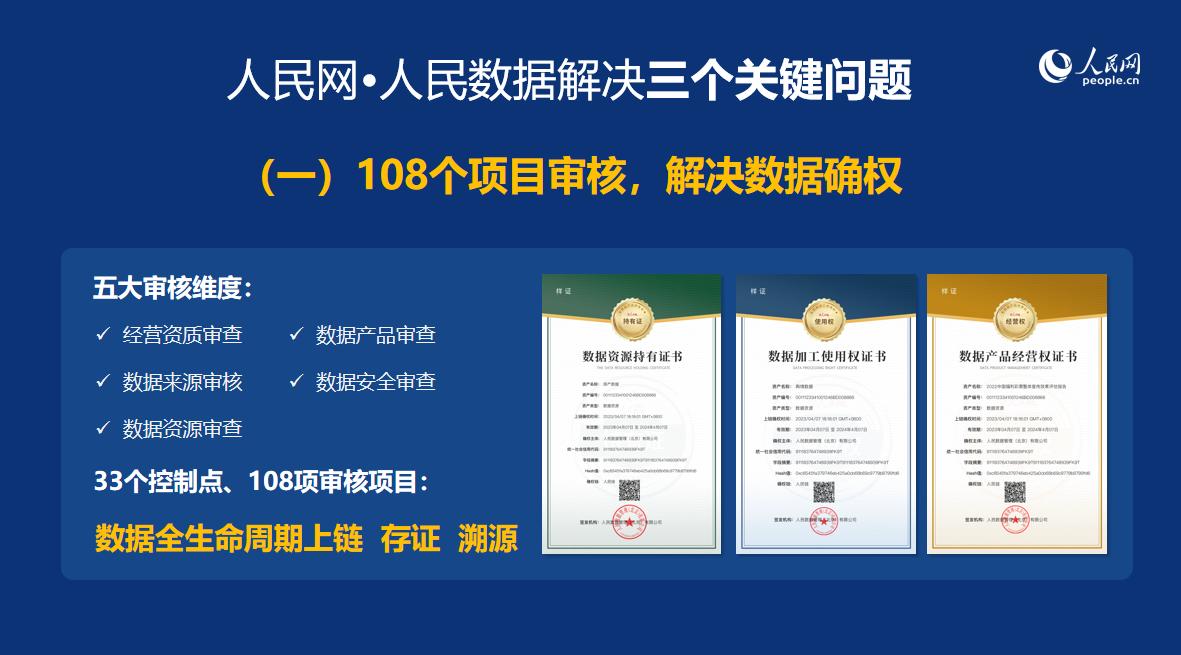
Group 1 - Data is regarded as the "new oil" and "new currency," becoming a fundamental engine for the deepening development of the digital economy [1] - China is enhancing its focus on data as a key factor for gaining competitive advantages in the next round of industrial competition [1][2] - The establishment of a comprehensive system for the value realization of data elements is a long-term and complex project requiring both institutional innovation and practical exploration [1][2] Group 2 - China's path to data value realization will balance safety and development, addressing the relationships between data development and regulation, security and application, as well as domestic and international considerations [2] - The inclusion of data as a production factor in the Fourth Plenary Session of the 19th CPC Central Committee has solidified its status and value enhancement [3] - Recent policies, including the Ministry of Finance's guidelines on data asset management, indicate that data assets are now recognized as important strategic resources for digital economic development [3] Group 3 - Data assetization is a key goal for maximizing the value of data resources, transforming them into a new source of economic growth [4] - The number of data trading institutions and related enterprises is increasing, with approximately 17,600 data trading companies in operation by the end of 2024, 25% of which were established within the last year [4] Group 4 - The process of data value release involves three stages: resourceization, assetization, and ultimately capitalization [5] - Data resourceization is the starting point for value release, focusing on converting raw information into manageable and reusable data assets [5] Group 5 - A successful data monetization strategy requires a closed-loop solution that aligns with national policy, industry development, low-cost investment, sustainable value growth, and high economic efficiency [6] - An example of a successful data service project involved a city investment company that invested over 3 million yuan, resulting in a data asset valuation exceeding 5 million yuan and a market value of over 30 million yuan [6][7] Group 6 - The "value cube" of data is achieved through addressing three key issues: rights confirmation, circulation, and financing [8][10][12] - The establishment of a data rights confirmation system aims to clarify ownership issues, with innovative products like the "three certificates" service for data rights [8] - A dual-driven model of government guidance and market dynamics is being developed to create an efficient and trustworthy data market ecosystem [10] Group 7 - Data asset pledge financing is a common practice that offers low-cost, efficient, and flexible solutions for financing challenges faced by small and medium-sized enterprises [12] - The construction of a data financing platform facilitates the management of data assets, ensuring compliance, quality, and value assessment [12] Group 8 - The essence of the "value cube" lies in the innovation of models, technological empowerment, and ecological collaboration, which together facilitate the realization of data value [14]