文化交融

Search documents
“骐骥乘风 春启新程”2026年全英学联春晚在伦敦举行
Xin Lang Cai Jing· 2026-02-06 15:51
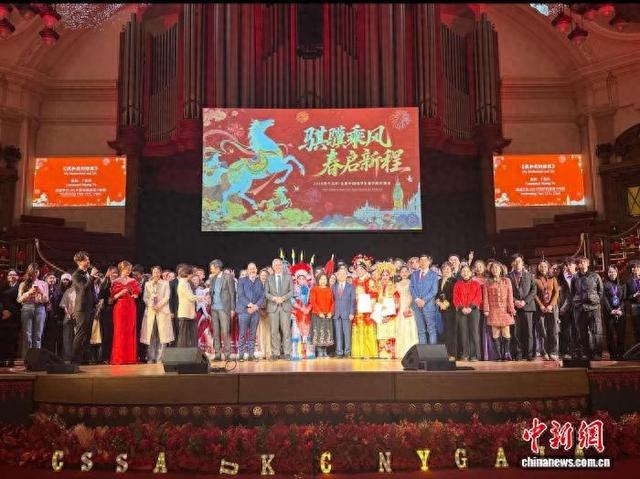
图为参加 活动代表合影。 刘施岑 摄 伦敦大学学院校长兼教务长迈克尔·斯宾赛特意用中文发表新春致辞。他表示,伦敦大学学院即将迎来 建校200周年,中国学生、学者及合作伙伴在学校发展历程中发挥了重要作用。斯宾赛表示,希望在马 年这一象征活力与进取的年份里,进一步深化英中教育与科研合作,共同应对全球性挑战。 推动不同文明之间的理解与互信,共同创造更加开放、包容和创新的未来。 中新网伦敦2月6日电 (欧阳开宇 刘施岑)当地时间2月5日晚,由全英中国学生学者联谊会主办的2026年 全英中国留学生春节联欢晚会在伦敦精彩上演。来自英国各高校的中国留学生、华人学者,以及英国高 校和教育机构代表等一千余人欢聚一堂,共迎农历马年,现场洋溢着喜庆祥和的节日氛围。 中国驻英国大使郑泽光出席晚会并致辞。郑泽光指出,中国始终以维护世界和平与发展为己任,在事关 国际道义的大是大非问题上坚定站在历史正确一边,旗帜鲜明反对单边主义、霸权主义和强权政治,中 国的发展给动荡不安的世界注入了稳定性、确定性和正能量。2026年是"十五五"开局之年,中国将坚持 以经济建设为中心,集中力量推进高质量发展,坚定不移推进高水平对外开放,将给全体中国人民带来 ...

“成为中国人”何以海外出圈
Ren Min Ri Bao· 2026-02-06 02:48
这股风潮的出圈,反映对外开放从"器物互通"到"标准对接"再到"文化交融"的进阶。 上世纪八九十年代,我们打开国门,逐步融入全球产业链,彼时中外互动多停留于商品贸易、技术交流 层面。新时代以来,中国的开放迈入制度型开放新阶段,自贸区网络不断织密,"一带一路"倡议架起合 作之桥,中欧班列驰骋在亚欧大陆上,中国与世界的互动更加频繁、联系更加紧密。 "成为中国人"的热潮印证,中国的开放已抵达文化共情的新境界。过境免签政策让外国友人轻松触摸真 实中国,短视频平台让一杯热水、一套养生功法跨越山海找到拥趸,中国的开放不再只是政策的放开、 市场的打开,更是生活方式与文化理念的真诚敞开。 这股风潮的出圈,彰显中华文化亘古亘今的生命力。 "成为中国人"热潮涌动,说到底是外国网友对中式生活智慧的认同,而这份智慧根植于中华文明的沃 土。喝热水的养生习惯,源于中医"温阳散寒"的健康理念;八段锦的风靡,蕴藏着道家"天人合一"的养 生哲学;多彩的饮食文化,承载着"民以食为天"的朴素追求。这些看似不起眼的日常,是中华文化历经 岁月洗礼形成的瑰宝。从诸子百家的思想智慧,到唐宋诗词的人文情怀,再到当代中国和合共生的开放 理念,中华文化始终在守正 ...
渝台同胞同心迎新春话发展
Xin Lang Cai Jing· 2026-01-28 20:59
(来源:团结报) 当日,一场精彩的游园会为这场盛会增添新春意趣。投壶雅戏妙趣十足,台胞们凝神体验传统游戏的快 乐;拓印展位前,大家亲手印制新春吉语,感受非遗魅力;书法爱好者挥毫泼墨,一副副饱含祝福的春 联与"福"字跃然纸上,赠送给现场台胞,将新春的美好祝愿一一传递……台胞们穿梭在各个体验区,沉 浸式感受中华优秀传统文化的同时,共享团圆相聚的喜悦,现场欢声笑语不断。 重庆市台协会长简国钏表示,今年是"十五五"开局之年,也是台商台企抢抓机遇、乘势而上的关键一 年。重庆市台协将始终秉持初心,以乡情为纽带,以合作为桥梁,架起政企沟通的"连心桥",用心用情 为会员排忧解难、共谋发展,持续深化两岸经贸交流、文化交融。 《重庆市台湾同胞投资促进条例》自2025年1月1日起正式实施,2026年是该条例深入实施的第二年。台 胞们在新春联谊会上纷纷表示,该条例自实施以来为台企提供法治保障和政策红利,极大增强台胞在渝 投资的信心和安全感,新的一年将加大在渝投资力度,深化渝台交流合作,推动两岸融合发展和现代化 新重庆建设。 (中国台湾网、重庆市台办报道) 转自:团结报 据中国台湾网报道 1月23日,重庆市台湾同胞投资企业协会(简称" ...
用音乐谱写民族团结新篇
Xin Lang Cai Jing· 2026-01-14 21:48
Core Viewpoint - The "Heavenly Sound, Tianjin Resonance" concert held in Xinjiang's Hotan region showcases cultural integration through music, featuring performances by Tianjin Conservatory of Music faculty and students alongside local artists [1] Group 1: Event Overview - The concert took place on January 12-13, with over 4,000 kilometers traveled from Tianjin to Xinjiang [1] - The event was live-streamed through multimedia platforms, enhancing its reach and engagement [1] Group 2: Performers and Program - The concert featured prominent figures such as the conservatory's president Wang Hongwei, singers Wang Zenan, Zhang Xiqiu, and Yu Pingli, as well as pianist Zhao Yang and young students [1] - The program included a mix of classic and innovative pieces, such as the folk song "The Girl from Daban City" and the opera classic "Nessun Dorma" [1] - A highlight was the fusion piece "Ancient Tunes and Modern Rhythms," which creatively combined Tianjin's quyi (traditional storytelling) with Xinjiang's musical elements [1] Group 3: Cultural Interaction - During rehearsals, faculty and students engaged in spontaneous performances with local artists and the community, showcasing vibrant cultural exchanges [1] - The concert served as a bridge connecting the cultures of Tianjin and Xinjiang, promoting national unity through artistic expression [1]
器以载道:博物馆里的中华文明基因图谱(下)
Xin Lang Cai Jing· 2026-01-13 18:48
Core Insights - The article highlights the significance of ancient Chinese artifacts, particularly bronze vessels, as crucial historical records that reflect the social structure and cultural practices of their time [10][11][19]. Group 1: Major Artifacts - The Dake Ding, a bronze vessel from the Western Zhou period, stands at 93.1 cm tall and weighs 201.5 kg, showcasing advanced bronze casting techniques with intricate beast face patterns [10][11]. - The Lianhe Fanghu, a bronze vessel from the Spring and Autumn period, features exquisite dragon motifs and symbolizes the fusion of Central Plains and southern cultures [12]. - The Guiye-shaped stone tool, discovered in Heilongjiang, measures 25 cm in length and represents a high level of stone tool manufacturing technology, dating back approximately 9,000 years [13][14][15]. Group 2: Cultural Significance - The Dake Ding's inscriptions document the feudal system and land distribution in the Western Zhou period, emphasizing the importance of historical responsibility in Chinese culture [11]. - The East Han ceramic performer figurine, measuring 66.5 cm, illustrates the popularity of performance arts during the Han dynasty, reflecting the cultural richness of the Sichuan region [17][18]. - The Gold-inlaid Beast Head Agate Cup from the Tang dynasty exemplifies the high craftsmanship of Tang jade artifacts and serves as evidence of cultural exchanges between the East and West [19][20].
共同创造中华文明
Xin Lang Cai Jing· 2026-01-08 20:05
Group 1 - The establishment of the "Chanyuan Treaty" led to over a century of peace between the Song and Liao dynasties, fostering cultural and trade exchanges, and promoting the development of handicrafts, particularly Liao porcelain [1] - The Northern Song period marked the peak of Ding kiln development, especially in the mid to late Northern Song, where the white porcelain production techniques reached maturity, resulting in thin, fine, and high-quality porcelain with intricate decorations [1] - Archaeological findings indicate that fine Liao white porcelain was primarily produced during the mid to late Liao period, showing significant influence from Ding kiln techniques [1] Group 2 - The rise of "Han-style" porcelain, based on the Cizhou kiln, emerged as the Khitan people absorbed more elements of Central Plains culture, with Liao porcelain showcasing this style in its later products [2] - Liao porcelain products commonly utilized cosmetic clay techniques, featuring simple and plain decorations, and incorporated techniques such as ink painting, calligraphy, and relief carving, reflecting a blend of artistic styles similar to those of the Song dynasty [2] - The influence of Central Plains kilns like Ding and Cizhou on Liao porcelain was both comprehensive and profound, illustrating the cultural exchange and mutual learning between Khitan and Central Plains cultures, contributing to the richness of Chinese civilization [2]
喀什古城景区:从游客到创客,温暖故事满街巷
Xin Lang Cai Jing· 2026-01-05 04:16
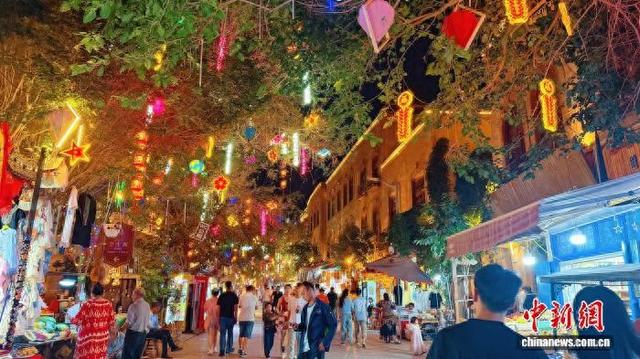
Core Insights - The Kashgar Ancient City Scenic Area is one of the largest existing earthen architectural complexes in the world, serving as both a national 5A-level tourist attraction and a living area for local residents [1][5] - The integration of diverse cultures and the transformation of tourists into creators and community members are highlighted through personal stories and interactions among visitors and locals [8] Group 1: Cultural Integration - The scenic area showcases a blend of architectural styles, with elements from Central Plains architecture and traditional Uyghur pottery techniques [3][4] - The storytelling approach of guides like Aliya Abulimiti emphasizes the historical significance of the Silk Road and the collaborative efforts of various ethnic groups in the region [1][5] Group 2: Economic Impact - Approximately 1,000 visitors from across the country and abroad have settled in the ancient city, contributing to the establishment of 5,030 businesses and creating over 20,000 jobs [7] - The average monthly income of residents has increased from 1,200 yuan in 2013 to 5,000 yuan, reflecting the economic benefits of tourism and local entrepreneurship [7] Group 3: Tourism Development - The scenic area has developed over 20 popular tourist spots and nine tourism routes, incorporating elements of Chinese culture to enhance visitor experiences [7] - The opening ceremony of the scenic area features traditional performances and historical reenactments, enriching the cultural experience for tourists [7]
武王墩200多件套文物亮相国博
Xin Lang Cai Jing· 2026-01-01 23:53
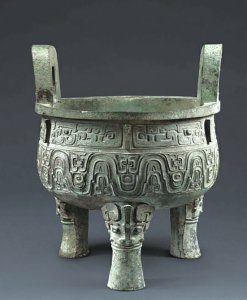
Core Viewpoint - The Wuwangdun archaeological exhibition at the National Museum showcases over 200 newly unearthed artifacts, marking the first comprehensive public display of findings from the Wuwangdun tomb, which belongs to the late Warring States period of the Chu state [1][2]. Group 1: Artifacts and Their Significance - The Wuwangdun tomb is identified as the burial site of King Xiong Yuan of the Chu state, with a bronze vessel inscribed with "Chu Wang Zai Qian made a gold vessel for annual offerings," serving as a key piece of evidence for identifying the tomb's owner [1]. - Among the artifacts, the largest bronze ding (cauldron) discovered has set a new record in China's ranking of large dings [1]. - The exhibition features a significant set of nine dings, visually representing the historical Nine Ding system, with two dings showcasing intricate scales and decorative motifs, indicating the cultural context of the late Warring States period [2]. Group 2: Cultural Exchange and Artistry - The Wuwangdun tomb yielded a unique bronze ding with an iron base, notable for its 18-character inscription, which references the "Left Envoy Vehicle (Warehouse)," a term specific to the state of Zhongshan, reflecting the cultural exchanges during the late Warring States period [2]. - The exhibition includes exquisite artifacts such as bronze bells, stone chimes, jade discs, and rare ball-shaped jars, collectively illustrating the ceremonial significance and material achievements of the Chu state [2].
和合共生 “香”约美好,多国风情+民族碰撞太惊艳
Xin Lang Cai Jing· 2025-12-28 07:01
Group 1 - The event "和合共生 '香'约美好" will feature a cultural dialogue showcasing the beauty of diversity through performances from various artists [3] - ASEAN singers will perform "东盟潮音," creating a joyful cross-border resonance during the New Year's Eve celebration [3] - The comedy skit "洋徒弟变形记," led by national first-class actor Yang Jianwei, will humorously depict the experiences of a foreign apprentice learning in Guangxi, highlighting cultural exchanges [3] Group 2 - Guangxi cultural tourism ambassador Jin Hua Yin Yue Xi will present a song and dance titled "广西有条大运河," celebrating the development vitality of Guangxi [6] - The performance by Zhuang ethnic singer Wei Qingqing, featuring the song "岜莱阿妈," will reflect the enduring spirit of Zhuang women [7] - Mongolian throat singer Du Leng Zha Na will perform "游牧," offering an immersive experience of the vastness of ethnic culture [7] Group 3 - A high-energy collaboration between Zhuang and Mongolian music styles will take place, promising an exciting fusion of different musical traditions [8] - The event will include a tech-driven short film "AI超级路演" and a heartwarming "新年祝福" short film, enhancing the overall experience [10] - The countdown to the New Year will be a highlight of the celebration, bringing together diverse cultures and communities [10] Group 4 - The 2026 Guangxi Broadcasting Television New Year's Eve Gala will be broadcasted on December 31 at 20:00, inviting audiences to join in the festivities [11] - The event will take place at the Guangxi Zhongken Tea Industry Park, emphasizing local cultural and tourism initiatives [11]
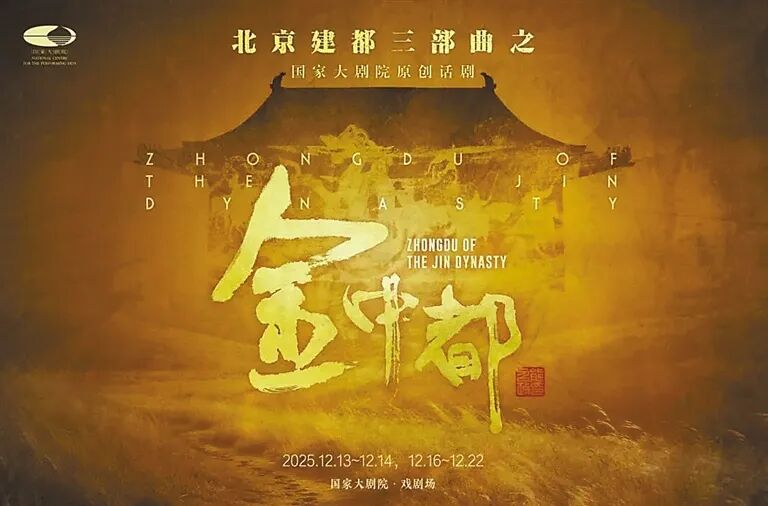
话剧《金中都》演绎“迁都”壮举:“混同华夏”的理想与现实
Xin Lang Cai Jing· 2025-12-20 00:32
Core Viewpoint - The original play "Jin Zhong Du" premiered at the National Centre for the Performing Arts, marking the beginning of the "Beijing Capital Trilogy," which explores the historical significance of the Jin Dynasty's capital relocation to Beijing [1][16]. Historical Context - The play focuses on the historical event of the Jin Dynasty's capital relocation in 1153, led by Emperor Wanyan Liang, who moved the capital from Shangjing to Yanjing (modern-day Beijing) [2][3]. Cultural Significance - "Jin Zhong Du" illustrates the transformation of Beijing from a city to a capital, emphasizing the cultural and ethnic integration during the Jin Dynasty [3][14]. - The play aims to reflect the historical and cultural lineage of Beijing, showcasing its evolution over 3,000 years and 870 years as a capital [3][16]. Dramatic Elements - The play consists of 10 acts, depicting key moments in Wanyan Liang's life, including his ascension to the throne, reforms, and the challenges faced during the capital relocation [8][12]. - The character of Wanyan Liang is portrayed as both a visionary leader and a tyrant, highlighting the complexities of his rule and the historical implications of his decisions [10][12]. Artistic Presentation - The production features meticulous costume and set design, reflecting the cultural fusion between the Jurchen and Han Chinese, and aims to create a visually immersive experience for the audience [13][14]. - The stage design incorporates significant historical symbols and visual elements to convey the grandeur of the capital relocation event [13][14]. Conclusion - "Jin Zhong Du" serves as a cultural artifact that encapsulates the historical narrative of Beijing's rise as a capital, contributing to the understanding of China's multi-ethnic and unified civilization [16].