
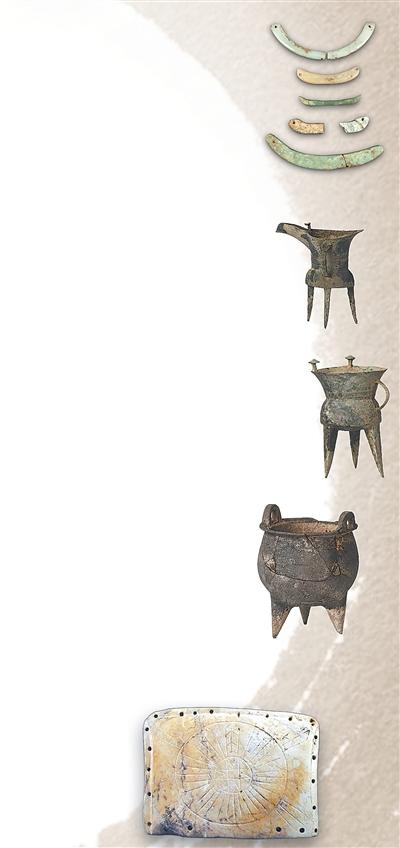
玉璜

Search documents
考古新成果阐释中华文明突出特性(考古中国)
Ren Min Ri Bao· 2026-02-28 00:26
Core Viewpoint - The recent release of archaeological findings in China highlights a significant transformation in the field, moving from discovery-driven research to one that is propelled by advanced technology and theoretical frameworks [4]. Group 1: Archaeological Discoveries - Ten important research results were presented, covering a vast timeline from the early Paleolithic to the Tang Dynasty, utilizing various technological methods such as micro-trace analysis and ancient DNA sequencing [4]. - A study confirmed that 35 wooden tools found at the Yunnan Gantangqing site were made and used by ancient humans approximately 300,000 years ago, challenging previous notions of slow technological development in China's Paleolithic era [5]. - Research on genetic links between Tibetan and South Asian populations indicates that the Red River region was a hub for early migrations and interactions, providing biological evidence for the continuity of the Chinese national community [5]. Group 2: Cultural Evolution and Integration - The study of bronze culture evolution reveals that the so-called "new" bronze forms and techniques during the early Zhou Dynasty were actually continuations of earlier traditions, showcasing the integration of cultures during this period [6]. - Research on the planning of the Lingjiatan site demonstrates the advanced urban planning and social mobilization capabilities of its inhabitants over 5,500 years ago [6]. - Analysis of early bronze artifacts from the Erlitou culture clarifies their characteristics and indicates that the concept of using vessels for rituals was already established, contributing to the rise of central plains dynasties [6]. Group 3: Unification of Civilizations - The research emphasizes the long-term cultural development in the Yellow River basin, illustrating how the central plains became a cultural heart through prolonged interactions and exchanges [7]. - The migration and integration of agricultural and nomadic groups during the Eastern Zhou period contributed to the formation of a unified multi-ethnic state, with physical anthropological data providing evidence for this historical process [7]. - The Qin Dynasty's stone inscriptions confirm the early establishment of a unified state, extending its influence to remote regions over 2,000 years ago [8]. Group 4: Cross-Regional Interactions - The rise of the Sanxingdui civilization was linked to extensive interaction networks with the Central Plains and other regions, highlighting the unique style developed through resource sharing and technological exchange [9]. - The analysis of Tang Dynasty textiles from the Qinghai Dulan Hot Water Tombs reveals their production and trade routes, challenging previous theories about their origins and showcasing the openness of Chinese civilization to the world [9]. - The integration of traditional archaeology with natural sciences and big data is emphasized as essential for future research, aiming to enhance cultural confidence and narrate the story of Chinese civilization [9].

去考古博物馆看年代最早的玉马
Xin Lang Cai Jing· 2026-02-08 08:13
Core Viewpoint - The exhibition "Jade Culture and Chinese Civilization" showcases 155 pieces of precious jade artifacts, highlighting the development of jade culture in China from the Neolithic era to modern times [1] Group 1: Exhibition Overview - The exhibition is held at the China Archaeological Museum and features representative jade artifacts from various historical periods, including the Erlitou culture, Western Zhou, Han tombs, Tang and Song dynasties, and Qing dynasty [1] - The artifacts illustrate the rich history and craftsmanship of jade culture in China, revealing the extraordinary wisdom of artisans throughout the ages [1] Group 2: Thematic Structure - The exhibition is organized into four main chapters: "Jade from the East," "Jade Meets Civilization," "Jade Gifts to the World," and "Jade Enriches China," showcasing the evolution of jade in terms of form, function, and cultural significance [1] - The opening section features the earliest known jade artifacts from the Aohan Xinglonggou site in Inner Mongolia, including jade discs, knives, and pendants [1] Group 3: Notable Artifacts - A notable highlight is the jade horse unearthed from the tomb of Fu Hao in Anyang, Henan, recognized as the earliest known horse representation in China, characterized by its small size and dynamic design [1]
武王墩200多件套文物亮相国博
Xin Lang Cai Jing· 2026-01-01 23:53
Core Viewpoint - The Wuwangdun archaeological exhibition at the National Museum showcases over 200 newly unearthed artifacts, marking the first comprehensive public display of findings from the Wuwangdun tomb, which belongs to the late Warring States period of the Chu state [1][2]. Group 1: Artifacts and Their Significance - The Wuwangdun tomb is identified as the burial site of King Xiong Yuan of the Chu state, with a bronze vessel inscribed with "Chu Wang Zai Qian made a gold vessel for annual offerings," serving as a key piece of evidence for identifying the tomb's owner [1]. - Among the artifacts, the largest bronze ding (cauldron) discovered has set a new record in China's ranking of large dings [1]. - The exhibition features a significant set of nine dings, visually representing the historical Nine Ding system, with two dings showcasing intricate scales and decorative motifs, indicating the cultural context of the late Warring States period [2]. Group 2: Cultural Exchange and Artistry - The Wuwangdun tomb yielded a unique bronze ding with an iron base, notable for its 18-character inscription, which references the "Left Envoy Vehicle (Warehouse)," a term specific to the state of Zhongshan, reflecting the cultural exchanges during the late Warring States period [2]. - The exhibition includes exquisite artifacts such as bronze bells, stone chimes, jade discs, and rare ball-shaped jars, collectively illustrating the ceremonial significance and material achievements of the Chu state [2].
北京:安徽淮南武王墩一号墓考古成果在国博展出
Xin Lang Cai Jing· 2025-12-27 23:51
Core Insights - The exhibition titled "Encountering King Koryo: Archaeological Achievements of the No. 1 Tomb of King Wu Wang Dun" is hosted by the National Museum of China and the Anhui Provincial Government, running for four months starting December 26, 2025 [2]. Group 1 - The exhibition showcases over 200 artifacts unearthed from the No. 1 Tomb of King Wu Wang Dun, divided into four sections: "Sealed Treasures," "Coffin Burials," "Exquisite Chuchan Treasures," and "Belongings of Huaxia" [3]. - Notable items include a bronze ritual vessel set of nine tripods and eight basins, a complete set of bronze bells and stone chimes, exquisite jade discs and pendants, and a painted lacquer wood table adorned with dragon and phoenix motifs, highlighting the scientific excavation process and the cultural significance of the tomb [3]. - The No. 1 Tomb of King Wu Wang Dun is the largest, highest-ranking, and most complex royal tomb of the Chu state from the Eastern Zhou period, providing crucial evidence for studying royal burial systems, cemetery planning, and burial customs from the late Warring States period to the Western Han dynasty [5].
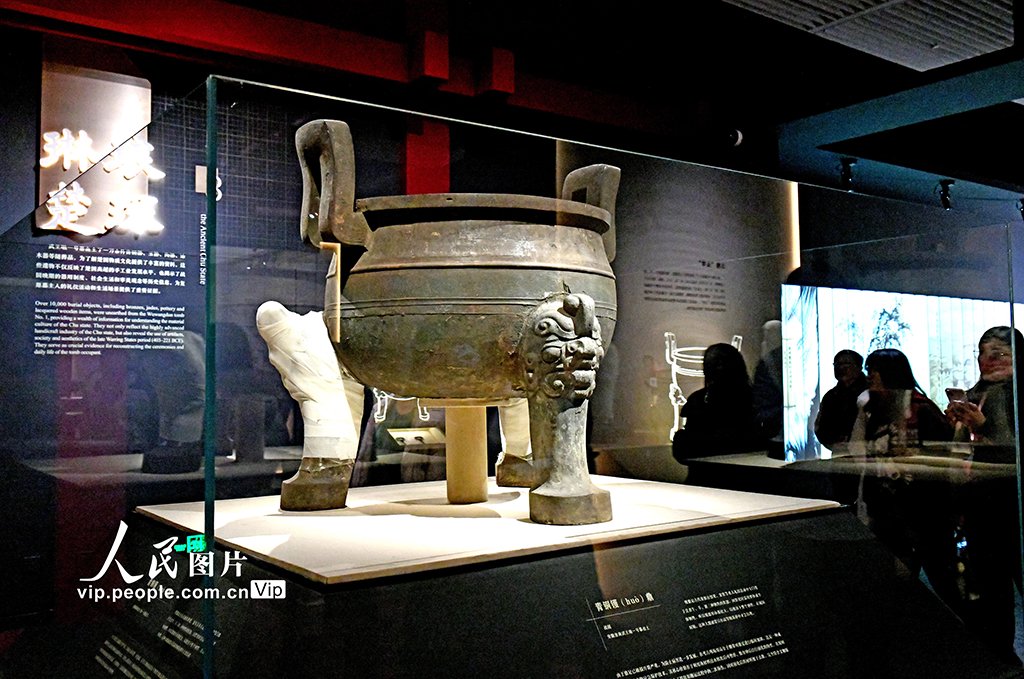
国博重磅大展“遇见考烈王”启幕
Xin Lang Cai Jing· 2025-12-27 07:24
Core Insights - The exhibition "Encountering King Koryo - Archaeological Discoveries from the No. 1 Tomb of King Wu Wang Dun in Huainan, Anhui" opened at the National Museum of China, showcasing the largest and most complex royal tomb of the Chu state from the Warring States period [2] - Over 10,000 precious artifacts have been unearthed from the site between 2020 and 2024, with the exhibition featuring more than 200 selected items [2] - The exhibition is divided into four sections: "Sealed Treasures," "Coffin Inscriptions," "Exquisite Chu Treasures," and "Belonging to Huaxia," highlighting significant bronze ritual vessels and exquisite jade artifacts [2] Group 1 - The No. 1 Tomb of King Wu Wang Dun is recognized as a "cultural treasure trove" of the Chu state, with artifacts that span over a thousand years [2] - The exhibition will last for four months, allowing visitors to engage with the historical artifacts directly [2] - Notable items include a set of bronze ritual vessels, a complete set of bronze bells, and intricately designed jade pieces, showcasing the craftsmanship of the era [2] Group 2 - The tomb also revealed two sets of musical bells, known as "Niu Bells," which are characterized by their decreasing sizes and intricate designs, reflecting the musical culture of the Chu people [3] - A rare spherical bronze urn, believed to have been used for holding fine wine or soup, exemplifies the romantic aesthetic of Chu culture [3] - The exhibition features a painted lacquer wood table adorned with dragon and phoenix motifs, along with a matching lacquer cup, highlighting the unique artistic expression of the Chu civilization [3]
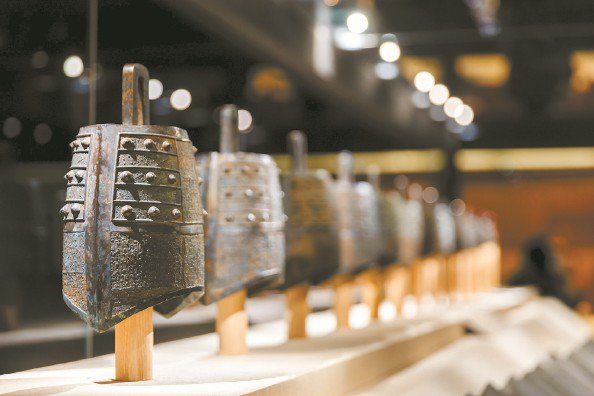
武王墩考古成果展开幕 200多件套文物亮相国博
Yang Shi Wang· 2025-12-26 19:18
Core Viewpoint - The archaeological exhibition of the Wuwangdun site showcases over 200 newly unearthed artifacts, marking the first comprehensive public display of these findings related to the tomb of King Koa of the late Warring States period in the Chu state [1][9]. Group 1: Artifacts and Their Significance - The exhibition features a significant bronze vessel, a bronze zun, inscribed with a key phrase that helps identify the tomb's owner, King Koa [1]. - A notable highlight is a set of nine bronze ding, which visually represents the historical nine ding system, with two pieces exhibiting intricate craftsmanship that reflects the cultural decline of the Chu state [3]. - The largest bronze pot unearthed from the tomb has set a new record in China's ranking of large ding [4]. Group 2: Cultural Insights - The Wuwangdun tomb excavation team leader, Gong Xicheng, noted that the unique design of the bronze ding, characterized by a waist and flat bottom, distinguishes it from round ding, indicating the craftsmanship of the Chu state during its peak [6]. - A bronze vessel with iron feet, inscribed with 18 characters, reveals cultural exchanges during the late Warring States period, as it features elements from the Zhongshan state, indicating a blend of cultures [8]. - The exhibition includes a complete set of bronze bells, exquisite jade artifacts, and rare ceremonial items, collectively illustrating the rich material culture and ceremonial practices of the Chu state [9]. Group 3: Exhibition Details - The exhibition is part of the National Museum's important exhibition plan, aiming to provide an immersive archaeological experience and enhance understanding of Chu culture's role in the broader context of Chinese civilization [11].
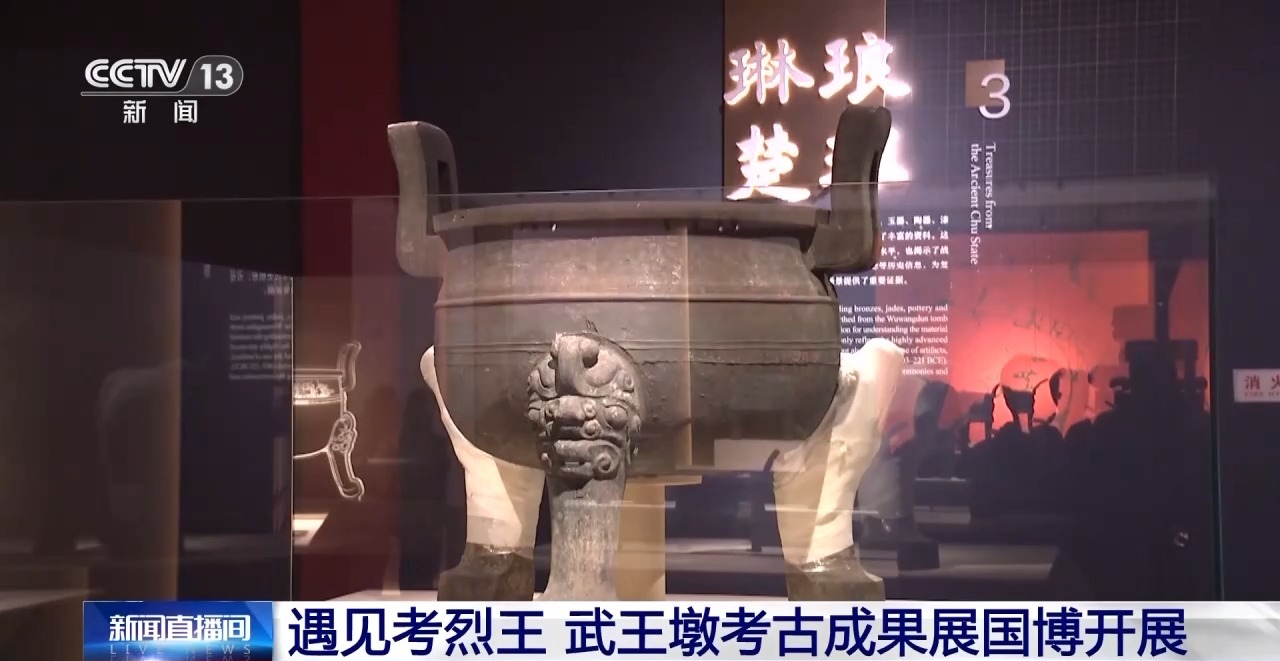
“遇见考烈王——安徽淮南武王墩一号墓考古成果展”国博开展
Xin Lang Cai Jing· 2025-12-26 16:59
Core Viewpoint - The exhibition "Encountering King Koryo - Archaeological Achievements of the No. 1 Tomb of Wuwangdun in Huainan, Anhui" showcases significant archaeological findings from the tomb of King Koryo of the Chu state, providing valuable insights into the material civilization of the late Warring States period in China [1] Group 1: Archaeological Significance - The No. 1 Tomb of Wuwangdun is the largest, highest-ranked, and most complex royal tomb of the Chu state discovered to date, dating back to the Eastern Zhou period [1] - Over 10,000 valuable relics reflecting the material culture of the late Warring States period were unearthed between 2020 and 2024, offering important empirical evidence for studying royal burial systems, cemetery planning, and burial customs from the Chu state to the Western Han period [1] Group 2: Exhibition Details - The exhibition features more than 200 selected artifacts from the No. 1 Tomb of Wuwangdun, organized into four sections: "Sealed Treasures," "Coffin Inscriptions," "Exquisite Chu Treasures," and "Belonging to Huaxia" [1] - Key exhibits include a bronze ritual vessel set of nine tripods and eight basins, a complete set of bronze bells and stone chimes, exquisite jade discs and pendants, and intricately decorated painted wooden tables, showcasing the scientific process of archaeological excavation and the cultural significance of the Chu royal tomb [1]
“沧海桑田”的河姆渡文化:访河姆渡遗址
Jing Ji Guan Cha Bao· 2025-09-30 00:14
Core Insights - The article focuses on the archaeological significance of the Hemudu site, highlighting its discoveries that reshape the understanding of Neolithic culture in the Yangtze River Delta region [9][10][16]. Archaeological Discoveries - The Hemudu site, located in Yuyao, Zhejiang Province, covers an area of 40,000 square meters, with significant findings from two major excavations conducted in 1973 and 1977, revealing a cultural layer approximately 4 meters thick [2][9]. - Notable artifacts include over 150 tons of carbonized rice, which, along with 170 bone farming tools, provides evidence of the earliest rice cultivation in the world [2][9]. - The site features well-preserved stilt houses, showcasing advanced construction techniques, including a 23-meter long house with ventilation and moisture-proofing features [3][14]. Cultural Artifacts - Various pottery types were discovered, including cooking vessels, storage jars, and decorative items, with intricate designs that indicate advanced artistic skills and the domestication of animals [5][6][13]. - The site yielded the earliest jade artifacts in the Yangtze River Delta, characterized by fine craftsmanship and smooth surfaces [6][9]. - Evidence of textile production was found, including wooden and ceramic spinning wheels, indicating a developed textile technology [7][9]. Social Structure - The burial practices at the site suggest social stratification, with some graves containing numerous ceremonial items, while others had minimal offerings, indicating a complex societal structure [8][9]. - The presence of various functional areas within the settlement, such as residential and storage zones, points to an organized community with distinct roles [8][9]. Historical Context - The Hemudu culture dates back approximately 7,000 to 5,000 years, contributing significantly to the understanding of Neolithic civilization in southern China [9][10][20]. - The cultural lineage of Hemudu is believed to be linked to earlier cultures in the region, with recent findings from the Jingtou Mountain site providing insights into its origins [18][19]. Environmental Adaptation - The inhabitants of Hemudu adapted to their coastal environment, utilizing marshlands for rice cultivation and fishing, which led to the development of a prosperous agricultural society [19][20]. - The transition of the Hemudu culture to the Liangzhu culture around 5,000 years ago indicates environmental changes and cultural exchanges in the region [20].
楚玉风华:楚人如何将浪漫与灵动注入玉石|观展
Jing Ji Guan Cha Bao· 2025-05-17 00:47
Group 1 - The article explores the historical significance of jade in early Chinese civilization, highlighting its dual role as a symbol of both divine and royal power [2][12][32] - Jade artifacts from different periods reflect the evolution of cultural practices, transitioning from spiritual communication tools to symbols of social hierarchy [12][32] - The craftsmanship of jade artifacts, such as the intricate designs and techniques used in the production of jade items, showcases the advanced skills of ancient artisans [5][18][24] Group 2 - The article discusses the transformation of jade from ritualistic objects in the Xia and Shang dynasties to more secular and decorative items in the Ming dynasty, indicating a shift in societal values [24][28][32] - Specific jade pieces, like the jade crown and belt buckles from royal tombs, illustrate the intertwining of art, power, and social status in ancient China [25][30][32] - The exhibition at Hubei Provincial Museum serves as a comprehensive showcase of jade artifacts across various dynasties, providing insights into the cultural and historical context of jade in Chinese civilization [33]