新型城镇化战略

Search documents
10个省份城镇化率超70%,这个省城镇人口超9700万→
第一财经· 2025-06-01 02:35
Core Viewpoint - The article discusses the rapid urbanization in China, highlighting the increase in urban population and the urbanization rate across various provinces, with a focus on the implications for economic development and potential investment opportunities in urban areas [1][2][3]. Urbanization Rate by Province - As of the end of 2024, 10 provinces have urbanization rates exceeding 70%, with Shanghai, Beijing, and Tianjin surpassing 85% [2]. - Shanghai's urbanization rate reached 89.46% by the end of 2023, maintaining the highest rate among provinces [2]. - Guangdong, Jiangsu, and Zhejiang have urbanization rates above 75%, with Guangdong at 75.91% and a total urban population of 97.01 million [2][4]. Growth in Urbanization Rates - In 2024, 10 provinces saw an increase in urbanization rates by over 1 percentage point, with 8 located in the central and western regions [4]. - Shanxi's urbanization rate increased by 1.35 percentage points to 66.32%, while Gansu's rate rose by 1.34 percentage points to 56.83% [4]. - The total urban population in six provinces exceeded 50 million, with Guangdong leading at 97.01 million, significantly higher than the second-largest province [4]. Focus on Rural Population and Urbanization Potential - The government has identified regions with high rural populations as key areas for urbanization potential, as outlined in the recent action plan [5]. - The plan emphasizes coordinated development of new industrialization and urbanization, particularly in regions with low urbanization rates but large populations [5]. Migration Trends and Economic Development - Population migration continues towards southeastern coastal areas, but central and western regions are experiencing industrialization and urbanization growth [5]. - Major cities in the central and western regions, such as Wuhan, Chengdu, and Xi'an, are attracting talent and population due to the rapid development of modern industries [5]. Case Study: Anhui Province - Anhui's workforce increased by 29.8% over five years, the highest in the country, indicating strong economic growth [6]. - The city of Hefei saw a population increase of 149,000 in 2024, with a significant portion of this growth coming from migration [6].

因势利导对经济布局进行调整优化
Ren Min Ri Bao· 2025-04-30 22:01
Group 1 - The core viewpoint emphasizes the need for forward-looking adjustments in economic layout in response to international developments and challenges [1][2] - The internal circulation and domestic demand are highlighted as significant advantages for a large economy, with "dual circulation" being the most stable economic layout [2][3] - The importance of maintaining strategic determination and proactive measures in economic management is underscored, focusing on stabilizing employment, enterprises, and market expectations [3][4] Group 2 - The current economic environment is characterized by both strategic opportunities and risks, necessitating a balanced approach to development and security [4] - The need for a modernized national security system and enhanced capabilities to manage risks is emphasized, ensuring that development and safety are mutually reinforcing [4] - The urgency of implementing the "14th Five-Year Plan" goals while planning for the "15th Five-Year Plan" is highlighted, calling for unity and practical efforts in achieving economic and social development [4]
建立实施育儿补贴制度
Bei Jing Qing Nian Bao· 2025-04-29 01:38
Core Viewpoint - The Chinese government is implementing a series of measures to stabilize employment and the economy while promoting high-quality development, focusing on targeted and actionable policies to enhance the sense of gain for enterprises and the public [1][2]. Group 1: Employment Support - Measures include encouraging enterprises to stabilize employment, increasing vocational training, expanding support through labor substitution programs, and enhancing public employment services [2][6]. - A large-scale vocational skills training initiative will be launched, targeting sectors with high recruitment demand and focusing on key groups such as rural laborers and unemployed graduates [6]. Group 2: Foreign Trade Stability - The government plans to enhance support for foreign trade through tailored policies for individual industries and enterprises, helping exporters mitigate risks and encouraging foreign investment [2][3]. - Financial support will be increased, including government funding, credit support from financial institutions, and insurance for domestic trade [3]. Group 3: Domestic Demand Expansion - The potential for expanding domestic demand is significant, with an estimated annual investment demand exceeding 5 trillion yuan for equipment upgrades as the country advances in high-quality development [4]. - A new childcare subsidy system and targeted measures for car purchase quotas in cities with restrictions will be implemented to boost consumption [4]. Group 4: Investment and Infrastructure - The government aims to improve consumption infrastructure and stimulate private investment through new policy financial tools [2][4]. - An estimated 4 trillion yuan investment demand will arise from the need to update and renovate various pipelines over the next five years [4]. Group 5: Skill-Based Compensation - A skill-oriented salary distribution system will be established, guiding enterprises to consider skill levels in wage distribution, thereby incentivizing skilled labor [6]. - The government will implement differentiated subsidy support to better link training with employment and income growth [6].
我国扩大内需有巨大潜力空间 “增收入+促消费+扩投资”做强国内大循环
Yang Shi Wang· 2025-04-28 10:08
Core Viewpoint - China has significant potential for expanding domestic demand, driven by its status as the world's second-largest economy and a population of over 1.4 billion people [1] Group 1: Consumption Potential - The total number of automobiles in China is 353 million, and the ownership of major household appliances exceeds 3 billion units, indicating a substantial annual demand potential in the consumption sector [3] - The investment demand for equipment updates is projected to exceed 5 trillion yuan annually as high-quality development progresses, with the net value of total social equipment assets around 40 trillion yuan [3] - The artificial intelligence industry in China is expected to surpass 700 billion yuan in 2024, maintaining a growth rate of over 20% for several consecutive years, indicating expanding investment opportunities [3] Group 2: Policy Measures for Domestic Demand - The government aims to enhance domestic demand by increasing the income of middle and low-income groups, boosting consumption, and expanding effective investment [4] - A total of 1.6 billion yuan has been allocated for the second batch of consumption subsidies, with an additional 1.4 billion yuan expected to be distributed based on local payment progress [5] - New policies will support the development of the service consumption sector and the elderly care industry, alongside targeted measures for specific consumer groups [5] Group 3: Automotive Sector Initiatives - The Ministry of Commerce is focusing on automotive consumption reform, including the promotion of vehicle trade and the optimization of purchase restrictions to meet consumer demand [6] - The implementation of the vehicle trade-in policy has reportedly stimulated consumption by over 720 billion yuan, benefiting numerous foreign trade and investment enterprises [7] - More than 120 million individuals have received direct subsidies from the trade-in policy, promoting the adoption of smart, green, and fashionable consumer products [7]
全省人口第一大市!2024年广州常住人口1897.8万人
Nan Fang Du Shi Bao· 2025-03-27 11:12
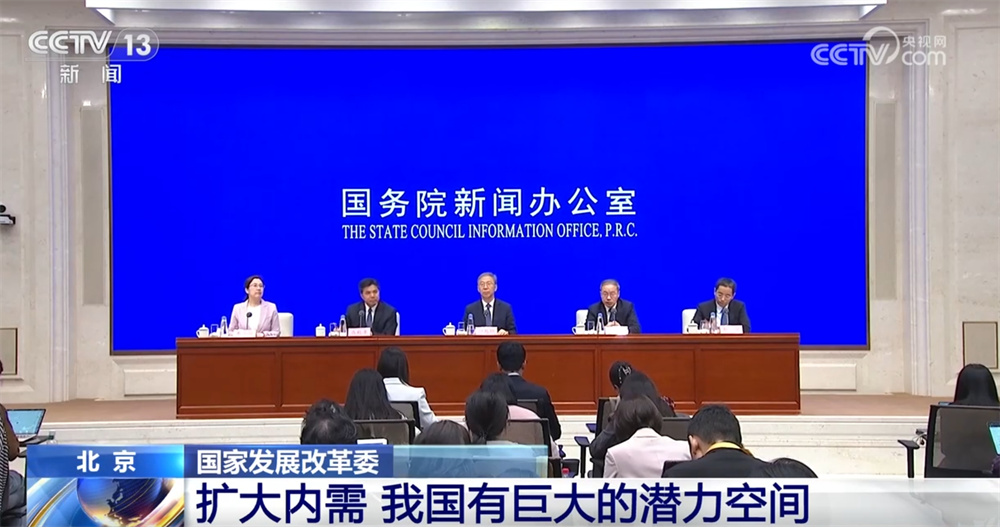
Core Insights - Guangzhou's permanent resident population reached 18.978 million by the end of 2024, an increase of 151,000 people or 0.8% from the previous year, maintaining its position as the largest city in the province by population [1] - The urbanization rate for Guangzhou's permanent population is 87.24%, reflecting a 0.48 percentage point increase from the previous year [5] - The registered population in Guangzhou reached 10.7502 million by the end of 2024, with an increase of 184,100 people or 1.74% year-on-year [4] Population Distribution - The population distribution across various districts in Guangzhou shows significant urbanization, with districts like Liwan, Yuexiu, Haizhu, and Tianhe achieving a 100% urbanization rate [2] - Baiyun District has a registered population of 1.36956 million with an urbanization rate of 81.85%, while Conghua District has the lowest urbanization rate at 39.62% [3] Population Growth Drivers - The growth in registered population is primarily driven by migration, with 165,200 people moving into the city, contributing 67.7% to the population increase [4] - Natural population growth also plays a role, with 114,300 births recorded in 2024, contributing 32.3% to the increase in registered population [5] Urbanization Strategy - Guangzhou is implementing a five-year action plan to enhance urbanization, aiming to improve public services for the permanent population and facilitate the integration of rural migrants into urban life [5] - The gap between the urbanization rates of registered and permanent populations has narrowed to 3.93 percentage points, indicating progress in urbanization efforts [5]

新型城镇化系列之区域一体化篇:区域一体化的主线思路、建设进展及未来机遇
Zhao Shang Yin Hang· 2025-03-14 14:56
Investment Rating - The report does not explicitly state an investment rating for the industry Core Insights - The report emphasizes that regional integration is a key trend in optimizing urban spatial structures and is a driving force for regional economic development in China. It highlights the importance of accelerating regional integration as part of the new urbanization strategy [21][22]. Summary by Sections 1. Regional Integration Enters a New Stage - The report notes that the collaborative development of large, medium, and small cities has made progress, but there is still a gap in achieving deep integration. The urban development is characterized by a dual challenge of rapid expansion of large cities and insufficient development momentum in small cities [22][31]. - The focus is on modern urban agglomeration construction as a critical breakthrough for advancing regional integration [23][29]. 2. Progress and Trends in Major Urban Agglomerations - **Infrastructure**: The report states that infrastructure integration is a primary task, with significant improvements in transportation, energy, and communication networks. The average road network density in cities reached 19.7 square meters per person in 2023 [46][47]. - **Industrial Development**: Urban agglomerations are experiencing a layer-based diffusion of industries, with a clear trend of industrial gradient transfer from central cities to surrounding areas. The report highlights the strong momentum for building modern industrial clusters [60][63]. - **Ecological Environment**: The report indicates that ecological governance has improved, with urban agglomerations achieving a 100% waste treatment rate and a 98.84% sewage treatment rate by 2023 [71][74]. - **Market Elements**: The integration of market elements is still in the exploratory stage, with a focus on optimizing the flow of capital, technology, and labor within urban agglomerations [83][89]. - **Public Services**: The report notes that while public service capabilities are improving, there are still structural mismatches that need to be addressed, particularly in education, healthcare, and elderly care services [38][45]. 3. Key Driving Paths and Opportunities - The report identifies that the next five years will likely see breakthroughs in regional integration, driven by major projects, mechanisms, and platforms [4][5].
【招银研究|区域深度】新型城镇化系列之区域一体化篇——区域一体化的主线思路、建设进展及未来机遇
招商银行研究· 2025-03-12 09:43
Core Viewpoint - The article emphasizes the importance of accelerating regional integration as a key component of China's new urbanization strategy, highlighting the need for collaborative development among large, medium, and small cities to achieve deeper integration [1][3]. Group 1: Regional Integration Progress - Regional integration in China has entered a new stage, with significant achievements in collaborative development among cities, yet still facing challenges in achieving deep integration [1][5]. - The focus is on modern urban agglomeration construction as a breakthrough point, emphasizing the transformation of large cities and the acceleration of small cities [5][9]. - The article outlines five dimensions for promoting integration: infrastructure, industrial development, ecological protection, market factors, and public services, driven by both "hard connectivity" and "soft connectivity" [1][13][14]. Group 2: Urban Agglomeration Development - Different urban agglomerations show varying progress in integration, with strong efforts in infrastructure and industrial collaboration, while market factors and public services lag behind [2][15]. - Infrastructure integration has made early progress, with transportation and livelihood systems improving, but there is still significant room for enhancement, particularly in new infrastructure [2][16]. - Industrial development is characterized by a layer-circular diffusion pattern, with a clear trend of industrial gradient transfer from core cities to surrounding areas [2][25]. Group 3: Ecological and Environmental Protection - Urban agglomerations are actively implementing green development concepts, achieving significant improvements in ecological governance, with waste treatment rates reaching 100% and sewage treatment rates at 98.84% [2][32]. - However, challenges remain, particularly in air quality, with many cities exceeding the WHO's PM2.5 guidelines [2][33]. - Collaborative environmental governance across administrative regions is becoming a primary focus, with initiatives in key areas like the Yangtze River Delta and Beijing-Tianjin-Hebei [2][36]. Group 4: Market Factors and Public Services - The integration of market factors is still in its early exploratory stage, with barriers to the flow of resources and uneven distribution of public services across urban agglomerations [2][38][49]. - Public service integration is improving, with increased capacity in healthcare and education, but structural mismatches remain, particularly in densely populated areas [2][42][49]. - The article highlights the need for further focus on urgent public service demands, particularly in education, healthcare, and elderly care, to address existing gaps [2][50]. Group 5: Future Opportunities - The next five years are expected to see breakthroughs in regional integration, driven by major projects, mechanisms, and platforms [2][51]. - Major projects will continue to be a key focus, with significant investments in municipal infrastructure expected to exceed 8.1 trillion yuan from 2019 to 2023 [2][52]. - The establishment of smart governance systems and cross-regional collaboration mechanisms will be crucial for enhancing urban agglomeration integration [2][53].