本土化策略

Search documents
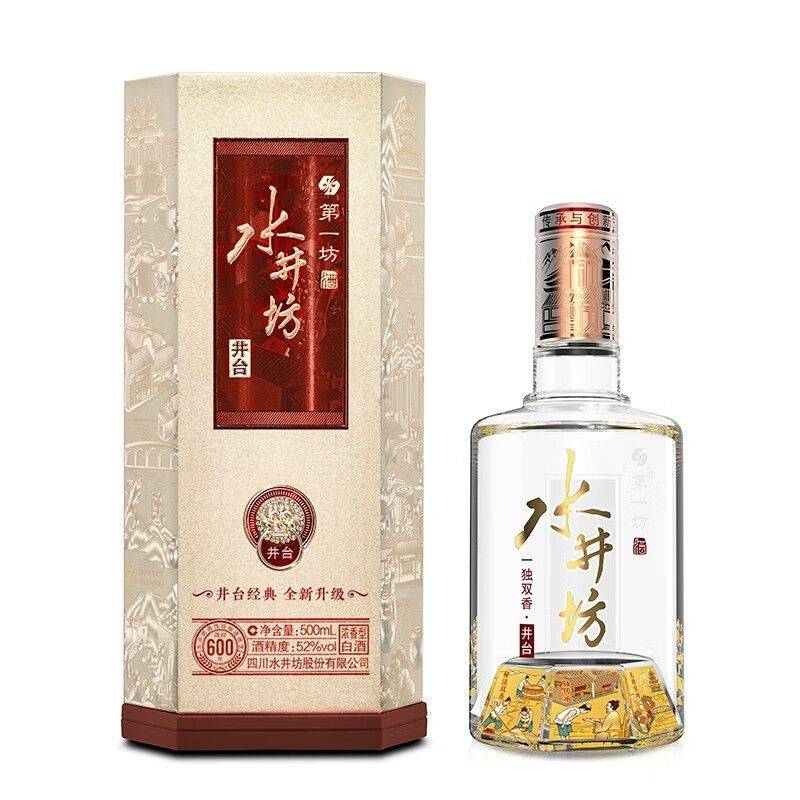
帝亚吉欧CEO闪电离职,水井坊换帅背后藏着中国市场困局
Sou Hu Cai Jing· 2025-07-18 03:44
Core Viewpoint - The sudden leadership change at Diageo has triggered significant market reactions, prompting the company to expedite the search for a new CEO to stabilize potential market volatility [1][9]. Group 1: Leadership Changes - Diageo is currently seeking a new CEO following the unexpected departure of Debra Crew, who led the company since 2020 and implemented several strategic initiatives [3][9]. - Water Margin Group, a key player in Diageo's China strategy, has also undergone significant personnel changes, with Sudhindra Shivnegere Rajarao replacing Cristina Samin Suner as chairman and general manager [3][7]. Group 2: Financial Performance - Diageo's Q3 FY2025 report shows an organic sales growth of 5.9%, reaching $4.376 billion, indicating overall stable growth [6]. - However, regional performance reveals a stark contrast, with North America growing at 6.2%, Latin America and the Caribbean at 28.5%, while the Asia-Pacific region only saw a 1.6% increase, primarily due to weak performance in China and Southeast Asia [6][7]. Group 3: Strategic Implications - The leadership changes at both the group and regional levels are seen as a response to immediate market pressures and a proactive shift in global strategic planning for the next five years [9]. - The new leadership at Water Margin Group is expected to implement a more aggressive localization strategy to address the current growth challenges in the Chinese market [7][9]. - The appointment of Bence Bokor, who specializes in digital marketing and channel innovation, may be crucial for engaging younger consumer demographics [7].


OEXN外汇:品牌国际化进程下的区域市场拓展
Sou Hu Cai Jing· 2025-07-17 05:41
Core Insights - OEXN Forex is actively advancing its brand internationalization process to achieve broader market coverage in the context of increasing globalization trends [1] - The company focuses on regional differentiation and localization as core strategies to enhance competitiveness and market penetration [9] - Effective implementation of localization strategies significantly improves brand recognition and consumer trust in target markets [11] Group 1: Global Market Strategy - OEXN Forex's global market strategy emphasizes the importance of cultural differences and legal compliance, requiring flexible strategy formulation in different markets [10] - The company integrates resources and optimizes operational models to ensure sustainable business development across various markets [9] - The international regulatory environment and the development of regional partnerships have a profound impact on OEXN Forex's market expansion [13] Group 2: Localization and Brand Impact - The effective implementation of localization strategies enhances brand recognition and trust among consumers by deeply understanding and integrating into local cultures [11] - OEXN Forex's localization efforts not only promote market share growth but also strengthen the brand's global competitiveness [11] Group 3: Technological Innovation and Service Optimization - OEXN Forex continuously drives the smart and automated transformation of its trading platform to enhance user experience and trading efficiency [12] - The introduction of advanced data analysis tools and artificial intelligence optimizes risk management and customer service processes [12] Group 4: Regulatory Environment and Partnerships - The complexity and variability of the international regulatory environment play a crucial role in shaping the strategies for regional market expansion [13] - Establishing and developing regional partnerships is key to effectively adapting to the unique demands and cultural differences of regional markets [14] Group 5: Competitive Pricing and Brand Awareness - To maintain price advantages in international competition, OEXN Forex optimizes supply chain management and leverages economies of scale [15] - Enhancing brand awareness globally involves precise market positioning, digital marketing, and participation in international financial forums [16] Group 6: Cultural Adaptation Strategies - The company must adopt flexible and thoughtful strategies to address cultural differences in various countries, including thorough market research and local partnerships [17] - Adjusting marketing messages and channels to fit local cultures and consumer preferences is essential for successful global market promotion [17] Conclusion - The success of the global market strategy relies on effectively combining regional differentiation and localization strategies to optimize resource allocation and operational models [18] - By adhering to local financial regulations and employing localization strategies alongside technological innovations, OEXN Forex enhances its market competitiveness and consumer engagement [18]

盲目自信害惨中国老板!中国企业出海6大雷区曝光
Feng Huang Wang Cai Jing· 2025-06-30 09:50
Core Insights - The "2025 China Enterprises Going Global Summit" was held in Shenzhen, focusing on creating a high-end platform for Chinese companies to address challenges in international expansion amidst global industrial chain restructuring [1] - Key obstacles identified for Chinese companies going global include insufficient compliance awareness, weak localization preparation, geopolitical risks, and irrational competition [3][4][6][8] Compliance Awareness - Many companies have a significant lack of understanding regarding the value of compliance systems, which can lead to substantial legal risks [4] - A case was shared where an investment of $100,000 in compliance helped avoid potential litigation risks amounting to $1 million [4] Localization Preparation - Companies often inadequately prepare for international markets, mistakenly believing that domestic success can be replicated abroad [6] - There are frequent instances where projects fail due to the application of domestic models in foreign contexts [6] Blind Confidence - Some Chinese entrepreneurs exhibit blind confidence when entering foreign markets, underestimating their complexities and believing that financial resources can solve all issues [8] - This attitude can lead to poor decision-making and is often not well-received in international markets [8] Irrational Competition - The practice of aggressive price competition among Chinese companies abroad is damaging profit margins and creating negative perceptions among local regulators and consumers [8] - Companies are encouraged to focus on research and development rather than price wars, as sustainable success lies in innovation [8] Strategic Misalignment - Traditional approaches to international expansion often overlook the need for localized branding strategies and fail to assess actual local market demands [10] - Some companies have faced backlash for not contributing to local economies while relying solely on domestic resources [10] Market and Geopolitical Risks - Emerging markets present significant risks, including currency fluctuations, political instability, and safety concerns for employees [11] Solutions for Overcoming Challenges - Experts recommend a "three-step compliance method" for companies to follow, which includes legal research, comprehensive due diligence, and ongoing compliance adjustments [12] - Collaboration with local partners and innovative business models are suggested as effective strategies for navigating international markets [12][14] - Emphasis is placed on understanding and meeting local needs through tailored products, as demonstrated by a successful case in Africa [14] Recommendations for SMEs - Small and medium enterprises are advised to leverage partnerships with larger state-owned enterprises to enhance their international presence [14] - Finding reliable local partners and integrating domestic solutions with international strategies can help mitigate risks during expansion [14]

“AK保镖开路,遍地是黄金,也遍地是坑”中国CEO亲述风扇出海非洲
Feng Huang Wang Cai Jing· 2025-06-27 06:53
Core Insights - The company, Ainia Electronics, has successfully penetrated the African market with its solar-powered energy-saving fans, achieving annual sales exceeding 100 million yuan over ten years, despite initial challenges [1][6][17] Market Environment - The African market is characterized by extreme conditions, including high temperatures and security risks, necessitating the use of armed security for business operations [2][5] - Local economic conditions are challenging, with an average monthly salary of 200 yuan, making the 300 yuan fans a significant investment for consumers [6] Product Offering - The solar-powered fans are designed for efficiency, capable of charging quickly and providing long usage times, which appeals to cost-conscious consumers [6] - The company offers a two-year warranty on its products, which is a competitive advantage over local brands that typically do not provide such guarantees [6] Operational Challenges - After-sales service presents significant difficulties due to logistical challenges and high costs associated with local operations [7][8] - The company has implemented strategies to improve after-sales support by training local personnel [9] Financial Risks - Currency devaluation poses a substantial risk, with the Nigerian Naira depreciating by four to five times, leading to potential financial losses if investments are not managed carefully [10] - The company has explored strategies to mitigate currency risks, such as bartering and direct currency exchanges to avoid losses associated with currency conversion [11] Cultural Insights - Local work habits include strict adherence to work hours, with employees not willing to work overtime, which can impact project timelines [14] - The local dining customs also differ, with many clients not taking lunch breaks, affecting meeting schedules [16] Entrepreneurial Insights - The CEO emphasizes the high risks associated with entrepreneurship, noting that only 1 in 100 startups may succeed, highlighting the importance of having a diverse skill set [17] - The company operates with a flexible work schedule, often extending beyond typical business hours to meet operational demands [18]
原小鹏联创发布智能电动摩托,获数千万美元融资|早期项目
3 6 Ke· 2025-06-27 01:03
Core Insights - OMOWAY, a smart electric motorcycle brand, has completed a multi-million dollar seed and angel round financing, with funds aimed at mass production and ongoing technological development [1][3] - The company was founded in 2024 by former Xiaopeng Motors executives and plans to launch its first mass-produced model in Indonesia by 2026 [1][3] Company Overview - OMOWAY was established by He Tao and Qiao Qingchun, with a team that includes former key personnel from Xiaopeng Motors and VIVO [1][3] - The company has set up two headquarters in Guangzhou, China, for product development, and Jakarta, Indonesia, for production and sales [5] Market Opportunity - Indonesia is the third-largest motorcycle market globally, with over 120 million motorcycles and an expected sales volume exceeding 6.3 million units by 2024 [3][4] - The electric two-wheeler industry in Indonesia is maturing, with a projected growth of nearly 400% in electric motorcycle sales due to government policies promoting electric vehicles [3][4] Product Features - The OMO X model features the HALO intelligent development architecture, which includes advanced driving assistance systems such as adaptive cruise control and collision avoidance [5] - The design allows for three riding modes: pedal, cross-ride, and travel, catering to various user needs [5] Strategic Focus - OMOWAY's strategy emphasizes local market adaptation and leveraging automotive supply chain expertise to enhance product quality and cost control [4][5] - The company aims to expand globally, with Indonesia as the starting point for its high-tech product offerings [5]

Labubu,全球年轻人疯抢的“中国奢侈品挂件”
创业邦· 2025-06-02 09:45
Core Viewpoint - The article discusses the rapid rise of Labubu, a character from the THE MONSTERS series, as a new cultural phenomenon and potential global IP, drawing comparisons to Hello Kitty and highlighting its success in various markets, particularly in North America and Europe [9][19][20]. Group 1: Market Performance - Labubu has gained immense popularity, with sales in the U.S. and Europe increasing approximately 8 times and 5 times year-over-year, respectively [18]. - The Labubu 3.0 series achieved a remarkable sales figure of $1.5 million (approximately 10.78 million yuan) in just 8 hours during a TikTok Shop live stream [14]. - In April 2024, the POPMART US SHOP reached monthly sales of $6-7 million (approximately 43-50 million yuan), becoming the top seller on TikTok Shop in the U.S. [15]. Group 2: Cultural Impact - Labubu has been embraced as a "social currency," with limited editions being resold at prices up to five times their original value [4]. - The character's unique design, which breaks traditional cute toy stereotypes, resonates with younger consumers, leading to a viral trend of customization and personal expression [22][31]. - Labubu's association with celebrities like Lisa from BLACKPINK and Rihanna has significantly boosted its visibility and desirability in the fashion world [25][27]. Group 3: Brand Strategy - The success of Labubu is attributed to effective marketing strategies, including localized approaches and collaborations with well-known IPs like Disney and Harry Potter [48][52]. - The character has been given a personality and backstory, enhancing its relatability and emotional connection with consumers [46]. - POPMART's global expansion strategy has led to a significant increase in overseas revenue, with a reported 379.6% growth in 2024 [54][57]. Group 4: Future Prospects - Morgan Stanley predicts that Labubu's sales could grow from 3 billion yuan in 2024 to 14 billion yuan by 2027, indicating its potential as a major global IP [19]. - The company aims to achieve 50% of its sales from overseas markets, with a target of surpassing 10 billion yuan in international sales by 2025 [57][58]. - The ongoing challenges in supply chain management and the presence of counterfeit products pose risks that the brand must navigate to maintain its market position [58].


阿迪达斯在中国,缓过来了?
虎嗅APP· 2025-03-09 02:42
Core Viewpoint - Adidas has successfully turned around its performance in the Chinese market, achieving double-digit growth in revenue for 2024, driven by a localized strategy and increased consumer engagement [1][2]. Group 1: Financial Performance - In 2024, Adidas reported global revenue of €23.68 billion, with the Greater China region contributing €3.46 billion, reflecting a 10.3% year-over-year increase [1]. - The fourth quarter of 2024 saw Greater China revenue reach €794 million, marking a 16.1% increase compared to the previous year [1]. - Adidas expects operating profit to rise to between €1.7 billion and €1.8 billion by 2025, excluding any revenue from the YEEZY line [1]. Group 2: Market Challenges and Recovery - From 2022, Adidas faced significant challenges, including a decline in revenue due to competition from local brands like Anta and a failure to adapt to changing consumer demands [1][2]. - The company experienced a severe inventory backlog and disruptions in sales channels, particularly after ending its collaboration with the YEEZY brand [2][6]. Group 3: Product Strategy and Innovation - In 2024, footwear accounted for over half of Adidas's revenue, with a 17% year-over-year increase when excluding currency effects [5]. - The Samba shoe line saw a remarkable 300% increase in sales, becoming a new revenue driver, while the YEEZY line's sales were significantly reduced [5][6]. - Adidas launched the "Adidas Essentials" line, which became one of the fastest-growing product lines, and increased the proportion of locally designed products in China to over 80% [6]. Group 4: Strategic Changes and Future Outlook - The new CEO, Bjørn Gulden, has emphasized the importance of direct-to-consumer (DTC) strategies while also strengthening relationships with wholesale partners, resulting in a 14% growth in wholesale channels and an 11% growth in DTC channels in 2024 [8][9]. - Adidas is focusing on expanding its presence in traditional sports like football and athletics while also investing in emerging sports and niche markets [10]. - The company aims to enhance brand visibility and health through innovative product lines and localized strategies, despite potential challenges in 2025 due to a lack of major sports events [10].