核能复兴

Search documents
机械设备:华龙、玲龙领衔参展,小堆技术引全球瞩目
Huafu Securities· 2025-11-09 06:37
Investment Rating - The industry rating is "Outperform the Market" indicating that the overall return of the industry is expected to exceed the market benchmark index by more than 5% in the next 6 months [14]. Core Insights - The global nuclear energy sector is experiencing a revival, with significant interest in small modular reactors (SMRs) as a key solution for meeting the growing energy demands of artificial intelligence [4][5]. - China National Nuclear Corporation (CNNC) showcased its full industry chain capabilities at the 2025 World Nuclear Energy Exhibition (WNE), highlighting technologies such as "Hualong One" and "Linglong One," which have attracted global attention [3]. - The collaboration between CNNC and international partners, including Electricité de France, emphasizes the importance of SMR technology in promoting diversified applications of nuclear energy [4]. Summary by Sections Industry Overview - The report discusses the advancements in nuclear energy, particularly focusing on the development and application of small modular reactors (SMRs) [4][5]. - The exhibition highlighted CNNC's progress in small reactor construction, which has garnered interest from global corporate executives and institutional representatives [3]. Key Companies to Watch - **Jingye Intelligent**: Collaborating with Zhejiang University to establish a joint R&D center for micro-reactor/SMR technology, showing significant growth potential in the context of global AI demand and energy transition [6]. - **Jia Electric**: The main helium fan is the only power device for the primary loop of fourth-generation high-temperature gas-cooled reactors, with its subsidiary leading in nuclear pump products [6]. - **Guoguang Electric**: Key components for the ITER project, focusing on filter and cladding systems [6]. - **Lanshi Heavy Industry**: Covers upstream nuclear fuel systems, midstream nuclear power plant equipment, and downstream spent fuel processing [6]. - **Kexin Electromechanical**: Manufacturing high-temperature gas-cooled reactor products, with new fuel transport containers replacing imports [6]. - **Hailu Heavy Industry**: Services various reactor types, including third and fourth-generation reactors and thermonuclear fusion reactors (ITER) [6]. - **Jiangsu Shentong**: Secured over 90% of orders for nuclear-grade butterfly valves and ball valves for new nuclear power projects in China [6].


Mirion Technologies(MIR) - 2025 Q3 - Earnings Call Transcript
2025-10-29 16:00
Financial Data and Key Metrics Changes - Third quarter revenue totaled $223 million, an increase of nearly 8% from the previous year, with organic revenue growth of 4.7% [5][17] - Adjusted EBITDA for the quarter was $52.4 million, up 14.7% year-over-year, with margin expansion contributing to the increase [6][18] - Adjusted free cash flow for the third quarter was $18 million, contributing to a year-to-date total of $53 million, with an increase in the low end of adjusted free cash flow guidance to between $100 million and $115 million for 2025 [6][22] Business Line Data and Key Metrics Changes - The nuclear and safety segment revenue grew 9% to $144.6 million, with organic growth of 4.4% driven by nuclear power end market growth of 9% [20] - The medical segment revenue totaled $78.5 million, up 5.9%, with organic revenue growth of 5.2% [21] - Adjusted orders in the nuclear power end market grew 21%, reflecting strong demand across new builds, SMRs, and the installed base [8][14] Market Data and Key Metrics Changes - Year-to-date orders in the U.S. nuclear power end market increased by 44%, primarily due to SMR activity [14] - The global nuclear fleet's average capacity factor reached 83% in 2024, indicating potential for increased operational efficiency [9] - The IAEA has raised its nuclear capacity forecast, expecting nearly a terawatt of nuclear capacity by 2050 [9] Company Strategy and Development Direction - The company is focused on broadening its nuclear power portfolio through acquisitions, including the recent Paragon Energy Solutions deal [5][11] - The strategy includes enhancing software solutions for regulatory compliance and expanding product offerings in the nuclear power sector [11] - The company remains optimistic about the nuclear renaissance and its positioning to benefit from it [5][9] Management's Comments on Operating Environment and Future Outlook - Management expressed confidence in the nuclear power market's growth, citing strong order flow and government support for new projects [28][30] - The medical segment is expected to normalize despite current pressures, with continued demand driven by demographic trends and cancer care needs [31][32] - Management anticipates a rebound in the RTQA business as funding dynamics stabilize [32] Other Important Information - The company expects a blended cost of debt of 2.8% by year-end 2025, reflecting a significant improvement over the past year [6] - Adjusted EPS for the third quarter was $0.12, a 50% increase compared to the same quarter last year [18] Q&A Session Summary Question: Regarding the commercial nuclear backlog and project activity - Management indicated that the installed base and new utility scale builds are key drivers for future growth, with expectations for a growing nuclear power-related backlog [25][27] Question: Insights on the medical business amidst current pressures - Management remains optimistic about the medical business, citing strong demand drivers and expecting a return to trend as market conditions normalize [31][32] Question: Confidence in the $175 million pipeline and potential awards - Management expressed confidence in the pipeline, noting that timing for large opportunities can be unpredictable but remains optimistic about winning contracts [36][37] Question: Discussion on SMR opportunities and project pipeline - Management highlighted the expanding SMR project landscape and the importance of government support in accelerating project development [39][54] Question: Impact of larger one-time orders on margin profiles - Management confirmed a commitment to maintaining a 30% adjusted EBITDA margin target, with expectations that new builds may have lower margins compared to installed base work [71]

全线大涨!美国突传大消息!
天天基金网· 2025-10-29 01:13
Core Viewpoint - The article discusses significant developments in the nuclear power sector in the United States, driven by the increasing electricity demand from artificial intelligence (AI) and the strategic partnerships formed between the government and private companies to enhance nuclear energy production [3][5][10]. Group 1: Government Actions and Agreements - The U.S. government has signed an $80 billion agreement with Westinghouse Electric Company to build nuclear reactors to meet the growing electricity demand from AI [5][10]. - This partnership involves Brookfield Asset Management and Canadian uranium producer Cameco Corp, which recently acquired Westinghouse for approximately $7.9 billion [5][6]. - The plan aims to solidify the U.S. position as a nuclear power leader and increase the global export of Westinghouse nuclear technology [7][8]. Group 2: Job Creation and Economic Impact - Each AP1000 nuclear power plant with two units is expected to create or maintain 45,000 manufacturing and engineering jobs across 43 states, with over 100,000 construction jobs nationwide [6][8]. - The initiative is part of a broader strategy to revitalize the nuclear energy sector, which includes regulatory reforms and increased investment in nuclear technology [8]. Group 3: Corporate Involvement and Projects - Major tech companies like Google and Microsoft are entering agreements to restart closed nuclear power plants to meet their energy needs for AI data centers [10][11]. - Google has signed a 25-year power purchase agreement with NextEra to restart the Duane Arnold Energy Center in Iowa, with a projected cost exceeding $1.6 billion and expected to begin operations in 2029 [10][11]. - Microsoft has also reached a similar agreement to restart the Three Mile Island nuclear plant in Pennsylvania, highlighting a trend of tech companies opting to revive existing facilities rather than building new ones [11]. Group 4: Safety Concerns and Criticism - Critics caution that efforts to restart decommissioned nuclear plants must adhere to strict regulatory standards, emphasizing the need for careful consideration of safety, especially for aging reactors [12]. - Concerns have been raised regarding the Duane Arnold plant, which suffered significant damage during a storm and shares design similarities with the Fukushima reactor that experienced a meltdown in 2011 [12].


深夜全线大涨,美国突传大消息
Zheng Quan Shi Bao· 2025-10-28 23:58
Core Viewpoint - The U.S. government has signed an $80 billion agreement with Westinghouse to build nuclear reactors to meet the growing electricity demand driven by artificial intelligence, leading to a surge in nuclear power stocks [1][3][4]. Group 1: U.S. Nuclear Power Developments - The U.S. government has partnered with Westinghouse, Cameco Corp, and Brookfield Asset Management to accelerate nuclear power deployment, with plans to construct reactors worth at least $80 billion [3][4]. - Each AP1000 nuclear power plant, equipped with two units, is expected to create or maintain 45,000 manufacturing and engineering jobs across 43 states, with over 100,000 construction jobs nationwide [3][4]. - The initiative aims to solidify the U.S. position as a nuclear power leader and enhance the global export of Westinghouse nuclear technology [4]. Group 2: Technology Companies' Involvement - Google has reached an agreement with NextEra to restart the Duane Arnold Energy Center in Iowa, which has been closed for five years, to address the electricity demand from AI [7][8]. - The Duane Arnold plant, with a capacity of 615 megawatts, is expected to have a restart cost exceeding $1.6 billion and is planned to begin supplying power in 2029 [7][8]. - Microsoft has also partnered with Constellation Energy to restart the Three Mile Island nuclear plant in Pennsylvania, indicating a trend among tech companies to collaborate with nuclear firms to revive old reactors rather than waiting for new technologies [7][8]. Group 3: Regulatory and Safety Considerations - The Trump administration is expected to assist Westinghouse in obtaining land and permits for reactor construction, potentially providing loan guarantees [4][5]. - Concerns have been raised regarding the safety of restarting older reactors, particularly the Duane Arnold plant, which suffered significant damage from a storm in 2020 [9]. - Analysts suggest that reviving idle nuclear plants is more cost-effective and quicker than building new facilities from scratch, although critics emphasize the need for strict regulatory compliance [8][9].
深夜,全线大涨!美国,突传大消息!
Zheng Quan Shi Bao Wang· 2025-10-28 23:48
Core Insights - The U.S. government has signed an $80 billion agreement with Westinghouse to build nuclear reactors to meet the increasing electricity demand driven by artificial intelligence [1][2] - Major U.S. tech companies, including Google and Microsoft, are collaborating with energy firms to restart closed nuclear power plants to address the surge in electricity needs [5][6] Group 1: U.S. Nuclear Power Developments - The agreement with Westinghouse involves partnerships with Brookfield Asset Management and Cameco Corp, aiming to accelerate nuclear power deployment across the U.S. [2][3] - Each AP1000 nuclear power plant, equipped with two units, is expected to create or maintain 45,000 manufacturing and engineering jobs across 43 states, with over 100,000 construction jobs nationwide [2][4] Group 2: Tech Companies' Involvement - Google has partnered with NextEra to restart the Duane Arnold Energy Center in Iowa, which has been closed for five years, under a 25-year power purchase agreement [5][6] - Microsoft has also reached a similar agreement with Constellation Energy to restart the Three Mile Island nuclear plant in Pennsylvania [5][6] Group 3: Economic and Employment Impact - The restart of idle nuclear plants is viewed as more cost-effective and quicker than building new facilities from scratch, which is why tech companies are opting for this approach [6] - The Duane Arnold plant's restart is projected to cost over $1.6 billion and is expected to begin supplying power in 2029 [5][6]
深夜,全线大涨!美国,突传大消息!
券商中国· 2025-10-28 23:33
Core Viewpoint - The article highlights significant developments in the U.S. nuclear power sector, driven by the increasing electricity demand from artificial intelligence (AI) and the strategic partnerships formed between the government and private companies to enhance nuclear energy production [1][2]. Group 1: U.S. Government Actions - The U.S. government signed an $80 billion agreement with Westinghouse Electric Company to construct nuclear reactors to meet the growing electricity demand from AI [1][2]. - This partnership involves Brookfield Asset Management and Canadian uranium producer Cameco Corp, aiming to accelerate nuclear power deployment across the U.S. [2]. - The initiative is expected to create or maintain 45,000 manufacturing and engineering jobs across 43 states, with over 100,000 construction jobs nationwide [2]. Group 2: Nuclear Stock Market Reaction - Following the announcement, U.S. nuclear stocks surged, with Cameco Corp experiencing a peak increase of over 27% during trading [2]. - Other companies like Energy Fuels and Uranium Energy also saw significant gains, reflecting investor optimism regarding the nuclear sector's future [2]. Group 3: Technology Companies' Involvement - Major tech companies are also taking steps to address the clean energy needs for AI data centers, with Google partnering with NextEra to restart the Duane Arnold Energy Center in Iowa, which has been closed for five years [6]. - Google signed a 25-year power purchase agreement for the 615 MW nuclear plant, with a restart cost exceeding $1.6 billion, expected to begin operations in 2029 [6]. - Microsoft has similarly partnered with Constellation Energy to restart the Three Mile Island nuclear plant in Pennsylvania, indicating a trend among tech firms to revitalize older nuclear facilities rather than building new ones [7]. Group 4: Regulatory and Strategic Implications - The plan aims to solidify the U.S. position as a nuclear power leader and enhance the global export of Westinghouse nuclear technology [3]. - The Trump administration is expected to assist Westinghouse in obtaining land and permits for reactor construction, potentially providing loan guarantees [3]. - Previous executive orders signed by Trump aimed to expedite reactor testing and reform the Nuclear Regulatory Commission (NRC) to increase nuclear power output significantly over the next 25 years [4].

Uranium Energy (NYSEAM:UEC) 2025 Conference Transcript
2025-10-09 13:02
Summary of Uranium Energy Corp. 2025 Conference Call Company Overview - **Company**: Uranium Energy Corp (NYSEAM:UEC) - **Industry**: Uranium Mining - **Positioning**: Leading U.S. uranium company, vertically integrated from mining to conversion [2][3] Key Highlights - **Production Capacity**: Largest licensed production capacity in the U.S. at 12.1 million pounds of U3O8 [2][3] - **Financial Position**: Strong balance sheet with $321 million in cash, inventory, and equities; no debt [3][4] - **Revenue**: Reported $66.8 million in revenue with 1.4 million pounds of production [4] Production and Projects - **Cost Efficiency**: Achieved low-cost production with total cash cost per pound at $36, including $27 non-cash costs [3][10] - **Expansion Projects**: - **Burke-Hollow**: Targeting December 2025 startup for the next ISR mine in South Texas [3][11] - **Irigaray**: Achieved production milestone of 130,000 pounds of uranium for the fiscal year ending July 31 [10] - **Sweetwater**: Acquired from Rio Tinto, expected to enhance production capabilities [12][23] Market Dynamics - **Demand vs. Production**: Projected uranium demand is exceeding production, with a current gap of about 51 million pounds, potentially increasing to 1.75 billion pounds by 2045 [4][5] - **Global Nuclear Commitment**: 31 countries pledged to triple global nuclear power by 2050, increasing the focus on domestic uranium [5][6] Competitive Landscape - **Permitting Process**: Recent regulatory changes under President Trump have expedited the permitting process from five years to one year [23][24] - **Market Position**: UEC has a significant asset base exceeding 500 million pounds of uranium, positioning it favorably against peers [7][8] Future Outlook - **Upcoming Developments**: Anticipated updates on U3O8 refining and conversion, Roughrider project pre-feasibility study, and Sweetwater project progress by year-end [26] - **Stock Performance**: Recent capital raise of $200 million at $13.15 per share, with stock closing at an all-time high of $14 [17][25] Additional Insights - **ESG Rating**: UEC has a strong ESG rating of 23.8, indicating medium risk [16] - **Market Strategy**: UEC maintains a 100% unhedged position to maximize shareholder benefits from uranium price increases [20][21] This summary encapsulates the key points discussed during the Uranium Energy Corp. conference call, highlighting the company's strategic positioning, financial health, production capabilities, and market dynamics.

港股异动 | 核电股集体走高 中核国际(02302)大涨超20% 中广核矿业(01164)涨超5%
智通财经网· 2025-10-03 03:04
Core Viewpoint - Nuclear power stocks have seen a significant rise, driven by strong demand for uranium and supply constraints from major producers [1] Group 1: Market Performance - Nuclear power stocks collectively surged in early trading, with China National Nuclear Power (02302) up 20.37% to HKD 6.5 and China General Nuclear Power (01164) up 5.34% to HKD 3.55 [1] - The Sprott Physical Uranium Trust (SPUT) has successfully raised funds in 18 out of the last 22 trading days, reaching the highest fundraising level since 2021-22, with over USD 300 million raised since September 1 [1] Group 2: Price Trends - The spot uranium price increased from USD 76.03 to USD 83 during September, reflecting a strong upward trend [1] - Year-to-date, both spot and futures uranium prices have risen by approximately 5% [1] Group 3: Supply and Demand Dynamics - Major uranium producers like Kazatomprom and Cameco are reducing output, creating supply bottlenecks amid rising demand driven by nuclear energy revival and AI-related electricity needs [1] - The upcoming fourth quarter is historically a peak procurement season for the nuclear power industry, with expectations for continued price increases in uranium [1]

核电股集体走高 中核国际大涨超20% 中广核矿业涨超5%
Zhi Tong Cai Jing· 2025-10-03 03:03
Core Viewpoint - Nuclear power stocks have seen a significant rise, driven by strong demand for uranium and supply constraints from major producers [1] Group 1: Market Performance - As of the latest report, China National Nuclear Power (02302) increased by 20.37% to HKD 6.5, while China General Nuclear Power (01164) rose by 5.34% to HKD 3.55 [1] - The Sprott Physical Uranium Trust (SPUT) has successfully raised funds in 18 out of the last 22 trading days, achieving the highest fundraising levels since 2021-22, with over USD 300 million raised since September 1 [1] Group 2: Price Trends - The spot uranium price increased from USD 76.03 to USD 83 during September, reflecting a strong upward trend [1] - Year-to-date, both spot and futures uranium prices have risen by approximately 5% [1] Group 3: Supply and Demand Dynamics - Major uranium producers like Kazatomprom and Cameco are reducing output, creating supply bottlenecks amid rising demand driven by nuclear energy revival and AI-related electricity needs [1] - The upcoming fourth quarter is historically a peak procurement season, with expectations that nuclear power operators will begin purchasing uranium [1]
核电股走高,小摩:AI数据中心正推动核电需求强劲增长
Zhi Tong Cai Jing· 2025-09-26 07:18
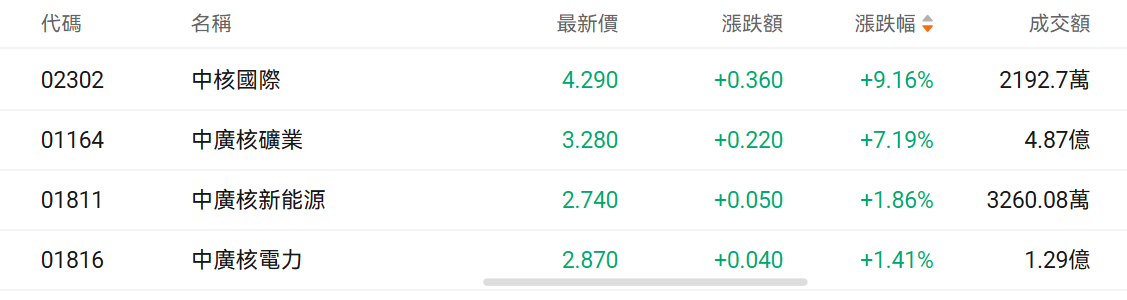
Group 1 - Nuclear power stocks have risen significantly, with increases of over 9% and 7% for specific companies [1] - Major companies such as China National Nuclear Corporation and China General Nuclear Power Corporation have seen notable stock price increases, with China National Nuclear Corporation rising by 9.16% to 4.290 and China General Nuclear Mining rising by 7.19% to 3.280 [1] - The rise in uranium prices, approximately 5% this year, is attributed to production cuts by major suppliers and increasing demand from nuclear power construction and AI data centers in China [1] Group 2 - Morgan Stanley reports that the global uranium market is undergoing significant changes, with a tight supply and strong demand leading to an optimistic price outlook [2] - The forecast predicts uranium prices will reach $87 per pound by Q4 2025, supported by supply challenges, stable spot demand, and potential increases in contract volumes [2] - The structural support from the "nuclear renaissance" is strengthening the fundamentals of the uranium market, indicating further price potential [2]