小型模块化反应堆(SMR)

Search documents
杰瑞股份20230331
2026-04-01 09:59
Summary of Key Points from the Conference Call Company Overview - **Company**:杰瑞股份 (Jereh Group) - **Industry**: Oilfield Services and Power Systems Core Insights and Arguments - **Valuation Shift**: The valuation logic of Jereh is transitioning from traditional oil services to data center power systems, with stock price drivers expected to shift post-2025 towards new business expectations [2] - **Order Backlog**: The company currently has an order backlog of $840 million, with a target of $1 billion in orders by 2026, positioning it alongside international giants like Schlumberger and Halliburton [2] - **Market Potential**: Baker Hughes predicts that the annual market for power systems will exceed $100 billion by 2030; if Jereh captures 7%-8% of this market, it could generate annual revenues of $5-6 billion [2] - **Profit Forecast**: Expected net profits for 2025, 2026, and 2027 are projected to be $4.6 billion, $6 billion, and $7.5 billion respectively, with corresponding P/E ratios of 33x, 25x, and 20x, indicating that the valuation has not fully reflected the value of new business [2] - **EPC Margins**: The company is providing EPC (Engineering, Procurement, and Construction) services with profit margins of approximately 10%-20%, leveraging competitive advantages in execution and service timeliness [2] Impact of Recent Events - **Middle East Gas Project**: A recent announcement regarding a potential $6-7 billion gas EPC project in the Middle East led to stock price adjustments. The project was initially an intention order but was later rescinded due to local government evaluations [3] - **Market Valuation**: The traditional oil service business is valued at 15-20x earnings, similar to peers like Halliburton and Schlumberger. The market does not assign a high premium to this segment, viewing it as cyclical [3] Energy Market Trends - **Geopolitical Influence**: Ongoing geopolitical conflicts in the Middle East are expected to lead to long-term increases in oil and gas prices, with natural gas and solar energy identified as key growth areas in the global energy structure [4] - **U.S. Energy Landscape**: The U.S. is achieving self-sufficiency in natural gas, while coal's share is declining significantly. Natural gas is projected to maintain a 40% share in North America's energy structure [4] Baker Hughes' Strategy - **Power Systems Focus**: Baker Hughes has positioned its power systems business as a core growth engine, expecting over $40 billion in orders from its Industrial and Energy Technology (IET) segment between 2026 and 2028 [5] - **Capacity Expansion**: The company plans to increase the production capacity of its NovaLT gas turbines by 150% by 2028-2029 [5] Jereh's Market Position - **Potential Revenue**: If Jereh captures 7%-8% of the projected $100 billion power systems market by 2030, it could achieve annual revenues of $5-6 billion, significantly higher than its current traditional oil service revenues [6] - **Profitability Outlook**: The profit margin for power system contracts is expected to be around 10%, which could yield profits of $5-6 billion from the anticipated revenue [6] Valuation Potential - **Market Comparison**: Jereh's valuation potential is contingent on the accumulation of orders. If the order backlog grows to $3 billion, the valuation could shift from traditional oil services to data center solutions, potentially reaching a market cap of $210-240 billion [6] - **Industry Comparison**: Jereh's strategy aligns with industry giants, focusing on energy solutions for data centers. Its 2026 order target of $1 billion is comparable to those of Schlumberger and Halliburton, indicating a competitive position [7] Emerging Energy Ventures - **New Energy Initiatives**: Jereh is exploring opportunities in emerging energy sectors, such as small modular reactors (SMRs), which are expected to commercialize around 2029-2030 [8] Financial Projections - **Revenue Growth**: Total revenue is projected to be approximately $24.5 billion, $30.5 billion, and $37.5 billion for 2025, 2026, and 2027, respectively, with growth rates of 21%-23% [9] - **Net Profit Estimates**: Expected net profits for 2025, 2026, and 2027 are $4.6 billion, $6 billion, and $7.5 billion, respectively, with current valuations not fully reflecting the potential of the data center business [9]

中国加入《三倍核能宣言》,小堆与乏燃料为核心聚焦点
Huafu Securities· 2026-03-14 10:15
Investment Rating - The industry rating is "Outperform the Market," indicating that the overall return of the industry is expected to exceed the market benchmark index by more than 5% in the next 6 months [15]. Core Insights - The report highlights the global focus on small modular reactors (SMRs) and spent fuel management, particularly following the recent Paris Nuclear Summit where over 60 countries discussed nuclear power development [4][5]. - China is accelerating the commercialization of small reactors and improving the spent fuel recycling system, leveraging the "Linglong One" demonstration project to promote standardized designs and expand applications in non-electric fields like urban heating [5]. - The report emphasizes the importance of international cooperation in nuclear fuel cycle and radioactive waste management, with China positioned as a key player in global nuclear power development [4][5]. Summary by Sections Industry Overview - The Paris Nuclear Summit underscored the significance of small reactors and spent fuel management, with countries committing to the "Triple Nuclear Declaration" to promote the application of small modular reactors in developing nations [4]. Technological Advancements - The report notes that SMRs are seen as a critical solution to meet the growing energy demands of artificial intelligence, with major tech companies collaborating on energy supply solutions tailored for data centers [6]. Investment Opportunities - The report suggests several companies to watch: 1. Jingye Intelligent: Focuses on the entire nuclear fuel cycle and is actively involved in intelligent operation and maintenance of nuclear power plants [6]. 2. Jiadian Co.: Its helium fan is the only power device for the primary circuit of fourth-generation high-temperature gas-cooled reactors [6]. 3. Guoguang Electric: Provides key components for the ITER project [6]. 4. Lanshi Heavy Industry: Covers upstream nuclear fuel systems to downstream spent fuel processing [6]. 5. Kexin Electromechanical: Produces high-temperature gas-cooled reactor products and has replaced imports with new fuel transport containers [6]. 6. Hailu Heavy Industry: Services various reactor types including third and fourth generation reactors [6]. 7. Jiangsu Shentong: Holds over 90% of orders for nuclear-grade butterfly and ball valves in new nuclear power projects in China [6].
中国 SMR 小堆监管拟定规则,安全发展锚定方向
Huafu Securities· 2026-03-07 13:09
Investment Rating - The industry rating is "Outperform the Market," indicating that the overall return of the industry is expected to exceed the market benchmark index by more than 5% over the next 6 months [13]. Core Insights - The report highlights the development of regulatory technical policies for small modular reactors (SMR) in China, focusing on safety and guiding safety design and assessment work [3][4]. - The ecological environment department has organized the compilation of a draft technical policy for the nuclear safety regulation of small modular reactors, which aims to clarify important safety issues and establish a regulatory stance [3][4]. - The policy outlines 11 core issues related to safety goals and defense-in-depth applications, emphasizing the need to utilize inherent safety features and reliable design measures to eliminate events that could lead to significant radioactive releases [4]. - The report suggests that SMR could be a key solution to meet the growing energy demands of artificial intelligence, with major tech companies showing continued interest in developing tailored energy solutions for data centers [5]. Company Summaries - **Jingye Intelligent**: Established a subsidiary focused on SMR, targeting power supply for AI data centers [5]. - **Jia Dian Co., Ltd.**: Their main helium fan is the only power device in the primary loop of fourth-generation high-temperature gas-cooled reactors, and their subsidiary has leading products in the nuclear power sector [5]. - **Guoguang Electric**: Provides key components for the ITER project, focusing on filter and cladding systems [5]. - **Lanshi Heavy Industry**: Covers the entire nuclear energy supply chain, including upstream nuclear fuel systems, midstream nuclear power plant equipment, and downstream spent fuel processing [5]. - **Kexin Electromechanical**: Manufactures high-temperature gas-cooled reactor products and has developed domestic alternatives for new fuel transport containers [5]. - **Haili Heavy Industry**: Services various reactor types, including third and fourth-generation reactors and thermonuclear fusion reactors (ITER) [5]. - **Jiangsu Shentong**: Secured over 90% of orders for nuclear-grade butterfly valves and nuclear-grade ball valves for new nuclear power projects in China [5].
杰瑞股份(002353):公司简评报告:再获发电机组超亿美元订单,布局小型模块化反应堆
Donghai Securities· 2026-01-15 08:59
Investment Rating - The investment rating for the company is "Buy" (maintained) [1][5] Core Insights - The company has secured a significant order for gas turbine generator sets worth $106 million (approximately 742 million yuan), which is expected to positively impact future operating performance [5] - The company is establishing a new growth curve in the power energy business, having formed partnerships with major players like Siemens Energy and Baker Hughes for gas turbine cooperation [5] - The company is expanding into the small modular reactor (SMR) sector, which is expected to enhance its competitiveness in the power sector and open new long-term growth opportunities [5] - The company is recognized as a leading domestic oil and gas equipment enterprise, with successful breakthroughs in drilling, natural gas, and gas turbine generator businesses both domestically and internationally [5] Financial Projections - Total revenue is projected to grow from 13,354.92 million yuan in 2024 to 23,799.61 million yuan in 2027, with a compound annual growth rate (CAGR) of approximately 20.14% [3][6] - Net profit attributable to the parent company is expected to increase from 2,627.03 million yuan in 2024 to 4,448.79 million yuan in 2027, reflecting a CAGR of about 17.77% [3][6] - The diluted EPS is forecasted to rise from 2.57 yuan in 2024 to 4.35 yuan in 2027, indicating strong earnings growth [3][6] - The price-to-earnings (P/E) ratio is projected to decrease from 32.79 in 2024 to 19.36 in 2027, suggesting improving valuation metrics [3][6]
新工业双周报(12/29-01/11):穆迪预测未来五年全球数据中心投资至少达 3 万亿美元;PJM 预计 2040 年夏季用电量将增加至 220GW-20260115
Haitong Securities International· 2026-01-15 01:09
Investment Rating - The report indicates a strong investment outlook for the data center sector, predicting global investments to reach at least $3 trillion over the next five years, driven by AI and major cloud providers [2]. Core Insights - The report highlights the rapid expansion of data center capacity driven by AI, with major U.S. companies expected to spend nearly $400 billion in 2025, with an additional $200 billion anticipated in the following two years [2][8]. - The report notes that the cost of supplying power to data centers has reached $6.5 billion, accounting for 40% of total auction costs in the latest capacity auction by PJM [2]. - The Texas power reliability council (ERCOT) has seen a surge in large load interconnection requests, increasing by approximately 300% to over 233 GW, with over 70% attributed to data centers [2]. - The report discusses the challenges faced by the energy market, including the freezing of offshore wind power projects, leading to significant daily losses for developers [2]. - MISO plans to invest about $1.2 billion in a new transmission line in Wisconsin as part of a long-term $22 billion transmission plan to strengthen the grid [2]. Summary by Sections Global Infrastructure and Construction Equipment - Moody's forecasts that global data center investments will reach at least $3 trillion over the next five years, primarily driven by AI and major cloud providers [2][8]. - The report emphasizes the evolving financing models in capital markets, with institutional investors increasingly participating in lending during the construction phase [8]. - The report also highlights the rising construction costs due to increased prices for critical inputs like construction equipment and GPUs, which are expected to further elevate the costs of new data centers [8]. Global Electrical and Intelligent Equipment - The gas turbine price index increased by 5.49% year-on-year and 2.1% month-on-month as of September 2025, indicating a stable demand in the market [15]. - The report notes that the U.S. gas turbine market's future growth will be driven by re-industrialization and the development of AI data centers [17]. Global Energy Industry - The average retail electricity price in the U.S. as of October 2025 was 13.63 cents/kWh, reflecting a year-on-year increase of 5% across various sectors [4]. - The report indicates that the U.S. electricity demand growth forecast has been revised upwards, with expectations of a 15.8% increase by 2029 [22]. Global New Materials - The report mentions that the global uranium spot price was $81.55 per pound as of December 2025, reflecting an 8% increase month-on-month and a 12% increase year-on-year [4]. Key Company Insights - The report suggests focusing on AI power operators such as Entergy, Talen Energy, and Constellation Energy, as well as energy equipment companies like Oklo and NuScale Power [5]. - It highlights the need for infrastructure improvements in the U.S. energy grid to support industrial return, AI data center construction, and decarbonization efforts [5]. - The report also points out that the demand for high-voltage transmission lines is expected to grow, with companies like Hitachi and Hyundai Electric being key players in this sector [5].





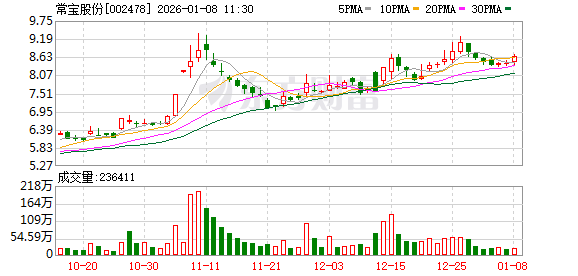
常宝股份:公司尚未启动针对SMR的专项产品研发
Mei Ri Jing Ji Xin Wen· 2026-01-08 04:36
Core Viewpoint - The company acknowledges the growing interest in Small Modular Reactors (SMR) within the nuclear power sector and indicates that it is exploring the development of related products, although specific R&D for SMR has not yet commenced [2]. Company Response - The company has confirmed its capability to develop nuclear power-related products but has not yet completed the necessary certifications for manufacturing civilian nuclear safety equipment [2]. - Currently, the company has not initiated targeted R&D for SMR-specific products but is monitoring advancements in SMR technology and market demands [2].


杰瑞股份:拟与关联方共同设立控股子公司开展SMR相关业务
Ge Long Hui· 2026-01-05 11:59
Core Viewpoint - Jereh Co., Ltd. is expanding its business in the Small Modular Reactors (SMR) sector by establishing a holding subsidiary in Dubai, UAE, through its wholly-owned subsidiary Jereh Oilfield Services Middle East FZE and Vice President Li Weibin [1] Group 1: Business Expansion - The company aims to actively expand and optimize its industrial layout in the SMR field [1] - A holding subsidiary will be established in Dubai to conduct SMR-related business activities [1] Group 2: Investment Details - The registered capital of the new holding subsidiary is planned to be 10 million AED (approximately 19.071 million RMB) [1] - Jereh Oilfield Services Middle East FZE will contribute 9.4 million AED, accounting for 94% of the registered capital [1] - Li Weibin will contribute 600,000 AED, representing 6% of the registered capital [1] Group 3: Compliance - Li Weibin is confirmed not to be a person subject to enforcement for dishonesty [1]
杭州景业智能科技股份有限公司关于设立控股子公司暨关联交易、开展新业务的公告
Shang Hai Zheng Quan Bao· 2025-12-29 20:59
Core Viewpoint - The company plans to establish a holding subsidiary, Hangzhou Jinghan Energy Technology Co., Ltd., focusing on advanced nuclear energy systems and key equipment development, with a registered capital of RMB 50 million [2][3]. Group 1: New Business Overview - The new subsidiary will have a registered capital of RMB 50 million, with the company contributing RMB 17.5 million (35%) and other investors contributing the remainder [2][5]. - The main business of the new company will focus on research, design, and manufacturing of advanced nuclear energy systems and key equipment [3][5]. - The establishment of the new company has been approved by various board meetings and does not constitute a major asset restructuring as per regulations [3][6]. Group 2: Industry Context - The global market for small modular reactors (SMR) is entering a commercial demonstration phase, with significant growth potential, projected to exceed several hundred billion USD in the next decade [13][14]. - China is a leading country in the development and demonstration of SMR and micro-reactor technologies, with significant advantages in engineering practices and market application potential [14]. Group 3: Management and Operational Structure - The company will directly hold 35% of the new subsidiary's shares and indirectly control 51% through its wholly-owned subsidiary [15]. - The new company will establish a governance structure and management system in line with the parent company's standards, ensuring compliance and effective risk management [16][24]. Group 4: Financial and Operational Impact - The new business is a strategic move for the company, leveraging its existing capabilities in the nuclear industry to expand into advanced nuclear systems [27]. - Initial investments will be made using the company's own funds, with expectations of potential short-term losses as the new business develops [28][29].

景业智能拟开展SMR业务 提示风险称“短期内难以实现盈利”
Zheng Quan Shi Bao Wang· 2025-12-29 11:16
Core Viewpoint - Jingye Intelligent (688290) is advancing its Small Modular Reactor (SMR) business by establishing a holding subsidiary focused on the research, design, and manufacturing of advanced nuclear energy systems and key equipment [1][2]. Group 1: Company Developments - The newly established subsidiary is tentatively named Hangzhou Jinghan Energy Technology Co., Ltd. (referred to as "Jinghan Energy") and will be controlled 51% by Jingye Intelligent [1]. - Key personnel involved in this project include Jingye Intelligent's Chairman Lai Jianliang, Professor Yang Xingtuan from Tsinghua University, and Dr. Wan Li from Zhejiang University, all of whom have extensive experience in relevant fields [1]. - Jingye Intelligent aims to integrate Jinghan Energy into its consolidated financial statements, holding 35% directly and an additional 16% indirectly through a wholly-owned subsidiary [1]. Group 2: Industry Context - SMR has gained popularity this year due to the explosive growth in energy demand from global data centers, with advantages such as power adaptability and near-zero emissions [2]. - China is recognized as one of the leading countries in the research and demonstration of SMR and micro-reactor technologies, with the "Linglong No. 1" project being the first globally to pass the International Atomic Energy Agency's safety review and is expected to commence commercial operations by 2026 [2]. - Jingye Intelligent has identified nuclear fusion and SMR as key strategic directions for its development, actively collaborating with nuclear industry clients and institutions like Zhejiang University to establish joint research centers and laboratories [2]. Group 3: Technical and Market Considerations - Jingye Intelligent has developed a complete product system in the nuclear industrial intelligent equipment and special robotics sector, which supports the R&D and manufacturing of SMR-related equipment [3]. - The company has accumulated trust and resources from serving leading clients in the nuclear industry, which will facilitate market alignment and project collaboration for the new SMR business [3]. - Jinghan Energy is currently in a critical phase of assembling its technical team and developing core technologies, facing high technical challenges across all stages of design, manufacturing, system integration, and safety verification [3].
谷歌为发电都上天了,但AI真的缺电吗?
美股研究社· 2025-11-10 11:07
Core Viewpoint - The article discusses the intersection of AI and energy, highlighting the current electricity shortage faced by the AI industry and the innovative solutions being proposed, such as Google's "Project Suncatcher" which aims to utilize solar energy in space for AI computations [5][6][7]. Group 1: AI Industry's Energy Needs - Microsoft CEO Satya Nadella indicated that the AI industry is experiencing a power shortage due to high electricity demands from GPUs, which are not being met by current energy supply [5][17]. - OpenAI CEO Sam Altman suggests that while there is a short-term electricity shortage, the long-term outlook may improve as AI energy consumption decreases over time [6][19]. - The AI industry's energy consumption is projected to double by 2030, with significant increases in data center power demands, highlighting the urgency of addressing energy supply issues [15][16]. Group 2: Innovative Solutions - Google's "Project Suncatcher" aims to deploy satellites in low Earth orbit to harness solar energy for AI computations, potentially overcoming terrestrial energy limitations [7][9]. - The project plans to launch its first test satellites by early 2027, focusing on direct computation in space rather than transmitting energy back to Earth [9][10]. - Other companies, such as Starcloud and initiatives in China, are also exploring space-based data centers, indicating a growing trend towards utilizing space for energy-intensive AI operations [12][13]. Group 3: Energy Supply Challenges - The energy supply chain faces significant delays, with grid access approvals taking up to five years and transmission line construction taking 10 to 17 years, creating a mismatch with the rapid growth of AI demand [17]. - Despite the apparent need for energy, major energy companies have not seen corresponding stock price increases, suggesting market skepticism about the AI industry's energy crisis [16]. Group 4: Future of Energy Generation - Small Modular Reactors (SMRs) are emerging as a viable solution for providing stable, low-carbon energy, with companies like Google and Microsoft investing in this technology [18]. - The global renewable energy capacity is expected to increase significantly, potentially outpacing the energy demands of AI [17][18]. Group 5: Efficiency Improvements - AI models are becoming more efficient, with significant reductions in energy consumption per unit of intelligence, indicating a potential decrease in future energy needs [19][21]. - New AI chips, such as Meta's Athena X1, show substantial improvements in energy efficiency, which could further alleviate the energy demands of AI systems [22][23]. - Data center energy efficiency is improving, with advancements in cooling technologies and energy management systems leading to lower power usage effectiveness (PUE) [24].