
生态融合

Search documents
中国炒股软件大比拼:为何新浪财经APP、同花顺、东方财富能位居前三?
Xin Lang Zheng Quan· 2025-08-15 06:37
Core Insights - The monthly active users of Chinese securities apps surpassed 166 million in 2025, with an overall penetration rate of 15.46% [1] - The top three apps, Sina Finance, Tonghuashun, and Eastmoney, dominate the market, creating a competitive landscape [1] Group 1: Company Analysis - **Sina Finance**: The app's core competitiveness lies in its global coverage and authoritative information. It covers over 40 markets, including A-shares, Hong Kong stocks, US stocks, forex, and futures, with millisecond-level data updates. Its AI assistant, "Xina," can interpret announcements in seconds, highlighting risks and opportunities [1] - **Tonghuashun**: With 35.02 million monthly active users, it excels in trading efficiency and smart tools. Its "Lightning Trading System" supports over 90% of brokers for rapid order execution, and it offers free Level-2 market data and an upgraded quantitative platform [2] - **Eastmoney**: This app has 17.21 million monthly active users and focuses on community engagement and inclusive finance. Its "Stock Bar" community generates over a million posts daily, providing a platform for retail investors. It also offers comprehensive fund services, significantly lowering investment barriers [3] Group 2: User Experience and Target Audience - **Interface and Operation**: Sina Finance provides smooth multi-platform collaboration; Tonghuashun has powerful but complex features; Eastmoney simplifies the interface for novice users [4] - **User Adaptation**: - Cross-market allocators prefer Sina Finance for global monitoring and arbitrage opportunities [4] - Technical traders favor Tonghuashun for quantitative backtesting and rapid order placement [4] - Fund investors are drawn to Eastmoney for its fund services and community sentiment analysis [4] - The competitive landscape reflects the diverse structure of Chinese investors, with a growing need for tools that match their specific investment strategies [4]


与苹果生态融合 vivo、荣耀掀折叠屏“破壁战”
Zhong Guo Jing Ying Bao· 2025-07-04 06:48
Core Insights - The foldable smartphone market in China is experiencing a significant slowdown, with a projected growth rate of only 30.8% in 2024 and a first-ever year-on-year decline of 9.6% in Q4 2024 [1] - Manufacturers are increasingly adopting an ecosystem integration strategy to find new growth points, aiming to break down barriers between Android and Apple ecosystems [1][2] Group 1: Market Trends - IDC forecasts that the foldable smartphone market may enter a "small year" in 2025, leading to a more cautious stance from various manufacturers [1] - The limited market capacity is currently dominated by Huawei, which compresses the space for other manufacturers, prompting them to seek alternative strategies [1] Group 2: Product Innovations - Vivo's X Fold5, launched on June 25, features a lightweight design at 217g and a thickness of 9.22mm, equipped with a 6000mAh battery and advanced imaging capabilities [2] - Honor's Magic V5, released on July 2, claims to be the "lightest and thinnest foldable smartphone," with a thickness of 8.8mm and a weight of 217g, also boasting a 6100mAh battery and comprehensive AI functionalities [3] Group 3: Ecosystem Integration - Both Vivo and Honor are focusing on integrating their devices with Apple's ecosystem, allowing features such as Apple Watch connectivity and iCloud access, which aim to attract Apple users [2][3] - The strategy of Android manufacturers to lower the barriers for users switching between ecosystems is seen as a way to capture the attention of Apple users [3] Group 4: Competitive Landscape - The entry of Apple into the foldable smartphone market, expected in 2026, raises questions about whether current Android ecosystem strategies will inadvertently cultivate user habits favorable to Apple [5] - Honor expresses optimism about competing with Apple, viewing its entry as a validation of the foldable market's potential and an opportunity for further innovation [6] Group 5: Future Outlook - Honor plans to launch a new small foldable device in August, focusing on upgrades in imaging, design, and battery life, while aiming to position itself among the top three in the domestic market by the end of the year [7]
荣耀IPO前夜的“临门一脚”:用折叠屏撕开苹果iOS的生态铁幕
Mei Ri Jing Ji Xin Wen· 2025-07-03 13:03
Core Insights - The foldable smartphone industry has transitioned from "usable" to "well-functioning" over the past six years, with significant technological advancements addressing challenges such as hinge design, weight, battery life, and durability [1][3][4] - The next growth driver for the foldable smartphone market is targeting iPhone users, a high-spending demographic with high expectations for product quality and experience [1][9] - Domestic manufacturers are adapting their ecosystems to facilitate cross-device compatibility, with brands like Honor and Vivo leading the way in supporting interoperability with iOS and Huawei's HarmonyOS [1][11] Industry Developments - Foldable smartphone technology has matured, with flagship models like OPPO Find N5 weighing around 229 grams and Honor Magic V5 at 217 grams, making them lighter than the iPhone 16 Pro Max [4][5] - Innovations in battery technology, such as the new generation of Qinghai Lake blade batteries with 25% silicon content, have achieved an energy density of 901Wh/L and a capacity of 6100mAh, addressing the challenge of balancing thinness and battery life [5][6] - Structural strength and durability remain key challenges, with advancements in materials like aerospace-grade fibers and high-strength alloys enhancing the robustness of foldable devices [6][9] Market Dynamics - The foldable smartphone market is experiencing a slowdown in growth, with expectations that the release of Apple's first foldable iPhone in 2026 will intensify competition for high-end users [9][10] - Analysts predict that the initial pricing for the foldable iPhone will be between $2000 and $2500, with expected annual sales in the millions by 2027 and 2028 [10] - Android brands are focusing on technological upgrades and ecosystem integration to attract iPhone users, emphasizing the importance of cross-system collaboration and user experience [11][12] Company Strategies - Honor is currently in the IPO preparation phase, working on governance and operational improvements as part of the listing process [12]



长三角议事厅·周报丨长三角软信产业需以标准互认促生态共融
Xin Lang Cai Jing· 2025-06-23 10:19
Core Insights - The article discusses the rapid restructuring of the software and information technology services industry in the Yangtze River Delta region, highlighting the competitive cluster development around industrial software [1][4] - Shanghai's government has approved measures to promote high-quality development in the software and information services sector, aiming to create a globally competitive innovation hub [1][4] - By 2024, the total revenue of the software and information services industry in the Yangtze River Delta is expected to reach 3.88 trillion yuan, accounting for nearly 30% of the national total [1][4] Group 1: Regional Development and Collaboration - Shanghai's software and information services industry revenue is projected to exceed 380 billion yuan in Q1 2025, with a year-on-year growth of 15.3%, contributing 13.6% to the city's GDP [2] - Jiangsu is focusing on the integration of software and manufacturing, with a software business revenue growth of 8.7% in 2024, and industrial software chain growth reaching 15.9% [2] - Zhejiang is building an industrial APP ecosystem with over 60,000 applications to support deep digital transformation in manufacturing [3] Group 2: Standardization and Ecosystem Integration - The Yangtze River Delta is promoting standard recognition and ecosystem integration as key strategies to break regional barriers, with a joint release of the "Yangtze River Delta Industrial Software Recommendation Directory" covering 35 quality software products [4][5] - The G60 Science and Technology Corridor is facilitating interconnectivity among 31 industrial internet platforms, reducing technical barriers for cross-regional collaboration [4] - Shanghai's "Gongfu Chain Master" platform has shared over 35,000 industrial knowledge models with Jiangsu, Zhejiang, and Anhui, fostering a collaborative model of "Shanghai R&D + Regional Application" [4] Group 3: Challenges and Future Directions - Despite progress, challenges remain in achieving ecosystem integration, including the lack of a unified regional standard system and insufficient collaborative applications in manufacturing scenarios [5][6] - The need for a standardized certification center and open-source platform is emphasized to enhance cross-regional collaboration and build a foundational trust mechanism [5][6] - The article suggests that the ability to establish an efficient and unified collaborative mechanism will directly impact the Yangtze River Delta's competitiveness in the global software and information services industry [6]
小罐茶分销网点突破5000家
Sou Hu Cai Jing· 2025-06-17 05:34
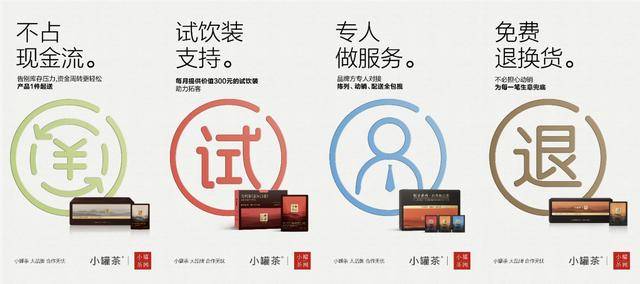
Group 1 - The tea industry is experiencing changes in channel models due to diversified consumption scenarios and the upgrade of new retail, with the modern Chinese tea brand, Xiaoguan Tea, exploring a new distribution strategy through cross-industry collaboration with high-frequency scenarios like tobacco and alcohol [1] - Xiaoguan Tea has established over 5,000 distribution points in tobacco and alcohol channels, covering 95 cities and municipalities across various provinces including Jiangsu, Zhejiang, Shanghai, and Guangdong [1] - The new channel model proposed by Xiaoguan Tea includes "1 strong empowerment platform + N types of specialty stores + X types of distribution channels," aiming to embed products into high-frequency consumption scenarios, creating a virtuous cycle of "front-end traffic and back-end profitability" [2] Group 2 - The traditional tea industry must expand consumption scenarios and channels in a multi-dimensional way to meet diverse consumer demands, as stated by food industry analyst Zhu Danpeng [2] - Xiaoguan Tea's channel upgrade is seen as a model for the entire industry to reconstruct channel value, breaking the boundaries of traditional tea categories and transforming them into modern lifestyle solutions [2] - The brand's unique "consumer goods gene" allows it to focus on user needs and scenario-based approaches, enhancing channel competitiveness through standardized products and a comprehensive category matrix [2] Group 3 - Xiaoguan Tea's expansion from 5,000 distribution points to a blueprint targeting millions of terminals demonstrates the commercial value of "scenario complementarity," providing new growth points for its original leaf tea business [4] - The entry of tea brands into collective public channels signifies a shift in the tea industry from a "single track" to "ecological integration," potentially bringing original leaf tea brands into the circulation field and offering new ideas for cross-industry integration and channel upgrades for fast-moving consumer goods [4]
AI赋能核聚变离不开生态融合
Zhong Guo Neng Yuan Wang· 2025-04-28 06:43
Core Insights - The integration of artificial intelligence (AI) is significantly empowering fusion research, aiming to reshape the ecosystem of nuclear fusion studies through deep collaboration among academia, industry, and policy [1][4] - Nuclear fusion, often referred to as the "artificial sun," simulates the energy release mechanism of the sun, requiring extreme conditions to fuse light atomic nuclei into heavier ones, thus providing a virtually limitless energy source [1][2] Group 1: Current Developments in Fusion Research - The International Thermonuclear Experimental Reactor (ITER) project involves resources from 35 countries globally, while China's Experimental Advanced Superconducting Tokamak (EAST) collaborates with ITER, creating an innovative network covering approximately 70 countries and over 150 research institutions [2] - China's "Circulation Three" project is set to open for international collaboration by the end of 2023, with the first round of joint experiments in 2024 attracting participation from 17 global institutions, research institutes, and universities [2] Group 2: AI's Role in Fusion Research - AI has demonstrated significant advantages in handling complex data related to nuclear fusion, enabling precise predictions and intelligent control, transforming plasma data analysis from "hours of modeling" to "milliseconds for solutions" [3] - The introduction of AI allows for 300 milliseconds of advance prediction, effectively preventing interruptions in fusion reactions due to plasma instability, a feat traditional commercial software cannot achieve [3] - AI models can integrate specialized knowledge, expert experience, and experimental records, potentially leading to the establishment of a cross-device database, fundamentally revolutionizing fusion research paradigms [3] Group 3: Future Implications - The deepening integration of AI and fusion research is expected to pave the way for an open-source ecosystem, breaking down data barriers and enhancing resource integration to lower research and development risks [3] - This collaboration will also reduce the marginal costs of knowledge integration, promoting cross-disciplinary cooperation and accelerating the fusion research process [3][4] - The combination of AI and nuclear fusion represents a pinnacle challenge in science and engineering, serving as a test of human collaborative intelligence [3][4]