绿美广东生态建设

Search documents
广东省森林覆盖率达53.39% 国土绿化和打造生态产品取得成效和经验
Zhong Guo Fa Zhan Wang· 2026-01-07 21:35
Core Viewpoint - Guangdong Province has made significant progress in ecological construction during the "14th Five-Year Plan" period, focusing on land greening and ecological product development, summarized as "increased quantity, improved quality, and enhanced atmosphere" [1] Group 1: Increased Quantity - During the "14th Five-Year Plan," Guangdong Province has optimized and enhanced 11.05 million acres of forest stands and improved 11.11 million acres of forest care [2] - The province has transformed 7.36 million acres of low-quality and inefficient forests, built 1.11 million acres of coastal protective forests, and established 3.51 million acres of large-diameter timber cultivation bases [2] - The forest coverage rate in the province has reached 53.39%, indicating a solid ecological barrier and an increasing green base [2] Group 2: Improved Quality - The province has focused on scientific greening, selecting native broadleaf tree species to enhance ecological diversity and economic suitability, planting 213 million native broadleaf trees [3] - Guangdong has constructed 148 mixed forests of over 5,000 acres and 1,030 large forest patches of over 1,000 acres, with total forest stock reaching 657 million cubic meters [3] - The average stock per hectare of tree forests has increased to 73.47 cubic meters, enhancing the stability and sustainability of the ecosystem [3] Group 3: Enhanced Atmosphere - The province has promoted various tree planting activities, with 39 million tree seedlings planted in rural areas and 67,400 voluntary tree planting events held, ranking first in the country [3] - Guangdong is utilizing surrounding urban mountains, collective forest lands, orchards, and abandoned mines for ecological restoration, creating diverse and functional green leisure spaces [3] - The province aims to deliver quality ecological products to the public, making "green views from windows and scenic sights upon stepping out" a common lifestyle [3] Group 4: Key Focus Areas - Guangdong is developing 257 green beauty points and initiating six green beauty belts, connecting representative ecological, historical, and cultural tourism nodes [4] - The province is innovating by establishing 114 suburban and mountain parks to meet new demands for leisure and fitness, covering 21 prefecture-level cities [4] - Guangdong is constructing 55 ancient tree parks, focusing on the protection of ancient trees and their habitats while integrating historical and cultural heritage [4]
广东公布“十四五”生态建设成绩单:连续五年国家考核获优秀
Nan Fang Du Shi Bao· 2026-01-07 05:07
Core Viewpoint - Guangdong Province has achieved significant improvements in ecological environment quality during the "14th Five-Year Plan" period, demonstrating a successful model of economic growth alongside effective environmental protection [1][2]. Environmental Quality Improvement - Guangdong's air quality has met national standards for 11 consecutive years, with a target of 95.4% of days having good air quality by 2025 [2]. - The surface water quality in the province improved from 87.3% to a target of 94.6% for good quality by 2025 [2]. - The proportion of excellent water quality in coastal areas is expected to reach 91.2% by 2025, with 100% of pollution outlets in the Pearl River Estuary being treated [2]. Pollution Control and Management - The province has implemented a multi-source approach to air pollution control, focusing on key industries such as steel and cement [2]. - Guangdong has established a centralized treatment and resource utilization center for polluted soil, leading the nation in innovative environmental restoration models [3]. - The rural sewage treatment rate has exceeded 90% as part of the government's commitment to improving living conditions [3]. Green Development Initiatives - Guangdong has made strides in green low-carbon development, with a carbon market that has seen a cumulative trading volume of 2.33 billion tons and a transaction value exceeding 6.78 billion yuan [3]. - The province has created a comprehensive ecological safety pattern, designating 5.08 million square kilometers as ecological protection red lines [4]. Urban and Rural Greenery - The province has optimized 11.05 million acres of forest and improved 11.11 million acres of forest care, achieving a forest coverage rate of 53.39% [8]. - Urban green space has increased, with 21,000 hectares of new urban green land, resulting in a green space rate of 41.2% and an average of 17.9 square meters of park space per person [8]. - The coverage rate of park service areas has risen from 81% to 90%, enhancing public access to green spaces [8][9]. Community Engagement and Accessibility - Over 1,800 urban parks have been opened for public use, covering more than 1,500 hectares, promoting diverse recreational and cultural activities [9].
“十四五”广东国土绿化实现“量增、质提、氛围浓”
Xin Lang Cai Jing· 2026-01-06 10:13
Core Viewpoint - Guangdong has made significant progress in ecological construction during the "14th Five-Year Plan" period, characterized by increased quantity, improved quality, and a stronger green atmosphere in land greening efforts [1][3]. Group 1: Quantity Increase - During the "14th Five-Year Plan," Guangdong optimized and enhanced 11.05 million acres of forest stands and improved 11.11 million acres of forest care [3]. - The province transformed 7.36 million acres of low-quality and inefficient forests and established 1.11 million acres of coastal protective forests, along with 3.51 million acres for large-diameter timber cultivation [3]. - The forest coverage rate in Guangdong reached 53.39%, indicating a solid ecological barrier and an increasing green base [3]. Group 2: Quality Improvement - Guangdong has focused on scientific greening, selecting native broadleaf tree species for afforestation, including species like wood-horse, red oak, and fragrant camphor [3]. - A total of 213 million native broadleaf trees were planted, gradually optimizing the proportion of mixed coniferous and broadleaf forests [3]. - The total forest stock volume in the province reached 657 million cubic meters, with the average stock volume per hectare increasing to 73.47 cubic meters [5]. Group 3: Enhanced Green Atmosphere - There is a strong movement to promote afforestation, with various themed forests such as "Youth Forest" and "Celebration Forest" being established [5]. - Innovative activities like "I plant a tree for Guangdong" and "Plant a tree for good news" have gained popularity, with 39 million tree seedlings planted in rural areas over the past two years [5]. - Guangdong has created 257 green beauty spots and initiated the construction of six green beauty belts, enhancing public access to nature and recreational spaces [7].

超53%森林覆盖率背后 广东的绿色提质密码
2 1 Shi Ji Jing Ji Bao Dao· 2026-01-06 05:17
Core Insights - Guangdong has achieved significant ecological improvements during the "14th Five-Year Plan" period, with continuous growth in forest area and volume, reaching a forest coverage rate of 53.39% and a total forest volume of 657 million cubic meters [1][2]. Group 1: Forest Resource Growth - The province has focused on enhancing forest quality, addressing challenges such as low quality and insufficient structural diversity, by implementing a strategy of "expanding green, promoting green, and protecting green" [2][3]. - Over the past five years, Guangdong has optimized 742,100 hectares of forest stands and nurtured 746,400 hectares of forests, creating over 1,030 large forest patches and 148 demonstration areas of mixed forests [3]. Group 2: Innovative Forest Management - Guangdong is establishing a new model for comprehensive forest management, with initiatives like the enhancement of 2,972.24 acres of forest land in Guangzhou, aiming to increase forest coverage to 96% and carbon storage to 161,500 tons [4]. - The province has developed a complete sustainable forest management system, including planning, implementation, and monitoring, to ensure continuous improvement in forest quality [4]. Group 3: High-Quality Forest Development - Guangdong has actively promoted the cultivation of large-diameter timber, national reserve forest construction, and high-quality forest nurturing, completing 233,900 hectares of large-diameter timber base construction and 40,000 hectares of national reserve forest [5]. - The province has also established 6,500 kilometers of new biological firebreaks and maintained 15,000 kilometers, contributing to a significant increase in the supply of high-quality ecological products [5].
“十四五”时期广东森林面积和蓄积量实现“双增长”
Nan Fang Nong Cun Bao· 2026-01-05 08:01
Core Viewpoint - During the "14th Five-Year Plan" period, Guangdong has achieved continuous growth in both forest area and volume, with a forest coverage rate of 53.39% and a total forest volume of 657 million cubic meters, reflecting a significant commitment to ecological development and forest quality improvement [3][4][5]. Group 1: Forest Area and Volume Growth - Guangdong's forest area and volume have maintained "double growth," with the forest coverage rate reaching 53.39% and the forest volume at 657 million cubic meters [3][4]. - The average volume of timber per hectare has increased to 73.47 cubic meters, indicating improved forest management practices [3]. Group 2: Quality Improvement Initiatives - The province has prioritized forest quality enhancement through a collaborative approach of "expanding green, promoting green, and protecting green," aiming for a historical leap from quantity expansion to quality improvement [5][6]. - Guangdong has completed the optimization of forest stands over 742,100 hectares and forest nurturing over 746,400 hectares during the "14th Five-Year Plan" [21]. Group 3: Innovative Forest Management - The establishment of a comprehensive forest management model has been initiated, focusing on scientific management and sustainable practices, with a pilot project in Guangzhou aiming to enhance forest coverage to 96% and carbon storage to 161,500 tons [28][30]. - Guangdong has developed a complete system for sustainable forest management, including planning, implementation, and monitoring, to ensure long-term quality improvement [35][37]. Group 4: National Reserve Forest Development - The province has actively optimized the planning and construction of national reserve forests, with significant projects implemented across multiple cities, contributing to the overall enhancement of forest resources [39][41]. - Over the past five years, Guangdong has completed the construction of 233,900 hectares of large-diameter timber bases and 40,000 hectares of national reserve forests, significantly increasing the supply of quality timber [44][46].

广东:十大新突破,锻造发展“顶梁柱”
Xin Lang Cai Jing· 2025-12-30 00:29
Core Viewpoint - Guangdong is committed to high-quality development through the implementation of the "Ten New Breakthroughs" strategy, focusing on various sectors including the Guangdong-Hong Kong-Macao Greater Bay Area, manufacturing, education, technology, and cultural development [1][2]. Group 1: Greater Bay Area Development - Guangdong has made significant strides in building the Guangdong-Hong Kong-Macao Greater Bay Area, with the "Shenzhen-Hong Kong-Guangzhou" innovation cluster ranking first globally in innovation index [2]. - Infrastructure connectivity has improved, with major projects like the Guangzhou-Shenzhen-Hong Kong high-speed rail and the Hong Kong-Zhuhai-Macao Bridge completed, creating a "1-hour living circle" [2][3]. - The region has implemented 262 "Bay Area Standards" to facilitate cross-border cooperation in various sectors, enhancing the ease of movement for residents [2]. Group 2: Manufacturing Sector - Guangdong maintains its position as China's largest manufacturing province, with a GDP projected to reach 14.16 trillion yuan by 2024, marking 36 consecutive years at the top nationally [5]. - The province's advanced manufacturing and high-tech manufacturing sectors are expected to grow by 5.4% and 6.4% respectively, contributing significantly to the overall industrial output [5]. - Strategic emerging industries, particularly in the electric vehicle sector, are rapidly expanding, with major projects from companies like GAC Honda and BYD driving growth [5][6]. Group 3: Innovation and Talent Development - Guangdong is enhancing its innovation ecosystem by integrating research, technology development, and talent support, aiming for sustained leadership in innovation capabilities [6][7]. - The province's investment in R&D and the number of high-tech enterprises continue to lead the nation, with significant increases in patent applications and technological outputs [7]. - The "Million Talents Gather in South Guangdong" initiative has attracted over one million graduates to the region, bolstering the local talent pool [7]. Group 4: Urban-Rural Coordination - The "Hundred Counties, Thousand Towns, and Ten Thousand Villages High-Quality Development Project" aims to address urban-rural disparities and promote coordinated regional development [8][9]. - The project has shown positive results, with GDP growth in 57 counties outpacing the provincial average, and urbanization rates improving significantly [9]. Group 5: Marine Economy - Guangdong's marine economy is projected to exceed 2 trillion yuan by 2024, but challenges remain in optimizing the industrial structure and enhancing innovation capabilities [10]. - The province has initiated comprehensive marine spatial planning and regulatory frameworks to support sustainable development in marine industries [10]. Group 6: Ecological Development - Guangdong is prioritizing ecological construction, with a goal of maintaining a forest coverage rate above 53% and improving air and water quality [11][12]. - The province is advancing green energy initiatives, including offshore wind and solar power projects, to support its carbon neutrality goals [12]. Group 7: Cultural Development - Guangdong's cultural industry has been the largest in China for 22 consecutive years, with significant contributions to tourism and cultural heritage preservation [13]. - The province has implemented policies to enhance cultural production and infrastructure, resulting in increased tourism and cultural engagement [13]. Group 8: Social Welfare and Livelihood - Guangdong is focusing on improving living standards through initiatives targeting education, healthcare, and elderly care, addressing the needs of its aging population [14][15]. - The province has launched various social programs, including free prenatal screenings and increased funding for special education, to enhance public welfare [15]. Group 9: Legal and Safety Framework - Guangdong is enhancing its legal framework to create a favorable business environment, with significant legislative activity and improved judicial efficiency [16][17]. - The province has achieved high public satisfaction regarding safety and security, with crime rates declining and community safety initiatives being implemented [18]. Group 10: Party Leadership and Governance - Strengthening the leadership of the Communist Party is emphasized as crucial for guiding Guangdong's development and ensuring effective governance [19][20]. - The province is committed to fostering a clean and efficient political environment to support its modernization efforts [20].
“抬头见绿、出门即景”,广东建设全域绿美空间
Xin Lang Cai Jing· 2025-12-28 15:19
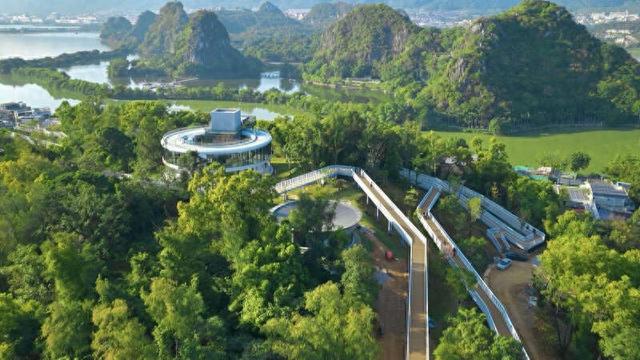
中国青年报客户端讯(中青报·中青网记者 林洁)记者近日从广东省林业局获悉,自推进绿美广东生态 建设以来,广东因地制宜打造绿美点257个,建成绿美古树乡村106个、新建古树公园55个,建设郊野公 园、山地公园114处,绿色开敞空间持续扩容,城市公园建设与基层治理协同发力。 谋划建设 中的肇庆市端州区岩前象岗绿美点。受访者供图 肇庆市端州区就是绿美广东生态建设成效的缩影。岩前社区结合典型镇村(社区)建设,正谋划建设岩 前象岗绿美点,打造云道穿山而过,如飘逸丝带轻绕山脊,将山、湖、城、林有机串联,巧妙把星湖美 景与街巷小景连为一体。家门口的"绿美花园"让居民实现"抬头见绿、出门即景",曾经的城中村蝶变为 粤港澳大湾区休闲旅游的热门打卡地。 在双龙中心湖绿美点,环湖景观步道穿行于百花密林之间;湖面一抹湖清绿翠,为片区叠起绿美"滤 镜"。龙溪栈道、古树公园、兰龙古屋等乡村游景点与"绿美双龙·萤舞龙溪"萤火嘉年华品牌活动相互赋 能,串联农庄、文旅企业与研学机构,形成"生态+文旅+研学"的联动格局,带动人气与产业协同发 展。 肇庆市端州区委常委、区"百千万工程"指挥办主任黄海平说,面对高密度城市空间,端州坚持"生态惠 民、 ...
广东建成古树公园、绿美古树乡村161个
Nan Fang Nong Cun Bao· 2025-12-19 09:02
Core Viewpoint - Guangdong Province has made significant progress in the protection and management of ancient trees, establishing 161 ancient tree parks and beautiful ancient tree villages, enhancing ecological construction and cultural heritage [2][4][24]. Group 1: Protection and Management Achievements - Over the past three years, Guangdong has effectively protected more than 85,000 ancient trees through comprehensive management and protection actions [3][8]. - The province has established 55 ancient tree parks and 106 beautiful ancient tree villages, contributing to the ecological landscape of Guangdong [4][23]. - The installation rate of ancient tree protection signs, the implementation rate of "one tree, one file," and the signing rate of maintenance agreements have all reached 100% [15][16]. Group 2: Legislative and Institutional Framework - Guangdong has introduced specific regulations for ancient tree protection, including a dedicated chapter in the "Guangdong Forest Protection Management Regulations" and clear responsibilities for county and town-level forest chiefs [9][10]. - The province has unified and standardized protection management at the provincial level, promoting harmonious coexistence between ancient trees and urban-rural development [11][14]. Group 3: Technological and Community Engagement - The province encourages research institutions to conduct key technology studies for ancient tree protection, enhancing the scientific and effective management of these trees [18][20]. - Community engagement initiatives, such as the "Ancient Tree Donation for a Beautiful Guangdong" project, have raised over 28 million yuan in donations, promoting a culture of public participation in ancient tree protection [24][25]. Group 4: Local Innovations and Practices - Huizhou has integrated ancient tree protection into its rural revitalization strategy, creating tourism and residential areas around ancient trees, thus enhancing their ecological and cultural value [28][29]. - Maoming has implemented a comprehensive management system for ancient lychee trees, establishing the country's first legal framework for their protection, which safeguards 20,000 ancient lychee trees [33][36]. Group 5: Future Directions - Guangdong aims to deepen the long-term mechanisms for ancient tree protection, focusing on the integration of systems, technology, and management to enhance ecological value and promote education and tourism [41][42].
清远“致富笋”带动百亿产业 推动生态与经济效益双丰收
Nan Fang Ri Bao Wang Luo Ban· 2025-12-19 08:17
Core Viewpoint - The development of the bamboo shoot industry in Qingyuan, Guangdong, is a successful example of integrating ecological construction with economic growth, aiming for a comprehensive industrial output value exceeding 120 billion yuan by 2035 [1][3]. Industry Development - The bamboo shoot industry in Qingyuan has seen a significant increase in planting area, with nearly 300,000 acres added in three years, bringing the total to over 1 million acres and creating employment for over 175,000 people [3][4]. - The industry is transitioning from raw material sales to deep processing, with the deep processing output value increasing from 800 million yuan to 2.576 billion yuan, a growth of 222% from 2022 to 2024 [5][4]. Economic Impact - The bamboo shoot industry not only enhances the ecological environment but also contributes to local economic development, with farmers like Lin Changfan earning over 150,000 yuan annually from bamboo shoot cultivation [2][3]. - The integration of agriculture, culture, and tourism is being promoted, with expected revenue of approximately 182 million yuan from related leisure and tourism industries in 2024 [3]. Policy Support - The local government has implemented various policies to support the bamboo shoot industry, including financial assistance and incentives for deep processing and brand development [7][8]. - Collaborative efforts between the government and financial institutions have led to low-interest loans for cooperatives, facilitating their transition to deep processing [7]. Market Expansion - The industry is focusing on brand building and market expansion, with initiatives like the "West Niu Bamboo Shoot Journey" to promote products across the country and internationally [8][9]. - Companies are establishing partnerships with well-known brands and entering international markets, enhancing the visibility and reputation of Qingyuan bamboo shoots [9].
展望“十五五” | 广东省发布“十五五”规划建议:着力打造新兴支柱产业,实施产业创新工程
Xin Lang Cai Jing· 2025-12-11 10:16
Core Viewpoint - The Guangdong Provincial Committee emphasizes the importance of the 15th Five-Year Plan in advancing China's modernization, highlighting the achievements during the 14th Five-Year Plan and setting ambitious goals for economic and social development in the upcoming period [3][4][7]. Group 1: Achievements During the 14th Five-Year Plan - Guangdong has achieved significant economic growth, reaching a total economic output of 14 trillion yuan, with over 7 million new urban jobs created and a rise in per capita disposable income outpacing economic growth [3][4]. - The province has made strides in high-quality development, technological innovation, and ecological improvements, showcasing a balanced and coordinated development approach [3][4][10]. Group 2: Historical Context and Development Environment - The 15th Five-Year Plan period is seen as crucial for consolidating the foundations of socialist modernization and creating new advantages for Guangdong [4][5]. - The province faces both opportunities and challenges, including global geopolitical shifts and the need for technological advancements to maintain competitive advantages [5][6]. Group 3: Guiding Principles and Goals for the 15th Five-Year Plan - The guiding principles include upholding the leadership of the Communist Party, prioritizing people-centered development, and focusing on high-quality growth [8][9]. - Key goals include achieving significant improvements in economic quality, enhancing self-reliance in technology, and promoting coordinated urban and rural development [10][11]. Group 4: Economic and Social Development Strategies - Strategies include deepening reforms, expanding openness, and enhancing the quality of the business environment to stimulate economic vitality [31][33]. - The plan emphasizes the importance of integrating domestic and international markets, fostering innovation, and developing a modern industrial system [30][36]. Group 5: Infrastructure and Technological Development - The plan outlines the need for a modern infrastructure system that supports economic activities and enhances resilience [21][22]. - It highlights the importance of technological self-reliance and innovation as key drivers for economic transformation and productivity enhancement [22][24]. Group 6: Consumer Market and Investment - The strategy focuses on boosting domestic consumption and investment, with initiatives aimed at enhancing consumer spending and optimizing investment structures [28][29]. - The plan aims to create a unified national market, facilitating resource sharing and economic integration across regions [30].