贸易强国建设

Search documents
贸易强国建设稳步推进——解码“十四五”收官年的外贸答卷
Xin Hua She· 2026-01-15 00:07
Core Insights - In 2025, China's total goods trade import and export value exceeded 45 trillion yuan, marking a historical high with a year-on-year growth of 3.8%, maintaining growth for nine consecutive years since 2017 [1][4] - The "14th Five-Year Plan" period saw China's cumulative import and export scale surpass 200 trillion yuan, a 40% increase compared to the previous five-year period, with a stable international market share for imports and exports [2] - The growth in high-tech product exports averaged 7.9% annually over five years, with new products like electric vehicles and solar products seeing a significant increase in export scale [2][5] Trade Performance - In 2025, the total import and export value reached 45.47 trillion yuan, a 41.1% increase from 2020, with an average annual growth rate of 7.1% [2] - December 2025 saw a record monthly import and export value of 4.26 trillion yuan, a year-on-year increase of 4.9% [4] - The number of trading entities exceeded 780,000, and China maintained trade relations with nearly 250 countries and regions [1] Challenges and Resilience - The external environment remains challenging, with global economic slowdown, geopolitical tensions, and rising trade costs [3] - Despite these challenges, China's imports have shown a steady increase, with a 4.4% growth in December 2025, marking seven consecutive months of year-on-year growth [7] - The government's timely policy responses have helped stabilize trade and boost market confidence [4][7] Innovation and Market Expansion - The export of self-owned brand products increased by 12.9%, with significant sales of smart devices in over 170 countries [5][6] - Private enterprises accounted for 57.3% of China's total foreign trade value, with a notable increase in exports through market procurement methods [6] - China has actively expanded its trade footprint in emerging markets, achieving growth in trade with over 60% of countries and regions across five continents [6] Future Outlook - The establishment of the Hainan Free Trade Port has led to a rapid increase in foreign trade enterprises, with a 19.6% year-on-year growth in trade volume since its closure [9] - The focus for 2026 includes enhancing trade and investment integration, promoting digital and green trade, and expanding the "Export China" brand [9][10] - China's commitment to high-level opening-up and cooperation is expected to inject stability and positive energy into global economic development [10]
新华全媒头条|贸易强国建设稳步推进——解码“十四五”收官年的外贸答卷
Xin Hua She· 2026-01-14 16:19
Core Insights - China's foreign trade achieved a record high in 2025, with total import and export value exceeding 45 trillion yuan, marking a 3.8% year-on-year growth and maintaining growth for nine consecutive years since 2017 [1][2][4]. Group 1: Trade Performance - In the "14th Five-Year Plan" period, China's cumulative import and export scale surpassed 200 trillion yuan, a 40% increase compared to the "13th Five-Year Plan" [2]. - The total import and export value reached 45.47 trillion yuan in 2025, a 41.1% increase from 2020, with an average annual growth rate of 7.1% [2]. - High-tech product exports grew at an average annual rate of 7.9%, with new products like electric vehicles and solar products seeing exports close to 1.3 trillion yuan, a 3.5-fold increase from 2020 [2][6]. Group 2: Market Dynamics - China's foreign trade maintained a strong resilience despite external challenges such as global economic slowdown and geopolitical tensions, achieving a 3.8% growth in 2025 [4][11]. - The number of foreign trade enterprises exceeded 780,000, and China maintained trade relations with nearly 250 countries and regions [1][2]. - The share of private enterprises in China's foreign trade increased to 57.3%, with significant contributions from emerging markets in ASEAN, Latin America, and Africa [6][7]. Group 3: Policy and Support - The Chinese government implemented a series of policies to stabilize foreign trade, which helped businesses maintain orders and expand markets, countering external shocks [4][11]. - The central leadership's unified approach was highlighted as a key factor in overcoming challenges and boosting business confidence [4][11]. Group 4: Future Outlook - The establishment of the China-ASEAN Free Trade Area 3.0 and the promotion of digital and green trade are set as key tasks for 2026, aiming for high-quality development in foreign trade [10][11]. - The rapid growth of Hainan's foreign trade post-free trade port closure indicates significant potential for future trade expansion [9].
2025年我国进出口亮点纷呈 实现“十四五”外贸圆满收官
Zhong Guo Xin Wen Wang· 2026-01-14 05:45
Core Insights - In 2025, China's foreign trade achieved significant milestones, marking a successful conclusion to the "14th Five-Year Plan" period, with total import and export value exceeding 200 trillion yuan, a 40% increase compared to the "13th Five-Year Plan" period [1] Group 1: Trade Volume - China's total import and export value reached 45.47 trillion yuan in 2025, representing a 41.1% increase from 2020, with an average annual growth rate of 7.1% [1] - The country maintained around 10% of the global import market share, with cumulative imports exceeding 90 trillion yuan over five years, while the export market share remained above 14% [1] - China is expected to retain its position as the world's largest goods trading nation in 2025 [1] Group 2: Trade Quality - The quality of China's goods trade has been continuously optimized, with high-tech product exports growing at an average annual rate of 7.9%, accelerating to 11.4% in 2025, contributing nearly 60% to overall foreign trade growth [2] - Exports of "new three items" such as electric vehicles, photovoltaic products, and lithium batteries reached nearly 1.3 trillion yuan in 2025, a 3.5-fold increase from 2020 [2] - Cross-border e-commerce imports and exports amounted to 2.75 trillion yuan in 2025, a 69.7% increase compared to 2020 [2] Group 3: Resilience and Diversification - China's ability to withstand risks and shocks has significantly improved, with a commitment to maintaining a multilateral trade system and opposing unilateralism [2] - The number of countries and regions that consider China a major trading partner has increased to over 160, up by more than 20 since 2020 [2] - Private enterprises have played a crucial role in stabilizing foreign trade, contributing approximately 80% of the foreign trade growth during the "14th Five-Year Plan" period [2]
新《对外贸易法》赋能开放新局
Xin Lang Cai Jing· 2026-01-08 03:31
Core Viewpoint - The newly revised Foreign Trade Law, effective from March 1, marks a significant adjustment in China's foreign trade legal framework, aiming to enhance the country's trade management towards a new phase of "safe and controllable + institutional openness" [1] Group 1: Legislative Framework - The core breakthrough of the new Foreign Trade Law is the establishment of a framework that balances "security and openness, innovation and regulation," incorporating national sovereignty, security, and development interests into its objectives [2] - The law aligns with China's transition from a major trading nation to a trading power, emphasizing a top-level logic of "security-development-power" [2] - It adapts to international high-standard trade rules, elevating measures like the negative list management for cross-border service trade to legal status, and addresses emerging fields such as digital and green trade [2] Group 2: Addressing Current Trade Challenges - The revised law directly addresses pain points in current foreign trade, introducing a negative list system for cross-border service trade, which enhances transparency and predictability [3] - It supports international mutual recognition of digital certificates and accelerates the establishment of a green trade system, providing legal support for new business models like cross-border e-commerce [3] - The law enriches the toolkit for external struggles, allowing trade restrictions against foreign entities that threaten national sovereignty, and strengthens trade control during wartime and emergencies [3] Group 3: Impact on Trade Development - The implementation of the new law is expected to stabilize market expectations and shift foreign trade from "scale expansion" to "quality improvement," particularly benefiting small and medium-sized enterprises [4] - The establishment of a trade adjustment assistance system reflects a governance philosophy focused on development for the people, helping to mitigate the impact of trade environment changes on specific industries and groups [4] - The revision signals China's proactive alignment with international high-standard trade rules, enhancing its voice and credibility in global economic governance [4]
3月1日起施行!中方修订《对外贸易法》,这招兵不血刃看懂的都说好
Sou Hu Cai Jing· 2025-12-31 09:09
Core Viewpoint - The recent revision of China's Foreign Trade Law, effective from March 1, 2026, signals a strategic shift in response to global economic uncertainties and trade tensions, positioning China to redefine rules and advance its trade power [1][3]. Group 1: Legislative Changes - The revised law emphasizes the protection of national sovereignty, security, and development interests, reflecting China's commitment to safeguarding its economic sovereignty and promoting high-quality development [3][5]. - The law introduces a dual strategy of expanding high-level openness while establishing robust countermeasures against external pressures, enhancing China's legal framework for international trade [5]. Group 2: Strategic Implications - The law enriches China's legal toolkit for external negotiations, including measures for trade retaliation and market access restrictions, providing clear legal grounds for responding to unreasonable trade restrictions [5][7]. - It aligns with global trade trends by focusing on digital trade, green trade, and intellectual property, indicating China's intent to meet international standards and attract foreign investment [5][7]. Group 3: Economic Resilience - Despite ongoing external challenges, including U.S. technology bans and rising global protectionism, China is adopting a proactive approach through institutional reforms to seize rule-making power [7]. - The implementation of the new law is expected to bolster China's economic resilience and competitive edge in high-tech sectors, reinforcing its central role in global supply chains [7].

对外贸易法全文公布,将于明年3月1日起实施|快讯
Hua Xia Shi Bao· 2025-12-28 07:53
Group 1 - The "Foreign Trade Law of the People's Republic of China" has been revised and will be implemented starting March 1, 2026, aiming to promote high-level opening-up and high-quality development of foreign trade [2] - The law emphasizes the importance of maintaining a fair and free foreign trade order while protecting the legitimate rights and interests of foreign trade operators [2][3] - The state will actively align with international high-standard economic and trade rules and participate in the formulation of international economic and trade rules [3] Group 2 - The law establishes a compliance mechanism for trade policies that align with international norms, requiring relevant government departments to conduct trade policy compliance assessments [3] - China will promote and develop trade relations with other countries and regions based on the principles of equality and mutual benefit, including entering into customs unions and free trade agreements [3] - In response to discriminatory trade measures from other countries or regions, China reserves the right to take corresponding measures based on actual conditions [4]

受权发布丨中华人民共和国对外贸易法
Xin Hua Wang· 2025-12-27 12:55
Core Points - The law aims to promote high-level opening up of foreign trade, ensure high-quality development, maintain trade order, protect the legitimate rights of trade operators, and safeguard national sovereignty, security, and development interests [2][7]. Group 1: General Principles - The law applies to foreign trade and related intellectual property protection [3]. - Foreign trade is defined as the import and export of goods, technology, and international service trade [4]. - The work of foreign trade should serve the national economic and social development and promote the construction of a strong trading nation [5]. - The State Council is responsible for overseeing national foreign trade work according to this law [6]. Group 2: Trade Operators - Foreign trade operators are defined as individuals or organizations that engage in foreign trade activities in accordance with the law [10]. - Operators must obtain qualifications for foreign labor cooperation and comply with relevant regulations for foreign contracting projects [10]. Group 3: Import and Export of Goods and Technology - The state allows the free import and export of goods and technology, except as otherwise provided by law [13]. - The State Council may implement automatic licensing for certain goods based on monitoring import and export conditions [17]. - The state can prohibit or restrict the import and export of certain goods and technologies for reasons including national security [19][20]. Group 4: International Service Trade - The state encourages various modes of international service trade, including cross-border delivery and overseas consumption [27]. - The State Council manages international service trade in accordance with this law and other relevant regulations [28]. Group 5: Intellectual Property Protection - The state strengthens the protection of intellectual property related to foreign trade and may take measures against the import of goods that infringe on intellectual property rights [32][33]. Group 6: Trade Order - In foreign trade activities, operators must not engage in monopolistic or unfair competition practices [24]. - The law outlines specific prohibited actions, including forgery of origin marks and evasion of taxes [25]. Group 7: Trade Investigation - The State Council may conduct investigations into foreign trade activities to maintain order and assess impacts on domestic industries [27][30]. Group 8: Trade Remedies - The state can take appropriate trade remedy measures based on investigation results, including anti-dumping and countervailing measures [44][45]. Group 9: Trade Promotion - The state formulates strategies to promote balanced development in foreign trade and supports the establishment of financial institutions for trade services [56][57]. - The law encourages the development of digital trade and green trade systems [60][61]. Group 10: Legal Responsibilities - Violations of the law can result in fines and restrictions on future trade activities [71][72]. - The law specifies penalties for unauthorized import and export activities [41][43]. Group 11: Miscellaneous Provisions - The law will come into effect on March 1, 2026 [46].
对外贸易法全文发布,2026年3月1日起施行
Xin Lang Cai Jing· 2025-12-27 11:29
Group 1 - The law aims to promote high-level opening-up and high-quality development of foreign trade, maintain trade order, protect the legitimate rights and interests of foreign trade operators, and promote the healthy development of the socialist market economy [1] - The law applies to foreign trade and related intellectual property protection [2] - Foreign trade is defined as the import and export of goods, technology, and international service trade [3] Group 2 - The foreign trade work should serve the national economic and social development and promote the construction of a strong trading nation [4] - The State Council is responsible for overseeing national foreign trade work according to this law [5] - The country implements a unified foreign trade system, encourages the development of foreign trade, and maintains a fair and free trade order [6] Group 3 - The country establishes a compliance mechanism for trade policies that align with international rules [7] - China promotes and develops trade relations with other countries and regions based on the principle of equality and mutual benefit [7] - The country can take corresponding measures against any country or region that adopts discriminatory measures against China in trade [7] Group 4 - Foreign trade operators are defined as individuals or organizations that engage in foreign trade activities in accordance with the law [8] - Those engaged in foreign labor cooperation must obtain the necessary qualifications [9] - The state may implement state-run trade management for certain goods, allowing only authorized enterprises to conduct import and export business [9] Group 5 - The state permits the free import and export of goods and technology, except as otherwise provided by law [11] - The State Council may implement automatic licensing for certain goods based on monitoring import and export situations [11] - The state can prohibit or restrict the import and export of certain goods and technologies for reasons such as national security and public interest [13][14] Group 6 - The state encourages various models of international service trade, including cross-border delivery and overseas consumption [27] - The State Council manages international service trade in accordance with this law and other relevant regulations [28] - The state can prohibit or restrict international service trade for reasons such as national security and public health [29] Group 7 - The state strengthens intellectual property protection related to foreign trade and promotes international cooperation in this area [20] - Measures can be taken against the import of goods that infringe on intellectual property rights and harm trade order [21] - The state can take necessary measures against countries that do not provide adequate intellectual property protection for Chinese entities [21] Group 8 - The law prohibits monopolistic or unfair competition practices in foreign trade activities [22] - Specific behaviors that violate trade order, such as smuggling and tax evasion, are strictly prohibited [23] - The State Council can announce and take necessary measures against violations that harm foreign trade order [39] Group 9 - The state can take appropriate trade remedy measures based on the results of foreign trade investigations [44] - Anti-dumping measures can be implemented against products entering the market at below normal value that harm domestic industries [45] - Safeguard measures can be taken in response to a significant increase in imports that threaten domestic industries [48] Group 10 - The state supports the development of foreign trade by establishing financial institutions and improving insurance measures [56] - The state encourages the innovation of foreign trade models, including cross-border e-commerce [59] - The state promotes the digital development of foreign trade and supports the use of digital tools in trade activities [60]
我国修改对外贸易法 明确国家维护公平公正的国际经济贸易秩序
Zhong Guo Xin Wen Wang· 2025-12-27 02:49
Core Viewpoint - The newly revised Foreign Trade Law of China aims to establish a fair and just international economic and trade order, effective from March 1, 2026 [1] Group 1: Key Provisions of the New Law - The revised law consists of 11 chapters and 83 articles, emphasizing the construction of a strong trading nation [1] - It includes provisions for promoting international service trade through various models [1] - The law supports the enhancement of trade promotion platforms to improve their functions and service levels [1] Group 2: Focus on Trade Facilitation - The new law strengthens regulations related to foreign trade promotion, including the development of a cross-border financial service system [1] - It promotes international recognition of digital certificates and electronic signatures to enhance the digitalization and convenience of foreign trade [1] - The law encourages the establishment of product standards, certification, and labeling systems related to green trade [1] - It also supports the development of a talent pool for foreign trade [1]
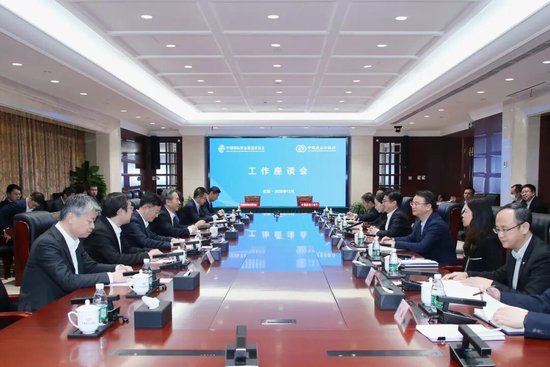
进出口银行董事长陈怀宇与中国贸促会会长任鸿斌举行会谈
Xin Lang Cai Jing· 2025-12-26 09:43
Core Viewpoint - The strategic cooperation agreement signed between the Export-Import Bank of China and the China Council for the Promotion of International Trade aims to enhance collaboration in promoting high-quality trade development [3][6]. Group 1: Strategic Cooperation - The Export-Import Bank and the China Council for the Promotion of International Trade have a strong alignment in their functions, both playing crucial roles in advancing high-quality trade development [3][6]. - The Export-Import Bank plans to leverage its policy-based financial advantages to deepen cooperation with the China Council, supporting enterprises in their international expansion and creating a favorable environment for businesses going abroad [3][6]. Group 2: Organizational Insights - The President of the China Council highlighted recent reforms and developments within the organization, emphasizing the importance of the partnership with the Export-Import Bank [3][6]. - Both organizations aim to strengthen their collaboration and enhance services for enterprises, contributing to high-quality development and a higher level of openness in trade [3][6].