车规级芯片

Search documents
航天智造(300446.SZ):暂不涉及车规级芯片的研发与制造
Ge Long Hui· 2025-10-20 07:09
Group 1 - The core viewpoint of the article is that Aerospace Intelligence Manufacturing (300446.SZ) clarified its business focus on automotive components, specifically interior and exterior parts, lightweight engine components, smart cockpit components, and mold research and manufacturing, while explicitly stating that it does not engage in the research and manufacturing of automotive-grade chips [1] Group 2 - The company specializes in automotive interior and exterior parts, lightweight engine components, smart cockpit components, and mold development and manufacturing [1] - The company does not involve itself in the research and manufacturing of automotive-grade chips [1]

速腾聚创启动近千万港元回购 激光雷达全链自研芯片达车规级
Zhi Tong Cai Jing· 2025-10-20 01:09
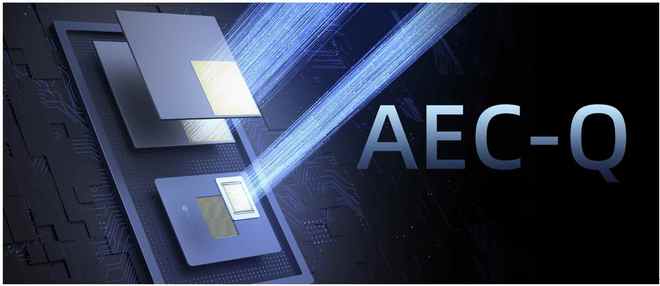
Core Viewpoint - The company, Suoteng Juchuang, has made a significant investment in share buybacks and achieved major technological milestones, reinforcing its market position in the laser radar industry [1] Company Summary - On October 17, Suoteng Juchuang announced a share buyback of 991.75 million HKD for 290,000 shares, with prices ranging from 33.84 to 34.5 HKD per share, reflecting confidence in its future development [1] - The company has achieved a major milestone by having its self-developed SPAD-SoC and 2D VCSEL chips pass AEC-Q automotive certification, making it the only global tech firm to meet automotive standards across all three core areas of digital laser radar [1] - The new generation EM platform products have entered mass production, with EM4 being the only mass-produced laser radar over 500 lines and E1 being the only mass-produced solid-state laser radar [1] - Suoteng Juchuang has secured orders from eight leading automotive manufacturers for 45 vehicle models, bringing the total number of designated models to 133 [1] Industry Summary - Recent policy developments in China have introduced national standards for intelligent connected vehicles, officially incorporating laser radar into the safety requirements for driving assistance systems [1] - The convergence of technological breakthroughs, mass production, and favorable policies is strengthening Suoteng Juchuang's leading market position [1]
汽车早餐 | 京东11月9日将发布新车;小马智行、文远知行港股IPO获证监会备案;全国机动车保有量达4.6亿辆
Zhong Guo Qi Che Bao Wang· 2025-10-15 01:23
Domestic News - The Ministry of Public Security reported that the total number of motor vehicles in China reached 460 million by the end of September 2025, with 360 million being cars and 550 million drivers, making it the largest in the world in terms of total and incremental numbers [2] - The State Administration for Market Regulation unconditionally approved several mergers and acquisitions, including Mitsubishi Motors' acquisition of GAC Mitsubishi's equity [3] - The China Semiconductor Industry Association expressed serious concerns regarding the intervention of the Dutch government in Nexperia, a subsidiary of Wingtech Technology, emphasizing support for fair business practices and opposing discriminatory measures against Chinese companies [4] - The China Automotive Power Battery Industry Innovation Alliance reported that the total production of power and other batteries in September was 151.2 GWh, a year-on-year increase of 35.4%, with cumulative production from January to September reaching 1,121.9 GWh, up 51.4% year-on-year [5] International News - The Abu Dhabi Investment Authority signed a strategic cooperation agreement with Stellantis to develop an integrated automotive ecosystem in the UAE [6] - Germany's Federal Statistical Office reported a 10.4% year-on-year increase in the number of companies filing for bankruptcy in September [7] - South Korea's semiconductor exports in September reached $16.62 billion, a year-on-year increase of 21.9% [8] - South Korea's ICT product exports in September totaled $25.43 billion, a 14% year-on-year increase, with a trade surplus of $11.65 billion [9] Corporate News - Honda reported a total of 54,544 vehicles sold in China in September 2025, with cumulative sales from January to September reaching 467,867 vehicles [10] - CATL and Dongfeng Commercial Vehicle established a new five-year strategic cooperation agreement focusing on product development and industry standards [11] - Pony.ai and WeRide received approval from the China Securities Regulatory Commission for their respective IPOs in Hong Kong [12] - JD.com announced a new car launch in collaboration with GAC and CATL, set for November 9, focusing on consumer insights and sales without direct involvement in manufacturing [13] - Bohai Automotive received approval from the Beijing State-owned Assets Supervision and Administration Commission for a major asset restructuring plan [14] - ZTE announced that its automotive-grade chip, Han域 M1, has been shipped by the end of September 2025, designed for next-generation automotive electronic architectures [15]



全球首家!速腾聚创(02498)全栈自研数字激光雷达芯片通过AEC-Q认证,技术断代领先
Zhi Tong Cai Jing· 2025-10-14 03:25
Core Viewpoint - RoboSense has achieved a significant milestone by having its two core chips for digital lidar pass the AEC-Q102 automotive reliability certification, making it the only company globally to have self-developed chips for the entire digital lidar link that meet automotive standards [1][4] Group 1: Certification and Technology - RoboSense's self-developed SPAD-SoC and 2D VCSEL chips have successfully passed the AEC-Q certification, marking a breakthrough in the global certification of digital lidar core chips [1][4] - The AEC-Q certification involves rigorous testing under extreme conditions, ensuring the reliability of automotive electronic components [4] Group 2: Performance and Innovation - The digital architecture established by RoboSense requires only two core chips to achieve the same functionality as traditional analog lidar, which typically needs seven key components [6] - The SPAD-SoC chip integrates SPAD receiving arrays with data processing SoC, enhancing target recognition rates by 99% and achieving a high sampling rate of 440 billion samples per second [6] - The 2D VCSEL chip is the world's only mass-produced two-dimensional addressable VCSEL emitting chip, which significantly improves laser emission efficiency and energy utilization [8] Group 3: Proprietary Technologies - RoboSense's proprietary technologies include Crosstalk Immunity Encoding, PicoSecond Timing Technology, and Adaptive Fusion Algorithm, which enhance signal processing and measurement accuracy while reducing power consumption [10][11] Group 4: Market Applications and Partnerships - RoboSense's digital lidar platforms have entered mass production, covering applications in Robotaxi, ADAS, and service robots [11] - The EM platform has secured contracts with eight major manufacturers for 45 vehicle models, including a significant partnership with a leading new energy vehicle company [13][14] - The combination of EM4 and E1 products is becoming the preferred choice for L3 and L4 autonomous driving applications, with multiple contracts from top Robotaxi clients [14][16]
北京:持续推进“车路云一体化”基础设施在更大范围、更广区域实现覆盖
Jing Ji Guan Cha Wang· 2025-09-23 05:55
Core Insights - The automotive industry is experiencing steady growth, with accelerated transformation towards electrification, intelligence, and connectivity [1] - Beijing aims to solidify its position as a hub for the intelligent connected vehicle industry by implementing national strategies [1] Industry Development - The city will continue to promote high-standard construction of "dual intelligence" cities, focusing on the 4.0 phase of development [1] - Efforts will be made to expand the coverage of "vehicle-road-cloud integration" infrastructure to support large-scale operation of high-level autonomous vehicles and the development of connected vehicles with assisted driving capabilities [1] Technological Focus - There will be an emphasis on overcoming core technological challenges, particularly in vehicle-grade chips, complex environmental perception, and intelligent operating systems [1] - Continuous innovation efforts will be undertaken to enhance self-controllability in key technologies for intelligent connected vehicles [1]
琻捷电子冲刺港交所IPO 分销商数量为何大幅减少?
Mei Ri Jing Ji Xin Wen· 2025-09-22 13:31
Core Viewpoint - The company, Panjie Electronics Technology (Jiangsu) Co., Ltd., is seeking to go public on the Hong Kong Stock Exchange as a specialized technology company under listing rules Chapter 18C, with significant reliance on a major customer, referred to as Customer F, which has become its largest client during the reporting period [1][2]. Group 1: Financial Performance - During the reporting period (2022-2024 and the first half of 2025), Panjie Electronics reported revenues of 1.04 billion, 2.23 billion, 3.48 billion, and 1.57 billion, respectively, indicating a modest business scale [2]. - The company has not achieved profitability, with losses recorded at 2.05 billion, 3.56 billion, 3.51 billion, and 1.43 billion during the same periods [2]. - Customer F contributed 25.2% and 22.9% of total revenue in 2024 and the first half of 2025, respectively, solidifying its position as the largest customer [3]. Group 2: Customer Dynamics - The sales model of Panjie Electronics includes both distribution and direct sales, with a notable decline in the number of distributors from 480 at the end of 2023 to 182 by the end of 2024 and 119 by the first half of 2025 [2]. - The exit of distributors has been significant, with 356 and 97 leaving in 2024 and the first half of 2025, respectively, while new distributors added were only 58 and 34 during the same periods [2]. Group 3: Acquisition Details - In 2022, Panjie Electronics acquired 100% of the shares of Juxun Semiconductor Technology (Shanghai) Co., Ltd. for over 1.26 billion, with the initial transaction involving multiple stakeholders [4][5]. - The company recognized goodwill of 76.1 million from the acquisition, which was fully impaired in 2023 due to the underperformance of Juxun Semiconductor [6]. - The acquisition process involved complex ownership structures, including significant stakes held by entities that later became indirect shareholders of Panjie Electronics [6][7].
吉利银河星耀6将于9月26日预售 搭载雷神AI电混2.0
Zhong Guo Zhi Liang Xin Wen Wang· 2025-09-18 03:44
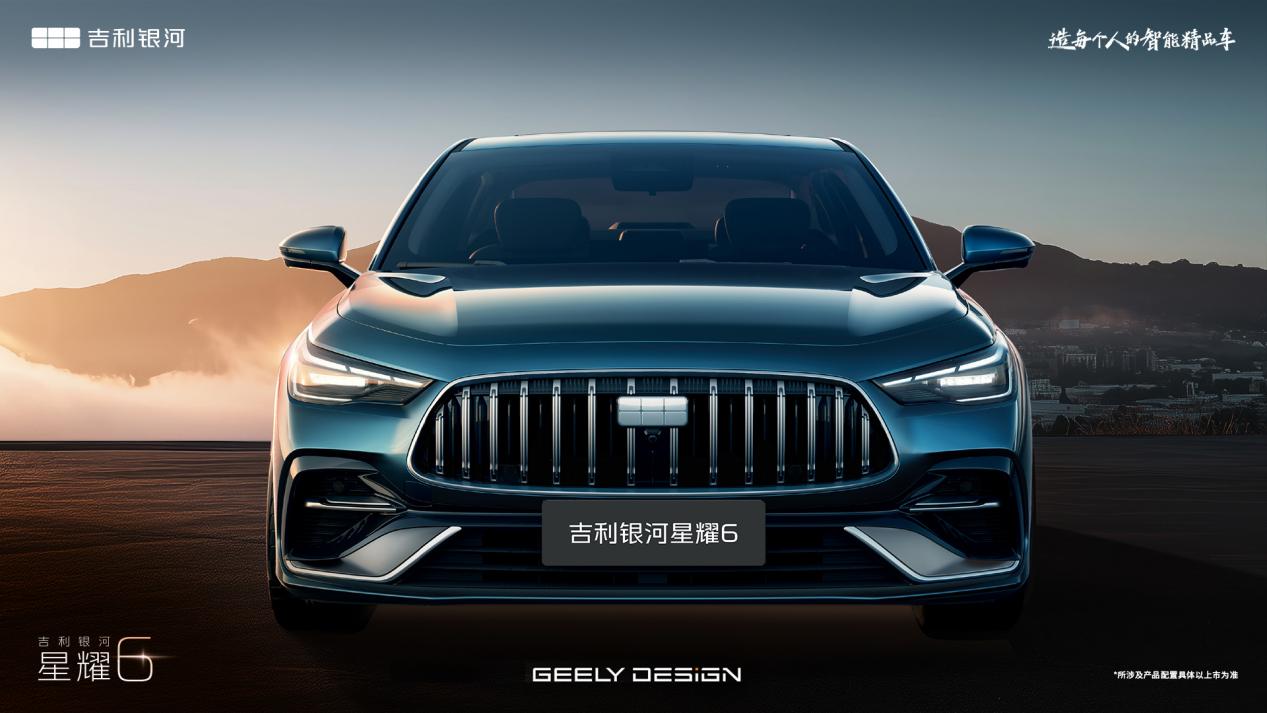
Group 1 - The core point of the news is that Geely Galaxy announced the pre-sale of its new mid-size sedan, Galaxy Xingyao 6, which will start on September 26, featuring the new generation Raytheon AI Electric Hybrid 2.0 technology [1] Group 2 - The vehicle adopts a new design language with a shield-shaped front grille adorned with straight chrome strips and elongated front headlights [3] - The rear features a贯穿式 tail light group, enhancing the vehicle's recognition [3] - The interior follows the Galaxy family style, equipped with a flat-bottom dual-spoke multifunction steering wheel, a liquid crystal instrument panel, and a large suspended central control screen [3] Group 3 - The vehicle is equipped with Flyme Auto smart cockpit and supports HUAWEI HiCar and Carlink connectivity features [3] - It utilizes a self-developed 7nm Long Eagle No.1 automotive-grade chip for the vehicle's system [3] Group 4 - In terms of intelligent driving assistance, it features the Qianli Haohan H3 advanced driving assistance system, which includes 3 millimeter-wave radars, 11 internal and external cameras, 12 ultrasonic radars, and 128 Tops computing power [3] Group 5 - The new generation Raytheon EM-i super hybrid system has a maximum engine power of 82 kW [3] - It is equipped with a 17 kWh large-capacity battery pack, providing a pure electric range of up to 125 km [3]

琻捷电子赴港上市:车规级无线传感龙头的资本突围战
Xin Lang Cai Jing· 2025-09-16 08:37
Core Viewpoint - The company, Jiangsu Ban Jie Electronics Technology Co., Ltd., has submitted its prospectus to the Hong Kong Stock Exchange, aiming to leverage its technological breakthroughs in automotive wireless sensor SoCs for an IPO, marking it as the second company to apply under the special technology rules of Chapter 18C in 2023 [1] Industry Position - According to Frost & Sullivan, Ban Jie Electronics is the third largest globally and the largest in China in the automotive wireless sensor SoC sector, with a product matrix that includes smart tire sensors, battery management systems (BMS), and universal sensor interfaces (USI), achieving a cumulative shipment of over 164 million units covering the top ten automotive manufacturers in China [2] - The company has established several industry "firsts," including being the first supplier in China to achieve mass production of TPMS SoC and BLE TPMS SoC, and the only domestic company providing such products to automotive OEMs; it is also the first globally to launch BPS SoC, with its 2024 BPS SoC product revenue projected to be the highest worldwide [2] Financial Profile - Financial data indicates that Ban Jie Electronics' revenue surged from 104 million yuan in 2022 to 348 million yuan in 2024, with a compound annual growth rate of 83%, and reported 157 million yuan in revenue for the first half of 2025, reflecting a year-on-year growth of 27% [3] - Despite high revenue growth, the company is in a strategic loss phase, with net losses of 206 million yuan, 356 million yuan, and 351 million yuan for the respective years, and a loss of 143 million yuan in the first half of 2025 [3] - The primary reason for the losses is attributed to high R&D expenditures, which accounted for 74%, 43%, and 31% of revenue from 2022 to 2024, maintaining a high ratio of 23% in the first half of 2025; the company plans to use the IPO proceeds to expand business scale, commercialize new products, enhance core technology R&D capabilities, and broaden domestic and international sales networks [3] Challenges and Opportunities - Despite its leading position, Ban Jie Electronics faces several risks, including reliance on a single industry, as its revenue is primarily derived from the automotive sector, making it susceptible to industry cycle fluctuations [4] - The company experiences seasonal revenue fluctuations, with a higher proportion of income typically recognized in the second half of the year due to the purchasing patterns of automotive industry clients [4] - The profitability path remains to be validated, as the Hong Kong market is increasingly rational in valuing technology companies, with investors focusing on the timeline for scalable profitability [4]
万马科技(300698.SZ):暂无车规级芯片相关的研发
Ge Long Hui· 2025-09-16 07:38
Group 1 - The core viewpoint of the article is that Wanma Technology's subsidiary, Youka Technology, focuses on providing products and services related to vehicle networking, platform operation, and autonomous driving toolchains, but does not currently engage in the development of automotive-grade chips [1] Group 2 - Youka Technology is a wholly-owned subsidiary of Wanma Technology [1] - The company primarily serves automotive manufacturers [1] - The services offered include vehicle networking connection management and platform operation [1]

中国销量前十车企都在用,这家芯片公司赴港IPO
Xin Lang Cai Jing· 2025-09-11 07:24
Core Viewpoint - Panjie Electronics is positioning itself as a leading player in the automotive wireless sensor SoC market, with significant growth in revenue and product offerings, despite ongoing net losses due to heavy R&D investments and operational challenges [3][5][6]. Company Overview - Panjie Electronics has submitted its IPO prospectus to the Hong Kong Stock Exchange, focusing on innovative sensor chips, particularly in the automotive sector [3]. - The company is recognized as the third-largest automotive wireless sensor SoC company globally and the largest in China, with all top ten automotive OEMs in China adopting its products by 2024 [3][8]. Financial Performance - Revenue has shown a steady increase from 104 million RMB in 2022 to 348 million RMB in 2024, with a projected revenue of 157 million RMB in the first half of 2025 [5]. - Despite revenue growth, the company has not yet achieved profitability, reporting losses of 205 million RMB, 356 million RMB, and 351 million RMB from 2022 to 2024, with a narrowed adjusted net loss of 15.7 million RMB in the first half of 2025 [5][6]. Product Offerings - The automotive wireless sensor SoC contributes over 60% of the company's revenue, with projected income of 209 million RMB in 2024 [6]. - The smart tire sensor SoC is the highest revenue-generating product, achieving sales of 32.45 million units in 2024, a year-on-year increase of 160.74% [10]. - The BMS SoC has also shown significant growth, with sales of 1.407 million units in the first half of 2025, reflecting a 99% increase [11]. Market Position - The global market for automotive wireless sensor SoC is expected to reach approximately 2.9 billion RMB in 2024, with Panjie Electronics holding a market share of 7.3% [8]. - The company aims to expand its product line to include wireless BMS SoC, which is anticipated to grow significantly in the coming years, with revenue projections soaring from 100 million RMB in 2026 to 20.7 billion RMB by 2030 [11]. R&D and Future Plans - R&D expenses have increased from 77 million RMB in 2022 to 108 million RMB in 2024, with a slight decrease to 36 million RMB in the first half of 2025 due to team restructuring [6]. - The company is also exploring opportunities in the robotics sector, developing customized sensor SoCs for various applications [12]. Investment and Valuation - Panjie Electronics has completed eight rounds of financing, with notable investors including well-known venture capital firms and automotive industry players [12]. - The latest funding round in November 2024 valued the company at 3.635 billion RMB [13].