高效化

Search documents
2025年中国耐火陶瓷制品行业发展背景、产业链、进出口情况及未来趋势研判:2025年上半年耐火陶瓷制品出口量同比增长12.45%,国际竞争力持续提升[图]
Chan Ye Xin Xi Wang· 2025-08-23 02:06
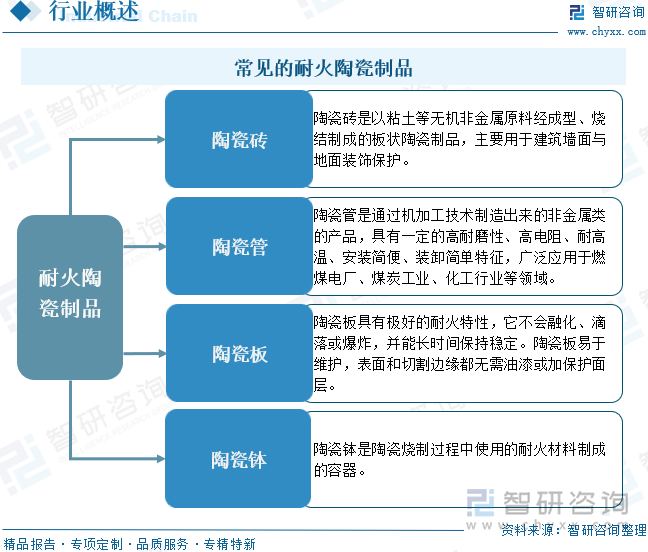
Core Viewpoint - The refractory ceramic products industry in China is experiencing significant growth due to advancements in material science, leading to improved product performance and increased export potential [1][12]. Industry Overview - Refractory ceramic products are materials that maintain stable performance at high temperatures, widely used in metallurgy, chemical engineering, and construction [1][12]. - The overall quality of China's refractory ceramic products has reached an internationally advanced level, laying a solid foundation for expanding exports [1][12]. Industry Development Background - The continuous development of China's economy and industrialization has driven strong demand for refractory materials in high-temperature industries such as steel, cement, and petrochemicals [4]. - China's refractory materials production decreased to 22.07 million tons in 2024, a year-on-year decline of 3.73%, but is expected to recover as downstream demand improves [4]. Industry Chain - The upstream of the refractory ceramic products industry includes raw materials such as clay, high-alumina bauxite, silicon stone, silicon carbide, and silicon nitride [6]. - The downstream applications include construction, metallurgy, chemical engineering, and power industries, where refractory ceramic products are used in various high-temperature environments [6]. Market Data - In the first half of 2025, China's refractory ceramic products industry imported 2,936.14 tons, a year-on-year decrease of 25.97%, with an import value of 664 million yuan, down 7.65% [12]. - The export volume for the same period was 54,200 tons, a year-on-year increase of 12.45%, with an export value of 1.217 billion yuan, up 2.96%, indicating a clear trade surplus [12]. Industry Trends - The industry is moving towards high efficiency, with a focus on optimizing production processes and developing high-performance composite materials [21]. - Customization is becoming increasingly important, with companies needing to provide tailored solutions for different industries, supported by digital design tools and 3D printing technology [22]. - Environmental considerations are reshaping the industry, with a shift towards eco-friendly materials and processes, including recycling and energy-saving technologies [23].

2025年中国汽车消音器行业发展历程、产业链、市场规模、重点企业及发展趋势研判:汽车消音器规模达215.1亿元,高效化、智能化、环保化成为发展主线[图]
Chan Ye Xin Xi Wang· 2025-08-20 01:26
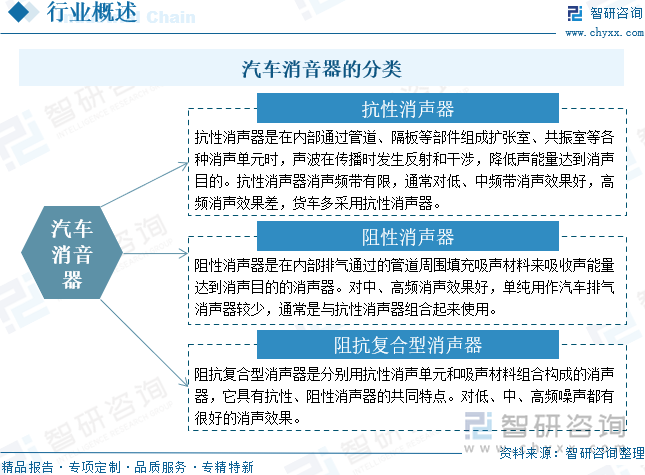
Core Insights - The automotive muffler industry in China is experiencing significant growth driven by increasing urbanization, rising vehicle ownership, and consumer demand for low-noise and fuel-efficient vehicles. The market size is projected to grow from 10.893 billion yuan in 2020 to 19.404 billion yuan in 2024, with a compound annual growth rate (CAGR) of 15.53% [1][13]. Industry Overview - Automotive mufflers, also known as silencers, play a crucial role in reducing engine noise and purifying exhaust gases, thereby enhancing driving comfort and optimizing emissions performance. They are designed to effectively lower back pressure in the exhaust system, improving engine efficiency [1][13]. Industry Development History - The automotive muffler industry in China has evolved through four stages, starting from reliance on imports and simple technology to a phase of rapid expansion post-WTO accession. The industry is now focusing on environmental sustainability and lightweight materials in response to stricter emission standards [5][11]. Industry Value Chain - The upstream of the automotive muffler industry includes raw materials such as aluminum alloys, steel, and various composites. Steel is the primary material used, significantly affecting the durability and performance of mufflers. The midstream involves manufacturing processes, while the downstream is primarily the automotive sector [7][8]. Market Trends - The automotive muffler market is expected to continue expanding due to increasing consumer expectations for vehicle comfort and stricter emission regulations. The market size is anticipated to reach 21.51 billion yuan by 2025 [1][13]. Key Companies - The industry features a fragmented competitive landscape with numerous small to medium-sized enterprises. Notable companies include Guangdong Huachuang Wind Industry Co., Ltd., SMC (China) Co., Ltd., and Zhanjiang Huaxia Silencer Co., Ltd. [2][15]. Future Development Trends - The industry is moving towards higher efficiency through optimized airflow structures and enhanced noise reduction capabilities. Innovations such as active noise control systems and the use of sustainable materials are becoming increasingly important [21][22][23].
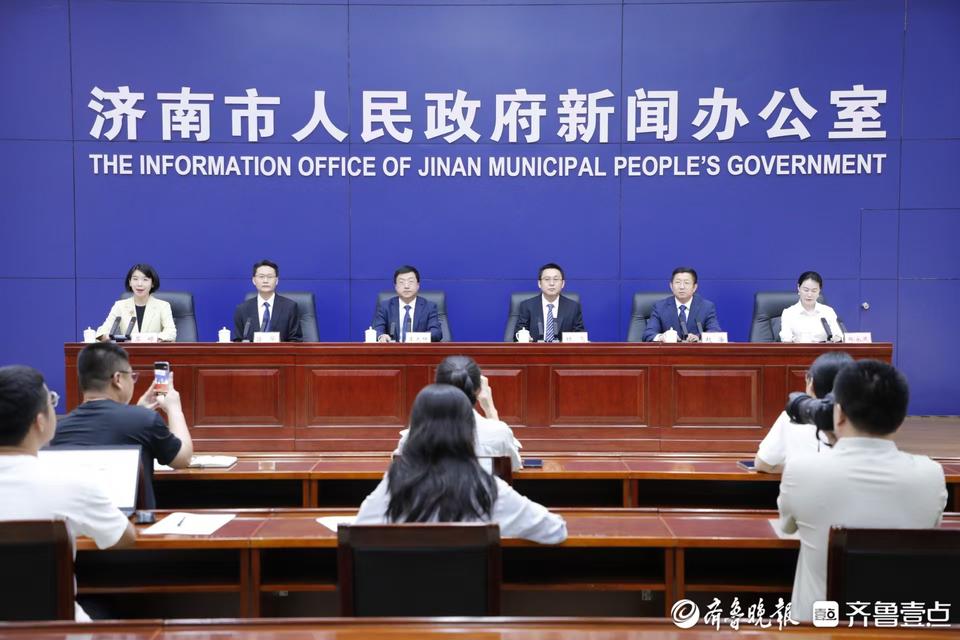
重汽济卡预计今年产销量同比增长超10%
Qi Lu Wan Bao Wang· 2025-08-12 04:38
Core Viewpoint - China National Heavy Duty Truck Group Jinan Truck Co., Ltd. anticipates a significant increase in production and sales, projecting over 10% growth in 2025 and an additional 10% increase in 2026, aiming to solidify its leadership position in the heavy truck industry by 2030 [1][4] Group 1: Production and Sales Projections - The company expects production and sales to grow by over 10% year-on-year in 2025, with a further 10% increase in 2026 based on 2025 figures [1][4] - By 2030, the company aims for comprehensive enhancement in production volume and market share [1][4] Group 2: Technological Advancements and Employment - The company is investing heavily in technology research and equipment upgrades to adapt to the trends of electrification, intelligence, and efficiency in the heavy truck industry [3] - The establishment of the "Intelligent Connected (New Energy) Heavy Truck Project" in Laiwu District has created over 3,000 quality jobs and significantly contributed to regional economic growth [3] Group 3: Manufacturing Capabilities - In 2024, the company achieved a production volume of 110,000 vehicles, marking a 9% year-on-year increase [3] - From January to July 2025, the company produced over 70,000 vehicles, reflecting a substantial year-on-year growth of 17%, with a 42% increase in per capita output [3] Group 4: Policy and Support from Local Government - Laiwu District has implemented over 50 supportive policies aimed at enhancing the business environment, focusing on manufacturing "champions," industrial upgrades, and new energy vehicles [4] - The local government has established a dedicated automotive industry department to provide tailored services to the company, ensuring that policy benefits reach the enterprise effectively [4]

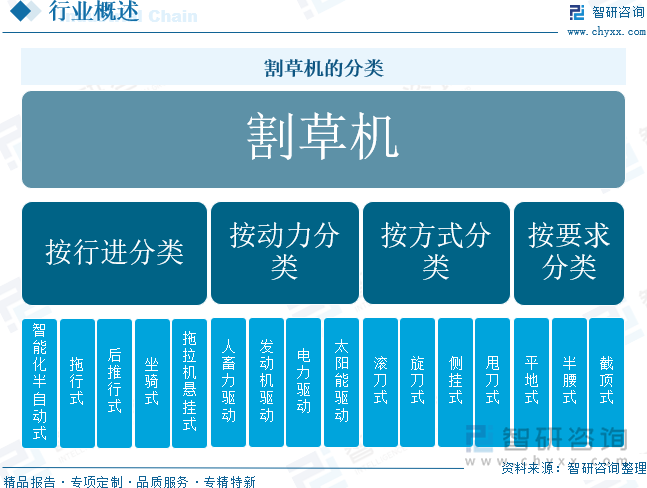
2025年中国割草机行业相关政策、市场规模、出口情况、重点企业及发展趋势研判:产品创新引领出口市场,国产割草机前五个月出口额增长超五成[图]
Chan Ye Xin Xi Wang· 2025-07-28 01:03
Industry Overview - The lawn mower industry plays a crucial role in agricultural planting, landscaping, public green space maintenance, and pasture management [1][16] - The Chinese lawn mower market is characterized by unique demand features, primarily used in public spaces due to the low proportion of private gardens in urban high-rise living [1][16] - The market size in China is projected to grow from 2.433 billion yuan in 2018 to 5.394 billion yuan by 2024, with a compound annual growth rate (CAGR) of 14.19% [1][16] Industry Development History - The lawn mower industry has evolved through three main stages: the manual mowing era (1830-1880), the mechanization era (1890-1950), and the intelligent era (1960-present) [5] - The first mechanical lawn mower was invented in 1830, leading to continuous improvements and innovations in design and functionality [5] Industry Policies - The development of the lawn mower industry in China is supported by national policies promoting agricultural mechanization and ecological protection [8] - Recent policies include increased subsidies for the replacement of agricultural machinery and support for the development of advanced agricultural equipment [10] Industry Supply Chain - The supply chain consists of upstream raw materials and components, midstream manufacturing, and downstream sales channels [11] - Key raw materials include steel, non-ferrous metals, rubber, and plastics, while components include engines and batteries [11] Current Market Trends - The global lawn mower market is expected to reach approximately $9.252 billion in 2024, with a projected growth to $10.195 billion by 2030 [15] - North America is the largest market, accounting for about 48.88% of global demand, driven by a strong culture of home gardening and landscaping regulations [15] Export Performance - In 2024, China's lawn mower exports reached 21.922 million units, a year-on-year increase of 59.6%, with export value rising by 50.26% to 17.589 billion yuan [18] - The first five months of 2025 saw exports of 13.6646 million units, reflecting a growth of 35.72% year-on-year [18] Competitive Landscape - The global lawn mower market is characterized by a competition between foreign brands and domestic players, with established brands like Husqvarna and Honda leading the market [21] - Chinese companies such as DAYE and Greebo are rapidly gaining market share through technological innovation and competitive pricing [21] Key Companies - Major companies in the industry include DAYE, Greebo, and others, with significant revenue growth reported in recent years [25][27] - For instance, DAYE's lawn mower revenue reached 1.558 billion yuan in 2024, a 93.3% increase [25] Future Development Trends - The industry is moving towards higher efficiency, with advancements in electric motor technology and lightweight materials expected to improve operational efficiency by over 30% [29] - Smart technology is becoming a key focus, with new products featuring AI algorithms for optimized mowing paths and remote control capabilities [30] - The shift towards low-carbon and environmentally friendly products is accelerating, with electric models increasingly replacing traditional gasoline-powered mowers [31]

华菱钢铁(000932) - 2025年7月16日投资者关系活动记录表
2025-07-21 00:42
Industry Overview - The steel industry is currently in a downward cycle that began in mid-2022, with a loss ratio of 26.14% among large and medium-sized steel enterprises, although this has narrowed year-on-year [2][3] - Demand for steel is expected to decline slowly in the long term, but there are structural opportunities in manufacturing, shipbuilding, wind power, silicon steel, and new energy vehicles [2][3] - The cost of raw materials like coking coal has decreased by 32% in the first half of the year, improving the supply-demand balance and leading to a downward shift in price levels [2][3] Government Policies - The government has emphasized the need to regulate the steel industry to combat "involution" and has proposed continuous control of crude steel production [3] - The new 2025 version of the "Steel Industry Normative Conditions" aims to promote high-quality development through optimization and elimination of outdated capacity [3] VAMA's Market Position - VAMA focuses on the high-end automotive steel market, having developed 137 steel grades since its inception in 2014, including advanced high-strength steel (AHSS) and ultra-high-strength steel (UHSS) [5][6] - VAMA's sales to new energy vehicle manufacturers have been increasing, with both Phase I and II of production nearly at full capacity [5][6] Future Developments - VAMA plans to introduce 24 advanced steel grades, including Ductibor®1500 and Fortiform® series, to enhance its competitive edge [8][9] - The third phase of VAMA's project is progressing, with plans to incorporate advanced vacuum coating technology (JVD technology) to improve production capabilities [10][11] Financial Performance - The company has maintained a leading profitability level in the industry, despite fluctuations due to transitional factors and maintenance schedules [12][13] - The cash dividend for 2024 is set at 1.00 yuan per 10 shares, with a payout ratio of 34%, which is an increase of 2.7 percentage points from the previous year [19] R&D Investment - The company has significantly increased R&D investment to support the development of new products and maintain competitiveness in high-end steel markets [16][17] - R&D expenses typically exceed 3% of revenue for large and medium-sized steel enterprises, reflecting the industry's commitment to innovation [17]

“Whoosh”!看中国高铁一路飞驰
Xin Hua She· 2025-07-08 12:53
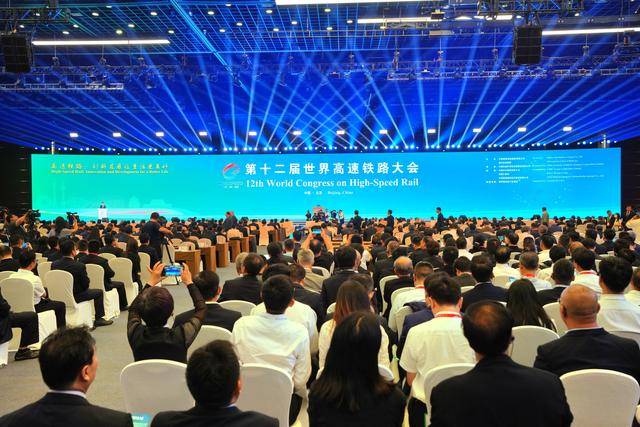
Core Viewpoint - The article highlights the significance of the "Whoosh" high-speed train as a symbol of China's high-speed rail achievements and its role in connecting the world, particularly in the context of the 12th World High-Speed Rail Conference held in Beijing [1][5]. Group 1: High-Speed Rail Achievements - China has built the world's largest and most modern high-speed rail network, with a total operational mileage of 48,000 kilometers, accounting for over 70% of the global high-speed rail mileage [3]. - The network covers 97% of cities with populations over 500,000, showcasing its extensive reach [3]. - The Chinese high-speed rail system has developed a comprehensive technology framework, including construction, manufacturing, and operational management, with notable innovations like the Fuxing train series [3]. Group 2: Conference Highlights - The conference attracted over 2,000 guests from more than 60 countries, focusing on the theme "High-Speed Rail: Innovative Development for a Better Life" [1]. - Key discussions included six core topics: artificial intelligence and digitalization, infrastructure, socio-economic and commercial aspects, locomotive performance, operational and passenger experience, and network planning [3]. - The event featured the CR450 train model, which is expected to operate at speeds of 400 kilometers per hour, marking it as the fastest next-generation train [3]. Group 3: Technological Innovations - The conference showcased new technologies such as magnetic levitation trains and new energy locomotives, along with an "Artificial Intelligence" exhibition area highlighting smart construction and maintenance [4]. - Six national key laboratories were opened to the public, demonstrating China's strong research capabilities in high-speed rail technology [4]. - China has established itself as a leader in setting international standards for high-speed rail, having developed all 13 system-level international standards in this field [4].
4.8万公里!中国高铁营业总里程占全球70%以上
Sou Hu Cai Jing· 2025-07-08 08:16
Core Insights - The 12th World High-Speed Rail Conference opened on July 8, focusing on "High-Speed Rail: Innovative Development for a Better Life," with over 2,000 attendees from more than 60 countries and regions [1][3] Industry Overview - China has built the world's largest and most modern high-speed rail network, with a total operating mileage of 48,000 kilometers, accounting for over 70% of the global high-speed rail mileage, covering 97% of cities with populations over 500,000 [3] - The operational system is highly efficient, with up to 10,000 high-speed trains running daily, transporting approximately 16 million passengers each day, and a cumulative total of over 22.9 billion passengers transported [3] Technological Developments - The conference showcased various speed series of the Fuxing high-speed trains, including CR400 (350 km/h) and CR300 (250 km/h), with multiple configurations to meet different transportation needs [8] - By the end of 2024, a total of 1,932 standard Fuxing trains are expected to be in operation, having transported 3.3 billion passengers and accumulated 32.5 billion kilometers of safe operation [8] Future Projections - The high-speed rail network is projected to reach 70,000 kilometers by 2035, covering all cities in China with populations over 500,000 [8] Conference Activities - The conference includes various activities such as high-speed rail innovation tours, technical visits, cultural outreach, and interactive sessions for rail enthusiasts, aimed at promoting high-speed rail culture and facilitating collaboration [7] - Discussions will focus on enhancing high-speed rail quality and its role in economic development, with participation from international railway organizations and experts from multiple countries [10][11] Event Significance - The World High-Speed Rail Conference serves as a global platform for showcasing achievements, technical exchanges, and industry collaboration, with significant international influence since its inception in 1992 [14]
余杭发布生态环境“天空地”一体化监管体系
Hang Zhou Ri Bao· 2025-06-25 01:31
Core Insights - The article highlights the launch of an integrated ecological environment monitoring system in Yuhang District, Hangzhou, which marks a significant advancement in the use of technology for ecological governance [1][2] - The system aims to enhance ecological environment management through a model characterized by "integrated perception, dual-chain fusion, three-dimensional collaboration, and intelligent linkage" [1] Group 1: System Features - The system integrates various sensing technologies, including satellite remote sensing, drones, unmanned vehicles, and over 200 automatic monitoring stations, enabling comprehensive and real-time monitoring of ecological factors [1] - A database combining dynamic data from over 5,000 local enterprises and multi-level ecological environment system data supports the system's functionality, allowing for deep data analysis using advanced models [1] Group 2: Operational Mechanism - The system operates a closed-loop management process in three core scenarios: "intelligent perception, intelligent early warning, intelligent tracing, and intelligent rectification" [1] - In the event of an anomaly, the system can automatically dispatch optimal resources for precise verification and rapid tracing, enhancing the efficiency of environmental management [1][2] Group 3: Future Developments - Yuhang District plans to continuously upgrade the integrated monitoring technology to improve ecological governance capabilities, aiming for higher levels of ecological environment management to support high-quality economic development [2]
分子筛活化粉市场发展趋势分析:行业将向高效化、环保化、多功能化等方向发展
Sou Hu Cai Jing· 2025-06-24 03:08
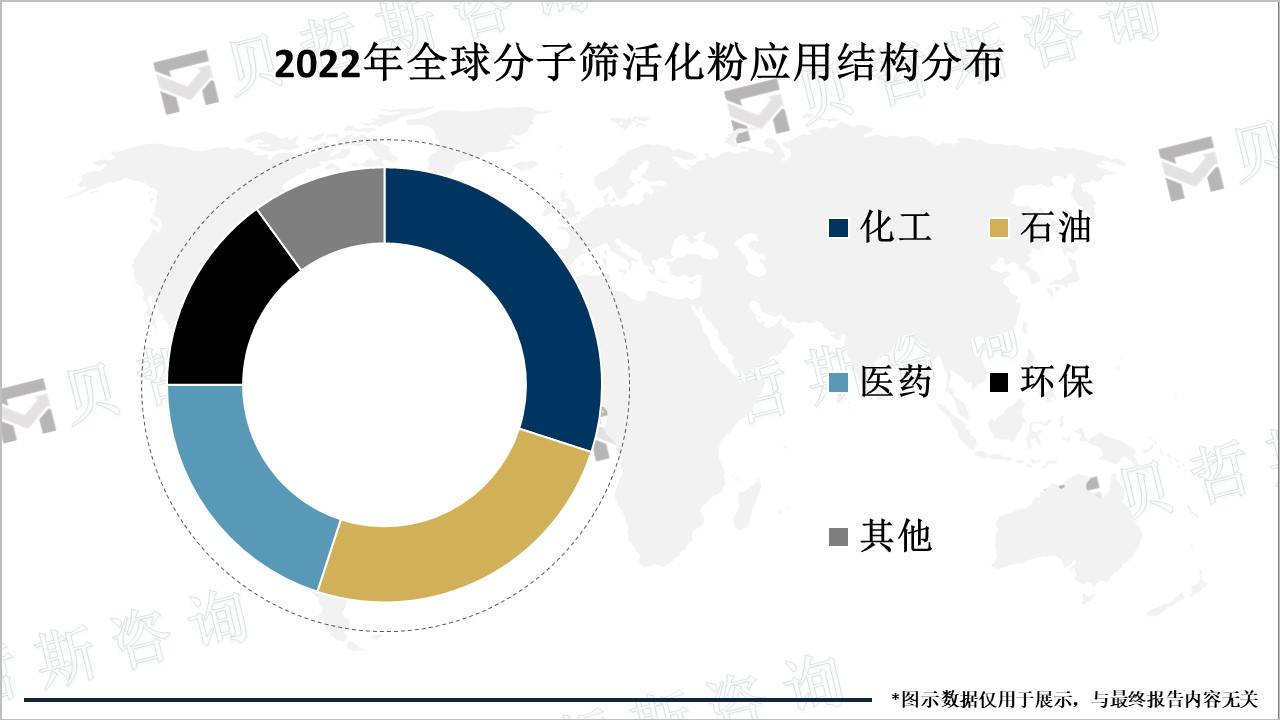
Core Insights - Molecular sieve activated powder is a highly porous powder material primarily composed of molecular sieves and carriers, used as catalysts or adsorbents to enhance reaction rates and efficiencies [1] - The market for molecular sieve activated powder is expected to grow steadily, reaching several billion dollars by 2025 due to increasing demand across various sectors [4][6] Application and Market Overview - Molecular sieve activated powder is widely used in chemical, petroleum, pharmaceutical, and environmental sectors due to its high adsorption and catalytic properties [2][4] - In the chemical industry, it serves as a catalyst to improve reaction rates; in the petroleum sector, it is utilized in oil processing and catalytic cracking; in pharmaceuticals, it aids in drug separation and purification; and in environmental applications, it is used for waste gas and water treatment [4] - The global market for molecular sieve activated powder is projected to maintain stable growth, driven by the ongoing development and demand in these industries [4] Emerging Opportunities - The market for molecular sieve activated powder is expected to expand into emerging fields such as new energy and new materials, reflecting the evolving industrial landscape [6] Regulatory Environment - The production and use of molecular sieve activated powder must comply with environmental regulations, safety standards, quality certifications, and intellectual property protections [7] - Government support for high-tech products like molecular sieve activated powder is increasing, providing more opportunities and favorable policies for production and application [7] Development Trends - Key trends in the molecular sieve activated powder market include a focus on efficiency, environmental sustainability, and multifunctionality [9]
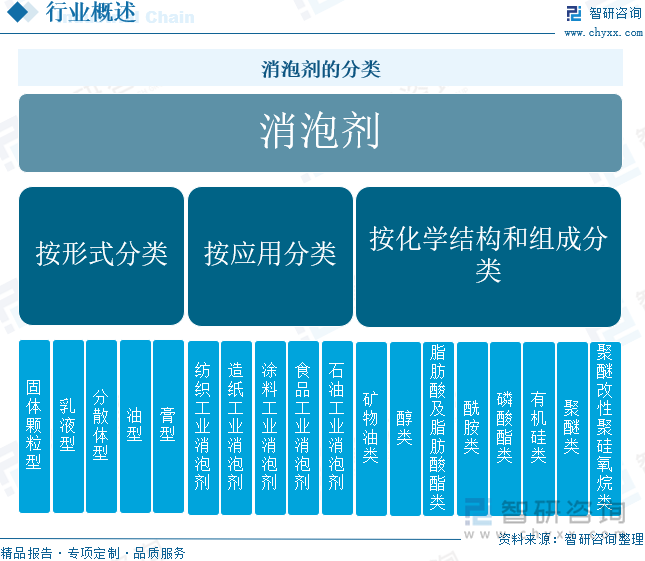
2025年中国消泡剂行业发展历程、产业链、产需情况、市场规模及未来趋势研判:消泡剂行业规模持续增长,环保型消泡剂将成为未来主流产品[图]
Chan Ye Xin Xi Wang· 2025-06-19 01:38
Industry Overview - The defoamer industry is experiencing rapid growth due to economic development and industrial upgrades, becoming an essential component in various sectors such as oil and gas extraction, automotive manufacturing, environmental engineering, and new synthetic materials [1][14] - The market size of China's defoamer industry is projected to grow from 4.75 billion yuan in 2018 to 5.87 billion yuan by 2024, with a compound annual growth rate (CAGR) of 3.59% [1][14] - The demand for defoamers in traditional industries like coatings, papermaking, and construction materials remains stable amid ongoing urbanization and infrastructure improvements [1][14] Defoamer Characteristics - Defoamers are substances that reduce surface tension in liquids to prevent or eliminate foam, impacting product quality and production processes [3][5] - Key properties of defoamers include strong defoaming ability, low dosage requirements, chemical stability, and safety [5][11] Industry Development History - The defoamer industry has evolved through four generations, starting with mineral oil and fatty acid-based products, followed by polyether defoamers, and currently dominated by silicone-based defoamers [6] Industry Chain - The defoamer industry chain consists of upstream raw materials (active ingredients, emulsifiers, carriers), midstream production, and downstream applications across various sectors including food, papermaking, water treatment, and more [9] Market Demand and Production - By 2024, China's defoamer production is expected to reach approximately 961,800 tons, with a demand of about 927,000 tons [13] - The increasing scale of industrial production and technological advancements are driving the demand for defoamers [13] Key Companies - Notable companies in the defoamer industry include Jiangsu Sixin Technology, Shenzhen Dayang New Materials, and Guangdong Tianfeng Defoamer, among others [2][19] - Jiangsu Sixin Technology, established in 1992, is a leading domestic defoamer manufacturer with a wide range of products across various industries [20] - Jiangsu Saiou Xinyue Defoamer Co., Ltd. focuses on high-performance defoamers and has a comprehensive application system covering multiple sectors [22] Industry Trends - The defoamer industry is moving towards green and multifunctional products, with an emphasis on biodegradable materials and integrated functionalities [25][26] - Innovations such as high-temperature resistant defoamers and smart defoaming systems are being developed to meet specific industrial needs [27][28]