
AI教育

Search documents
未知机构:国泰海通商社刘越男凯文教育AI教育开启增长新篇章合作方智谱-20260127
未知机构· 2026-01-27 02:15
合作方智谱华章是中国领先的人工智能公司,按2024年收入统计,在中国独立通用大模型开发商中位列第一,在 所有通用大模型开发商中位列第二,市场份额达6.6%。 【国泰海通商社刘越男】凯文教育:AI教育开启增长新篇章 合作方智谱华章技术实力强。 2025年9月,公司与北京智谱华章及北京鸿智睿师共同出资设立北京智启文华教育科技有限公司,专注教育智能产 品的研发与商业化应用。 【国泰海通商社刘越男】凯文教育:AI教育开启增长新篇章 合作方智谱华章技术实力强。 2025年9月,公司与北京智谱华章及北京鸿智睿师共同出资设立北京智启文华教育科技有限公司,专注教育智能产 品的研发与商业化应用。 海淀学校2024-2025学年小学生年学费为23万元/年,初中学费为25万元/年,高中学费为27万元/年,且逐年稳步增 长。 AI教育市场潜力大:2024‑2025学年北京市中小学学生人数预计为180万人,假设AI教育产品按每名学生收费 200‑300元,北京市场学生端收入可达3.6亿元‑5.4亿元。 我们认为,北京作为全国教育高地的成功试点,有望为公司未来向全国市场复制推广提供重要样本。 盈利能力稳步提升:公司2023年总收入为3. ...

听民意汇民声 建言献策谱新篇
Xin Lang Cai Jing· 2026-01-24 22:40
出席北京 市第十六届人大四次会议的朝阳团代表李静接受媒体采访。本报记者 和冠欣摄 本报记者 李松林 胡子傲 昨天上午,参加市十六届人大四次会议的人大代表陆续抵达驻地报到。首都高质量发展、超大城市治理 现代化、托育服务提质升级、AI教育、老字号人才培养……代表们带着深入一线调研的成果、倾听民 意汇集的心声,聚焦北京经济社会发展关键领域与民生关切,以高度的责任感履职尽责、建言献策。 王报换代表: 加强托育机构能力建设 幼有所托、幼有善育是民生关切的一个焦点。市人大代表、首都统战智库联合会常务副会长王报换带来 了一份建议,呼吁加强0到3岁托育机构核心能力培训体系建设,以专业化、规范化、人性化能力培训破 解行业痛点,推进托育机构高质量发展。 王报换介绍,近年来北京不断发力托育服务,部分区域(如海淀区)2至3岁幼儿入托需求基本得到满 足,但全市层面托育资源分配仍有差距。托育服务能力上,机构多停留在"照看护"基础层面,向"促发 展""塑心智"高质量转型进程缓慢,尤其在婴幼儿心理行为发育识别、支持与早期干预方面专业能力薄 弱。此外,托育服务与医疗领域结合不紧密,托育从业人员整体专业素养不足,托班教师保育教育综合 能力也有待 ...

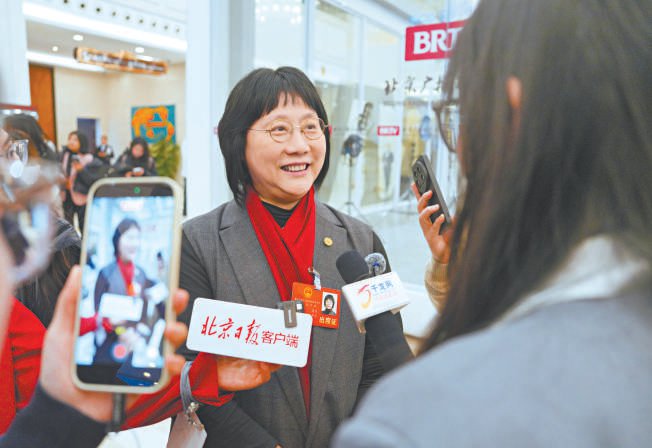
参加北京市十六届人大四次会议的人大代表1月24日报到-千龙网·中国首都网
Xin Lang Cai Jing· 2026-01-24 22:39
(来源:千龙网) 昨天(24日)上午,参加北京市十六届人大四次会议的人大代表陆续抵达驻地报到。首都高质量发展、 超大城市治理现代化、托育服务提质升级、AI教育、老字号人才培养……代表们带着深入一线调研的 成果、倾听民意汇集的心声,聚焦北京经济社会发展关键领域与民生关切,以高度的责任感履职尽责、 建言献策。 为此,她建议,中小学人文学科AI教学以智能化激发教育活力的同时,应制定分级应用指南,并明确 技术使用边界与伦理,确立"辅助而非替代"核心原则,禁止AI直接进入课堂作文、期末考试、现场创作 等核心能力评估环节,限制其在学生主创过程中的依赖程度。 李静表示,应建立AI应用"负面清单",严禁利用AI进行学术不端行为,严禁直接使用未经审核的AI生 成内容,对进入校园的AI教育产品开展算法逻辑与价值观审核。"对于允许使用AI的作业,要求学生附 上'使用说明',重点考查其批判性思维与驾驭工具的能力。" "建议构建体系完整、内容科学、机制健全的托育核心能力培训系统。"王报换说,可尝试构建分层分类 模块化课程体系,补齐医育融合、实操技能等;组建跨领域专家团队,创新"线上+线下+跟岗+认证"混 合培训模式。同时,将培训结果与 ...
凯文教育:首次覆盖报告:AI教育开启增长新篇章-20260123
GUOTAI HAITONG SECURITIES· 2026-01-23 05:45
Investment Rating - The report assigns an "Accumulate" rating to the company with a target price of 9.57 CNY [5]. Core Insights - The company is expected to capture new market opportunities through its AI education layout and expansion of core educational resources [2]. - Revenue growth is projected to be significant, with total revenue expected to reach 4.2 billion CNY, 5.72 billion CNY, and 7.6 billion CNY from 2025 to 2027 [16]. - The company is transitioning from traditional education services to a blend of education and technology, supported by strong partnerships with AI firms [12]. Financial Summary - Total revenue for 2023 is projected at 3.20 billion CNY, with a year-on-year growth of 25.9% [4]. - The net profit attributable to the parent company is expected to improve from a loss of 50 million CNY in 2023 to a profit of 138 million CNY by 2027 [4]. - The company anticipates a gradual increase in gross margin, driven by optimized resource utilization and the introduction of AI education products [17]. Revenue Breakdown Forecast - The revenue from tuition and training fees is expected to grow steadily, with tuition fees for the Haidian and Chaoyang campuses set to increase [16]. - AI education product revenue is projected to reach 1 billion CNY by 2026, with significant growth expected in subsequent years [16][65]. - The overall revenue forecast includes contributions from various segments, with tuition fees expected to be 259.76 million CNY in 2024, growing to 489.58 million CNY by 2027 [18]. Strategic Developments - The company has established a joint venture with leading AI firms to develop and commercialize AI educational products, marking a significant step in its strategic transformation [58]. - The dual-track educational model aims to cater to diverse educational needs, enhancing the company's market reach and brand credibility [44]. - The partnership with state-owned enterprises is expected to strengthen governance and operational efficiency, providing a competitive edge in the education sector [41].
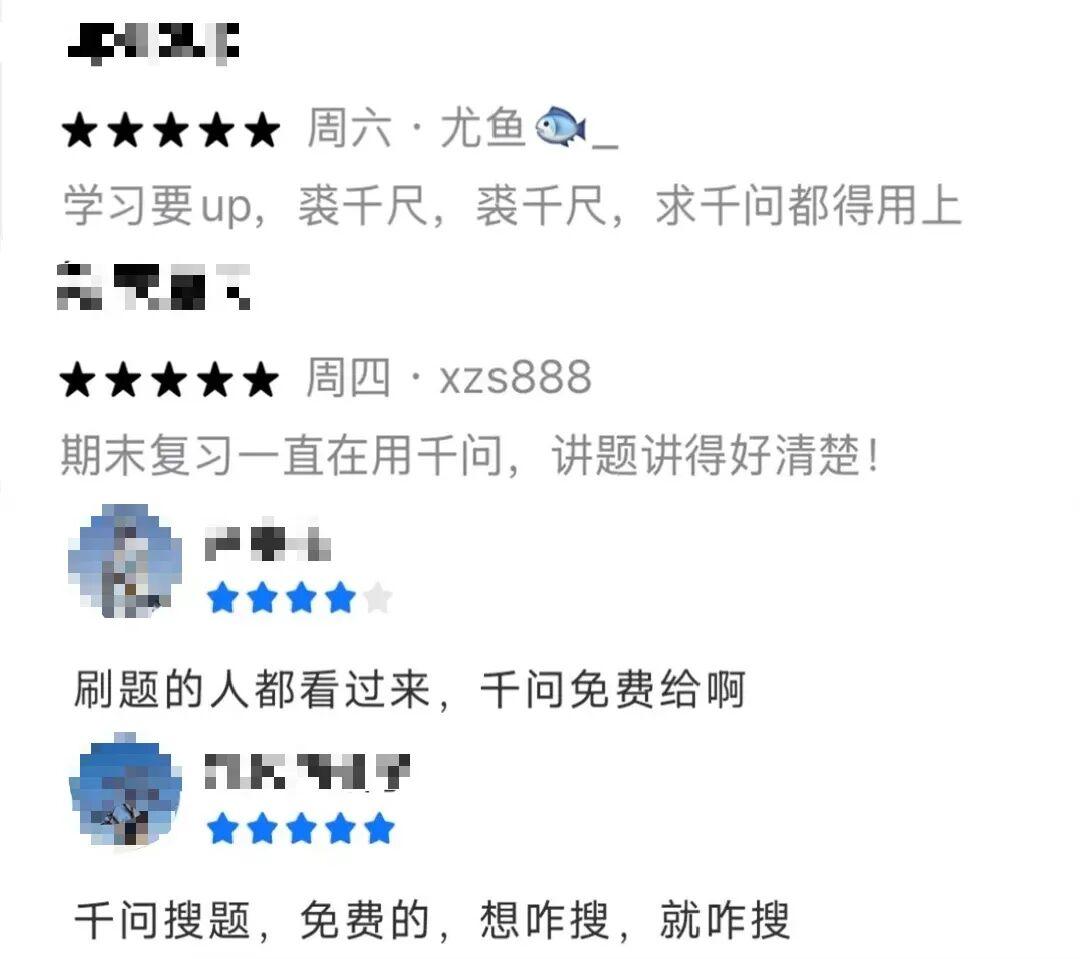
小学生组团刷差评,竟然惊动千问官方专门开了个会?
3 6 Ke· 2026-01-23 03:46
Core Viewpoint - The recent update of Alibaba's Qianwen app has sparked a significant debate about the role of AI in education, highlighting both positive feedback from parents and negative reactions from students [1][2][5]. Group 1: AI in Education - The Qianwen app offers features like photo search for exam questions and AI-generated practice exercises, which some parents view as a valuable educational tool [1][5]. - A large number of students have expressed frustration with the app, feeling overwhelmed by the additional exercises it generates [2][6]. - The controversy has led to a broader societal discussion about whether children should use AI for learning [5][6]. Group 2: Educational Conference - Qianwen organized a seminar titled "Can Children Use AI?" featuring prominent education experts and scholars [5][6]. - The seminar addressed concerns about whether reliance on AI could hinder children's learning capabilities, with some experts arguing that traditional education methods may not be effective in the AI era [6][11]. Group 3: Changing Definitions of Intelligence - Experts suggest that the definition of "intelligence" is evolving in the AI age, as AI can perform tasks like calculation and memorization more efficiently than humans [13][19]. - The focus should shift from rote learning to understanding the logic behind AI-generated solutions, promoting a new learning approach termed "downhill learning" [15][19]. Group 4: Teacher's Role and AI Limitations - While AI can assist in knowledge transfer, it lacks the emotional connection and personal touch that human teachers provide [20][21]. - Teachers are seen as essential for addressing students' emotional needs and fostering personal growth, which AI cannot replicate [21][23]. Group 5: Equity and Standardization in Education - AI tools like Qianwen are democratizing access to educational resources, but there are concerns about potential standardization and mediocrity in learning outcomes [23][25]. - The future of education may require a shift towards holistic learning that encompasses physical and emotional development, rather than solely academic performance [25][27]. Group 6: Future Considerations - The discussion around whether children should use AI is becoming less relevant as AI becomes integrated into daily life [28][30]. - The focus should be on how to effectively utilize AI as a supportive tool in education, rather than allowing it to replace critical thinking and personal engagement [30][31].

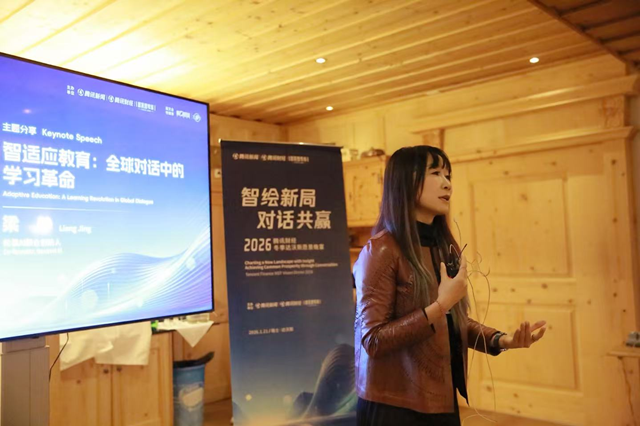
松鼠Ai梁静:AI教育需要垂直模型,而非通用大语言模型
Di Yi Cai Jing· 2026-01-23 00:47
Core Viewpoint - The true AI education must be based on vertical models rather than general large language models, emphasizing the importance of precise learning behavior data to understand students and provide tailored education [1][3]. Group 1: AI Education Trends - The AI education sector is experiencing a significant "bubble phenomenon," where many so-called AI education products merely apply general large language models superficially, failing to genuinely assist students in learning how to learn [3]. - There is widespread concern among schools, local governments, and parents globally about children using these AI platforms, as they may only receive answers without developing real learning capabilities [3]. Group 2: Vertical AI Models - Squirrel AI has developed a specialized "AI vertical model" for the education sector, integrating AI adaptive learning with multimodal large models, which differs significantly from the commonly used general large language models that constitute less than 5% of their system [3]. - The core difference between vertical AI models and general AI lies in the depth of understanding of students; vertical AI can comprehensively record a student's learning journey, with some students having been in the system for five, seven, or even ten years, allowing for a deeper understanding than any human teacher [3]. Group 3: Industry Recommendations - The AI education industry should focus on vertical AI specifically tailored for education, rather than merely applying general large language models in educational contexts [4].
凯文教育20260119
2026-01-20 01:50
Kevin Education Conference Call Summary Company Overview - **Company**: Kevin Education - **Industry**: Education Technology (EdTech) Key Points AI Product Launch and Expansion - Kevin Education's AI product "Zhiqi" has been piloted in 54 schools in Haidian District, covering approximately 135,000 students, which constitutes a significant portion of the district's K-12 student population [2][4] - The product is set for full rollout in Haidian District and plans to expand to other areas in Beijing and beyond [2][4] - The AI product has received positive feedback from schools and teachers, particularly for its capabilities in generating exams and assigning homework [2][7] Product Features and Development - The AI product leverages a partnership with Zhipu Huazhang, enhancing its ability to process complex text and integrate data across school environments [5] - It is designed to be user-friendly for teachers and aims to promote equitable education [5] - The product is currently available on both Apple and Android platforms, with plans for a subscription model priced at approximately 200 to 300 yuan per year [2][9] Growth Projections - Kevin Education anticipates a 10% increase in student enrollment at its two schools in Beijing by 2026, with new projects in the Chaoyang District and potential branch openings in Haidian [2][9] - The company expects traditional business revenue and profits to continue increasing, with the AI education segment projected to achieve profitability in its first year [3][13] Asset Management and Financial Strategy - One of the key tasks for 2026 is to communicate with potential investment partners regarding asset disposal to optimize the company's asset structure [2][10] - The company has received support from local education authorities for its initiatives, and there is a focus on enhancing product performance and market share following the initial rollout [8] Market Trends and Future Outlook - The AI education market is expected to grow significantly, driven by government investment and increasing participation from schools and parents [11] - Kevin Education plans to allocate more resources to AI education while also improving its traditional business operations [11] Student Engagement and Feedback - The AI product currently serves 135,000 students, with ongoing data collection to enhance its functionality and accuracy [12] - Feedback from the Haidian District indicates high acceptance among teachers and an increase in usage metrics [7] Additional Insights - The company is positioned to benefit from the ongoing development of large model technologies, which may accelerate the adoption of AI tools in education [11] - The integration of AI in education is seen as a long-term trend, with potential for significant market opportunities [11]
如何让AI既激发创新又不越界 复旦大学发布国内高校首个生成式AI教学指引与共创平台
Zhong Guo Qing Nian Bao· 2026-01-14 02:31
Core Insights - Fudan University has launched the AI3A education co-creation platform and released the "Guidelines for the Application of Generative Artificial Intelligence in Education" to integrate AI into teaching while fostering innovation and maintaining ethical boundaries [1][2][9] Group 1: AI Application Guidelines - The guidelines provide detailed action suggestions, ethical warnings, and tool recommendations for various educational scenarios, including classroom teaching and academic evaluation [2] - The focus is on how students use AI tools rather than just the correctness of results, emphasizing the importance of process documentation and responsible use [2][3] - The guidelines aim to ensure that AI assists in tasks like language polishing but does not replace core academic work such as research conception and data analysis [2][3] Group 2: AI3A Platform Features - The AI3A platform includes a teaching case library, practical learning platform, and a collection of global AI case studies, designed to support a progressive learning path [4][5] - The platform encourages collaboration across disciplines, allowing students and teachers to share and build upon each other's AI educational experiences [4][5] - It features over 100 exemplary practices in AI education developed by faculty and students, showcasing innovative course designs and applications [5][6] Group 3: Educational Transformation - The integration of AI into education is seen as a transformative opportunity rather than a challenge, with the potential to enhance educational quality [9] - The collaborative model between students and teachers is fostering interdisciplinary research and innovation, breaking down traditional academic silos [7][8] - The platform aims to help educators adapt to AI technologies, promoting a new ecosystem of education that combines AI with existing academic strengths [7][8]
如何让AI既激发创新又不越界
Zhong Guo Qing Nian Bao· 2026-01-14 01:28
Core Insights - Fudan University has launched the AI3A education co-creation platform and released the "Guidelines for the Application of Generative Artificial Intelligence in Education" to integrate AI into teaching and foster innovation while maintaining ethical boundaries [1][2][9] Group 1: AI Application Guidelines - The guidelines provide detailed action suggestions, ethical warnings, and tool recommendations for various educational scenarios, including classroom teaching and academic evaluation [2] - The focus is on how students use AI tools rather than just the correctness of their results, emphasizing the importance of process documentation and responsible use [2][3] - The guidelines aim to ensure that AI assists in tasks like language polishing but does not replace core academic work such as research design and data analysis [2][3] Group 2: AI3A Platform Features - The AI3A platform includes a teaching case library, practical learning platform, and a collection of global AI case studies, designed to support a progressive learning path [4][5] - The platform encourages collaboration across disciplines, allowing students and faculty to share and build upon each other's AI educational experiences [4][5] - It features over 100 exemplary practices in AI education developed by faculty and students, showcasing innovative course designs and applications [5][6] Group 3: Educational Transformation - The integration of AI into education is seen as a transformative opportunity rather than a challenge, with the potential to enhance educational quality [9] - The collaborative model between students and faculty is fostering interdisciplinary research and innovation, breaking down traditional academic silos [7][8] - The platform aims to redefine teaching roles, emphasizing the synergy between teachers' experience, students' fresh perspectives, and AI's capabilities [8][9]
凯文教育20260112
2026-01-13 01:10
Kevin Education Conference Call Summary Company Overview - **Company**: Kevin Education - **Industry**: AI Education - **Key Product**: AI education products based on the Zhipu Huazhang large model Core Insights and Arguments - **Product Application**: The AI education product has been implemented in 52 schools in Haidian District, Beijing, covering approximately 130,000 users, generating revenue through procurement by local government and education committees, receiving positive feedback from users [2][3][4] - **Teacher Experience Focus**: The product emphasizes teacher usability with features such as generative problem-solving, question capturing, grading, error archiving, cause analysis, and targeted push notifications, creating a closed-loop system to enhance teaching effectiveness [2][3][5] - **Market Expansion Plans**: The company plans to expand its market nationwide over the next three to five years, adjusting its business model based on local economic conditions and utilizing physical school resources to optimize product functionality [2][6] - **Market Potential**: The global AI education market is expected to reach $150 billion by 2026, with significant potential in the Chinese market, which the company aims to capitalize on by leveraging the technological and educational advantages of Haidian District [2][7] - **International School Growth**: The company anticipates a continued growth rate of over 10% for student enrollment in its two international schools, with a current student body of approximately 2,550 [2][9][10] Additional Important Content - **Government Support**: The company benefits from strong support from the Beijing Education Committee, which aids in the promotion and adoption of new technologies through case studies and recognition programs [4][10] - **User Feedback and Adoption**: The AI education software has received overall positive feedback, although usage varies among teachers and students. The company is actively working to improve adoption rates through dedicated operational teams in each school [10][11] - **Future Revenue Projections**: AI education is expected to contribute significantly to the company's revenue and profit by 2026, with potential for substantial growth in the following years [13][14] - **Cost Structure**: The company’s cost structure is clear, primarily involving initial R&D investments, ongoing product upgrades, and operational costs, with long-term costs mainly related to storage and computing power [14][15] - **Market Strategy**: The company plans to leverage its educational resources in Haidian District and adapt its products to meet the needs of different provinces, ensuring cost-effective nationwide promotion [8][12] - **Partnership Dynamics**: The joint venture with Zhipu Huazhang involves a 65% stake held by Haidian State-owned Assets and a 35% stake by Zhipu Huazhang, with both parties collaborating on product development and market adaptation [17] Conclusion - **Long-term Outlook**: The company is optimistic about the long-term prospects of AI applications in education, supported by government policies and market demand, positioning itself for significant growth in the coming years [19]