
精准医疗

Search documents
食管癌患者跨海求医,机器人精准“拆弹”!广医肿瘤医院前沿技术助患者“既治好病,也过好生活”
Nan Fang Nong Cun Bao· 2025-08-28 11:32
Core Viewpoint - Guangzhou Medical University Cancer Hospital is leveraging advanced robotic and minimally invasive surgical technologies to enhance cancer treatment outcomes while prioritizing patient quality of life [7][8][49]. Group 1: Robotic Surgery Innovations - The hospital has implemented the "fourth generation Da Vinci" robotic system for esophageal cancer surgeries, which has been shown to be more precise and efficient compared to traditional methods [33][35]. - The robotic-assisted surgeries have been performed on over 150 cases, with approximately 30 cases specifically for esophageal cancer, demonstrating the system's growing adoption [34][35]. - The surgery for a patient named Cai, who underwent robotic surgery for esophageal cancer, lasted less than 2 hours with minimal blood loss of less than 50 mL, significantly reducing recovery time and postoperative pain [44][51]. Group 2: Advanced Treatment Techniques - The TOMO system, a high-end radiotherapy device, combines spiral CT and linear accelerators, allowing for precise targeting of complex tumors while minimizing damage to surrounding healthy tissues [66][69]. - A patient named Wang received TOMO therapy for nasopharyngeal cancer, achieving complete tumor regression without significant side effects, allowing him to return to work shortly after treatment [74][75]. - The TOMO system's ability to cover long treatment areas in a single session addresses the challenges of traditional radiotherapy, which often requires multiple sessions and can lead to greater collateral damage [76][80]. Group 3: Patient-Centric Care - The hospital emphasizes a multidisciplinary approach to cancer treatment, ensuring personalized care plans that include nutritional support and psychological counseling [88][90]. - A case involving a patient named Li, who underwent a minimally invasive procedure for cervical cancer, highlights the hospital's commitment to preserving fertility while effectively treating cancer [102][119]. - The hospital plans to integrate robotic surgery and AI-assisted diagnostics to further enhance treatment precision and patient outcomes [125][126].



塞力医疗跌2.02%,成交额3.19亿元,主力资金净流出3120.40万元
Xin Lang Cai Jing· 2025-08-28 03:04
Company Overview - Seer Medical Technology Group Co., Ltd. is located in Wuhan, Hubei Province, established on February 23, 2004, and listed on October 31, 2016 [2] - The company's main business includes centralized marketing and service for medical testing, agency for in vitro diagnostic products, and R&D, production, and sales of self-developed in vitro diagnostic products [2] - The revenue composition is as follows: centralized SPD 45.10%, centralized IVD 33.43%, and pure sales 21.47% [2] Financial Performance - As of March 31, the number of shareholders is 46,600, an increase of 52.46% compared to the previous period; the average circulating shares per person is 4,099, a decrease of 34.40% [2] - For the first quarter of 2025, the company achieved operating revenue of 287 million yuan, a year-on-year decrease of 40.75%; the net profit attributable to the parent company was -14.32 million yuan, a year-on-year decrease of 553.66% [2] Stock Performance - On August 28, the stock price of Seer Medical fell by 2.02%, trading at 32.48 yuan per share, with a transaction volume of 319 million yuan and a turnover rate of 5.05%, resulting in a total market value of 6.204 billion yuan [1] - Year-to-date, the stock price has increased by 349.86%, with a 13.37% increase over the last five trading days, an 8.19% increase over the last 20 days, and a 165.36% increase over the last 60 days [1] - The company has appeared on the daily trading leaderboard 37 times this year, with the most recent appearance on August 26, where the net buying on the leaderboard was 146 million yuan, accounting for 18.85% of the total trading volume [1] Dividend Information - Since its A-share listing, Seer Medical has distributed a total of 27.0741 million yuan in dividends, with no dividends distributed in the last three years [3]

联影医疗涨2.01%,成交额1.81亿元,主力资金净流出363.60万元
Xin Lang Cai Jing· 2025-08-27 02:13
Core Viewpoint - The stock of United Imaging Healthcare has shown a positive trend with a year-to-date increase of 10.24%, reflecting strong market interest and performance in the medical imaging sector [1]. Financial Performance - For the first quarter of 2025, United Imaging Healthcare reported a revenue of 2.478 billion yuan, representing a year-on-year growth of 5.42% [2]. - The net profit attributable to the parent company for the same period was 370 million yuan, showing a year-on-year increase of 1.87% [2]. Stock Market Activity - As of August 27, the stock price reached 139.25 yuan per share, with a market capitalization of approximately 114.764 billion yuan [1]. - The trading volume on August 27 was 181 million yuan, with a turnover rate of 0.16% [1]. - The stock has experienced a net outflow of 3.636 million yuan from major funds, with significant buying and selling activity from large orders [1]. Shareholder Information - As of March 31, the number of shareholders increased by 17.32% to 21,400, while the average number of circulating shares per person decreased by 14.77% to 27,678 shares [2]. - The company has distributed a total of 534 million yuan in dividends since its A-share listing [3]. Institutional Holdings - As of March 31, major institutional shareholders include Huaxia SSE Sci-Tech Innovation Board 50 ETF and E Fund SSE Sci-Tech Innovation Board 50 ETF, both of which have reduced their holdings compared to the previous period [3].

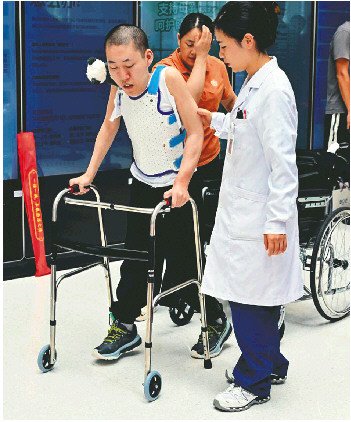
“折叠男孩”告别“折叠人生”
Qi Lu Wan Bao· 2025-08-26 21:26
Core Viewpoint - The story of Jiang Yancheng, a boy with a rare congenital muscle disease, highlights a groundbreaking medical achievement in correcting severe spinal deformities, marking a significant advancement in the field of spinal surgery and rehabilitation [2][12]. Medical Achievement - Jiang Yancheng underwent four high-risk surgeries that corrected approximately 170 degrees of spinal deformity, making it the world's first case of reversing a "reverse folding" spinal condition [5][12]. - The surgeries were performed by a team led by Liang Yijian, a renowned expert in severe spinal deformities, who has conducted over 5,000 similar surgeries [5][12]. Patient Background - Diagnosed with a rare congenital muscle disease at the age of two, Jiang's condition progressively worsened, leading to severe spinal deformities and a grim prognosis [3][4]. - Despite his challenges, Jiang completed high school and was admitted to Dezhou College, demonstrating resilience and determination [4][12]. Rehabilitation Process - Jiang's rehabilitation involved over 10,000 minutes of training, focusing on improving his physical condition to prepare for surgery and recovery [10][11]. - The rehabilitation program was tailored to address his unique needs, emphasizing muscle strength, respiratory function, and overall physical fitness [9][11]. Future Implications - The successful surgeries and rehabilitation not only transformed Jiang's life but also provide a replicable treatment pathway for similar cases globally, enhancing the recognition of Chinese medical capabilities in addressing complex conditions [12].
联影医疗涨2.11%,成交额5.38亿元,主力资金净流出1514.14万元
Xin Lang Cai Jing· 2025-08-26 04:34
Core Viewpoint - The stock of United Imaging Healthcare has shown a positive trend with a year-to-date increase of 9.81%, despite a slight decline over the past 60 days, indicating potential resilience in the medical imaging equipment sector [1]. Group 1: Stock Performance - As of August 26, United Imaging Healthcare's stock price reached 138.71 CNY per share, with a market capitalization of 114.32 billion CNY [1]. - The stock has experienced a 2.11% increase during the trading session on August 26, with a trading volume of 5.38 billion CNY and a turnover rate of 0.48% [1]. - Year-to-date, the stock has increased by 9.81%, with a 7.07% rise over the last five trading days, a 1.01% increase over the last 20 days, and a 2.28% decline over the last 60 days [1]. Group 2: Financial Performance - For the first quarter of 2025, United Imaging Healthcare reported a revenue of 2.478 billion CNY, representing a year-on-year growth of 5.42%, and a net profit attributable to shareholders of 370 million CNY, reflecting a 1.87% increase year-on-year [2]. - The company has distributed a total of 534 million CNY in dividends since its A-share listing [3]. Group 3: Shareholder Structure - As of March 31, 2025, the number of shareholders for United Imaging Healthcare increased by 17.32% to 21,400, while the average number of circulating shares per person decreased by 14.77% to 27,678 shares [2]. - Major institutional shareholders include the Huaxia SSE Sci-Tech Innovation Board 50 ETF, which holds 23.33 million shares, and the E Fund SSE Sci-Tech Innovation Board 50 ETF, holding 16.59 million shares, both showing a decrease in holdings compared to the previous period [3].
第十三届陆道培血液病学术大会举行
Zhong Guo Jing Ji Wang· 2025-08-25 08:11
Core Insights - The 13th Lu Daopei Hematology Academic Conference was held in Beijing on August 22-23, focusing on advancements in hematopoietic stem cell transplantation, related complications, immunotherapy, precision testing, lymphoma, and multiple myeloma [1][2] - The conference featured 70 academic reports from domestic and international hematology experts, aimed at enhancing the comprehensive diagnosis and treatment of blood diseases in China [1] Group 1 - The conference included a main venue and four specialized sub-venues, showcasing the rapid development in the field of hematology, particularly in precision medicine, immunotherapy, and artificial intelligence [1] - Experts reviewed the history and achievements of hematology in China, highlighting the challenges faced in individualized treatment, especially for refractory and relapsed patients [1] Group 2 - The event provided valuable diagnostic references for clinicians and facilitated high-level, cross-regional exchanges, demonstrating the vitality of the hematology field [2] - The conference is expected to inject new momentum into the global advancement of blood disease diagnosis and treatment [2]
贝达药业涨2.06%,成交额2.47亿元,主力资金净流出2627.22万元
Xin Lang Cai Jing· 2025-08-25 03:49
Group 1 - The core viewpoint of the news is that 贝达药业 (Bida Pharmaceutical) has shown fluctuations in stock performance and financial metrics, indicating both growth and challenges in its operations [1][2] Group 2 - As of August 25, 贝达药业's stock price increased by 2.06% to 66.38 CNY per share, with a total market capitalization of 27.93 billion CNY [1] - The company has experienced a year-to-date stock price increase of 23.54%, but a recent decline of 3.80% over the last five trading days [1] - The main business revenue composition is 99.10% from drug sales and 0.90% from other sources [1] Group 3 - For the first half of 2025, 贝达药业 reported a revenue of 1.73 billion CNY, reflecting a year-on-year growth of 15.37%, while the net profit attributable to shareholders decreased by 37.53% to 140 million CNY [2] - The number of shareholders increased by 9.97% to 32,100, while the average circulating shares per person decreased by 9.08% to 13,064 shares [2] Group 4 - The company has distributed a total of 669 million CNY in dividends since its A-share listing, with 184 million CNY distributed over the past three years [2] - Notable institutional holdings include 易方达创业板ETF (E Fund ChiNext ETF) as the fifth largest shareholder, holding 6.37 million shares, a decrease of 107,600 shares from the previous period [2]
祥生医疗加速布局超声AI生态 持续拓宽精准医疗多场景应用
Quan Jing Wang· 2025-08-22 11:22
Core Insights - The article highlights the rapid evolution of ultrasound diagnostic equipment towards intelligence and portability, with Xiangsheng Medical emerging as a representative enterprise in technological innovation and market expansion in the ultrasound AI field [1] Group 1: Technological Innovation - Xiangsheng Medical has positioned itself as a pioneer in the domestic ultrasound AI diagnostic sector, leveraging AI technology to enhance traditional ultrasound practices [2] - The company employs a dual-engine approach of "ultrasound artificial intelligence + specialized models" to drive innovation across various scenarios, establishing a comprehensive intelligent framework that covers device development, image acquisition, and diagnostic decision-making [2] - The company has achieved significant advancements in AI-assisted diagnostic technologies across multiple fields, including breast, liver, and cardiovascular diseases, with its breast ultrasound analysis software receiving medical device registration approval in 2022 [2] Group 2: Product Development and Applications - Xiangsheng Medical has launched the "Breast Artificial Intelligence Ultrasound Robot" system to address the challenges of mass screening for breast cancer in China, integrating ultrasound imaging, robotics, and AI technology into a comprehensive health management model [3] - The system features an original integrated design that includes a touchscreen, electric examination bed, six-degree-of-freedom robotic arm, and AI-assisted diagnostic capabilities, facilitating large-scale efficient scanning and data tracking for breast cancer prevention and treatment [3] Group 3: Market Expansion and New Applications - The company is actively exploring new ultrasound application scenarios, achieving breakthroughs in areas such as helicopter medical rescue, precision aesthetic medicine, and veterinary ultrasound [4] - Xiangsheng Medical provided medical support at major sporting events, utilizing its self-developed 5G remote consultation system and portable ultrasound devices to enhance emergency response efficiency [4] - The company is expanding its portable intelligent product offerings in the aesthetic medicine sector and has entered various domestic and international medical institutions, including partnerships with notable organizations like the Gates Foundation for project funding [5]

破解糖尿病逆转困局!《柳叶刀》四大策略助患者重获健康
GLP1减重宝典· 2025-08-22 03:03
Core Viewpoint - The article discusses the evolving concept of diabetes remission, highlighting the increasing prevalence of diabetes globally and the need for new management strategies that focus on patient-centered approaches [5][6][19]. Summary by Sections Global Diabetes Prevalence - As of 2021, there are 537 million diabetes patients aged 20-79 worldwide, projected to exceed 783 million by 2045. The global medical expenditure related to diabetes reached $966 billion in 2021 [5]. Evolution of Diabetes Remission Concept - The traditional belief that type 2 diabetes is incurable has been challenged by new findings, particularly a 1992 study showing that 86.5% of patients achieved long-term normal blood sugar levels post metabolic surgery. The medical community reached a consensus in 2021 defining remission as maintaining HbA1c below 6.5% after stopping diabetes medication [8][10]. Controversies and Limitations of Current Standards - The current definition of diabetes remission faces challenges, including: 1. Over-reliance on blood sugar metrics, potentially overlooking other health risks [10]. 2. The requirement to stop medication may be inappropriate given the protective effects of new diabetes drugs [11]. 3. Psychological burdens on patients due to blood sugar fluctuations, leading to feelings of personal failure [12]. Four Scientific Strategies for Diabetes Remission - 1. **Lifestyle Interventions**: Strict dietary management and exercise can lead to remission, but maintaining these changes is challenging [13]. - 2. **Very Low-Calorie Diets**: Short-term diets (800-1200 kcal/day) can lead to significant weight loss and remission rates of 46% within a year, but require high adherence [14]. - 3. **New Medications**: GLP-1 receptor agonists and SGLT2 inhibitors not only control blood sugar but also provide cardiovascular protection, potentially redefining remission standards [15]. - 4. **Metabolic Surgery**: Effective for obese diabetes patients, with a remission rate of 72.3% within two years, but requires ongoing management to prevent weight regain [16]. Future Directions - The standards for diabetes remission need optimization, potentially moving towards: - Personalized definitions based on patient characteristics [17]. - Inclusion of protective medications in remission strategies [18]. - Dynamic assessments of remission as an ongoing process rather than a binary outcome [19].

阿尔茨海默病早诊“金标准”落地上海 美中嘉和打开新增长空间
Zheng Quan Ri Bao Wang· 2025-08-20 14:13
Core Viewpoint - The approval of the first Aβ-PET imaging agent in China marks a significant breakthrough in the early diagnosis of Alzheimer's disease (AD), potentially advancing diagnosis by 15-20 years [1][2]. Company Overview - Meizhong Jiahe Medical Technology Development Group is a leader in high-end medical imaging diagnostics in China, with its Shanghai Meizhong Jiahe Medical Imaging Diagnosis Center playing a crucial role in the high-end medical market in Shanghai [2][3]. - The center is equipped with advanced imaging technologies, including GE Signa PET/MR, PET/CT, and others, providing diagnostic services to multiple medical institutions in the region [3]. Industry Impact - The introduction of the Aβ-PET imaging agent is expected to enhance the professional image of Meizhong Jiahe in the medical imaging sector and facilitate collaborations with top medical institutions and research teams [2]. - The center's innovative business model, which combines independent third-party services with shared imaging resources and remote diagnostics, demonstrates significant growth potential in the medical imaging service market [3]. Technological Innovation - The center has developed an AI-assisted diagnostic evaluation system in collaboration with Hexin Health, which screens critical health indicators and generates comprehensive reports, significantly reducing the risk of missed diagnoses [4]. - The ongoing demand for precision medicine is likely to further solidify the center's leading position in the high-end imaging service market [4].