
脑机接口技术

Search documents
马斯克的脑接机口公司又融资了,估值百亿美元!已植入5例患者
Di Yi Cai Jing· 2025-06-03 06:25
目前已有五名重度瘫痪患者接受了Neuralink脑机接口设备的植入手术,并能够通过意念控制数字和实体设备。 当地时间6月2日,马斯克的脑机接口公司Neuralink宣布,公司的脑植入设备已进入临床试验阶段,并在最新一轮融资中筹集了6.5亿美元。 在上一轮的融资后,Neuralink估值已经达到90亿美元,最新融资后,该公司的估值将突破百亿美元。 Neuralink表示,最新一轮融资的主要投资者包括 ARK Invest、G42、Human Capital、Lightspeed、卡塔尔投资局(QIA)、红杉资本、Thrive Capital等。 该公司还称,在获得监管机构的批准之后,计划在今年晚些时候启动一项正式的临床试验,以研究脑机接口技术的长期安全性和人体应用效果。据公司介 绍,Connexus系统最初将帮助患有严重运动障碍(例如瘫痪)的患者通过计算机设备"开口说话"。 在中国,脑机接口临床研究今年也将进入关键一年。在近日召开的第20届亚洲神经肿瘤年会上,复旦大学附属华山医院院长毛颖教授透露,由上海华山医院 和北京宣武医院牵头的脑机接口临床队列研究已启动患者入组工作,旨在进一步验证植入式脑机接口治疗方案的有 ...


我国植入式脑机接口技术正式启动临床入组,数百万脊髓损伤患者迎来曙光
Di Yi Cai Jing Zi Xun· 2025-06-02 08:22
近日,在上海召开的第20届亚洲神经肿瘤年会上,复旦大学附属华山医院院长毛颖教授透露,由上海华 山医院和北京宣武医院牵头的脑机接口临床队列研究已启动患者入组工作,旨在进一步验证植入式脑机 接口治疗方案的有效性、安全性等关键问题。 洪波在去年12月接受第一财经记者采访时称,2025年这款脑机接口设备将开始大规模临床试验,计划在 年底前入组30至50名患者进行植入,在国内大约10个中心展开,选定的入组患者为脊髓损伤患者,在完 成这些植入手术后,将会向药监部门递交临床数据,以申请相关脑机接口产品的上市。 他介绍道,与科技富豪马斯克的脑机接口公司Neuralink的技术路径不同,NEO设备通过将电极植入患 者颅骨下硬膜外,避免对神经细胞的直接破坏,同时通过无线供电与通信技术实现长期稳定使用。此 外,在算法层面还实现了稳健的运动解码效果。 洪波援引数据称,中国现有脊髓损伤患者约300万至400万,年新增8万至9万例,未来脑接口技术有望惠 及更多人群。 此前,使用NEO技术,已成功开展多例手术,帮助因脊髓损伤导致高位截瘫的患者恢复部分运动功 能。第一财经记者了解到,其中,首例患者于2023年10月在宣武医院完成植入手术;华 ...
脑机接口重磅消息! 马斯克创立的Neuralink筹资6亿美元 估值触及90亿美元
智通财经网· 2025-05-28 02:15
Core Insights - Neuralink, co-founded by Elon Musk, has completed a new funding round raising up to $600 million, with a pre-funding valuation of $9 billion [1] - The company aims to develop brain-machine interface (BMI) technology to treat neurological disorders and enhance human capabilities [3] Funding and Valuation - Neuralink's recent funding round aimed to raise at least $500 million from global institutional investors [1] - The company previously completed a $280 million Series D funding round in August 2023 [1] Technology and Development - Neuralink's core technology involves implanting wireless chips in the human skull to connect with the brain, enabling patients with conditions like paralysis and ALS to control devices using their thoughts [1] - The upgraded BMI chip, "Blindsight," is expected to be implanted in human patients by the end of 2025, with initial trials involving 20 to 30 patients [2] - The first human brain implant occurred in January 2024, marking a significant step towards allowing thought-based control of devices [2] Vision and Goals - Neuralink aims to treat various neurological diseases, including Parkinson's and Alzheimer's, while also striving for seamless integration between human cognition and artificial intelligence [3] - The company utilizes advanced, flexible, high-density electrodes and automated surgical robots to simplify the implantation process [3] - Neuralink's vision extends beyond medical applications, seeking to enhance human cognitive and physical abilities and integrate human consciousness with AI [3]
“浙江制造”闪耀中东欧博览会
Zhong Guo Jing Ji Wang· 2025-05-26 01:21
Group 1: Event Overview - The Fourth China-Central and Eastern European Countries Expo and International Consumer Goods Expo was held in Ningbo, Zhejiang Province from May 22 to 25 [1] - The Zhejiang Pavilion, covering 300 square meters, showcased over 20 leading enterprises from Zhejiang, highlighting the region's manufacturing capabilities [1] Group 2: Innovative Products - A silver robotic dog named Lingrui P1 was featured, designed for high load capacity (30 kg) and long endurance, suitable for dangerous environments like fire scenes and substations [2] - The BoLing Brain-Machine Technology Co., Ltd. presented the Cyber Lingke HC2 hand rehabilitation exoskeleton system, utilizing brain-machine interface technology for rehabilitation [3] Group 3: Global Expansion and Trade - Wanxiang Yiersan Co., Ltd. introduced two products, the Ultra fast-charging battery and a 48V power system, with a focus on global resource sharing and local production in Europe [4] - Ningbo Zhongji Huitong Group, a foreign trade service provider, reported serving over 10,000 enterprises with an export volume exceeding $1.8 billion in 2024 [5] - Zhejiang's trade with Central and Eastern European countries reached 182.7 billion yuan in 2024, with imports from these countries increasing by 64% since 2021 [5]
科学大讲堂传递科技创新“火种”
Xin Hua She· 2025-05-24 13:25
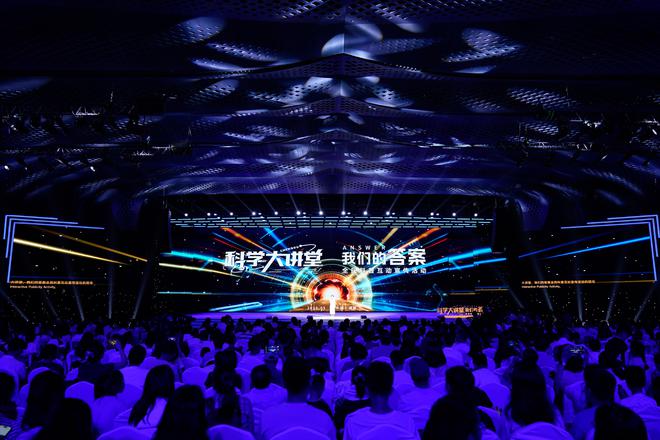
Group 1 - The event held in Chengdu featured prominent scientists discussing cutting-edge technology topics, including space exploration, high-speed rail, and brain-computer interfaces [1][4][11] - The China Jinping Underground Laboratory, located 2400 meters underground, is the world's deepest and largest underground laboratory for cosmic exploration [4][7] - The development of China's high-speed rail has transformed travel, achieving speeds of up to 350 kilometers per hour, making it a national symbol [8][10] Group 2 - Astronaut Ye Guangfu shared personal experiences from space missions, emphasizing the importance of perseverance and dreams in achieving success [2][6] - Professor Yue Qian discussed the significance of dark matter research in expanding human understanding of the universe [7] - Brain-computer interface technology is gradually changing lives, particularly in the medical field, enhancing surgical precision and success rates [7][8]
用意念操控设备,苹果也盯上了脑机接口技术
3 6 Ke· 2025-05-23 11:15
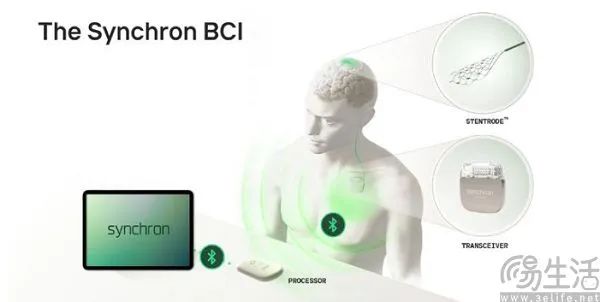
Core Viewpoint - The emergence of brain-computer interface (BCI) technology is transforming the concept of controlling devices through thought into reality, with Synchron becoming the first company to integrate Apple's BCI Human Interface Device (HID) protocol for controlling Apple devices like iPhone, iPad, and Vision Pro through neural signals [1][3]. Group 1: BCI Technology and Integration - Apple plans to announce a new development standard later this year, allowing third-party developers to integrate BCI technology into iOS, iPadOS, and visionOS applications [3]. - Synchron will utilize a device called Stentrode, which reads brain activity signals, to connect with Apple's Switch Control feature, enabling thought-based control of Apple devices [3][5]. - Early volunteer Mark Jackson, an ALS patient, has experienced the capability of Stentrode, allowing him to engage with virtual environments despite physical limitations [3]. Group 2: Comparison with Competitors - Stentrode employs a non-invasive BCI approach using a vascular stent, which does not penetrate brain tissue, resulting in lower sensitivity and functionality compared to Neuralink's invasive method that uses 1024 electrodes directly inserted into the brain [5]. - Neuralink's approach offers better signal quality and transmission speed, but Synchron's method is safer, which may explain Apple's choice of Synchron as its first BCI HID protocol partner [5]. Group 3: Accessibility and User Benefits - The introduction of BCI technology aims to provide a new mode of interaction for individuals with paralysis and other physical disabilities, enhancing their independence and quality of life [6][8]. - BCI will enable users to control computers and smartphones through thought, facilitating activities like typing, web browsing, and gaming [8]. - Apple has a history of developing accessibility features for disabled users, and BCI represents a significant advancement in providing inclusive technology [8][10]. Group 4: Security and Privacy Considerations - Current accessibility services can pose security risks, as they may allow unauthorized access to sensitive information [12][14]. - BCI technology could enhance security by ensuring that all interactions with devices are based on the user's intent, potentially reducing the risk of unauthorized actions [14].

一场机器人大会背后的“智造跃升”
Qi Lu Wan Bao· 2025-05-21 21:03
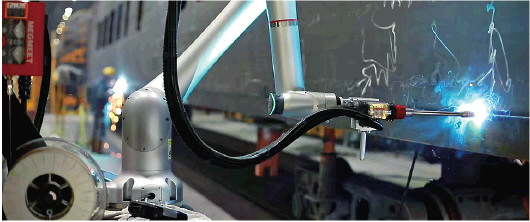
Group 1 - The Shandong Province is positioning robots as a powerful engine for transitioning from "manufacturing" to "intelligent manufacturing," supported by policies like the "Implementation Plan for Promoting the Innovative Development of Humanoid Robot Industry" [2][9] - The integration of brain-machine interface technology allows users to control devices through thoughts, with applications in medical rehabilitation for patients with mobility impairments [3][4] - The "Walker Taishan" robot, equipped with advanced AI capabilities, can perform various physical tasks and is part of a broader trend of integrating AI with robotics to enhance functionality [4][8] Group 2 - The EV660 heavy-duty logistics drone represents a significant advancement in logistics, capable of transporting 200 kilograms over a distance of 200 kilometers, suitable for complex environments [5][6] - Dragon Wing Aviation has evolved from a small enterprise to a leader in firefighting drone technology, achieving a 50% market share in national firefighting drones and 75% in fire extinguishing bombs [6][9] - The robotics industry in Jining has seen an average annual growth rate of over 20% over the past five years, with a focus on creating a comprehensive industrial chain that includes industrial, service, and special robots [9][10] Group 3 - The collaboration between companies like Luoshi and Dragon Wing Aviation is fostering a robust industrial ecosystem, with Jining's robot industry forming a "two parks and multiple points" industrial cluster [9][10] - The establishment of the "Tianji Network" and four service centers aims to provide comprehensive support for the robotics and drone industry, enhancing innovation and competitiveness [10]

科幻之光如何照进现实
Jing Ji Ri Bao· 2025-05-20 22:49
Core Insights - The recent demonstration by Shanghai Ladder Medical Technology Co., showcasing a subject using a brain-computer interface (BCI) to play "Mario Kart," highlights significant advancements in BCI technology, with the potential for clinical applications by 2028 [1] - China is positioned advantageously in the BCI field, with notable innovations such as ultra-fine flexible electrodes and high-throughput flexible BCIs, indicating a strong foundation in materials science and micro-nano processing [1][2] Group 1: Technological Advancements - Ladder Medical has developed flexible electrodes that are one-hundredth the thickness of a human hair, improving biocompatibility and signal stability [1] - Brain Tiger Technology has achieved a breakthrough with a 256-channel high-throughput flexible BCI, transitioning from single-point innovations to universal technologies [1] Group 2: Policy and Systemic Advantages - The Shanghai Municipal Government's "Action Plan for the Future Industry Cultivation of Brain-Computer Interfaces (2025-2030)" aims to streamline the transition from research to clinical application, fostering a demand-driven innovation model [2] - Other cities like Beijing and Shenzhen are following suit, establishing their own frameworks for brain science industries [2] Group 3: Industry Development Challenges - Despite technological breakthroughs, there is a need for a robust industrial system and regulatory framework to support the healthy development of BCI technology [2] - Current gaps in the technical chain and talent pipeline hinder the industrialization capabilities of BCI companies, indicating a long road ahead from experimentation to everyday application [2] Group 4: Collaborative Innovation and Talent Development - The industry should focus on market-driven approaches to accelerate the application of BCI technologies and foster new productive forces [3] - High-level universities are encouraged to cultivate interdisciplinary talents, while a collaborative innovation mechanism involving government, industry, academia, and medical sectors is essential for addressing common technological challenges [3] Group 5: Governance and Ethical Considerations - Establishing a governance framework for BCI technology is crucial, including the development of standards and ethical guidelines to prevent privacy data breaches [4] - The industry must navigate ethical challenges associated with BCI advancements, ensuring that technological development aligns with human interests and values [4]
5月19日早间新闻精选
news flash· 2025-05-19 00:21
Group 1 - The China Securities Regulatory Commission has recently issued a decision to amend the "Measures for the Administration of Major Asset Restructuring of Listed Companies," encouraging private equity funds to participate in mergers and acquisitions of listed companies. The investment period for private equity funds is linked to the lock-up period for shares obtained through restructuring, reducing the lock-up period from 12 months to 6 months for those who have held investments for 48 months [1] - The U.S. Department of Commerce has announced that using Huawei's Ascend chips is considered a violation of U.S. export control regulations, which has been met with strong opposition from China [3] - Nvidia's CEO has indicated that due to U.S. government restrictions on the export of the Hopper architecture H20 chip to China, the company is reassessing its market strategy in China and will not launch the Hopper series chips in the future [3] Group 2 - The 15th China Airshow showcased the "Jiutian" drone, which is expected to complete its first flight by the end of June. A notable feature of this drone is the integrated "heterogeneous hive mission cabin," capable of carrying over a hundred loitering munitions or small drones, earning it the nickname "aerial drone carrier" [2] - China's J-10CE fighter jet has achieved its first combat success by shooting down multiple enemy aircraft without sustaining any losses, drawing significant attention from global military enthusiasts [2] - The National Financial Supervision and Administration has approved China Life Asset Management to participate in the third batch of long-term investment reform pilot programs for insurance funds, with the Honghu Fund having successfully invested 50 billion yuan by early March 2025 [3] Group 3 - Ningde Times has announced an H-share offering price of 263.00 HKD per share, with H-shares expected to be listed on the Hong Kong Stock Exchange on May 20. The company also plans to invest up to 225 million USD in an industrial investment fund [4] - Wentai Technology has announced plans to sell assets worth 4.389 billion yuan to Luxshare Precision and Luxshare Communications, focusing on the development of its semiconductor business [4] - Guizhou Moutai has reported a total share repurchase of 2.6421 million shares, amounting to 4.05 billion yuan [4]




【私募调研记录】盘京投资调研怡和嘉业
Zheng Quan Zhi Xing· 2025-05-19 00:05
Group 1 - The core viewpoint of the news is that Panjing Investment has conducted research on a listed company, Yihe Jiaye, which is expected to see revenue and net profit growth in Q1 2025 due to the end of inventory destocking in the US ventilator market and the joining of a senior consumer goods marketing expert [1] - Yihe Jiaye's domestic market revenue and gross margin have improved, and the company has achieved basic localization of core components, ensuring supply chain security [1] - The company has established a strategic partnership with Hanyu Pharmaceutical to jointly develop projects combining ventilators and casein active peptides, expanding into health consumer goods channels [1] Group 2 - Yihe Jiaye has completed the construction of its cloud platform in the European market, connecting with over 20 agents [1] - The company has signed a confidentiality agreement with Qiangnao Technology to discuss advancing brain-computer interface technology cooperation [1] - The newly launched P5 series ventilators are primarily targeted at domestic hospital channels and have generated sales revenue in Q1 2025 [1]