Physical AI

Search documents
Hyundai and Boston Dynamics Push Humanoid Robots Forward
The Motley Fool· 2026-01-14 02:33
Core Viewpoint - The introduction of Boston Dynamics' Atlas humanoid robot by Hyundai at CES 2026 is generating excitement among investors, with potential implications for the automotive industry and factory productivity [2][3][5]. Group 1: Product Announcement and Capabilities - Boston Dynamics unveiled the Atlas humanoid robot, which is fully electric and set to begin production immediately, with plans to deploy it across Hyundai's global network starting in 2028 [2][6]. - Hyundai aims to produce 30,000 Atlas robots annually at a U.S. factory, anticipating that humanoids will become the largest segment of the Physical AI market [6]. - The Atlas robot features human-scale hands with tactile sensing, advanced rotational joints, the ability to lift up to 110 pounds, and can learn tasks in under a day [6]. Group 2: Market Potential and Strategic Partnerships - Hyundai plans to introduce Atlas in processes with proven safety and quality benefits, expanding its applications to component assembly and complex operations over time [7]. - Successful deployment of humanoid robots could benefit not only Hyundai but also partners like Toyota, as well as companies like Nvidia and Google DeepMind involved in robotics research [7]. Group 3: Investor Sentiment and Caution - Investor enthusiasm is high regarding the potential for humanoid robots to enhance factory productivity, but historical failures in the humanoid robot market warrant caution [3][8]. - Previous attempts to introduce humanoid robots, such as SoftBank's Pepper and 1X's NEO, faced significant challenges and ultimately did not succeed in the market [9][10]. - Research from Morgan Stanley suggests that while the humanoid robot market could reach $5 trillion by 2050, adoption may be slow until the mid-2030s, indicating that investors should be patient [13].


Tesla Rival Xpeng Hires Morgan Stanley, JPMorgan To Prepare Hong Kong Listing For Aeroht: Report
Yahoo Finance· 2026-01-13 23:02
Group 1 - Xpeng Inc. is preparing for a potential IPO of its flying car unit, Aeroht, with the assistance of Morgan Stanley and JPMorgan Chase [1][2] - The IPO plans may evolve, as banks were previously invited to present their proposals for listings in Hong Kong or the U.S. [3] - Xpeng's CEO, He Xiaopeng, emphasized the company's ambition to expand beyond traditional automotive manufacturing into areas like Robotaxi and Humanoid Robots, with a trial phase for the Robotaxi service expected to begin soon [4] Group 2 - Xpeng plans to launch its Robotaxi service in 2026, utilizing Alibaba's Amap mapping platform [4] - The air taxi sector is being positioned as a significant development in mobility, with potential implications for the U.S. aviation industry [6]

半导体 CES 展会展望:AI 订单与未交付订单强劲,缓解峰值支出担忧;周期性终端市场复苏加速,聚焦实体边缘 AI
2026-01-13 11:56
Summary of Key Points from J.P. Morgan's Semiconductor Industry Conference Call Industry Overview - The semiconductor industry is experiencing a strong demand driven by AI spending and data center build-outs, with companies like NVIDIA and Marvell seeing significant visibility and demand growth [1][5] - Concerns about a potential "AI bubble" are present, but companies report no signs of deceleration in customer activity, with many already planning for deployments in 2027 [1][5] Company-Specific Insights NVIDIA Corporation - NVIDIA is deeply engaged with customers for CY27 deployments, indicating a "tremendous" demand curve ahead [9] - The company has added to its previously announced backlog of over $500 billion, with expectations of significant revenue from data center operations [9] - Supply chain readiness for CY26 is confirmed, with confidence in managing the transition to new systems [9] - NVIDIA is focusing on physical AI opportunities, particularly in automotive and other industry verticals [9] - A 90% attach rate for networking products in data centers indicates strong integration of NVIDIA's offerings [9] Marvell Technology Inc. - Marvell's short-term bookings are described as "on fire," with expectations of 25% growth in the datacenter business for CY26 and 40% for CY27 [12] - AI custom ASIC revenues are projected to double to $3.6 billion in CY27, driven by strong demand from major customers [12] - The company is well-positioned in networking products, with significant growth expected in optical networking and switching [12] Analog Devices (ADI) - ADI is experiencing a cyclical recovery, particularly in industrial and communications segments, with a 50% year-over-year growth in the datacenter segment [15] - The company anticipates a return to normalized consumption levels in 2026, with strong momentum in automotive and consumer electronics [15] Micron Technology (MU) - Micron has a $10 billion design win pipeline expected to unfold over the next 4-5 years, with strong demand for DRAM and NAND [21] - The company expects at least 20% growth in bit shipments for both DRAM and NAND in CY26, despite supply constraints [21][23] - Pricing for DRAM is forecasted to increase by nearly 60% year-over-year in CY26 due to ongoing supply-demand tightness [23] Synaptics Inc. - Synaptics is focusing on context window memory management as a growing demand vector for NAND, driven by AI applications [24] - The company expects physical AI and robotics to become significant demand drivers for memory in the future [24] Silicon Laboratories Inc. (SLAB) - SLAB is seeing strong revenue growth from electronic shelf labels and smart metering, with expectations of continued momentum into 2026 [18] - The continuous glucose monitoring business is also expected to contribute significantly to revenue growth [18] Market Trends - The overall tone in the memory market is bullish, with improving demand for DRAM and NAND as AI applications increase memory requirements [1][5] - Companies are actively working on new product introductions and demos to capture opportunities in physical AI and edge AI applications [1][5] Conclusion - The semiconductor industry is poised for strong growth driven by AI and data center demands, with key players like NVIDIA, Marvell, and Micron leading the charge. The cyclical recovery in end markets and the focus on innovative applications in AI and edge computing are expected to sustain momentum through 2026 and beyond [1][5][12][21]


Nvidia CEO Jensen Huang "Loves" This Artificial Intelligence (AI) Company. The Stock Could Soar 77% in 2026, According to 1 Wall Street Analyst
The Motley Fool· 2026-01-13 08:02
Core Insights - The article discusses the rapid growth of Serve Robotics, a company specializing in food delivery robots, and highlights its potential in the physical AI sector, particularly after receiving recognition from Nvidia's CEO Jensen Huang [3][5]. Company Overview - Serve Robotics is focused on deploying autonomous robots for the $450 billion last-mile food delivery market, with a median delivery distance of 2.5 miles in the U.S. and a cost of approximately $1 per delivery [3]. - The company operates the largest sidewalk delivery fleet in the U.S. with over 2,000 robots and has partnerships with major companies like Uber and DoorDash [4][5]. Financial Performance - In Q3, Serve Robotics reported a revenue increase of 209% to $687,000, although it also experienced a significant loss of $33 million, which increased nearly fourfold [6]. - The company aims to increase its revenue tenfold by 2026 based on preliminary projections [6]. Operational Metrics - Delivery volume surged by 66% quarter over quarter and 300% year over year, attributed to rapid geographical expansion [7]. - Serve Robotics currently serves over 3 million people and 1 million households across cities like Chicago, Dallas, Miami, and Los Angeles, with plans to deploy over 1 million robots [7]. Market Sentiment - Wall Street analysts are highly optimistic about Serve Robotics, with all seven analysts rating the stock as a buy and an average price target of approximately $19, indicating a potential upside of 28% [8]. - One analyst has set a particularly high price target of $26, suggesting a potential upside of 77% [9]. Future Outlook - Analysts believe Serve Robotics is well-positioned for growth in the physical AI sector, with significant catalysts expected in 2026 [10]. - The company is seen as a top investment opportunity in physical AI, despite its current lack of profitability and high valuation [11].

NVIDIA (NasdaqGS:NVDA) FY Conference Transcript
2026-01-13 02:17
Summary of Nvidia's Presentation at J.P. Morgan's 44th Annual Healthcare Conference Company Overview - **Company**: Nvidia - **Industry**: Healthcare and AI Semiconductors - **Key Speaker**: Kimberly Powell, Vice President and General Manager of Healthcare at Nvidia Core Points and Arguments 1. **Shift in Healthcare Technology**: Nvidia is experiencing a once-in-a-generation platform shift in the healthcare industry, with accelerated computing and AI becoming integral to healthcare solutions [5][41] 2. **Agentic AI Deployment**: The deployment of agentic AI in healthcare is occurring faster than in any other industry, with significant advancements in robotics and simulation [6][13] 3. **Open Models and Innovation**: Open models are crucial for innovation, with 80% of startups built on these models. Nvidia became the largest contributor to open-source AI in 2025, with over 650 language models and 250 datasets [8][9] 4. **Healthcare Market Size**: The U.S. healthcare market is valued at $4.9 trillion, and AI is being deployed at an unprecedented scale to address acute challenges in the industry [14] 5. **AI as Digital Coworkers**: Healthcare systems are beginning to hire AI systems as digital coworkers to alleviate the shortage of healthcare professionals, projected to be tens of millions by 2030 [13][14] 6. **Return on Investment (ROI)**: The cost of AI inference has decreased significantly, making it viable for mass-market healthcare adoption. For example, the cost of running an agent has dropped from $1 to $0.01 [48] 7. **Impact on Clinical Development**: AI is transforming clinical development processes, making them less labor-intensive and more efficient. Companies like ConcertAI and Cytoreason are leveraging AI for better planning and execution of clinical trials [18][19] 8. **Partnerships and Collaborations**: Nvidia is collaborating with companies like Thermo Fisher to build AI infrastructure for labs, enhancing the quality and throughput of scientific experiments [26][27] 9. **Future of Drug Discovery**: The integration of AI in drug discovery is expected to reinvent the $300 billion R&D industry, with AI-driven models accelerating the process [23][32] 10. **Investment in AI Infrastructure**: Nvidia announced a $1 billion investment over five years in partnership with Lilly to co-innovate in AI lab infrastructure, aiming to flip the current lab-to-compute ratio from 90-10 to a more compute-centric model [37][38] Additional Important Content - **AI in Lab Automation**: AI agents are being developed to autonomously run experiments and analyze results in real-time, significantly reducing manual work and increasing data quality [25][27] - **Emerging AI Science Companies**: New companies are emerging that focus on AI-driven scientific research, utilizing Nvidia's platforms to enhance their capabilities [20][36] - **Global AI Infrastructure**: Nvidia's technology is being integrated into public clouds worldwide, with expectations that every country will develop its own AI healthcare infrastructure [51][52] - **Democratization of AI**: The accessibility of AI tools and models is enabling scientists to become AI researchers, fostering a new paradigm in scientific discovery [44][46] This summary encapsulates the key insights and developments presented by Nvidia at the conference, highlighting the transformative role of AI in healthcare and the company's strategic initiatives to lead this change.
Arm Holdings (ARM) Expands in the Robotics Industry With Physical AI Unit
Yahoo Finance· 2026-01-12 17:47
Group 1 - Arm Holdings plc (NASDAQ:ARM) is reorganizing its business to enhance its presence in the robotics industry by establishing a new Physical AI unit [1][2] - The company will operate through three main lines of business: Cloud and AI, Edge, and Physical AI [2] - The head of the Physical AI unit, Drew Henry, believes advancements in robotics can enhance labor efficiency and contribute to GDP growth in the future [3] Group 2 - Recent stock ratings include an upgrade from Hold to Buy by Stephane Houri from Oddo BHF with a price target of $170 [4] - Vivek Arya from Bank of America Securities reiterated a Buy rating but lowered the price target from $205 to $145 [4] - Arm Holdings specializes in architecting, developing, and licensing CPU products and related technologies for semiconductor companies and original equipment manufacturers [4]

Multiply Labs to Bring “Physical AI” Robotics Technology to Advanced Biomanufacturing With NVIDIA
Businesswire· 2026-01-12 15:30
Core Insights - Multiply Labs has achieved a significant milestone in scaling the production of cell and gene therapies by utilizing NVIDIA's open Isaac and GR00T technologies, which include advanced robotics simulation and perception [1] Company Developments - The company is recognized as a leader in robotic biomanufacturing, indicating its strong position in the industry [1] - The adoption of advanced technologies marks a pivotal shift from traditional manual processes to more automated and efficient methods in the production of cell and gene therapies [1] Industry Impact - The integration of robotics in biomanufacturing is expected to transform the cell and gene therapy landscape, which has historically depended on artisanal production methods [1] - Cell and gene therapies are highlighted as life-changing treatments, emphasizing their potential impact on healthcare [1]

Tesla Stock Faces Biggest Year Ever. How Musk Can Make DREAMS Come True.
Barrons· 2026-01-12 12:29
Tesla aims to grow its lead in physical AI this year. ...


Tesla Rival Xpeng Hires Morgan Stanley, JPMorgan To Prepare Hong Kong Listing For Aeroht: Report - XPeng (NYSE:XPEV)
Benzinga· 2026-01-12 10:31
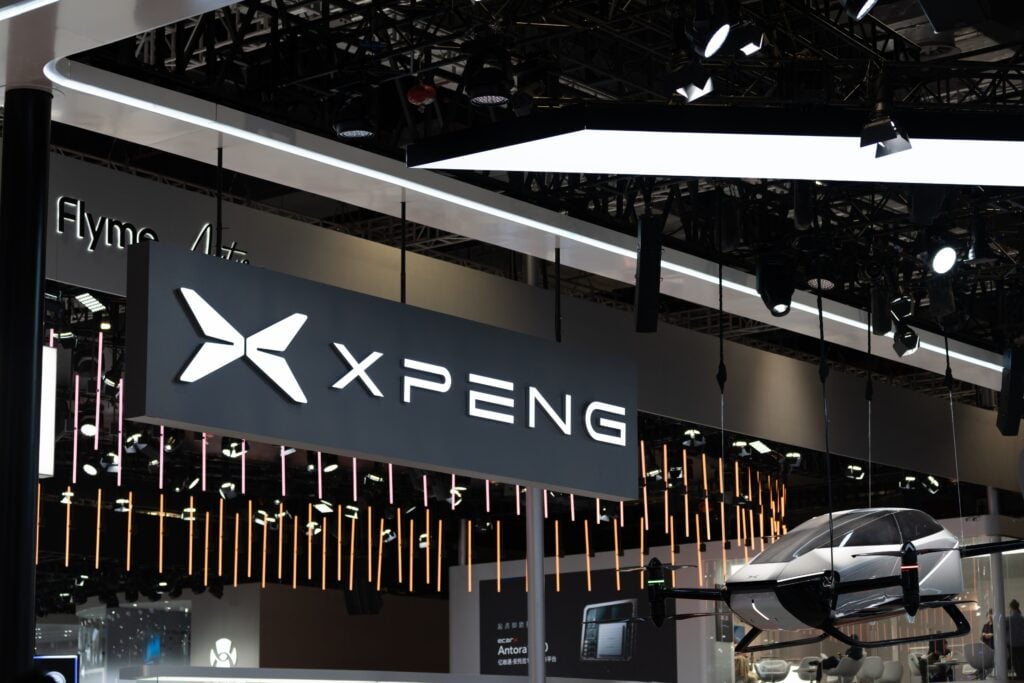
Group 1 - Xpeng Inc. is preparing for a potential IPO of its flying car unit, Aeroht, with the assistance of Morgan Stanley and JPMorgan [1][2] - The IPO plan may evolve, as banks were previously invited to present their proposals for listings in Hong Kong or the U.S. [3] - Xpeng's CEO, He Xiaopeng, emphasized the company's ambition to expand beyond traditional automotive manufacturing into "physical AI," including Robotaxi and humanoid robots [4] Group 2 - Xpeng's Robotaxi service is set to enter trial phases soon, with plans to launch in 2026 using Alibaba's Amap mapping platform [4] - In the broader context of mobility, Transportation Secretary Sean Duffy has highlighted air taxis as a significant advancement, potentially positioning the U.S. ahead of China in the aviation sector [6] - Xpeng's stock saw a 2.70% increase in pre-market trading, with shares currently priced at $20.56 [6]

Want to Buy Artificial Intelligence (AI) Stocks in 2026? These 2 Companies Could Net You Millions in Retirement.
The Motley Fool· 2026-01-10 22:44
Core Insights - Nvidia is a leading player in the AI revolution, providing high-performance chips essential for AI model training and operation [1][2] - The company is set to release new hardware annually, enhancing its growth potential and maintaining its competitive edge [3][4] - Nvidia's upcoming Rubin architecture promises significant cost reductions and efficiency improvements for AI model developers [5][6] Nvidia's Market Position - Nvidia's Blackwell GPUs have seen exceptional sales, with cloud GPUs currently sold out [3] - The company anticipates strong demand from the Chinese market, with expectations of approval for H200 chip sales [7][8] - Nvidia's market capitalization stands at $4.5 trillion, with a gross margin of 70.05% [9] Physical AI and Related Companies - The physical AI sector is emerging, with Nvidia's CEO highlighting its potential at CES [9] - Companies like Serve Robotics, which utilizes Nvidia's technology for autonomous delivery, are positioned to benefit from this trend [10][11] - Serve Robotics has expanded its fleet significantly and is integrated with major delivery platforms [12] Financial Projections - Serve Robotics is projected to generate $2.5 million in revenue for 2025, with expectations of growth to approximately $25 million in 2026 [14][15] - Despite its speculative nature, Serve Robotics' market cap has exceeded $1 billion, indicating high growth expectations [13][14]