自由现金流

Search documents
Did You Miss Broadcom Stock’s $51 Billion Payout?
Forbes· 2025-10-29 13:07
Core Insights - Broadcom has returned a substantial $51 billion to shareholders over the past decade through dividends and buybacks, driven by its strong cash generation capabilities in the semiconductor and software markets [2][4]. Group 1: Business Performance - Broadcom's semiconductor solutions business generates $34 billion in revenue, while its infrastructure software division contributes $26 billion, highlighting the company's dominance in mission-critical sectors [3]. - The company converts approximately $24+ billion annually into free cash flow from a revenue base of $51.6 billion, showcasing its cash-generative business model [4][12]. - Broadcom's revenue growth stands at 28.0% for the last twelve months (LTM) and an average of 24.0% over the last three years, indicating strong performance [12]. Group 2: Shareholder Returns - The total capital returned to shareholders positions Broadcom as the 53rd highest in history for total returns, reflecting management's confidence in the company's fiscal health [4][5]. - Dividends and stock buybacks are essential for providing direct returns to shareholders, which also signal the company's ability to generate sustainable cash inflows [5]. Group 3: Market Position and Valuation - Broadcom's P/E ratio is 92.9, indicating a higher valuation compared to the S&P 500, while also offering greater revenue growth and improved margins [12]. - The company operates in markets with high barriers to entry, allowing it to maintain industry-leading margins and convert revenue into cash flow effectively [2][3].



威瑞森第三季度营运收入338亿美元 低于市场预估
Xin Lang Cai Jing· 2025-10-29 10:40
Core Insights - Verizon's Q3 operating revenue was $33.8 billion, falling short of market expectations of $34.25 billion [1] - Adjusted earnings per share for Q3 were $1.21, slightly up from $1.19 in the same period last year, meeting the forecast of $1.19 [1] - Adjusted EBITDA for Q3 was $12.8 billion, representing a year-over-year growth of 2.4%, exceeding the estimate of $12.76 billion [1] - The company maintains its full-year operating cash flow guidance of $37 billion to $39 billion, compared to the market estimate of $37.81 billion [1] - Verizon continues to project full-year free cash flow between $19.5 billion and $20.5 billion, against the forecast of $19.96 billion [1]

电新、有色等行业普涨,银行股领跌,不含金融地产的自由现金流ETF基金(159233)投资机会受关注
Xin Lang Cai Jing· 2025-10-29 06:18
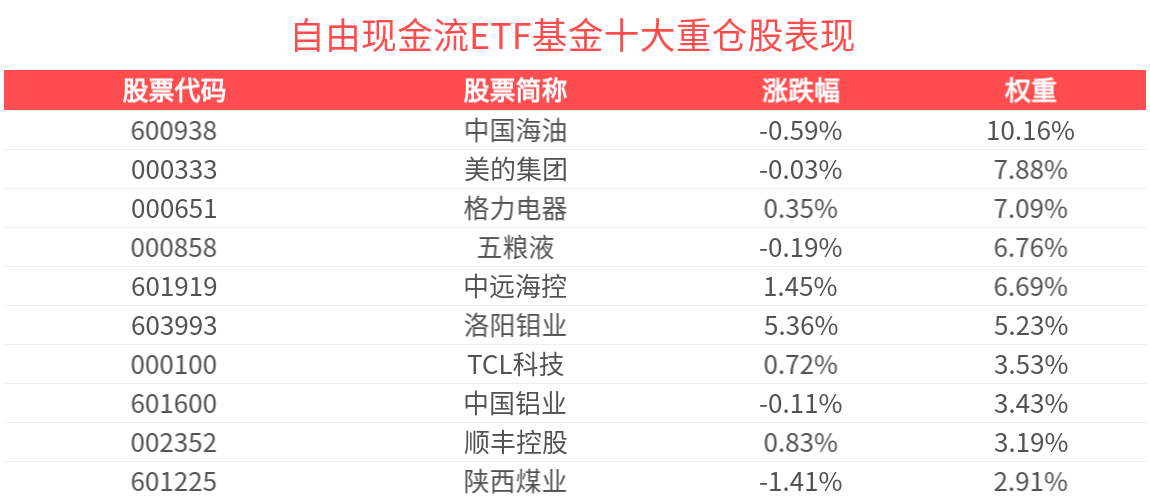
Core Viewpoint - The report highlights the performance and growth of the Free Cash Flow ETF Fund, indicating significant increases in both fund size and share volume, alongside a strong historical performance in terms of returns and risk management. Performance Summary - As of October 29, 2025, the Free Cash Flow ETF Index rose by 0.99%, with notable increases in constituent stocks such as Changgao Electric (up 9.95%) and Nanshan Aluminum (up 9.64%) [1] - Over the past week, the Free Cash Flow ETF Fund has accumulated a rise of 1.22% [1] - The fund's trading volume showed a turnover of 1.65% with a total transaction value of 5.8038 million yuan [1] - The fund's size increased by 24.854 million yuan over the past week, ranking third among comparable funds [1] - The fund's share volume grew by 18 million shares in the same period, also ranking third among comparable funds [1] - In the last five trading days, there were net inflows on four days, totaling 27.8734 million yuan, with an average daily net inflow of 5.5747 million yuan [1] Return and Risk Analysis - Since its inception, the Free Cash Flow ETF Fund has achieved a maximum monthly return of 7.80% and a longest consecutive monthly gain of 4 months, with an average monthly return of 3.08% [2] - The fund has maintained a 100% probability of profit over a three-month holding period, with a maximum drawdown of 3.76% since inception [2] Fee Structure - The management fee for the Free Cash Flow ETF Fund is set at 0.50%, while the custody fee is 0.10% [3] - The fund closely tracks the CSI Free Cash Flow Index, which includes 100 high free cash flow rate listed companies [3] Top Holdings - As of September 30, 2025, the top ten weighted stocks in the CSI Free Cash Flow Index accounted for 56.31% of the index, including China National Offshore Oil (10.16%) and Midea Group (7.88%) [3][5]
低利率环境优选,同类规模最大的自由现金流ETF(159201)连续11天合计“吸金”5.38亿元
Mei Ri Jing Ji Xin Wen· 2025-10-29 03:40
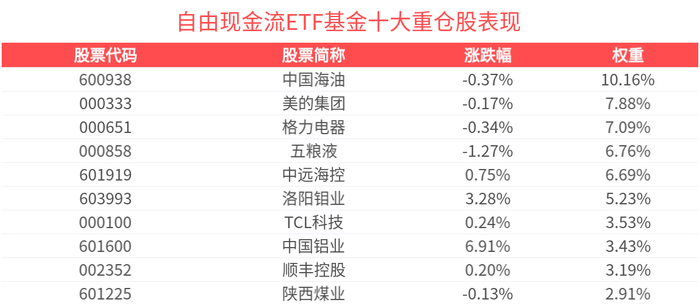
Core Viewpoint - The A-share market indices have shown upward movement, with the Guozheng Free Cash Flow Index experiencing a notable increase, indicating a positive trend in companies with stable free cash flow [1] Group 1: Market Performance - On October 29, the A-share major indices rose, with the Guozheng Free Cash Flow Index fluctuating and increasing by approximately 0.45% during the trading session [1] - Leading stocks included Yun Aluminum Co., Shenhuo Co., China Aluminum, and Guodian Nanzi, which contributed to the index's performance [1] Group 2: Fund Inflows - The largest free cash flow ETF (159201) has seen continuous net inflows over the past 11 days, totaling 538 million yuan, bringing its latest scale to 5.043 billion yuan, a record high since its inception [1] Group 3: Investment Strategy - Huachuang Securities suggests that in a low-interest-rate environment, the compounding effect of stable free cash flow is a cornerstone for a long-term bull market [1] - The shift in economic operation models indicates a change in the long-term logic of stock market pricing, moving from front-end expansion to back-end cautious management and cash flow accumulation [1] Group 4: Fund Characteristics - The free cash flow ETF (159201) and its linked funds (A: 023917; C: 023918) closely track the Guozheng Free Cash Flow Index, focusing on listed companies with high and stable free cash flow levels in the Shanghai and Shenzhen stock exchanges [1] - These funds are characterized by higher long-term returns and lower volatility, making them suitable for allocation in the current phase of high-quality economic growth [1] - The management and custody annual fee rates of the funds are among the lowest in the market [1]
Tenet Health(THC) - 2025 Q3 - Earnings Call Transcript
2025-10-28 15:30
Financial Data and Key Metrics Changes - In Q3 2025, net operating revenues were $5.3 billion, with consolidated adjusted EBITDA growing 12% year-over-year to $1.1 billion, resulting in an adjusted EBITDA margin of 20.8%, a 170 basis points improvement from the previous year [4][11] - The company raised its full-year 2025 adjusted EBITDA guidance to a range of $4.47 to $4.57 billion, reflecting an increase of $445 million, or 11% at the midpoint from initial guidance [6][14] - Free cash flow for 2025 is now expected to be in the range of $2.275 to $2.525 billion, with free cash flow after non-controlling interest projected at $1.495 to $1.695 billion, an increase of $250 million at the midpoint from previous guidance [7][16] Business Line Data and Key Metrics Changes - USPI's adjusted EBITDA grew 12% year-over-year to $492 million, with same-facility revenues increasing by 8.3% and total joint replacements in ASCs growing by 11% [4][11] - The hospital segment's adjusted EBITDA increased 13% to $607 million, with same-store hospital admissions up 1.4% and revenue per adjusted admission rising 5.9% [5][12] Market Data and Key Metrics Changes - The exchange business represented 8.4% of total admissions and 7% of total consolidated revenues in Q3, with a slight increase in total as a percent of admissions from Q2 [24][68] - The company noted healthy patient demand supporting same-store volume growth and a stable operating environment for 2026 [8][9] Company Strategy and Development Direction - The company is focusing on higher acuity services, which has led to improved margins and strong earnings growth [9][10] - There is a robust M&A and de novo activity, with 11 centers acquired and two new centers opened in Q3, emphasizing high-acuity procedures [5][6] - Capital expenditures for 2025 are expected to be between $875 million and $975 million, reflecting a $150 million increase at the midpoint over prior expectations [6][16] Management's Comments on Operating Environment and Future Outlook - Management expressed confidence in the business's performance, citing strong same-store revenue growth, high patient acuity, and effective cost controls [11][14] - There is uncertainty regarding enhanced premium tax subsidies and their impact on reimbursement and enrollment in exchanges for 2026, but management remains optimistic about patient demand [8][9] Other Important Information - The company recognized a $38 million pre-tax impact for Medicaid supplemental revenues related to prior years in Q3 2025, totaling $148 million year-to-date [12][54] - The leverage ratio as of September 30 was 2.3 times EBITDA, indicating strong operational performance and financial discipline [13][14] Q&A Session Summary Question: Q4 guidance and utilization expectations - Management has not built in expectations for higher utilization due to exchange subsidies expiring, but they are prepared for typical demand increases in Q4 [19][20] Question: CapEx inputs and allocation - The increased CapEx is focused on clinical program infrastructure and growth strategies, particularly in high-acuity services [25][26] Question: Free cash flow sustainability - The company highlighted improved cash collections and operational efficiencies as key drivers for sustainable free cash flow [28][29] Question: ASC volumes and service line performance - Growth in ASC volumes was driven by higher acuity services, with healthy GI recovery noted in Q3 [46][48] Question: Contribution from DPP in provider taxes - The company recorded approximately $346 million in supplemental Medicaid programs in Q3, with $148 million being out-of-period [52][54] Question: M&A environment for ASCs - The company remains a partner of choice in the ASC market, focusing on high-end specialties and multi-specialty centers [64][66] Question: Impact of CMS WISER model - The company is prepared for changes in pre-authorization requirements and is confident in managing operational adjustments [69][70] Question: Inpatient-only list removal impact - The potential removal of the inpatient-only list could benefit the USPI segment, but quantification of the impact is still under discussion [73][74]

高盛:药明康德上季盈利胜预期 关注新订单动能与临床CRO业务 目标价109.6港元
Zhi Tong Cai Jing· 2025-10-28 07:21
Core Viewpoint - Goldman Sachs anticipates a positive market reaction to WuXi AppTec's strong performance and new order momentum, despite concerns regarding the slowdown in TIDES order reserve growth [1] Financial Performance - WuXi AppTec reported third-quarter revenue of 12.1 billion RMB, representing a year-on-year increase of 15.3%, or a 19.7% increase when considering continuing operations [1] - The TIDES business experienced a significant year-on-year growth of 91%, contributing to 23% of total revenue [1] Target Price and Valuation - Goldman Sachs set a 12-month target price of 109.6 HKD for WuXi AppTec's Hong Kong stock, based on a forward price-to-earnings ratio of 18 times, while the target price for the Shanghai stock is 105.6 RMB [1] Revenue Guidance - WuXi AppTec's management raised the full-year revenue guidance for 2025 to 43.5 to 44 billion RMB, up from the previous guidance of 42.5 to 43.5 billion RMB [1] - The revenue growth guidance for continuing operations was also increased to 17% to 18% year-on-year, compared to the previous range of 13% to 17% [1] Capital Expenditure and Cash Flow - The third-quarter capital expenditure was 1.47 billion RMB, with a total of 3.57 billion RMB for the first nine months [1] - The full-year capital expenditure budget was revised down to 5.5 to 6 billion RMB from the previous estimate of 7 to 8 billion RMB due to longer-than-expected project settlement cycles [1] - The free cash flow guidance was raised to 8 to 8.5 billion RMB, up from the previous range of 5 to 6 billion RMB [1] - Management reiterated its commitment to advancing global capacity construction [1]

盘中速递 | 成交额超3亿元,同类规模最大的自由现金流ETF(159201)获资金抢筹
Sou Hu Cai Jing· 2025-10-28 06:29
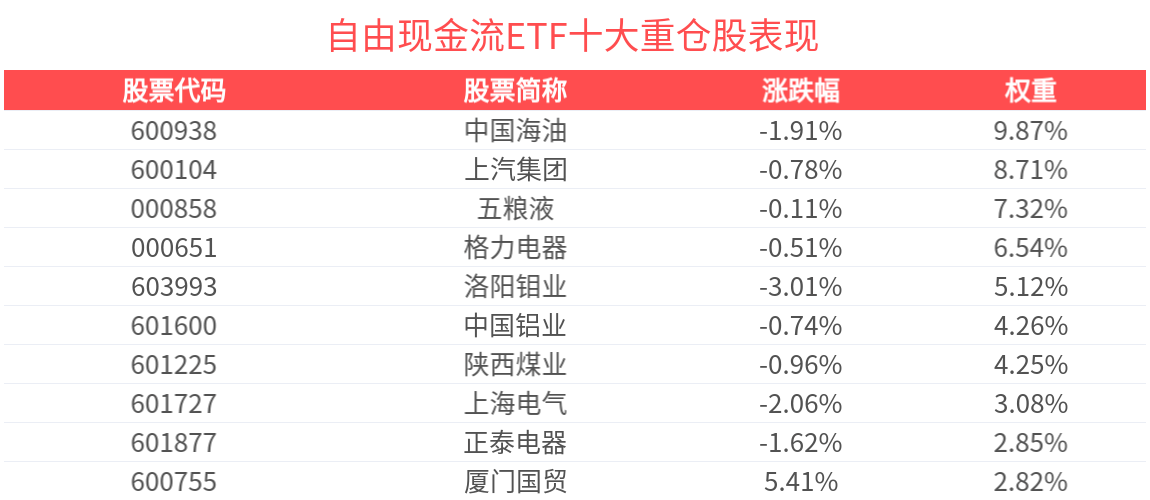
Core Insights - The Guozheng Free Cash Flow Index has decreased by 0.84% as of October 28, 2025, with mixed performance among constituent stocks [1] - The Free Cash Flow ETF (159201) has seen a recent decline of 0.85%, currently priced at 1.17 yuan, but has increased by 3.69% over the past week, ranking first among comparable funds [1] - The Free Cash Flow ETF has achieved record highs in both share count (42.22 billion shares) and total assets (4.975 billion yuan) [1] Performance Metrics - The Free Cash Flow ETF has experienced a net inflow of 428 million yuan over the past 10 days, indicating strong investor interest [1] - Over the last six months, the net asset value of the Free Cash Flow ETF has risen by 22.50%, with a maximum monthly return of 7% and a historical six-month holding profitability rate of 100% [2] - The ETF's maximum drawdown in the last six months was 3.65%, the smallest among comparable funds, with a recovery time of 35 days [2] Fund Characteristics - The management fee for the Free Cash Flow ETF is 0.15%, and the custody fee is 0.05%, both of which are the lowest among comparable funds [2] - The tracking error for the ETF over the past three months is 0.061%, indicating the highest tracking precision among similar funds [2] Top Holdings - As of September 30, 2025, the top ten weighted stocks in the Guozheng Free Cash Flow Index account for 54.91% of the index, including China National Offshore Oil Corporation, SAIC Motor, and Wuliangye [3]
自由现金流ETF(159201)近10天获得连续资金净流入,合计“吸金”4.28亿元
Sou Hu Cai Jing· 2025-10-28 02:10
Core Insights - The Guozheng Free Cash Flow Index has decreased by 0.31% as of October 28, 2025, with mixed performance among constituent stocks [1] - The Free Cash Flow ETF (159201) has seen a decline of 0.42%, currently priced at 1.18 yuan, but has increased by 3.69% over the past week, ranking first among comparable funds [1][3] - The Free Cash Flow ETF has experienced continuous net inflows totaling 428 million yuan over the past 10 days, reaching a record high of 4.222 billion shares and a total size of 4.975 billion yuan [1][3] Fund Performance - The Free Cash Flow ETF has received net purchases from leveraged funds for four consecutive days, with a peak single-day net purchase of 33.6626 million yuan, and a latest financing balance of 100 million yuan [3] - The ETF's average daily trading volume over the past month is 342 million yuan, the highest among comparable funds, with a tracking error of 0.061% over the past three months, also the best in its category [3] - The maximum drawdown over the past six months is 3.65%, with a relative benchmark drawdown of 0.04%, indicating the smallest drawdown among comparable funds [3] Historical Returns - The Free Cash Flow ETF has achieved a net value increase of 22.50% over the past six months, with the highest monthly return reaching 7% and the longest consecutive monthly gain lasting five months with a total increase of 18.05% [3] - The fund has a monthly profit percentage of 85.71% and a historical six-month holding profit probability of 100% [3] Fee Structure - The management fee for the Free Cash Flow ETF is 0.15%, and the custody fee is 0.05%, making it the lowest among comparable funds [3] Top Holdings - As of September 30, 2025, the top ten weighted stocks in the Guozheng Free Cash Flow Index include China National Offshore Oil Corporation, SAIC Motor, Wuliangye, Gree Electric Appliances, and others, collectively accounting for 54.91% of the index [4]
市场有望重回业绩驱动,同类规模最大的自由现金流ETF(159201)连续9天合计“吸金”3.83亿元
Mei Ri Jing Ji Xin Wen· 2025-10-27 06:00
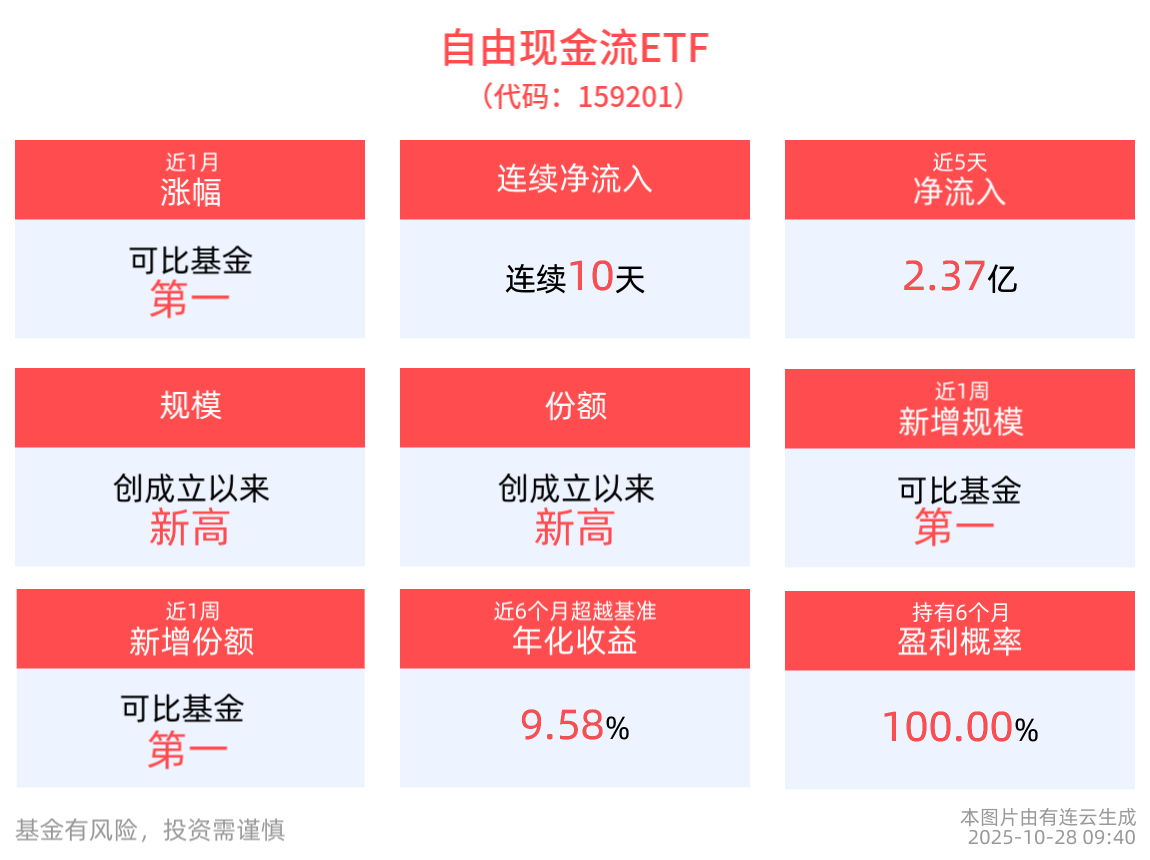
Group 1 - The A-share major indices showed a strong upward trend on October 27, with the Guozheng Free Cash Flow Index rising approximately 1.2% during the session [1] - The top-performing stocks included Changbao Co., Ltd., which hit the daily limit, along with Dongfang Tower, CITIC Special Steel, and Moulding Technology [1] - The largest free cash flow ETF (159201) has seen continuous net inflows of 383 million yuan over the past nine days [1] Group 2 - According to CITIC Securities, the reduction of active trend-following funds has largely been completed, and market trading volume and turnover have returned to rational levels [1] - This indicates that the recent discussions among investors regarding style switching have essentially concluded, suggesting a return to performance-driven market characteristics [1] - The free cash flow ETF (159201) focuses on industry leaders with abundant free cash flow, covering sectors such as non-ferrous metals, automotive, petrochemicals, and power equipment, effectively mitigating single-industry volatility risks [1] Group 3 - The fund management annual fee rate is 0.15%, and the custody annual fee rate is 0.05%, both of which are the lowest in the market [1]
市场量价齐涨,不含银行地产行业的自由现金流ETF基金(159233)值得关注
Xin Lang Cai Jing· 2025-10-27 02:29
Core Insights - The China Securities Index Free Cash Flow Index (932365) has shown a positive performance, with a 0.56% increase as of October 27, 2025, and notable gains in constituent stocks such as Luoyang Molybdenum (603993) and CITIC Special Steel (000708) [1][2] - The Free Cash Flow ETF Fund (159233) has also performed well, with a 0.69% increase and a recent price of 1.17 yuan, reflecting a 2.47% rise over the past week [1][2] - The fund has experienced continuous net inflows for 34 days, accumulating a total of 230 million yuan, with an average daily net inflow of approximately 6.78 million yuan [1][2] Performance Metrics - The Free Cash Flow ETF Fund has achieved a maximum monthly return of 7.80% since its inception, with a longest streak of 4 consecutive months of gains [2] - The fund's maximum drawdown is recorded at 3.76%, with a recovery time of 35 days [2] - The management fee for the fund is set at 0.50%, while the custody fee is 0.10% [2] Top Holdings - As of September 30, 2025, the top ten weighted stocks in the Free Cash Flow Index account for 56.31% of the index, including major companies like China National Offshore Oil (600938) and Midea Group (000333) [3][5] - The top ten stocks are characterized by varying performance, with Luoyang Molybdenum (603993) showing a significant increase of 5.36% [5]