全国统一大市场

Search documents
数览2025“年报”丨向新向优,中国经济向好
Xin Hua Wang· 2026-01-19 07:31
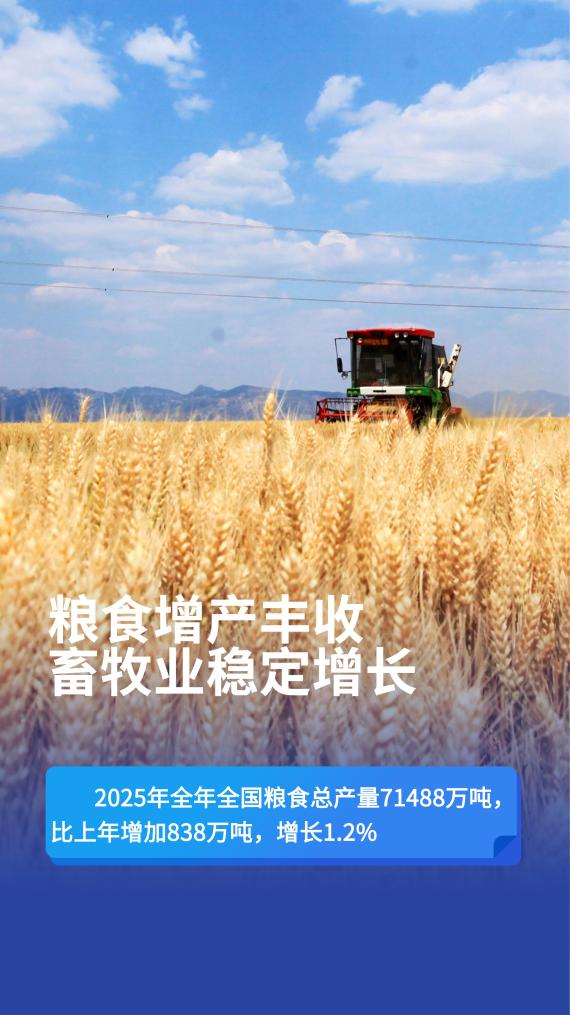
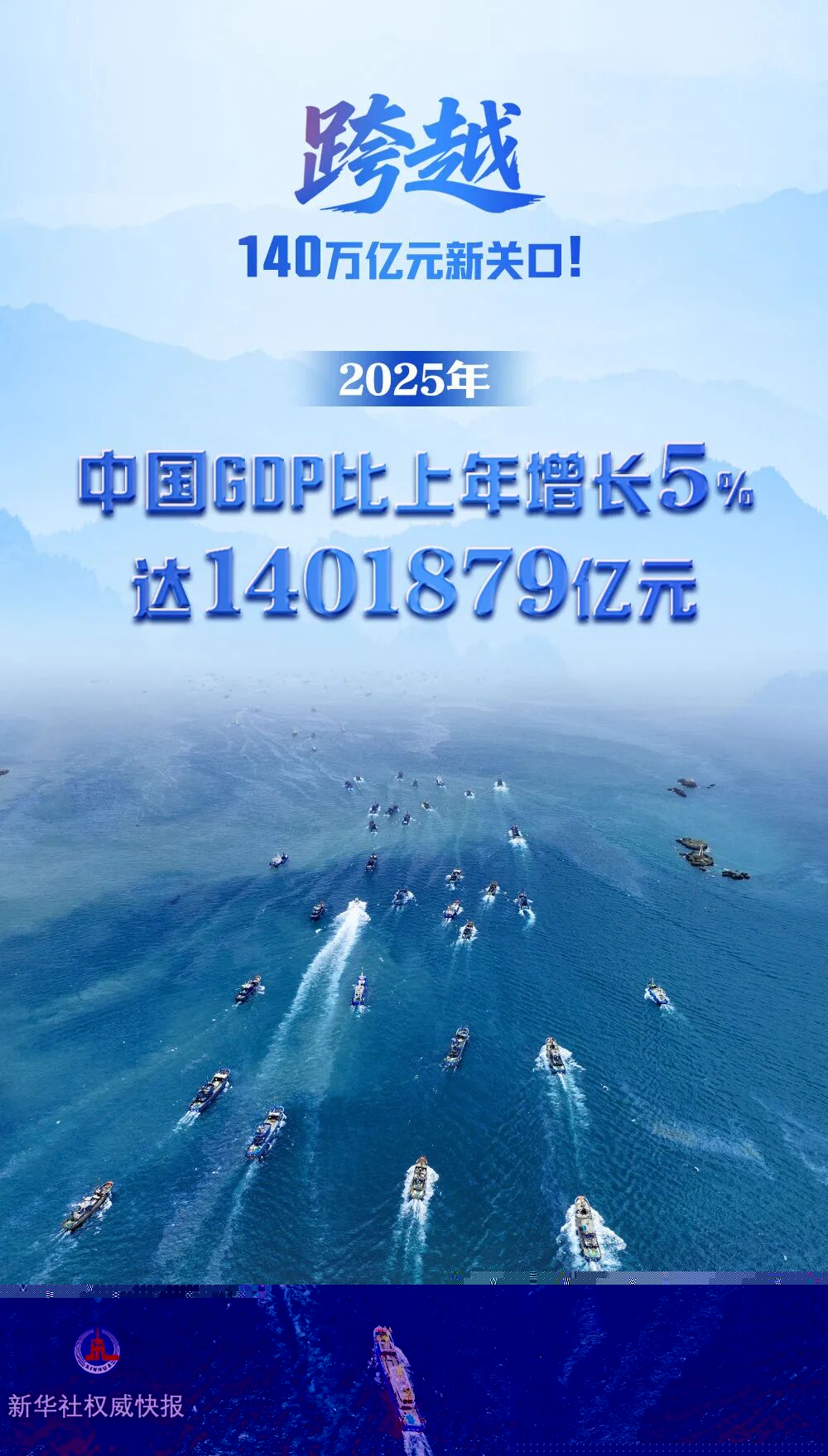
2025年,国民经济运行顶压前行、向新向优,高质量发展取得新成效,经济社会发展主要目标任务圆满 实现,"十四五"胜利收官。 国家统计局1月19日发布数据,初步核算,2025年中国国内生产总值(GDP)达到1401879亿元,按不变 价格计算,比上年增长5.0%。 粮食增产丰收,畜牧业稳定增长。全年全国粮食总产量71488万吨,比上年增加838万吨,增长1.2%。 其中,夏粮产量14975万吨,下降0.1%;早稻产量2851万吨,增长1.2%;秋粮产量53662万吨,增长 1.5%。 工业生产较快增长,装备制造业和高技术制造业增势较好。全年全国规模以上工业增加值比上年增长 5.9%。装备制造业增加值增长9.2%,高技术制造业增加值增长9.4%,增速分别快于规模以上工业3.3、 3.5个百分点。 2025年经济数据 全年全国规模以上工业增加值比上年增长 全年服务业增加值比上年增长 全年社会消费品零售总额比上年增长 e complicit 8891 1991 11 中国经济顶压前行 向新向优 新华社音视频部制作 服务业平稳增长,现代服务业发展良好。全年服务业增加值比上年增长5.4%。其中,信息传输、软件 和信息技术 ...

2025中国经济成绩单:GDP同比增长5%,出生人口792万人
Guo Jia Tong Ji Ju· 2026-01-19 07:24
Economic Overview - In 2025, China's GDP reached 14,018.79 billion yuan, growing by 5.0% year-on-year at constant prices [1] - The GDP growth rates by quarter were 5.4% in Q1, 5.2% in Q2, 4.8% in Q3, and 4.5% in Q4, with a quarter-on-quarter growth of 1.2% in Q4 [1] Agriculture - National grain production totaled 714.88 million tons, an increase of 8.38 million tons or 1.2% from the previous year [2] - The total meat production reached 100.72 million tons, marking a 4.2% increase, with pork production at 59.38 million tons, up 4.1% [2] Industrial Production - The industrial added value for large-scale enterprises grew by 5.9% year-on-year [3] - High-tech manufacturing and equipment manufacturing saw significant growth, with increases of 9.4% and 9.2% respectively [3] - The profit of large-scale industrial enterprises totaled 66,269 billion yuan, a slight increase of 0.1% year-on-year [3] Services Sector - The service sector's added value increased by 5.4% year-on-year [4] - Key areas such as information technology services and business services experienced growth rates of 11.1% and 10.3% respectively [5] Retail and Consumption - Total retail sales of consumer goods reached 501.202 billion yuan, growing by 3.7% year-on-year [6] - Online retail sales amounted to 159.722 billion yuan, an increase of 8.6% from the previous year [6] Investment - Total fixed asset investment (excluding rural households) was 485.186 billion yuan, a decrease of 3.8% year-on-year [7] - Manufacturing investment grew by 0.6%, while real estate investment saw a significant decline of 17.2% [7] Trade - Total import and export value reached 454.687 billion yuan, growing by 3.8% year-on-year, with exports increasing by 6.1% [8] Employment and Income - The average urban unemployment rate was 5.2%, with a December rate of 5.1% [11] - The per capita disposable income for residents was 43,377 yuan, reflecting a nominal growth of 5.0% [12] Population and Urbanization - The total population decreased by 3.39 million to 1,404.89 million, with an urbanization rate of 67.89%, up by 0.89 percentage points [13][14]
法治为基,商业有序:论企业文化中的法治内核与商业秩序构建
Sou Hu Cai Jing· 2026-01-19 07:14
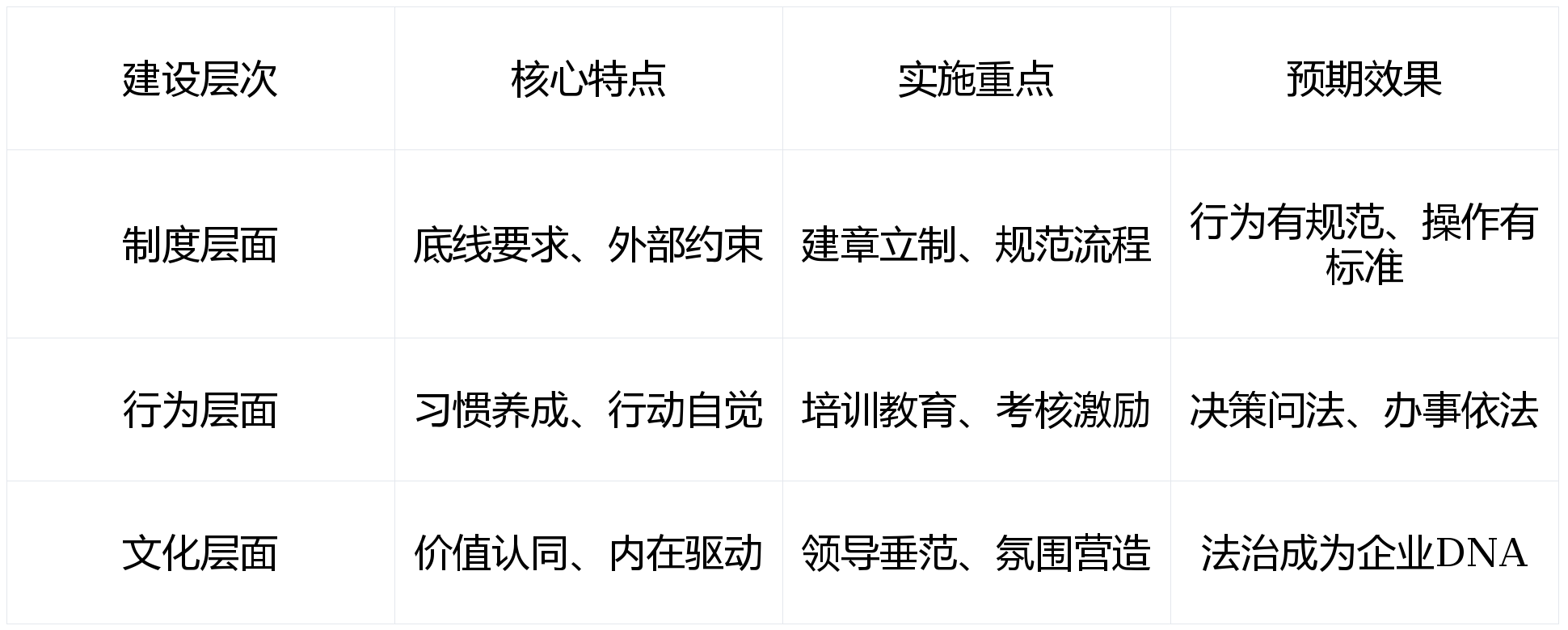
Core Viewpoint - The article emphasizes the importance of a rule-of-law business environment as a fundamental guarantee for healthy corporate development, highlighting that "the rule of law is the best business environment" as stated by President Xi Jinping [1]. Group 1: Rule of Law as a Foundation - The rule of law is essential for ensuring transaction safety, reducing market uncertainty, and promoting business innovation [1]. - A market economy is fundamentally a rule-of-law economy, where orderly business activities and stable expectations stimulate innovation and investment [1]. - The rule of law provides comprehensive protection for business activities through three core mechanisms: establishing rules, safeguarding rights, and resolving disputes [1]. Group 2: Construction of Legal Culture in Enterprises - The construction of corporate legal culture is a systematic project that evolves from compliance as a "bottom line requirement" to cultural "internal recognition" [2]. - Institutional construction is the cornerstone of corporate legal culture, exemplified by China Shipbuilding Group's comprehensive regulatory framework [3]. - Successful institutional design should be systematic, operable, and dynamic, ensuring that regulations are effectively executed and adapted to changing environments [3]. Group 3: Dynamic Balance of Law and Business Order - The relationship between law and business order is dynamic, requiring a balance that ensures orderly business activities while allowing space for innovation [8]. - Law provides a stable framework for business activities, ensuring fair competition and efficient resource allocation [9]. - Legal frameworks must adapt to new business models, balancing innovation with necessary regulations to prevent deviations from established norms [10]. Group 4: Practical Pathways for Legal Culture in Enterprises - Leadership is crucial in the construction of legal culture, with leaders' legal awareness directly influencing the depth and breadth of legal culture within the enterprise [13]. - Institutional construction is a core aspect of legal culture, requiring a comprehensive system that covers all operational management processes [14]. - Digital transformation offers new tools for enhancing legal management efficiency, with companies leveraging information technology for contract management and compliance monitoring [16]. Group 5: Future Trends in Legal Culture Construction - The integration of law and business will deepen, transforming legal work from a supportive function to a strategic support role [18]. - Digital technologies will be widely applied in legal construction, improving the efficiency and precision of legal work [18]. - The ability to manage legal risks in international operations will become a key factor in corporate competitiveness, necessitating a robust legal framework for overseas operations [18].

去年四季度GDP回落至4.5%,今年经济增速走势怎么看
Di Yi Cai Jing· 2026-01-19 06:45
2026年我国经济稳中向好有条件、有支撑。 随着宏观政策不断加力显效,2025年全年经济增长5%,完成了年初设定的预期目标。 国家统计局19日发布的数据显示,经初步核算,全年国内生产总值1401879亿元,按不变价格计算,比 上年增长5.0%,与上年增速持平。其中,四季度当季GDP同比增长4.5%,较第三季度增速放缓0.3个百 分点。 从环比增速看,四季度GDP增长1.2%,连续两个季度增速提升,显示经济增长边际加快。 国家统计局局长康义表示,2025年实施更加积极有为的宏观政策,纵深推进全国统一大市场建设,国民 经济运行顶压前行、向新向优,高质量发展取得新成效,经济社会发展主要目标任务圆满实现,"十四 五"胜利收官。 康义表示,2025年国内生产总值首次跃上140万亿元新台阶,比上年增长5.0%;城镇调查失业率平均值 是5.2%,就业保持总体稳定;货物贸易再创新高,外汇储备余额超过3.3万亿美元。对于我国这样超大 体量的经济体而言,在各种风险挑战交织的背景下,能够实现这样的稳定发展很不容易。 中国财政科学研究院原院长刘尚希分析,亮眼的数据充分反映出中国经济具有内在韧性,也体现了我国 经济优势多、潜力大、韧性 ...
今年经济增速走势怎么看
第一财经· 2026-01-19 06:16
2026.01. 19 本文字数:1533,阅读时长大约2分钟 作者 | 第一财经 祝嫣然 随着宏观政策不断加力显效,2025年全年经济增长5%,完成了年初设定的预期目标。 国家统计局19日发布的数据显示,经初步核算,全年国内生产总值1401879亿元,按不变价格计算,比上年增长5.0%,与上年增速持平。其中,四季 度当季GDP同比增长4.5%,较第三季度增速放缓0.3个百分点。 从环比增速看,四季度GDP增长1.2%,连续两个季度增速提升,显示经济增长边际加快。 国家统计局局长康义表示,2025年实施更加积极有为的宏观政策,纵深推进全国统一大市场建设,国民经济运行顶压前行、向新向优,高质量发展取得 新成效,经济社会发展主要目标任务圆满实现,"十四五"胜利收官。 康义表示,2025年国内生产总值首次跃上140万亿元新台阶,比上年增长5.0%;城镇调查失业率平均值是5.2%,就业保持总体稳定;货物贸易再创新 高,外汇储备余额超过3.3万亿美元。对于我国这样超大体量的经济体而言,在各种风险挑战交织的背景下,能够实现这样的稳定发展很不容易。 康义表示,2026年是"十五五"开局之年,我国发展站在了新起点上。尽管外部 ...
5%,GDP突破140万亿元!国家统计局重磅公布
Qi Huo Ri Bao· 2026-01-19 04:35
Economic Overview - In 2025, China's GDP reached 14,018.79 billion yuan, growing by 5.0% year-on-year at constant prices [1] - The first, second, and third industries contributed 93.35 billion yuan (3.9%), 499.65 billion yuan (4.5%), and 808.88 billion yuan (5.4%) respectively to the GDP [1] Agricultural Production - National grain production totaled 714.88 million tons, an increase of 0.838 million tons (1.2%) from the previous year [3] - Meat production reached 100.72 million tons, a 4.2% increase, with pork production at 59.38 million tons (4.1% growth) [3] Industrial Growth - The industrial added value for large-scale enterprises grew by 5.9%, with manufacturing increasing by 6.4% and high-tech manufacturing by 9.4% [5] - The production of 3D printing equipment, industrial robots, and new energy vehicles saw significant increases of 52.5%, 28.0%, and 25.1% respectively [5] Service Sector Performance - The service sector's added value grew by 5.4%, with notable growth in information transmission (11.1%) and rental and business services (10.3%) [5] - The revenue of large-scale service enterprises increased by 7.8% year-on-year [5] Consumer Market - Total retail sales of consumer goods reached 501.20 billion yuan, growing by 3.7% [7] - Online retail sales amounted to 159.72 billion yuan, an 8.6% increase, with physical goods online retail at 130.92 billion yuan (5.2% growth) [7] Investment Trends - Fixed asset investment (excluding rural households) decreased by 3.8% to 485.19 billion yuan, with manufacturing investment growing by 0.6% [9] - High-tech industries, particularly information services and aerospace manufacturing, saw investment growth of 28.4% and 16.9% respectively [9] Trade and Export - Total goods import and export reached 454.69 billion yuan, a 3.8% increase, with exports growing by 6.1% [11] - High-tech product exports increased by 13.2% [11] Price Stability - The Consumer Price Index (CPI) remained stable year-on-year, with food prices decreasing by 0.7% [13] - Core CPI, excluding food and energy, rose by 0.7%, reflecting a slight increase in inflationary pressure [13] Employment and Income - The urban unemployment rate averaged 5.2%, with a slight decrease to 5.1% in December [15] - Per capita disposable income reached 43,377 yuan, a nominal increase of 5.0% [17]
推动全国统一大市场建设 《组织机构统一社会信用代码管理办法》下月施行
Zhong Guo Jing Ji Wang· 2026-01-19 03:29
近日,《组织机构统一社会信用代码管理办法》(以下简称《办法》)由市场监督管理总局发布,自2026 年2月1日起施行。 据介绍,《办法》的核心是对统一社会信用代码,实施全生命周期规范,实现组织机构从"设立"到"存 续"的精准识别、动态追踪。《办法》将织密社会信用体系"数据网"。统一社会信用代码可以串起各地 区、各部门的信用信息。以代码为索引,可全景记录经济活动,交叉稽核信用状况,真正做到"一处失 信、处处受限"。(中国经济网记者佟明彪) 统一代码制度是建设社会信用体系和构建全国统一大市场的基础性制度,加快统一代码立法有利于加强 统一代码管理、推动社会信用体系建设和全国统一大市场建设。 ...
国家统计局:2025年全年国内生产总值1401879亿元,同比增长5.0%
Sou Hu Cai Jing· 2026-01-19 03:02
国家统计局表示,总的来看,2025年国民经济顶住多重压力保持稳中有进发展态势,高质量发展取得新 成效。但也要看到,外部环境变化影响加深,国内供强需弱矛盾突出,经济发展中老问题、新挑战仍然 不少。下阶段,要实施更加积极有为的宏观政策,持续扩大内需、优化供给,做优增量、盘活存量,因 地制宜发展新质生产力,纵深推进全国统一大市场建设,推动经济实现质的有效提升和量的合理增长, 确保"十五五"开好局、起好步. 分季度看,一季度国内生产总值同比增长5.4%,二季度增长5.2%,三季度增长4.8%,四季度增长 4.5%。从环比看,四季度国内生产总值增长1.2%。 数据显示,2025年全年全国粮食总产量71488万吨,比上年增加838万吨,增长1.2%;全国规模以上工 业增加值比上年增长5.9%;服务业增加值比上年增长5.4%;社会消费品零售总额501202亿元,比上年 增长3.7%;全国网上零售额159722亿元,比上年增长8.6%,服务零售额比上年增长5.5%;全国固定资 产投资(不含农户)485186亿元,比上年下降3.8%;扣除房地产开发投资,全国固定资产投资下降 0.5%。分领域看,基础设施投资下降2.2%,制造业 ...
5.0%!突破140万亿元!2025年GDP出炉
Zheng Quan Shi Bao· 2026-01-19 02:38
Economic Overview - In 2025, China's GDP reached 1401879 billion yuan, growing by 5.0% year-on-year at constant prices [1][5] - The first industry added value was 93347 billion yuan, increasing by 3.9%; the second industry added value was 499653 billion yuan, growing by 4.5%; and the third industry added value was 808879 billion yuan, rising by 5.4% [1][5] Quarterly Performance - GDP growth rates by quarter were 5.4% in Q1, 5.2% in Q2, 4.8% in Q3, and 4.5% in Q4 [1][5] - The Q4 GDP growth rate was 1.2% on a quarter-on-quarter basis [1] Agricultural Production - National grain production totaled 71488 million tons, an increase of 838 million tons or 1.2% year-on-year [6] - Meat production reached 10072 million tons, a growth of 4.2%, with pork production at 5938 million tons, up 4.1% [6] Industrial Growth - The industrial added value for large-scale enterprises grew by 5.9% year-on-year [7] - High-tech manufacturing saw a growth of 9.4%, outpacing overall industrial growth [7] Service Sector Performance - The service sector's added value increased by 5.4% year-on-year [8] - Key sectors such as information technology services and rental services grew by 11.1% and 10.3%, respectively [8] Retail and Consumption - Total retail sales of consumer goods reached 501202 billion yuan, growing by 3.7% year-on-year [9] - Online retail sales amounted to 159722 billion yuan, an increase of 8.6% [9] Investment Trends - Fixed asset investment (excluding rural households) was 485186 billion yuan, a decrease of 3.8% [10][11] - Manufacturing investment grew by 0.6%, while real estate investment fell by 17.2% [10] Trade Performance - Total goods import and export reached 454687 billion yuan, growing by 3.8% year-on-year [12] - Exports increased by 6.1%, while imports rose by 0.5% [12] Price Stability - The Consumer Price Index (CPI) remained stable year-on-year, with a core CPI increase of 0.7% [13] - Producer prices decreased by 2.6% year-on-year [13] Employment and Income - The urban unemployment rate averaged 5.2% for the year [14] - Per capita disposable income reached 43377 yuan, with a nominal growth of 5.0% [15] Population Trends - The total population decreased by 3.39 million to 140489 million [16] - The urbanization rate increased to 67.89%, up by 0.89 percentage points [16] Future Outlook - The economy is expected to face challenges from external changes and domestic supply-demand imbalances [17] - Emphasis will be placed on expanding domestic demand and optimizing supply to ensure quality growth [17]
5%!GDP突破140万亿!
券商中国· 2026-01-19 02:29
2025年,面对国内外经济环境的复杂变化,在以习近平同志为核心的党中央坚强领导下,各地区各部门深入贯 彻落实党中央、国务院决策部署,坚定不移贯彻新发展理念、推动高质量发展,统筹国内国际两个大局,统筹 发展和安全,实施更加积极有为的宏观政策,纵深推进全国统一大市场建设,国民经济运行顶压前行、向新向 优,高质量发展取得新成效,经济社会发展主要目标任务圆满实现,"十四五"胜利收官。 初步核算,全年国内生产总值1401879亿元,按不变价格计算,比上年增长5.0%。分产业看,第一产业增加值 93347亿元,比上年增长3.9%;第二产业增加值499653亿元,增长4.5%;第三产业增加值808879亿元,增长 5.4%。分季度看,一季度国内生产总值同比增长5.4%,二季度增长5.2%,三季度增长4.8%,四季度增长 4.5%。从环比看,四季度国内生产总值增长1.2%。 一、粮食增产丰收,畜牧业稳定增长 全年全国粮食总产量71488万吨,比上年增加838万吨,增长1.2%。其中,夏粮产量14975万吨,下降0.1%;早 稻产量2851万吨,增长1.2%;秋粮产量53662万吨,增长1.5%。分品种看,小麦产量14007万 ...