
基层治理

Search documents
“实地调研 + 民主协商”双线发力 大港街道汇聚多元力量解民生难题
Zhen Jiang Ri Bao· 2025-09-03 23:40
Core Viewpoint - Grassroots governance is essential for national governance, with the well-being of the people being the core focus of grassroots work. The "Red Housekeeper" convenience service project in Zhenjiang Economic Development Zone aims to address urgent public concerns through a dual approach of field research and democratic consultation [1]. Group 1 - The "Red Housekeeper" project integrates multiple forces to solve the pressing issues faced by the community [1]. - Prior to the consultation, participants engaged in immersive field research to understand the progress of livelihood projects, identifying pain points and bottlenecks [1]. - During the specialized consultation meeting, community representatives and local companies presented implementation plans and gathered feedback on improving convenience facilities and consumer experiences [1]. Group 2 - Community representatives and political advisors provided suggestions on key issues and project advancement, focusing on policy interpretation, resource integration, and plan optimization [1]. - The collaborative effort aims to provide precise and feasible solutions to the challenges faced by the community [1].
兰州西固河口:强化“四个实战化”工作 推动主动创稳提质增效
Zhong Guo Fa Zhan Wang· 2025-09-02 09:39
Core Viewpoint - The article emphasizes the implementation of a comprehensive grassroots governance system in HeKou Town, Lanzhou's Xigu District, focusing on proactive stability and safety measures to enhance community safety and governance efficiency [1][2][3]. Group 1: Governance Structure - The establishment of a "one-door management" system aims to create a unified command center for governance, integrating various departments to address community issues effectively [2][3]. - A "closed-loop management" mechanism is introduced to ensure efficient operation of the command system, involving monitoring, analysis, and feedback processes [3][5]. - The integration of "grid patrols and data empowerment" is highlighted, with grid members assigned specific responsibilities to ensure timely reporting and resolution of issues [4][6]. Group 2: Operational Mechanisms - The implementation of a "three-single system" for closed-loop processes includes task assignment, feedback collection, and evaluation to enhance accountability and service quality [5][6]. - A "dynamic ledger" system is established to track issues, tasks, and responsibilities, ensuring clarity in governance and problem resolution [2][5]. - The introduction of a "training and empowerment" system aims to enhance the skills of grid members through structured training and knowledge sharing [7]. Group 3: Performance Metrics - The governance center has received a total of 1,739 public requests and achieved a 100% response rate to dispatched tasks, indicating high operational efficiency [3][5]. - The resolution rate of conflicts has improved by 30% year-on-year, while public safety incidents have decreased by 25%, reflecting enhanced community safety and satisfaction [5][6]. - A performance management system is in place to evaluate grid members based on their reporting and resolution rates, linking results to rewards and recognition [6][7].
丁岗镇五级联动织密民生网——“民情日记”写满民生温暖
Zhen Jiang Ri Bao· 2025-09-01 23:41
Core Viewpoint - The article highlights the effective community governance model in Xinle Community, where a five-level linkage system led by the party organization addresses residents' concerns and enhances their quality of life through active engagement and problem-solving [2][3][4]. Group 1: Community Engagement - The community has established a five-level linkage system involving the town party committee, community party branch, area party branches, central households, and residents to proactively address issues rather than waiting for complaints [2]. - Residents are encouraged to document their concerns in a "民情日记本" (People's Diary), which serves as a tool for community leaders to understand and respond to local issues [2][4]. Group 2: Problem Resolution - Issues recorded in the diary are categorized into three types: community self-handled, department joint-handled, and collaborative handled, with specific timelines for resolution [3]. - Over the past six months, the community has successfully resolved 128 issues by coordinating with various departments, demonstrating a collaborative approach to governance [3]. Group 3: Feedback Mechanism - A feedback mechanism is in place to ensure that residents are informed about the resolution of their reported issues, fostering a sense of community involvement and trust [4]. - The community encourages residents to participate in initiatives, such as improving local green spaces and volunteering for educational programs, thereby transforming the diary into a collaborative tool for community building [4].
江苏无锡新吴:“小程序”推动“大治理”
Ren Min Wang· 2025-09-01 00:54
Group 1 - The core idea of the news is the integration of the "Berdou Governance" judicial brand into grassroots judicial practice in Wuxi, Jiangsu Province, which aims to enhance community governance through a newly developed judicial service app [1][2] - The app has facilitated a significant increase in mediation success rates, rising from 68% to 93% within six months of its trial operation, demonstrating its effectiveness in resolving disputes [4] - The app allows for real-time data analysis and visualization of community disputes, enabling better understanding and management of social issues, thus transforming traditional governance methods into data-driven approaches [5][7] Group 2 - The app has been instrumental in resolving multiple disputes quickly, as evidenced by a case where three potential disputes were resolved within 24 hours through remote mediation [3][6] - The platform provides a comprehensive overview of community disputes, including a detailed analysis of litigation rates and types of conflicts, which helps in targeted legal education and resource allocation [6][8] - The judicial service app has also led to proactive measures in community governance, such as the implementation of new property management standards based on data-driven insights, showcasing a shift from reactive to proactive governance [8]
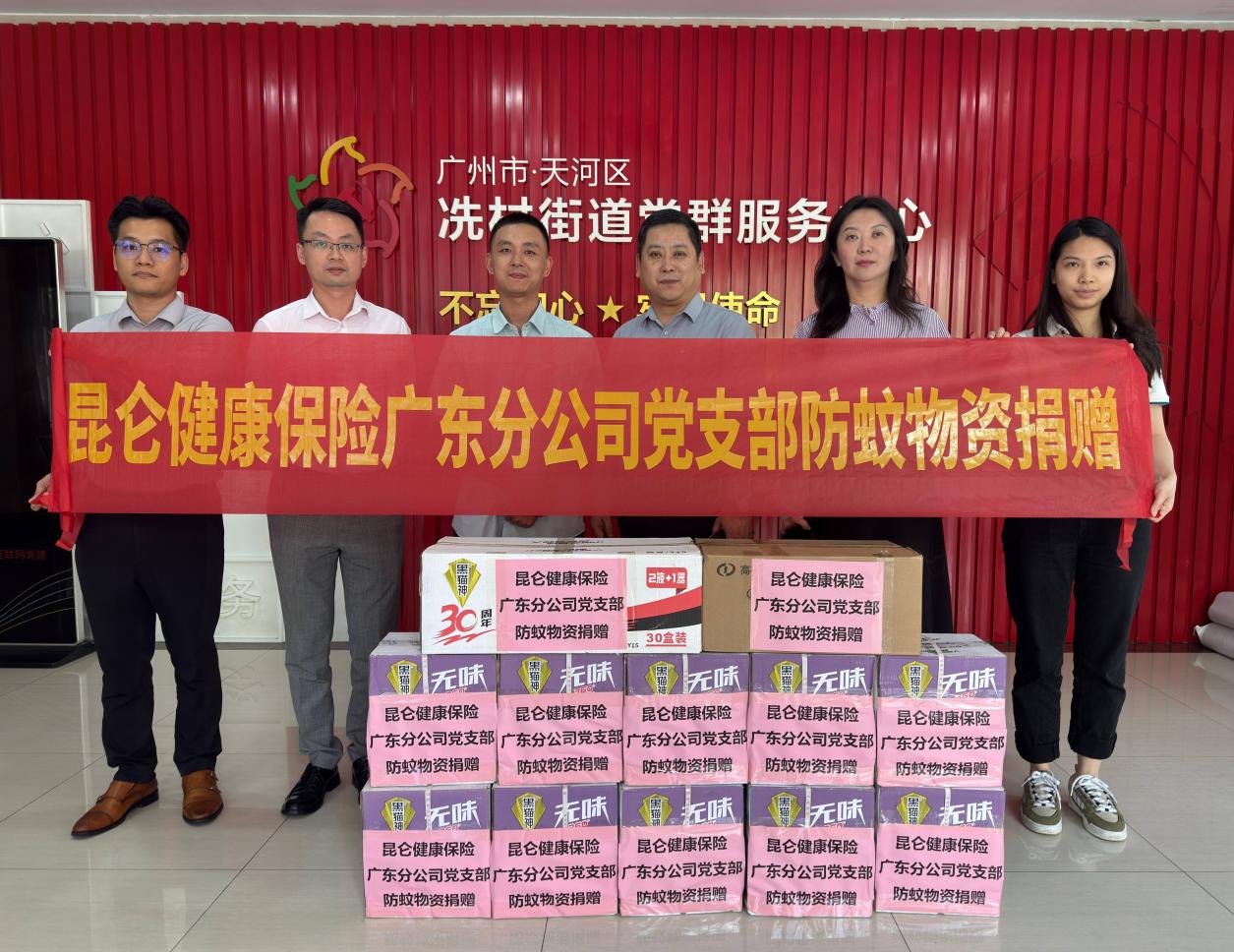
昆仑健康保险广东分公司党支部开展防蚊物资捐赠活动
Zhong Guo Jing Ji Wang· 2025-08-29 05:58
Group 1 - The core viewpoint of the article highlights the proactive role of Kunlun Health Insurance Guangdong Branch in supporting local epidemic prevention efforts against mosquito-borne diseases like Chikungunya and Dengue Fever through a donation of anti-mosquito supplies [1][3] - The donation included efficient mosquito repellent sprays and mosquito coils, demonstrating the company's commitment to community health and safety [3] - The initiative reflects the company's ongoing efforts to engage in grassroots governance and regional party-building activities, emphasizing the importance of collaboration between government and enterprises in public health [3] Group 2 - The company’s party branch leader expressed that everyone has a responsibility in epidemic prevention, and the donation symbolizes the collective effort of all party members [3] - The local government expressed gratitude for the donation, recognizing it as both material support and a morale booster, showcasing the strong partnership between political and corporate entities [3] - The party branch plans to continue monitoring the epidemic situation and will maintain close cooperation with local communities, encouraging all members to actively promote mosquito prevention knowledge and participate in environmental sanitation efforts [3]

小河街道成立“廉盟”,筑牢“微腐”防线
Hang Zhou Ri Bao· 2025-08-29 02:59
Core Viewpoint - The establishment of the "Sunshine Integrity Alliance" in Tanghe New Village Community aims to address local governance issues, focusing on transparency and integrity in community services and resource management [1][2] Group 1: Community Governance Initiatives - The community is implementing a "Sunshine Integrity" project to enhance the management of public resources and ensure transparency in procurement processes, particularly in student meal services [1] - A long-term mechanism for resource sharing, supervision, and problem-solving is being established to combat corruption and improve governance [1] Group 2: Anti-Corruption Measures - The community is focusing on preventing "micro-corruption" through five key projects: "Sunshine Property," "Sunshine Elderly Assistance," "Sunshine Support," "Sunshine Engineering," and "Sunshine Meals" [1] - A "Public Sentiment Observation Team" has been formed to supervise and address community concerns regarding public service issues [1] Group 3: Cultural and Educational Initiatives - The community is promoting a culture of integrity through various activities, including family story sessions, parent-child workshops, and the singing of integrity-themed nursery rhymes [1] - The "Integrity Growth Camp" is part of the initiative to instill values of integrity across all age groups within the community [1]
学纪知纪明纪守纪丨推动破解基层治理“小马拉大车”问题
Zhong Yang Ji Wei Guo Jia Jian Wei Wang Zhan· 2025-08-27 01:34
Core Viewpoint - The article emphasizes the importance of reducing burdens on grassroots levels to enhance governance efficiency and empower local officials, addressing the persistent issue of "small horse pulling a big cart" in grassroots governance [4][10][20]. Group 1: Background and Context - The issue of "small horse pulling a big cart" has long troubled grassroots governance, with the central government placing high importance on addressing this problem [4][10]. - Various measures have been implemented to rectify issues related to formalism and bureaucratic inefficiencies, aiming to alleviate the burdens on grassroots officials [5][6]. Group 2: Key Measures and Regulations - The central government has introduced several regulations to combat formalism, including the inclusion of behaviors that increase grassroots burdens into disciplinary actions [5][6]. - Specific regulations have been established to clarify responsibilities and streamline processes for community workers, thereby enhancing efficiency [5][6]. Group 3: Challenges and Root Causes - The article identifies several manifestations of the "small horse pulling a big cart" issue, including mismatched responsibilities, inadequate resources, and insufficient capabilities among grassroots officials [10][11]. - The root causes include a lack of accountability among some officials, inadequate recognition of the long-term nature of burden reduction efforts, and insufficient enforcement of existing regulations [11][12]. Group 4: Strategies for Improvement - Strategies proposed include establishing clear responsibility lists for grassroots officials, enhancing supervision mechanisms, and promoting digital solutions to streamline governance [9][19]. - Emphasis is placed on the need for a systematic approach to unify burden reduction, empowerment, and motivation for grassroots officials, ensuring that these efforts are sustainable and effective [20][21].
丹东市振兴区:居民“点单” 社区“上菜”
Liao Ning Ri Bao· 2025-08-27 01:12
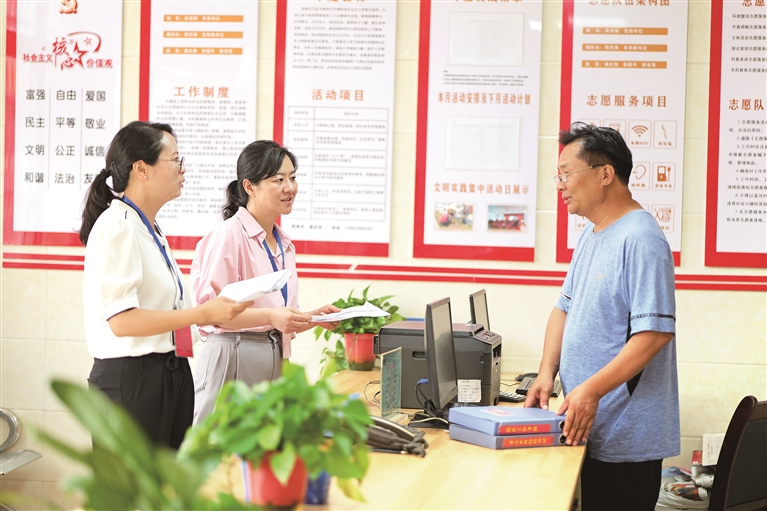
Group 1 - The core idea of the articles revolves around the community governance model in Dandong City, emphasizing the importance of efficient service delivery and resident engagement in improving the quality of life for elderly residents [1][2][3] - The "15-minute dual service" model is highlighted as a key initiative, ensuring that residents can access services within a short distance and time, thereby enhancing community support [1] - The establishment of bilingual services and volunteer programs, particularly involving the Korean ethnic community, demonstrates a commitment to inclusivity and effective communication in community services [2] Group 2 - The comprehensive approach of "Party building + renovation + autonomy" is being implemented to address issues in old residential areas, leading to significant improvements in infrastructure and community facilities [3] - The introduction of a tripartite mechanism involving community leaders, property managers, and resident representatives has effectively resolved long-standing issues such as water accumulation during rainy days [3] - Various community initiatives, including the establishment of "warm bee stations" and "love public welfare funds," have provided essential support to vulnerable groups, showcasing a model of shared governance and mutual aid [3]
以红色教育为核心、艺术体验为载体 “九色鹿”暑托服务护航童年梦想
Zhen Jiang Ri Bao· 2025-08-26 23:37
Core Viewpoint - The "Nine-Color Deer" public summer care class in the Jiuhua Mountain Villa community successfully concluded, addressing the childcare challenges faced by dual-income and new employment families, serving over 40 children in the district [1][2]. Group 1: Program Structure and Impact - The summer care class implemented an innovative "Nine-Color Curriculum" system, emphasizing comprehensive education through various activities, including red culture, AI classes, and traditional crafts, which significantly nurtured children's growth [2][4]. - Activities included practical skills like making earthquake alarms and an eco-friendly fashion show, promoting both safety awareness and environmental consciousness among children [3][4]. Group 2: Community Collaboration - The success of the program was attributed to a collaborative model involving community support, university student volunteers, and contributions from local businesses, fostering a strong partnership between families and educational institutions [3][4]. - The program's approach of "learning through play" was highlighted, with children engaging in hands-on activities that combined fun with educational value [3]. Group 3: Future Development and Goals - The Jiuhua Mountain Villa community aims to enhance the "Nine-Color Deer" brand, focusing on integrating various educational elements and expanding service reach, while striving to create a sustainable and replicable community service model [4]. - The community's commitment to instilling a sense of national pride and responsibility in children through red education and artistic experiences was emphasized as a key aspect of their mission [4].
无人机充当“空中哨兵”,网格员随时“接单” 藏在微网格里的治理巧思
He Nan Ri Bao· 2025-08-25 23:30
Core Viewpoint - The article highlights the innovative grassroots governance model in Zhengzhou's Shangjie District, which integrates "Party building + grid management + big data" to enhance community services and responsiveness to residents' needs [1][2][5]. Group 1: Governance Structure - Shangjie District has established a comprehensive governance network by refining its existing 65 communities into 401 basic units and 2,334 micro-grids, ensuring that local issues are managed effectively [2]. - The integration of various platforms, including smart mediation, petition handling, and digital city management, allows for a one-stop service for community demands, streamlining the process for residents [2]. Group 2: Community Engagement - The community has seen active participation from residents, with 416 personnel and 333 young district officials engaging directly in grassroots governance, enhancing local accountability [3]. - New employment groups, such as delivery personnel, have been mobilized as "mobile sentinels" to report issues, demonstrating a collaborative approach to community management [3]. Group 3: Technological Integration - The district has implemented a smart city operation center that utilizes AI for real-time data processing and proactive governance, shifting from reactive to preventive measures [4]. - The establishment of a drone operation service center has enabled over 200 flight missions, enhancing monitoring capabilities for urban management [4]. Group 4: Service Efficiency - Shangjie District has achieved a completion rate of over 98% for service requests, with a satisfaction rate of 99.15%, reflecting the effectiveness of its governance model [5].