
绿色低碳转型

Search documents
国电电力2024年发电量超4500亿千瓦时
Xin Hua Wang· 2026-01-14 08:14
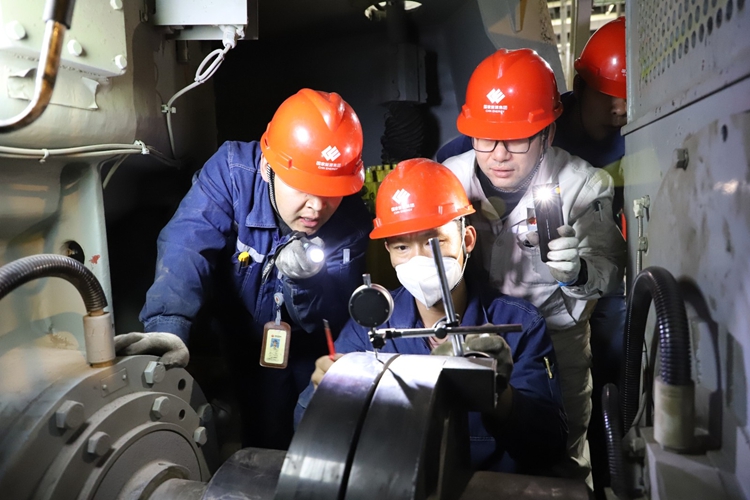
图为上海庙公司员工进行设备检查 2024年,国电电力坚定落实集团公司"一三六"发展战略,坚持稳中求进工作总基调,推动公司安全环 保工作持续稳定向好。不断完善安全生产体系,严格落实安全环保一号文件,以《安全生产治本攻坚三年 行动》为工作主线,新能源推行"四票合一",火电"包、卡、票、单"全线贯通,成功应对各类极端天气 和"摩羯""格美"等多个超强台风登陆侵袭,和禹水电成功抵御50年一遇洪水过境,火电机组开机率、负荷 率保持区域领先,13家企业获评集团公司安全环保一级企业,19家企业获评集团公司安全管理标准化一级 企业。坚持创新发展,加快绿色转型,对煤电机组实施"一机一策",稳步推进"三改联动",全年累计完成 24台次"三改联动"升级改造,系统内13台机组荣获全国可靠性对标或能效对标优胜机组称号。深入实施煤 电低碳化改造,锦界公司生物质掺烧项目投运,布连电厂沙柳生物质颗粒生产线开工建设,胜利电厂完成 全国首例"牛粪掺烧"实验。截至2024年12月31日,公司合并报表口径控股装机容量11173.39万千瓦,其 中:火电7462.9万千瓦,水电1495.06万千瓦,风电983.98万千瓦,光伏1231.45万千瓦,2 ...


全国电力系统调节能力持续提升
Ren Min Ri Bao Hai Wai Ban· 2026-01-14 08:13
《报告》显示,一季度,电源完成投资1322亿元,其中非化石能源发电投资占比接近八成;全国新 增发电装机容量8572万千瓦,同比多投产1629万千瓦。全国非化石能源发电装机规模超过20亿千瓦,电 力供应持续绿色低碳转型。 中国电力企业联合会日前发布的《2025年一季度全国电力供需形势分析预测报告》(以下简称《报 告》)显示,今年一季度,全国重点调查企业电力完成投资合计2278亿元,同比增长7.4%。截至今年3 月底,全国全口径发电装机容量34.3亿千瓦,同比增长14.6%。从分类型投资、发电装机增速及结构变 化等情况看,电力行业绿色低碳转型成效显著。 跨区、跨省输送电量快速增长。一季度,全国完成跨区输送电量2132亿千瓦时,同比增长12.3%。 其中,西北外送电量888亿千瓦时,同比增长10%,占全国跨区送电量的41.6%;东北、西南、南方外送 电量同比分别增长31.9%、25.3%和14.7%。(记者廖睿灵) 风电和太阳能发电合计新增装机占比接近九成,电力系统调节能力持续提升。 ...
长源电力:全资子公司长源电力青山热电脱硫废水深度治理EPC项目中标金额为3670万元
Jin Rong Jie· 2026-01-14 08:09
Core Viewpoint - The announcement highlights that Changyuan Power's wholly-owned subsidiary, Guoneng Changyuan Wuhan Qingshan Thermal Power Co., Ltd., has won a bid for an EPC project focused on deep treatment of desulfurization wastewater, amounting to 36.7 million yuan [1] Group 1: Project Details - The project aims to achieve zero discharge of desulfurization wastewater at Qingshan Company [1] - Guoneng Water Environmental Protection Co., Ltd., an affiliated party, is the winning bidder for this project, indicating it constitutes a related party transaction for the company [1] Group 2: Environmental Impact - The implementation of this project is expected to effectively address the negative impacts of desulfurization wastewater on the efficiency of the desulfurization system and the safe operation of equipment [1] - The project aligns with the company's goals for clean production and supports the transition towards a green and low-carbon development direction [1]

万亿进阶之路,看济宁如何以“三大定位”锻造发展实力
Feng Huang Wang Cai Jing· 2026-01-14 06:26
Core Viewpoint - Shandong province has successfully entered the 10 trillion yuan economic club in 2025, with Jining city exemplifying innovative transformation from a resource-based economy to a high-quality development model [1] Group 1: Economic Development - Jining port achieved a cargo throughput of 116 million tons in 2025, marking a 19.6% year-on-year increase, becoming the first inland port in northern China to reach this milestone [2] - The city has established 360 kilometers of high-grade waterways, accounting for 58% of the province's inland waterways, and 103 berths for vessels over 1,000 tons, representing 68% of the province's total [3] - Jining's industrial economy saw a year-on-year growth of 7.8% from January to November 2025, with the manufacturing sector growing by 10.2%, contributing to 61% of the industrial output [9] Group 2: Infrastructure and Logistics - Jining is developing a multi-modal transport system with a focus on high-grade waterways and dedicated railway lines, enhancing its position as a northern inland shipping hub [3] - The city is implementing a "front port - middle production - back garden" model, establishing seven major logistics parks to integrate port operations with local industries [4] - Jining's logistics network now covers 20 provinces, 152 cities, and extends to 19 countries, marking a significant leap in its port and shipping capabilities [5] Group 3: Industrial Transformation - Jining is focusing on a "number one project" in industrial economy, emphasizing the importance of the manufacturing sector and green, low-carbon development [6] - The city has initiated a three-year action plan for technological upgrades, with 251 projects included in the provincial key directory, maintaining the highest number in the province for four consecutive years [8] - New energy projects and smart manufacturing initiatives are being developed, including a significant investment in industrial robots and low-altitude economy sectors [8] Group 4: Cultural and Tourism Development - Jining is transforming its cultural tourism sector, with the launch of immersive experiences that attract significant visitor numbers, such as the "Ru Water Source" night show [10][11] - The city aims to build a "world cultural tourism city," leveraging its rich cultural heritage to drive high-quality development [11] - Jining's tourism service system is being enhanced to improve the overall quality of visitor experiences, with expectations of receiving over 100 million domestic tourists in 2025 [13]
扬州首家!高邮电池工业园入选省级新型电力系统试点
Yang Zi Wan Bao Wang· 2026-01-14 06:18
Core Insights - Jiangsu Province's Development and Reform Commission has approved the green electricity grid connection and consumption planning report for the Gaoyou Battery Industrial Park, marking the official start of construction for the first provincial-level new power system pilot park in Yangzhou [1] Group 1: Project Overview - The Gaoyou Battery Industrial Park is located on the eastern side of the Gaoyou Economic Development Zone, covering over 2,700 acres and is recognized as a highly specialized battery industry cluster within the province [3] - The park has achieved significant progress in new energy development, with a current installed capacity of 728.8 MW, which is planned to increase to 781.8 MW by 2030 [3] Group 2: Green Electricity Goals - Post-implementation of the planning, the proportion of green electricity used in the park is expected to exceed 30%, with an estimated 52% of green electricity consumption traceable to enterprises by 2030 [3] - The construction of the green electricity grid connection system will focus on upgrading the power grid, including the establishment of dedicated green electricity busbars to provide stable and reliable green power for 14 enterprises within the park [3] Group 3: Future Development Plans - Gaoyou City aims to leverage the approval as an opportunity to accelerate the implementation of the green electricity connection and consumption system, while building a complete industrial chain from silicon materials to battery cells, energy storage devices, and application scenarios [3] - This initiative is expected to contribute to the green and low-carbon transformation of the entire Yangzhou region, providing valuable experience and support for the advancement of the new energy industry [3]
河南永城:“一次办”进小区 充电桩报装快
Zhong Guo Fa Zhan Wang· 2026-01-14 05:02
Core Viewpoint - The article highlights the innovative measures taken by Yongcheng Power Supply Company to streamline the installation process of electric vehicle charging stations, significantly improving efficiency and enhancing the user experience for residents [1][2][3]. Group 1: Service Innovation - Yongcheng Power Supply Company has initiated a "one-stop" service for the installation of electric vehicle charging stations, allowing residents to complete the process without needing to visit multiple offices [1][2]. - The company has collaborated with property management to simplify the approval process, enabling a single verification to cover all eligible residents, thus reducing the administrative burden [2]. Group 2: Efficiency Improvement - The time required for low-voltage residential charging station installations has been reduced from approximately 5 working days to just 2 working days, achieving an efficiency increase of over 60% [2]. - The new process allows for same-day acceptance of applications and next-day power supply, significantly enhancing the overall customer experience [2]. Group 3: Safety and Compliance - While simplifying procedures, Yongcheng Power Supply Company maintains a commitment to safety and compliance, ensuring that installations adhere to national standards and industry regulations [2]. - The company emphasizes the importance of safety in electricity usage and has implemented measures to ensure the quality of installations [2]. Group 4: Future Plans - Yongcheng Power Supply Company plans to expand the "one-stop" service model to all eligible residential communities in the city, further enhancing the coverage of the "green channel" for charging station installations [3]. - The company aims to develop a "one-stop shared platform" for charging station applications, facilitating data sharing with other departments to streamline the process even further [3].
绿色甲醇加快步入规模化应用
Jing Ji Ri Bao· 2026-01-13 22:09
Group 1: Core Insights - Accelerating the construction of a new energy system is essential for achieving carbon peak goals and ensuring energy security during the 14th Five-Year Plan period, with methanol emerging as a key component due to its advantages in low carbon and storage [1] - The application of methanol in commercial vehicles and shipping is expanding, with significant projects like the 350 methanol-hydrogen hybrid vehicles for the 2025 Harbin Winter Games and the world's first methanol-electric dual-use ship "Yuanchun 001" starting commercial operations in Shanghai [1] - Experts at the recent Second Green Methanol Energy Industry Development Conference indicated that methanol energy will transition from demonstration exploration to large-scale application [1] Group 2: Green Development Dynamics - China's economic development is entering a phase of accelerated greening and low-carbon high-quality growth, with green methanol aligning well with circular economy principles [2] - The production of green methanol from urban organic waste, low-quality coal, industrial by-product hydrogen, and carbon dioxide enhances resource efficiency and reduces environmental pollution [2] - Over 200 green methanol projects have been planned, under construction, or in operation nationwide, with a total capacity exceeding 51 million tons per year [2] Group 3: Policy and Market Demand - The expansion of green methanol applications is driven by policy support and market demand, with over 70 policy documents issued to promote methanol-hydrogen vehicles by 2025 [3] - Methanol has potential as a low-carbon solution in the commercial vehicle sector, particularly in fixed-route urban delivery and short-distance transport scenarios [3] - The automotive industry is exploring diverse power solutions, with methanol being a viable option in regions with weak infrastructure and dominant long-distance transport [3] Group 4: Energy and Vehicle Integration - The automotive sector is evolving from a mere transportation tool to a crucial part of the energy system, with calls for accelerating vehicle-energy integration [4] - A new transportation energy system is needed, moving away from traditional fuel-centric models to accommodate diverse energy supply methods, including methanol [4] - The hybrid model of "oil, methanol, and electricity" is seen as suitable for China's automotive energy strategy [4] Group 5: Ecosystem Development - The development of the green methanol industry is in its early stages, facing challenges such as high costs and infrastructure limitations [5][6] - Collaboration among automotive and energy sectors is essential for fostering new business models, with companies like Yuanmeng establishing methanol refueling stations across key regions [5] - Technological breakthroughs are critical for the industrialization of green methanol, with companies working to overcome key bottlenecks in the entire supply chain [5] Group 6: Challenges and Recommendations - The green methanol industry faces issues like an incomplete standard system and inadequate infrastructure, which need to be addressed for broader adoption [6] - Recommendations include establishing unified standards for green and low-carbon methanol, promoting carbon footprint accounting, and enhancing international certification recognition [6] - A coordinated development approach is suggested, focusing on long-term planning, core technology collaboration, and resource utilization to build a circular methanol industry chain [6]
沙钢集团董事长沈彬会见法国液化空气集团首席执行官傅朗华一行
Zheng Quan Shi Bao Wang· 2026-01-13 12:36
Core Viewpoint - The meeting between Shagang Group and Air Liquide aims to deepen long-term strategic cooperation and promote green low-carbon transformation [1] Group 1 - Shagang Group's Chairman, Shen Bin, met with Air Liquide's CEO, François Jackow, on January 13 [1] - The discussions focused on enhancing collaboration in the context of sustainable development and green initiatives [1]


余热供暖大有可为
Jing Ji Ri Bao· 2026-01-13 08:30
Core Viewpoint - The innovative use of waste heat from garbage incineration in Tianjin's Dongli District demonstrates the potential for transforming waste into a sustainable heating source, significantly reducing heating costs and providing a new pathway for urban heating solutions [1][2]. Group 1: Current Heating Challenges - Urban heating demand is increasing due to rapid urbanization and extreme weather, with traditional heating methods relying heavily on coal and natural gas, which have drawbacks such as price volatility and environmental impact [1]. - The reliance on fossil fuels for heating exacerbates air pollution and increases the likelihood of smog in northern regions during winter [1]. Group 2: Potential of Waste Heat Utilization - China possesses abundant waste heat resources, with over 300,000 kilowatt power plants capable of meeting significant urban heating needs, highlighting the untapped potential of waste heat from industries like steel, chemicals, and waste incineration [2]. - Exploring diverse heating sources is essential for alleviating supply-demand conflicts and promoting energy recycling and green transformation [2]. Group 3: Implementation Strategies - Successful implementation of waste heat heating requires breakthroughs in technology, mechanisms, and collaboration [2]. - Technological advancements are needed for efficient recovery and transportation of waste heat, including the development of heat pump systems and long-distance heating techniques [2]. - Mechanism innovation is crucial to balance the interests of government, enterprises, and residents, ensuring investment returns without relying on fiscal subsidies [2]. - Cross-departmental collaboration is necessary to address construction challenges and ensure efficient delivery of heating to residents [2]. Group 4: Long-term Significance - The innovative waste heat heating approach not only saves costs and protects the environment but also provides a replicable model for urban resource recycling [3]. - Future developments may integrate waste heat with renewable energy sources like geothermal and solar energy, creating a complementary heating system [3]. - Continuous technological advancements and collaborative efforts will enhance heating efficiency and contribute to sustainable urban development [3].
【省生态环境厅】陕西碳配额累计交易量4521万吨
Shan Xi Ri Bao· 2026-01-13 00:28
Group 1 - The core viewpoint is that Shaanxi has been actively implementing carbon quota compliance as a key measure to promote the construction of the national carbon market, achieving significant milestones since the market's launch in 2021 [1][2] - The total carbon quota trading volume reached 45.21 million tons, with a transaction value of 3.121 billion yuan [1] - In 2024, the focus will be on ensuring 100% compliance for key emission units, with a projected carbon quota trading volume of 985,000 tons and a transaction value of 581 million yuan [1] Group 2 - Shaanxi is continuously improving its institutional framework to standardize carbon emission trading and data quality management, including the establishment of a carbon emission data audit room [2] - The monthly audit pass rate for carbon emission data has increased to 89.6%, indicating a significant improvement in data quality across the province [2] - The province has successfully implemented five carbon quota collateralized loans totaling 34.62 million yuan, enhancing financing channels for key emission units and encouraging energy-saving and carbon reduction initiatives [2]