农业农村现代化

Search documents
从“吨粮田”到“百亿链”,南通“十四五”农业农村现代化成就显著
Yang Zi Wan Bao Wang· 2025-12-12 15:06
Core Insights - Nantong is advancing rural revitalization and agricultural modernization during the 14th Five-Year Plan, achieving significant progress and being recognized as the top city in Jiangsu for four consecutive years in rural revitalization assessments [1] Agricultural Production - The city maintains a stable grain planting area of over 8.04 million acres and a total grain output exceeding 3.4 million tons, with per capita grain availability above international safety standards [1] - Key agricultural products such as pork, poultry, aquatic products, and vegetables have stable production, with marine aquaculture area and output ranking first in the province for several years [1] - High-standard farmland construction has been promoted, with 4.89 million acres completed, and over 90% of major crops using quality varieties [1] Industrial Development - Nantong is developing four leading industrial chains with over 10 billion yuan in value and nurturing 25 county-level characteristic industries worth over 1 billion yuan [2] - The city has 13 national-level agricultural leading enterprises, the highest in the province, and over 300 enterprises in provincial agricultural product processing zones, significantly increasing farmers' income [2] - Rural residents' per capita disposable income has grown by an average of 7.7% annually, outpacing urban residents for four consecutive years, narrowing the urban-rural income gap to 1.86 [2] Rural Environment and Infrastructure - The "Rural Revitalization Hundred Villages First" and "Thousand Villages Environmental Improvement" projects have transformed rural landscapes, with significant improvements in sewage treatment and sanitation facilities [2] - 242 villages have been recognized as provincial-level livable and workable villages, with infrastructure and public services rapidly extending to rural areas [2] Comprehensive Rural Reform - The Haimen District has been selected as a national pilot for comprehensive rural reform, introducing innovative measures such as agricultural facility ownership registration and the establishment of the "Tongnong Industry Investment Fund" to address financing challenges [3] - By 2024, the average collective operating income per village is projected to reach 1.299 million yuan, with over 86% of income being stable [3] Future Outlook - Nantong aims to achieve basic agricultural modernization by 2035, focusing on strengthening foundations, addressing shortcomings, and improving quality and efficiency in rural revitalization efforts [3]
国家统计局:2025年全国粮食实现丰收 粮食总产量增加167.5亿斤
Guo Jia Tong Ji Ju· 2025-12-12 10:20
2025年全国粮食实现丰收 ——国家统计局农村司司长魏锋华解读粮食生产情况 2025年,虽然部分地区遭遇干旱、洪涝和连阴雨天气,对粮食生产造成一定影响,但全国大部农区光温 水匹配良好,气象条件总体有利于粮食作物生长发育和产量形成。各地进一步扩大粮食单产提升工程实 施规模,加大合理增密、水肥一体化等技术推广力度,促进粮食单产水平持续提升。全国粮食单产 399.1公斤/亩,每亩产量比上年增加4.4公斤,增长1.1%。 (一)玉米、稻谷单产有所提高,小麦单产持平。2025年,全国谷物单产437.4公斤/亩,每亩产量比上年 增加4.6公斤,增长1.1%。其中,玉米单产446.7公斤/亩,比上年增加7.2公斤,增长1.6%;稻谷单产480.4 公斤/亩,比上年增加3.4公斤,增长0.7%;小麦单产396.0公斤/亩,与上年持平。 (二)豆类和薯类单产均有所增加。2025年,全国豆类单产135.4公斤/亩,每亩产量比上年增加2.2公斤, 增长1.6%。其中,大豆单产135.9公斤/亩,比上年增加2.5公斤,增长1.9%。全国薯类单产292.3公斤/ 亩,比上年增加2.7公斤,增长0.9%。 三、粮食总产量增加167.5亿 ...
“十四五”山东粮食总产连续四年稳定在1100亿斤以上,蔬菜、肉蛋奶年产量居全国首位
Qi Lu Wan Bao· 2025-12-12 08:27
Core Viewpoint - Shandong Province is accelerating agricultural modernization during the "14th Five-Year Plan" period, achieving significant production stability and growth in key agricultural products, contributing to national food security and supply stability [1][2][3] Group 1: Agricultural Production Achievements - Shandong's total grain production has remained above 110 billion jin for four consecutive years, with vegetable, meat, egg, and milk production ranking first in the country, and fruit and aquatic products ranking second [1] - The province has cumulatively increased grain production by 5.268 billion jin since the beginning of the "14th Five-Year Plan," equivalent to the annual grain output of a major grain-producing city [1] Group 2: Agricultural Production System - Shandong has established a "1+4" agricultural production system, focusing on large-scale yield improvement of grain crops, with innovative strategies combining various crops and production methods [1] - The province has initiated a yield improvement action, achieving historical breakthroughs in summer grain production, with both yield levels and total production increases ranking first in the country [1] Group 3: Potential in Various Agricultural Sectors - The province is tapping into four major potentials: facility agriculture, animal husbandry, marine fisheries, and comprehensive utilization of saline-alkali land, promoting a coordinated approach to food and protein production [2] - Facility agriculture is rapidly transitioning to smart, green, and standardized practices, with vegetable production maintaining over 90 million tons and fruit production around 32 million tons [2] Group 4: Saline-Alkali Land Utilization - Shandong is enhancing the production potential of saline-alkali land, with significant improvements in average grain yield, particularly in regions with high saline-alkali land coverage [3] - The province has developed salt-tolerant crop varieties and is promoting high-yield specialty agricultural products from saline-alkali areas, transforming these lands into stable production zones [3]
琪金集团林其鑫:以数智科技应对和破解“猪周期”
Zhong Guo Jing Ji Wang· 2025-12-10 08:04
Core Viewpoint - The future of the pork industry will exemplify smart agriculture through deep integration of biotechnology and digital technology [1][7]. Group 1: Industry Transformation - The agricultural modernization has evolved from simple mechanization to a deep integration of digitalization, intelligence, and greening [1][2]. - The "pig cycle" fluctuations in the pork industry are a persistent challenge, and the integration of technological innovation and industrial innovation is seen as a breakthrough [2][3]. - The "Rongchang pig," developed by the company, is recognized as one of the "national treasure" pig breeds, emphasizing the importance of core breeding research and development [2]. Group 2: Modernization and Innovation - A modern industrial system is characterized by "innovation-driven, collaborative efficiency, green low-carbon, and safe reliability," requiring upgrades across the entire pork industry chain [4]. - Key areas for modernization include upstream biotechnology for breeding, midstream smart farming practices, and downstream branding and digitalization for food safety and market insight [4]. - Challenges include significant funding pressures, a shortage of interdisciplinary talent, and ongoing threats from animal diseases like African swine fever [4]. Group 3: Empowering Enterprises - The current state of private enterprises is described as "cautiously optimistic," facing pressures from demand fluctuations and rising costs [5][6]. - To stimulate enterprise vitality, specific measures are needed, such as developing inclusive financial products based on soft assets and providing direct tax incentives for R&D investments [6]. - The focus on the "14th Five-Year Plan" is seen as a critical opportunity for high-quality development, particularly in biotechnology, artificial intelligence, and big data [6]. Group 4: Future Expectations - The company anticipates a more innovative and intelligent industry environment during the "14th Five-Year Plan," viewing it as a significant opportunity for development [7]. - The application of biotechnology in local pig breeding and the use of AI for real-time monitoring and data analysis are highlighted as key advancements [7].
四中全会精神在基层丨天山南北的甜蜜事业
Yang Guang Wang· 2025-12-10 05:07
Group 1 - The core viewpoint of the article emphasizes the modernization of agriculture and rural areas in Xinjiang, particularly through the development of the walnut industry, which is experiencing high-quality growth driven by technology and brand enhancement [1] Group 2 - Xinjiang's walnut production is currently in peak season, with significant activity at the walnut wholesale market in Hotan County, indicating a thriving trade environment [1] - Walnut quality this year is reported to be good, with a local trader planning to purchase 3 tons, reflecting the overall positive outlook for the walnut harvest [2] - The production of walnut oil is also on the rise, with a local agricultural technology company achieving an annual transaction volume of over 2 million yuan through both online and offline sales [2] - The walnut industry in Hotan has generated employment for over 20,000 people, showcasing its impact on local livelihoods [2] - The walnut production in Hotan reached 256,200 tons this year, with a total output value of 3.023 billion yuan, and a projected trading volume of 350,000 tons, marking a 10% increase compared to last year [2] Group 3 - The local government aims to enhance the walnut industry by promoting quality improvement actions and introducing more enterprises to strengthen deep processing capabilities [3] - Xinjiang's fruit industry has seen a total production increase from 13 million tons in 2021 to 14 million tons projected for 2024, indicating a robust growth trajectory [3] - The fruit industry in Xinjiang has developed a comprehensive supply chain that includes planting, processing, logistics, and sales, with products exported to over 30 countries and regions [3] - Future plans for the industry include optimizing layout, developing new varieties, and enhancing brand creation to further expand market reach [3]
践行新发展理念 中国经济行稳致远丨乡村全面振兴扎实推进 农业农村现代化迈出坚实步伐
Yang Shi Xin Wen Ke Hu Duan· 2025-12-08 13:27
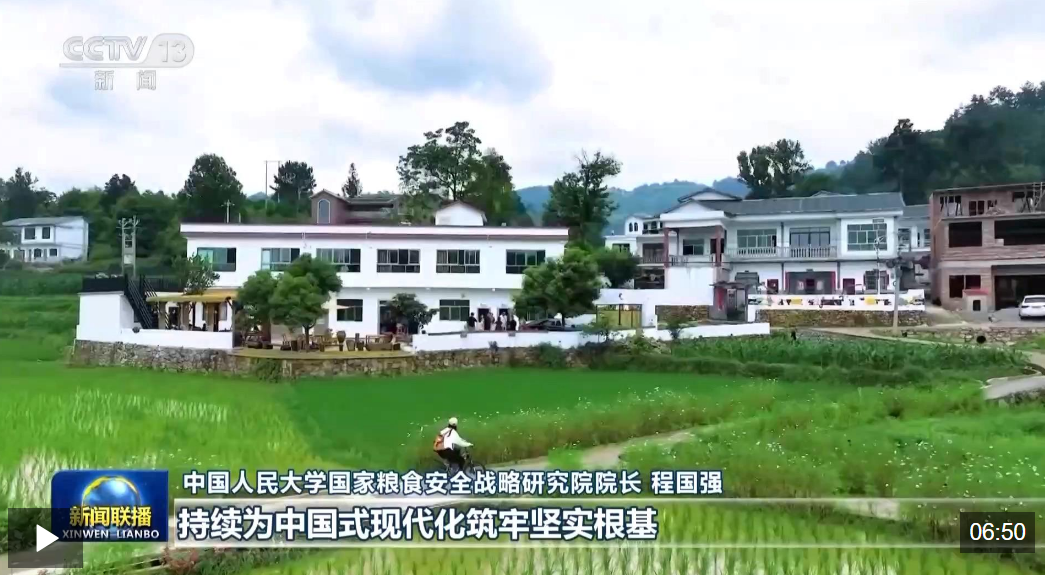
习近平总书记指出:"加快农业农村现代化步伐,推动农业基础更加稳固、农村地区更加繁荣、农民生活更加红火。" 2025年是"十四五"规划收官之年,也是巩固拓展脱贫攻坚成果同乡村振兴有效衔接5年过渡期的最后一年,我国锚定农业农村优先发展目标,全方位夯实粮 食安全根基、牢牢守住不发生规模性返贫致贫底线,深入实施乡村建设行动,推动农业农村现代化迈出坚实步伐。 今年以来,习近平总书记深入各地考察,为农业农村现代化发展指明方向、擘画蓝图。围绕如何做强农业,习近平总书记强调"要加强耕地保护和建设,扛 牢粮食安全责任";他指出,"要加强科技应用,推动农文旅融合,不断延伸产业链、增加附加值,带动更多农民群众增收致富";围绕让农民就地过上现代 文明生活,习近平总书记要求,"坚持城乡融合发展,推进以县城为重要载体的新型城镇化建设,优化县乡村公共资源配置和产业链布局,扎实推进乡村全 面振兴。" 中国人民大学国家粮食安全战略研究院院长 程国强:习近平总书记就推进农业农村现代化作出了一系列的重要指示。为我国加快农业农村现代化,扎实推 进乡村全面振兴,明确了具体的实施路径。今年以来,农业农村呈现出许多趋势性的新变化。科技对农业生产的支撑作用 ...

"三农"成绩单传递中国稳定性和确定性
Ren Min Ri Bao· 2025-12-08 02:41
Core Viewpoint - The modernization of agriculture and rural areas is essential for China's overall modernization, emphasizing that a strong nation must first have a strong agricultural sector [1]. Group 1: Agricultural Modernization Goals - The "15th Five-Year Plan" emphasizes accelerating agricultural modernization and promoting comprehensive rural revitalization as a top priority for the Party [1][2]. - The plan aims to enhance agricultural production capacity and quality efficiency, focusing on improving the supply guarantee for important agricultural products [3]. Group 2: Enhancing Agricultural Production Capacity - Agricultural production capacity is defined as the stable output achievable under existing infrastructure, technology, and policy support, with a goal of achieving breakthroughs in grain production capacity during the "15th Five-Year Plan" [4]. - Over 1 billion acres of high-standard farmland have been established, with agricultural technology contributing 63.2% to production capacity [4]. Group 3: Addressing Shortcomings in Agriculture - The plan identifies the need to strengthen the agricultural foundation, improve infrastructure, and enhance resilience against natural disasters as critical areas for development [5]. - Strategies include implementing the "store grain in the land and technology" approach and accelerating self-reliance in high-level agricultural technology [5]. Group 4: Quality and Efficiency Improvement - The focus is on not only quantity but also quality, with initiatives to develop high-quality rice and wheat varieties, and to promote diversified food supply systems [7]. - The plan aims to integrate technology, green practices, quality agriculture, and branding to build a modern agricultural industry [7]. Group 5: Rural Living Environment Improvement - The modernization of agriculture is linked to the well-being of millions of farmers, with plans to create quality living spaces in rural areas [8]. - The approach emphasizes local conditions and orderly, categorized development to enhance rural living standards [11]. Group 6: Policy Effectiveness and Financial Support - The "15th Five-Year Plan" proposes enhancing the effectiveness of agricultural support policies to meet farmers' needs and ensure stable grain production [15][16]. - Financial commitments include increasing the proportion of land transfer income for agricultural use and ensuring that agricultural loans are prioritized [17]. Group 7: Precision in Policy Implementation - The plan stresses the importance of precise policy measures to prevent poverty and support low-income populations in rural areas [18]. - It aims to establish a regular mechanism to prevent the return to poverty, focusing on targeted assistance for vulnerable groups [18].
奔向共同富裕的美好明天 ——加快农业农村现代化,扎实推进乡村全面振兴
Ren Min Ri Bao· 2025-12-08 00:33
Core Viewpoint - Agricultural modernization is essential for China's overall modernization, as emphasized by President Xi Jinping, linking national strength to agricultural strength [1]. Group 1: Agricultural Modernization Goals - The "14th Five-Year Plan" has strengthened the agricultural sector, ensuring food security for over 1.4 billion people and preventing large-scale poverty [1]. - The "15th Five-Year Plan" aims to accelerate agricultural modernization and promote comprehensive rural revitalization, highlighting the importance of addressing agricultural issues as a priority for the entire party [1][2]. Group 2: Enhancing Agricultural Production Capacity - The focus is on improving agricultural production capacity and quality, which is crucial for ensuring food supply and supporting domestic economic circulation [3]. - The goal is to achieve breakthroughs in grain production capacity during the "15th Five-Year Plan," with over 1 billion acres of high-standard farmland established and a 63.2% contribution rate from agricultural technology advancements [4]. Group 3: Addressing Agricultural Shortcomings - Key challenges include unstable industrial foundations, inadequate agricultural infrastructure, and insufficient resilience against natural disasters [5]. - Strategies include implementing the "store grain in the land and technology" approach and enhancing soil quality and farming practices [5]. Group 4: Quality and Efficiency in Agriculture - Innovative practices such as duck-rice co-cultivation and advanced planting techniques are being adopted to enhance product quality and market competitiveness [6]. - The "15th Five-Year Plan" emphasizes the integration of technology, green practices, and quality agriculture to build a modern agricultural industry [7]. Group 5: Rural Living Standards - Agricultural modernization directly impacts the well-being of millions of farmers, with plans to create quality living spaces in rural areas [8]. - The focus is on tailored approaches to rural development, ensuring that local characteristics and cultural heritage are preserved [10]. Group 6: Infrastructure and Environmental Improvements - Various regions are implementing plans to enhance rural infrastructure, including wastewater management and waste disposal systems [11]. - Collaborative development mechanisms among neighboring villages are being established to optimize resource allocation and improve living conditions [13]. Group 7: Strengthening Agricultural Policies - The "15th Five-Year Plan" aims to enhance the effectiveness of agricultural support policies, addressing farmers' needs and ensuring sustainable agricultural development [15][16]. - Financial support for agriculture has increased, with over 10% of land transfer income allocated to rural development and significant agricultural loans being provided [17]. Group 8: Precision in Policy Implementation - Targeted measures are being developed to prevent poverty and support low-income populations, ensuring that assistance reaches those in need [18]. - The transition from poverty alleviation to rural revitalization is a key focus, with an emphasis on maintaining stability and improving living standards for rural residents [18].
奔向共同富裕的美好明天
Ren Min Ri Bao· 2025-12-07 22:02
Core Viewpoint - Agricultural modernization is essential for China's overall modernization, emphasizing that a strong nation must first have a strong agricultural sector [1]. Group 1: Agricultural Modernization Goals - The "14th Five-Year Plan" has solidified the agricultural sector as a stabilizing force for the economy, ensuring food security for over 1.4 billion people and preventing large-scale poverty [1]. - The "15th Five-Year Plan" aims to accelerate agricultural modernization and promote comprehensive rural revitalization, highlighting the importance of addressing agricultural issues as a top priority for the Party [1][2]. Group 2: Enhancing Agricultural Production Capacity - The focus is on improving agricultural production capacity and quality, which is crucial for ensuring food supply security [3]. - The establishment of over 1 billion acres of high-standard farmland and a 63.2% contribution rate from agricultural technology advancements are key achievements that bolster production capacity [4]. Group 3: Addressing Agricultural Shortcomings - There are existing bottlenecks such as unstable industrial foundations and inadequate infrastructure that need to be addressed to enhance agricultural production [5]. - Strategies like "storing grain in the land and technology" will be implemented to strengthen agricultural technology and protect soil quality [5]. Group 4: Quality and Efficiency in Agriculture - Innovative practices such as duck-rice co-cultivation and the use of plastic film in rice planting are being adopted to enhance ecological farming and market competitiveness [6]. - The "15th Five-Year Plan" emphasizes the need for a diversified food supply system that includes high-quality agricultural products [7]. Group 5: Rural Living Standards and Infrastructure - Agricultural modernization directly impacts the quality of life for millions of farmers, with plans to create better living spaces in rural areas [8]. - Local governments are focusing on improving rural infrastructure, such as water supply and waste management, to enhance living conditions [11]. Group 6: Financial and Policy Support for Agriculture - The proportion of land transfer income allocated to agriculture has exceeded 10%, with significant financial support for agricultural and rural development [17]. - Policies are being refined to ensure that financial assistance and subsidies effectively support farmers and rural communities [18].
12月7日晚间央视新闻联播要闻集锦
Yang Shi Xin Wen Ke Hu Duan· 2025-12-07 13:20
今日摘要 习近平总书记指出,加快农业农村现代化步伐,推动农业基础更加稳固、农村地区更加繁荣、农民生活 更加红火。系列报道《践行新发展理念中国经济行稳致远》今天来看:2025年,我国锚定农业农村优先 发展目标,深入实施乡村建设行动,推动农业农村现代化迈出坚实步伐。 中共中央印发《中国共产党工作机关条例》。 系列报道《学习贯彻四中全会精神在基层》今天来看:山东、海南、湖南以全会精神为指引,立足各自 优势,推动高质量发展。 北京优化整合科研资源,推动创新发展。 五年来,上海浦东引领区建设取得丰硕成果。 国际人士表示,高市早苗的错误言论歪曲历史,危害和平。 俄罗斯称,打击乌军多种设施。乌克兰称,在多个方向击退俄军进攻。 内容速览 【践行新发展理念 中国经济行稳致远】乡村全面振兴扎实推进 农业农村现代化迈出坚实步伐 山东:加快构建航天产业发展新格局 海南:全力推进商业航天高质量发展 湖南:积极拓展对非经贸合作 推动贸易创新发展 北京市全面增强自主创新能力,整合创新资源,抢占科技发展制高点,把创新优势转化为首都发展新动 能,不断催生新质生产力。 上海浦东引领区建设五周年成果丰硕 上海浦东新区打造社会主义现代化建设引领区5 ...